Inspiration
RoomDrop started from a very real dorm problem.
There was a cockroach in the dorm, and one roommate was so freaked out that he did not even want to go downstairs to pick up his DoorDash order. As a joke, it was said, "I'll go get it if you pay me." The food got picked up, brought back upstairs, and that turned into the idea.
Later that night, a post went up on Fizz asking if people would actually pay for a service that brings food from the dorm drop-off point straight to their room. The response was strong, with over 2,000 votes and nearly 900 people saying yes. That made it feel like a real problem worth building for.
What it does
RoomDrop is a last-mile delivery logistics service for college campuses.
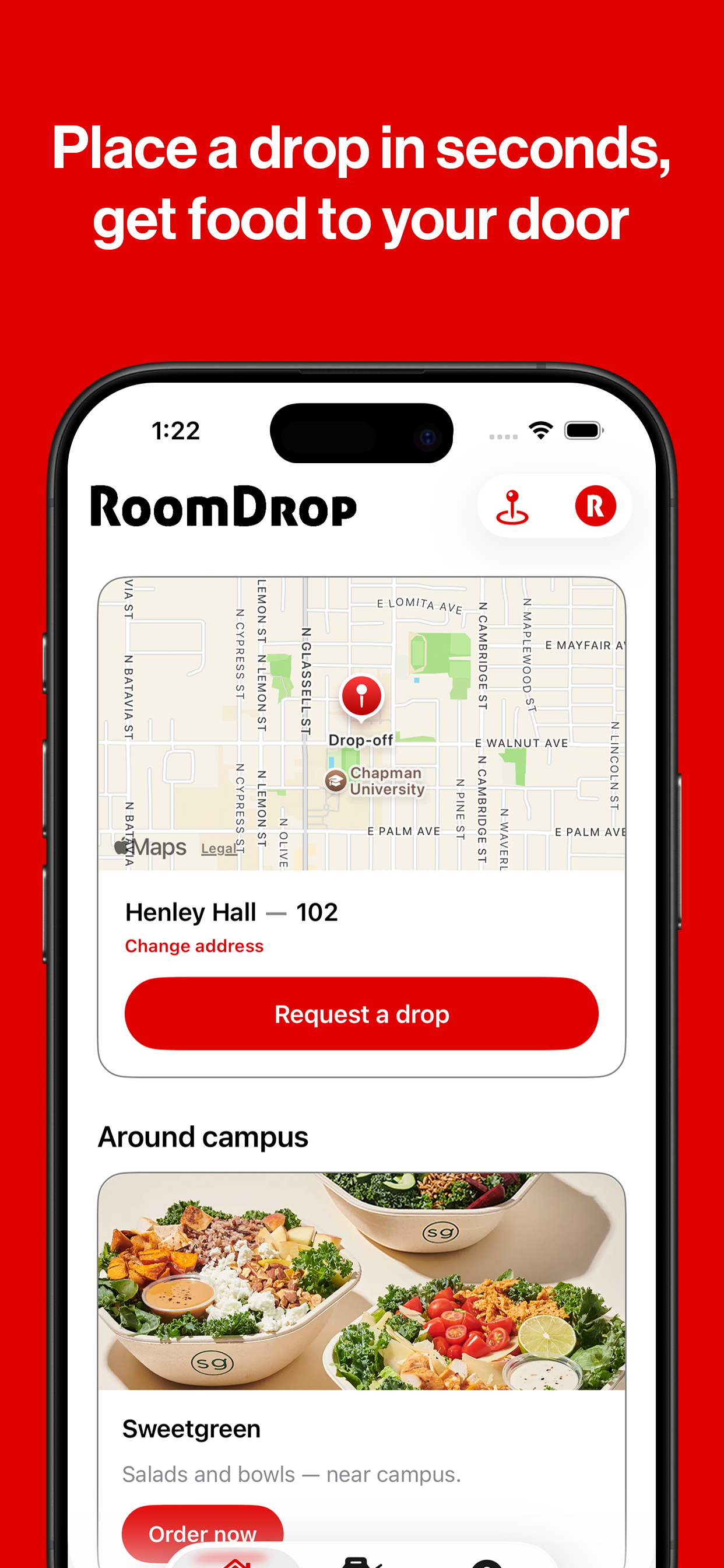
Students still order food like they normally would, but RoomDrop handles the final step that delivery apps usually cannot: getting the order from the public campus drop-off point to the student's dorm room.
The goal is simple: make food delivery actually work for dorm life.
How it was built
RoomDrop was built as a logistics and coordination system powered by:
- Firebase Firestore for real-time data
- Firebase Functions for backend logic and webhooks
- Firebase Auth for user authentication
- Twilio for temporary phone numbers and inbound SMS updates
- A web dashboard for admin and runner logistics
- GitHub for source control and collaboration
- Vercel for dashboard deployment
The core flow works like this:
- A user starts an order session in RoomDrop
- A temporary phone number is assigned to that order session
- The user places their DoorDash order using that assigned number
- Delivery updates sent by SMS are received through Twilio
- The backend stores and parses those updates
- The order appears in the RoomDrop system
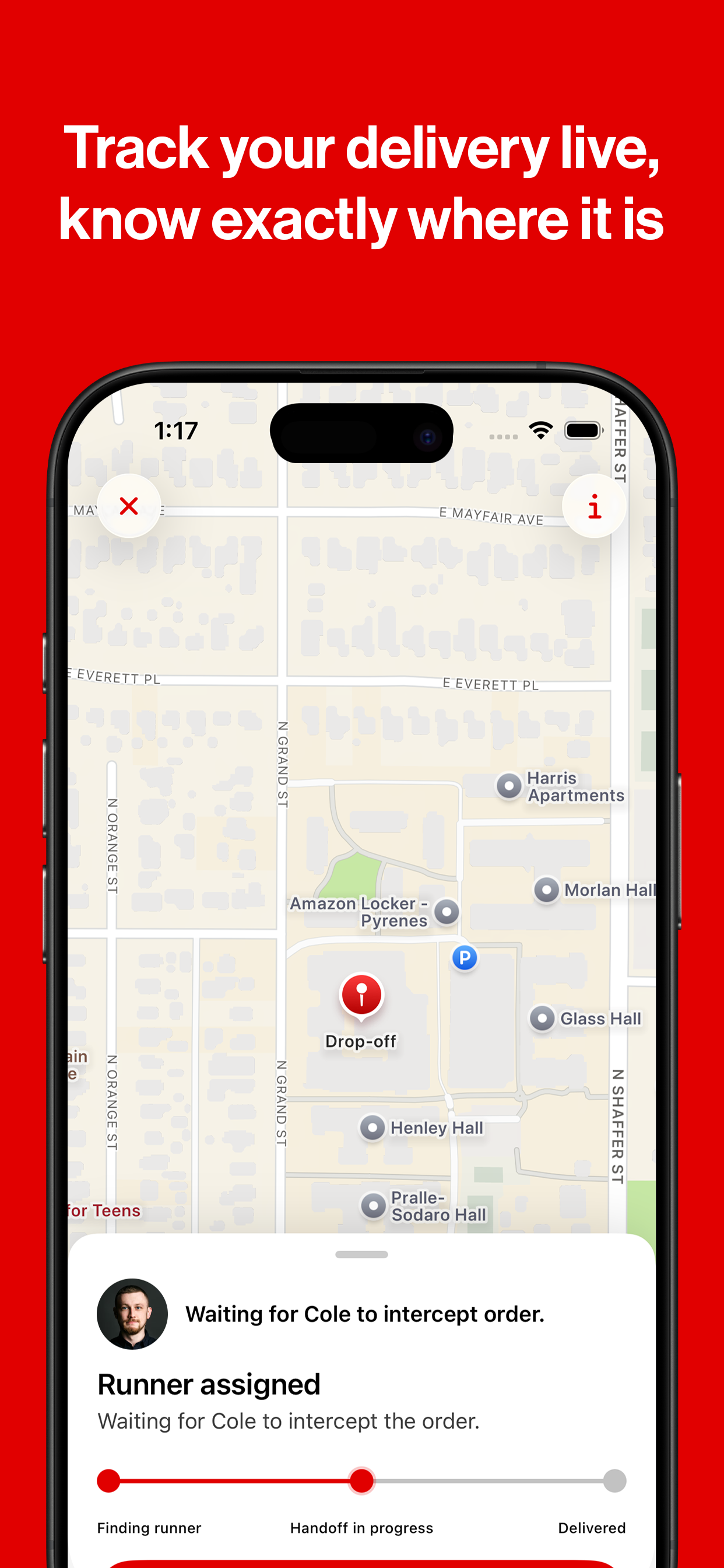
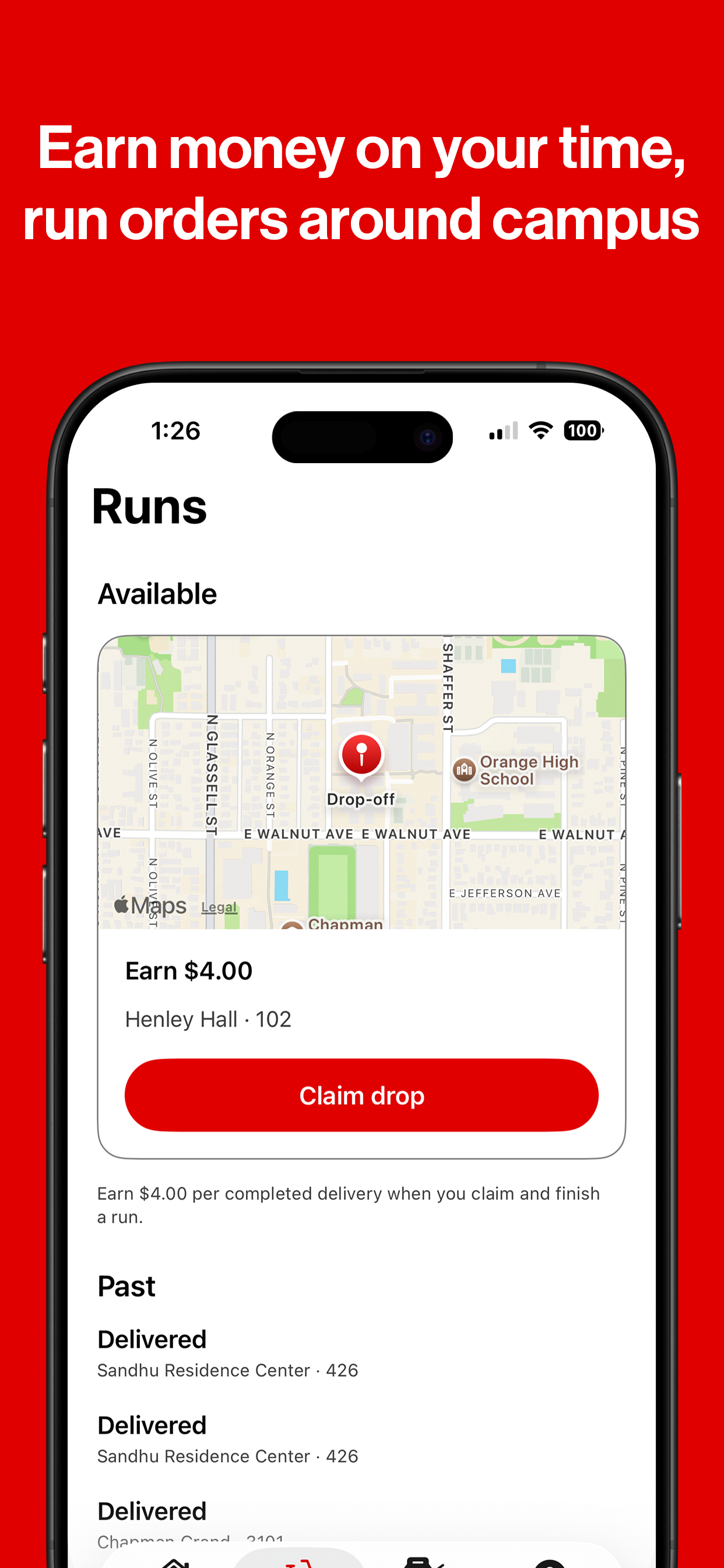
- A student runner is assigned to complete the final handoff to the dorm
This made it possible to build around an existing delivery flow instead of trying to replace it.
Challenges faced
The biggest challenge was building around a platform that was not directly integrated.
Since there is no simple end-user DoorDash API for this use case, the project had to be designed around temporary routing numbers, inbound SMS handling, and backend parsing. That meant figuring out how to reliably detect order updates, track delivery progress, and connect everything to one live order session.
Another challenge was making the system feel realistic and scalable instead of just being a mockup. A lot of effort went into thinking through the actual logistics of assigning numbers, storing order state, handling runner coordination, and setting up a dashboard that could support real operations.
What was learned
A lot was learned about logistics software, event-driven backend systems, and how much real-world software is about connecting messy systems that were never designed to work together.
This project also reinforced how strong ideas can come from very small, real-life moments. What started as a joke in a dorm turned into a product concept with clear user demand and a real operational use case.
What's next for RoomDrop
The next step is making RoomDrop feel even more complete for real campus use.
That includes:
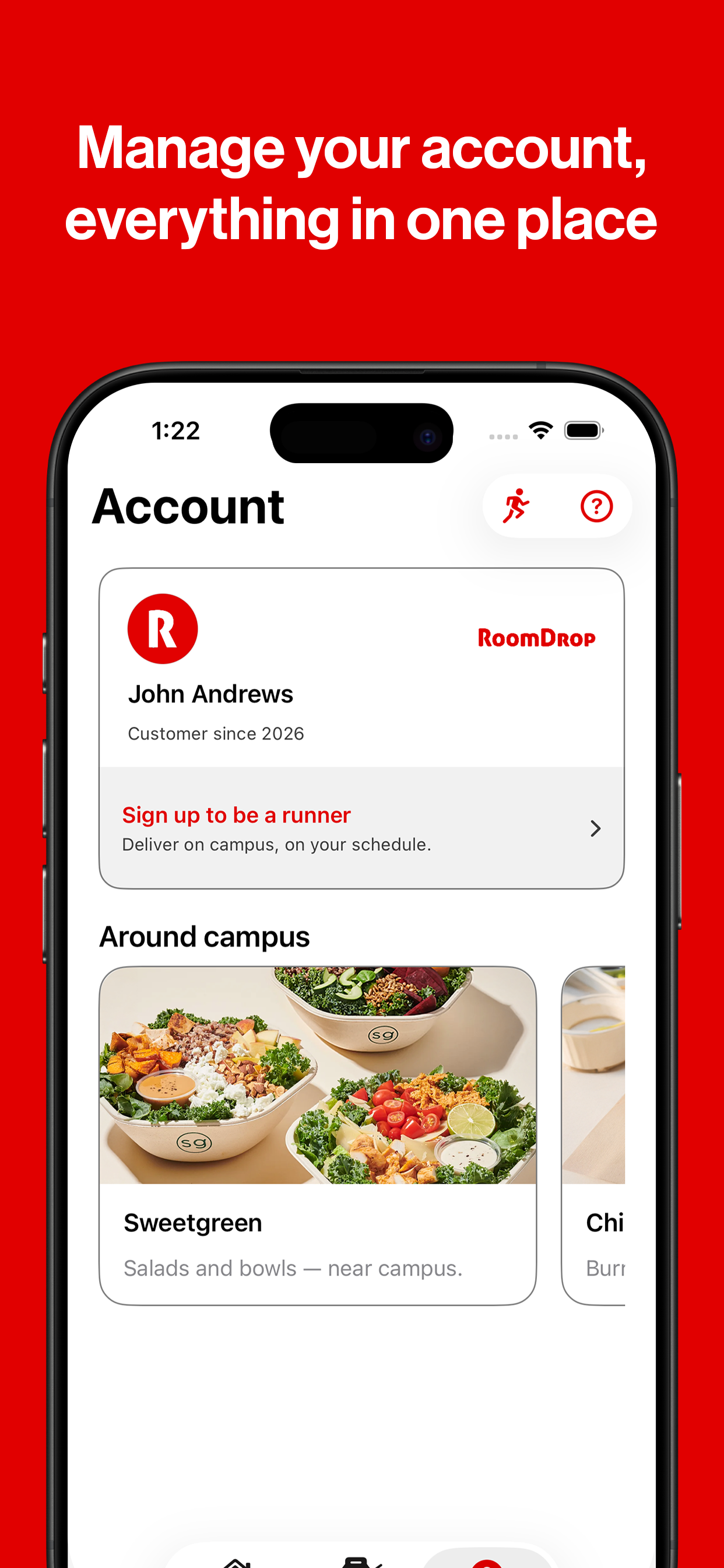
- finishing the iOS experience
- improving live delivery tracking
- expanding runner tools
- making order parsing and status updates more reliable
- testing the concept with real students in a live campus setting
RoomDrop started with one simple idea: if food delivery stops at the curb, someone should solve the last step.
Built With
- firebase
- firebase-auth
- firebase-functions
- firestore
- github
- nextjs
- swiftui
- twilio
- typescript
- vercel


Log in or sign up for Devpost to join the conversation.