-
-
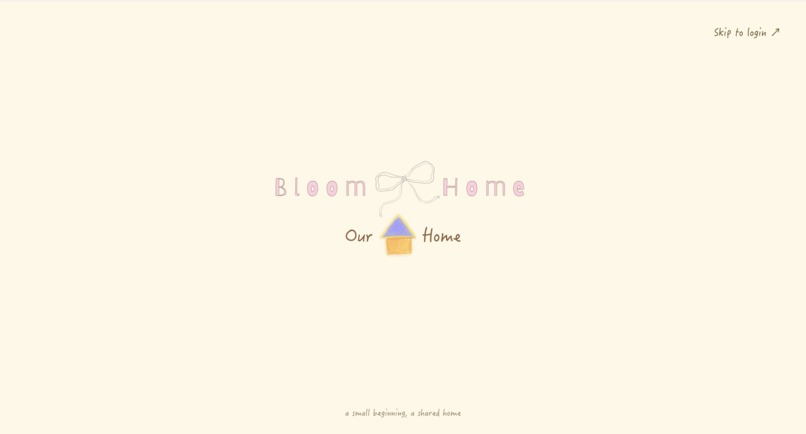
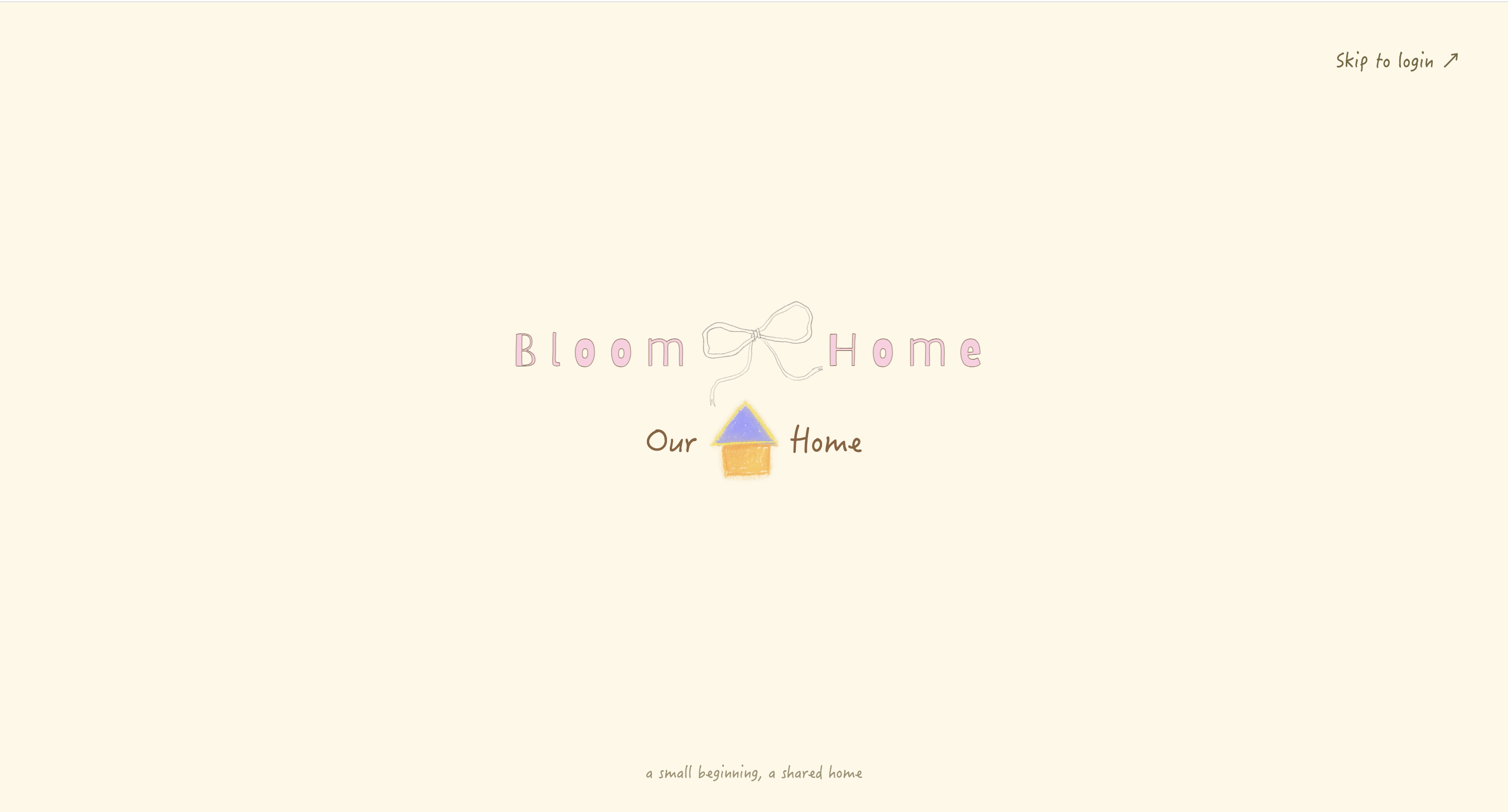
WELCOME
-
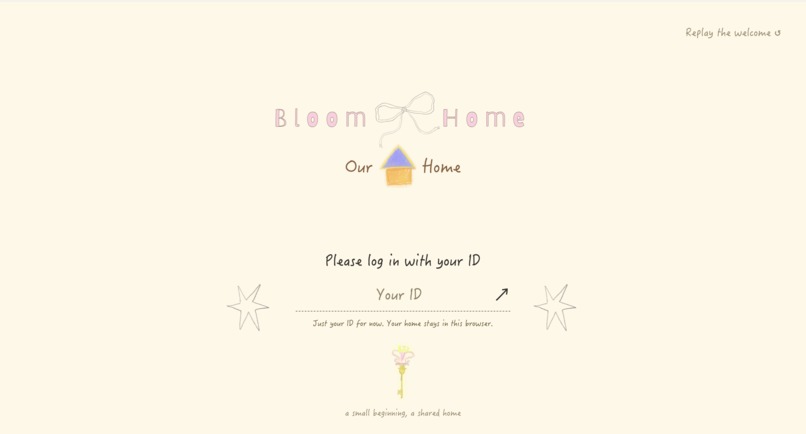
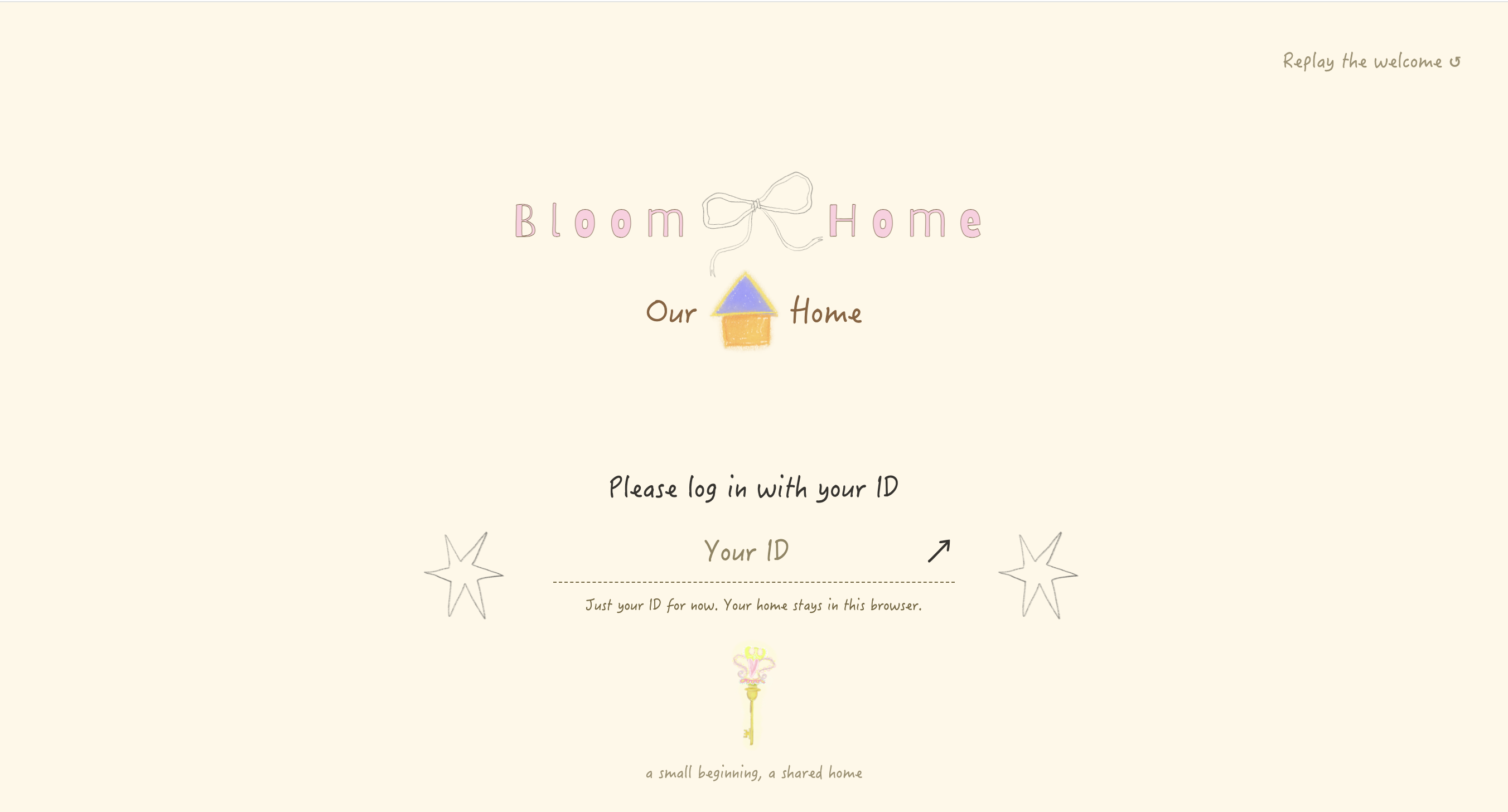
LOG IN
-
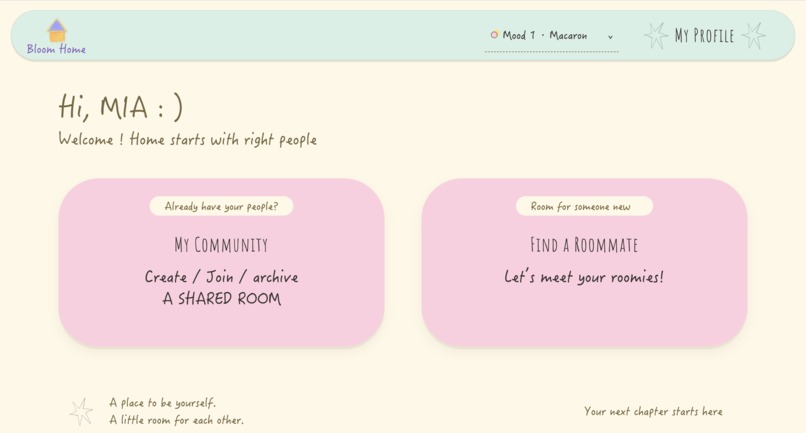
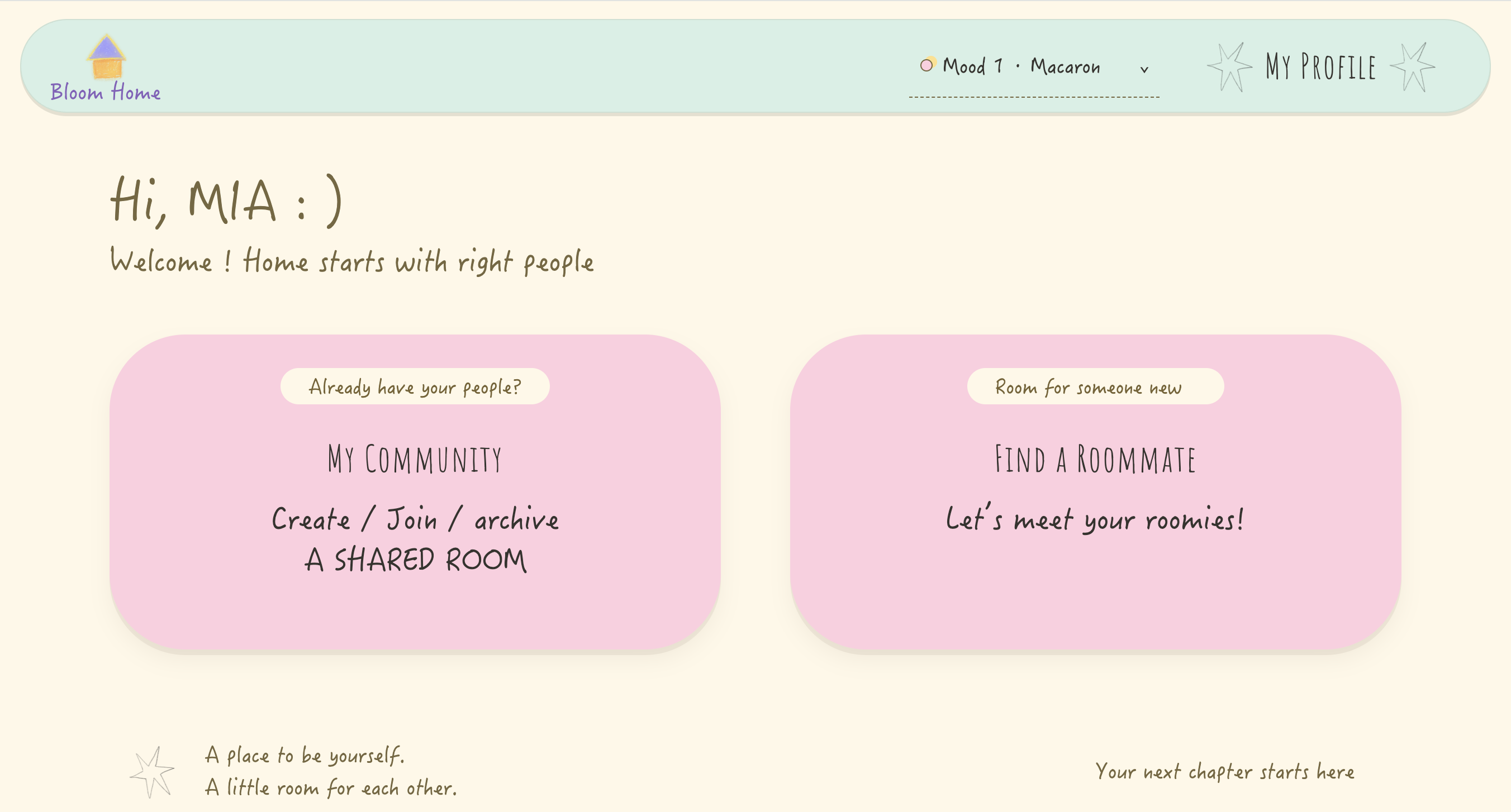
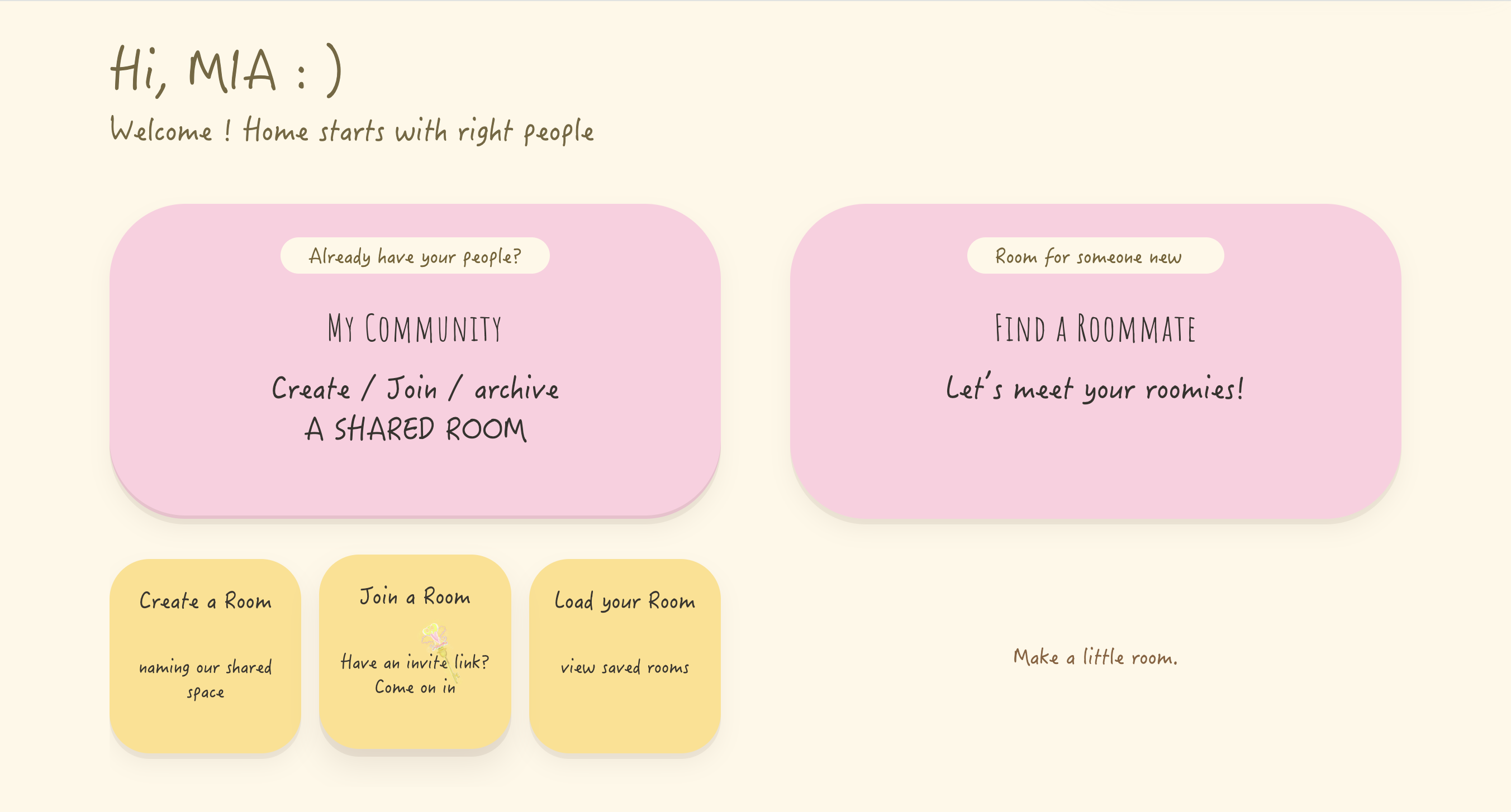
MAIN PAGE
-
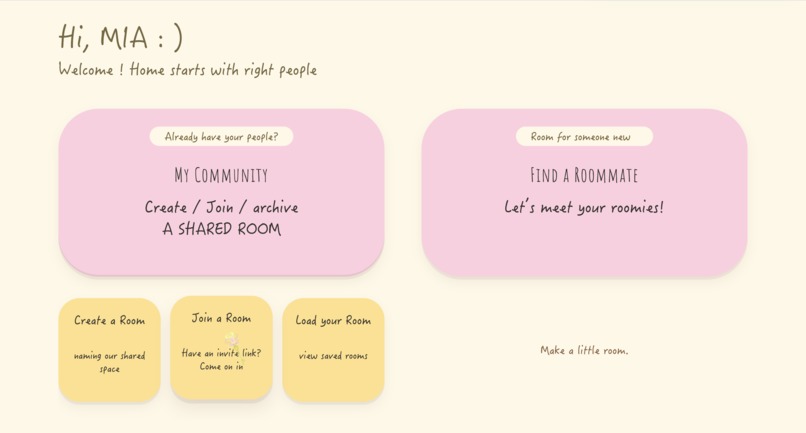
SUB NAVIGATION 1
-
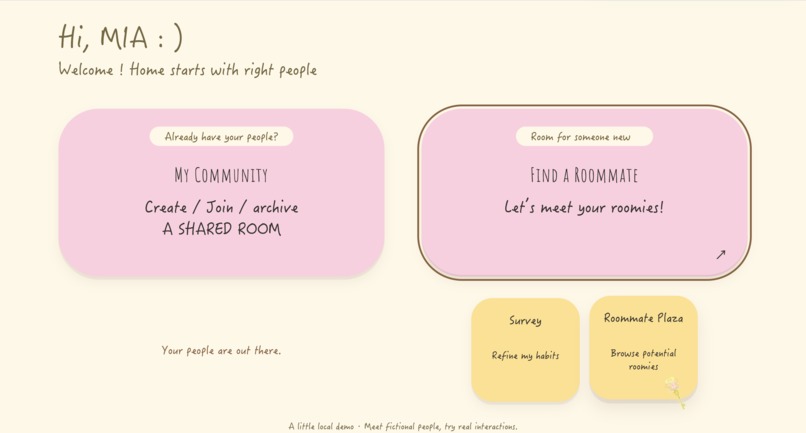
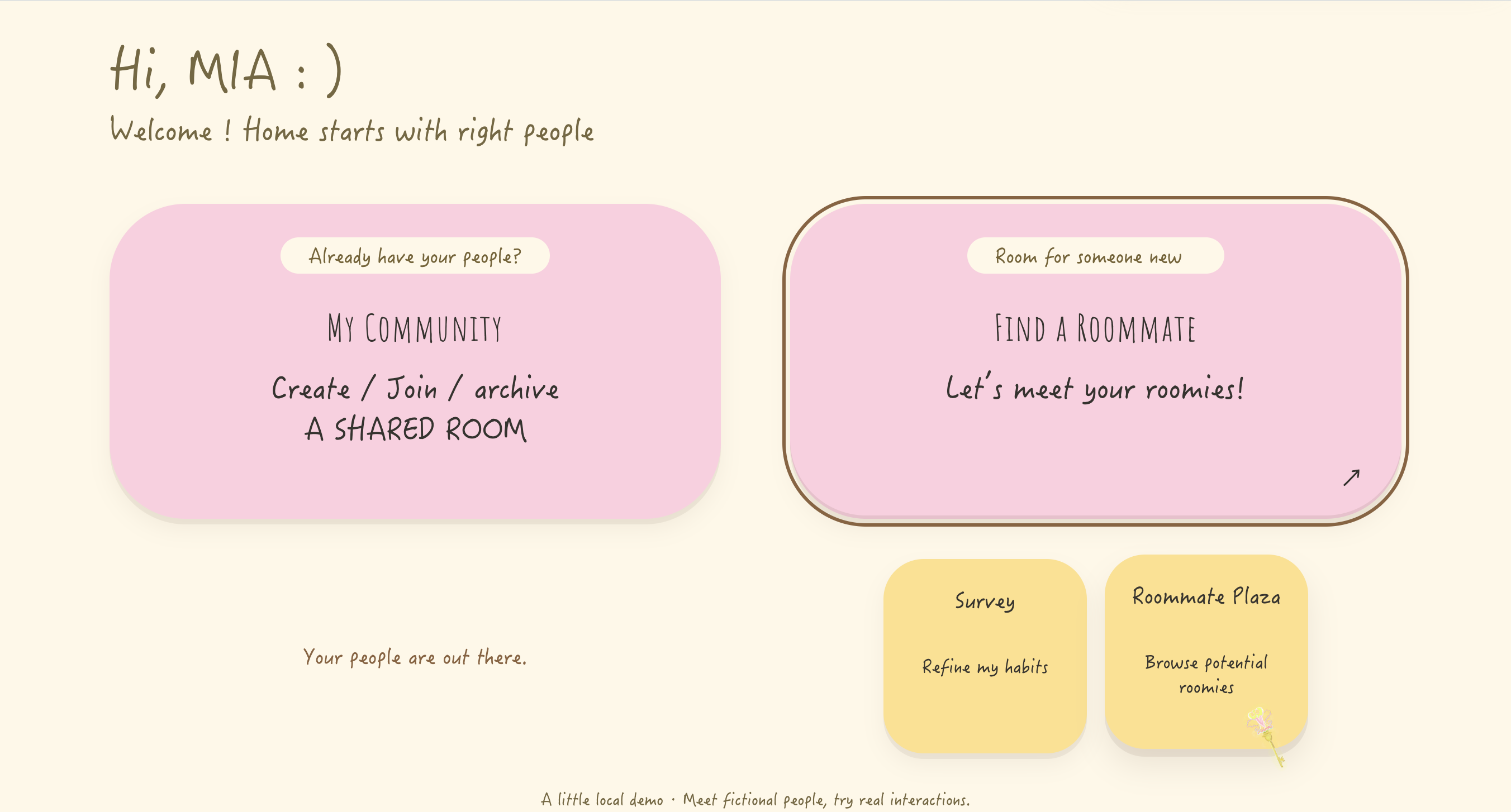
SUB NAVIGATION 2
-
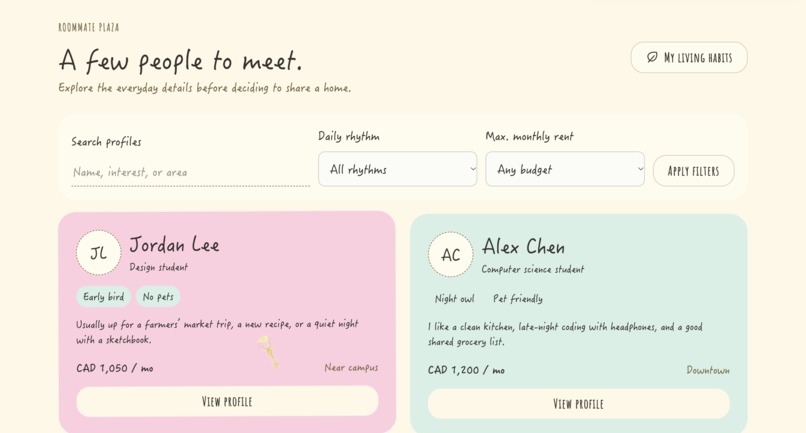
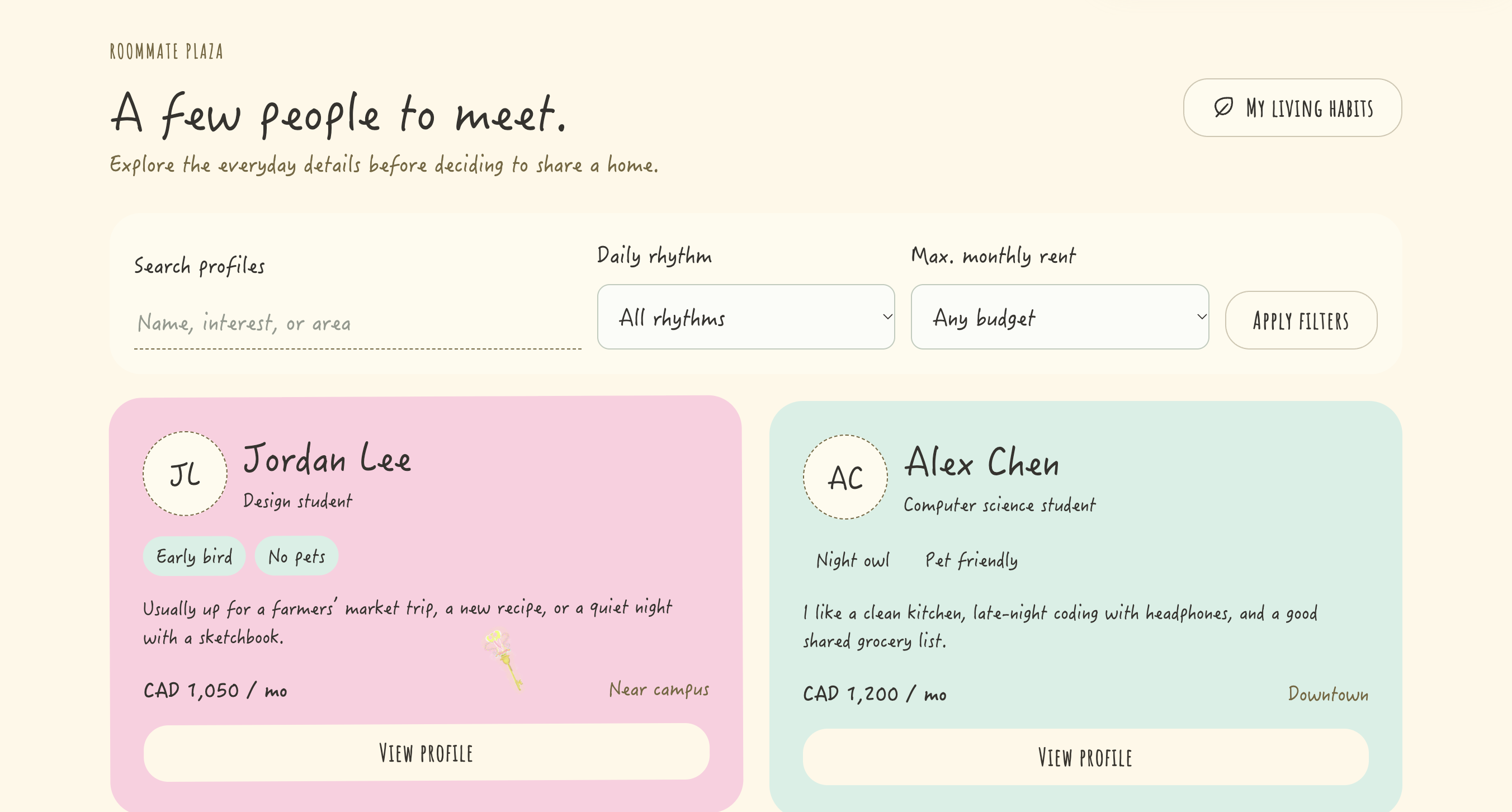
MEETING FIREND
-
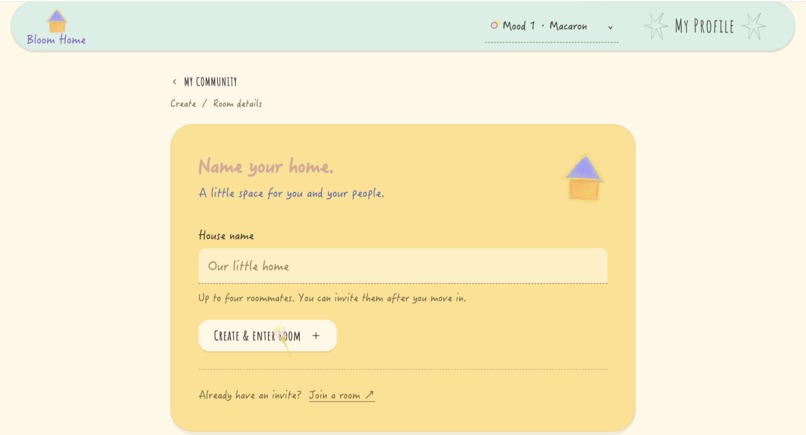
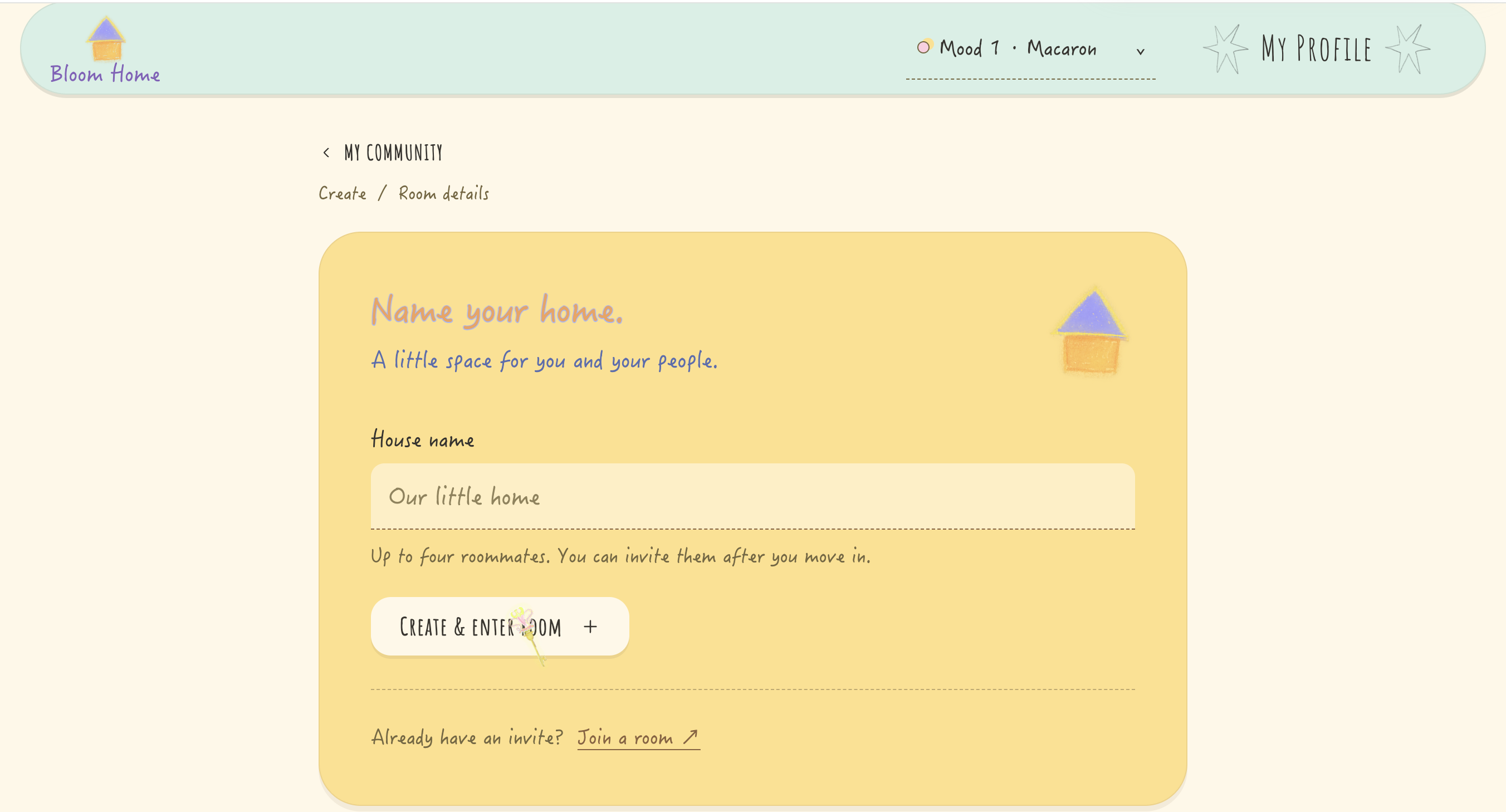
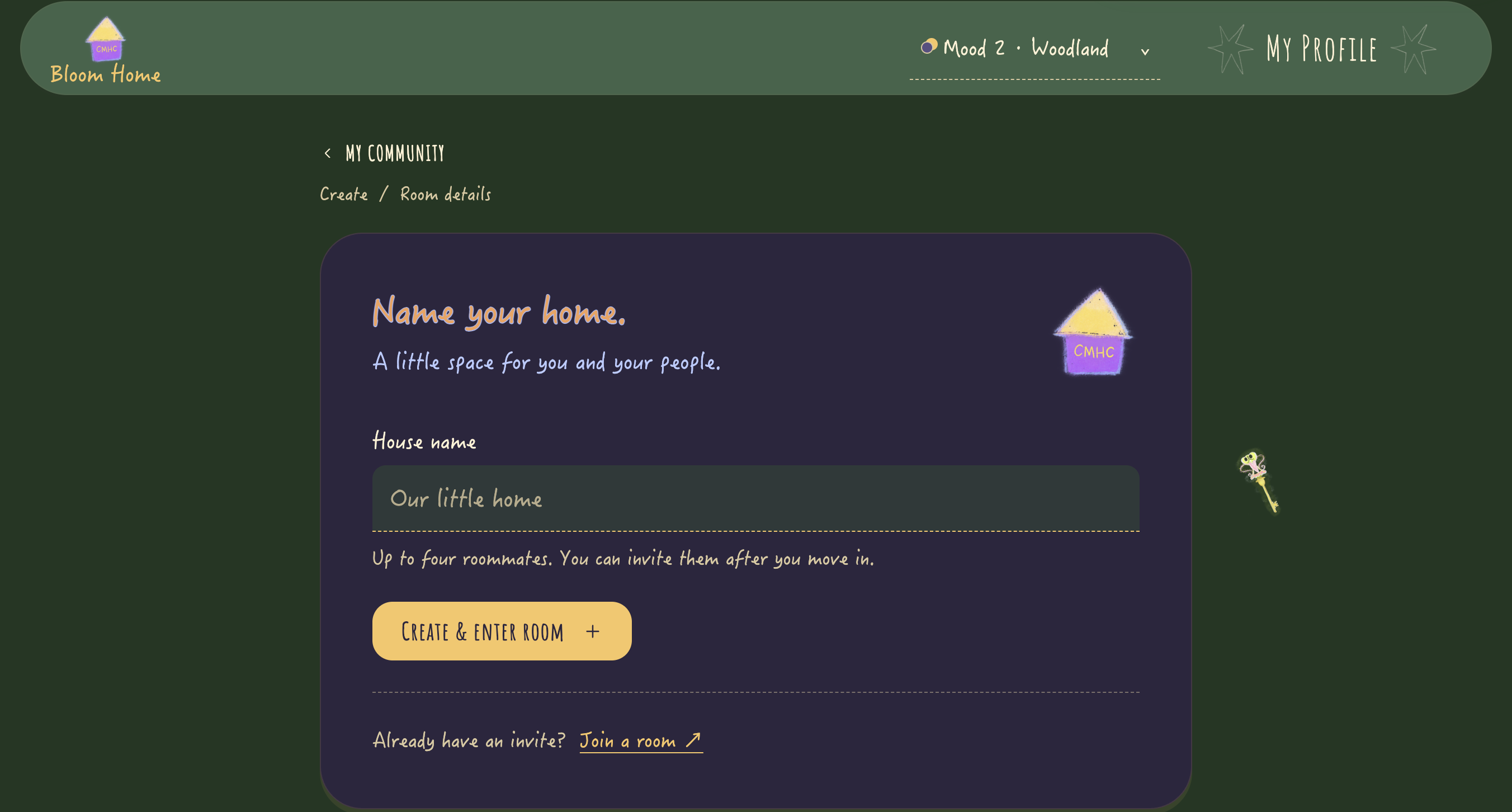
NAME NEW ROOM
-
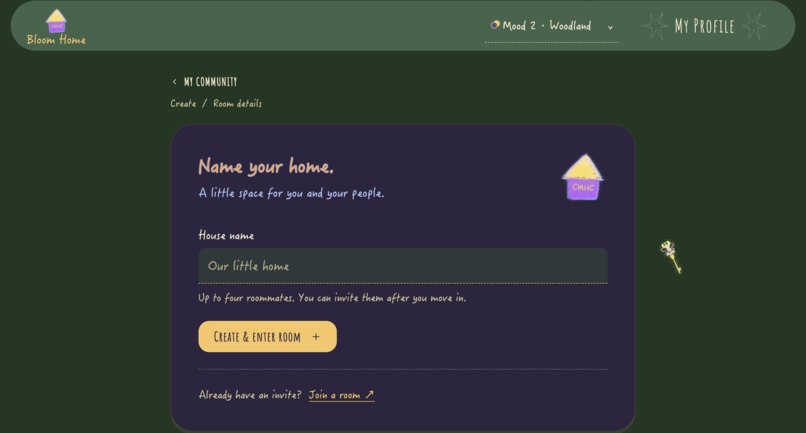
2ND MODE FOR NAME YOUR HOME
-
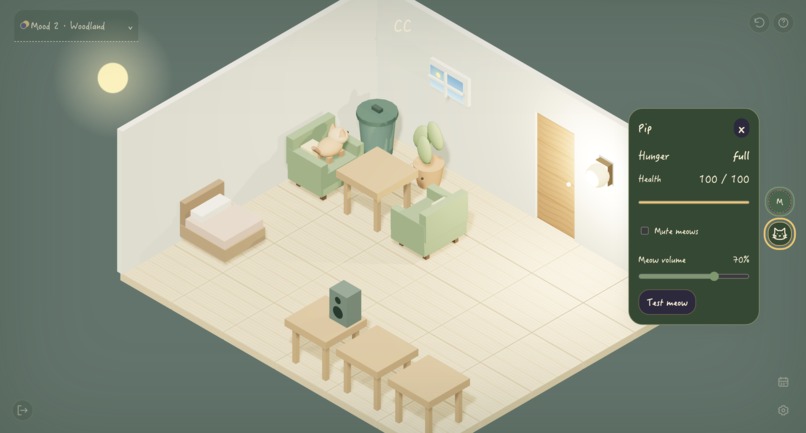
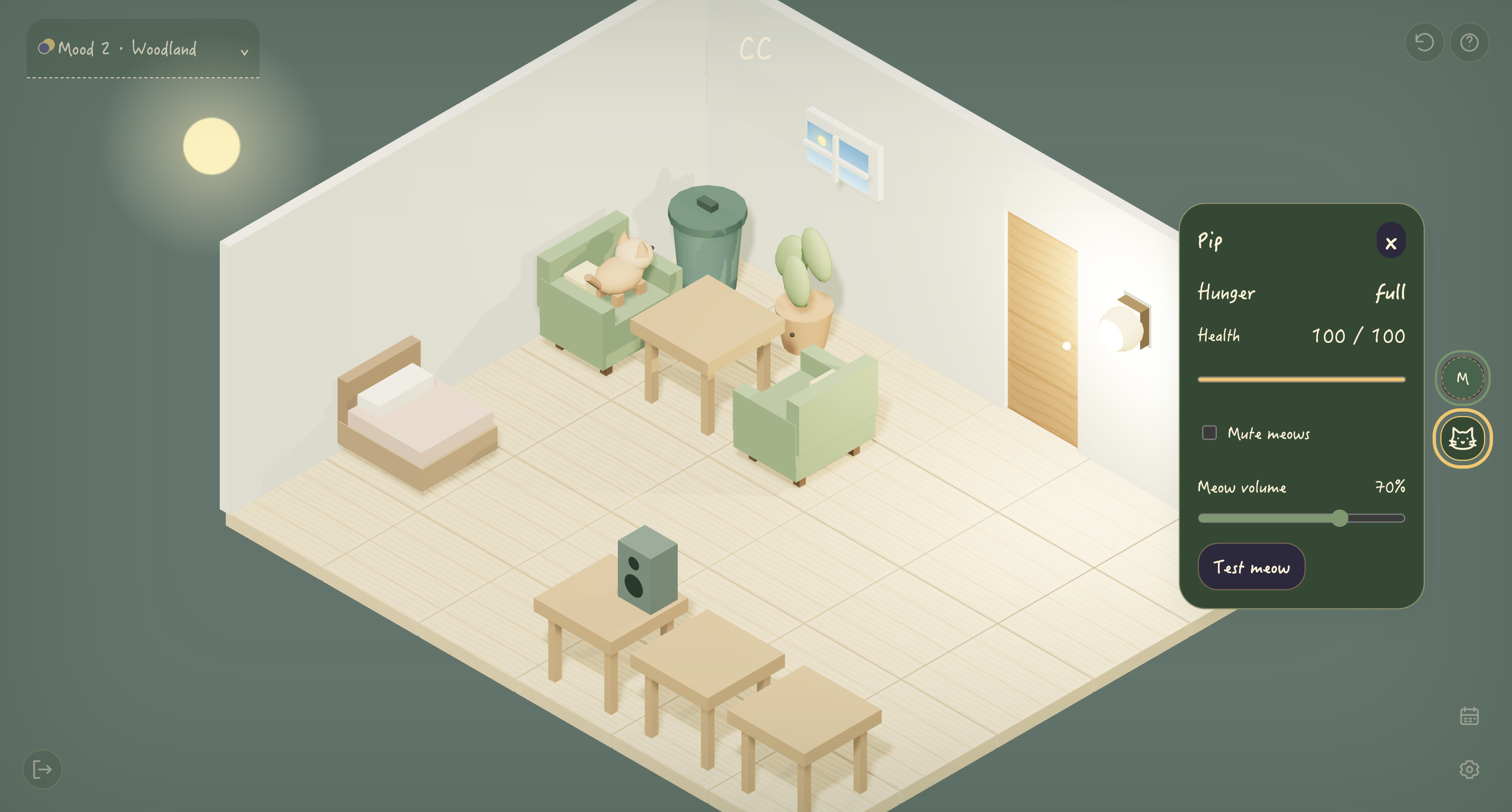
HEALTHY SITUATION FOR PET
-
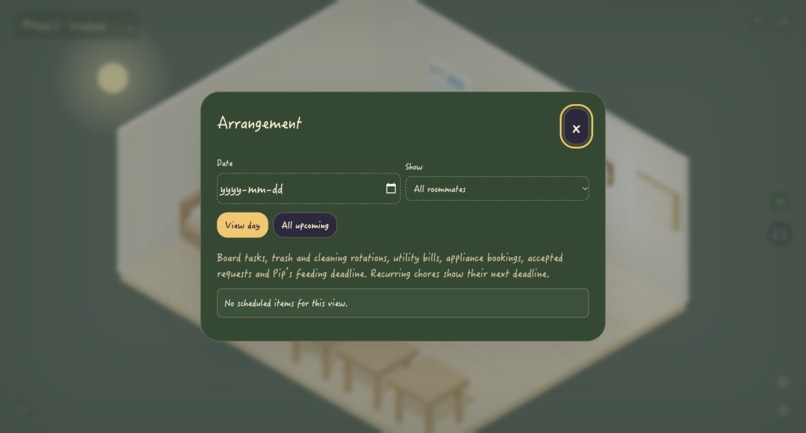
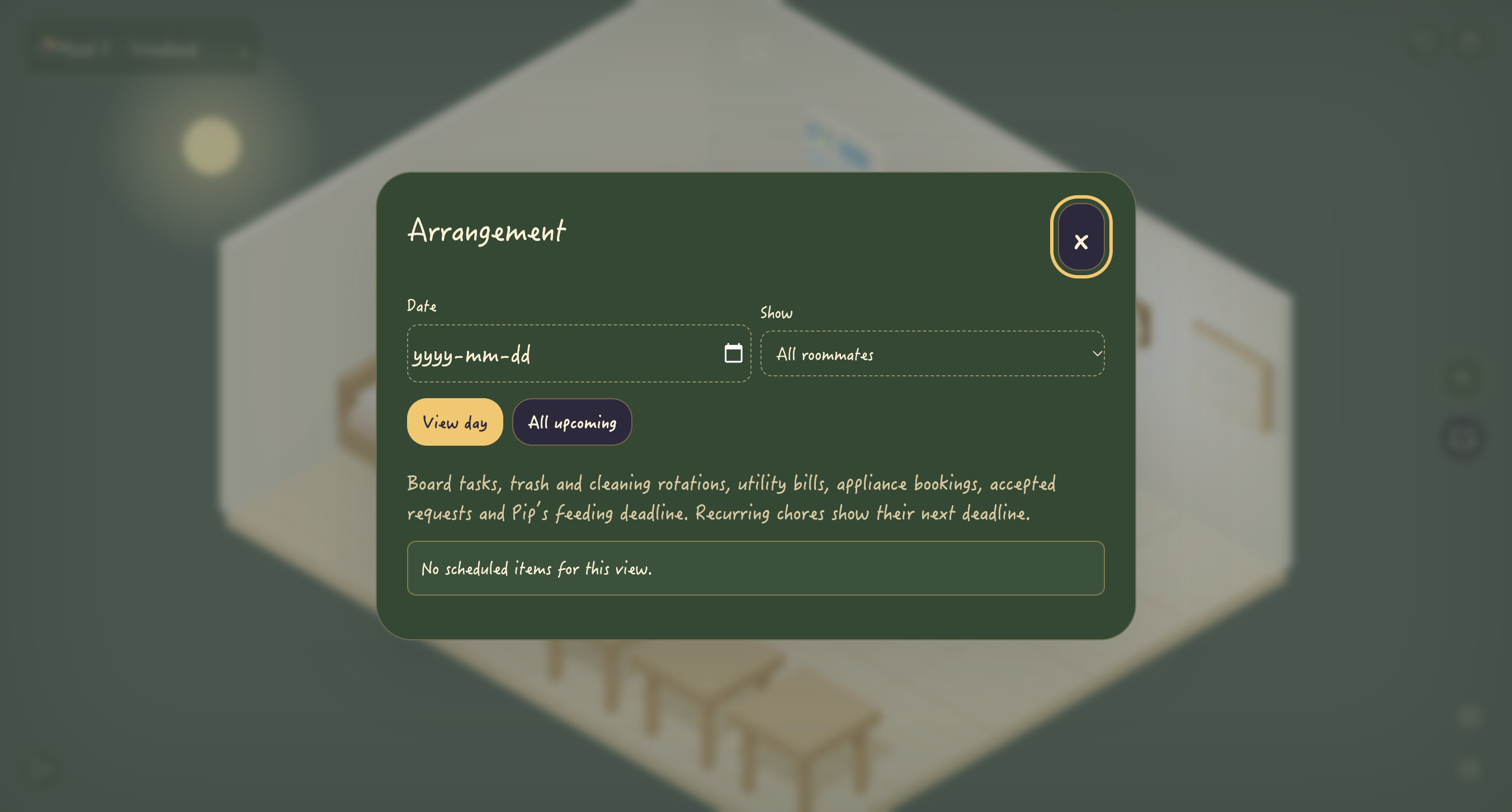
ARRANGEMENT LIST
-
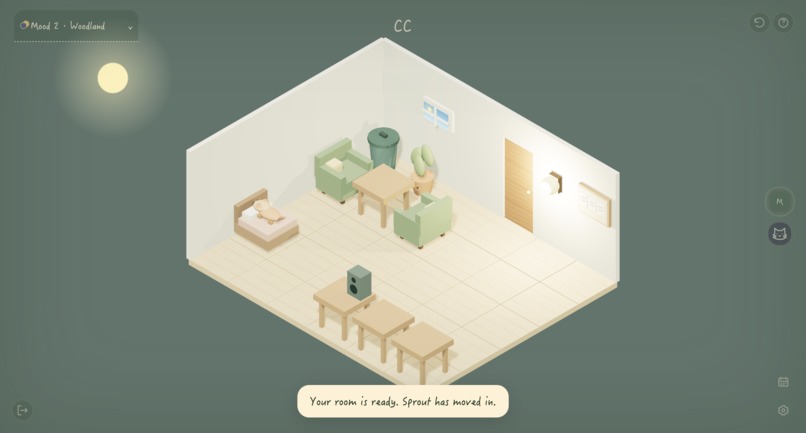
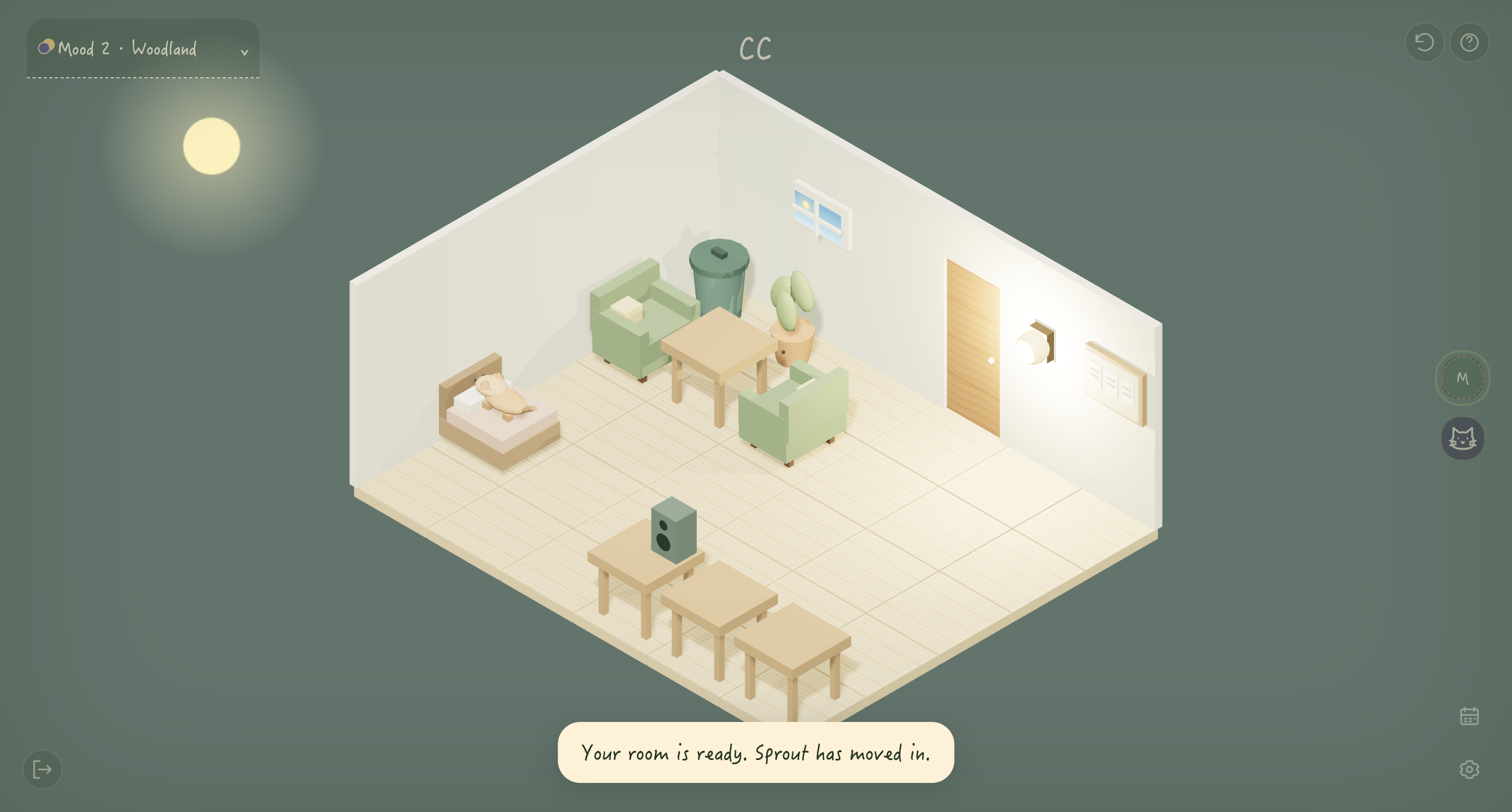
CUSTOMIZABLE "OUR ROOM" MAIN PAGE
-
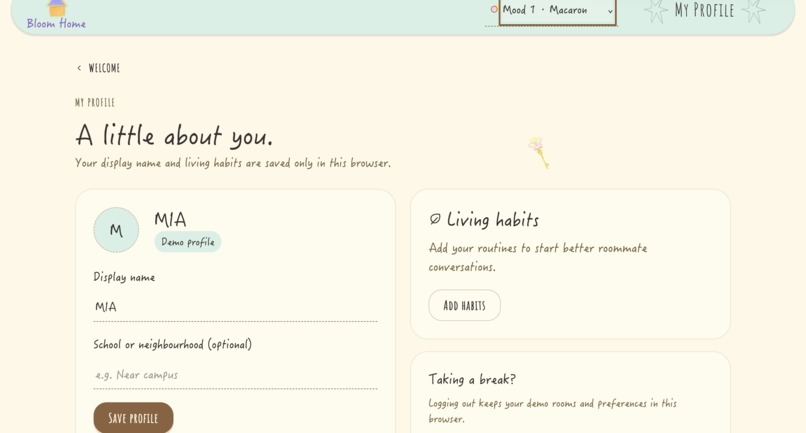
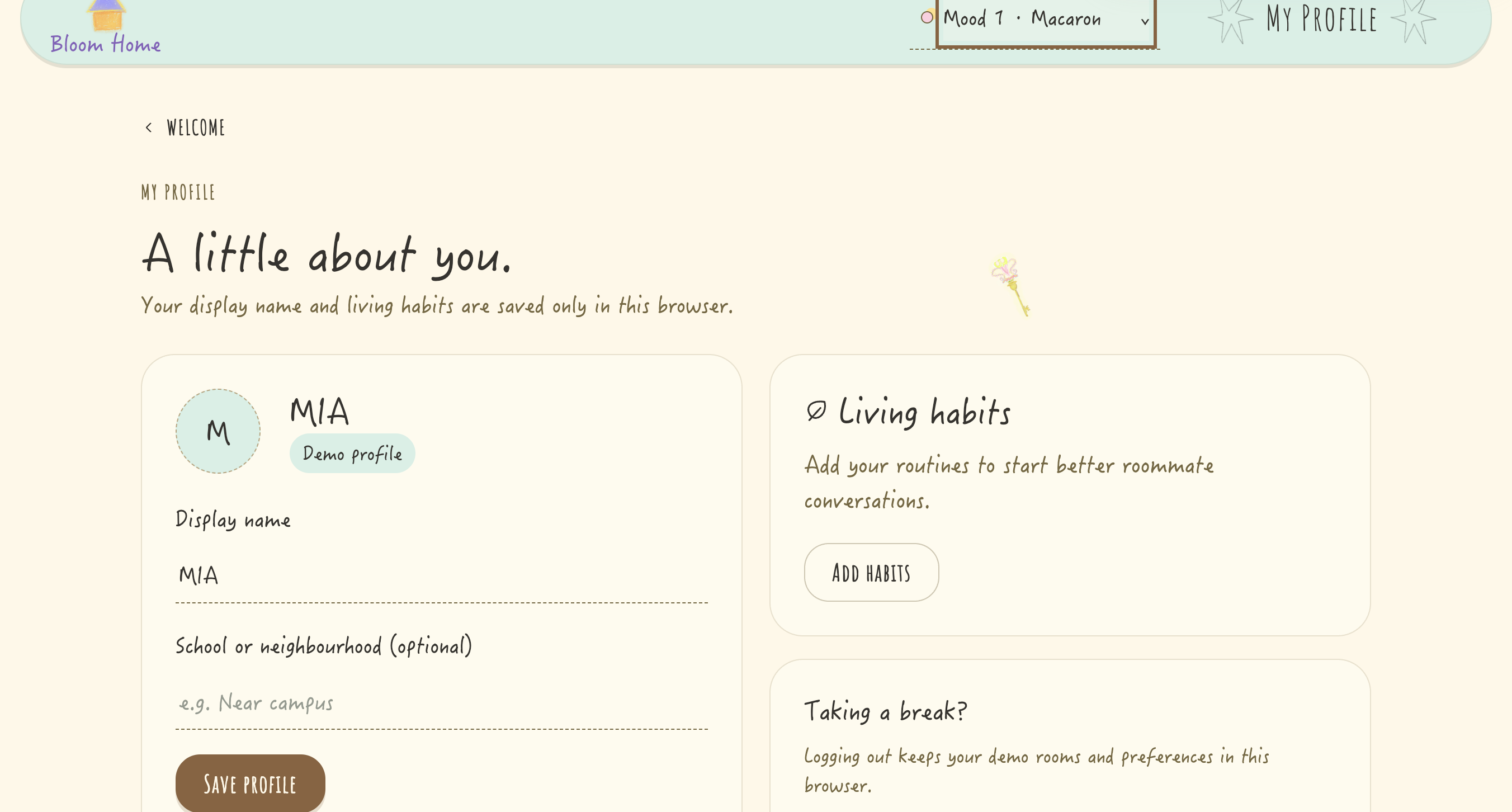
MY PROFILE
-
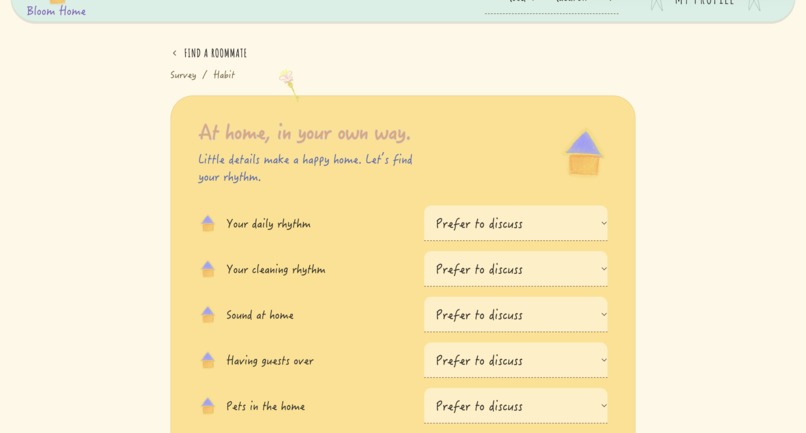
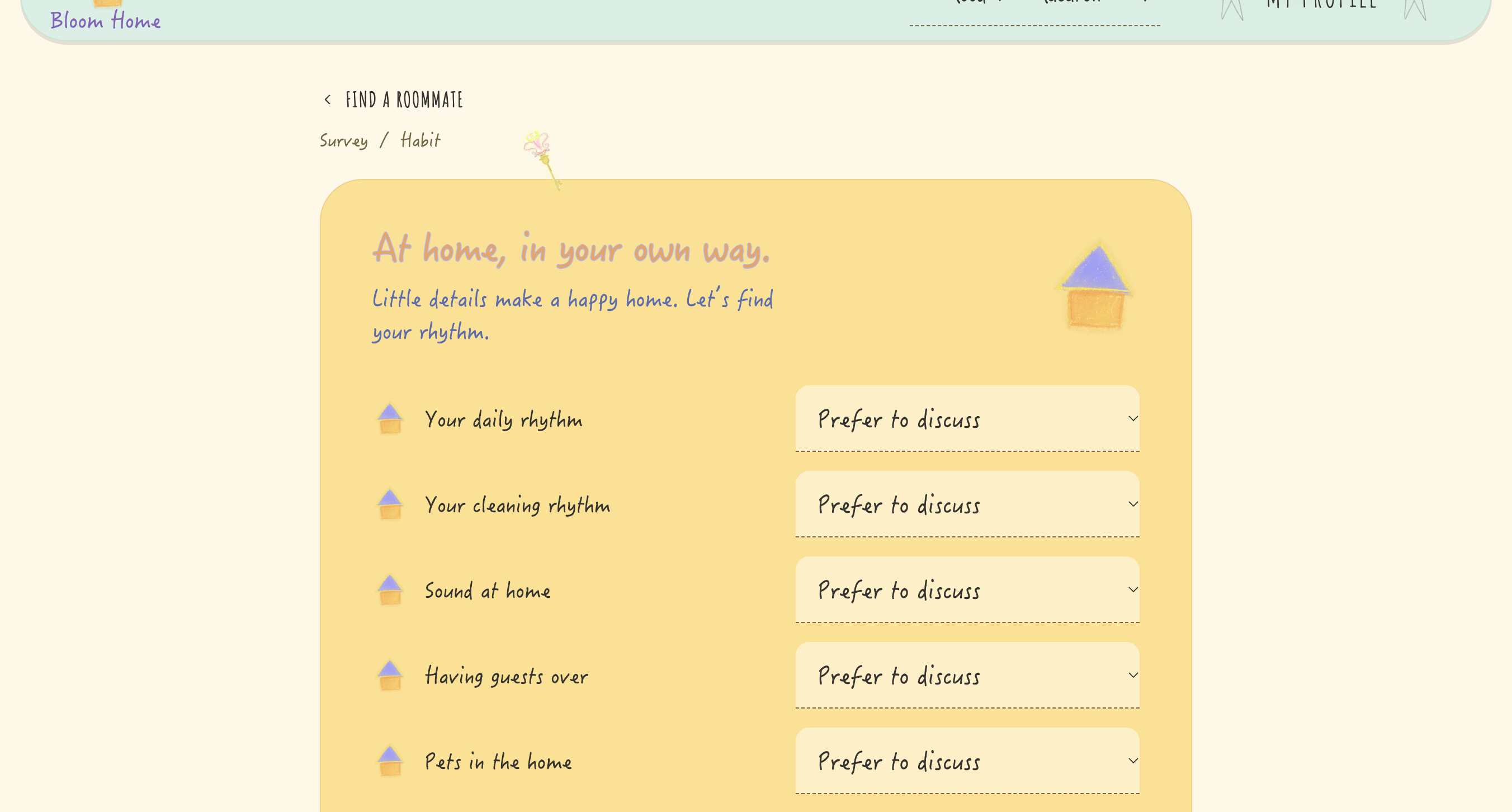
USER HABIT SURVEY
Inspiration
Bloom Home grew out of the challenges we encountered while renting and sharing a home. Finding a suitable roommate involves more than a similar budget—daily routines, cleanliness, noise, guests, and attitudes toward pets all affect how comfortably people live together. After moving in, unclear responsibilities and unevenly shared chores can lead to frustration and uncomfortable conversations.
We wanted to help roommates understand each other’s expectations earlier, divide responsibilities fairly, and make cooperation feel more natural. We also wanted to build a sense of connection. By bringing everyday tasks into a virtual home with a pet and plant to care for together, Bloom Home gives roommates a shared purpose and a space that feels like their own.
What it does
Bloom Home helps people find compatible roommates and build a shared routine after moving in. It brings roommate discovery, household coordination, and shared care into an interactive 3D home for two to four people.
Find compatible roommates. Users record their living habits, browse profiles, and compare routines, cleanliness, noise preferences, guest expectations, attitudes toward pets, and budget. They can create a home, join by invitation, or return to an existing household.
Share responsibilities clearly. Clickable furniture connects everyday objects to household actions. Roommates can set chore rotations, assign tasks and deadlines, and track responsibility for utility bills. Personal task cards show individual commitments, while the Arrangement view brings household schedules together.
Coordinate shared resources. Roommates can reserve the washer, dryer, and oven, with overlapping bookings prevented and queues available when appliances are occupied. The refrigerator tracks groceries and offers to create an assigned restocking task when an item runs out.
Build connection through shared care. Pip, the virtual cat, explores the home, rests on furniture, needs feeding, and reminds users about upcoming tasks. Completing responsibilities earns points for Sprout, the shared plant, while overdue tasks affect its health. Contribution histories make individual efforts visible, giving roommates a shared goal to care about.
Make the space feel personal. Users can arrange furniture, change materials, add photos, play music, adjust lighting, and import custom 3D objects. Homes can be saved, exported, and archived, creating a familiar space that reflects the people living together.
How we built it
Bloom Home was built with HTML, CSS, JavaScript, Three.js, Anime.js, and Figma. Three.js powers the interactive isometric home, while Anime.js supports interface transitions and Figma guided the UX wireflows. The prototype runs locally without installation or a build step. Its interface is separated from household data and interaction logic, enabling flexible iteration. A unified task system connects chores, bookings, bills, restocking, and roommate requests with personal reminders and shared plant rewards. Local storage saves household data, IndexedDB stores uploaded media, and JSON import/export supports portable configurations. User research informed the design by identifying household coordination needs, shared responsibility patterns, and preferences for clear reminders and visible progress.
Challenges we ran into
As Bloom Home evolved from a simple roommate-finding flow into an interactive 3D household, our biggest challenge was keeping the experience intuitive as its functionality expanded. Early versions focused on onboarding and roommate discovery; later versions connected clickable furniture, chore rotations, appliance reservations, bills, and shared pet care. We had to make these interactions discoverable while keeping controls and reminders from covering the house, especially on smaller screens. Connecting everything also introduced consistency challenges: tasks needed to appear for the correct roommate, reservations could not overlap, and rewards could not be counted twice after refreshing or editing. We refined the interface and separated household logic from visual design so both could evolve independently. Within the 24-hour hackathon, we also had to prioritize a working local prototype while clearly identifying simulated matching and communication features.
Accomplishments that we're proud of
We’re proud of expanding beyond the tools we already knew and learning to apply Three.js, a JavaScript library for 3D graphics, within a 24-hour hackathon. We translated our Figma wireframes into an interactive 3D home, connecting visual design with logical user flows and working household features. Bringing room customization, task management, and virtual companions into one prototype required us to learn quickly and adapt our designs as we built. Seeing those ideas work together was our biggest accomplishment.
What we learned
We learned that designing for shared living depends on cooperation from the earliest structural decisions to the final interaction details. Building the project together began with establishing a shared skeleton: defining the information architecture, organizing the page hierarchy, and agreeing on how users would move through the experience. This foundation helped us align our ideas before translating them into HTML and CSS, where consistent structure, reusable styles, and clear responsibilities made collaboration more efficient.
We also learned that building an app means shaping both its functions and the relationship users develop with it. Familiar spaces, a pet to care for, and small responses to everyday actions can give routine tasks emotional meaning. Designing Bloom Home taught us to consider how care, familiarity, and a sense of belonging can make users want to return.
What's next for Bloom Home
We want to develop Bloom Home into a standalone app with synchronized household data and a desktop companion. Pip would step outside the virtual room to become an interactive desktop pet, responding to users throughout the day and creating small moments of companionship. Floating task notifications would bring timely reminders into their everyday workflow, with adjustable timing and visibility. Our next phase also includes user interviews, persona research, and usability testing to understand both practical needs and emotional connections with the app, then refine the design through repeated iterations. Beyond shared housing, we want to explore workplace and educational settings, adapting shared responsibilities, cooperative care, and progress tracking for project teams, classrooms, and study groups.
Built With
- css3
- figma
- html5
- javascript
- openai
- three.js

Log in or sign up for Devpost to join the conversation.