-
-
-
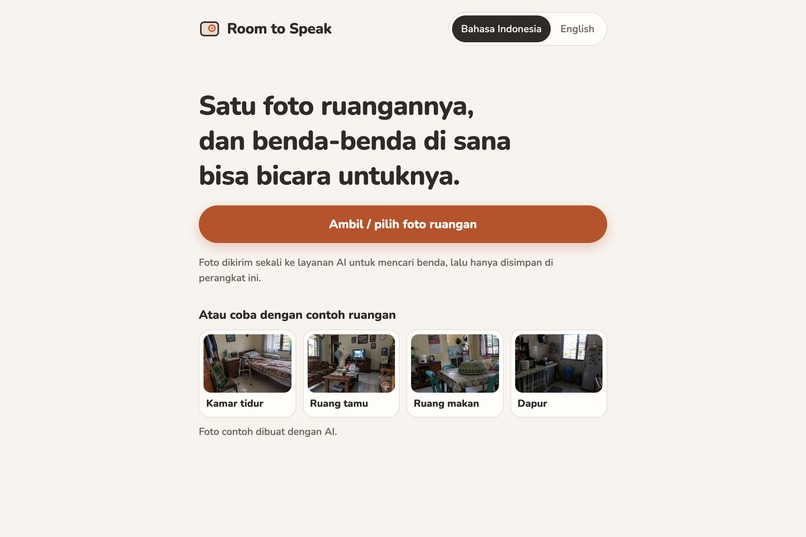
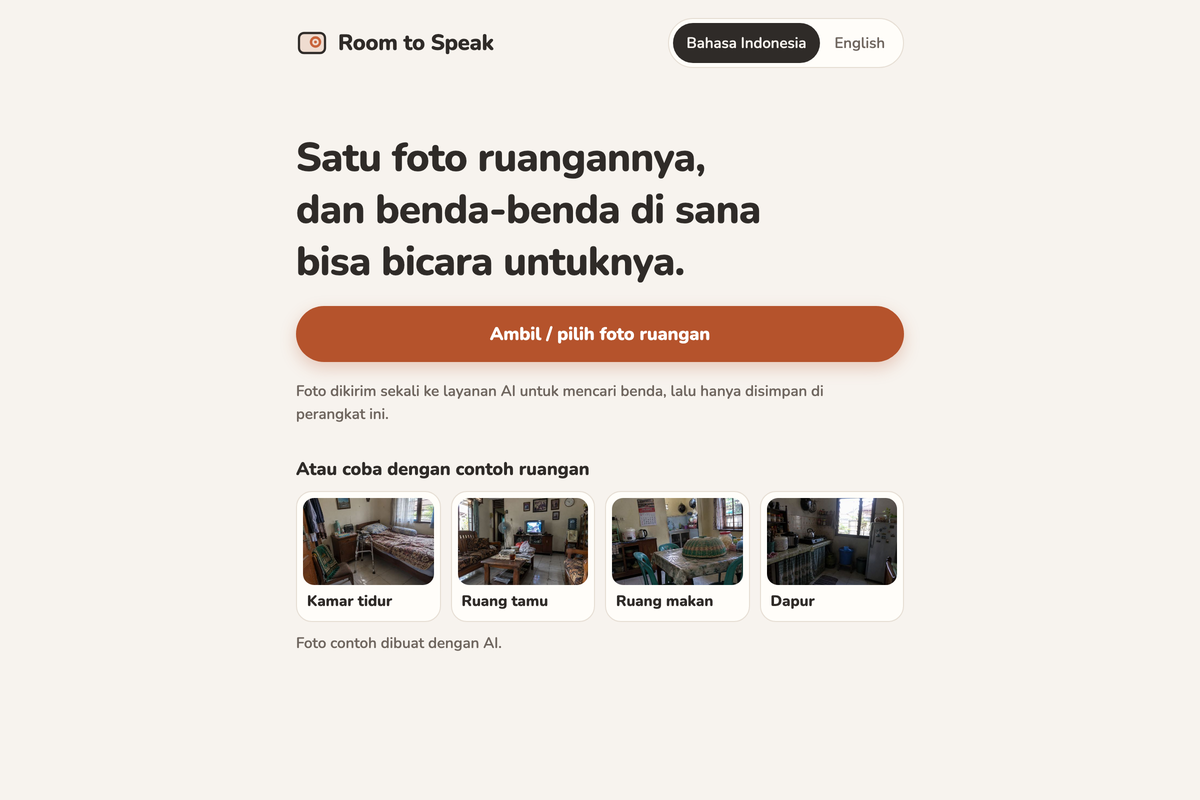
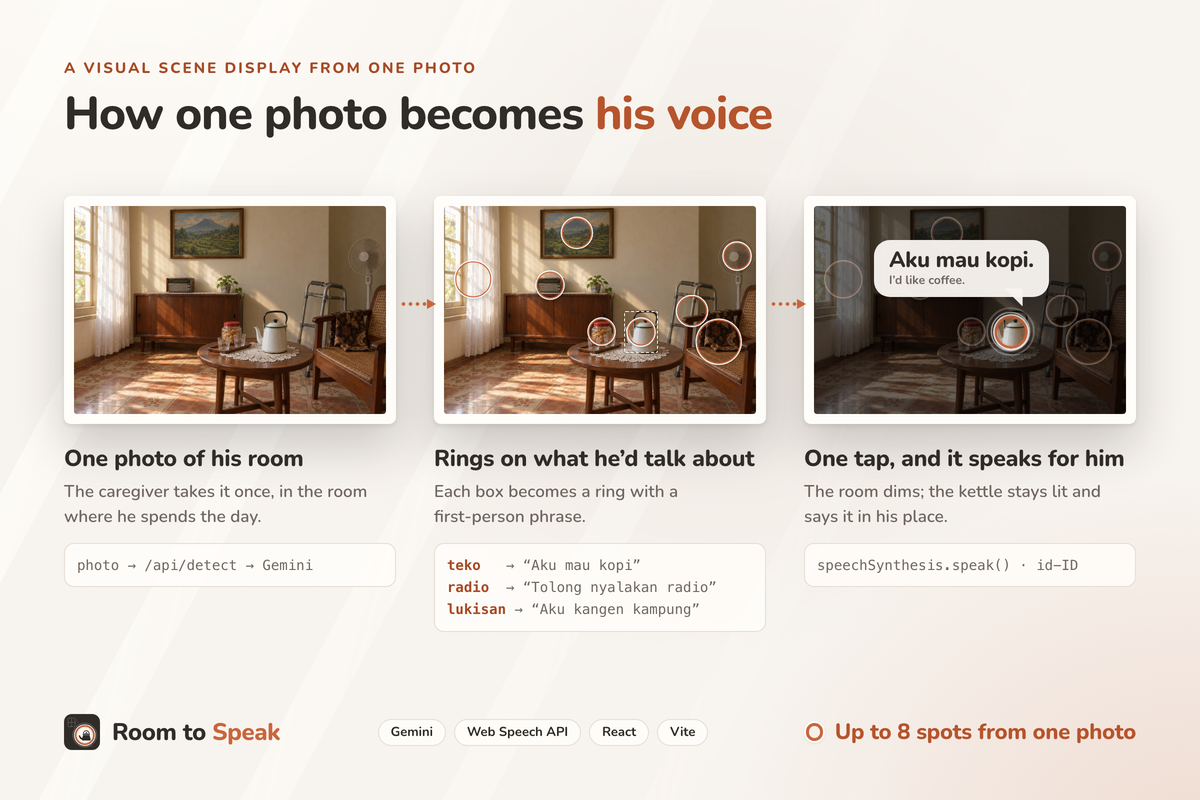
Take one photo of his room, or try an example room.
-
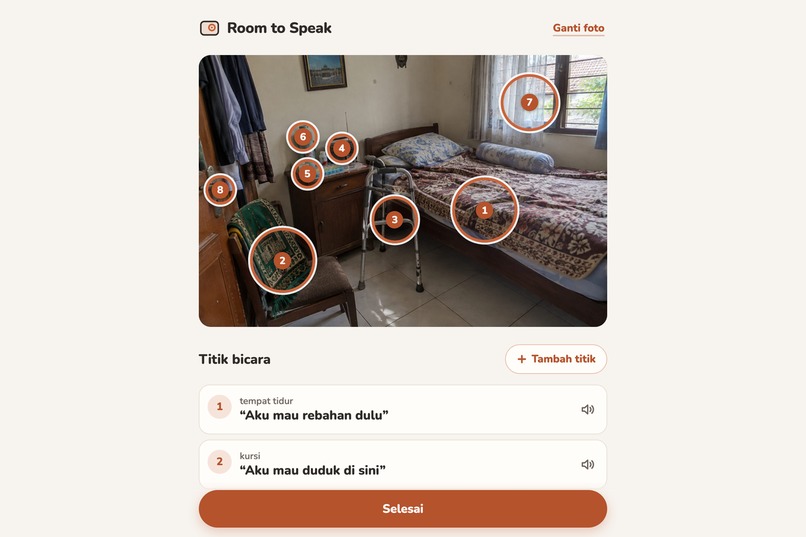
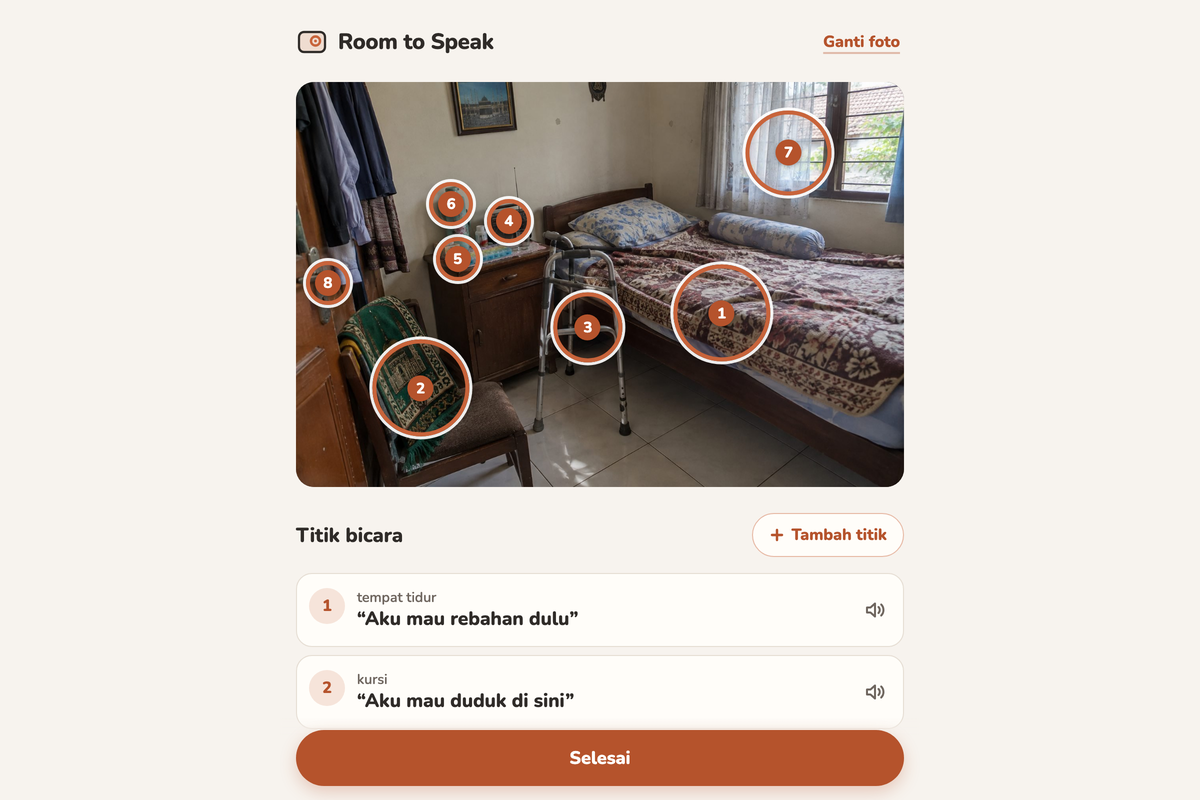
AI rings the things he'd want to say, each with a phrase.
-
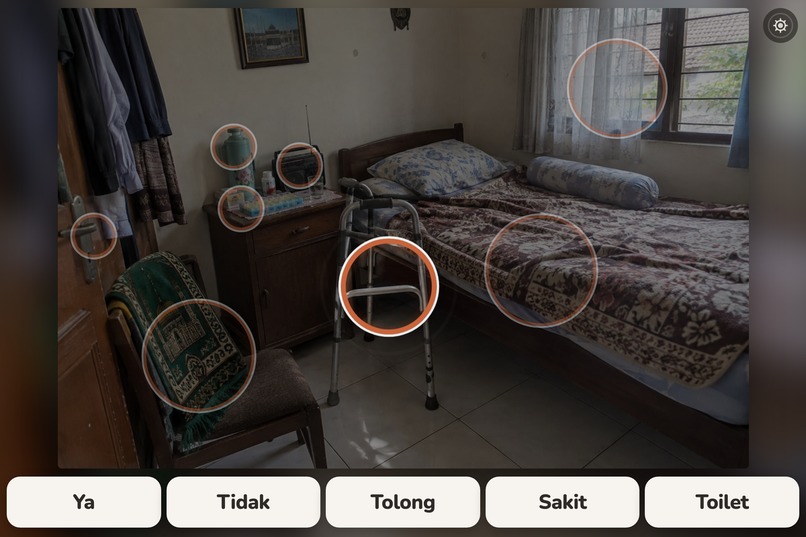
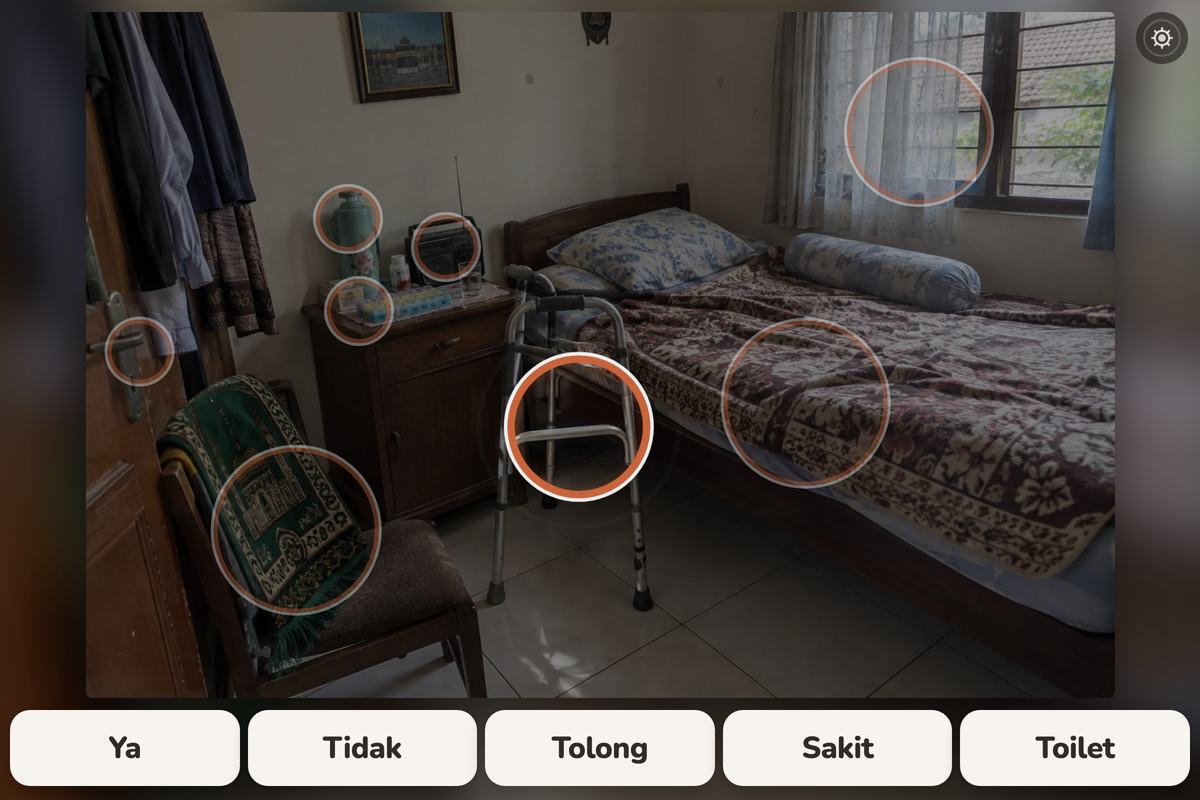
He taps the walker. The room dims and the device speaks for him.
-
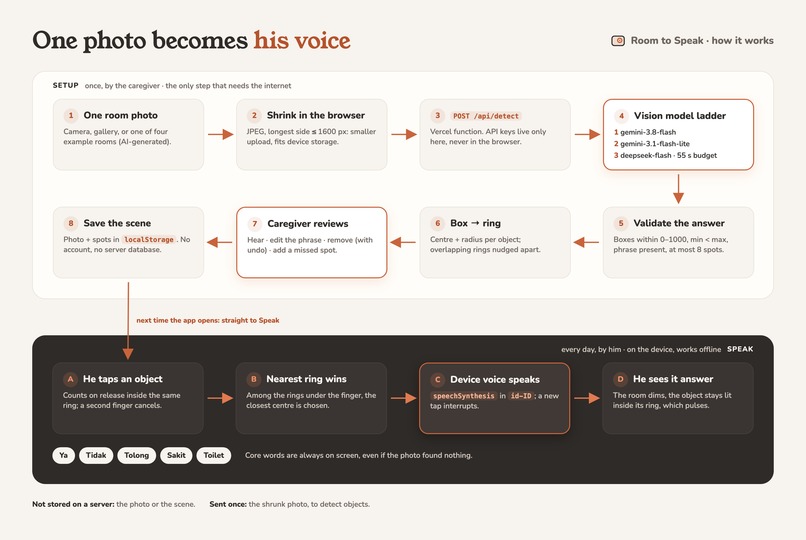
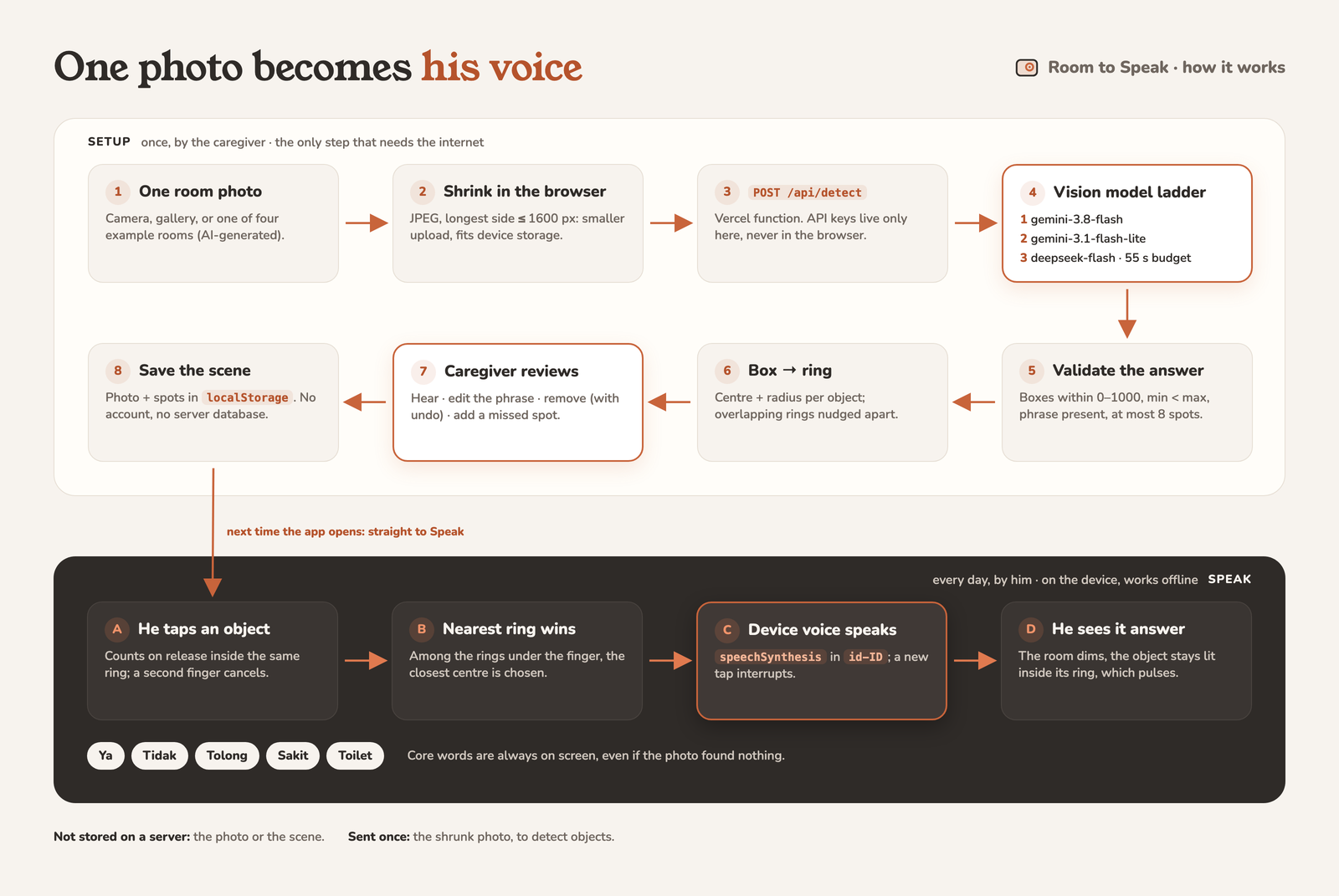
Setup needs the internet once. Everything else runs on the device.
-
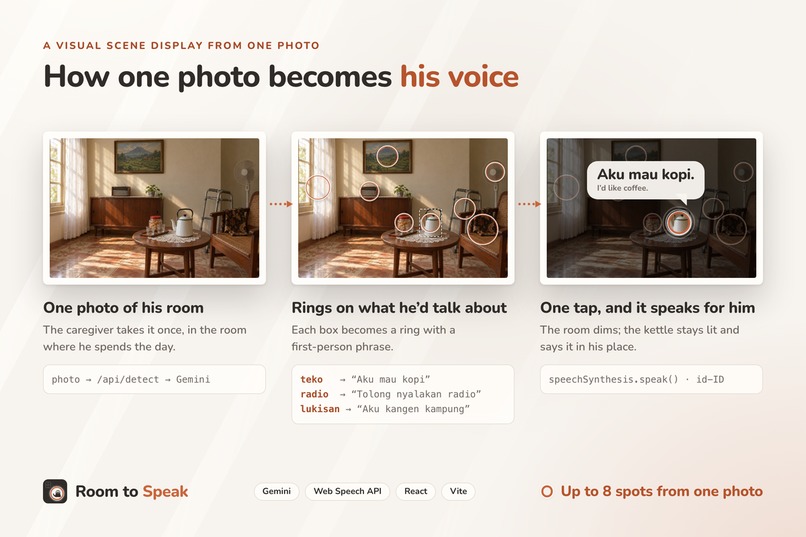
One photo, rings, one tap.
Inspiration
After a stroke, many people with aphasia understand everything but can't find the words. Hospital picture cards (EAT, DRINK, TOILET) look nothing like their life, so they ignore them. A board made from their own room works better, but a therapist has to build it by hand. (Add your own reason here, one line.)
What it does
- The caregiver takes one photo of his room.
- AI puts rings on the things he'd want to talk about, each with a short phrase like "Aku mau kopi" (I'd like coffee).
- The caregiver can hear, edit, remove or add spots.
- He taps an object, and the device speaks for him.
- Yes / No / Help / Pain / Toilet are always on screen.
- Everything stays on the device. No account.
- No photo? Tap one of four example rooms.
How we built it
- Planned with the Devpost Learn Skill Pack: scope → PRD → spec → build checklist.
- React + Vite + TypeScript.
- One Vercel function finds the objects: Gemini first, DeepSeek as backup.
- The phone's own voice speaks the phrases.
Challenges we ran into
- Gemini was sometimes busy or slow, so I added a backup chain to DeepSeek.
- Rings overlapped on small screens, so they get nudged apart.
- A resting hand could trigger speech, so a tap only counts when the finger lifts.
Accomplishments that we're proud of
- It works end to end, live, in Indonesian and English.
- Anyone can try it in seconds with the example rooms.
- Big targets, high contrast, keyboard support.
What we learned
- Planning first made the build fast and calm.
- Testing against the real AI caught bugs that mock tests missed.
What's next for Room of Speak
- A recorded family voice.
- More rooms.
- A tablet app for the bedside.
- Testing with real families and speech therapists.
Built With
- deepseek
- gemini
- playwright
- react
- typescript
- vercel
- vite
- vitest
- web-speech-api

Log in or sign up for Devpost to join the conversation.