Inspiration
A lot of important life decisions, such as budgeting, managing stress, and building a career, are critical, but often boring or overwhelming to engage with. I wanted to explore how these systems could be made more interactive and enjoyable, especially for students transitioning into life after graduation. This project was also inspired by games such as BitLife, but I wanted to go beyond simple text choices and create something more interactive, skill-based, and immersive.
What it does
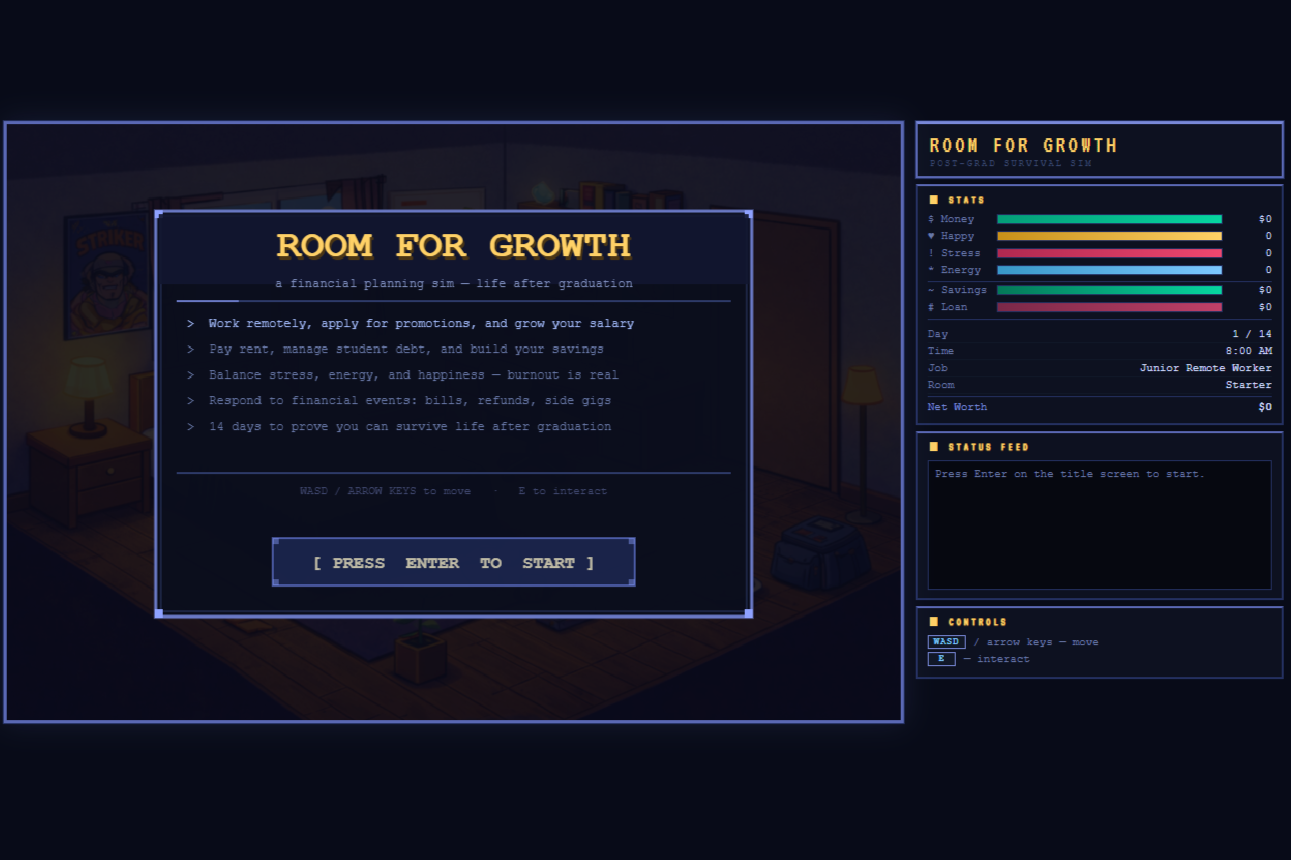
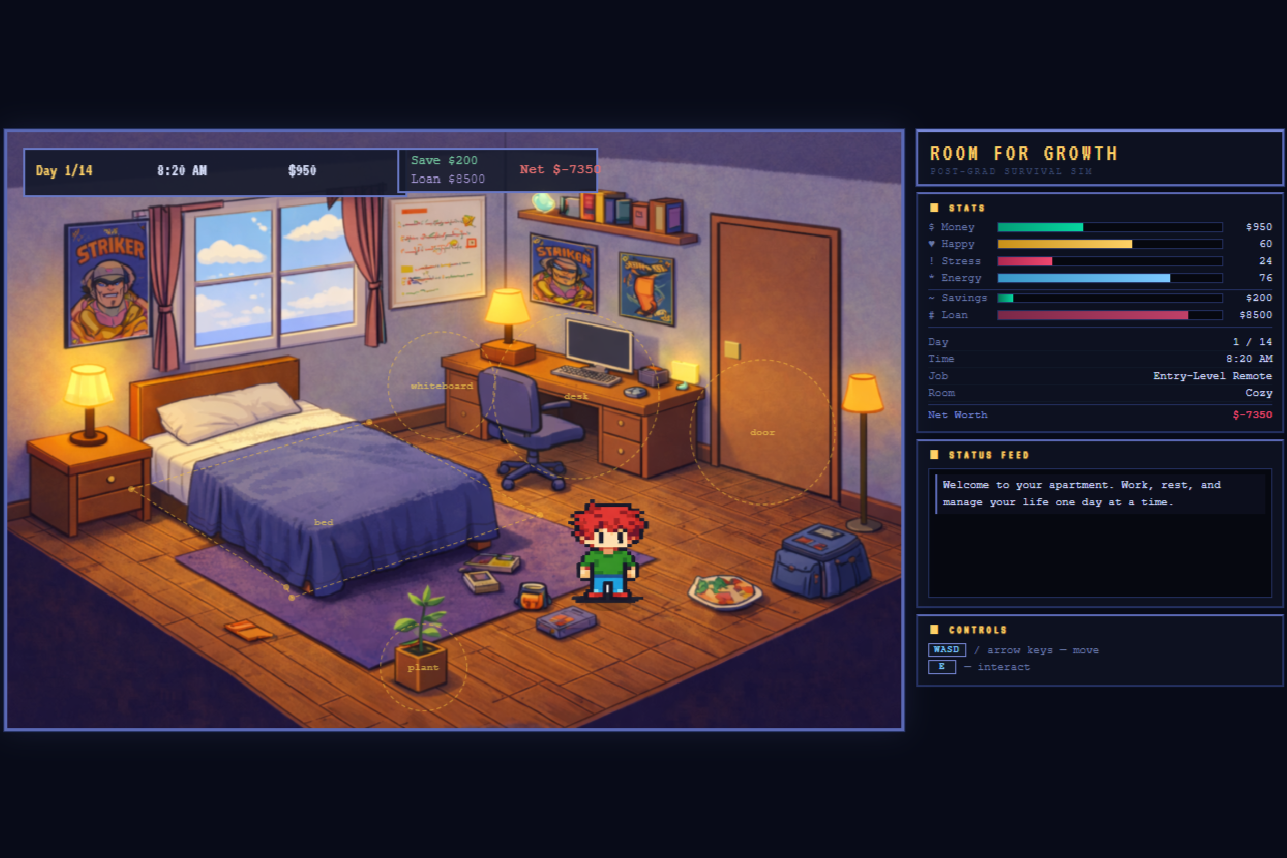
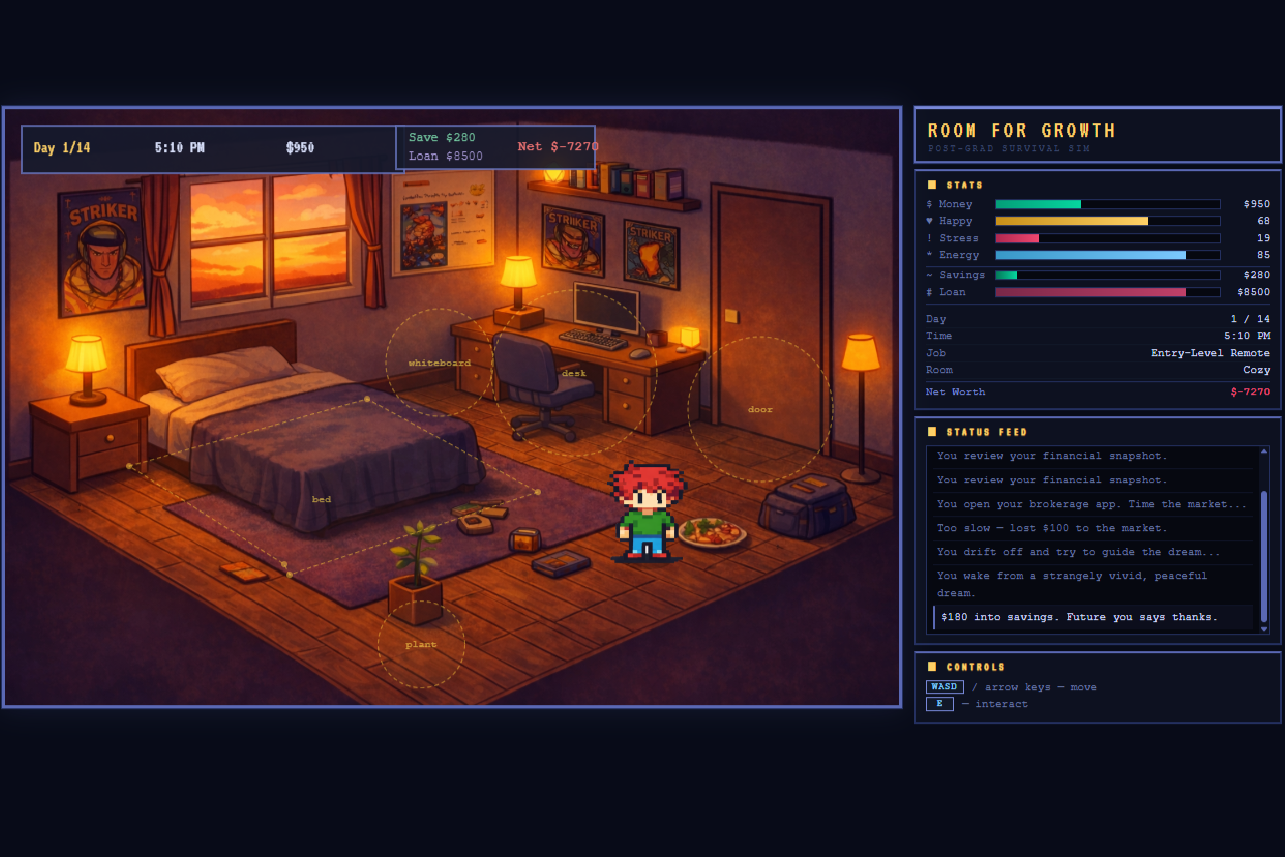
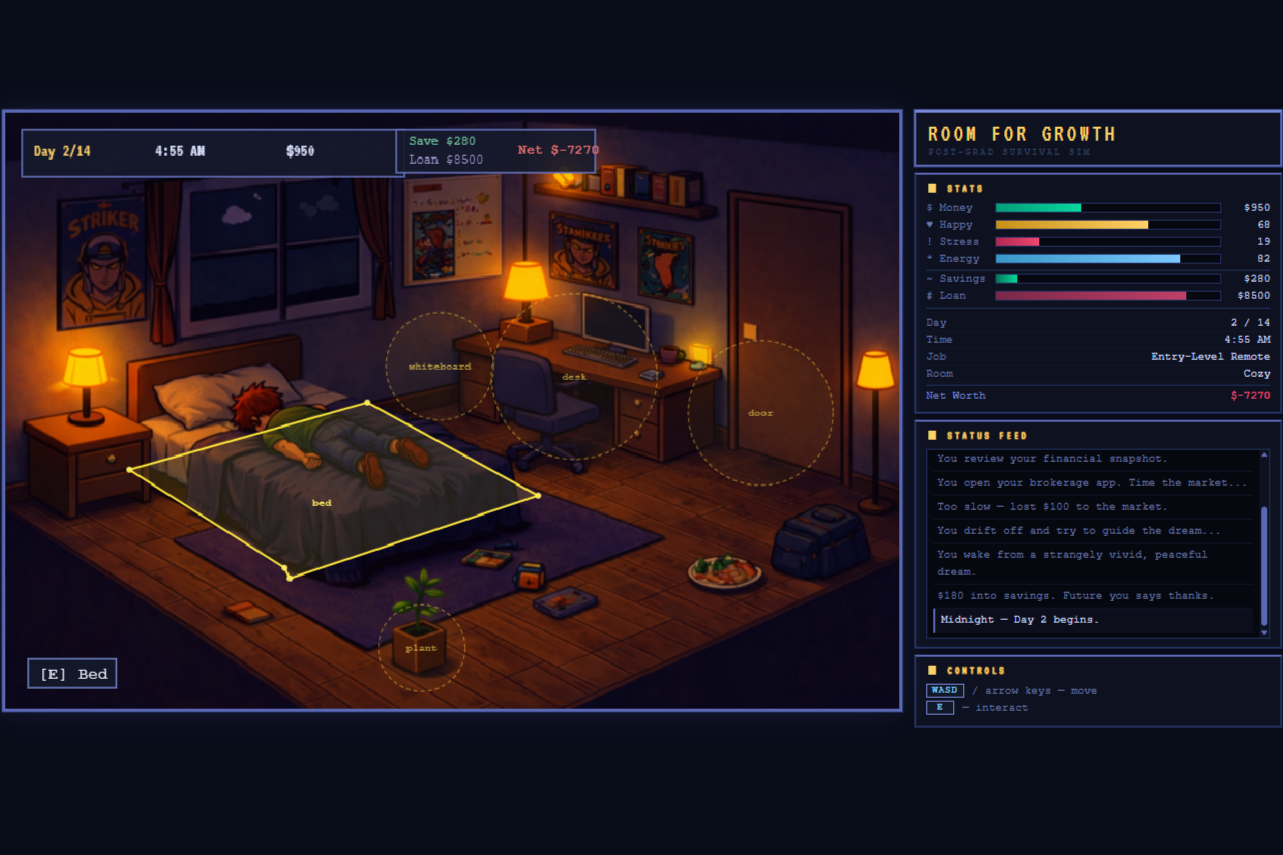
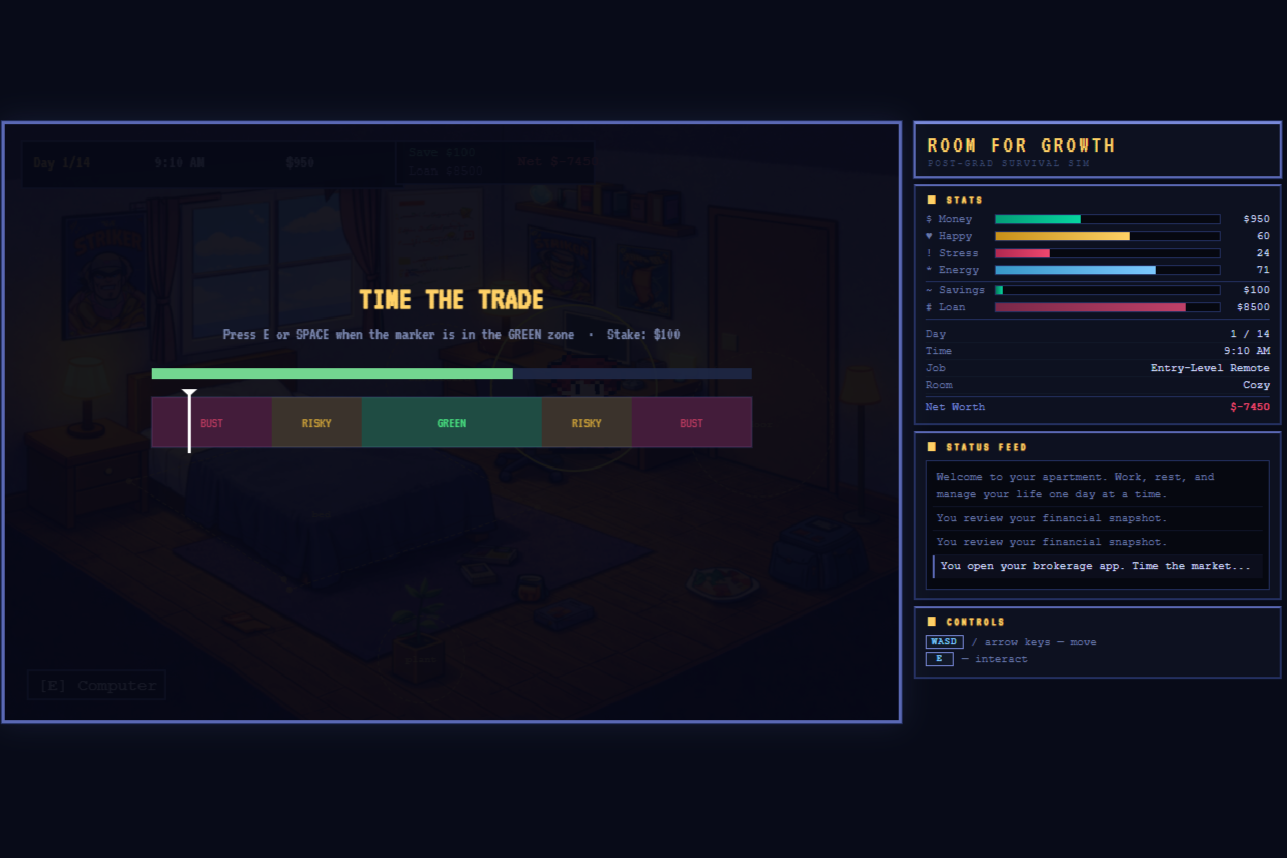
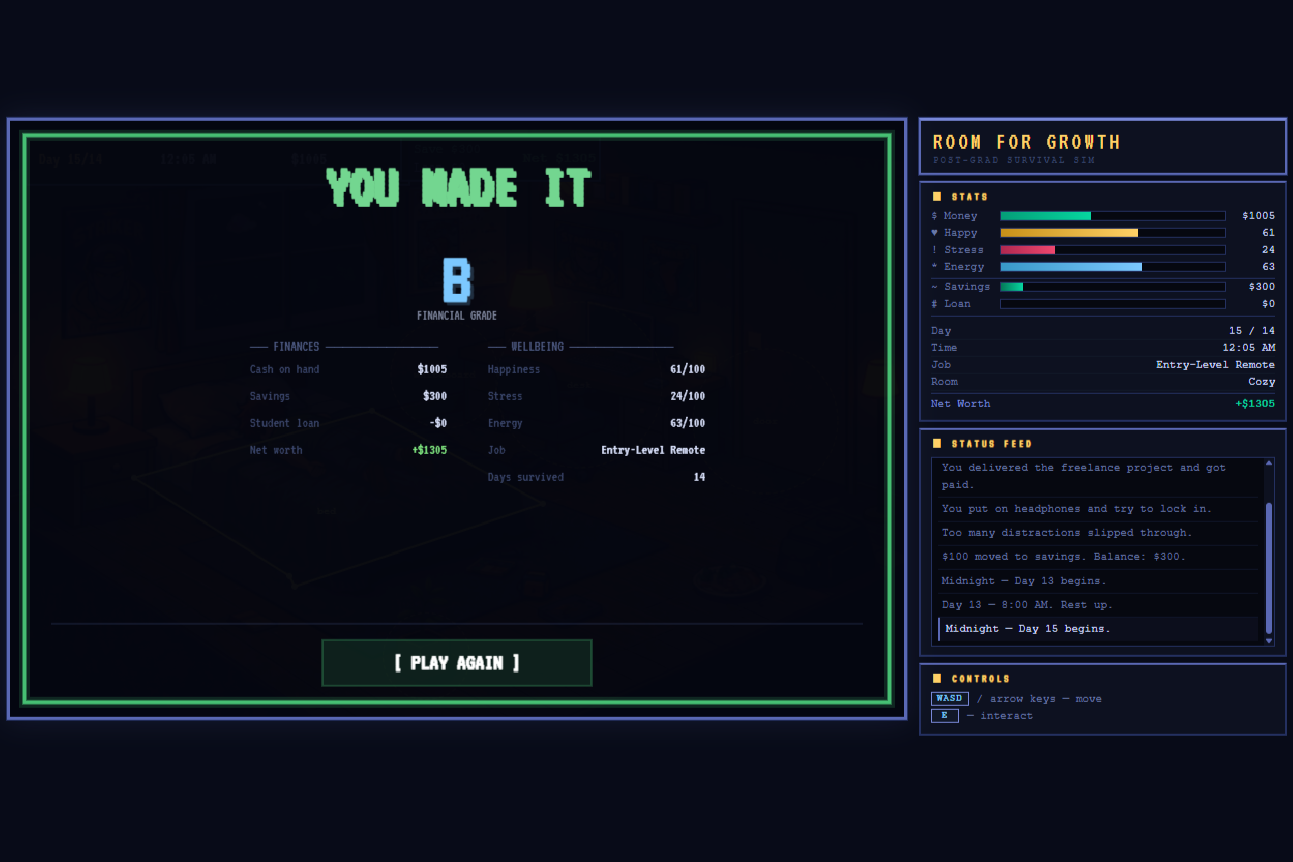
Players must live through a 14-day period where they must balance money, happiness, energy, and stress, trying their best to manage each one to prevent spiraling out. The player moves around their room, interacting with objects to trigger decisions or minigames such as staying focused at work, guiding dreams while sleeping, making smart grocery decisions under pressure, avoiding negative effects of mindless scrolling, applying for better jobs through decision challenges, and socializing through time/rhythm-based interactions. Each action affects both short-term survival and long-term outcomes, including savings, debt, and overall well-being.
How we built it
This game was built with Vanilla JavaScript for all game logic and systems, HTML Canvas for rendering the game world and minigames, and CSS for UI styling and layout. The architecture is modular: game.js handles core systems, room.js defines the environment and movement/collision, and each minigame is implemented in its own file within the minigames folder.
Challenges we ran into
As the game grew and more minigames were added, game.js began expanding quickly. I solved this by moving new features into the modular files (hence, the birth of the minigames folder). Another challenge I faced was making the gameplay feel engaging as opposed to a simple simulator (which is how it felt towards the beginning). Adding minigames made the experience much more interactive. UI and alignment issues kept arising, but I solved this with careful control of text alignment and drawing state. Balancing stats and progression was also not easy, but with time and effort put in, I made the game feel fair but still challenging.
Accomplishments that we're proud of
What we learned
How to structure a game loop and state system from scratch, managing complexity in a growing codebase, designing modular systems (especially for minigames), creating engaging gameplay from simple mechanics, and balancing realism with fun in simulation design.
What's next for Room for Growth
More diverse minigames, expanded environments beyond just a single room, better progression systems and long-term strategy, sound effects and animations.
Built With
- css
- html
- html5
- javascript
- vs-code


Log in or sign up for Devpost to join the conversation.