ROOH – A Personalized Study & Emotional Support Companion for Medical Students
Inspiration
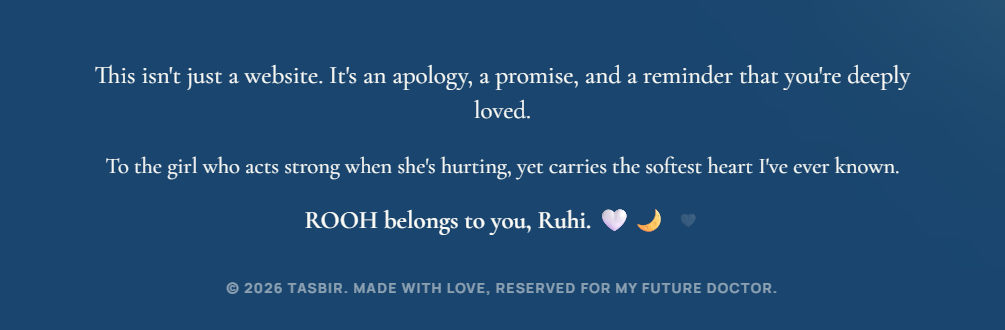
ROOH was inspired by someone very close to me: my partner, Ruhi, a medical student.
As I watched her navigate long study sessions, demanding coursework, exam pressure, and emotional exhaustion, I realized that most existing tools only address part of the problem. Productivity apps help students manage tasks, while wellness apps focus on mental health. Very few solutions recognize that academic performance and emotional well-being are deeply connected.
I wanted to build something specifically for Ruhi—something that could support her not only as a student, but also as a person. A place where she could stay organized, track her progress, find encouragement during difficult days, and feel supported throughout her journey in medical school.
That idea became ROOH.
What It Does
ROOH is a personalized companion designed to help students balance productivity and well-being.
Key features include:
- 📚 Study Planner for organizing subjects, tasks, and goals
- ⏳ Pomodoro Focus Sessions for structured study time
- 😊 Mood Tracker for monitoring emotional well-being
- 📅 Exam Countdown to track important academic milestones
- 💌 Emergency Comfort Button for difficult moments
- 📝 Memory Wall for preserving achievements, memories, and encouraging messages
- 🔔 Smart Reminders and Notifications
- 📊 Progress Tracking to celebrate consistency and growth
Rather than encouraging students to simply work harder, ROOH helps them work sustainably while taking care of their mental and emotional health.
How I Built It
I built ROOH as a full-stack web application using modern web technologies.
Frontend
- Next.js
- React
- TypeScript
- HTML5
- CSS
- Framer Motion
- Lucide React
The user interface was designed to feel calm, welcoming, and supportive, especially during stressful study periods.
Backend & Database
- Supabase
- PostgreSQL
- Supabase Authentication
- Supabase Realtime
These technologies handle user accounts, secure data storage, authentication, and real-time functionality.
Browser Technologies
To create a more engaging experience, I integrated:
- Web Notifications API
- Web Storage API
- Web Workers API
- Web Vibration API
- HTML5 Audio API
These features power reminders, focus session alerts, local data persistence, background processing, and interactive feedback.
Deployment
- Vercel
The application is deployed on Vercel to ensure fast performance and reliable accessibility.
Challenges I Faced
Designing for Real Human Emotions
One of the biggest challenges was translating emotional needs into meaningful software features.
Stress, burnout, anxiety, and self-doubt are complex experiences. I had to think carefully about how technology could provide support without feeling intrusive or artificial.
Building for a Real Person
Because ROOH was designed around one specific person rather than a generic audience, every feature required thoughtful consideration.
Instead of asking, “What would students want?” I had to ask, “What would genuinely help Ruhi?”
That shift significantly changed the way I approached design decisions.
Balancing Productivity and Wellness
Most productivity tools focus solely on efficiency.
I wanted ROOH to encourage both achievement and self-care. Finding the right balance between helping users stay productive and helping them avoid burnout was one of the most important challenges of the project.
What I Learned
Building ROOH taught me that empathy is one of the most valuable skills in product development.
Technical skills allowed me to build the platform, but understanding a real person's experiences guided every important decision.
Through this project, I learned:
- User-centered design leads to better products.
- Emotional well-being is closely connected to productivity.
- Building for one specific person can uncover problems shared by many others.
- Small, thoughtful features often create the greatest impact.
Most importantly, I learned that meaningful software starts with understanding people, not just technology.
Future Plans
I plan to continue developing ROOH beyond this hackathon.
Future versions may include:
- AI-powered study assistance
- Personalized wellness recommendations
- Adaptive study schedules
- Voice-based interactions
- Emotional trend analysis
- Community support features
My goal is to create a platform that helps students succeed academically without sacrificing their well-being.
Built For
Ruhi, my partner and a medical student.
ROOH began as a personal project built to support someone I care deeply about through the challenges of medical school. My hope is that the same ideas can eventually help many other students facing similar struggles.
Because future doctors deserve support too. ❤️
Built With
- css
- framer-motion
- html
- html5-audio-api
- javascript
- lucide-react
- next.js
- postgresql
- react
- supabase
- supabase-auth
- supabase-realtime
- typescript
- vercel
- web-notification-api
- web-storage-api
- web-vibration-api
- web-workers-api

Log in or sign up for Devpost to join the conversation.