-
-
Roof Racer
What we learnedAbout the Project
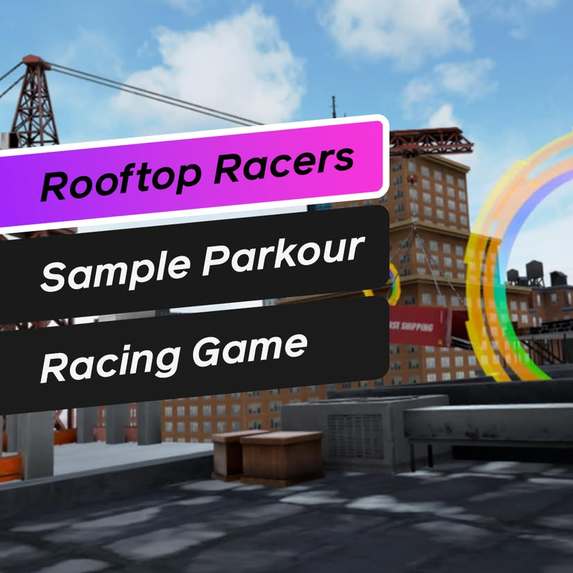
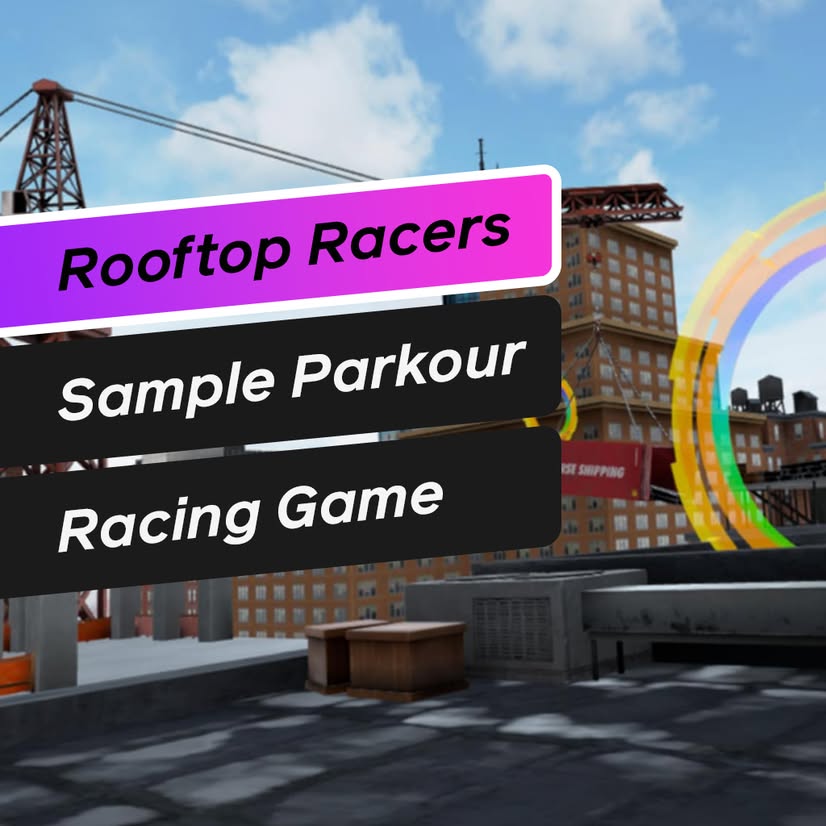
Rooftop Racer is a fast-paced, first-person parkour experience set across the rooftops of a stylized cityscape in Horizon Worlds. Players sprint, jump, wall-run, and slide across urban rooftops in a race against time—or each other. It's designed to push both reflexes and creativity, challenging players to find the most efficient routes and master fluid movement.
🌟 Inspiration The main inspiration came from Mirror’s Edge, a game that deeply influenced my perception of immersive movement. I wanted to capture that feeling of momentum and flow in VR—especially the thrill of leaping between buildings at high speed. I also drew inspiration from speedrunning culture and obstacle courses, blending those elements into a social multiplayer experience.
🛠️ How I Built It I built Rooftop Racer using Horizon’s visual scripting and environment design tools. Key features include:
Custom First-Person Movement System: I created a smooth-running character controller with sprinting, wall-running, and sliding mechanics, using Horizon’s logic blocks and collision triggers.
Momentum-Based Mechanics: Speed increases as you chain moves together. This encourages flow-based movement and route optimization.
Checkpoint & Timer System: Integrated a responsive checkpoint and lap timer system for solo time trials and competitive multiplayer races.
Urban Environment Design: Rooftops vary in height and shape, with obstacles like vents, signs, and moving platforms to make the race dynamic.
🧠 What I Learned Developing a fluid movement system in Horizon Worlds is both possible and incredibly rewarding. I learned how to simulate physics-like behavior using creative logic block combinations.
Playtesting is essential. Observing how players naturally moved helped me refine jump distances and flow paths to keep movement intuitive.
Optimization matters: high-speed gameplay can strain frame rates, so I learned how to reduce complexity while keeping the visual identity strong.
⚙️ Challenges Faced Designing a wall-run system with Horizon’s tools was a major challenge. It required a lot of iteration to make it feel natural and not disorienting in VR.
Balancing difficulty—some sections were initially too punishing or confusing. I had to tune the layout to support both casual and competitive players.
Creating a sense of verticality while ensuring players wouldn't get lost or frustrated took careful environment layout and visual signposting.
💡 What’s Next? I plan to add:
A ghost replay system so players can race against their own best times.
More movement options like vaulting or rope swings to increase the depth of traversal.
A leaderboard and community challenge mode where users can design their own courses using shared building blocks.


Log in or sign up for Devpost to join the conversation.