-
-
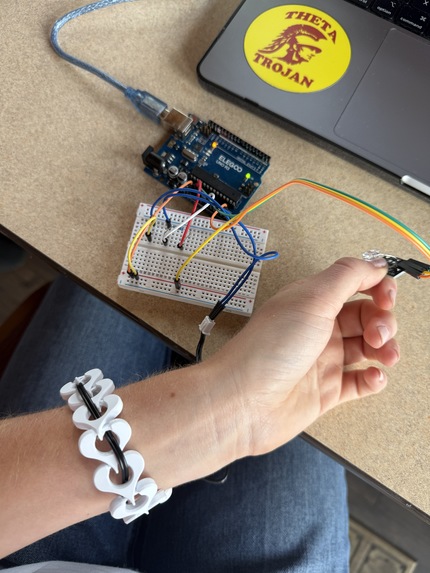
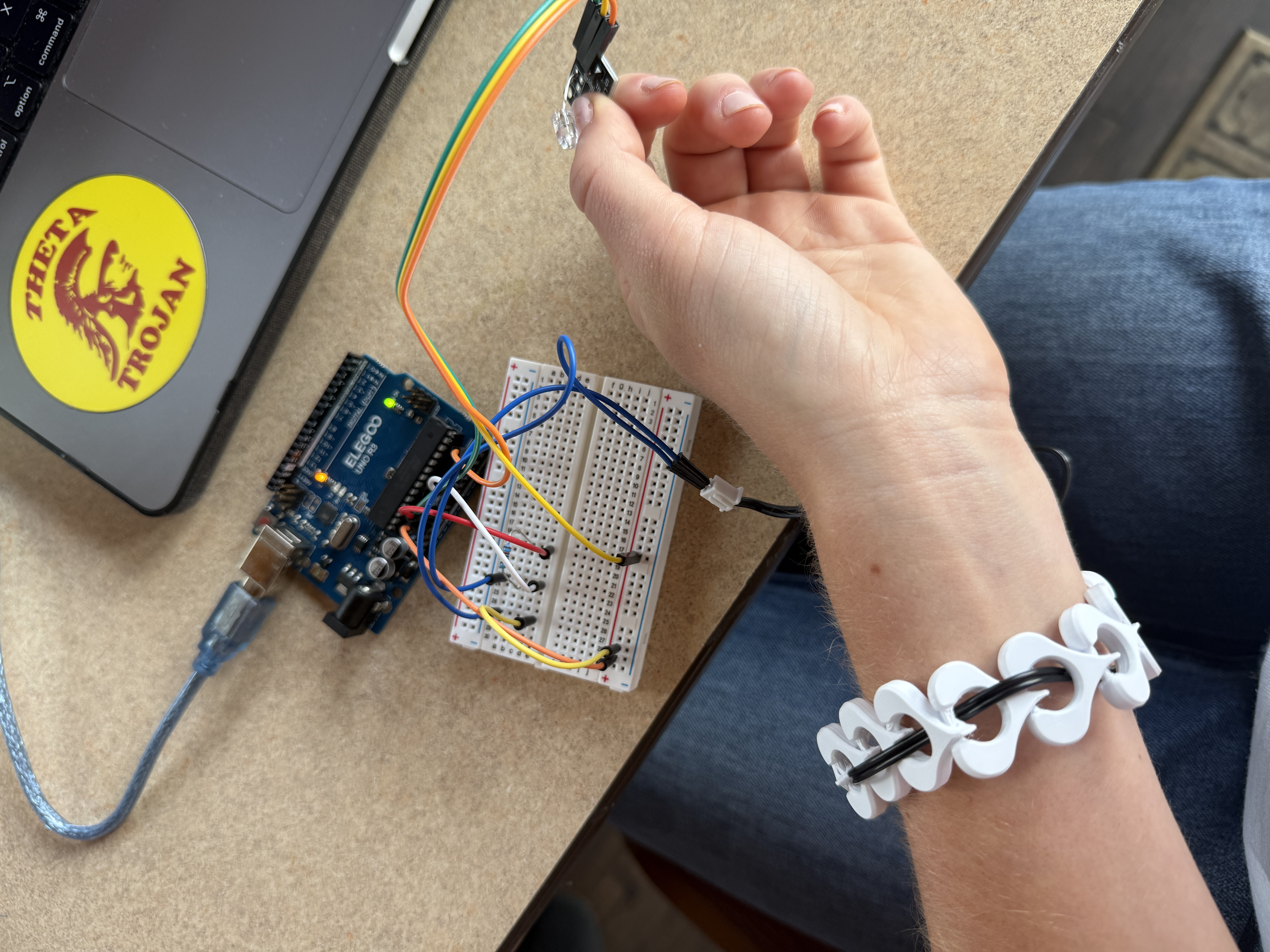
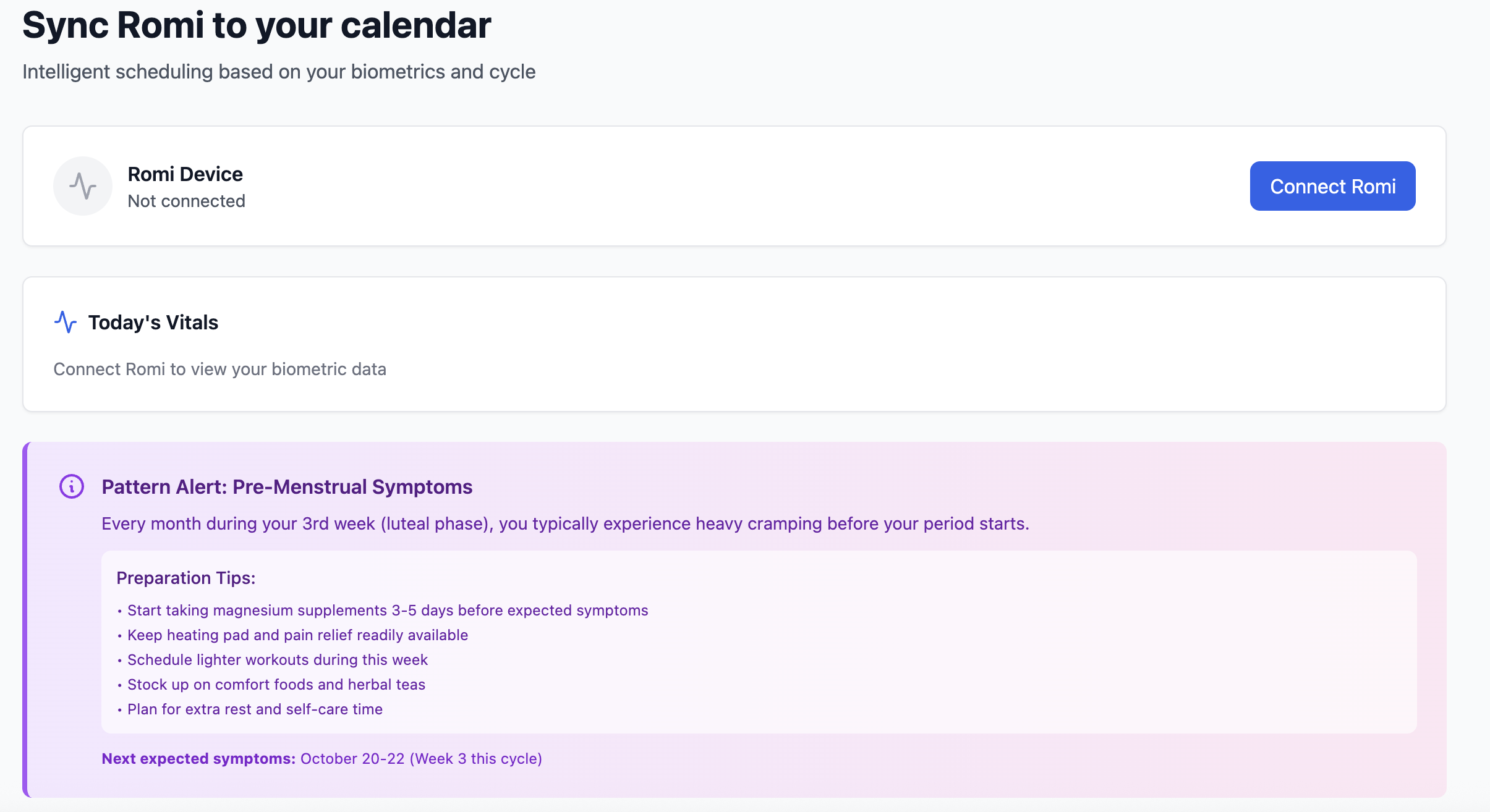
wearable bracelet
-
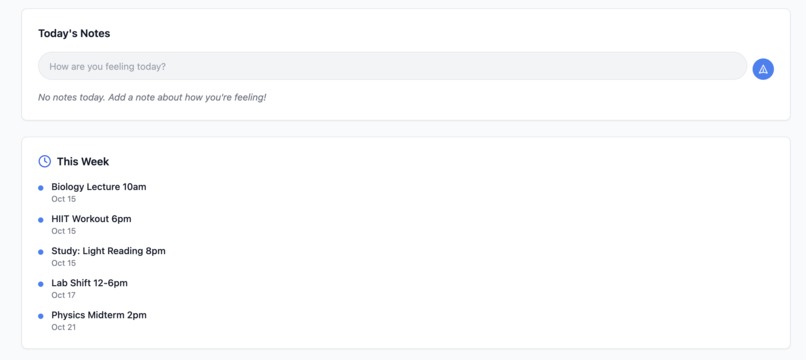
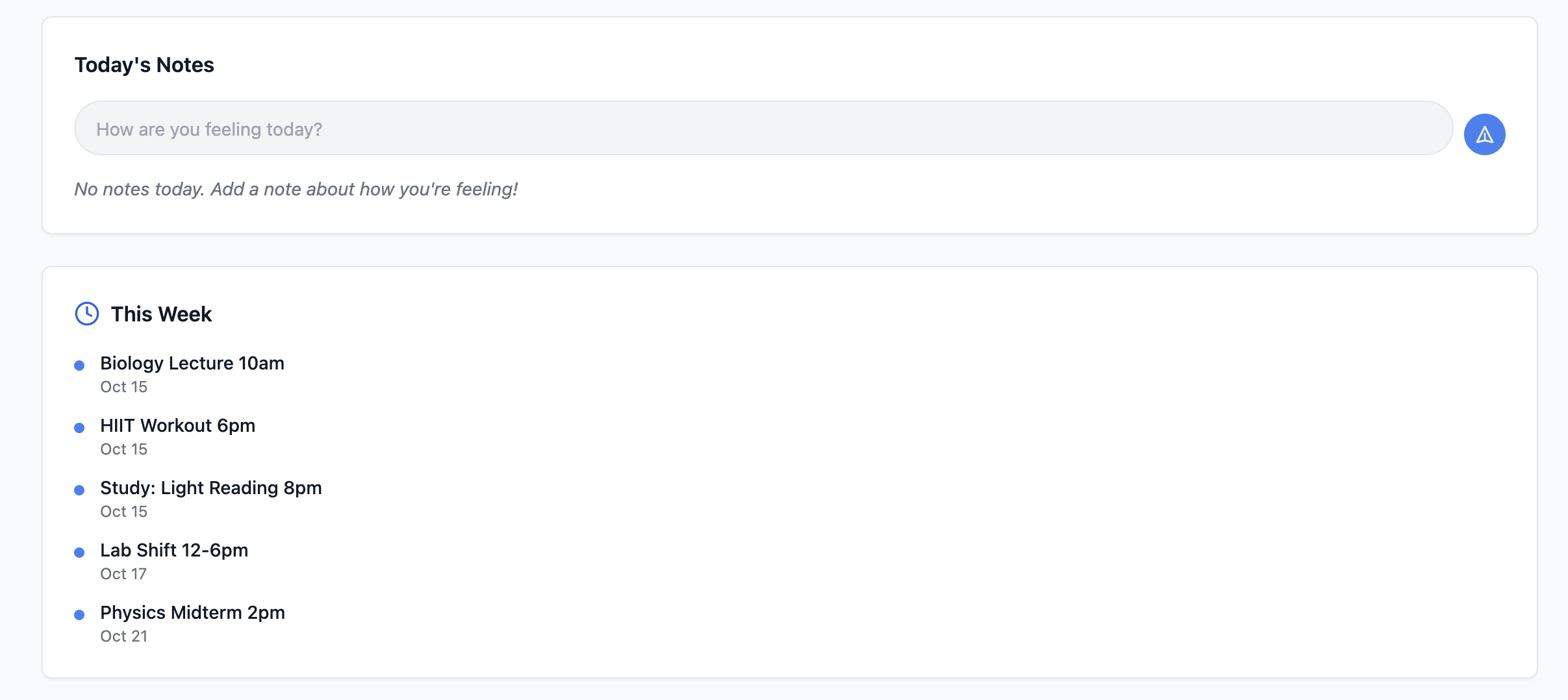
notes to help track pattern track
-
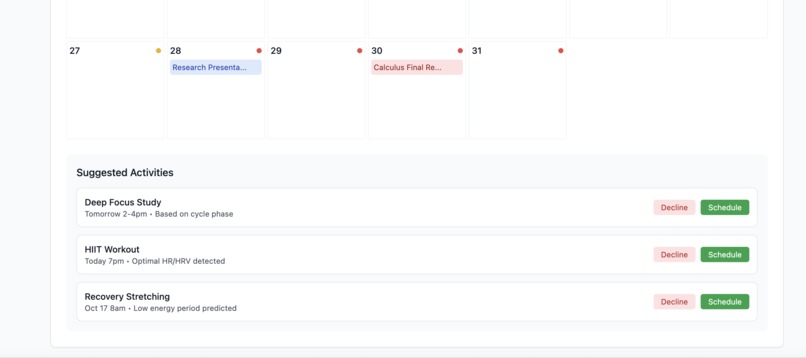
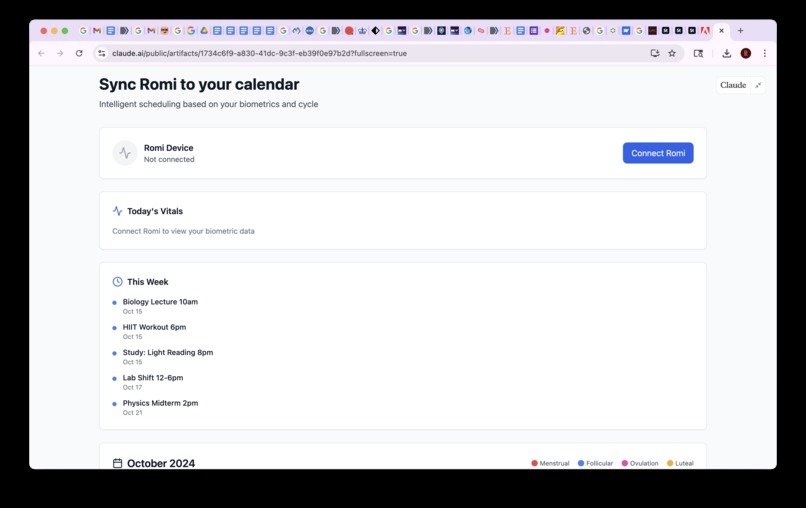
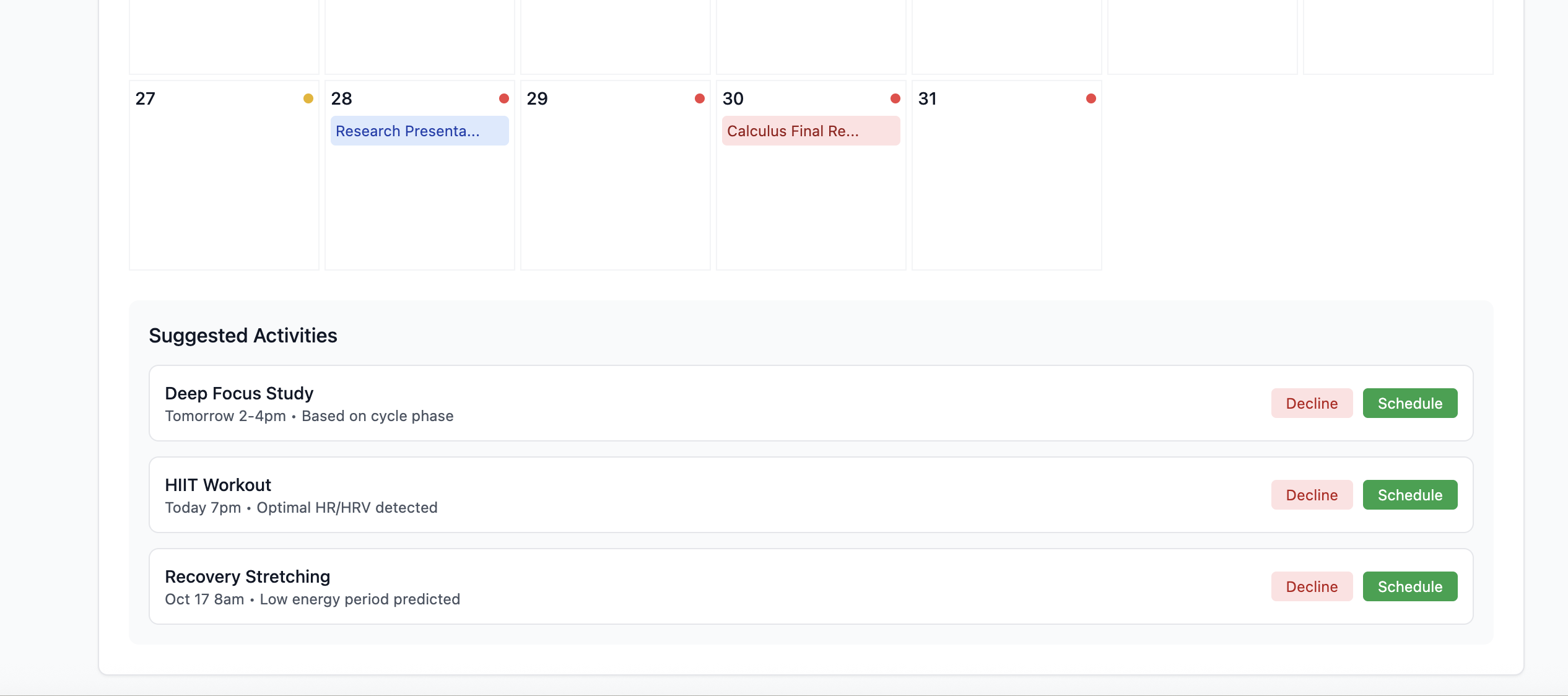
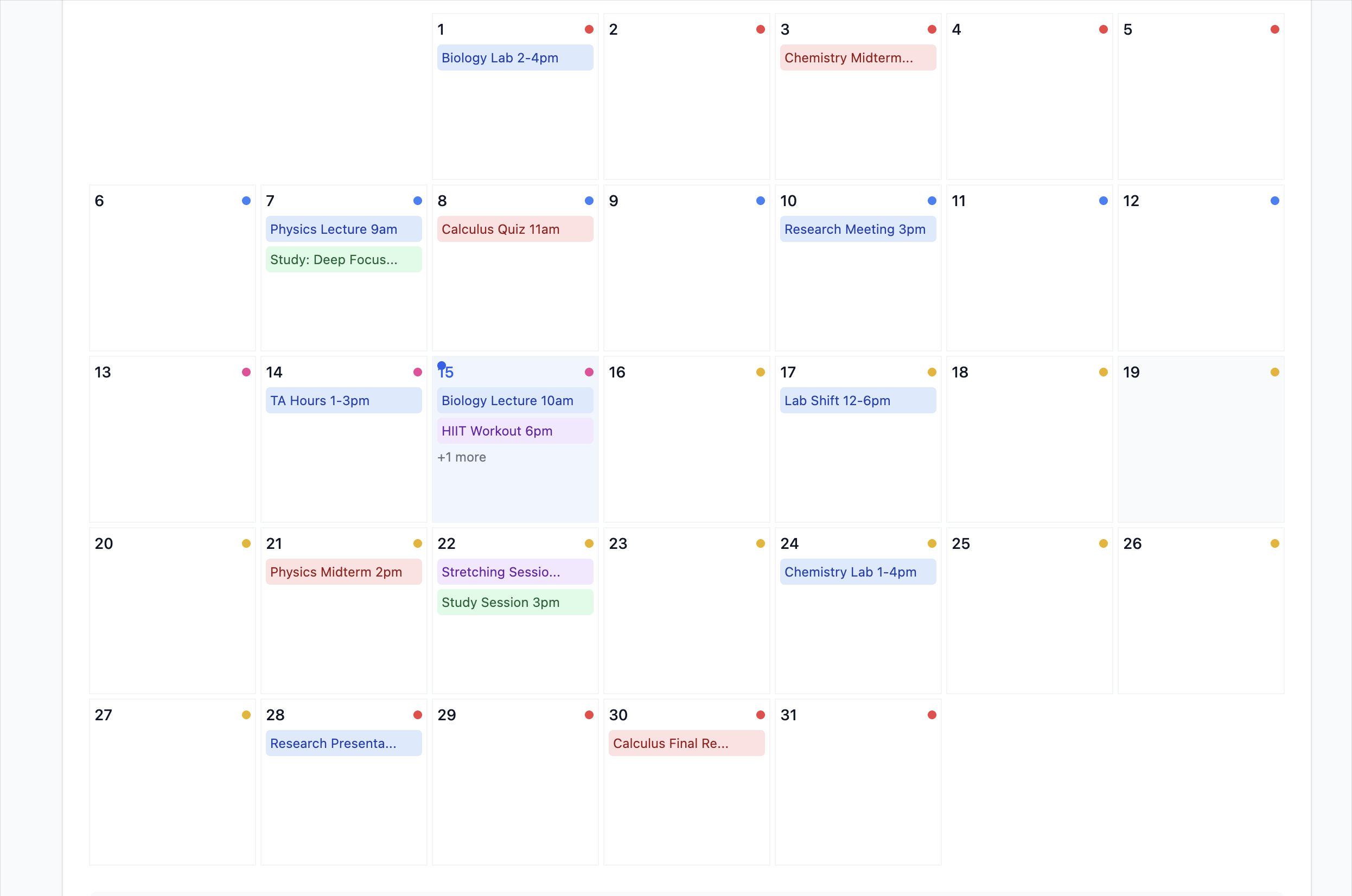
suggested activities based on the cycle
-
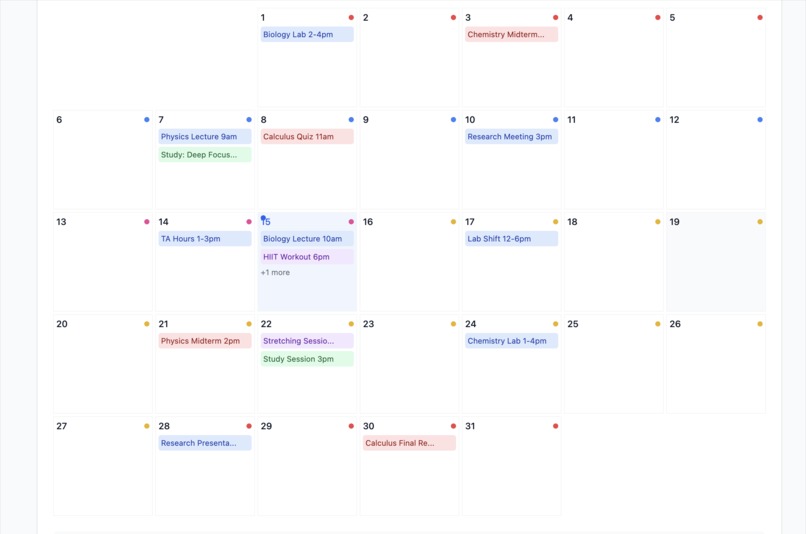
-
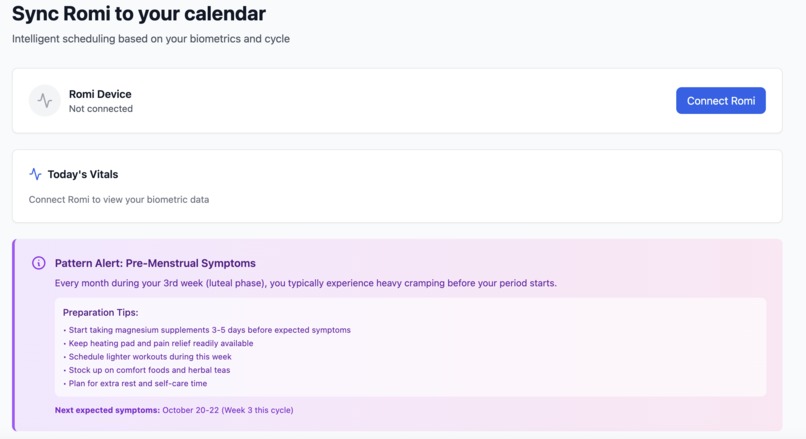
premenstrual pattern tracker
-
-
Inspiration
Hormonal changes across the menstrual cycle affect everything from mood, energy, to focus. Despite these shifts following biological patterns, most rely on intuition to navigate changes.
While 62% of women use period tracking apps, these tools don’t track the biomarkers needed to confirm ovulation, the cycle’s key anchor point. Additionally, current wearables that do offer this insight are cost-prohibitive, ranging from $300–$500, limiting access to essential metrics about one’s own body.
What it does
We are building an affordable wearable paired with a supporting mobile app that tracks your wrist skin temperature, heart rate, and heart rate variability in order to detect ovulation. Romi combines ovulation insights, manual period tracking, and the user's unique physiological indicators to provide personalized support and empower users with knowledge throughout every phase of their cycle from the moment their hormones start influencing their body.
How I built it
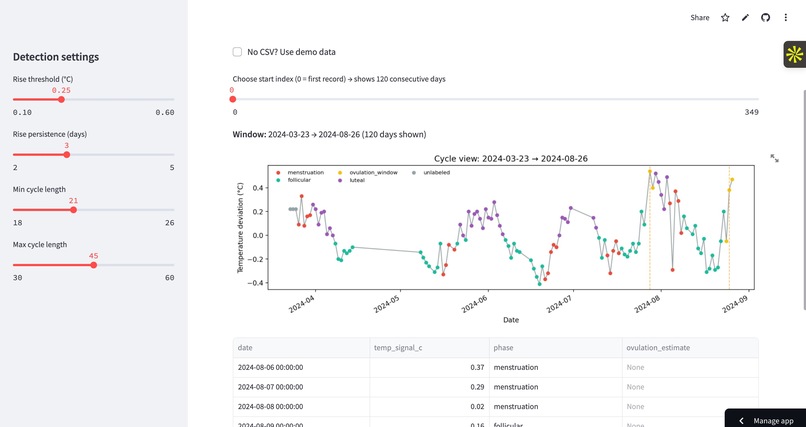
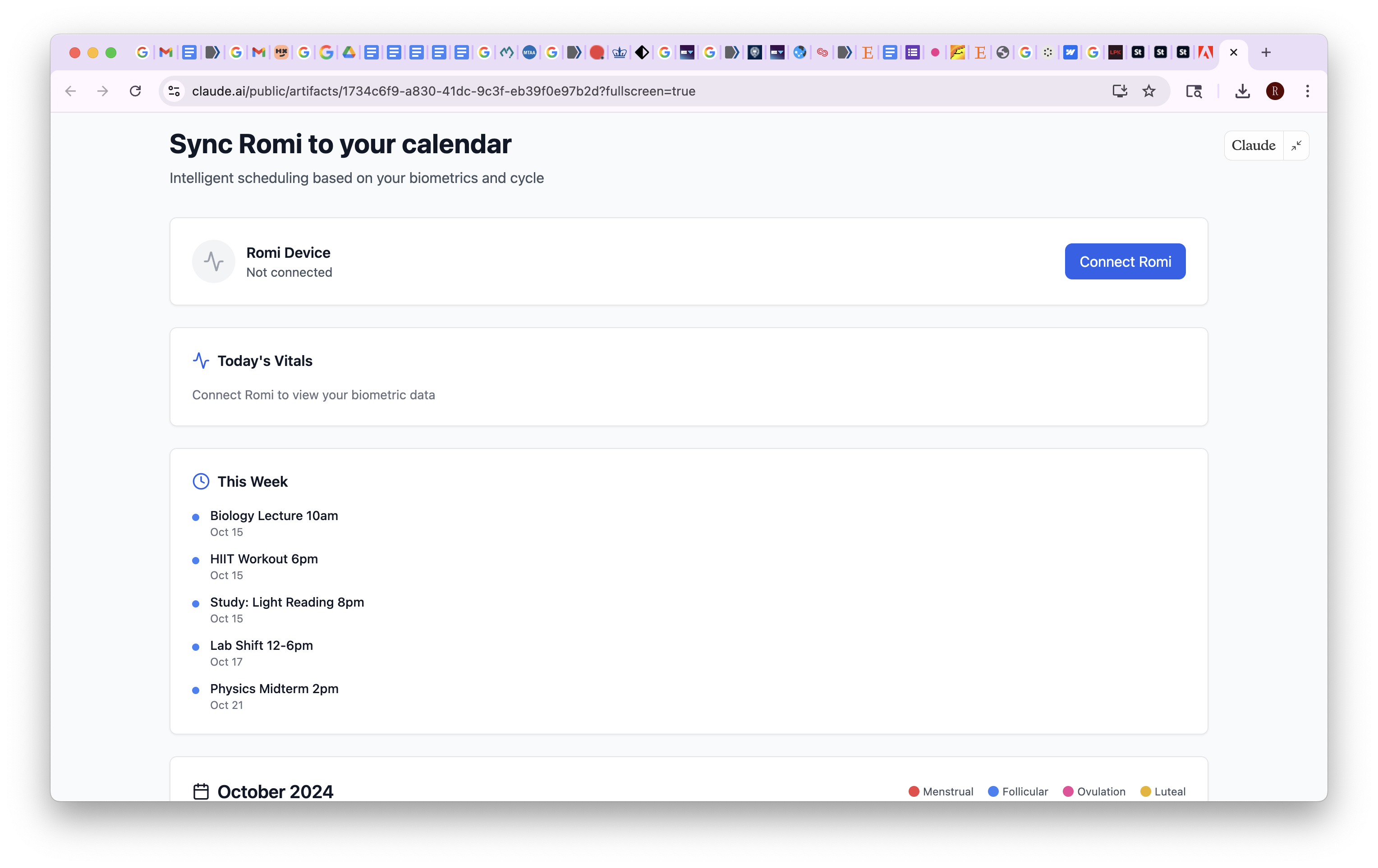
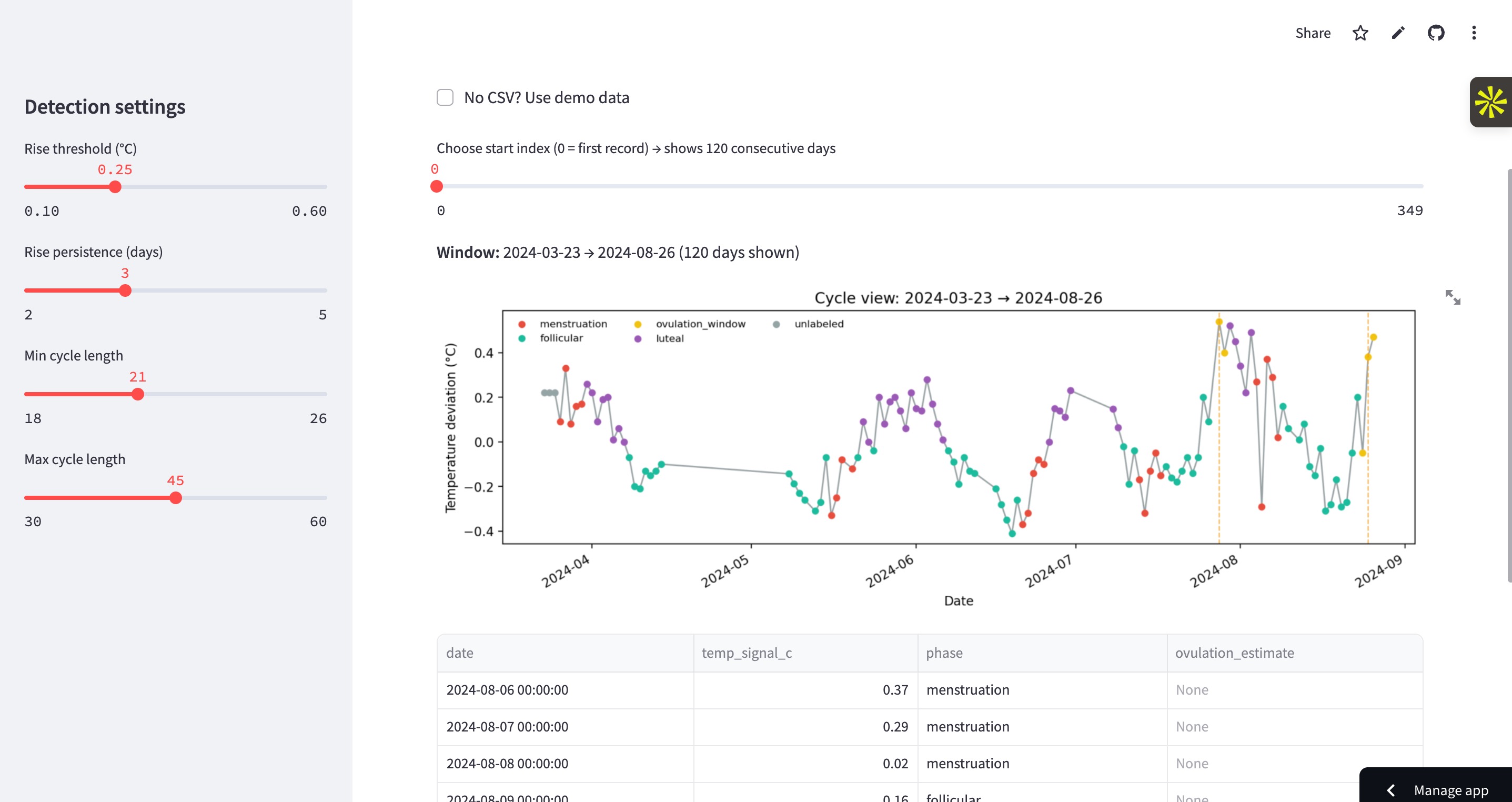
We 3D printed a bracelet that has an NTC temperature and heart rate sensor that continuously tracks wrist temperature. We wired the sensors to an Arduino Uno and was able to successfully read these bio metrics. We prototyped an app to support this data. Using Oura ring data from the past year, we extracted raw temperature data and built an algorithm that visualizes the phases of the cycle. We then rapid prototyped a calendar and insight app feature to conceptualize how this data can be used to provide hormonal insights on a day to day basis

Log in or sign up for Devpost to join the conversation.