-
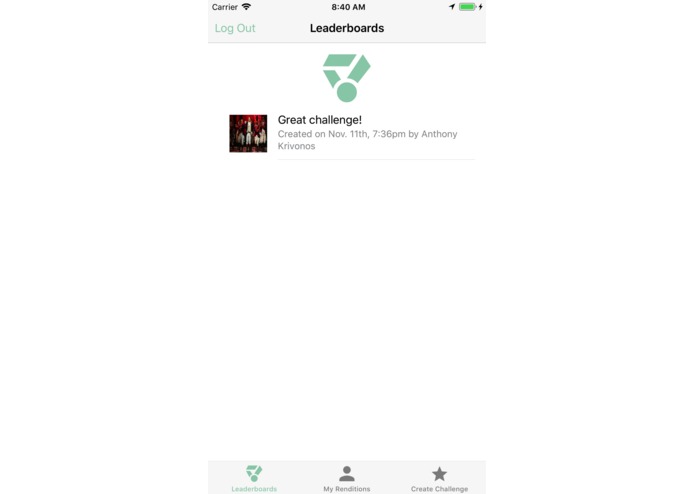
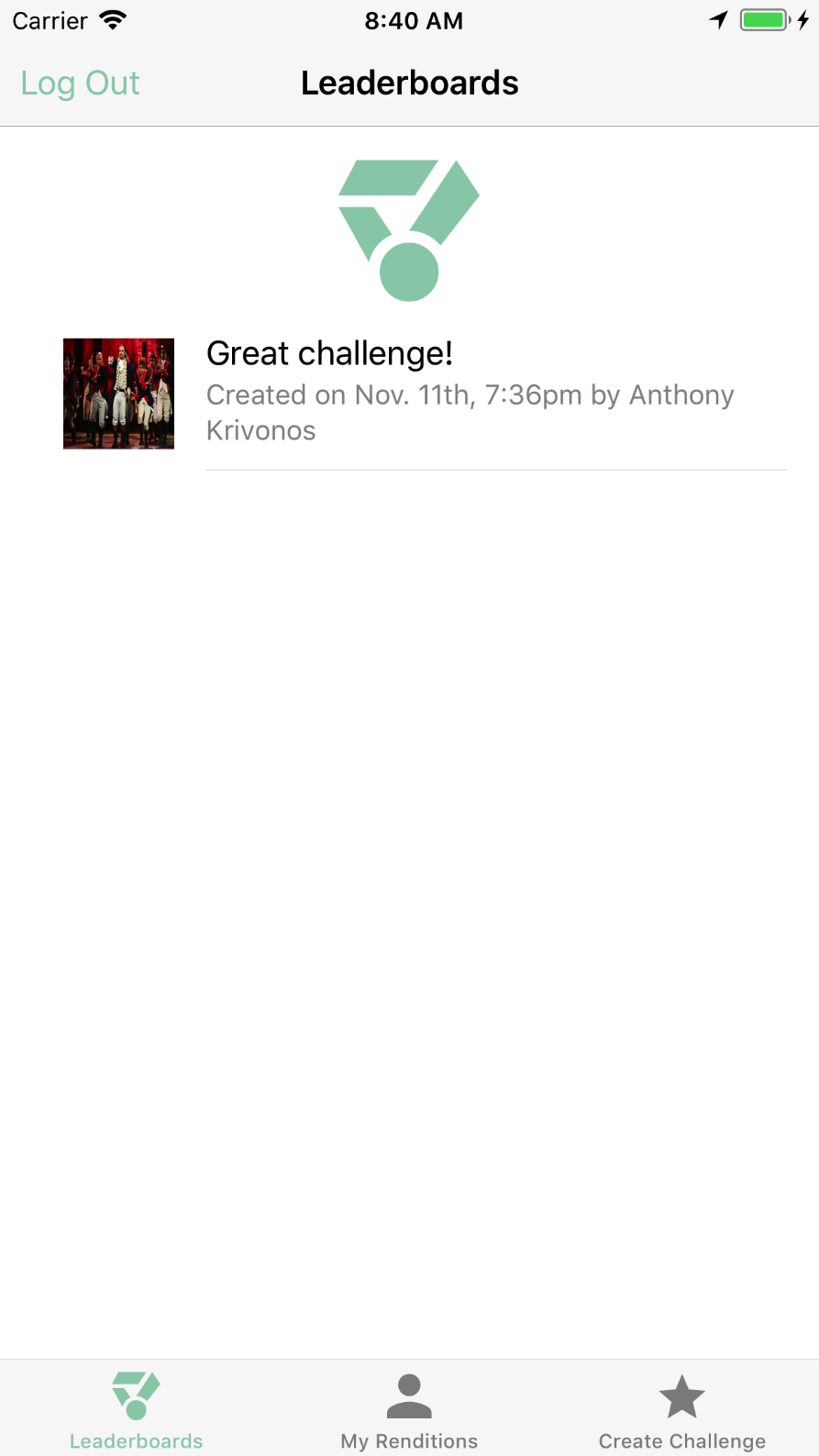
Leaderboards Screen
-
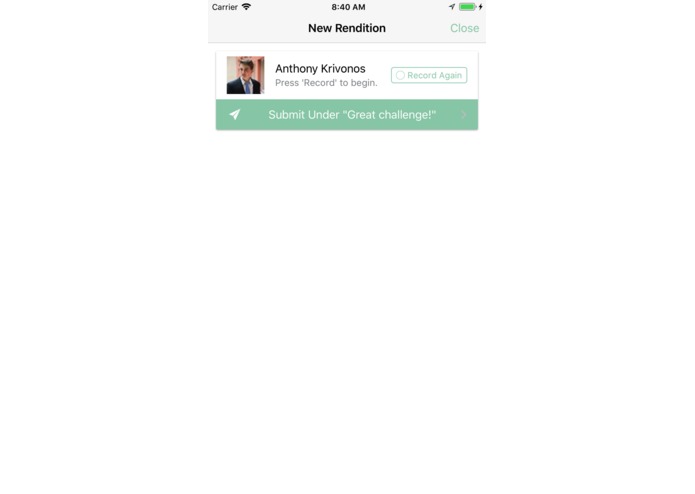
Rendition Submission Screen
-
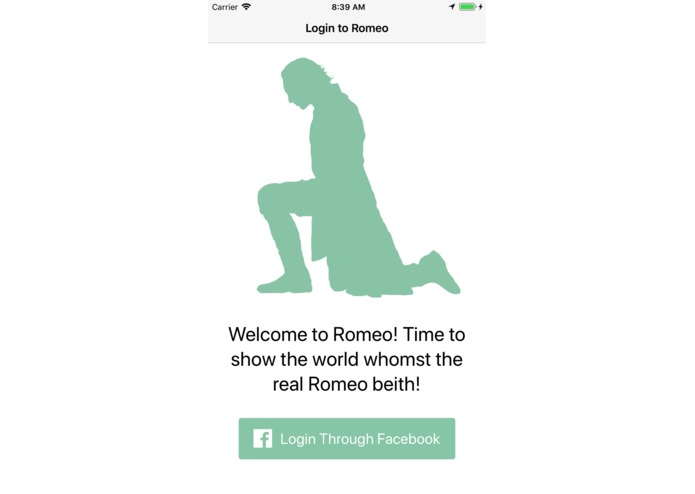
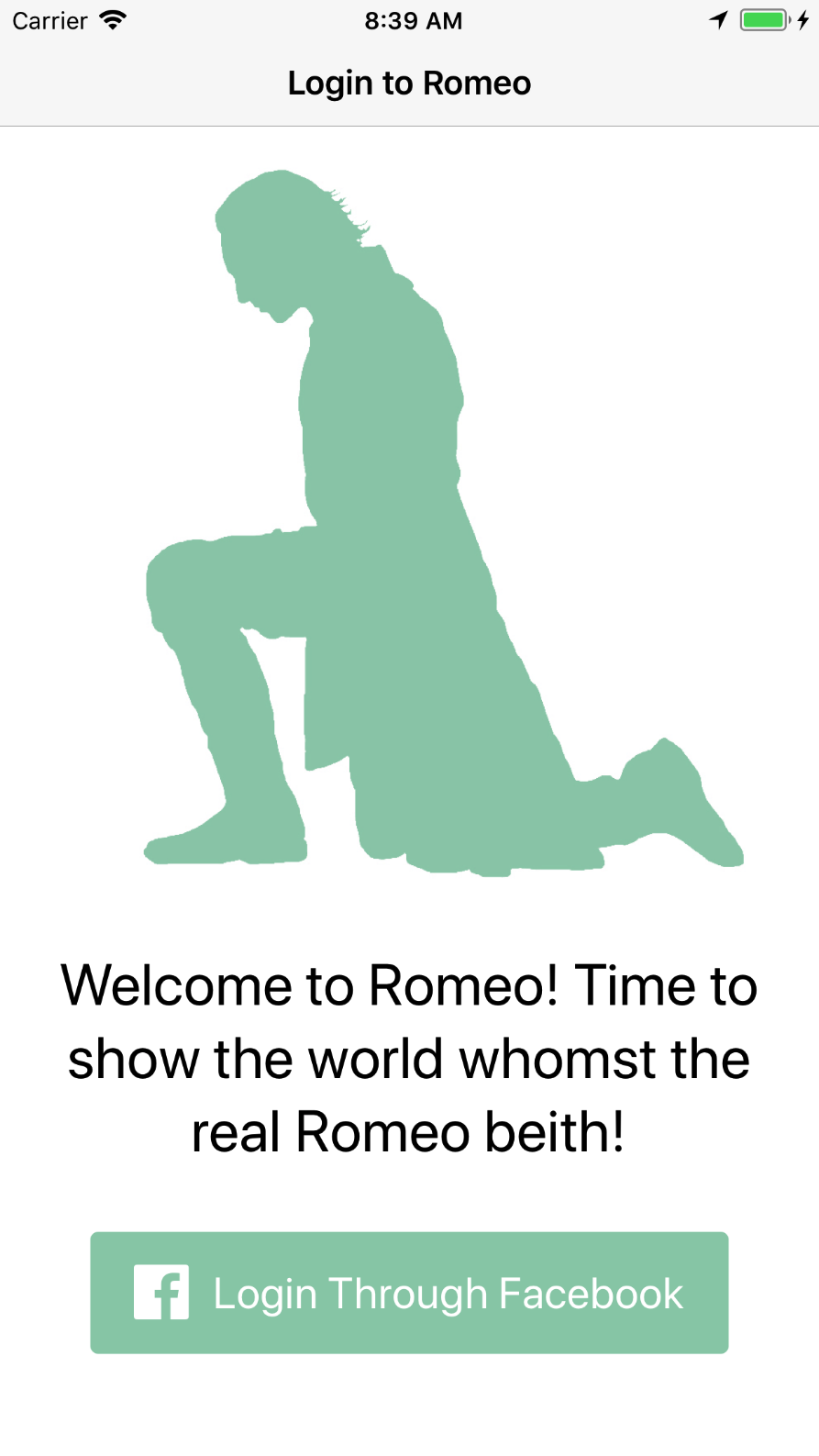
Onboarding
-
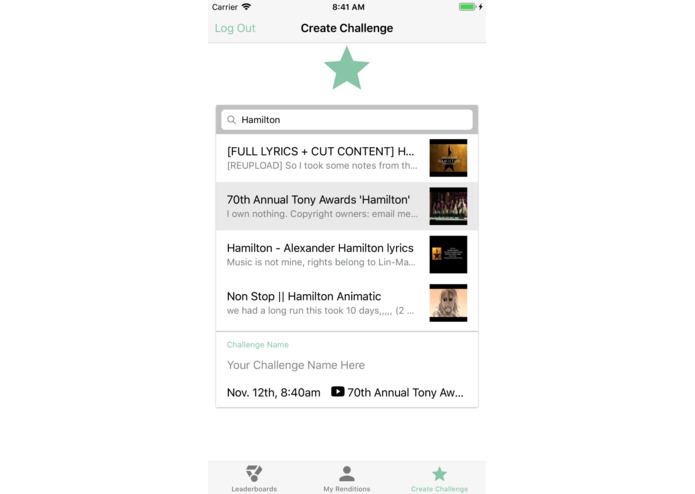
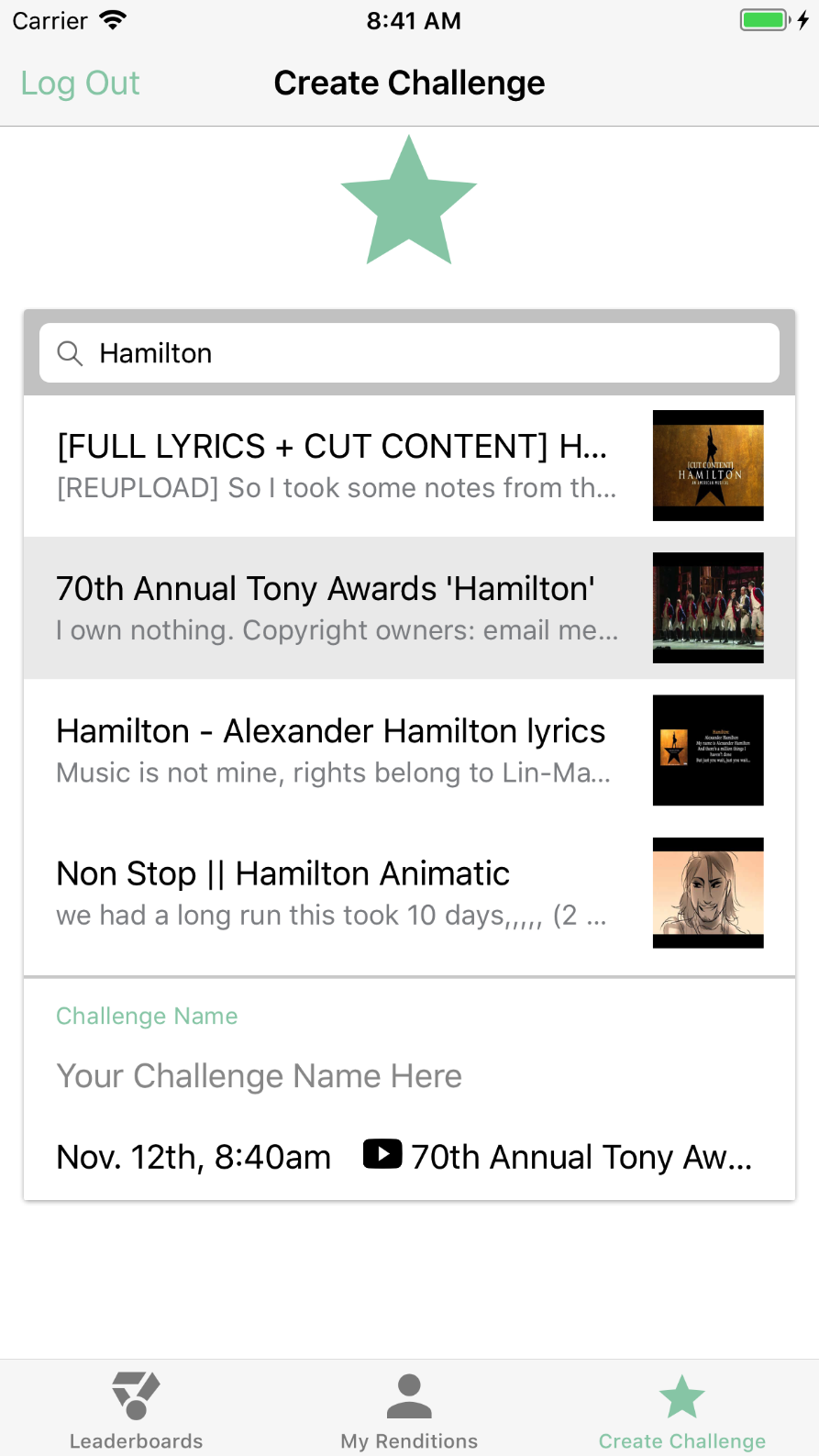
Challenge Creation Screen
-
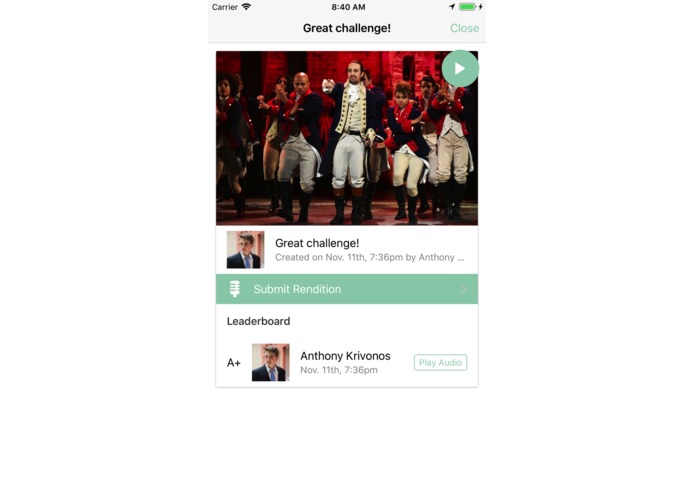
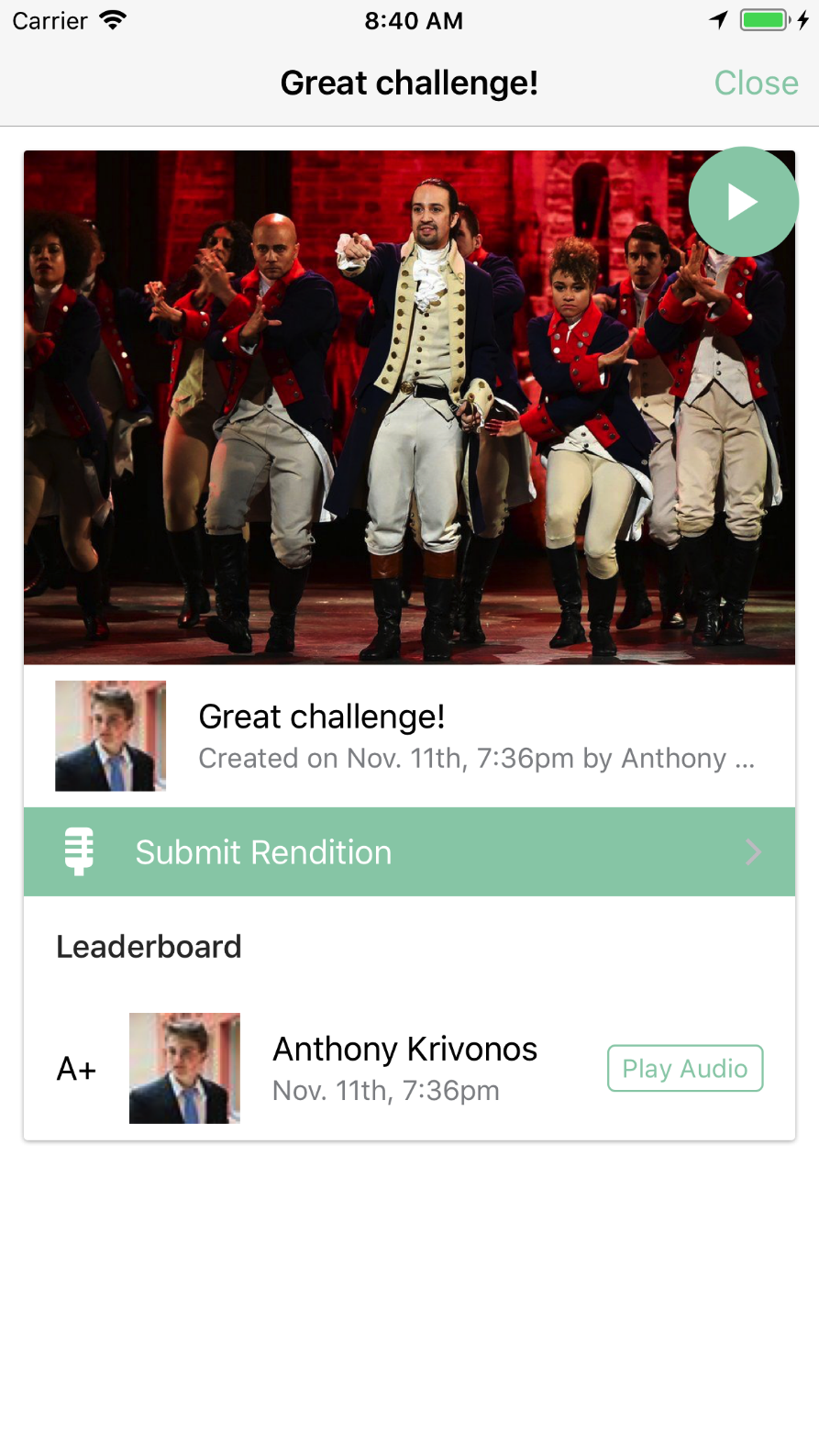
Challenge Screen

Inspiration
We wanted to make a natural language processing app that inferred sentiment from vocal performance, while incorporating all of this within a game.
What it does
You can upload a YouTube video that will be parsed into text, and then challenge friends to make a rendition of what the text entails. Live scores are always changing via the realtime database.
How we built it
Anthony used Ionic 3 to make a mobile app that connects with Firebase to send challenge and user data, while Steven and Roy developed a REST API in Node.js that handles the transcription processing and challenge requests.
Challenges we ran into
Heroku is terribly incompatible with FFMPEG, the only reasonable API for media file conversion. On top of that, Heroku was the only online server option to provide a buildpack for FFMPEG.
Accomplishments that we're proud of
The UI runs smoothly and Firebase loads and transmits the data rapidly and correctly.
What we learned
If you want to get a transcript for a natural language, you should do so in-app before processing the data on a REST API.
What's next for Romeo
We are excited to implement invitation features that rely on push notifications. For instance, I can invite my friends via push to compete against my best rendition of a scene from Romeo and Juliet.


Log in or sign up for Devpost to join the conversation.