-
-
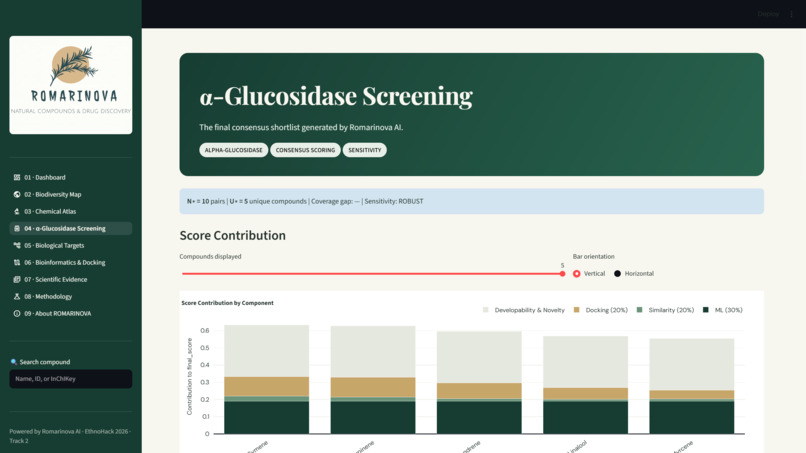
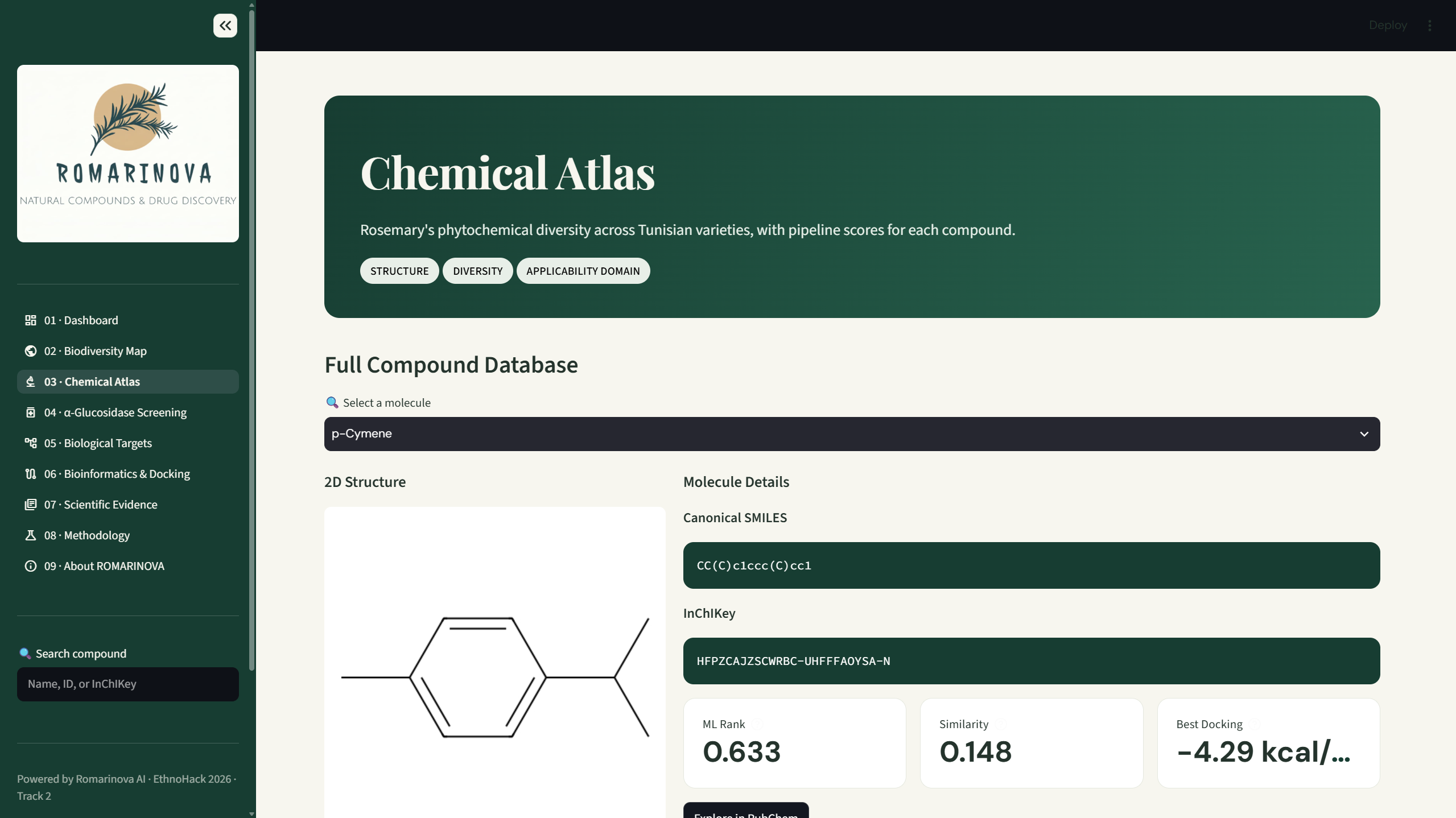
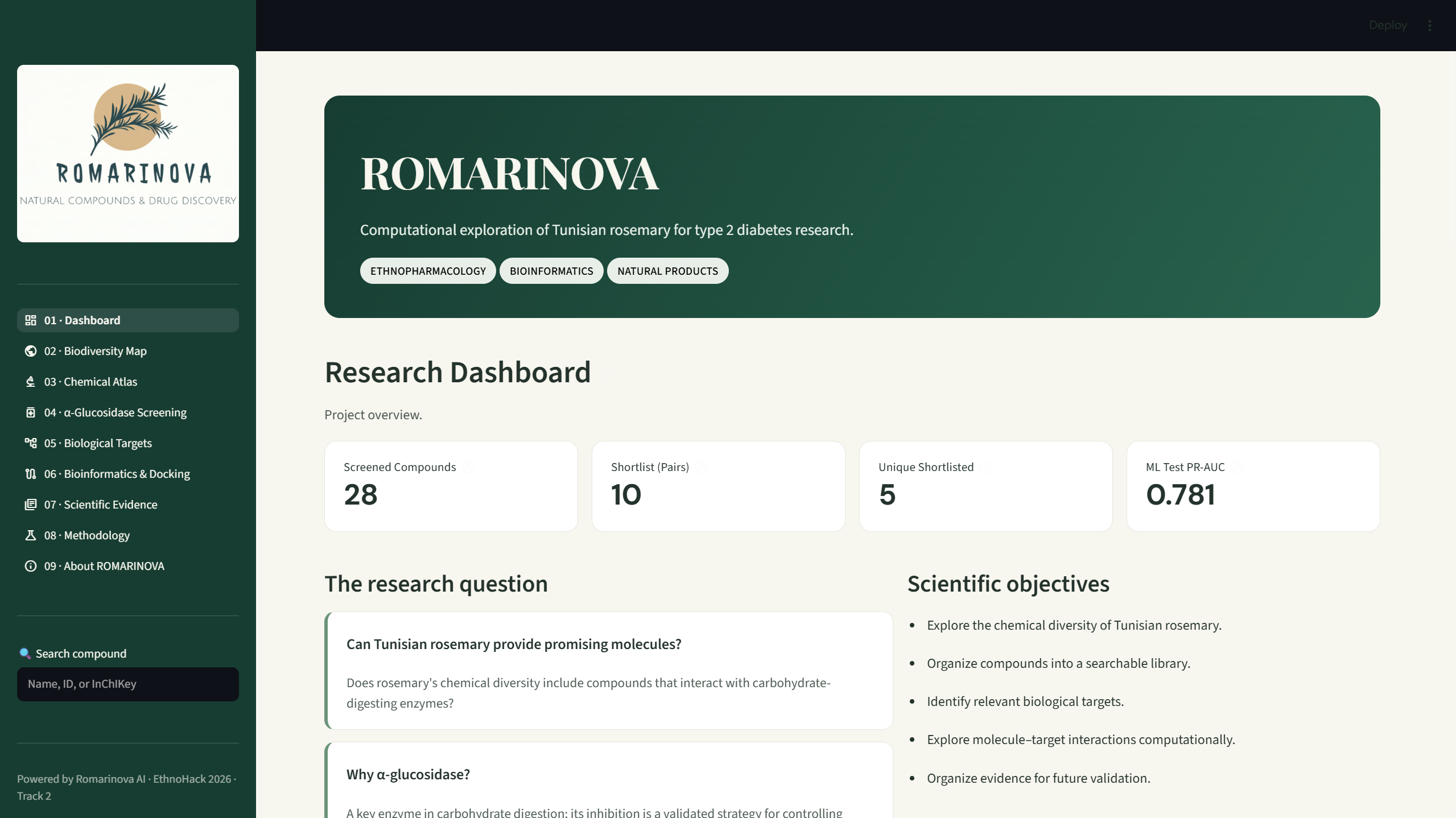
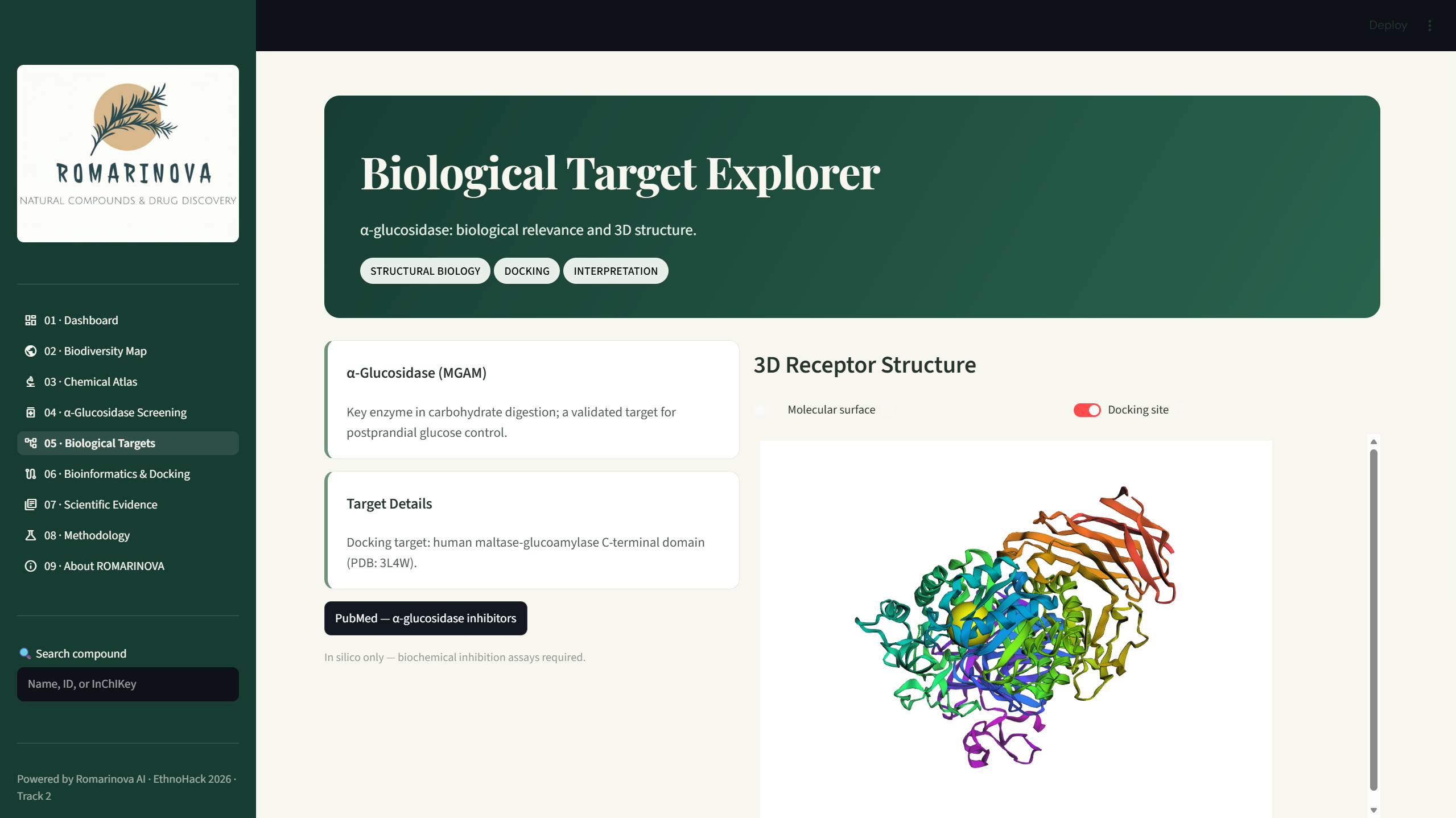
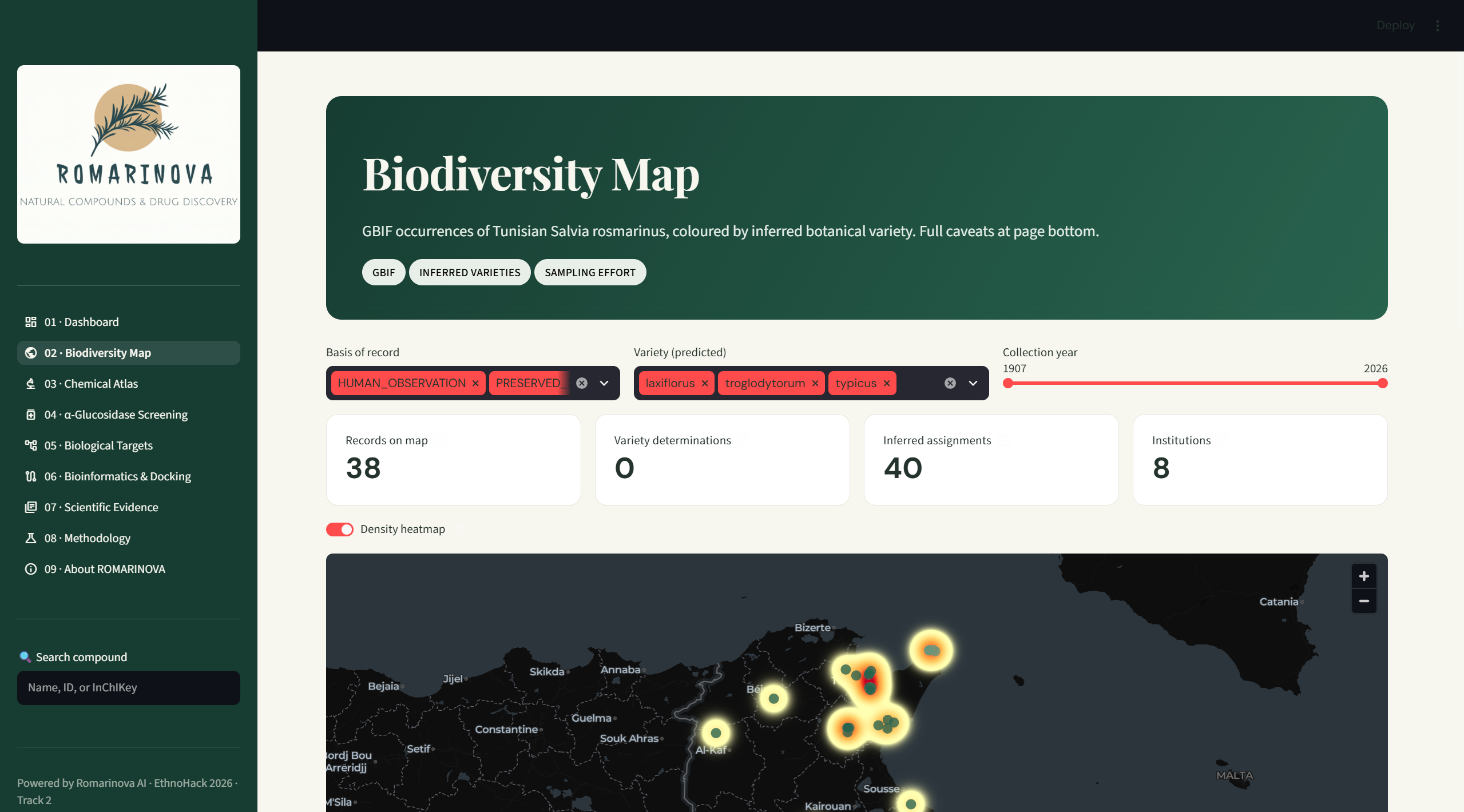
web page 4
-
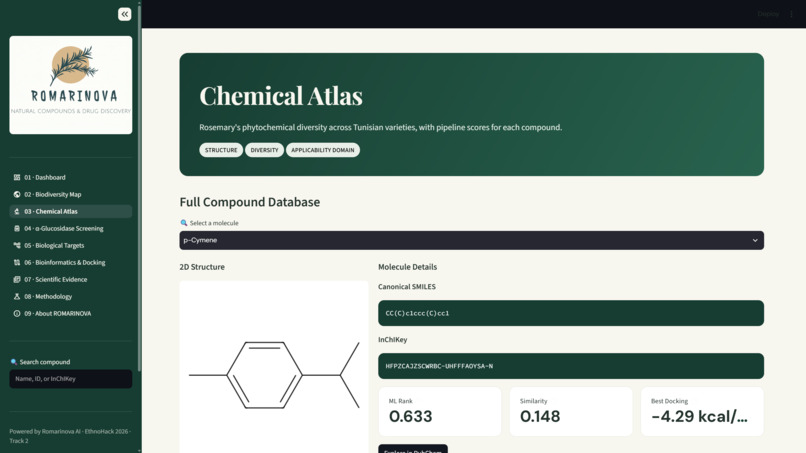
web page 3
-
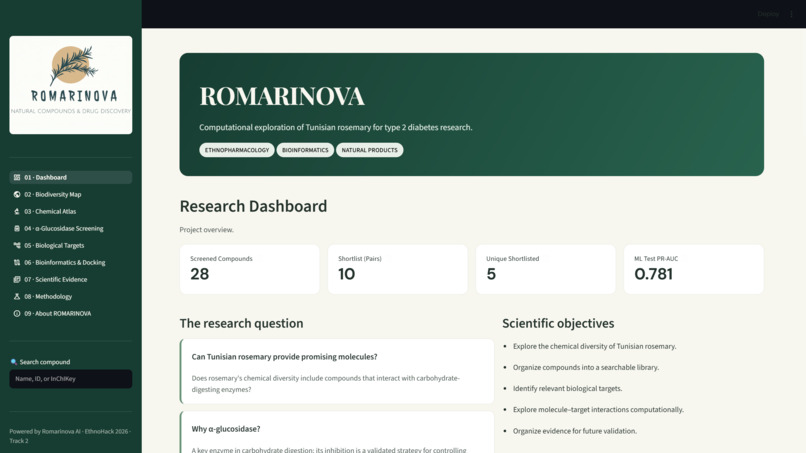
web page 1
-
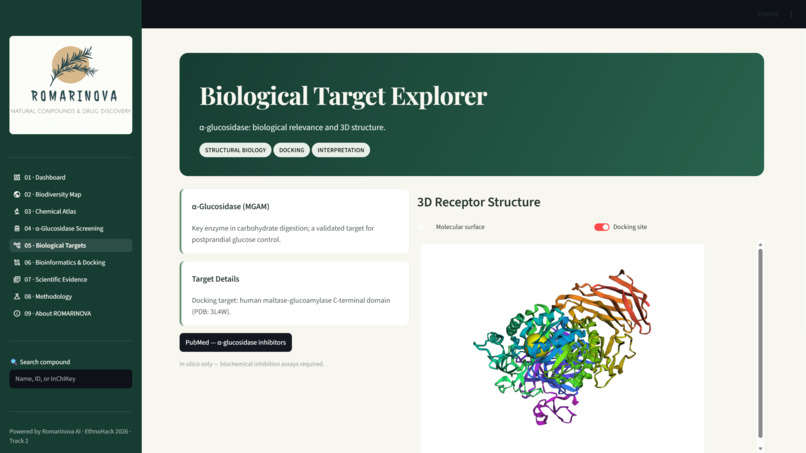
web page 5
-
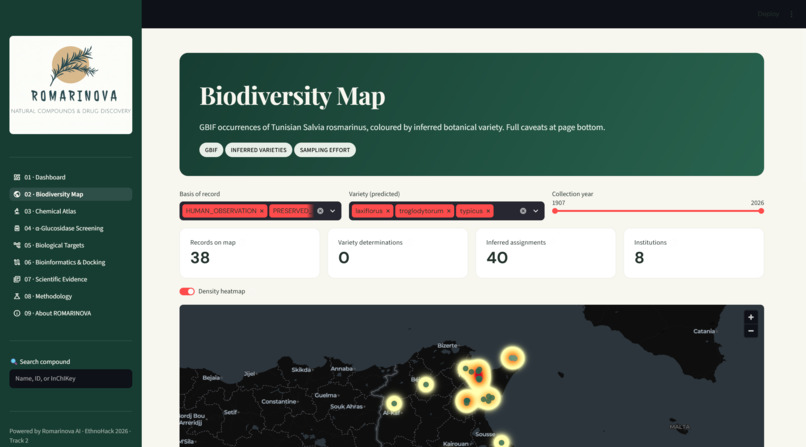
web page 2
-
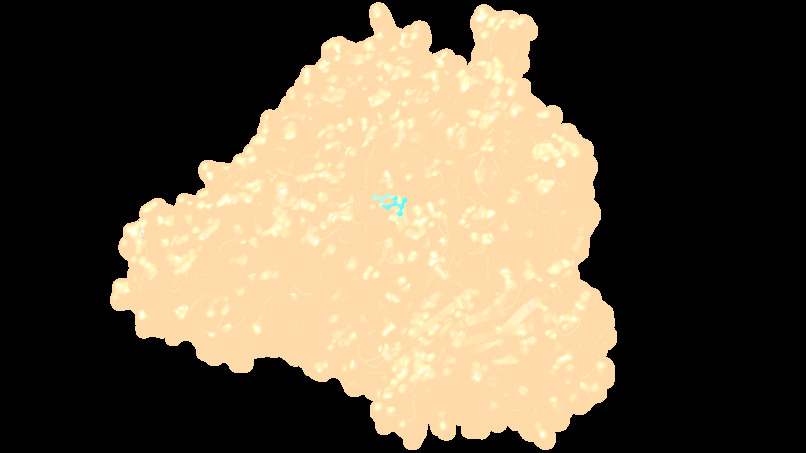
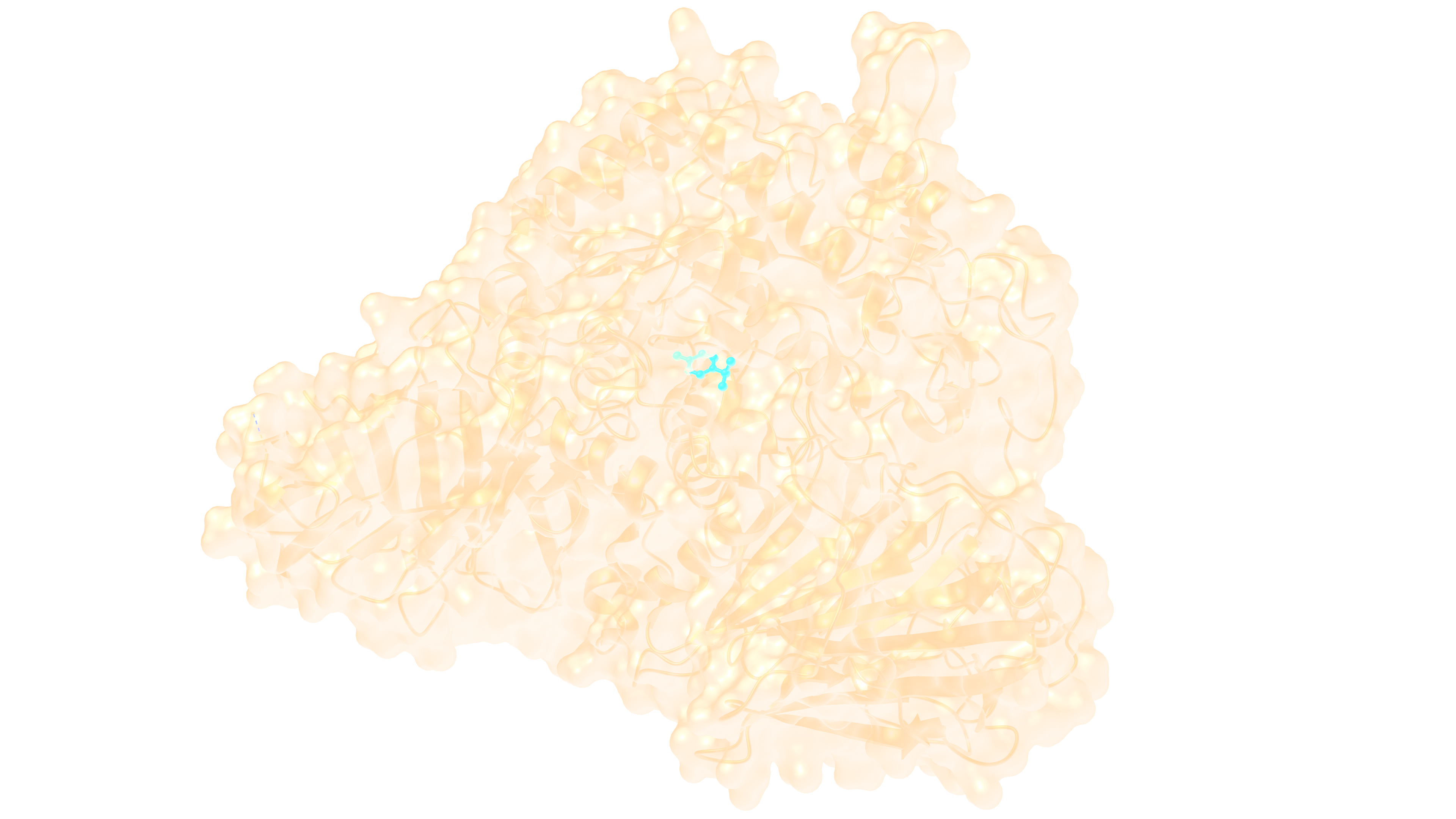
Docking of rosemary-derived molecule
-
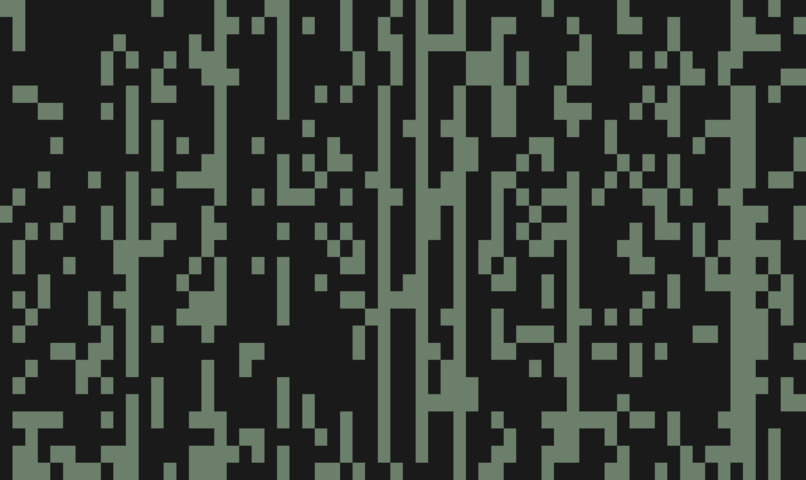
generated fingerprint from bioinformatics pipeline
-
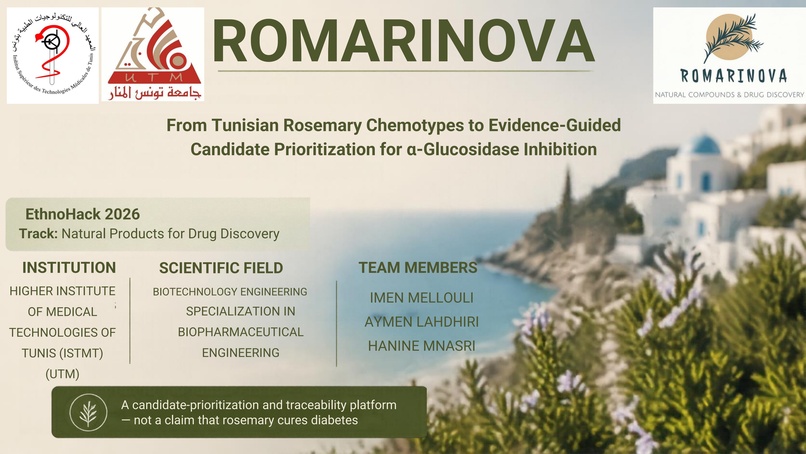
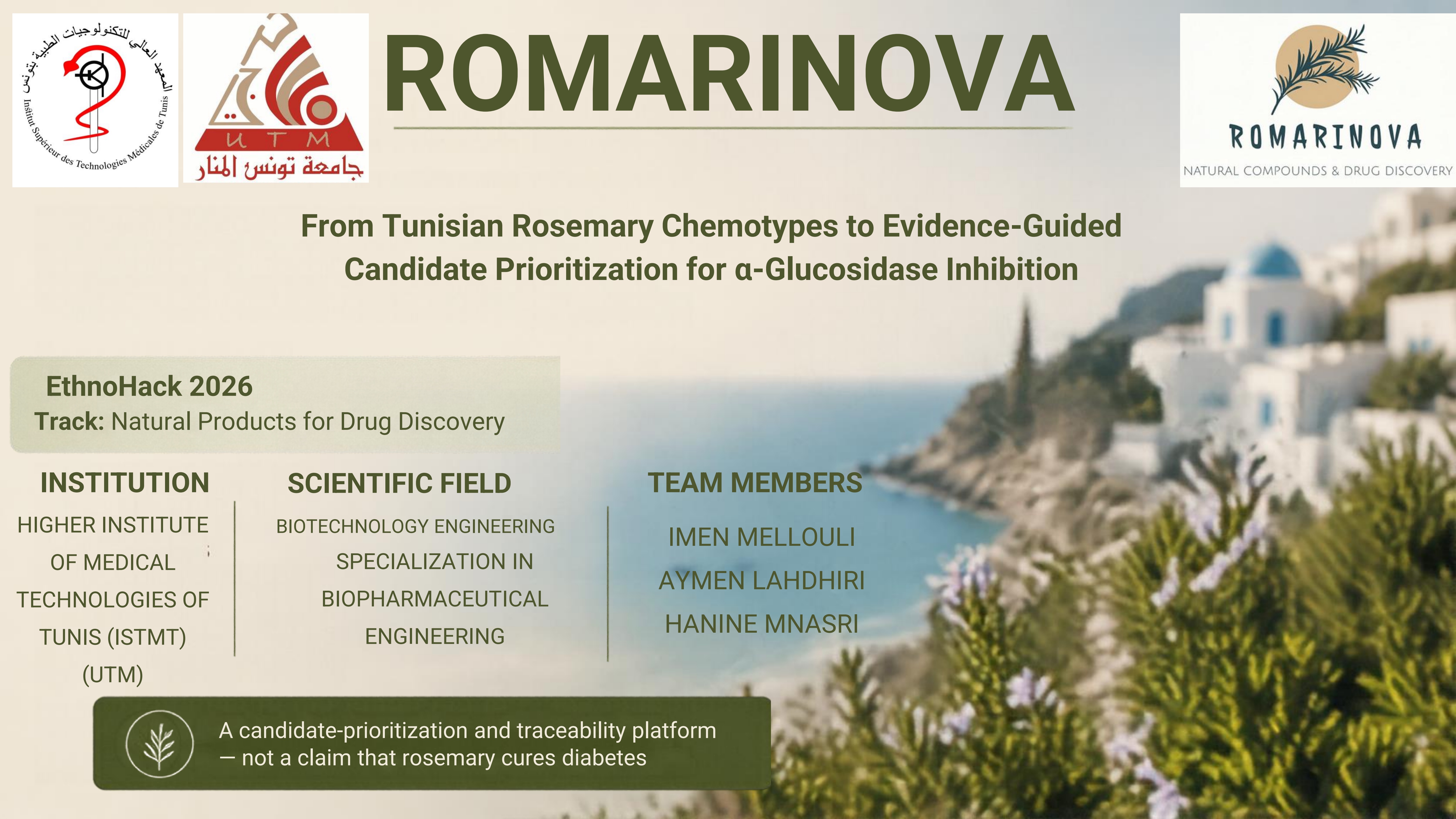
presentation slide 1 - Full presentation available in the github repo
-
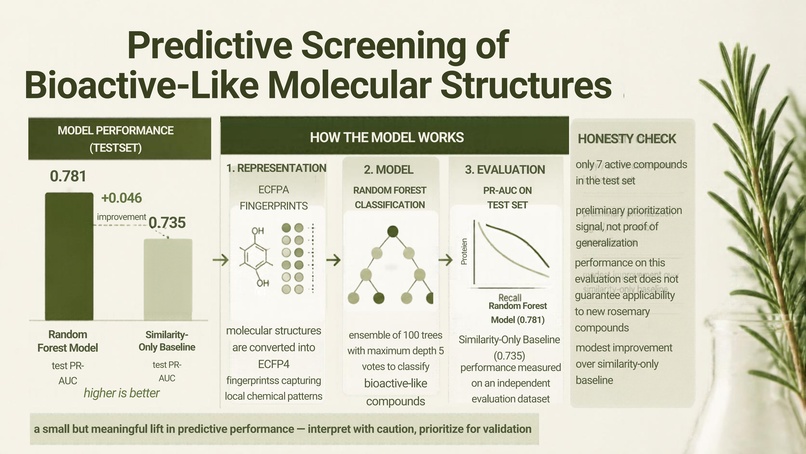
presentation slide 5
-
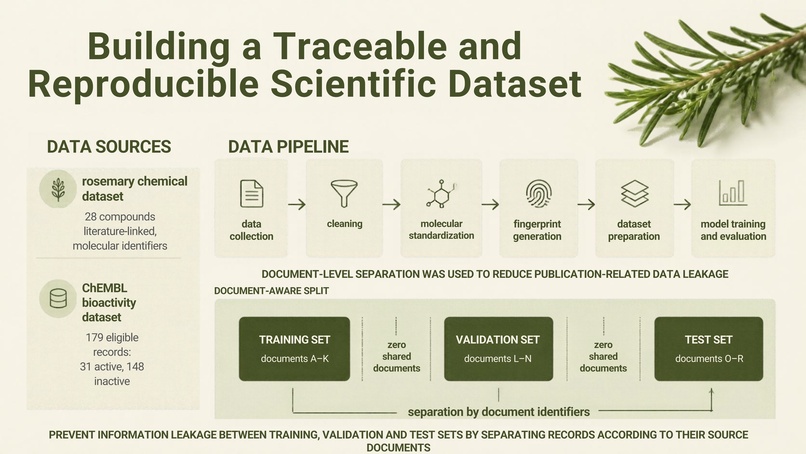
pesentation slide 4
-
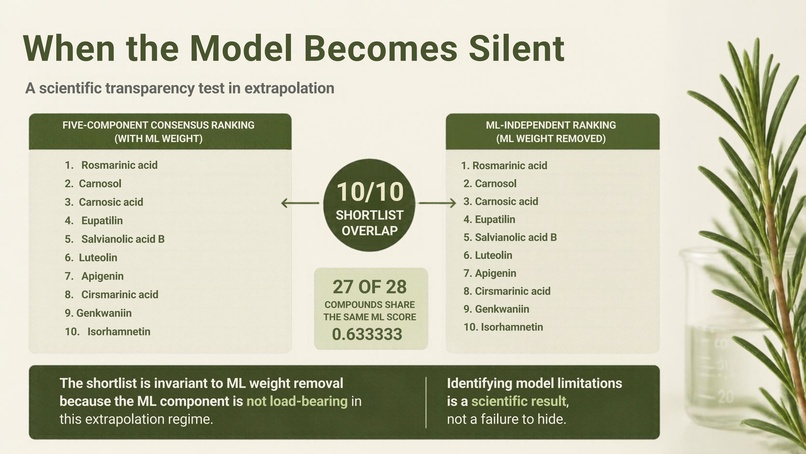
presentation slide 7
-
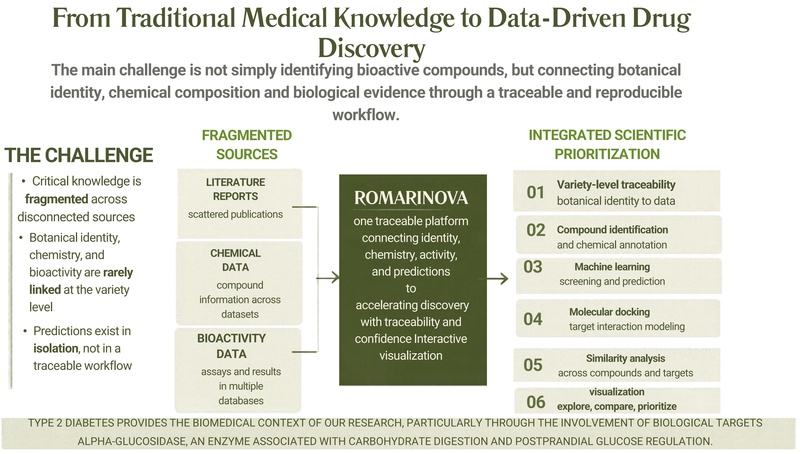
presentation slide 2
-
presentation slide 3
-
presentation slide 6
-
presentation slide 9
About the project
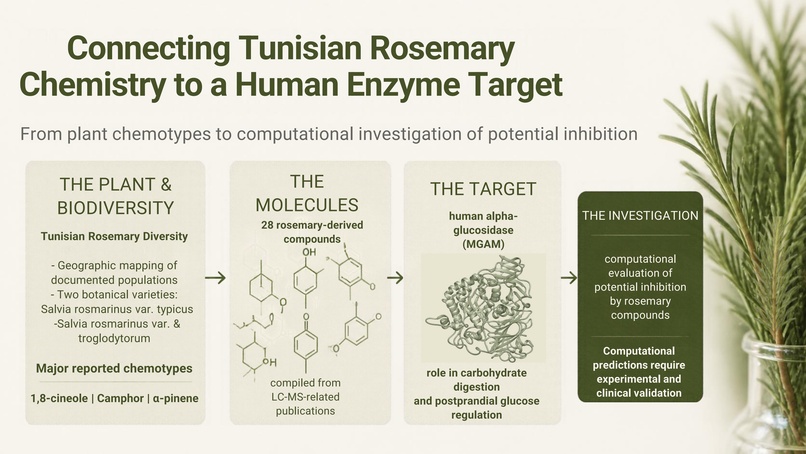
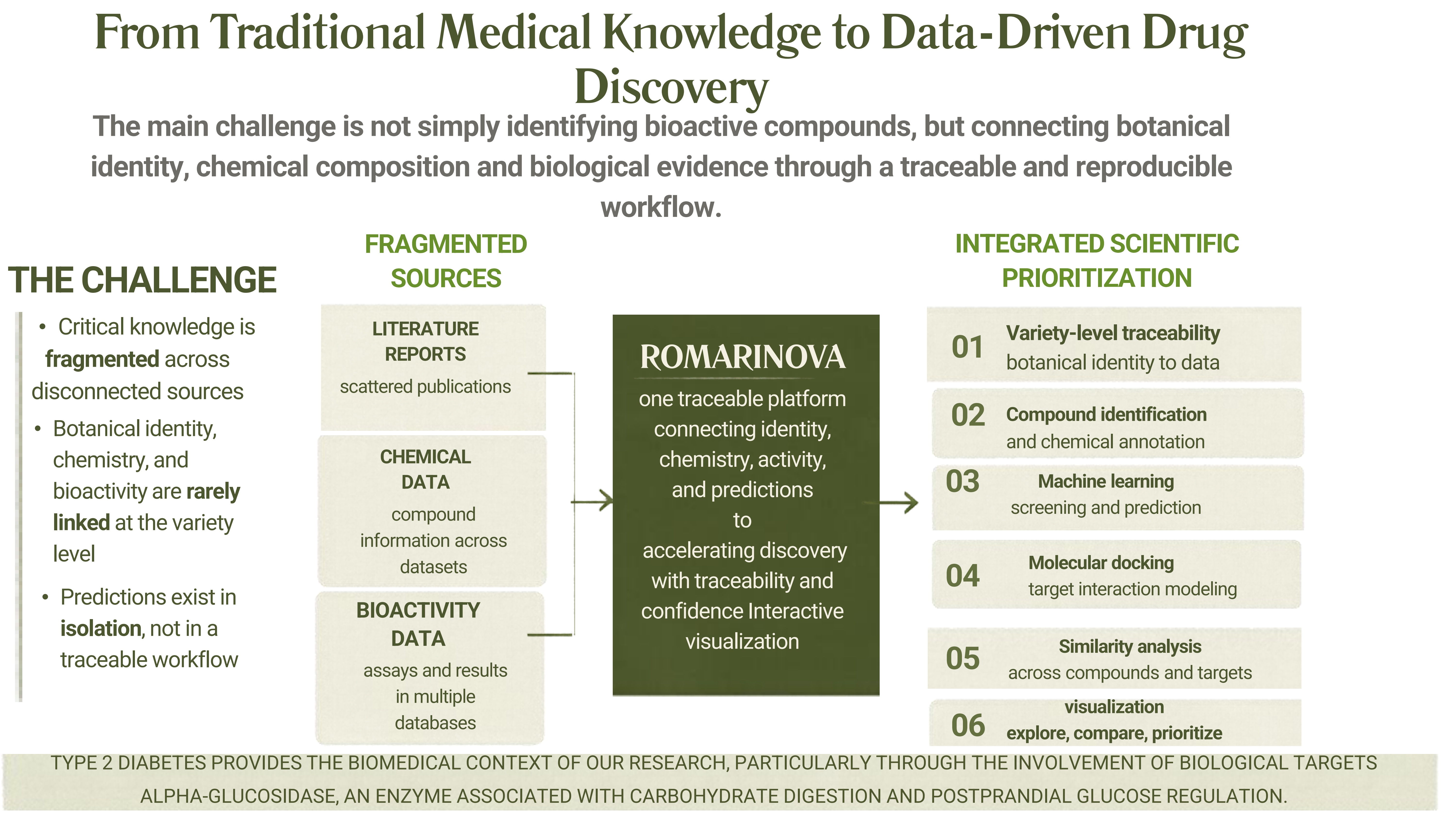
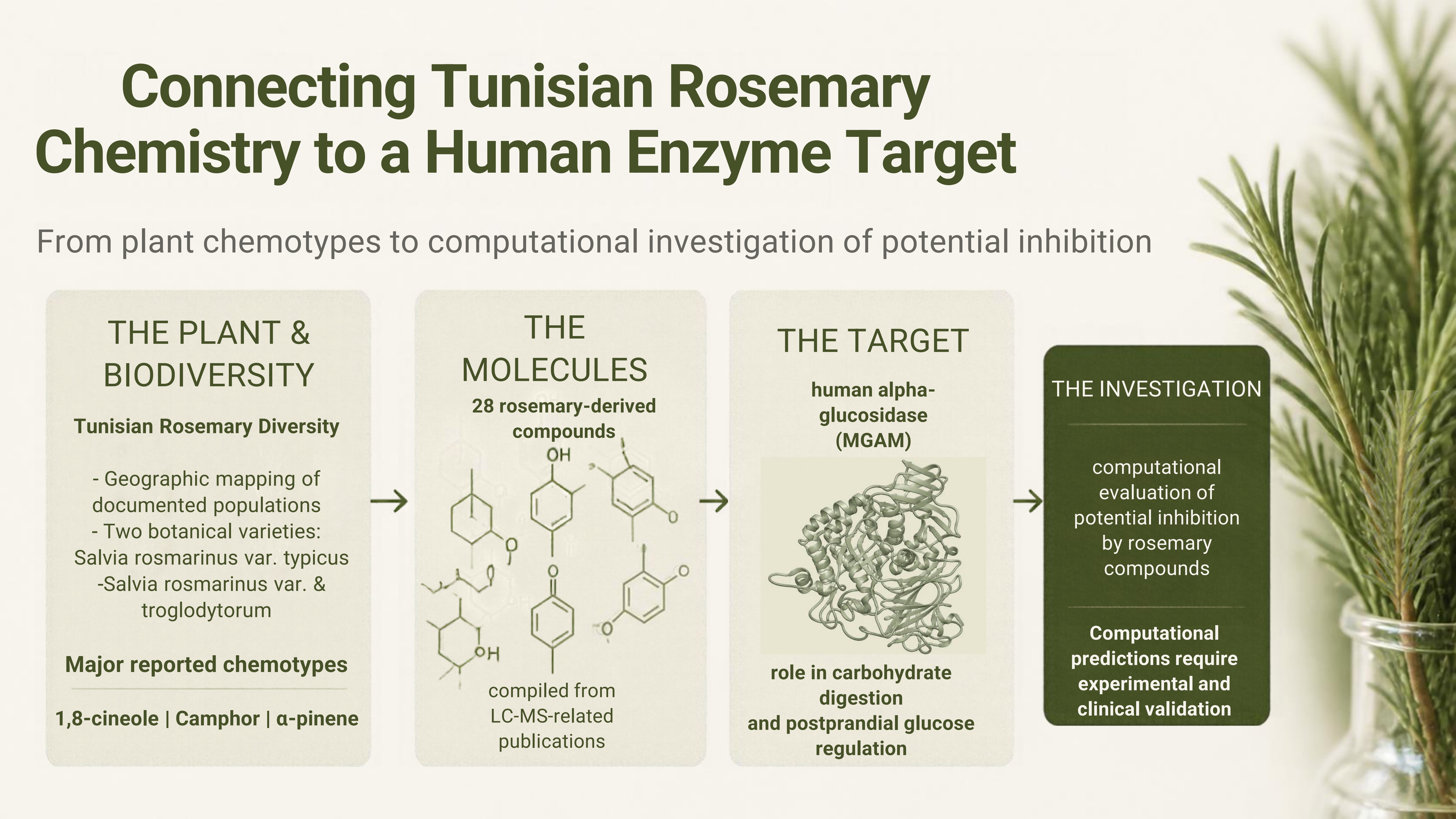
Tunisian rosemary is more than one plant profile: its chemical composition varies across varieties and growing populations. We were inspired by a gap between those documented rosemary compounds and the enzyme-level research on human α-glucosidase. We wanted to build a way to connect the two—and make it clear which evidence supports each candidate, and where that evidence stops. Romarinova AI is a research prioritization tool, not a claim that rosemary or any shortlisted compound treats diabetes.
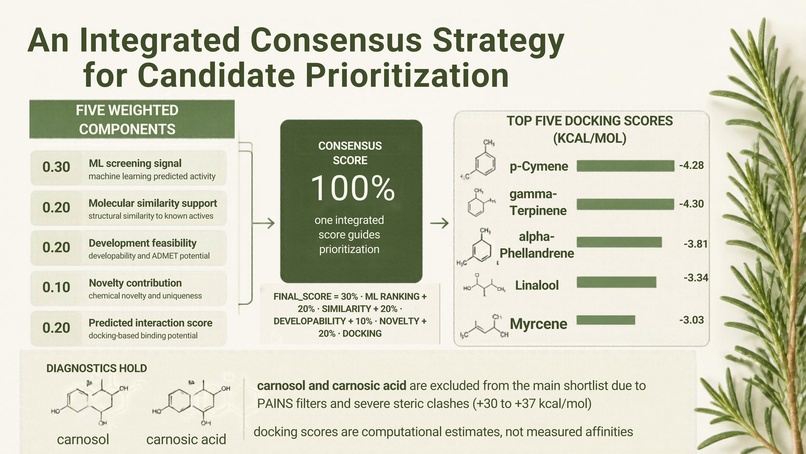
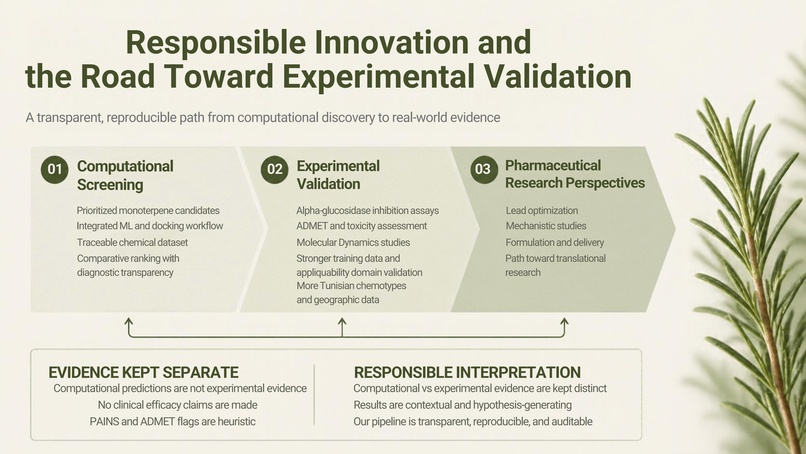
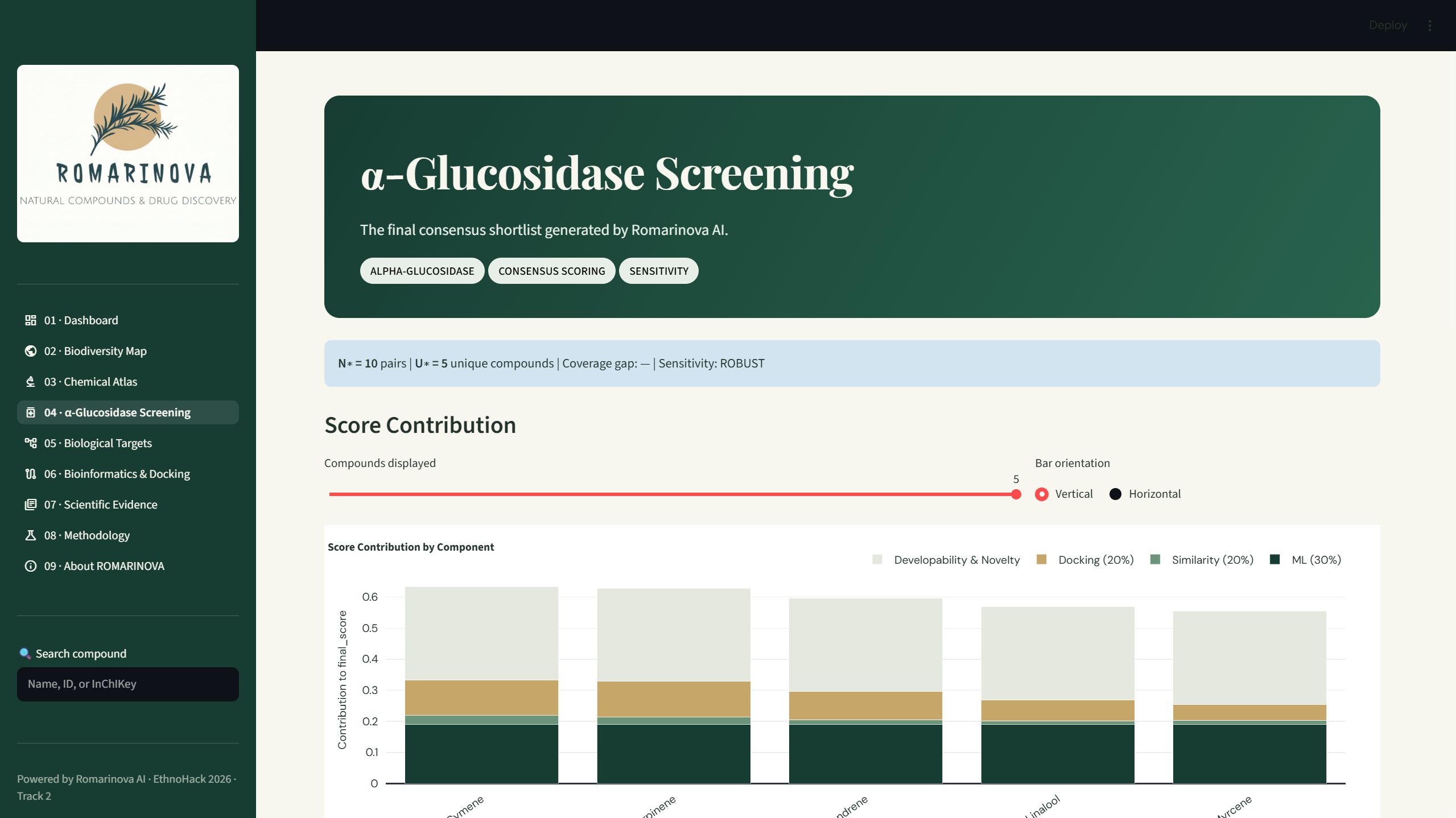
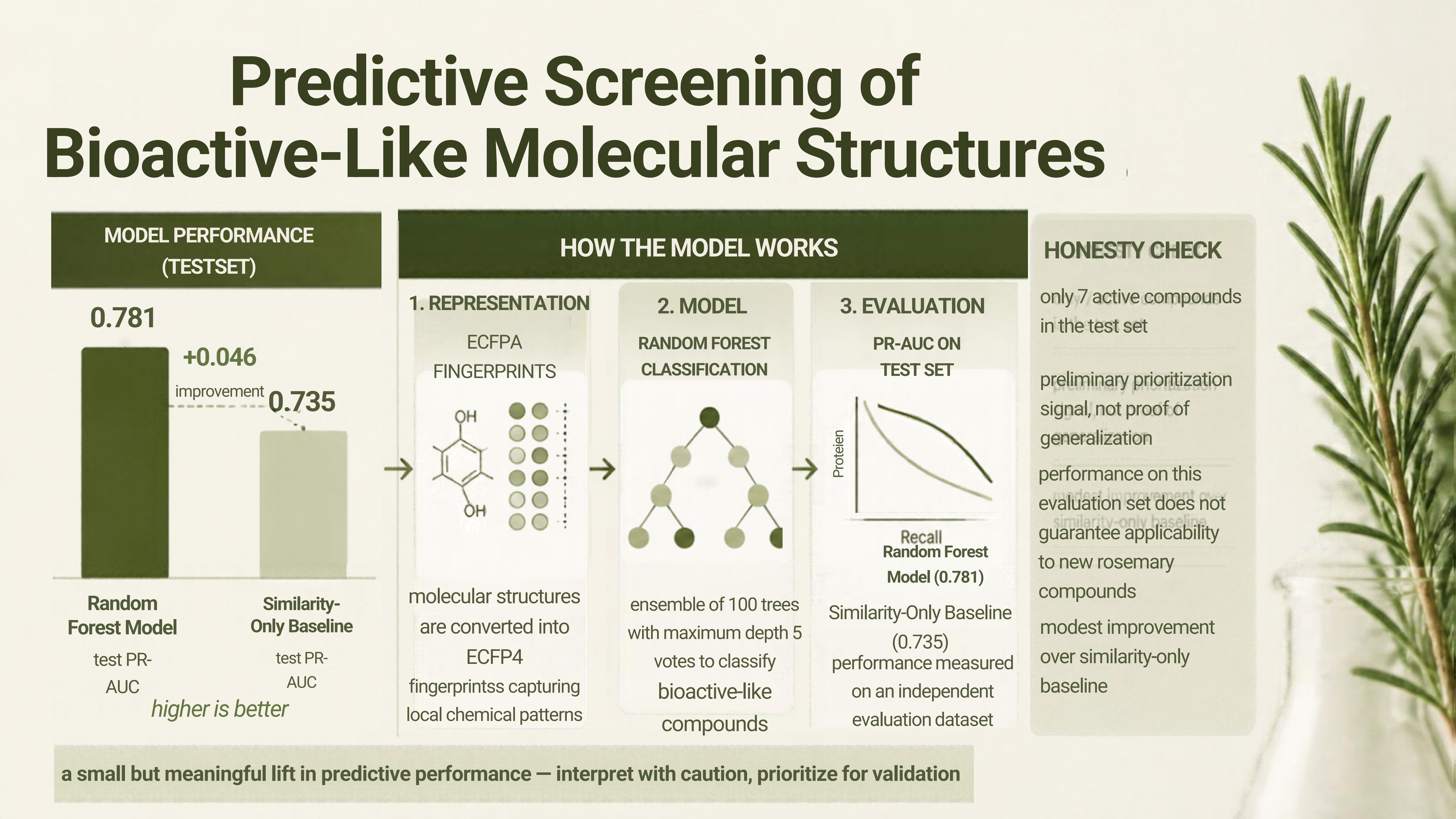
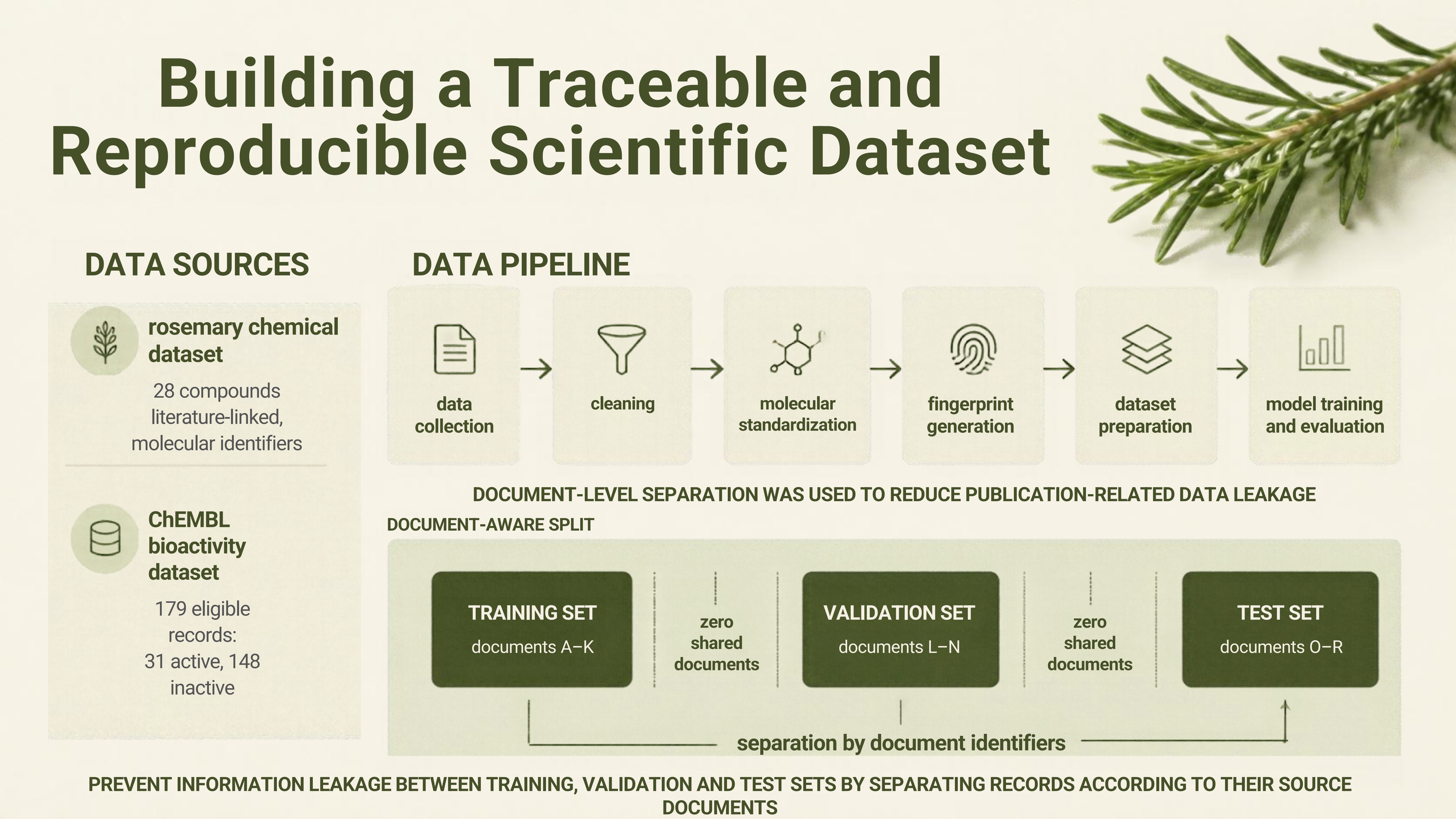
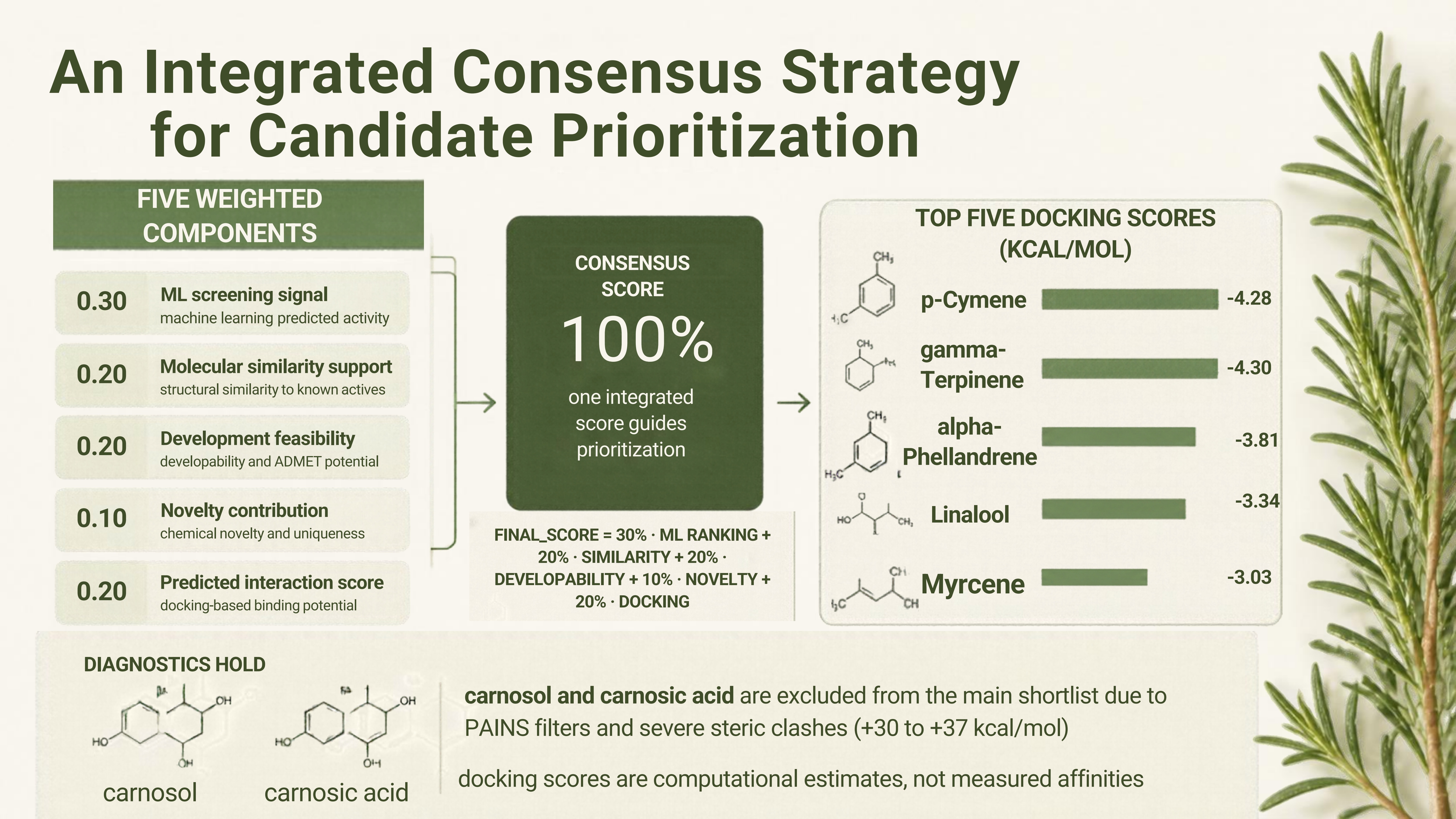
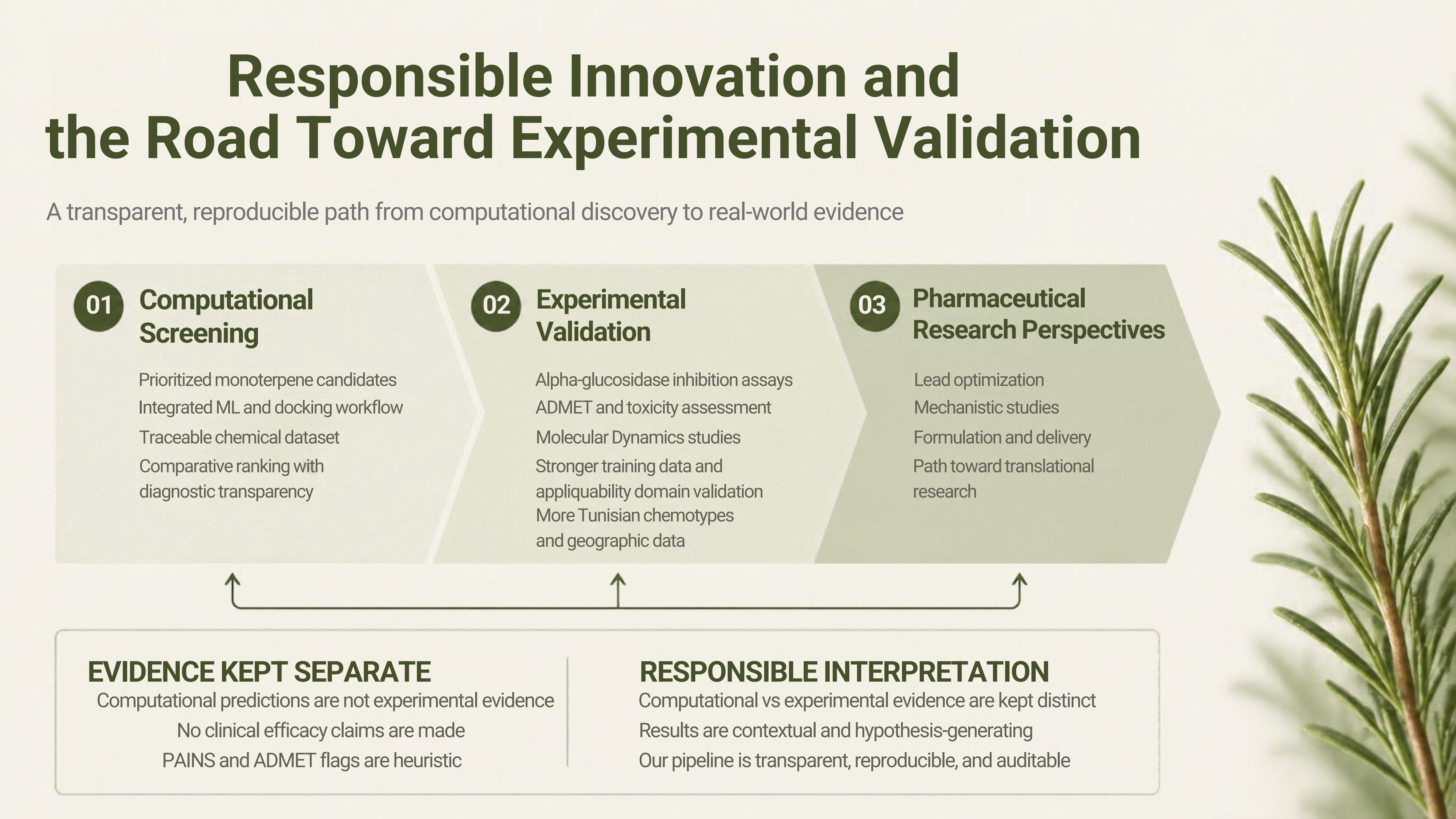
We built a reproducible pipeline that links rosemary compound records to their published sources, then evaluates them using several complementary methods. We curated a catalogue of 28 compounds and used ChEMBL bioactivity data to train and evaluate a Random Forest model. The pipeline also compares chemical similarity, applies developability filters, and docks compounds against the human MGAM catalytic site. It brings these evidence streams together in a traceable shortlist, with diagnostics for compounds that fail filters. The final shortlist contains five compounds for further investigation; experimental validation is still needed.
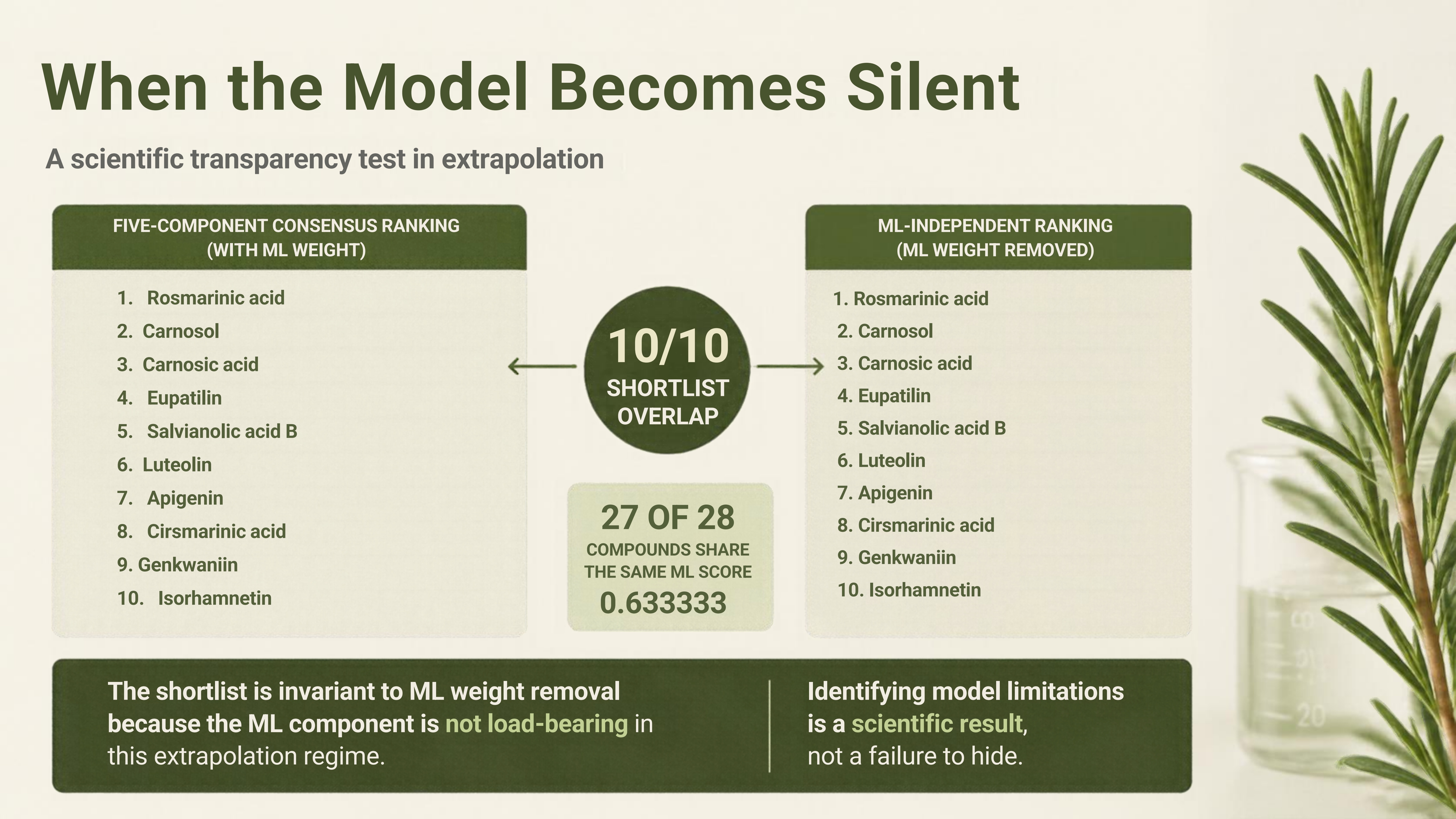
The project taught us that a good model score is only part of the story. Our model achieved a test PR-AUC of 0.781, but all 28 rosemary compounds fell outside its applicability domain. For nearly all of them, the model returned the same ranking score. That meant we could not treat its predictions as meaningful distinctions within this chemical set. Comparing the shortlist with and without the ML contribution helped us see that the ranking was driven by the other evidence—not by a model that could not reliably distinguish these compounds.
One of our biggest challenges was making the workflow reproducible and scientifically honest under a short hackathon timeline. We had to resolve which α-glucosidase target was relevant, prevent compounds from the same source document crossing evaluation splits, and report the limits of a small test set. Integrating docking brought its own challenge: scoring needed to be appropriate for the small rosemary compounds, and docking results had to remain hypotheses rather than claims of binding or biological activity.
The result is a transparent starting point for experimental follow-up: a shortlist, the evidence behind it, and an explicit account of the uncertainty.
Built With
- autodock-vina
- bioinformatics
- chembl
- cheminformatics
- drug
- fastapi
- jupyter
- machine-learning
- meeko
- molecular-docking
- natural-products
- numpy
- pandas
- plotly
- py3dmol
- python
- rdkit
- scikit-learn
- scipy
- sqlite
- streamlit
- xgboost
