-
-
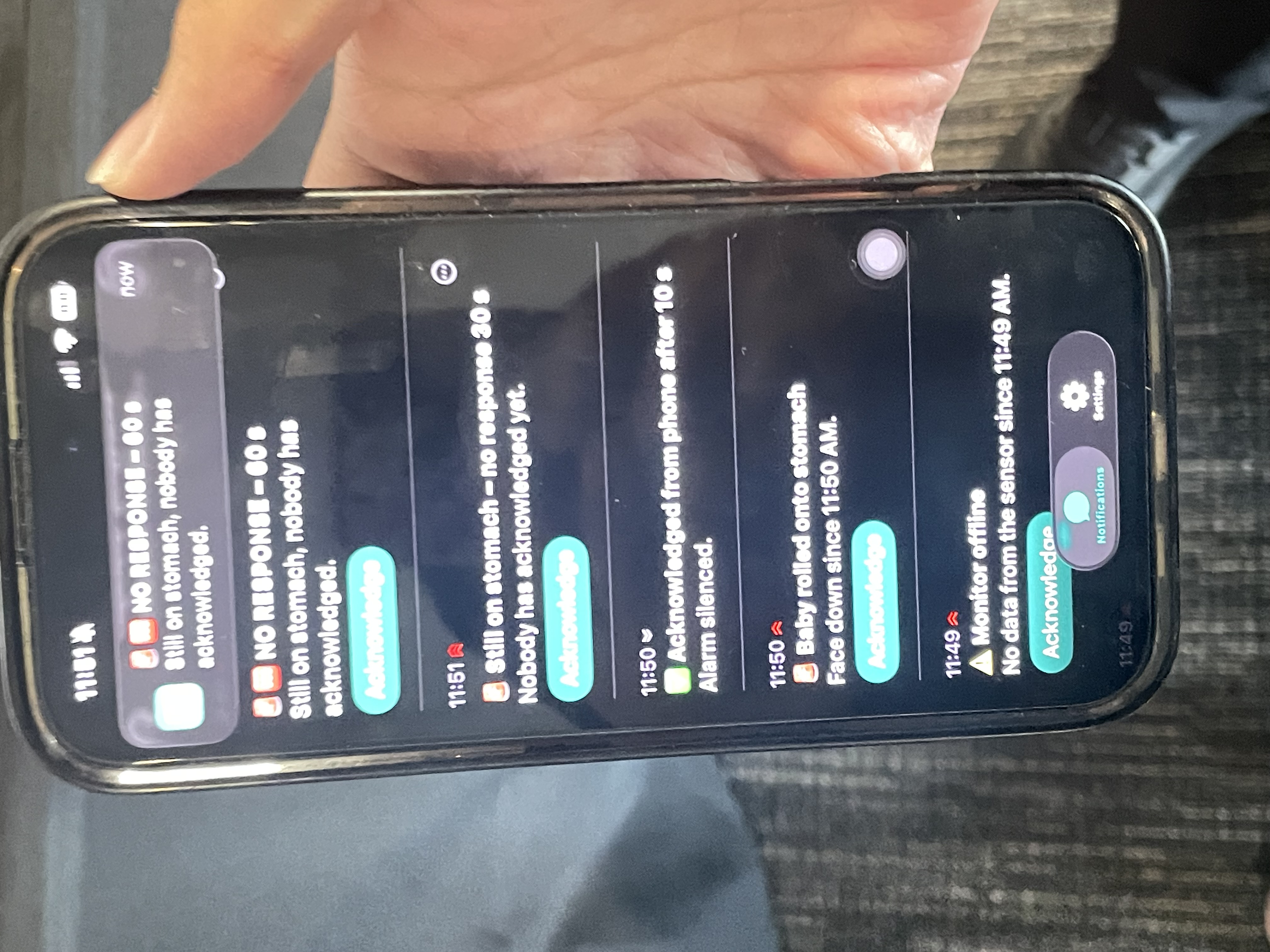
notifications
-
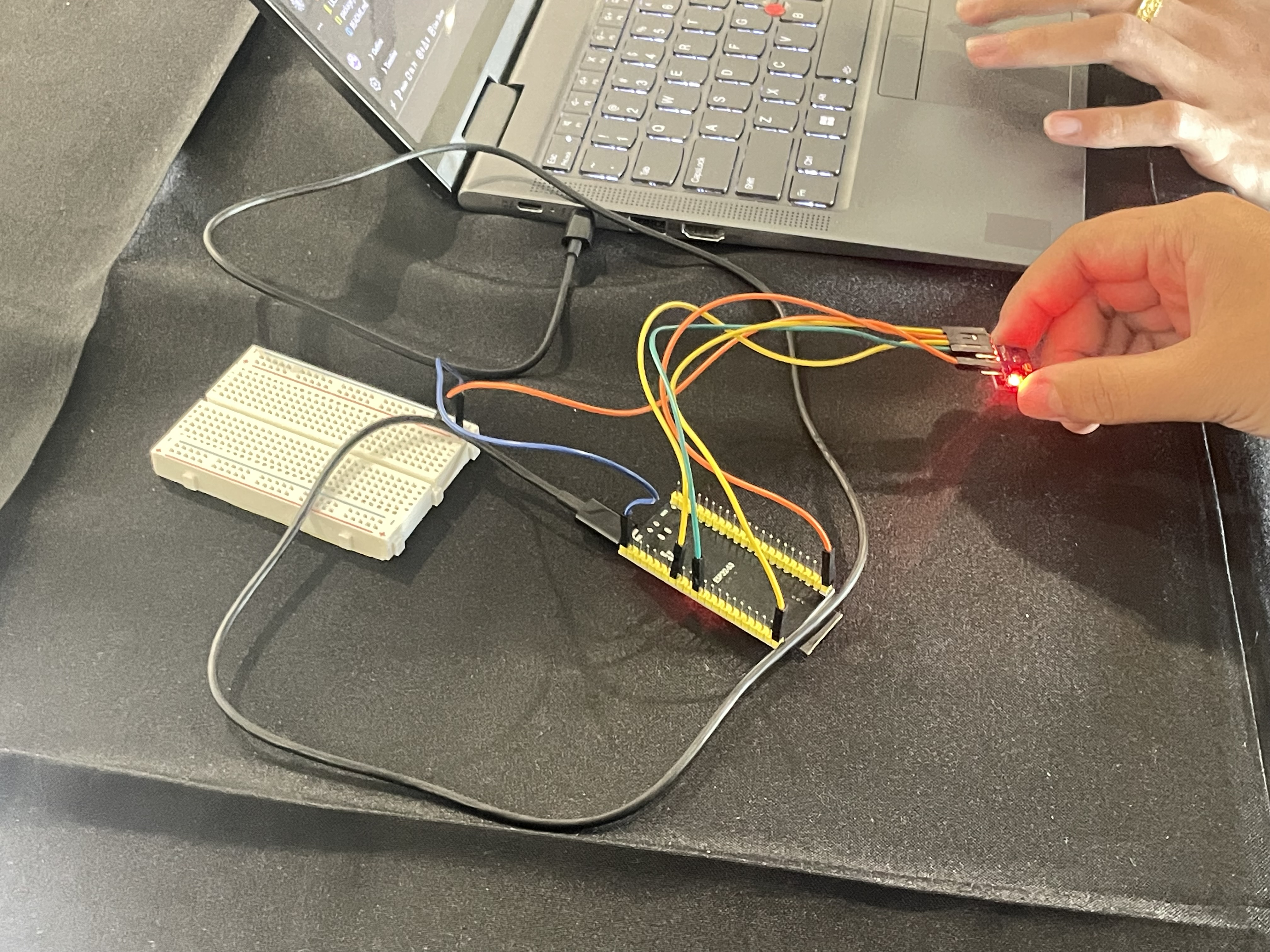
hardware
-
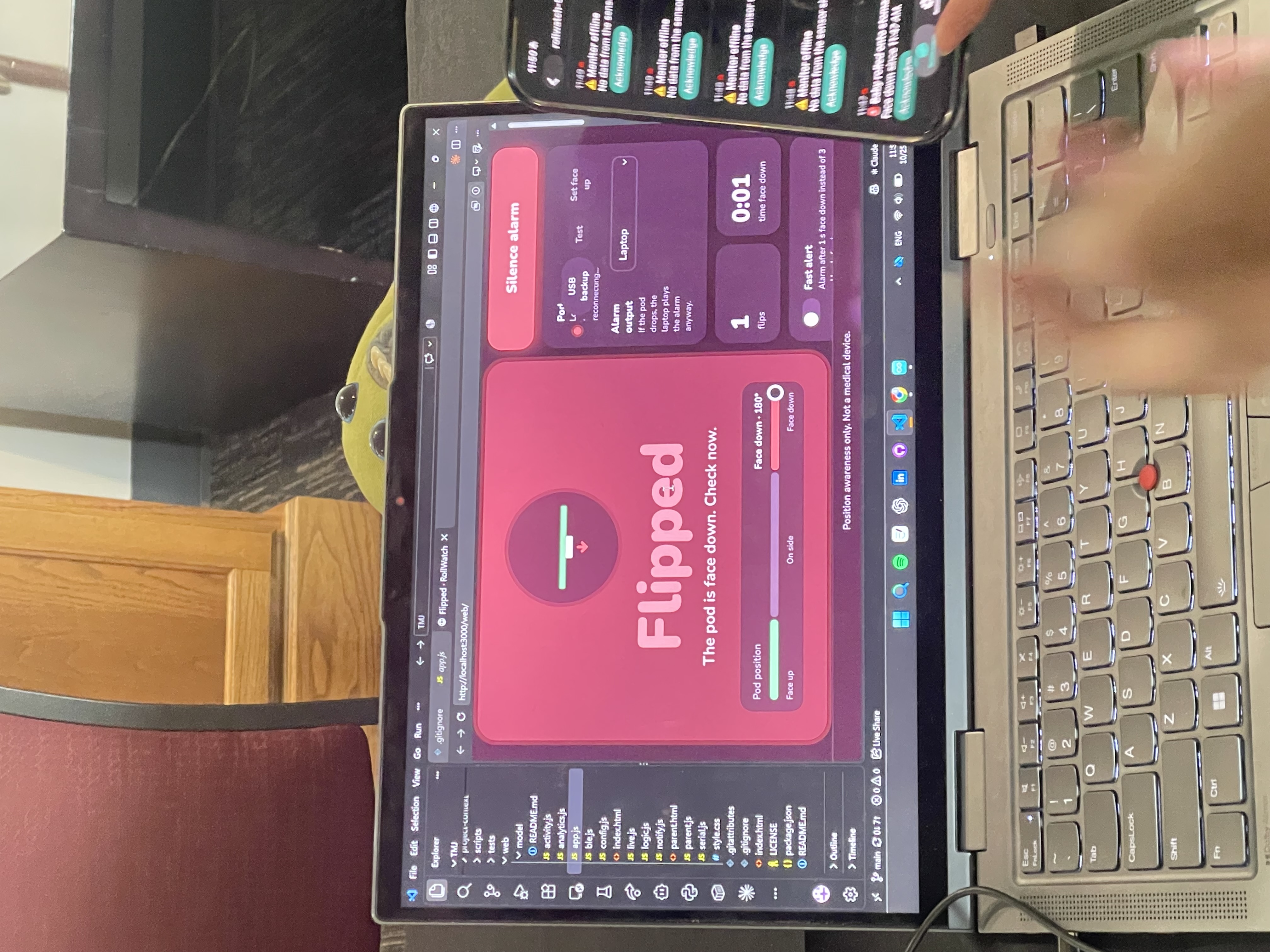
flipped
-
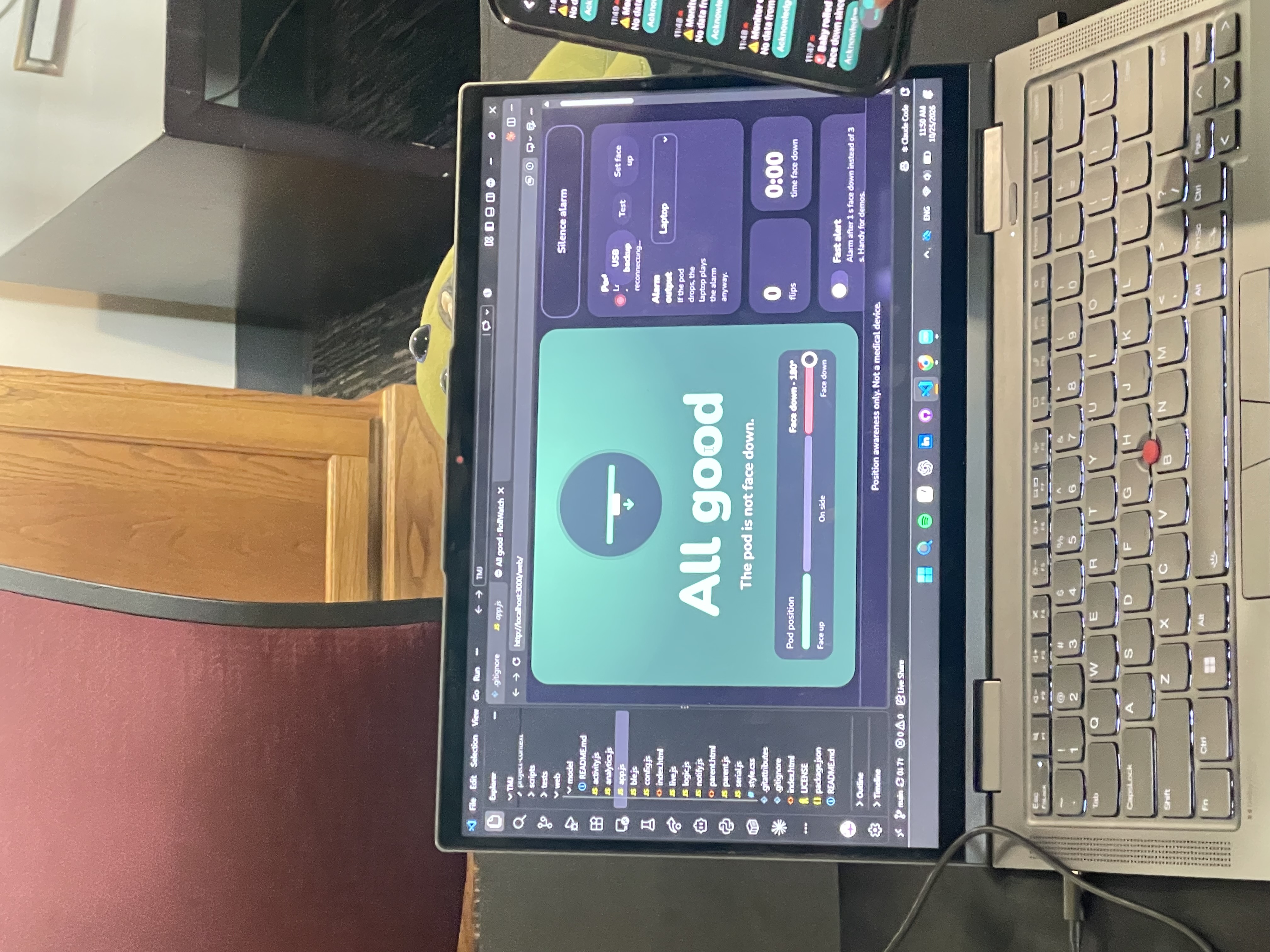
not flipped
Inspiration
We were inspired by concerns about infant sleep safety and the challenges caregivers face when monitoring a sleeping baby. We wanted to explore how technology could help caregivers notice when a baby changes from sleeping on their back to rolling onto their stomach.
What it does
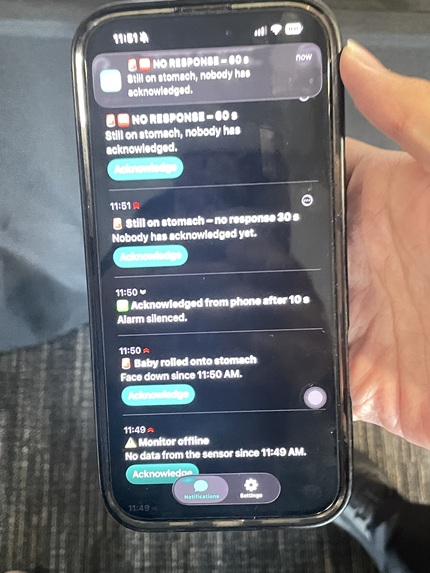
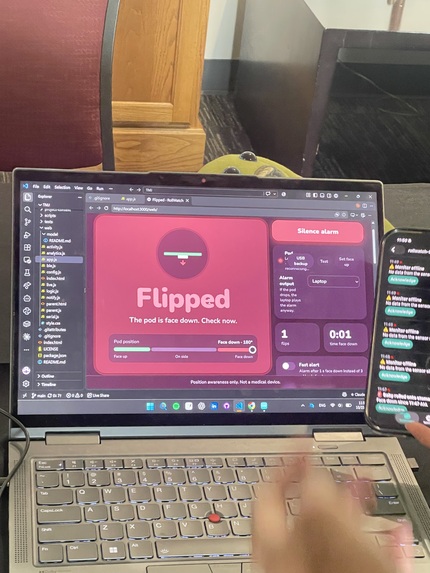
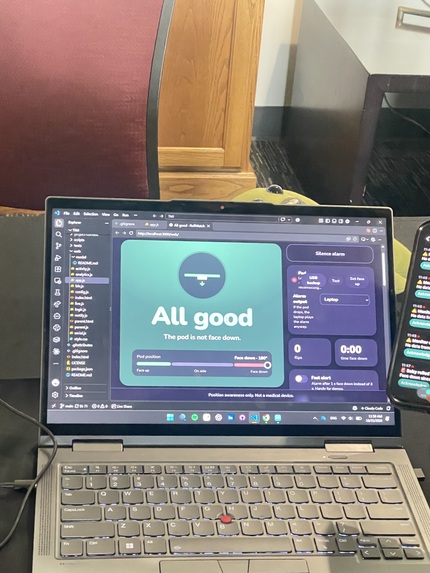
RollWatch is a prototype designed to detect when a baby doll rolls from its back onto its stomach using a motion sensor connected to an ESP32-S3. The web app provides a live camera feed, two-way communication so parents can talk back through the system, and audio alerts through the computer. If a notification isn't acknowledged, the system sends another alert every 30 seconds. The app also provides analytics to help parents review monitoring activity, bringing several monitoring features together in one interface.
How we built it
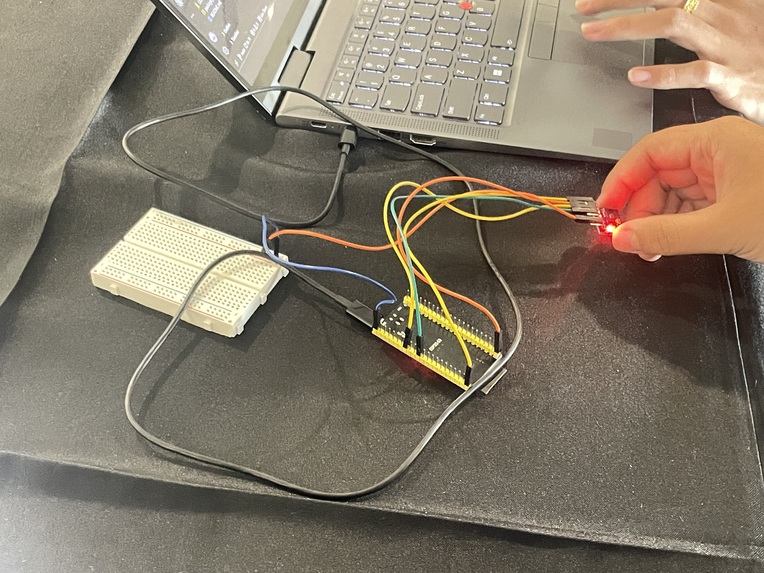
We connected an MPU-6050 motion sensor to an ESP32-S3 microcontroller to detect changes in orientation. We developed a web app that combines motion alerts, a live video feed from the computer's built-in camera, two-way audio communication, and monitoring analytics. We also implemented a notification system that repeats alerts every 30 seconds until a parent acknowledges them. For audible alerts, we used the computer's audio output because our separate speaker setup required an adapter that we didn't have available.
Challenges we ran into
One of our main challenges was integrating the hardware and software into one system. We had to troubleshoot sensor wiring, identify the correct GPIO pins on the ESP32-S3, and establish communication between the motion sensor and the web app. We also ran into an audio hardware limitation: our separate speaker setup required an adapter we didn't have, so we adapted by using the computer's audio output for alerts. Coordinating the live camera, two-way communication, repeated notifications, and analytics also required us to bring multiple features together into one web app.
Accomplishments that we're proud of
We're proud of building a prototype that combines motion detection with a feature-rich web app. RollWatch brings together a live camera feed, two-way communication, computer-based audio alerts, recurring notifications until acknowledgment, and monitoring analytics. We're especially proud of adapting when we couldn't connect our separate speaker and using the computer's audio instead, allowing us to continue developing the core monitoring experience.
What we learned
We learned how motion sensors detect changes in orientation, how microcontrollers process sensor data, and how wireless communication can connect hardware to a monitoring system. We also learned that building a working prototype takes patience, testing, and troubleshooting, especially when integrating components with different wiring and programming requirements.
What's next for RollWatch
Our next steps are to improve the reliability of roll detection, integrate wireless alerts, and develop a user-friendly interface that allows caregivers to monitor the system from their phones. We also hope to explore camera streaming and two-way communication to make the prototype more interactive. Ultimately, we want to continue refining RollWatch into a more reliable demonstration of technology-assisted monitoring, while recognizing that it is not a replacement for safe-sleep practices or caregiver supervision.

Log in or sign up for Devpost to join the conversation.