Inspiration
Creating an explainer video starts with a topic or a question, but turning it into something worth watching involves several different kinds of work: researching, choosing an angle, writing a narrative, designing visuals, recording narration, and editing.
RollFromHere began with a question about that process: could a coordinated team of AI agents take on these production roles while keeping the creator involved in the editorial decisions?
The project explores agentic filmmaking for content creators and YouTubers who want to make explanatory videos. A creator provides the subject and direction; the agents work through the research and production, with their intermediate work available to inspect.
What it does
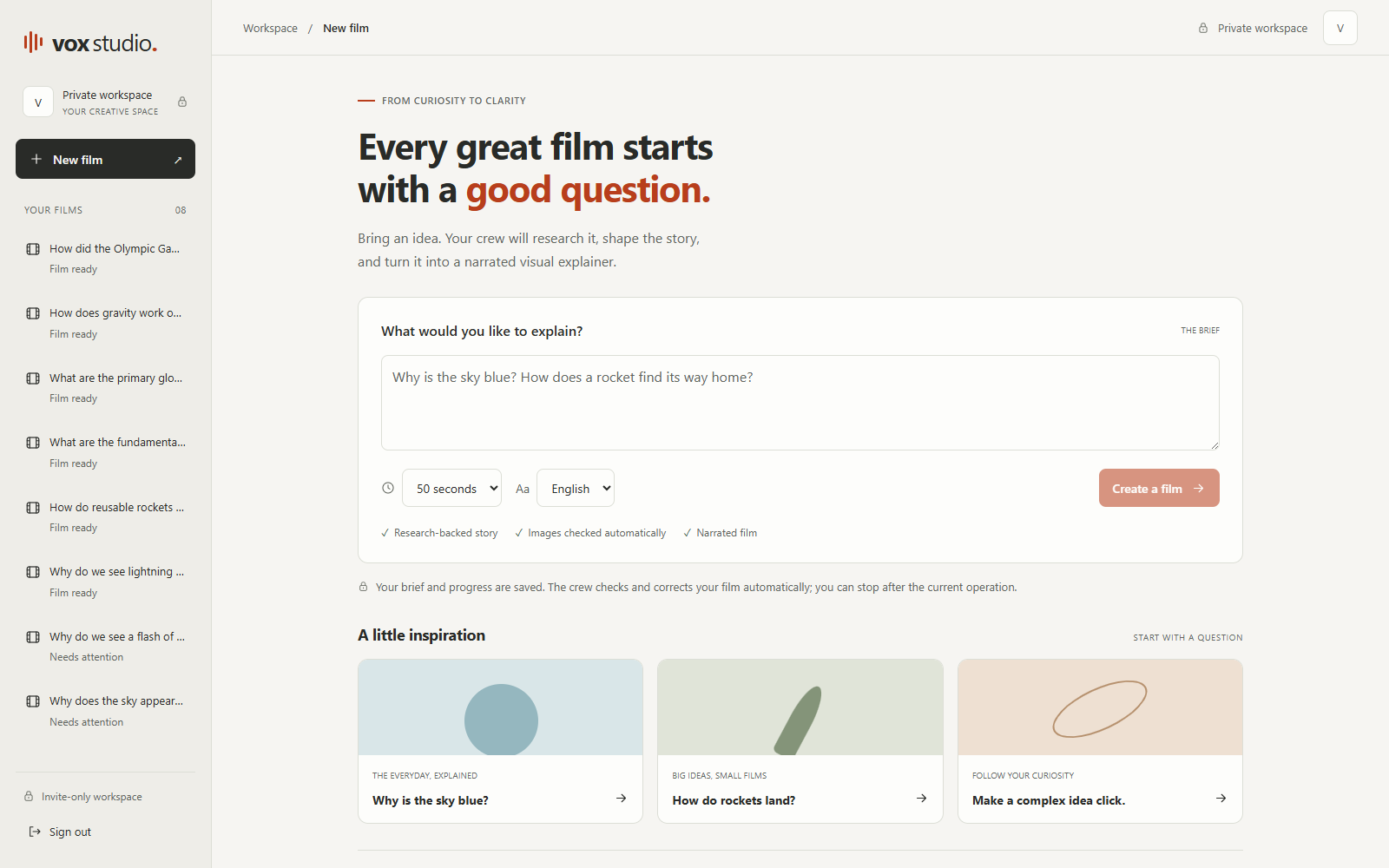
RollFromHere turns a topic, question, or written instruction into a researched, narrated explainer video.
The workflow starts with an editorial brief: what the video should explain, who it is for, its angle, language, and target duration. The crew then gathers evidence, develops the narrative, plans the visual sequences, generates supporting images, prepares narration, and assembles the video.
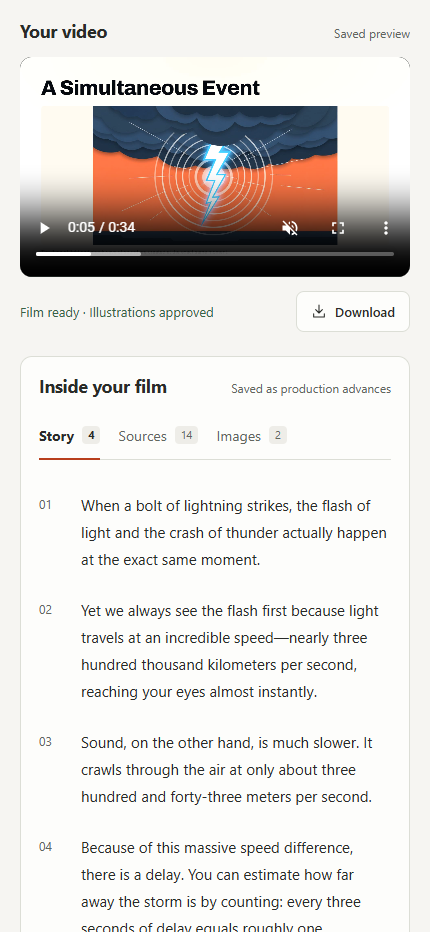
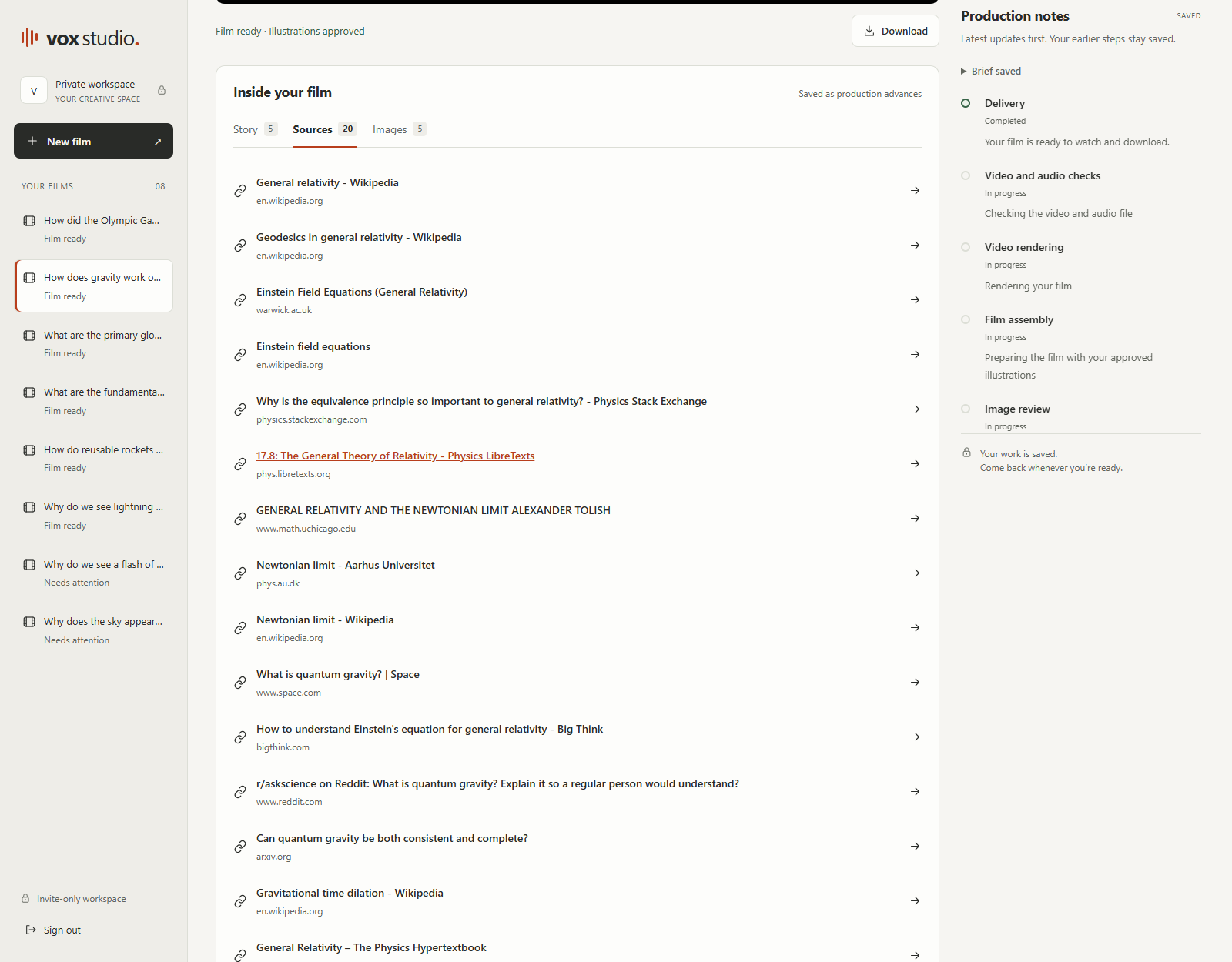
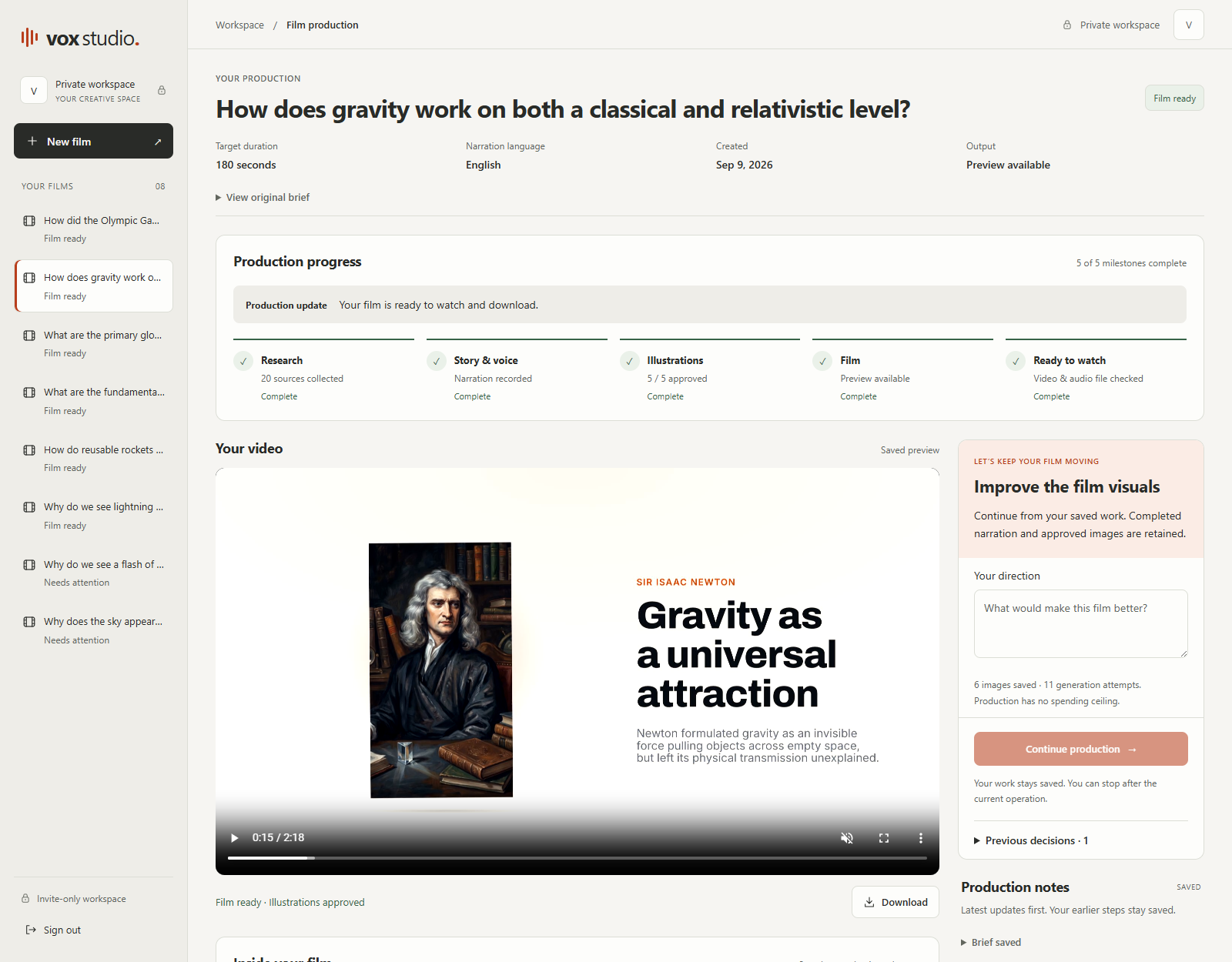
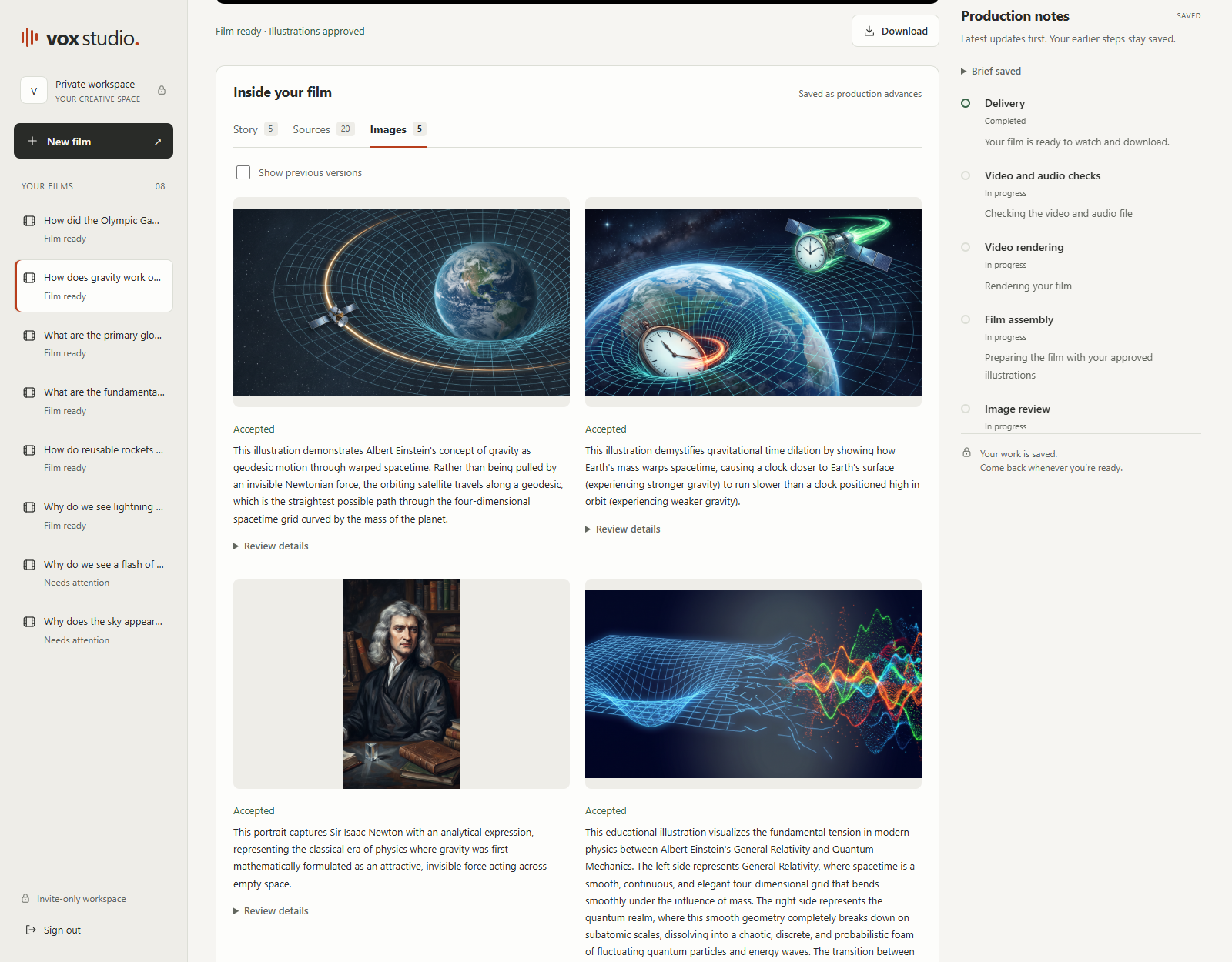
The browser-based Studio makes that process visible. Creators can follow progress, consult sources, inspect narration and image versions, give direction when production needs clarification, and play or download the resulting video. Saved projects retain their production history and consumption records.
The agentic part is the coordination between these stages. Research can be revisited when it does not adequately answer the question. Images can be reviewed and revised. When corrections repeat without progress or instructions conflict, the workflow can pause for human direction.
How it was built
The project combines an agent crew, a separate production service, and a web interface.
- Google ADK and Gemini implement specialized roles for editorial planning, writing, visual authoring, and review. Their outputs pass through structured contracts before the next stage uses them.
- Parallel Search through Gemini on Google Cloud supplies grounded web research. The research adapter connects supported claims to the sources in the grounding response, preserving those references for inspection.
- Gemini image generation creates supporting visual assets. Image corrections can use the previous candidate as a reference, and candidate history is retained.
- ElevenLabs supplies speech synthesis in the current implementation.
- TypeScript, React, and Remotion provide the production and rendering layer. Agents describe narrative beats and visual intentions; a compiler resolves those instructions against the recorded narration to produce the timed video.
- Google Cloud hosts the application infrastructure. A Cloud Run HTTPS proxy fronts services on private Compute Engine infrastructure, with persistent storage for production state and media.
The separation between agents and production is a central design choice. Agents work with published visual capabilities and structured commands, while the production service handles timing, assets, validation, and rendering.
Challenges encountered
Keeping research useful to the story. A response with citations can still fail to explain the central question. The workflow therefore distinguishes having source references from having enough evidence to support the explanation.
Synchronizing visuals with narration. An animation may need to happen when a particular word is spoken. The project uses references to narrative beats and spoken words, then resolves them using the recorded audio timings.
Making corrections converge. Image reviews can conflict, and repeated attempts can spend resources without improving the result. Production preserves previous candidates and correction history, and pauses when it needs a clearer editorial decision.
Recovering from interruptions. A lost response does not necessarily mean an operation failed. Checkpoints and provider journals help distinguish completed work from uncertain outcomes, so recovery can preserve existing assets and avoid blindly repeating generation.
Accomplishments
The project brings research, narration, visual composition, rendering, and inspection into one saved production workflow.
A particularly useful result was demonstrating recovery from a live worker interruption while preserving the same production run, image candidate, and provider journal. Browser rehearsals also exercised video playback, seeking, downloads, source links, and project persistence.
These engineering checks establish specific behaviors. They do not mean every topic produces a satisfactory film without intervention; editorial quality remains something to evaluate on the actual output.
What was learned
Agentic filmmaking depends heavily on the handoffs between roles: what evidence a writer receives, what a visual author can express, what a reviewer is judging, and what state survives an interruption.
Creative decisions also need different checks from technical ones. A video can render correctly while explaining something poorly. Keeping those questions separate makes failures easier to understand and corrections more precise.
What's next
The next step is to evaluate the workflow across a broader set of creator briefs and complete films, with attention to factual coverage, visual clarity, pacing, and the amount of human correction needed.
Further work will focus on more direct editing of individual narrative beats and visual sequences, stronger continuity across longer videos, and clearer feedback when the crew needs a creator's decision.
Built With
- cloud-run
- compute-engine
- docker
- elevenlabs
- fastapi
- gemini
- google-adk
- google-cloud
- parallel
- python
- react
- remotion
- sqlite
- typescript
- vite

Log in or sign up for Devpost to join the conversation.