-
-
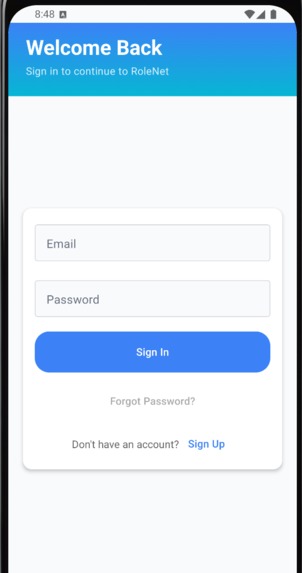
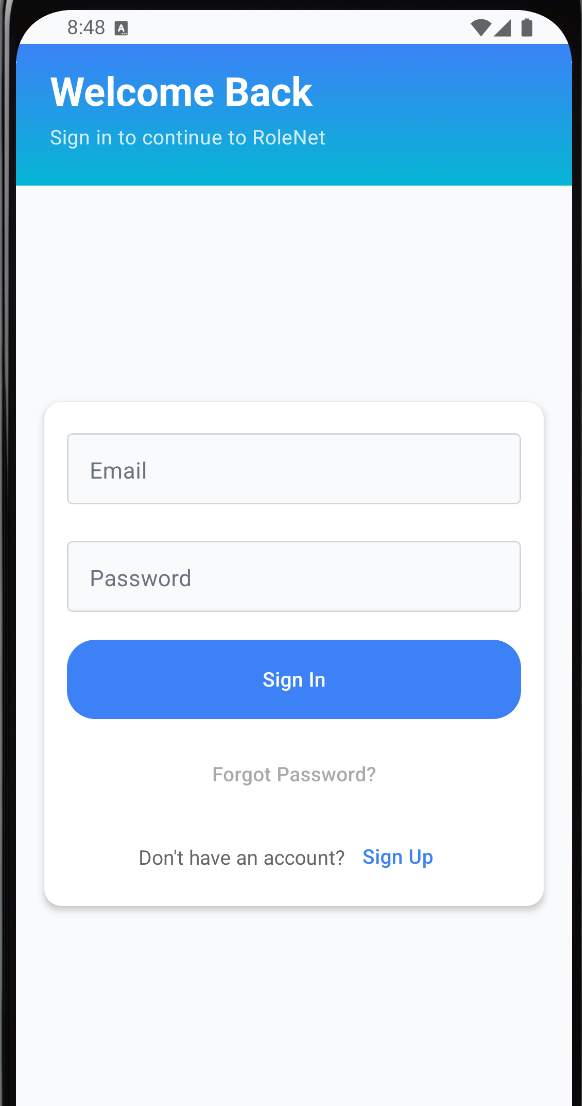
Login page
-
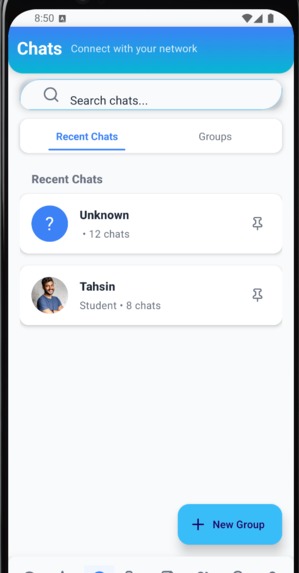
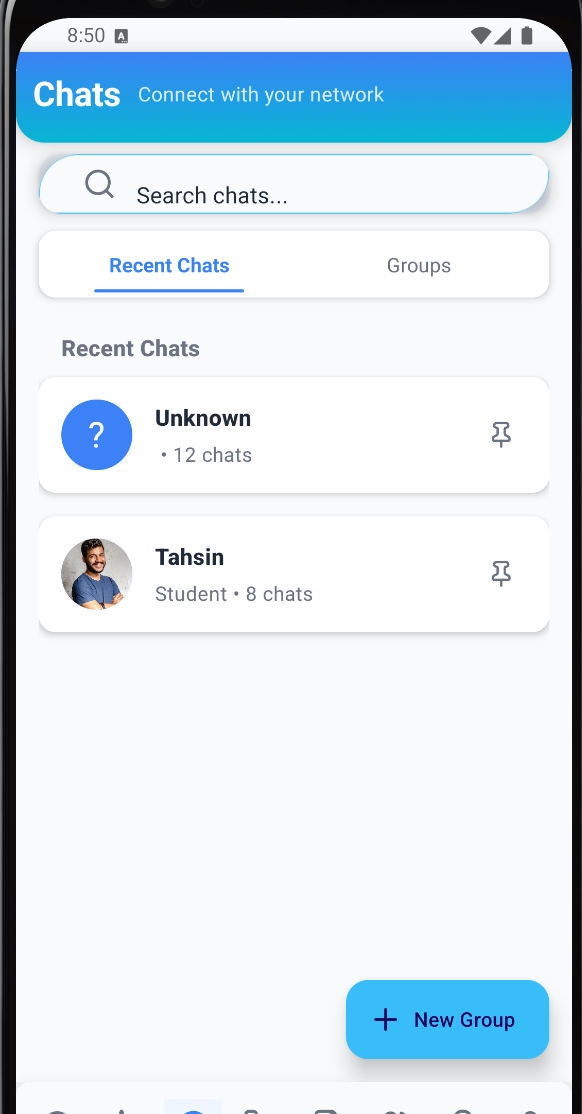
Chats Page
-
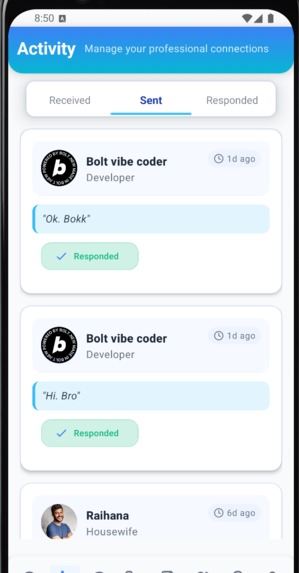
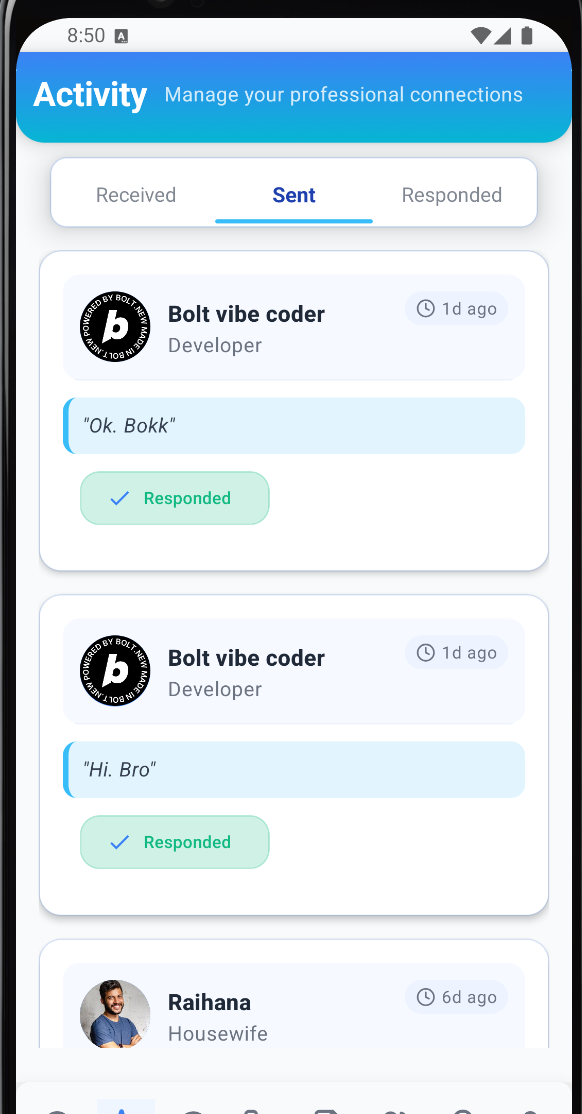
Activity page
-
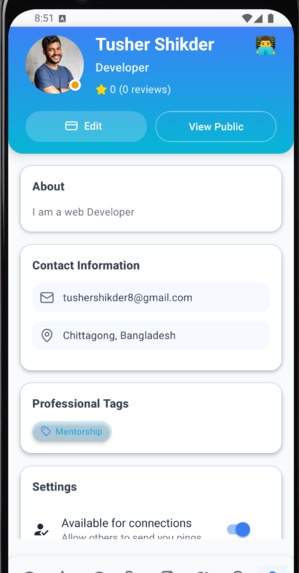
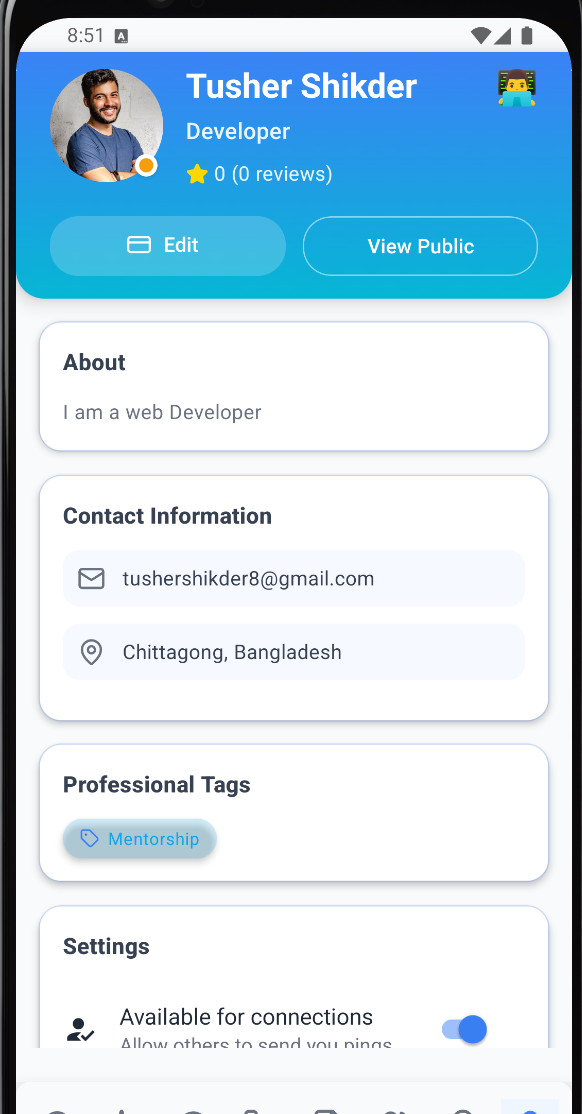
Profile Page
-
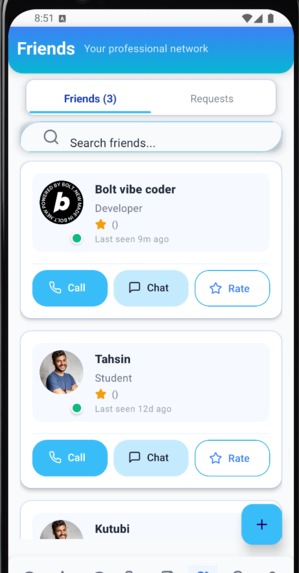
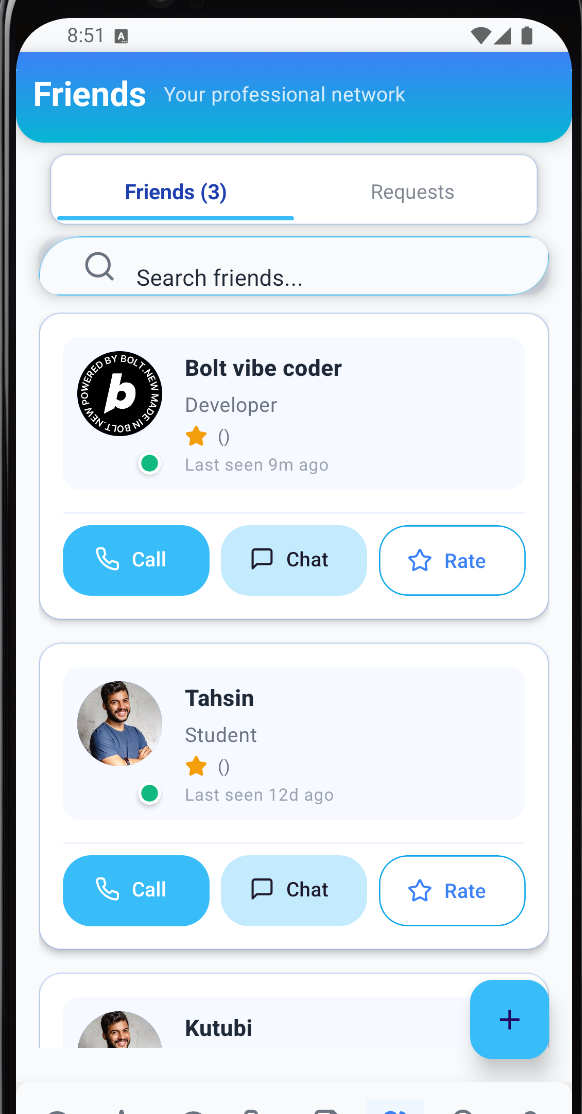
Friends page
-
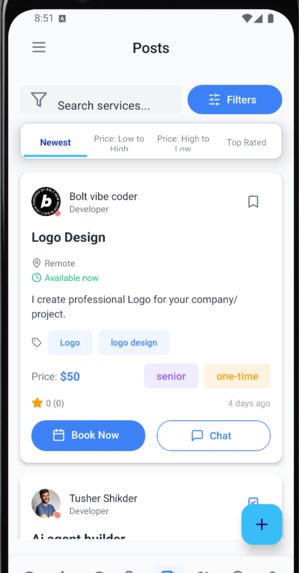
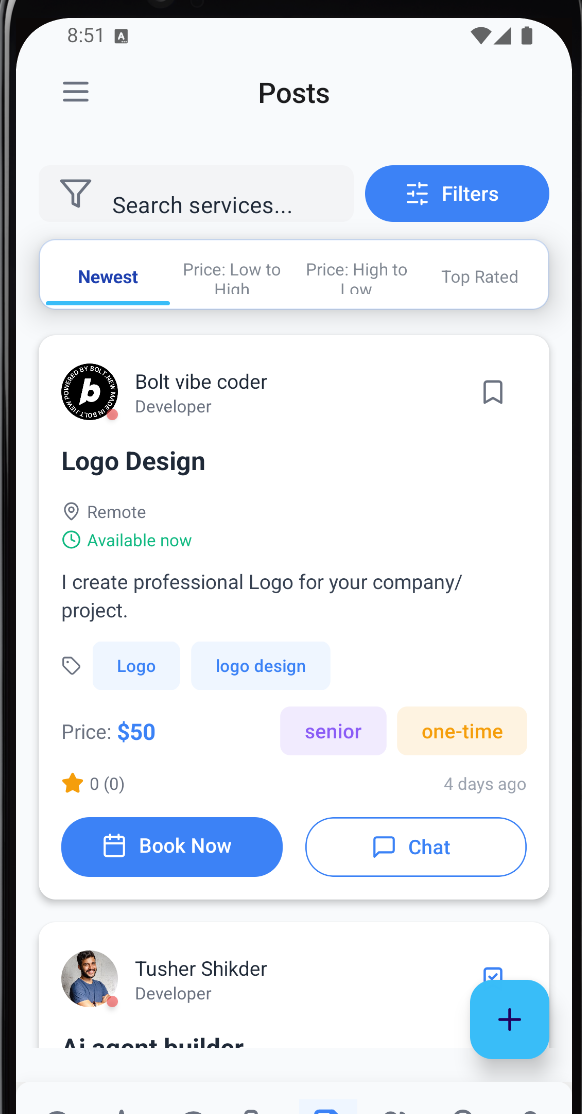
Posts Page
-
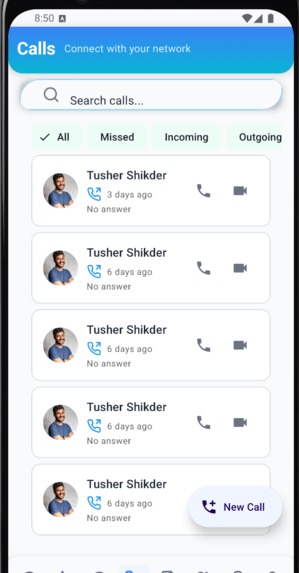
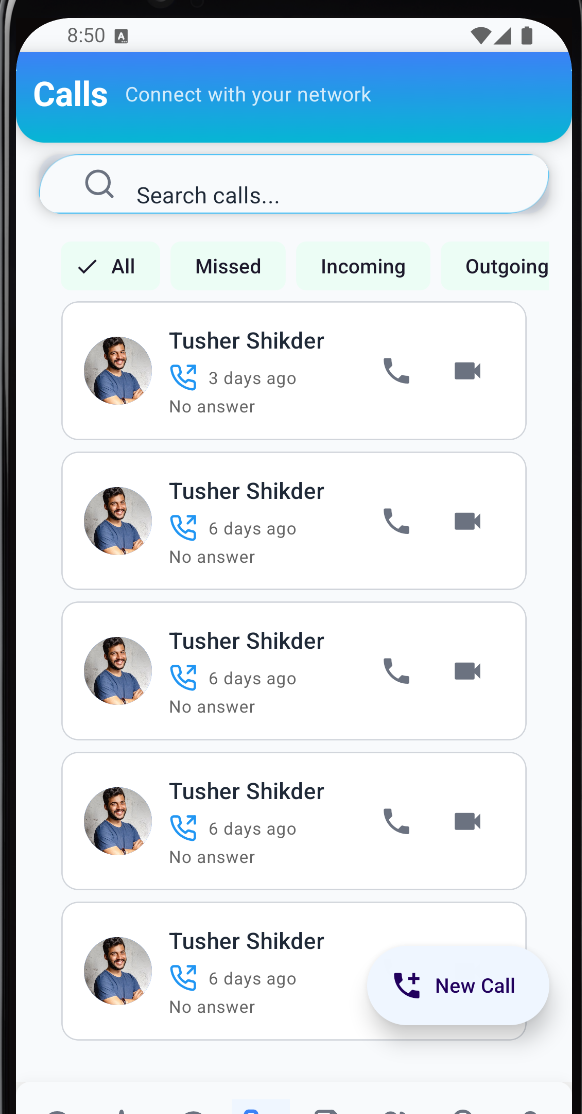
Calls page
-
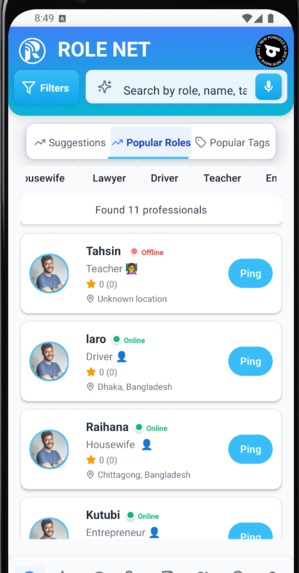
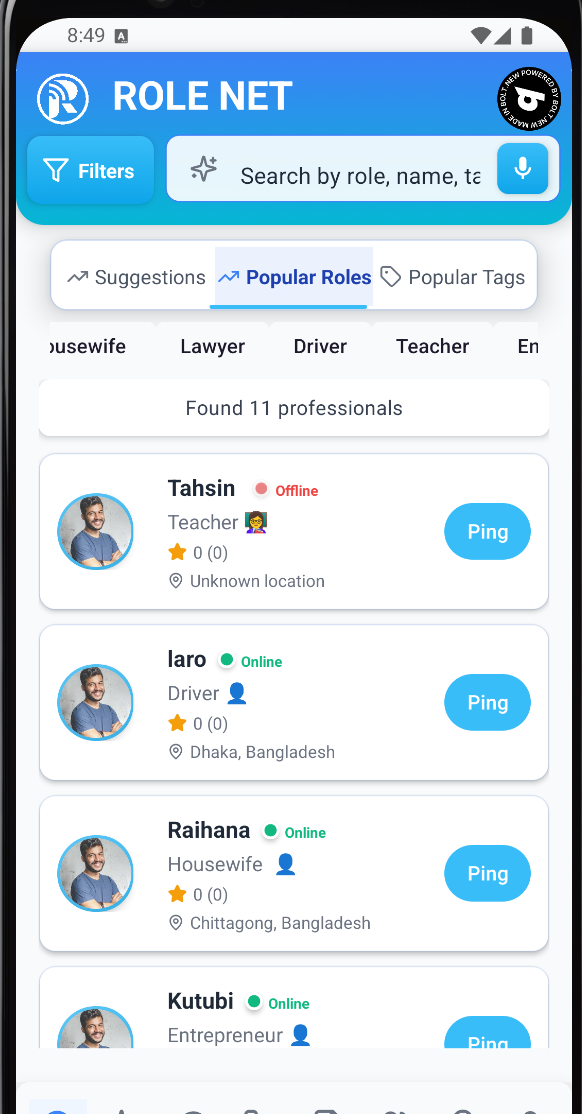
Discover page
-
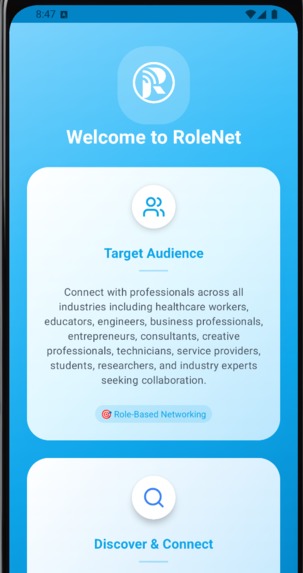
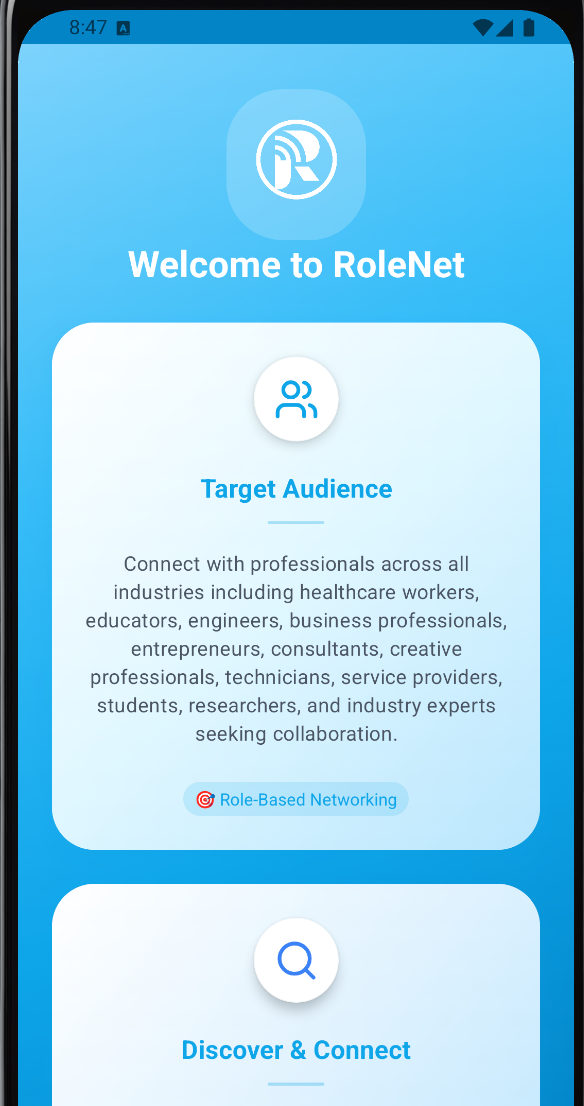
Welcome page
RoleNet: Connecting Every Professional Role in One Network
Inspiration
RoleNet was born from a simple observation: while there are many networking platforms for specific industries, there wasn't a single platform that connected professionals across all roles and sectors. Whether you're a teacher looking for a developer, a doctor seeking legal advice, or a student needing mentorship - traditional networking platforms often create silos rather than bridges.
I wanted to build something that would break down these barriers and create a truly inclusive professional network where your role is your identity, and your skills are your currency. The vision was simple yet powerful: "Every Role. One Network."
What it does
RoleNet is a comprehensive professional networking platform that connects people based on their professional roles and expertise. The app offers:
Role-Based Discovery: Find professionals by role, tags, or location with AI-powered search and intelligent filters.
Smart Ping System: Send personalized connection requests to professionals with context about why you want to connect.
Real-Time Communication: Engage through instant messaging and HD audio calls with WebRTC integration.
Professional Profiles: Create detailed profiles showcasing your role, skills, and expertise with ratings and endorsements.
Service Marketplace: Post and discover professional services with detailed descriptions, pricing, and availability.
Friend Management: Build and maintain your professional network with a comprehensive friend system.
Activity Tracking: Keep track of your networking activities, pings, and connections in one place.
How we built it
RoleNet was built using a modern React Native stack with Expo, focusing on performance, reliability, and user experience:
Core Technologies
- React Native & Expo: For cross-platform mobile development
- Expo Router: For file-based navigation with nested layouts
- Zustand: For lightweight, flexible state management
- Supabase: For authentication, database, storage, and real-time features
- WebRTC: For peer-to-peer audio calling
Key Implementation Details
Smart Search Engine: We built a custom search algorithm that uses AI-inspired relevance scoring to match professionals based on roles, tags, location, and other factors.
Ping System: The connection request system uses Supabase Edge Functions to process pings, send notifications, and update user statistics in a single transaction.
WebRTC Integration: The calling system implements a custom signaling protocol using Supabase Realtime, with fallbacks to TURN servers for NAT traversal.
Offline Support: We implemented a comprehensive offline strategy with message queuing, background sync, and optimistic UI updates to ensure a seamless experience regardless of connectivity.
Performance Optimizations: The app includes real-time subscription management, connection pooling, and smart data loading to maintain performance even with many active users.
Responsive Design: The UI adapts seamlessly across different screen sizes and orientations, with platform-specific optimizations for iOS, Android, and web.
Challenges we ran into
Building RoleNet came with its share of technical hurdles:
1. WebRTC Complexity
Implementing reliable peer-to-peer calling was challenging, especially handling NAT traversal and fallback mechanisms. We had to create a custom Expo plugin to properly configure WebRTC on native platforms and implement mock implementations for Expo Go testing.
2. Real-time Performance
As the number of real-time subscriptions grew, performance began to degrade. We solved this by implementing a subscription manager that uses connection pooling, throttling, and batching to reduce overhead.
3. Offline Synchronization
Building a robust offline experience required careful consideration of conflict resolution, retry mechanisms, and data consistency. We implemented an optimistic UI approach with background sync to provide a seamless experience.
4. Cross-Platform Compatibility
Ensuring consistent behavior across platforms was challenging, particularly for features like audio routing and background processing. We created platform-specific implementations with graceful fallbacks to address these issues.
5. Database Schema Design
Designing a flexible yet performant database schema that could handle the complex relationships between users, pings, calls, and messages required several iterations and careful consideration of query patterns.
Accomplishments that we're proud of
Seamless Real-time Experience: We achieved a smooth, responsive real-time experience for messaging and calling, even under challenging network conditions.
Robust Offline Support: The app works reliably offline, with smart caching, message queuing, and background synchronization.
Cross-Platform Consistency: We maintained a consistent user experience across iOS, Android, and web platforms.
Performance Optimization: Despite the complexity of real-time features, we maintained excellent performance through careful optimization.
Comprehensive Security: We implemented robust security measures with Row Level Security policies, secure authentication, and proper data validation.
Intuitive UI/UX: We created a clean, intuitive interface that makes complex networking features accessible to users of all technical levels.
What we learned
The development of RoleNet taught us valuable lessons:
Real-time Architecture: We gained deep insights into building scalable real-time applications, including subscription management, connection pooling, and efficient data synchronization.
Offline-First Design: We learned the importance of designing for offline scenarios from the beginning, rather than adding it as an afterthought.
Performance Monitoring: We discovered the value of implementing comprehensive performance monitoring to identify and address bottlenecks early.
Cross-Platform Strategies: We developed effective strategies for maintaining consistency across platforms while leveraging platform-specific capabilities.
Database Design: We learned how to design database schemas that balance normalization with query performance for real-time applications.
WebRTC Mastery: We gained expertise in implementing and troubleshooting WebRTC connections across different network environments.
What's next for RoleNet
RoleNet is just getting started, and we have exciting plans for its future:
Video Calling: Expanding the calling system to support video calls with screen sharing capabilities.
AI-Powered Recommendations: Implementing machine learning to suggest relevant professionals based on user behavior and needs.
Enhanced Service Marketplace: Building out the posts feature into a full-fledged service marketplace with integrated payments and booking.
Internationalization: Adding multi-language support to make RoleNet accessible to professionals worldwide.
Enterprise Features: Developing team accounts and organization-specific features for businesses and institutions.
RoleNet represents our vision for a more connected professional world where expertise is accessible across all roles and industries. We believe it has the potential to transform how we network, collaborate, and share knowledge professionally.
Built With
- anthropic
- asyncstorage
- bolt
- entri
- eslint
- expo-application-services
- expo-audio
- expo-blurview
- expo-dev-client
- expo-eas-build
- expo-filesystem
- expo-location
- expo-notifications
- expo-router-5
- expo-sdk-53
- expo-webbrowser
- linear-gradient
- lucide-react-native
- netlify
- postgresql
- prettier
- react-native
- react-native-drawer-layout
- react-native-gesture-handler
- react-native-paper
- react-native-reanimated
- react-native-safe-area-context
- supabase
- supabase-edge-functions
- supabase-realtime
- supabase-storage
- typescript
- webrtc
- zustand

Log in or sign up for Devpost to join the conversation.