-
-
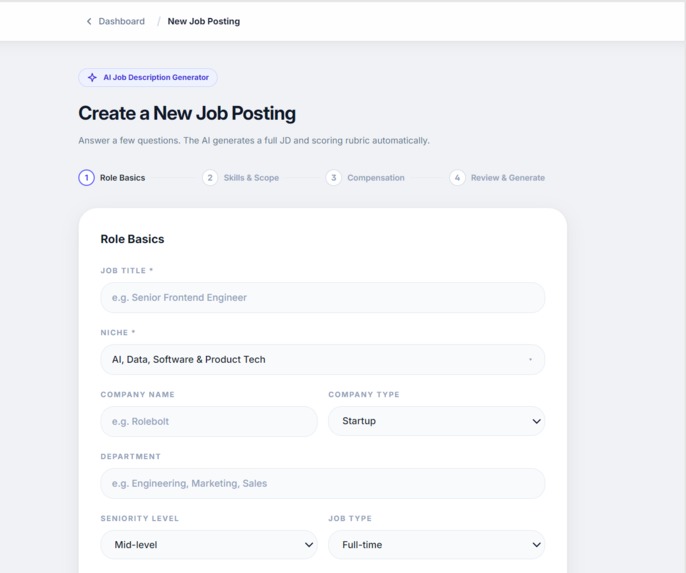
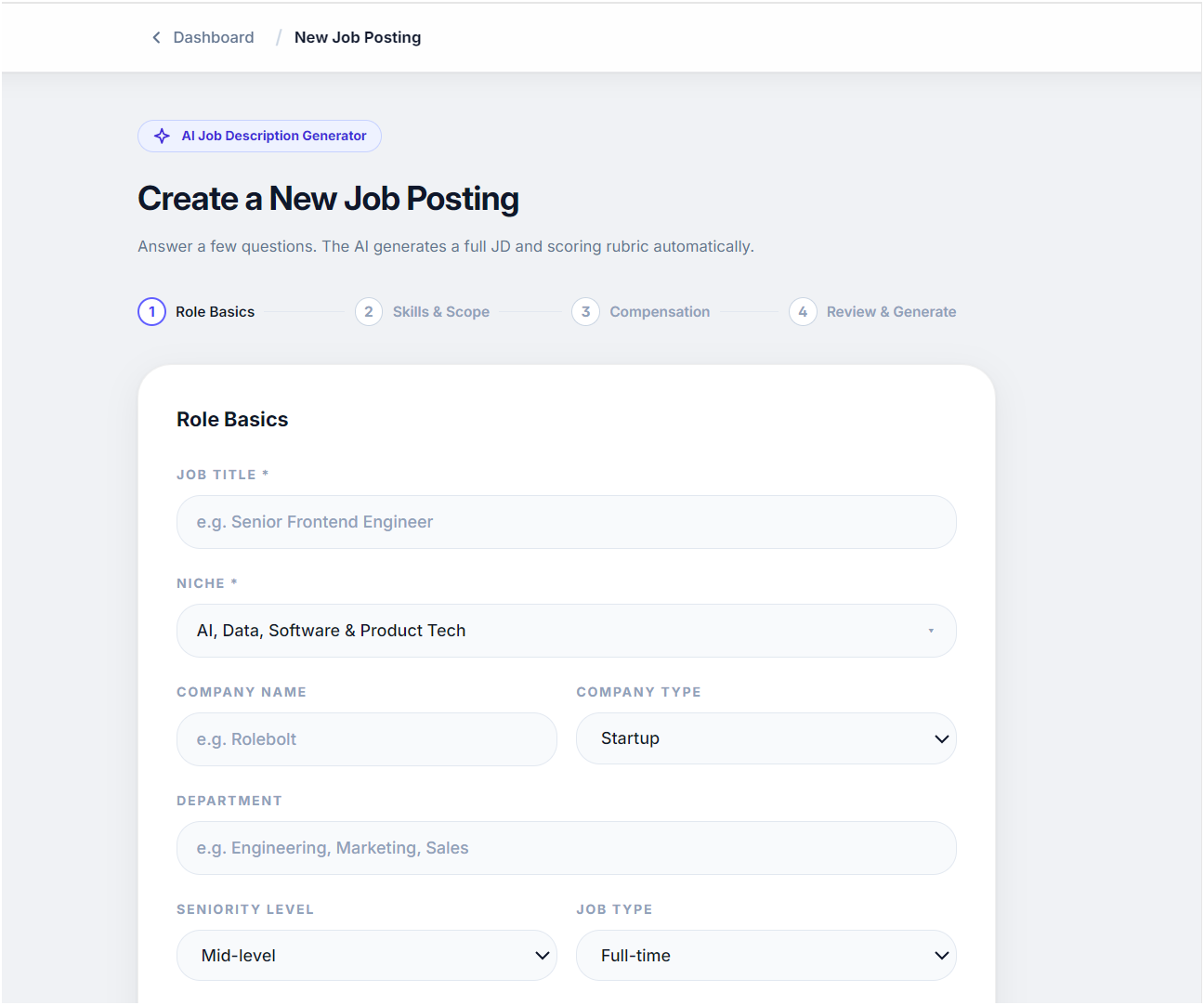
AI Job Description Generator
-
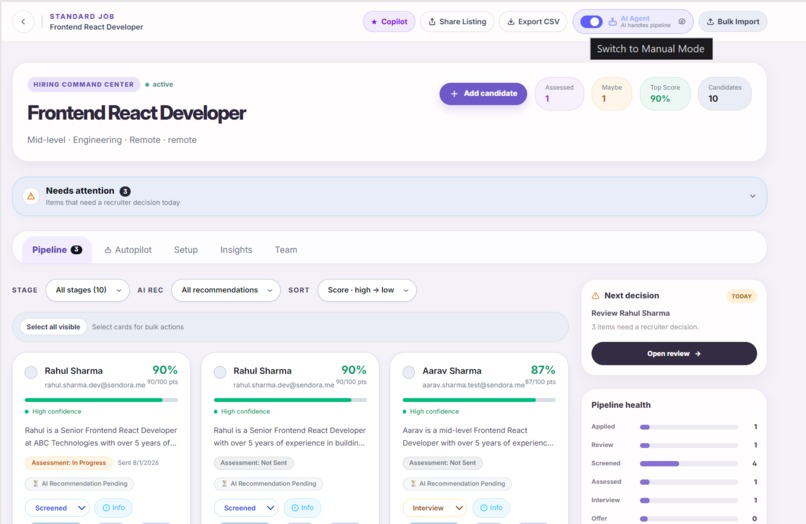
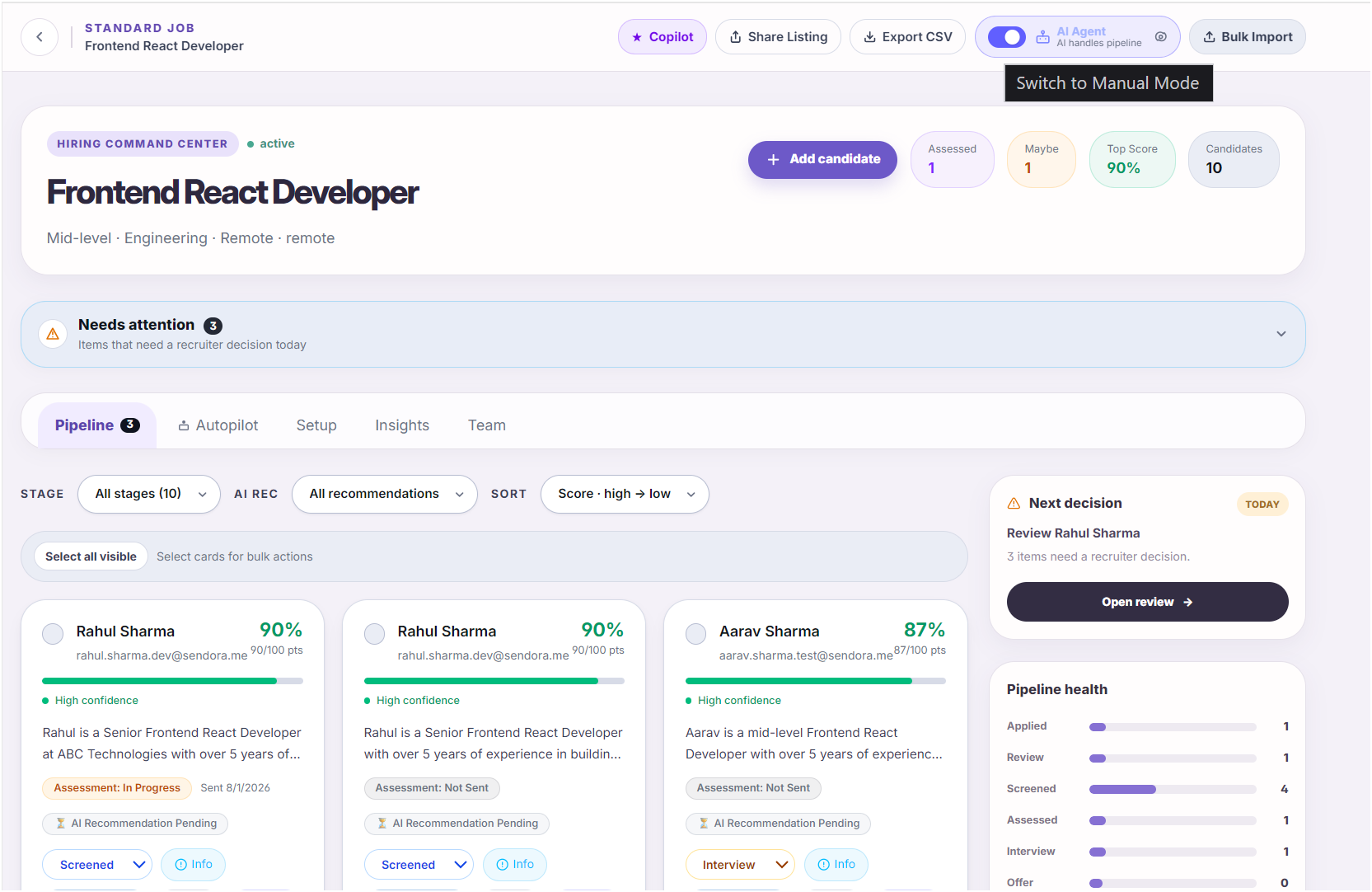
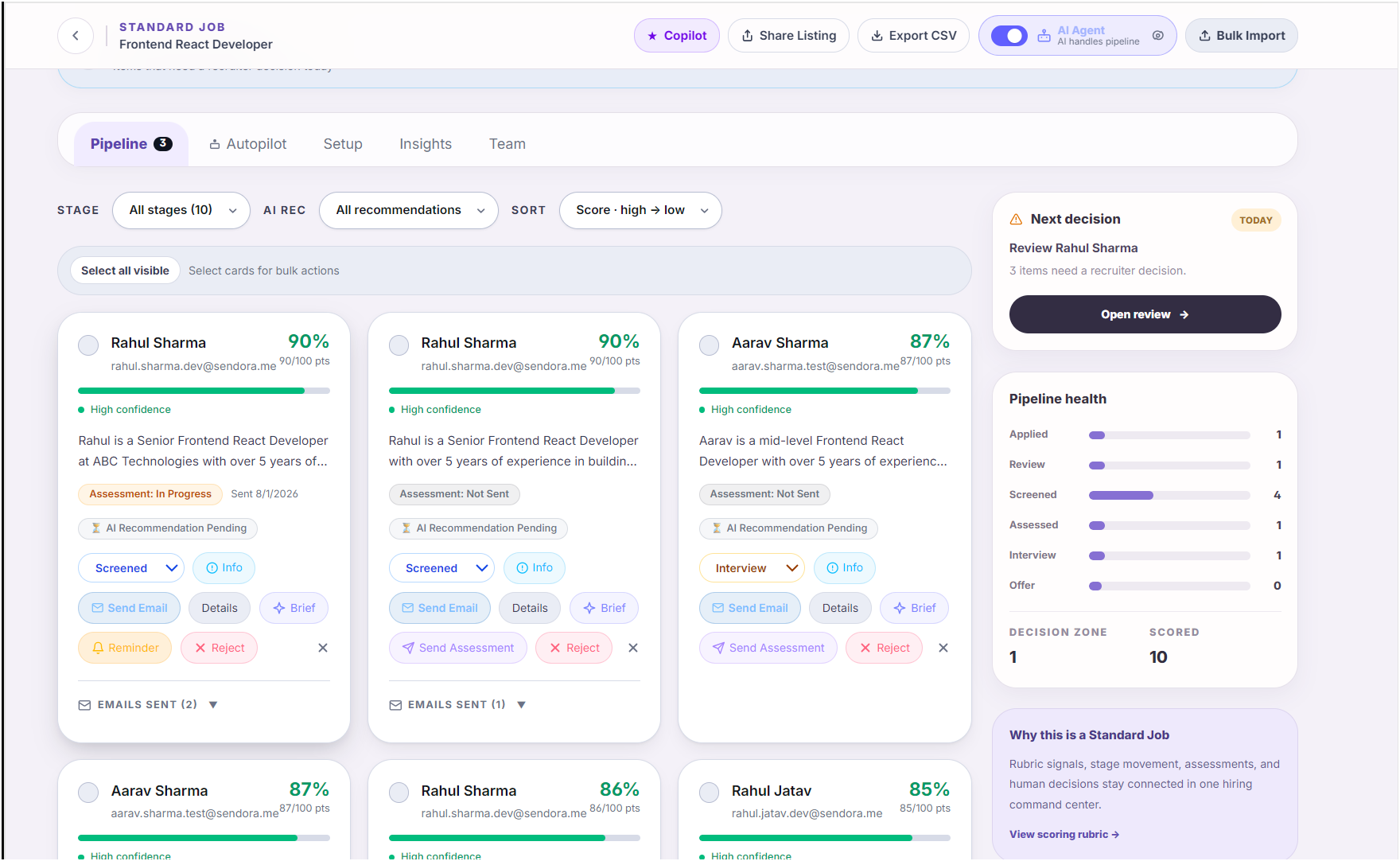
Standard Job Pipeline
-
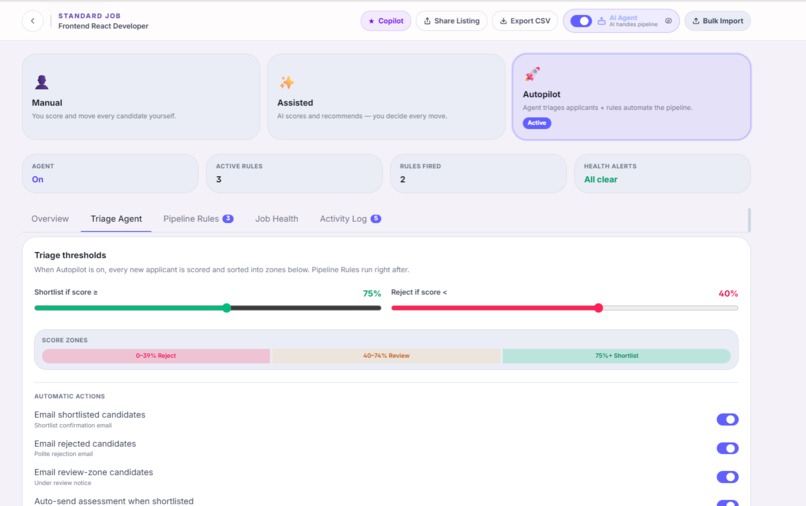
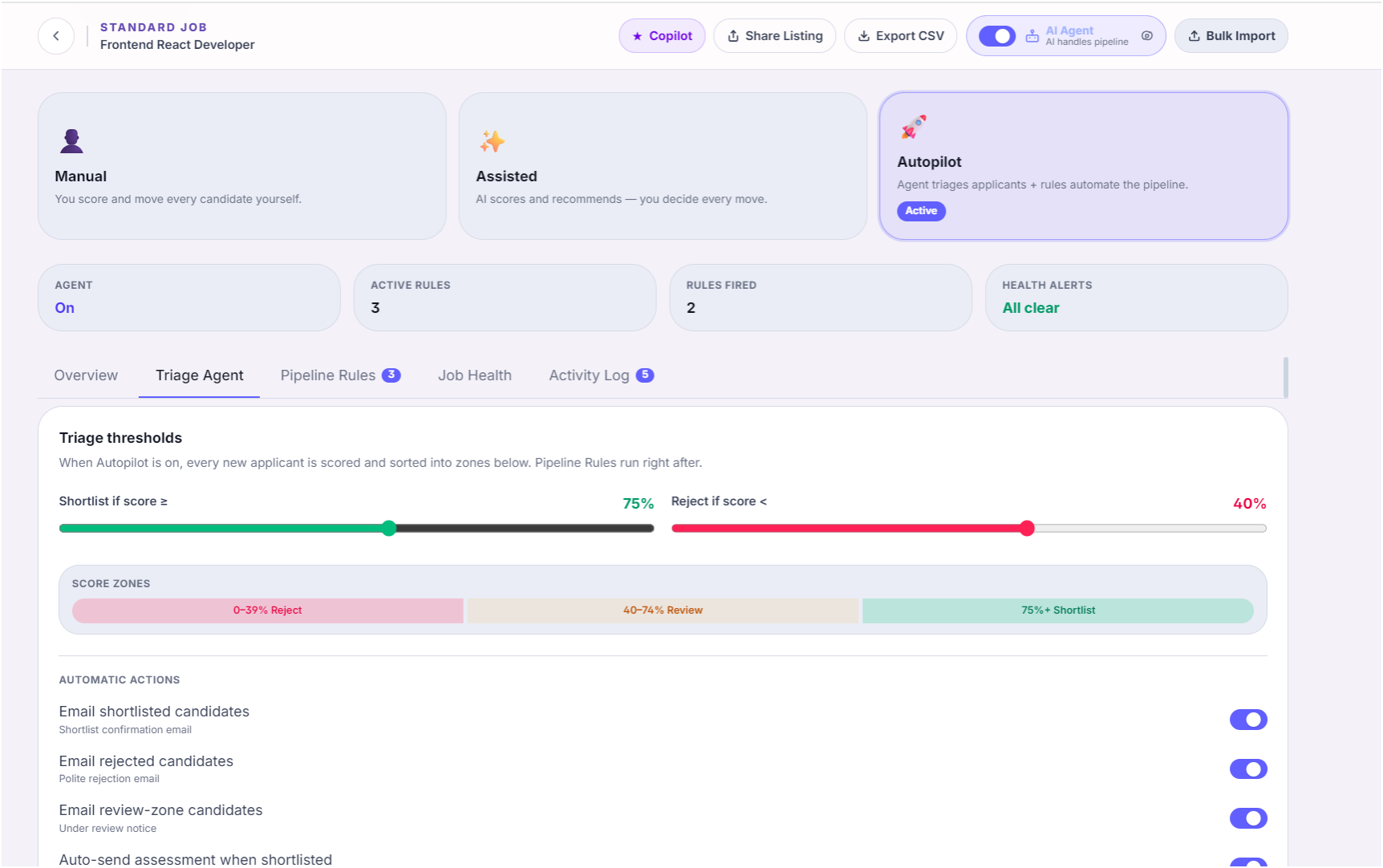
AI Triage Agent
-
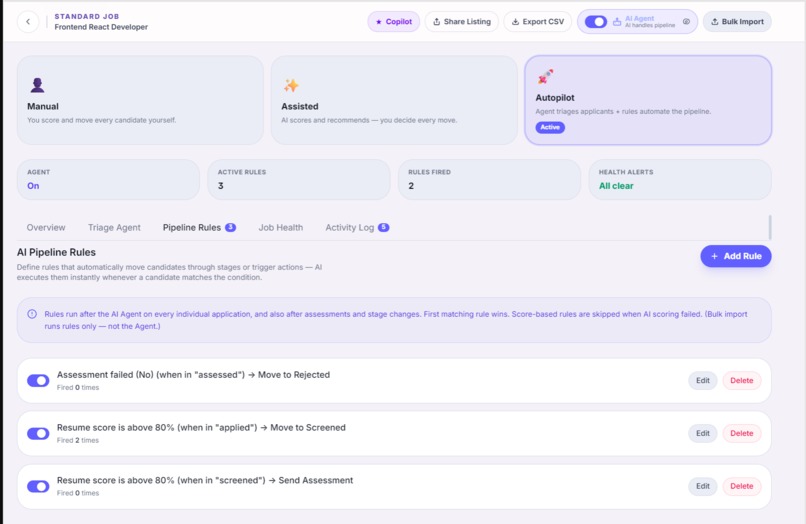
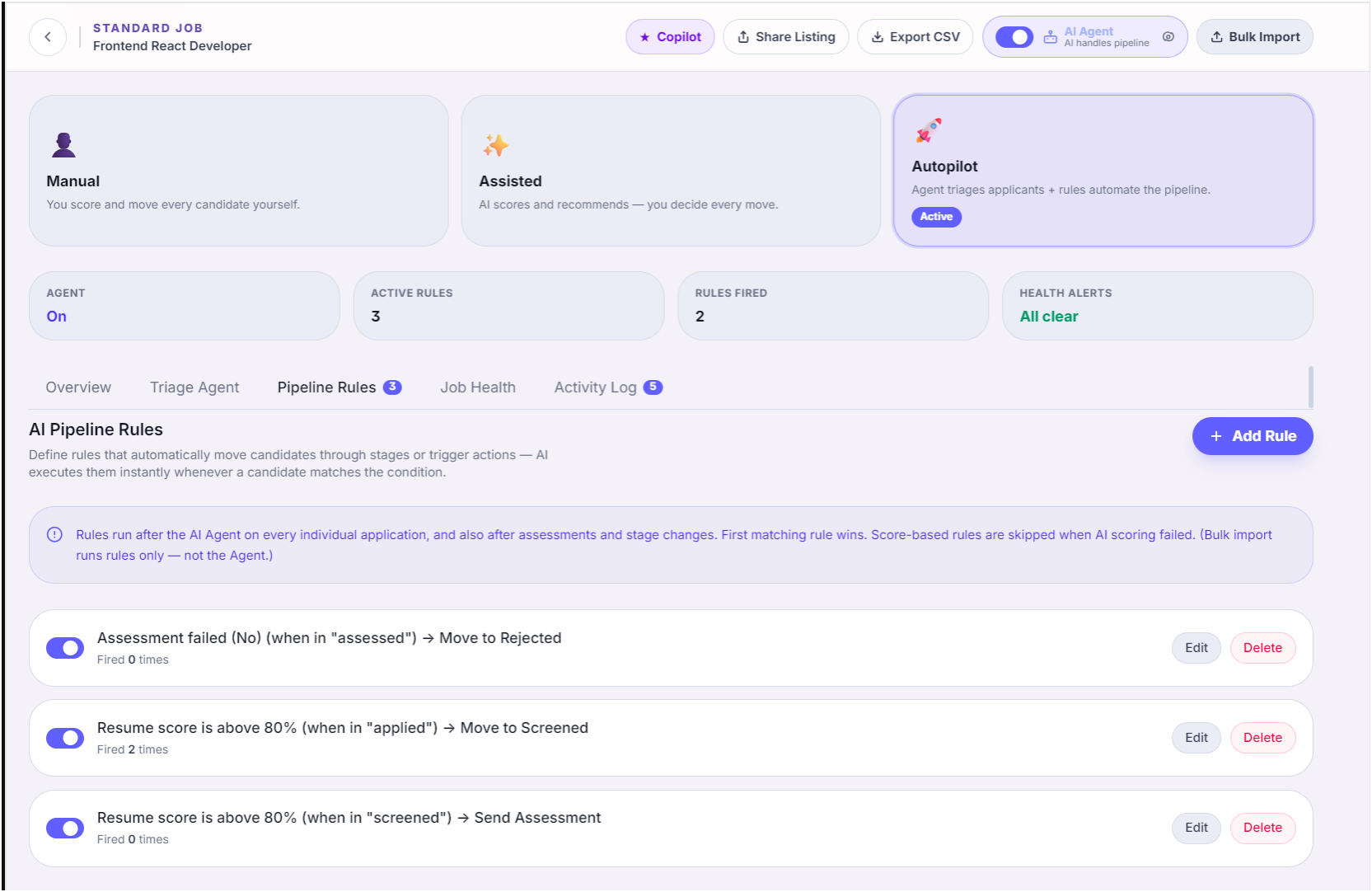
AI Pipeline Rules
-
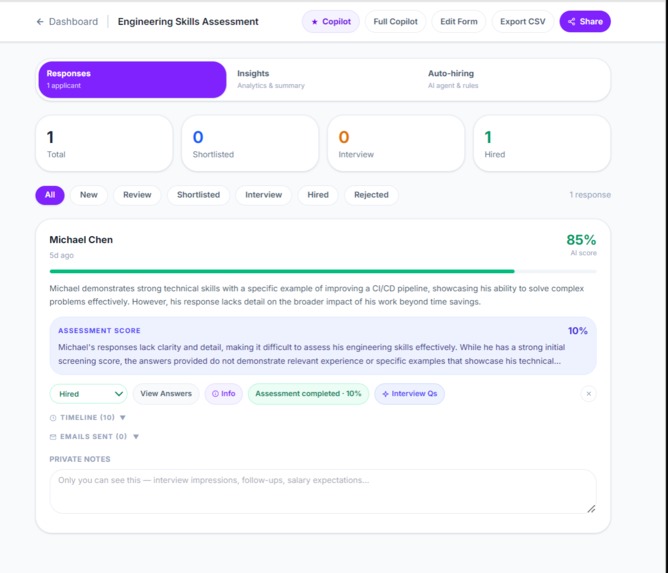
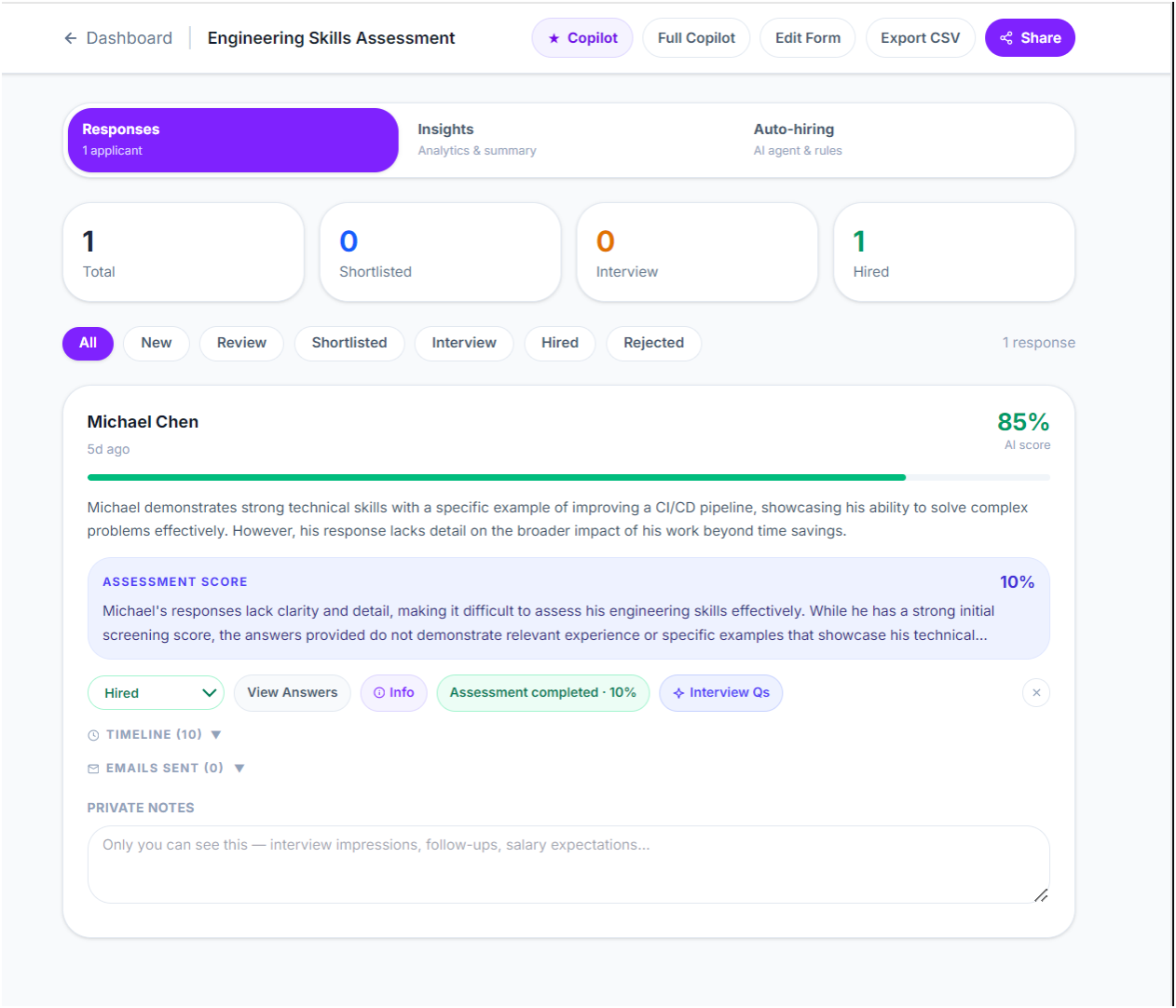
Assessment Responses
-
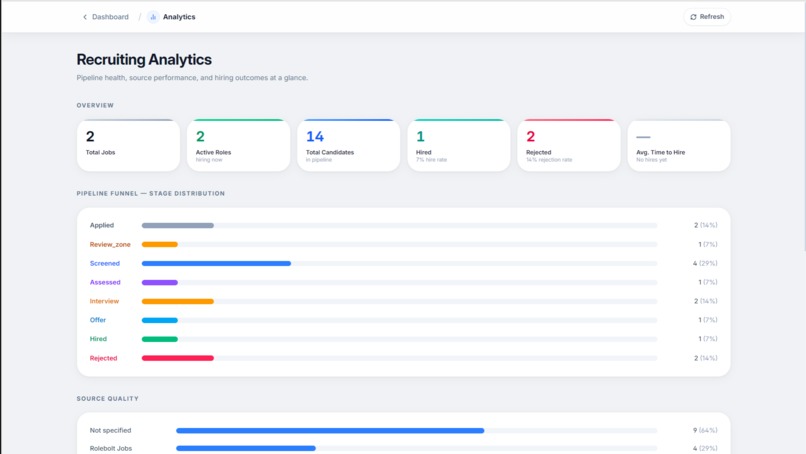
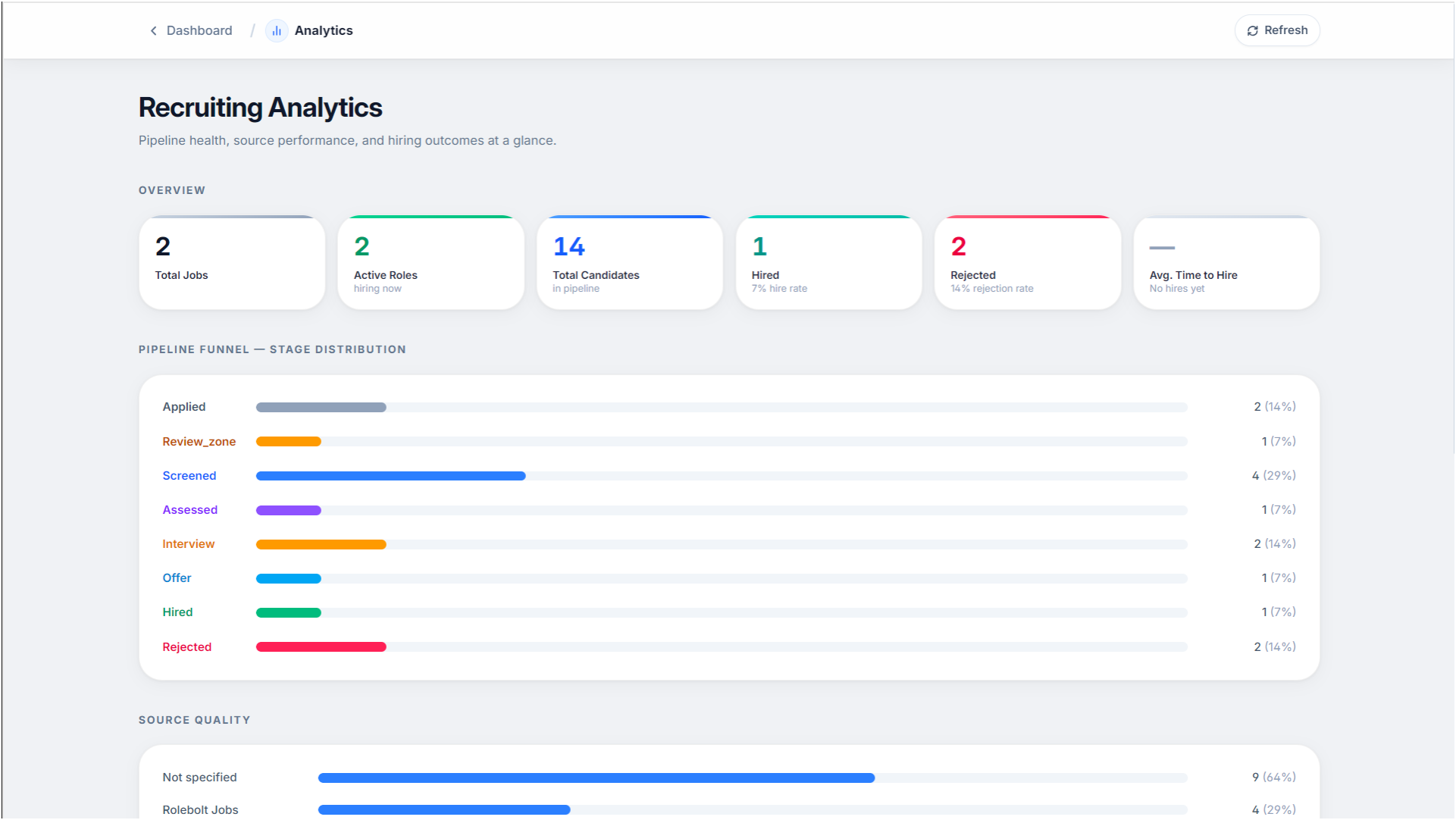
Recruiting Analytics
-
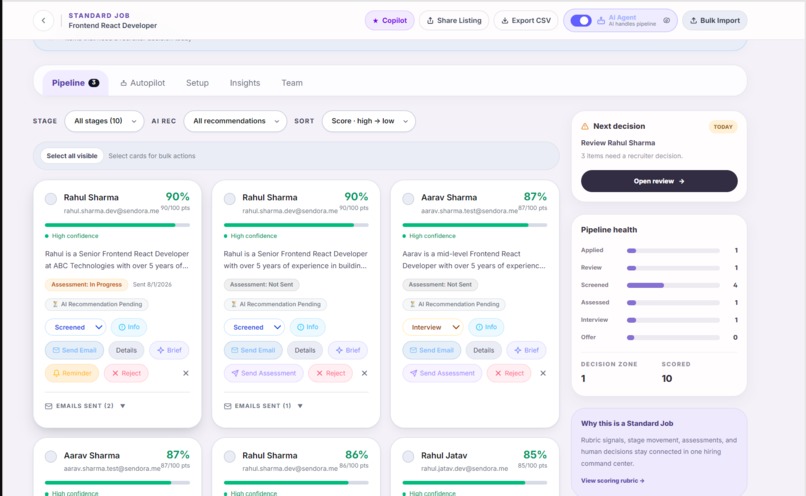
Candidate Pipeline Review
-
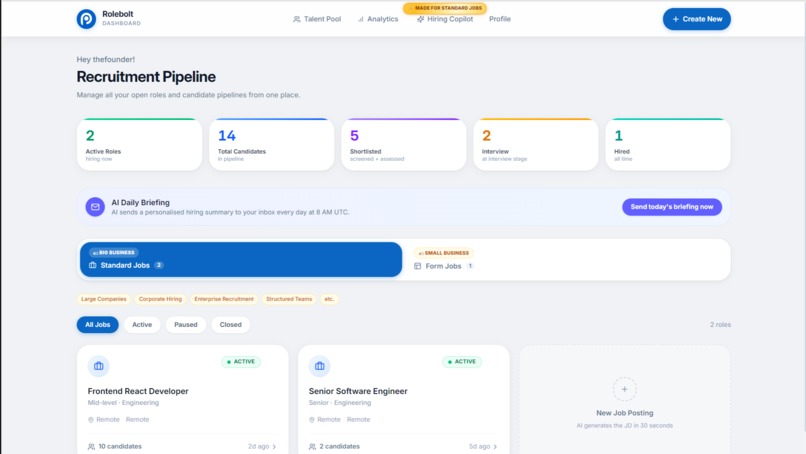
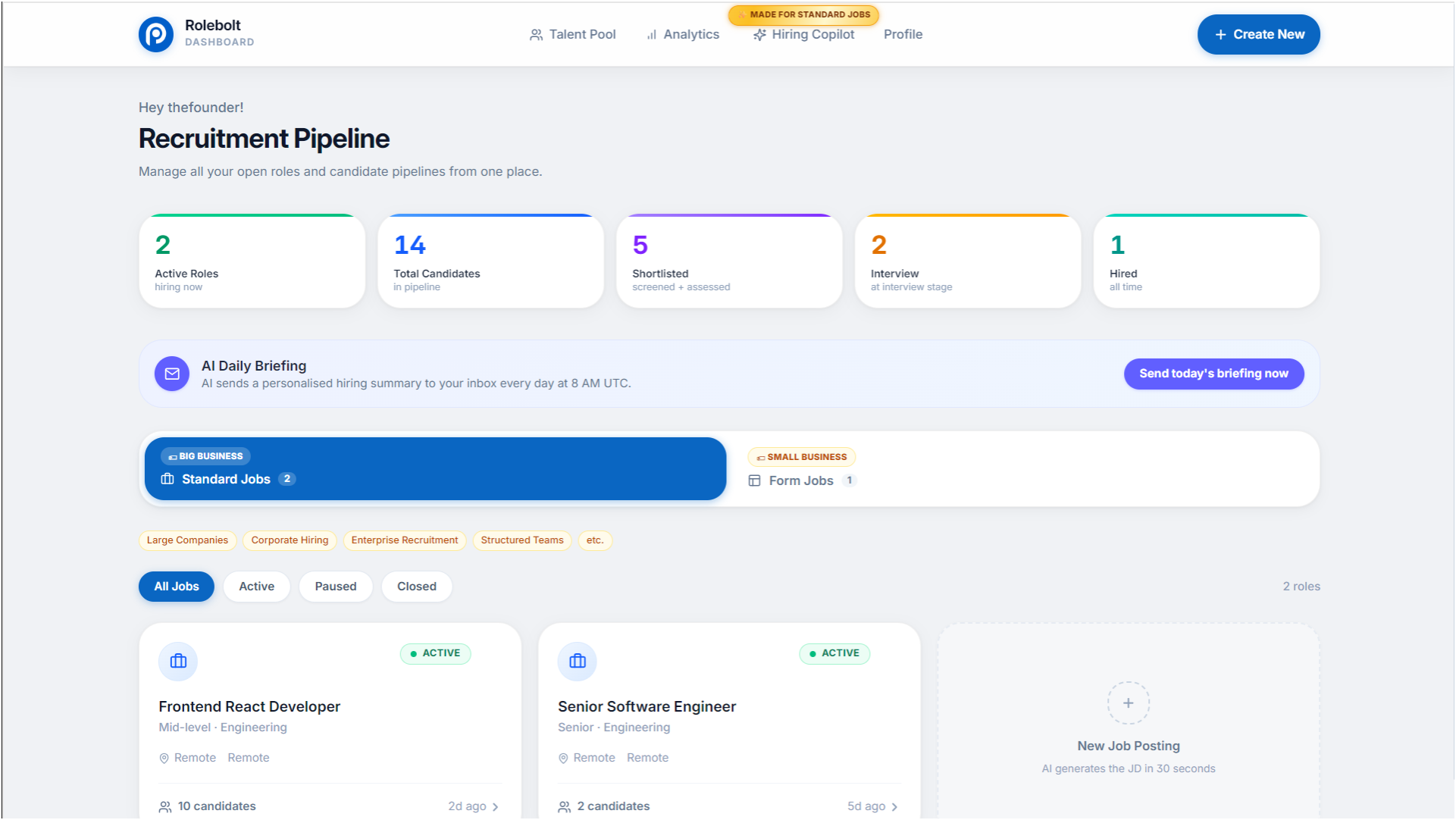
Recruiter Dashboard
-
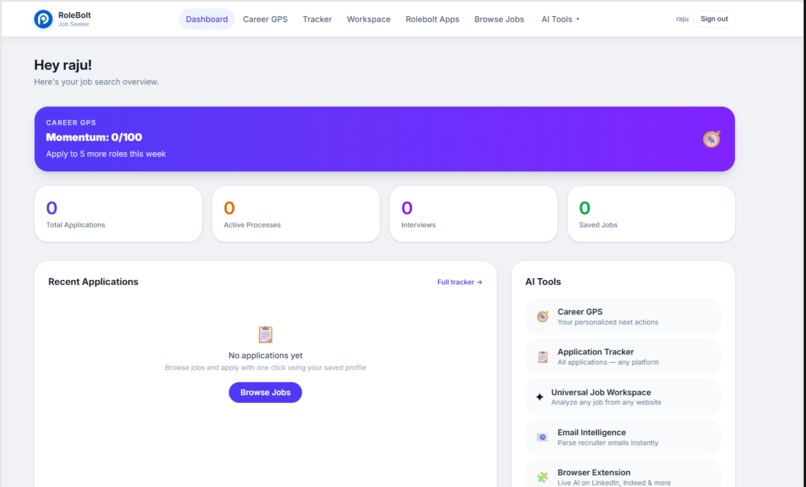
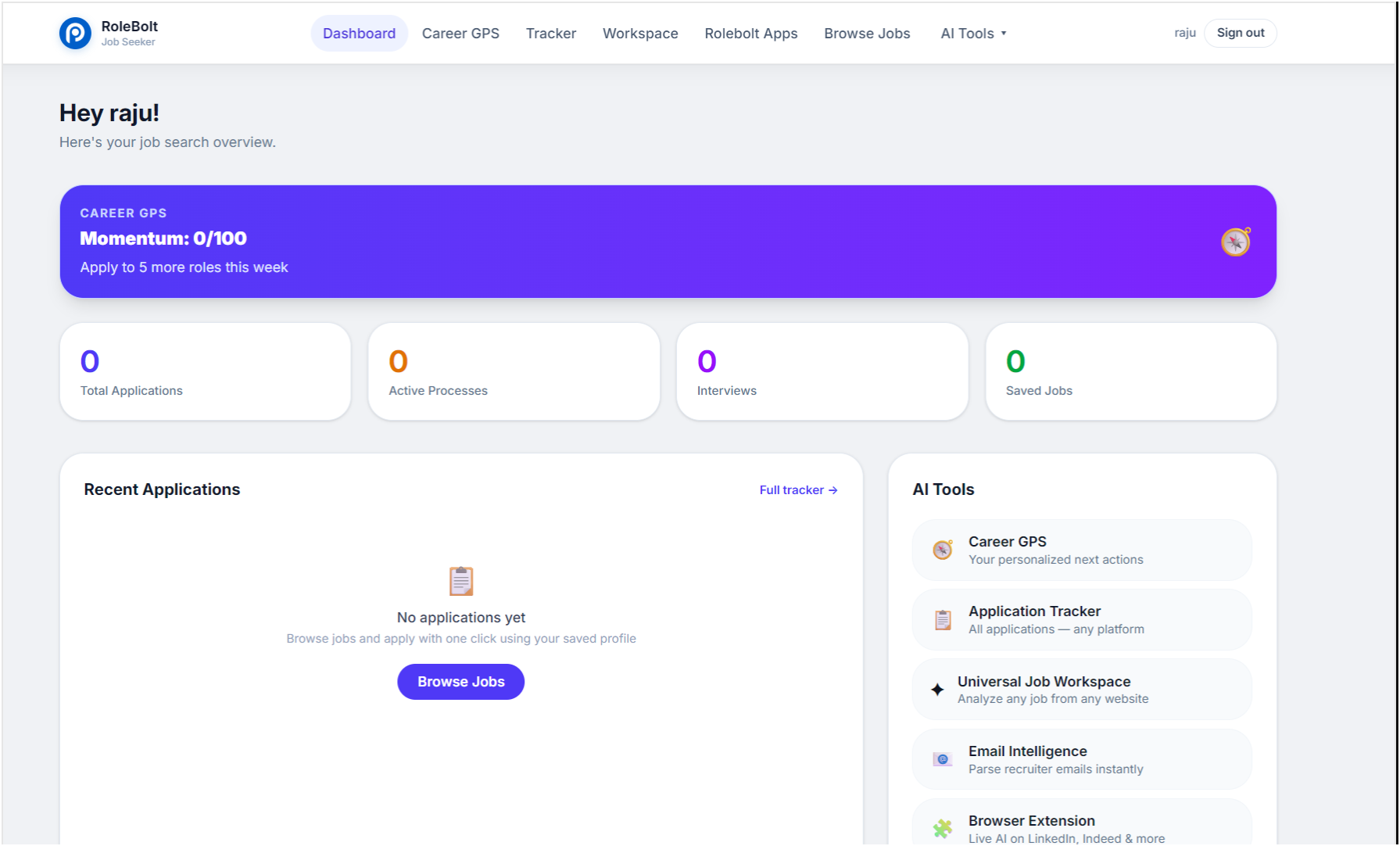
Job Seeker Dashboard
-
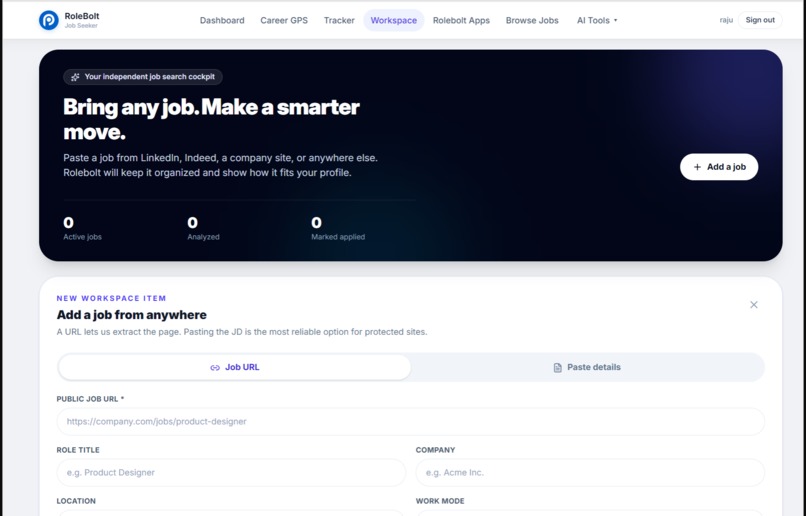
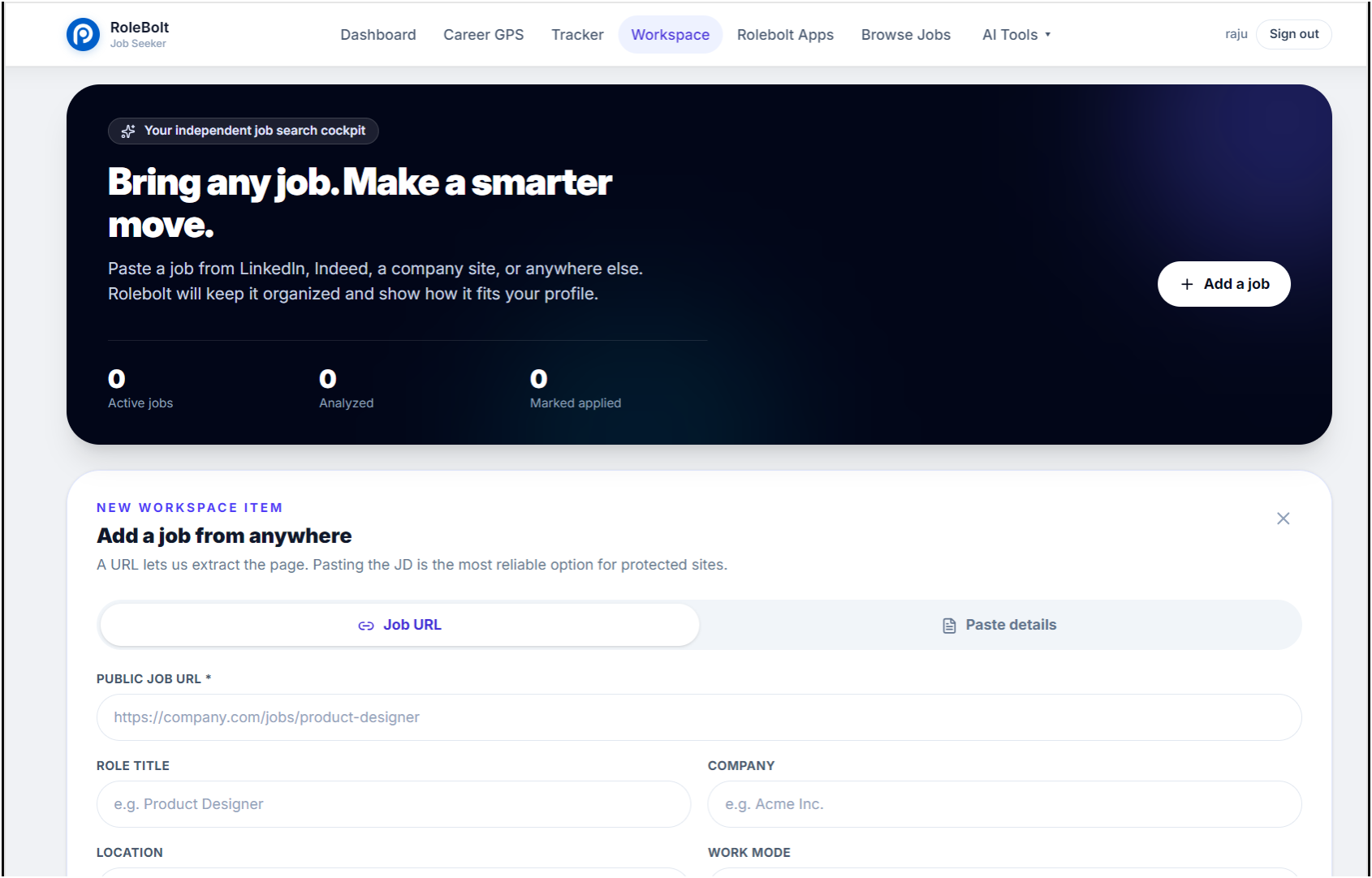
Universal Job Workspace
-
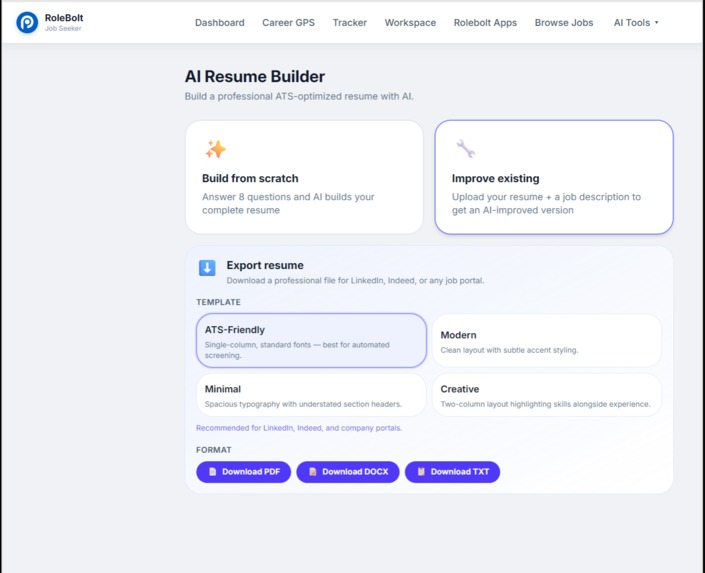
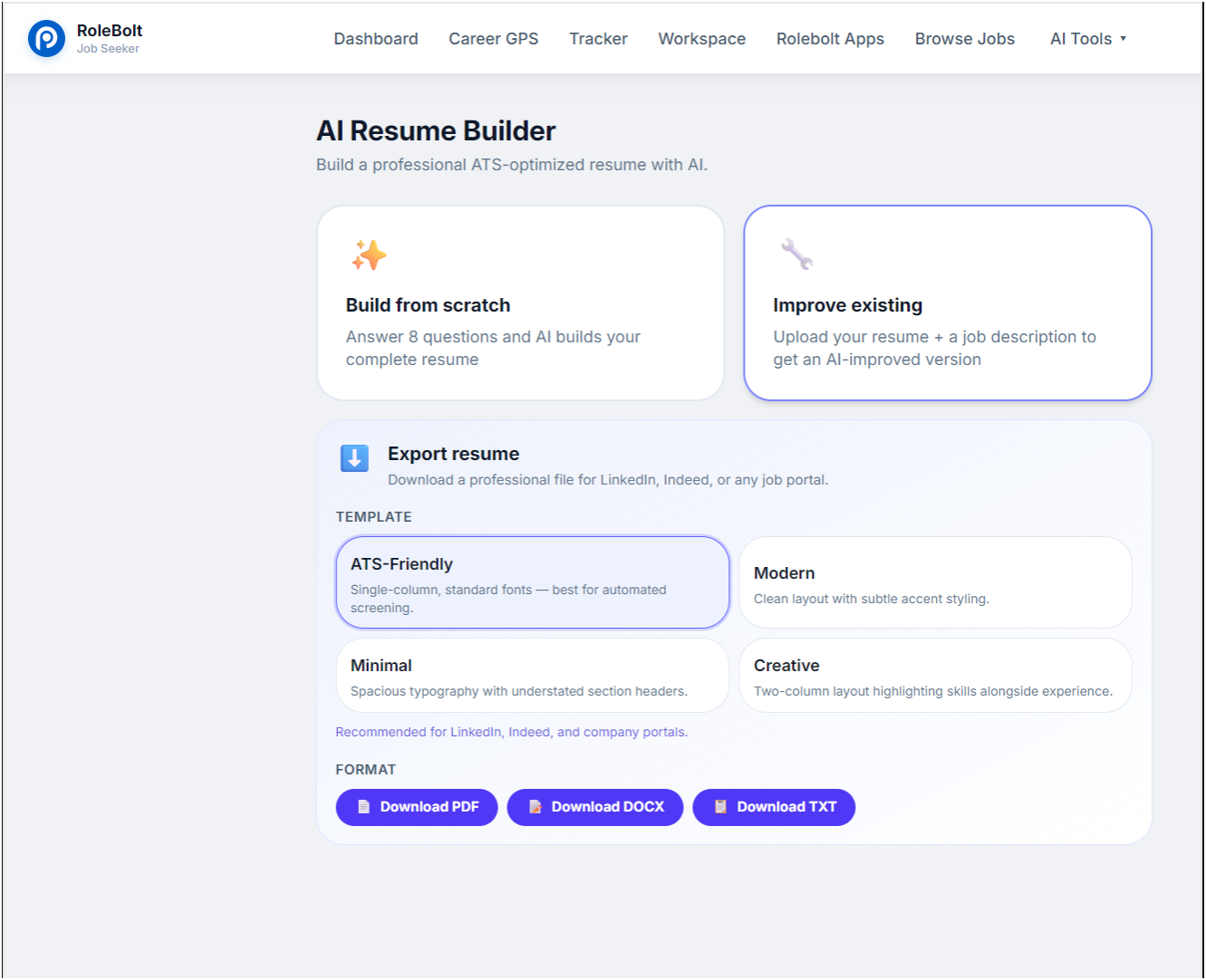
AI Resume Builder
-
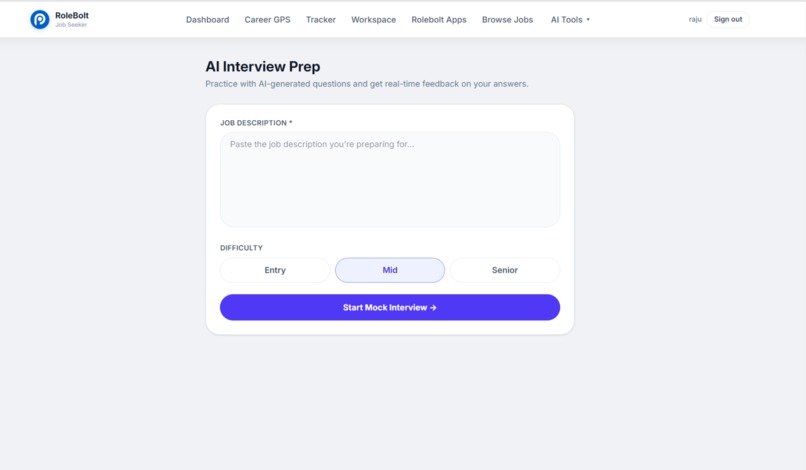
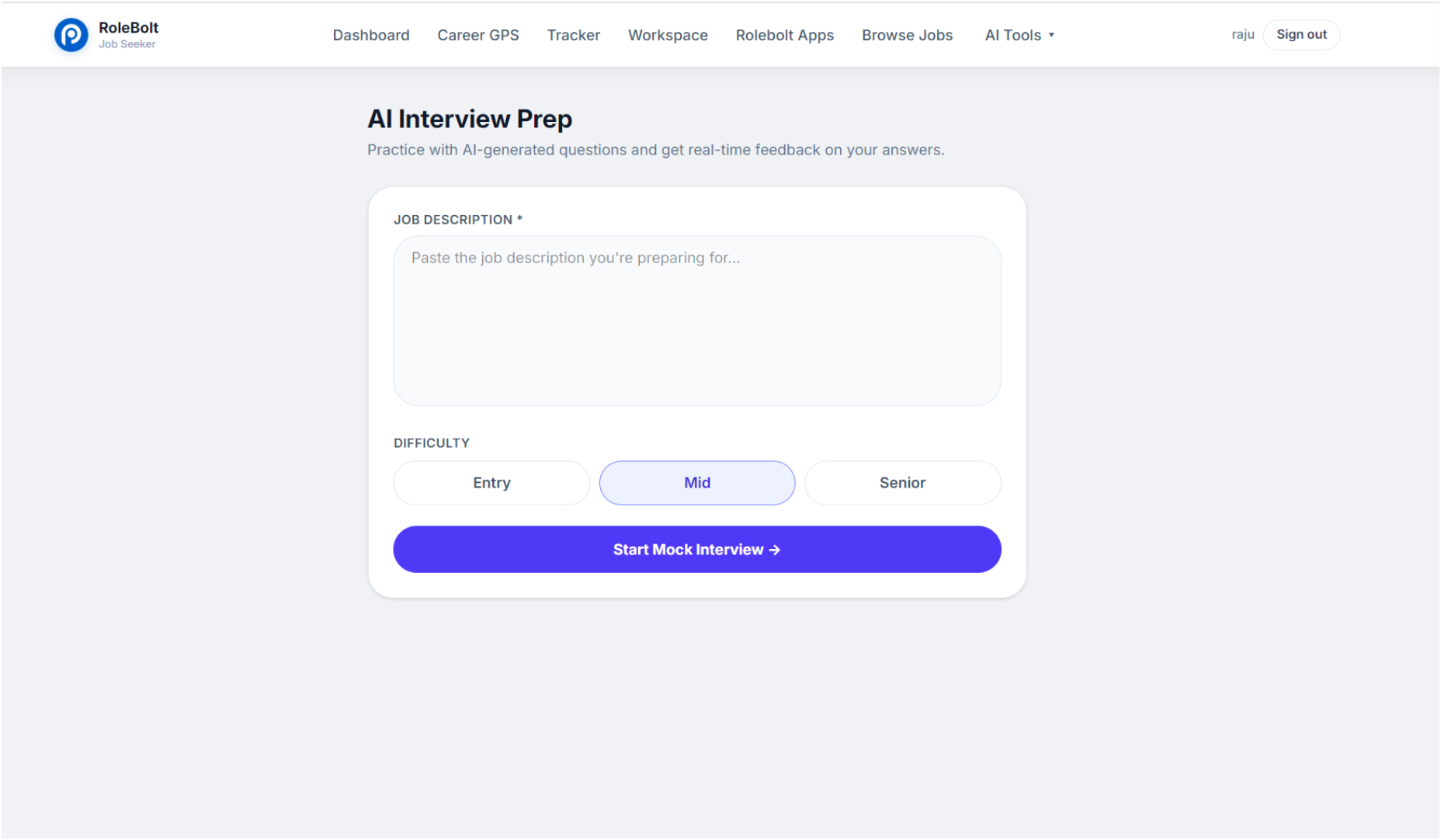
AI Interview Prep
-
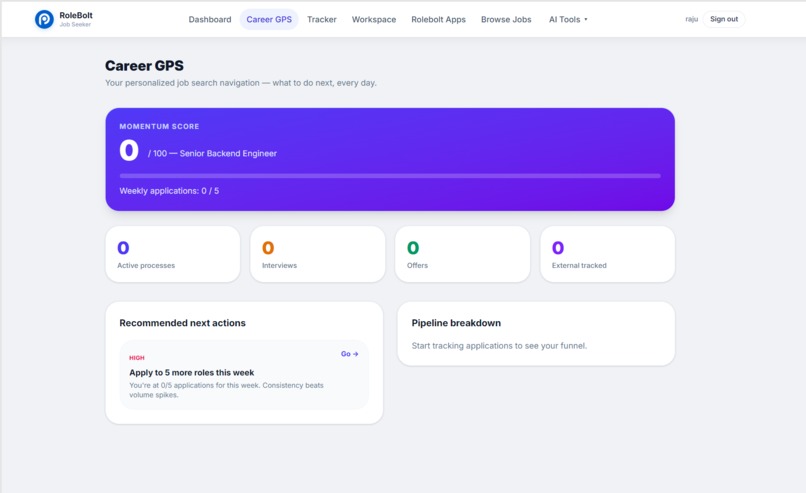
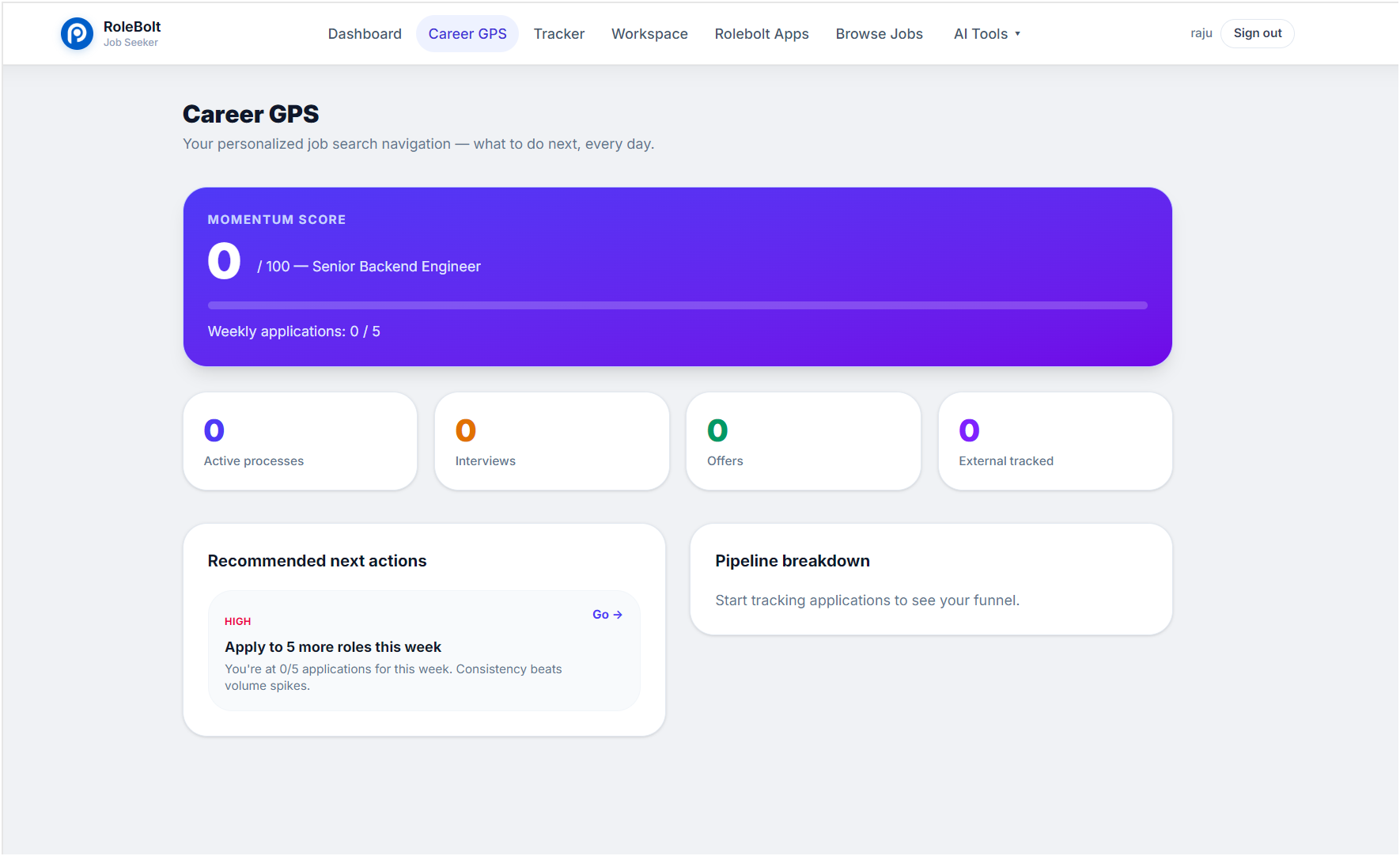
Career GPS
-
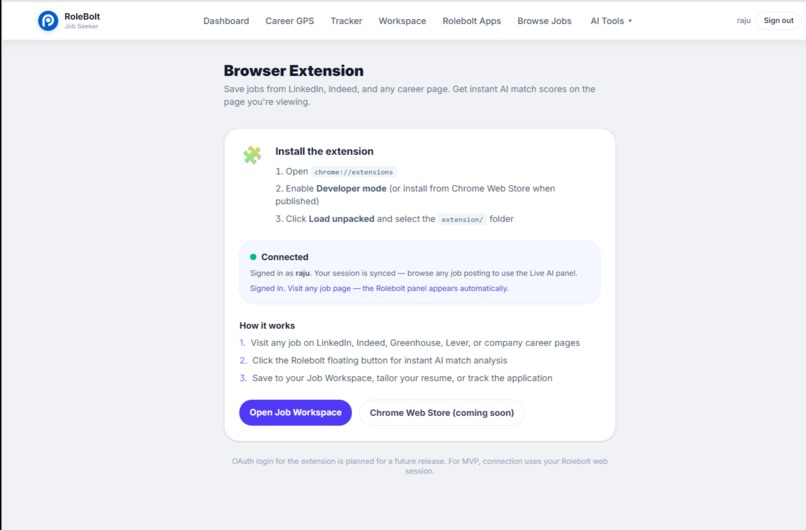
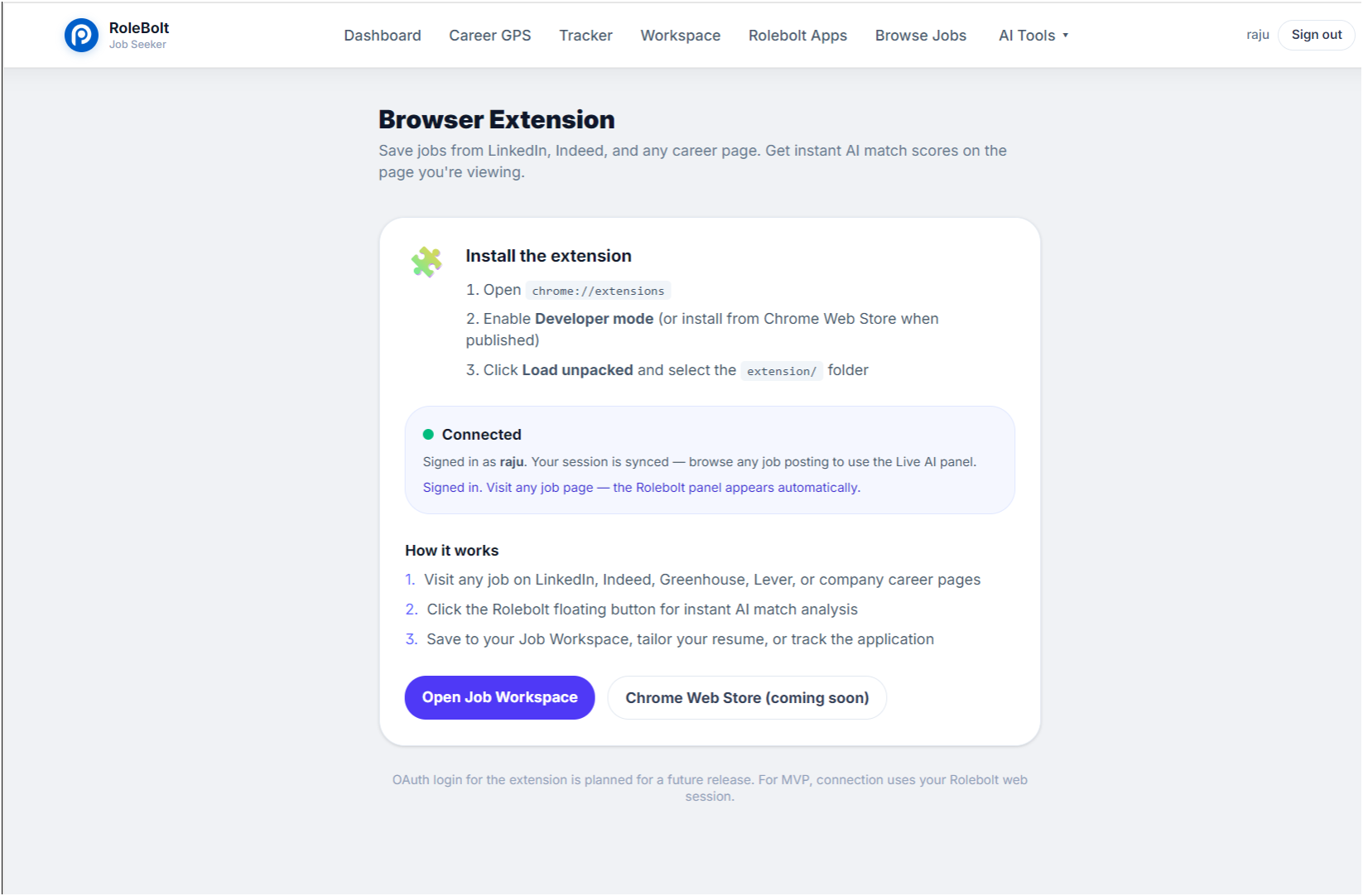
Browser Extension
-
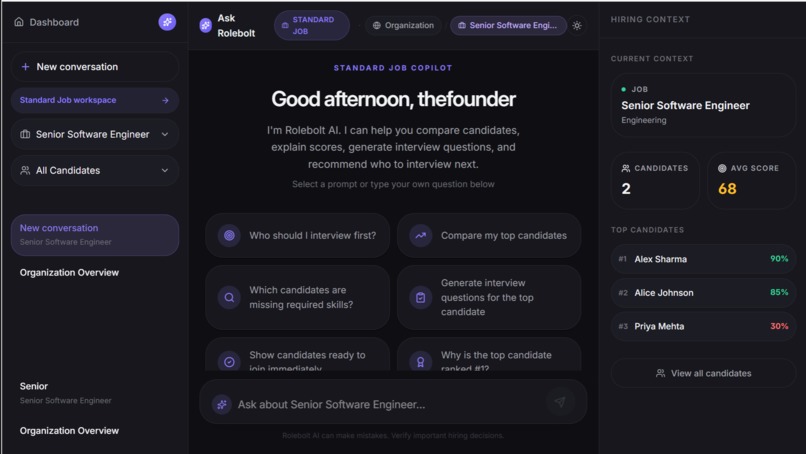
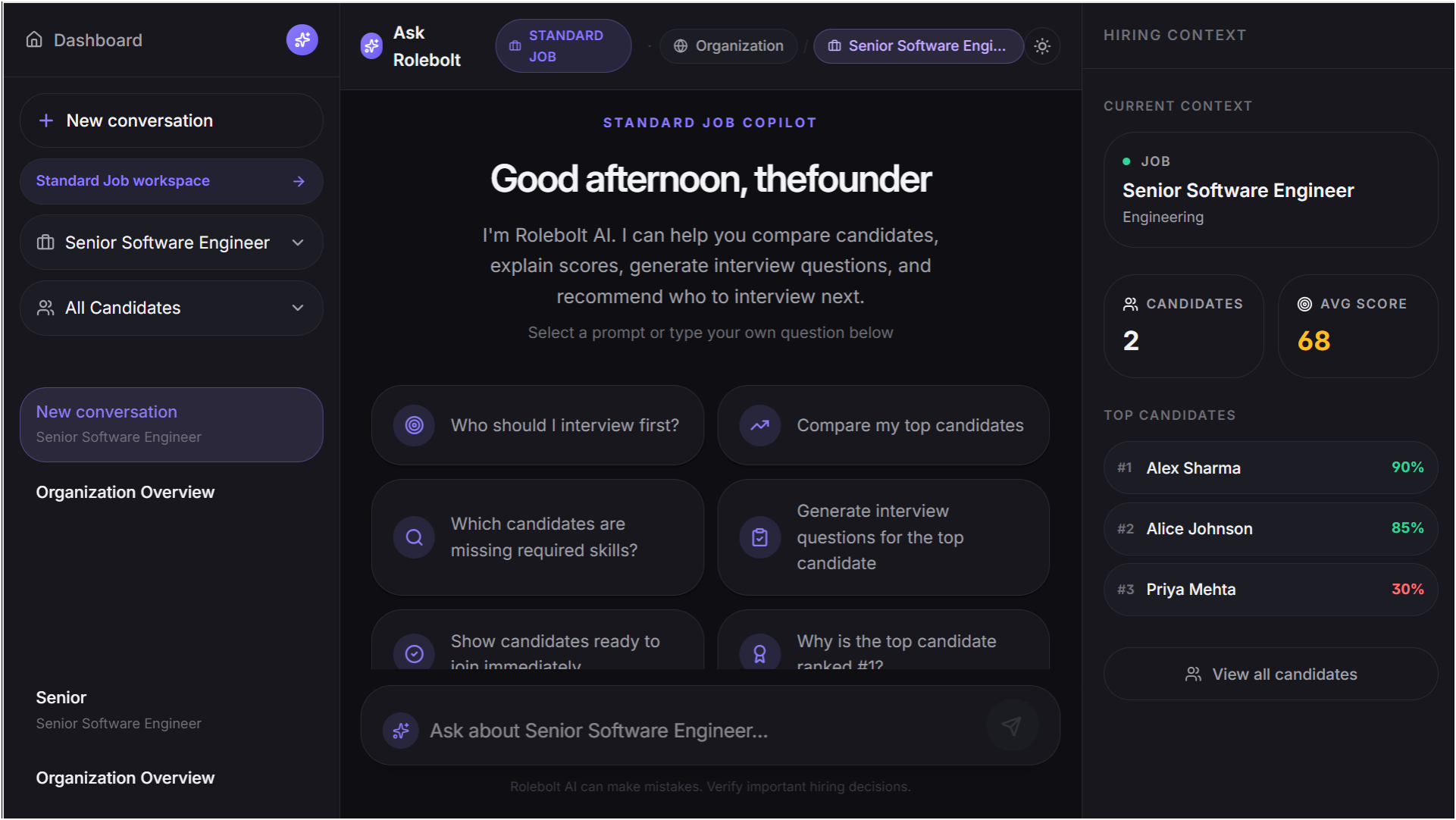
AI Copilot
Inspiration
Hiring is still too slow, fragmented, and dependent on manual work. Recruiters spend hours writing job descriptions, reviewing resumes, comparing candidates, sending follow-up emails, and coordinating assessments. At the same time, job seekers often struggle to understand which opportunities fit them, how to improve their resumes, and how to prepare for interviews.
We wanted to build more than another chatbot. We wanted to create an AI-operated employment platform that could actively move work forward: helping businesses make better hiring decisions while helping people become more prepared and confident candidates.
That idea became Rolebolt.
Our goal was to make high-quality hiring support accessible to smaller businesses and individuals who may not have large recruiting teams, expensive software, or professional career coaches.
What it does
Rolebolt is an AI-powered hiring and career platform serving both recruiters and job seekers.
For recruiters, Rolebolt provides:
- AI-generated job descriptions and structured scoring rubrics
- Resume parsing and candidate scoring
- Criterion-level score breakdowns, strengths, and red flags
- AI candidate triage into screened, review, and rejected zones
- Automated pipeline movement based on scores, assessments, and stage age
- AI-generated assessments and assessment evaluation
- Interview briefs and AI hiring recommendations
- Recruiter analytics, job health insights, and live assessment progress
- Automated candidate communication and daily hiring briefings
- An AI hiring copilot that helps recruiters understand their pipeline and decide what to do next
- Collaboration tools for teams reviewing candidates together
For job seekers, Rolebolt provides:
- A professional profile and resume workspace
- AI resume creation and resume improvement
- Job-fit analysis and skill-gap identification
- Cover-letter generation
- Interview question generation and answer evaluation
- A universal application tracker for jobs from Rolebolt and external platforms
- Career guidance that connects preparation with specific opportunities
The important difference is that AI is not limited to answering questions. It participates in the operating workflow by generating hiring materials, evaluating information, recommending actions, and helping move candidates through the process. Human users remain responsible for final decisions, while AI reduces repetitive work and surfaces useful evidence.
How we built it
We built Rolebolt as a full-stack web application with a Next.js frontend and an Express/TypeScript backend. MongoDB and Mongoose store users, jobs, candidates, applications, assessments, profiles, usage records, and workflow history.
The platform uses Firebase Authentication for its identity layer, including Google sign-in and phone OTP authentication. Firebase issues the identity token, which the backend verifies before creating a secure Rolebolt session.
For direct Gemini usage, Rolebolt calls the Gemini API through Google's generativelanguage.googleapis.com endpoint. Gemini 2.5 Flash is used directly for job-description and scoring-rubric generation. The generated output is validated, parsed, and saved as structured job data rather than being displayed as unprocessed text.
Different workflows use a resilient AI provider strategy. Mesh API supports additional AI workloads and model options, while NVIDIA models provide an ultimate fallback when the primary AI route is unavailable. The system also validates structured AI responses and falls back to safe built-in content when providers fail or return unusable output.
We built operational systems around the AI layer, including:
- Structured prompts and JSON response formats
- Model fallback chains
- Error handling and retry behavior
- AI scoring failure states
- Usage and quota enforcement
- Pipeline automation rules
- Assessment and offer workflows
- Authentication and role-based access
- Production email and notification flows
- Recruiter and seeker-specific workspaces
The project was developed iteratively during the hackathon period, moving from the initial recruitment workflow to a broader AI-operated platform for hiring and career development.
Challenges we ran into
One of the biggest challenges was making AI outputs reliable enough for real workflows. A conversational answer can be imperfect, but a malformed scoring response or incomplete job description can break an entire hiring process. We solved this by using structured outputs, validation, explicit failure states, retries, and provider fallbacks.
Another challenge was coordinating several connected workflows. Job creation, resume scoring, pipeline stages, assessments, candidate emails, offers, analytics, and billing all depend on one another. We had to design the system so that a failure in one AI call would not silently create incorrect hiring data or block the entire application flow.
We also had to think carefully about the boundary between automation and human judgment. Rolebolt can surface recommendations and automate repetitive actions, but hiring decisions affect real people. We therefore designed the product around explainable score breakdowns, strengths, red flags, review zones, collaboration, and recruiter control rather than treating a single model score as the complete truth.
Finally, building both recruiter and job-seeker experiences created a product-design challenge. The two sides have different goals: recruiters want faster, more structured decisions, while candidates want clarity, preparation, and control. We built separate workflows while connecting them through the same employment ecosystem.
Accomplishments that we're proud of
We are proud that Rolebolt evolved into a working end-to-end hiring and career platform rather than a single AI feature.
The platform now connects job creation, AI-generated hiring criteria, candidate intake, resume scoring, automated triage, assessments, interviews, offers, collaboration, analytics, and candidate communication in one system.
We are especially proud of the AI-native architecture. Gemini is used directly where it matters for job-description generation, while Mesh and NVIDIA provide resilience for other AI workflows and provider failures. This lets the product continue operating instead of depending on one fragile model endpoint.
We are also proud of building for both sides of the employment process. Recruiters receive an AI-assisted operating system for hiring, and job seekers receive tools to understand opportunities, improve their applications, and prepare for interviews.
What we learned
We learned that building an AI product is not just about connecting an application to a model. The difficult part is designing the surrounding system: validating outputs, handling failure, preserving user trust, tracking decisions, and making AI useful inside a repeatable workflow.
We learned that AI is most valuable when it removes operational bottlenecks and helps users take the next action. In hiring, that means turning unstructured resumes and job descriptions into evidence, recommendations, and workflow steps.
We also learned that automation must be paired with transparency. Recruiters need to understand why a candidate received a score, and candidates deserve a process that does not reduce them to an unexplained number. This shaped our focus on score breakdowns, reasoning, review zones, and human oversight.
Most importantly, we learned how much more complex it is to operate an AI-enabled business than to build an AI demo. Reliability, authentication, privacy, usage controls, communications, billing, analytics, and customer feedback all matter.
What's next for Rolebolt: AI-Powered Hiring & Career Platform
Next, we want to make Rolebolt more reliable, measurable, and useful at scale.
Our roadmap includes:
- More accurate and explainable candidate matching
- Better AI monitoring and execution logs
- More recruiter-controlled automation
- Stronger candidate feedback and career guidance
- Notifications and communication automation
- More integrations with job boards and workplace tools
- Improved analytics for hiring outcomes and fairness
- More personalized resume and interview preparation
- Better support for small businesses and first-time recruiters
- Measuring outcomes such as time saved, applications improved, interviews reached, and hires made
Our long-term vision is for Rolebolt to become an AI-operated employment infrastructure: a platform where businesses can build better teams and people can access clearer, more personalized paths to meaningful work.
Built With
- ai-agents
- applicant-tracking-system
- artificial-intelligence
- automation
- career-development
- express.js
- firebase-authentication
- gemini-api
- generative-ai
- google-cloud
- job-matching
- machine-learning
- mongodb
- mongoose
- nextjs
- node.js
- nvidia-nim
- razorpay
- react
- recruitment-technology
- resend
- rest-api
- server-sent-events
- tailwind-css
- typescript


Log in or sign up for Devpost to join the conversation.