-
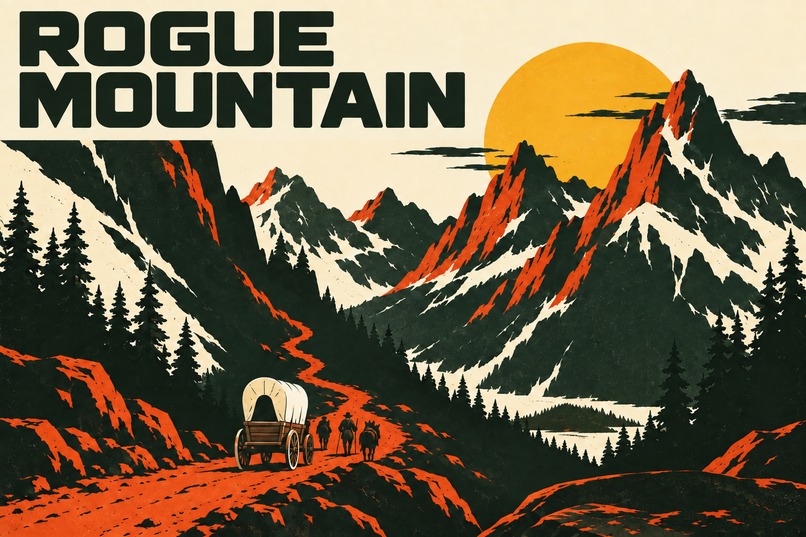
Cover
-
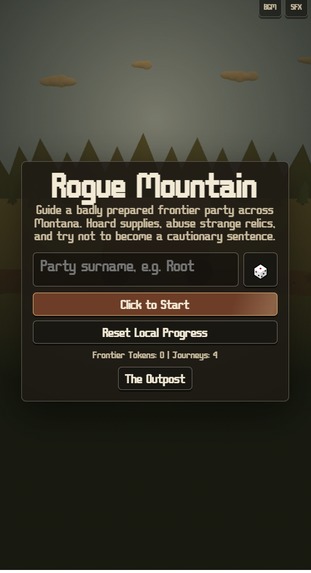
Title
-
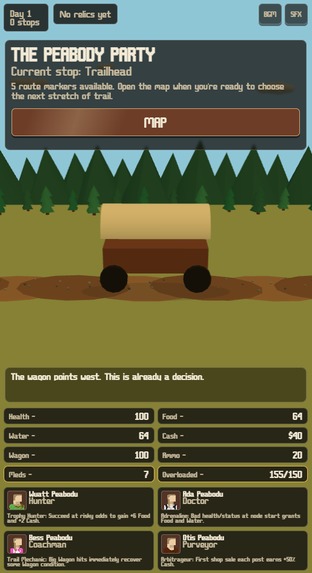
Day
-
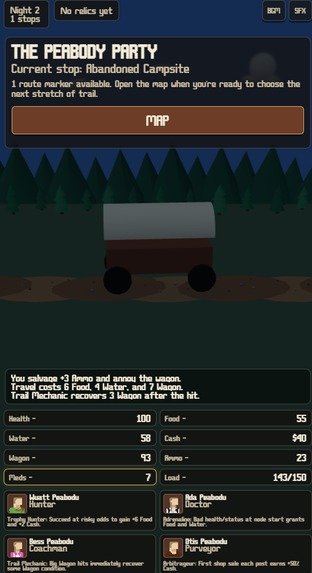
Night
-
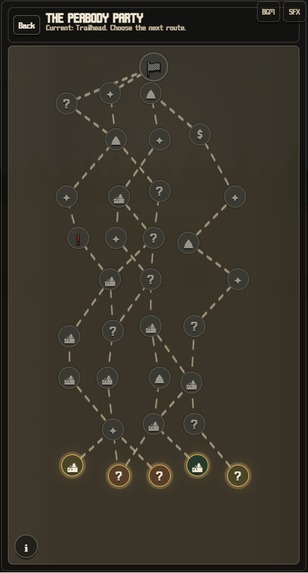
Map
-
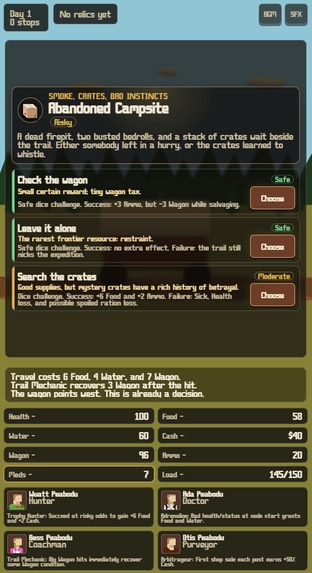
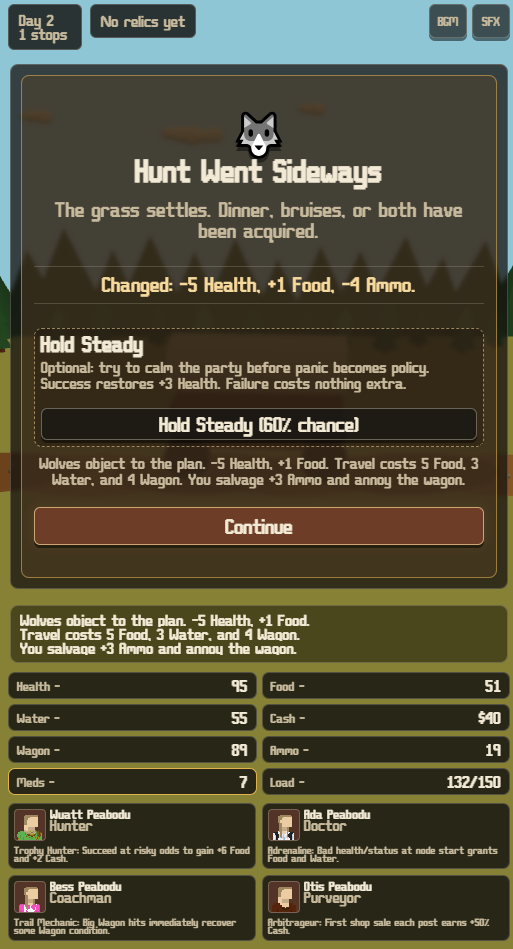
Events
-
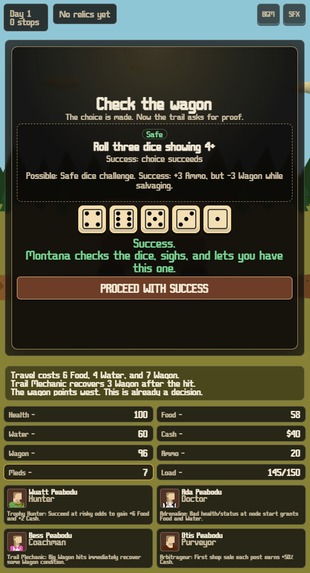
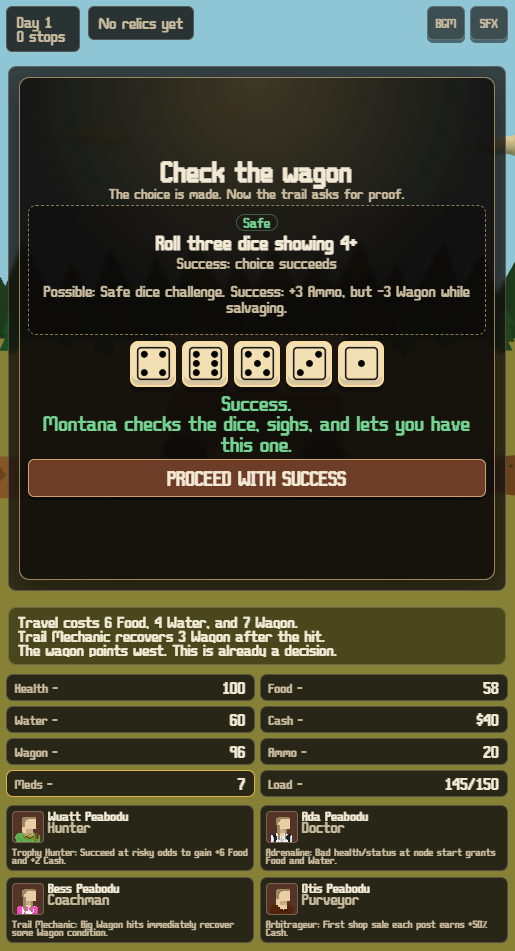
Skill Check
-
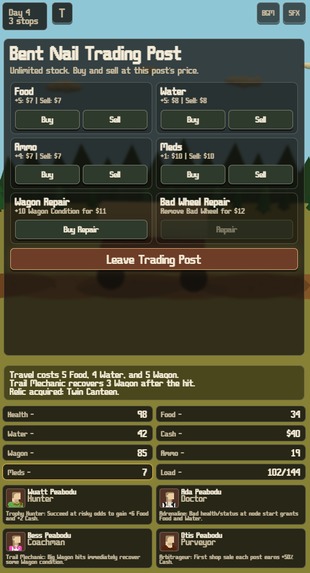
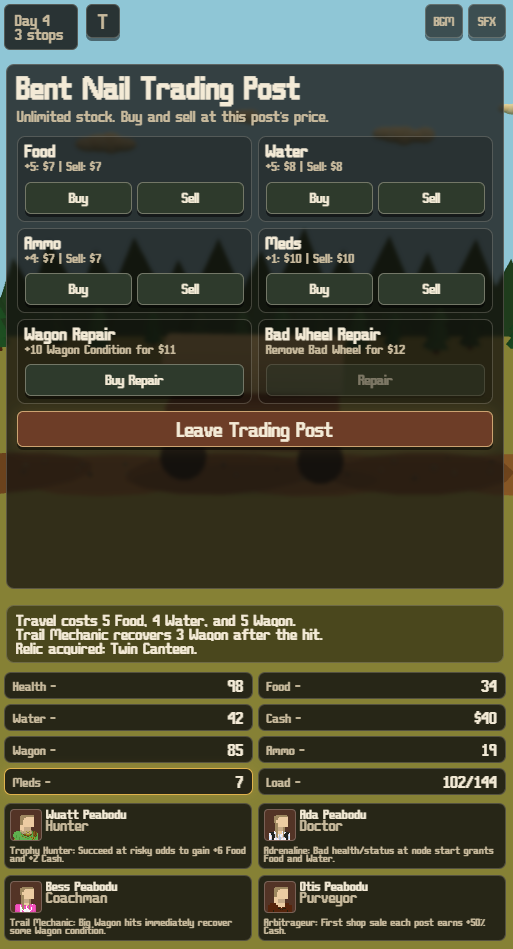
Shop
-
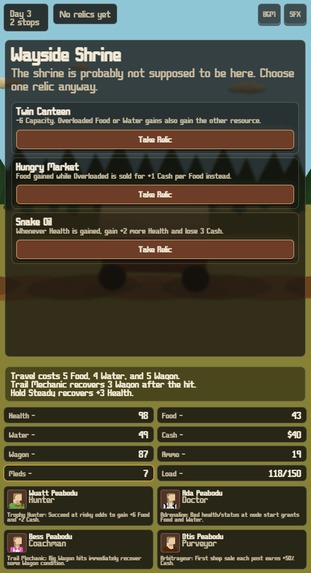
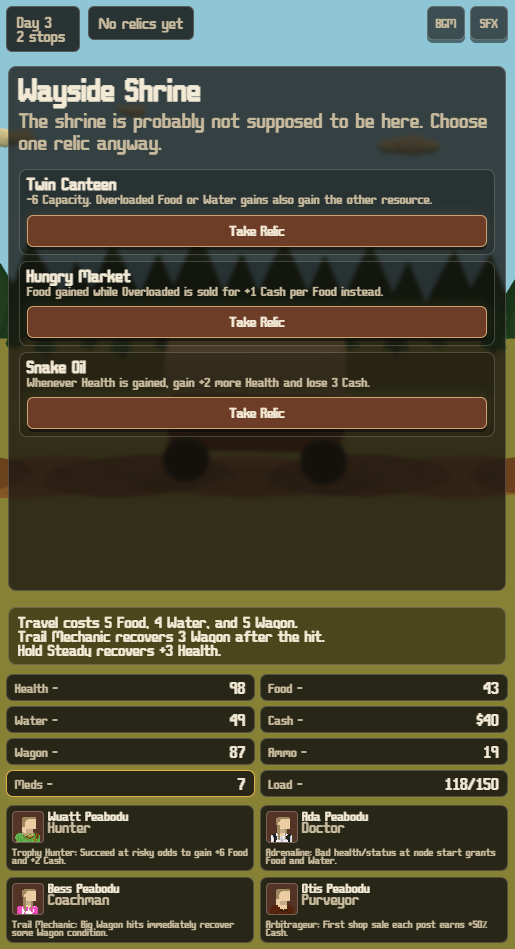
Relics
-
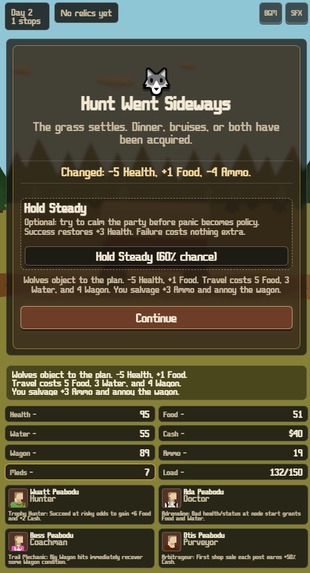
Recovery
Inspiration
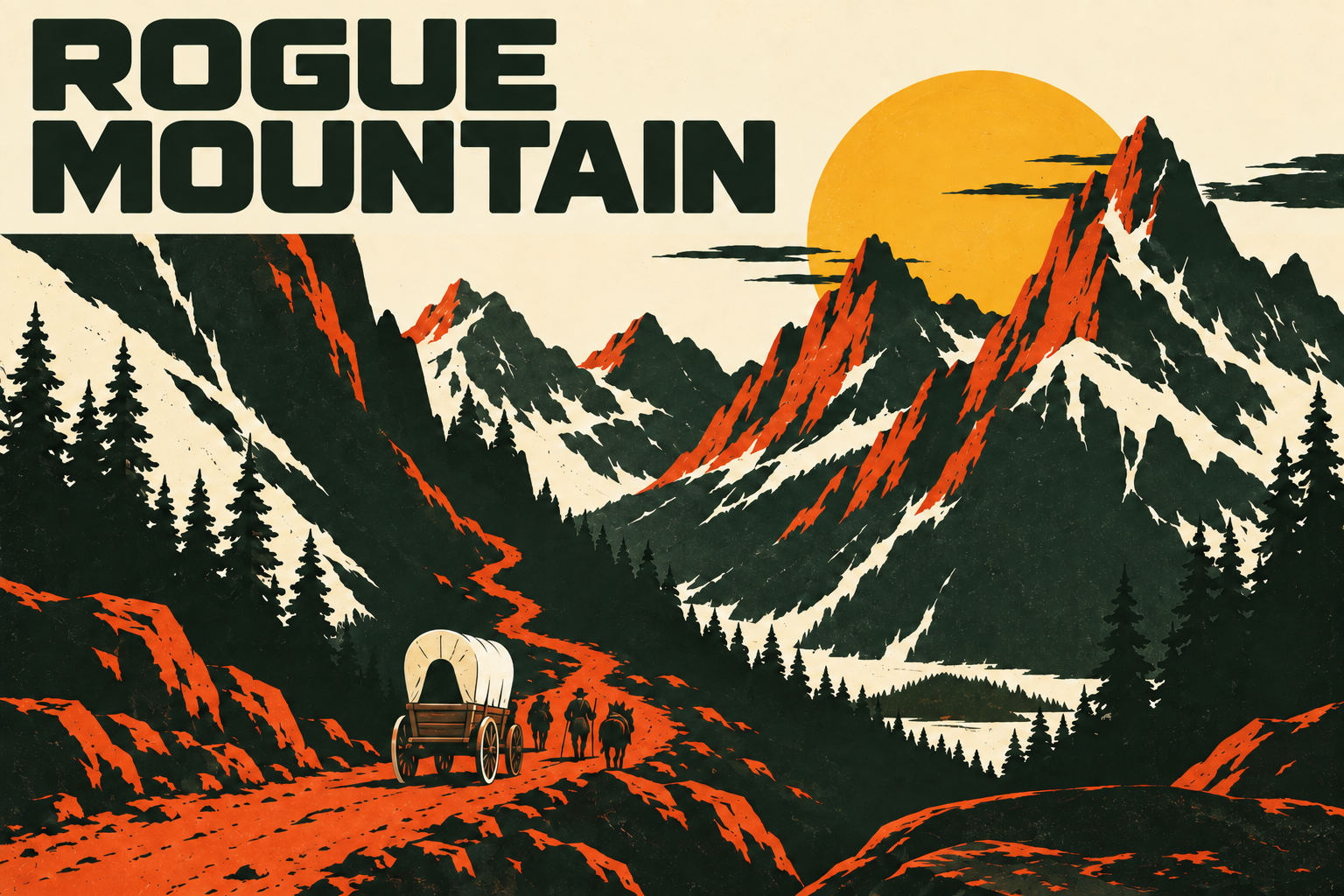
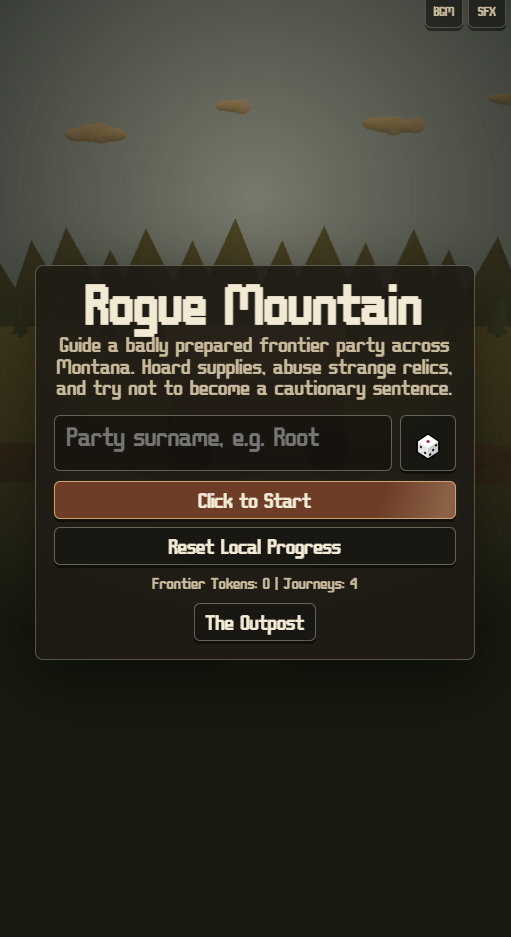
Rogue Mountain is inspired by Oregon Trail-style survival and resource management, Slay the Spire-style route planning, and Balatro-style “wait, my build is doing what now?” synergy. The Montana/Bitterroot setting gives the game its identity: harsh travel, risky decisions, and absurd frontier disasters.
What it does
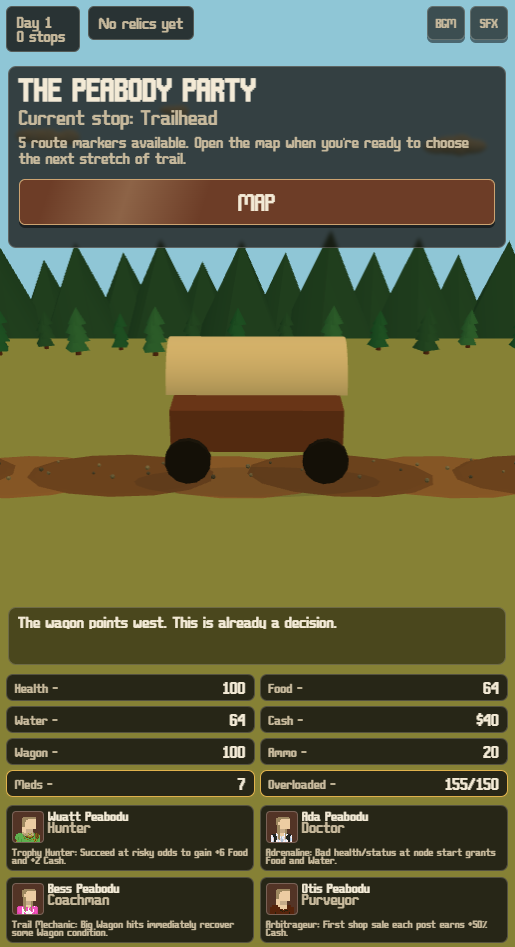
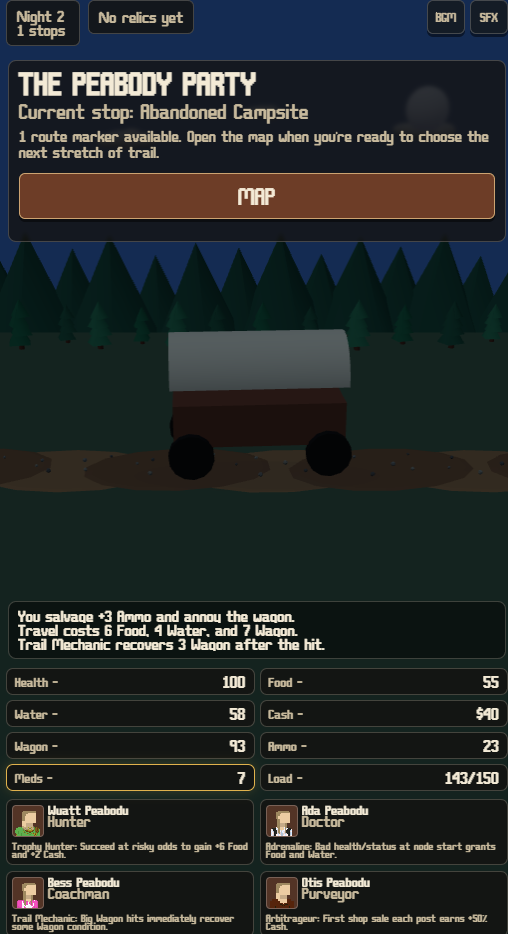
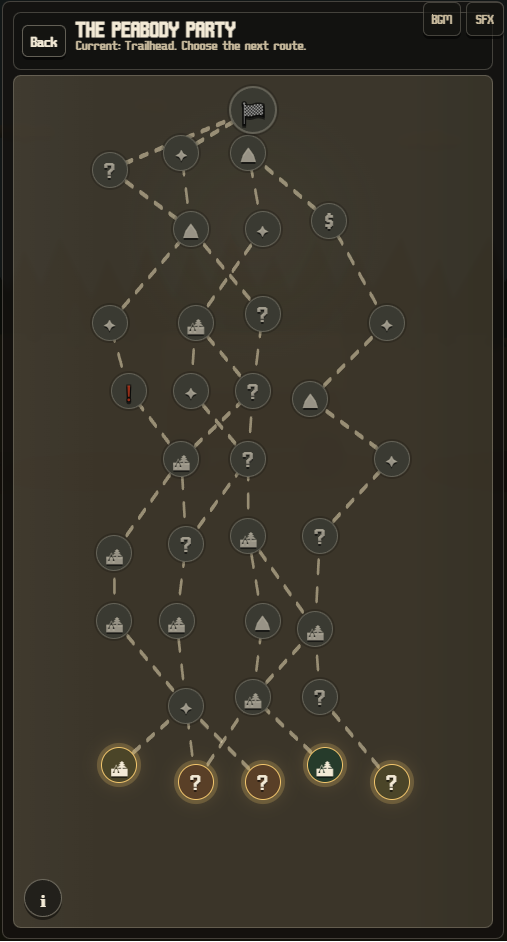
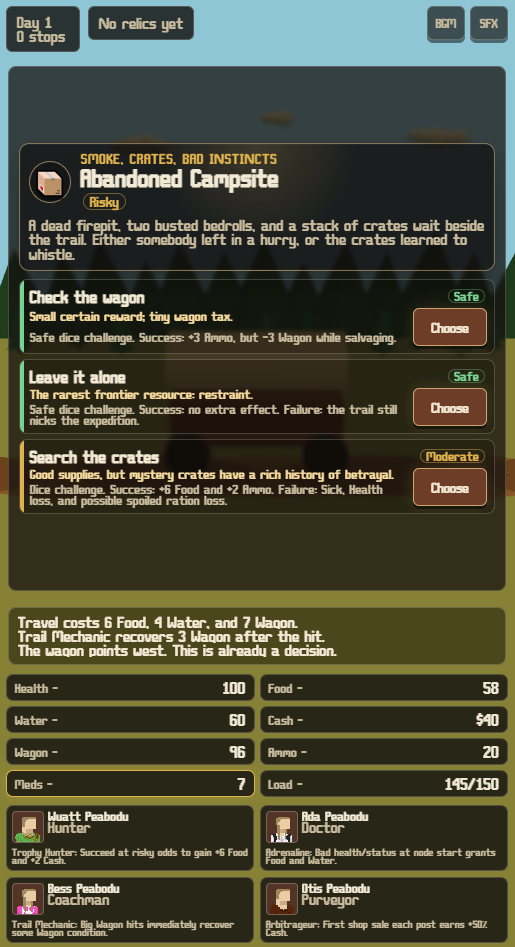
Players guide a named frontier party across Montana toward Bitterroot Pass. Each run mixes route choices, supply management, relics, character passives, trading posts, nightfall attrition, and dice-based node outcomes. The goal is to survive long enough to reach the pass without losing all Health or destroying the wagon.
How we built it
We built Rogue Mountain as a mobile-first HTML5/Three.js web prototype. The game uses local assets only, including local Three.js, portrait art, dice images, font files, and audio, with no runtime network calls. Development was playtest-driven: we built the stripped-down loop first, then added route pressure, dice, relic unlocks, audio, and scene polish.
Challenges we ran into
The biggest challenge was making the game feel like something the player actively plays instead of a click-through survival menu. Early versions had too little route pressure, too much scrolling, weak event presentation, and a map that felt too linear. We pivoted hard into randomized route layouts, front-and-center scenes, and a required dice minigame to give every node a satisfying gamble.
Accomplishments that we're proud of
We’re proud that the prototype became playable, readable, and testable in a short timeline. The dice system gave the core loop a real hook, while relics, passives, and The Outpost added roguelite progression without blowing up scope. The game now has a distinct Montana survival-comedy tone, local save progression, audio, and a lightweight 3D wagon scene.
What we learned
We learned that “more content” does not automatically make a better prototype. The experience improved most when we focused on friction points from playtesting: route decisions, readable risk, outcome drama, resource pressure, and removing unnecessary scrolling. The dice mechanic also showed how one strong interaction can transform a menu-heavy design.
What's next for Rogue Mountain
Next, Rogue Mountain would expand with more events, more relic/passive synergies, stronger regional Montana progression, improved art/audio polish, and deeper route variety. The long-term goal is a compact survival roguelite where every run becomes a ridiculous frontier story shaped by risky choices and broken synergies.


Log in or sign up for Devpost to join the conversation.