-
-

Logo
-
Thumbnail
-
Home
-
Design Generate 1
-
Design Generate 2

Inspiration
Coding agents are getting very good at writing code, but they still need clear product context before they can build the right thing.
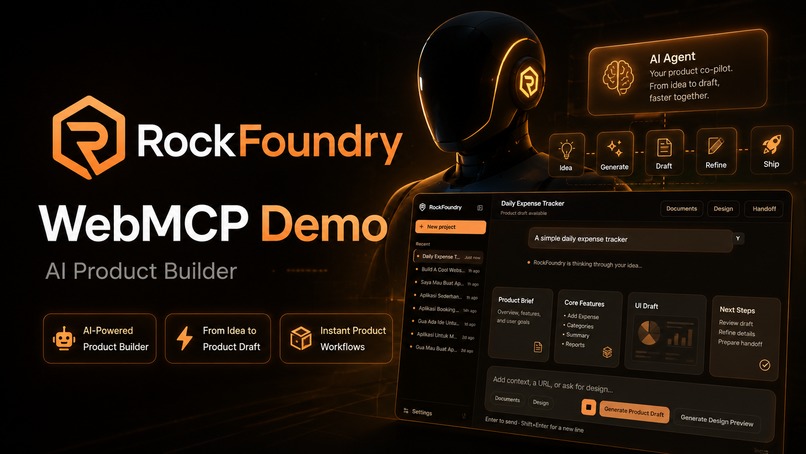
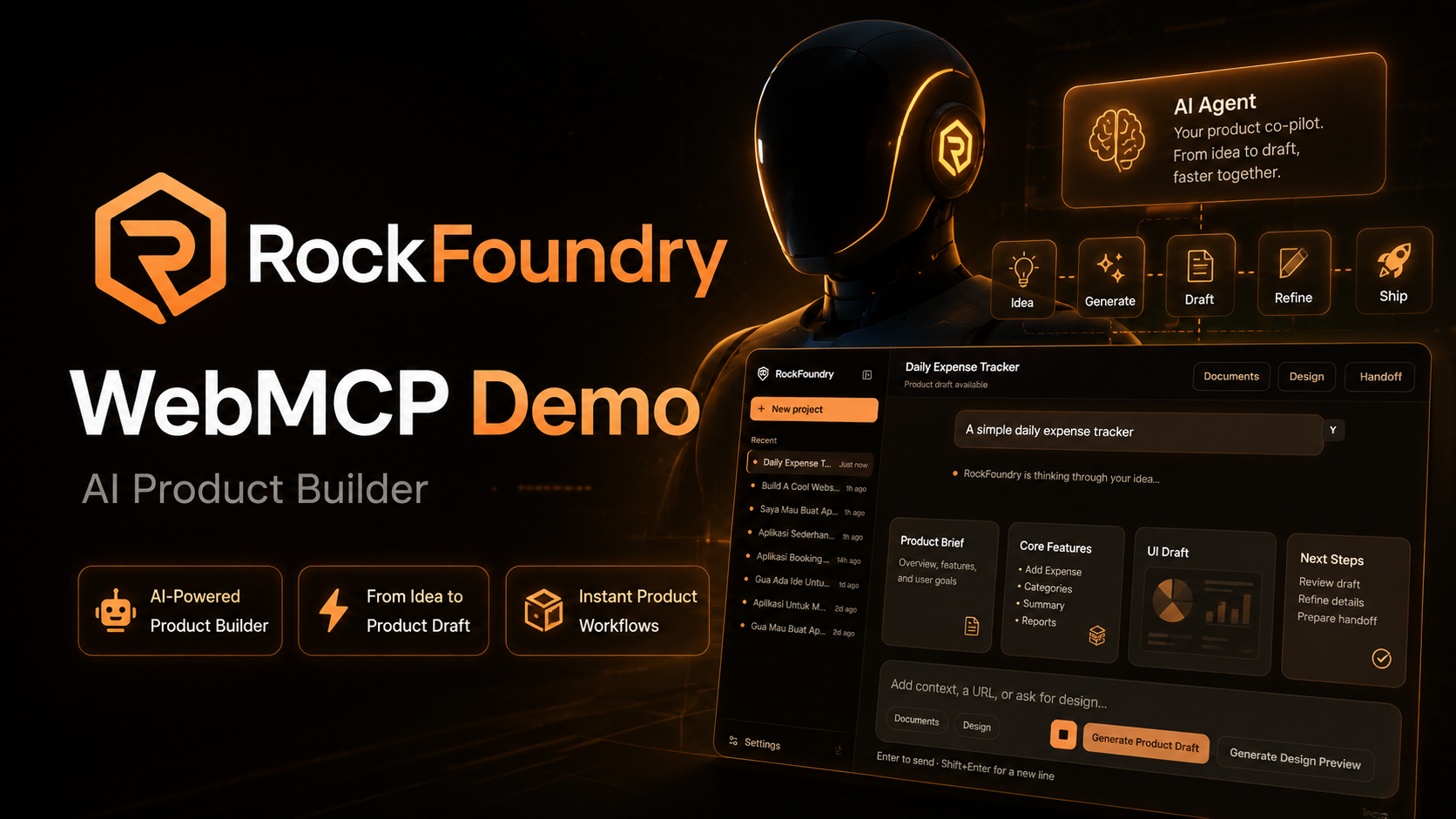
I built RockFoundry to bridge that gap: turn a rough product idea into structured product decisions, documents, and an interactive design before implementation starts.
For this challenge, I extended RockFoundry with WebMCP so ChatGPT can operate the product workspace directly from the browser.
What it does
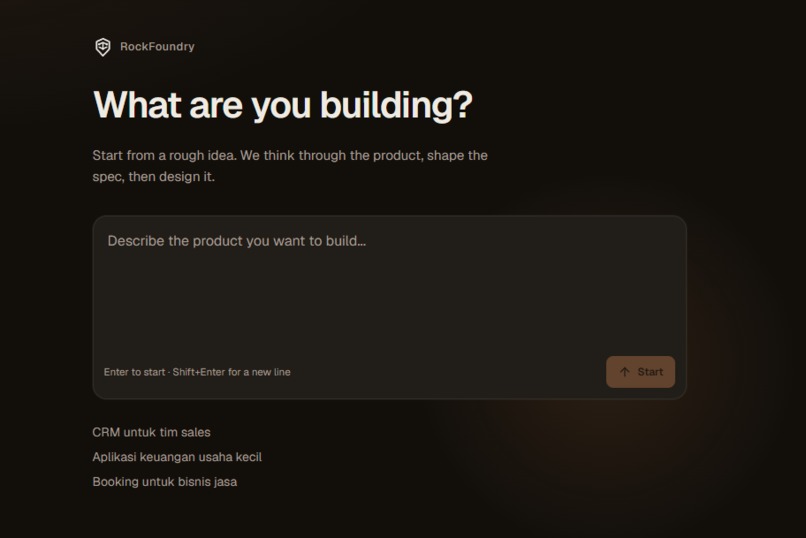
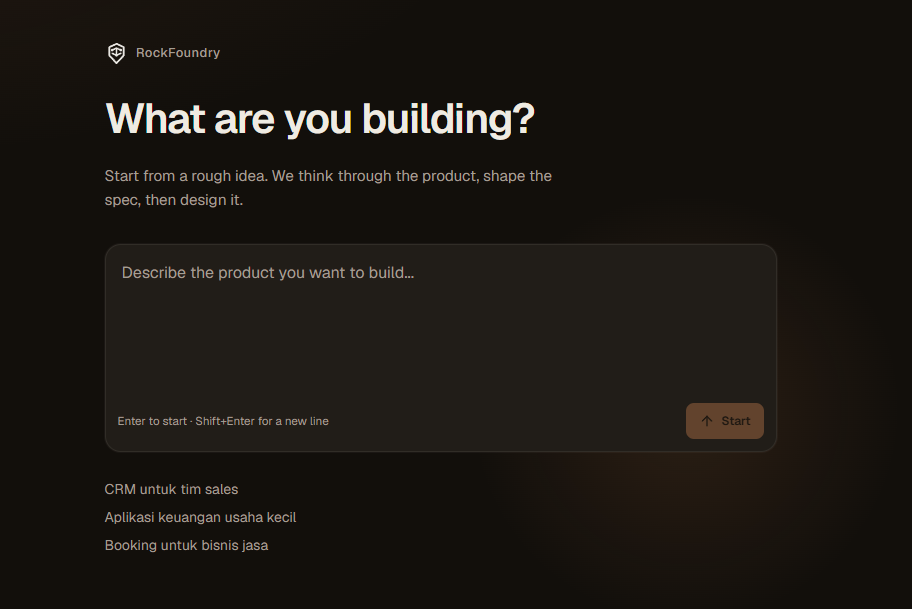
RockFoundry turns a simple idea into a structured product workspace.
From ChatGPT, WebMCP site tools can:
- start a new RockFoundry product
- inspect the current product state
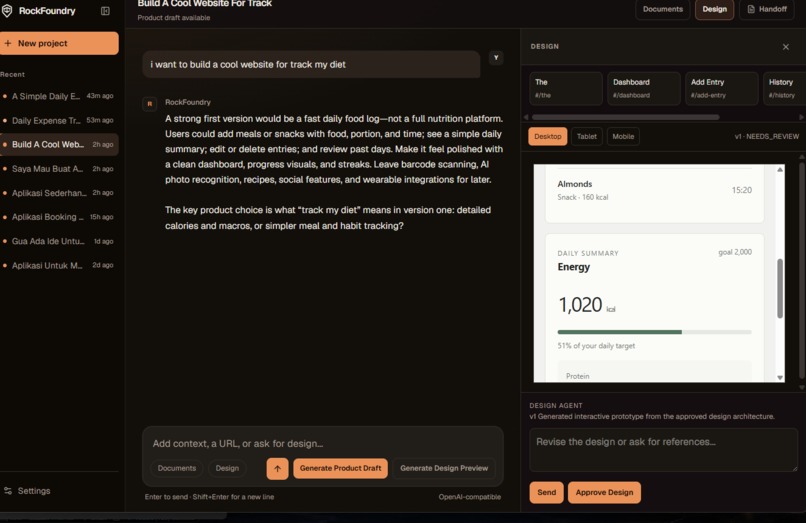
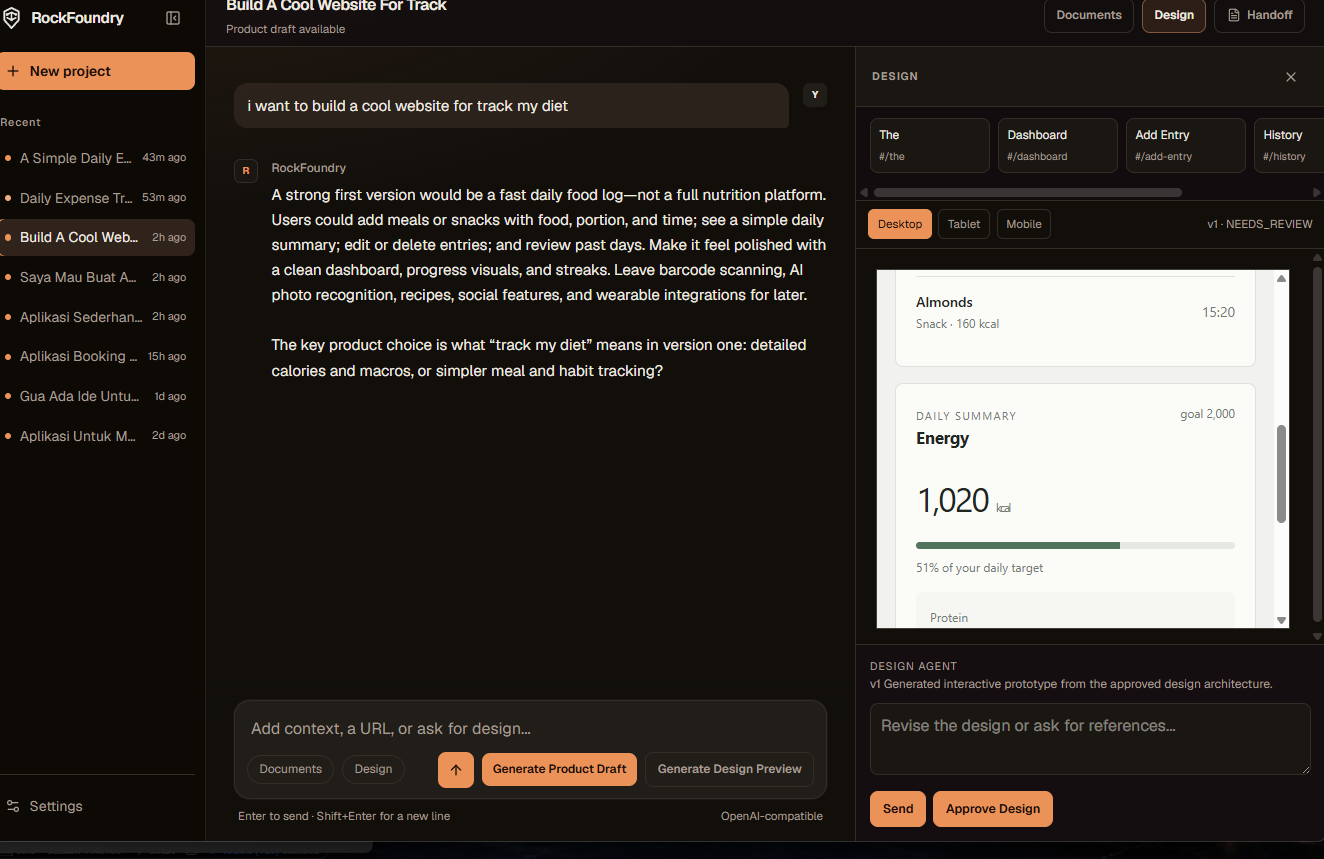
- generate a Product Draft
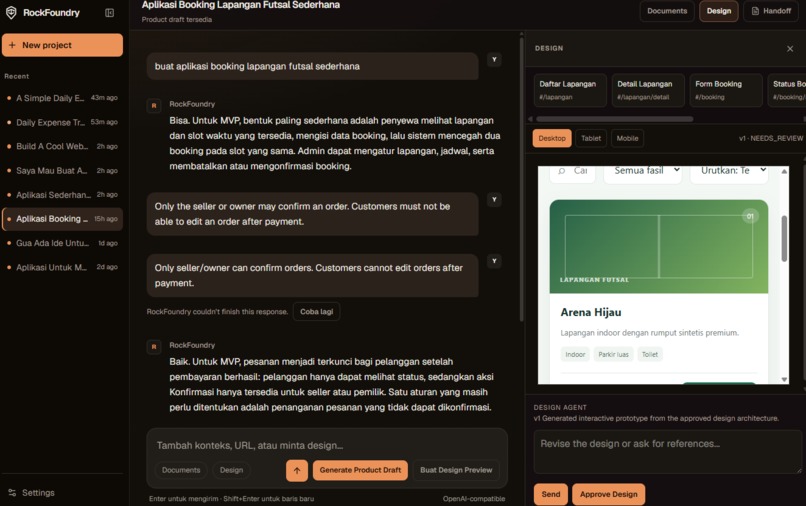
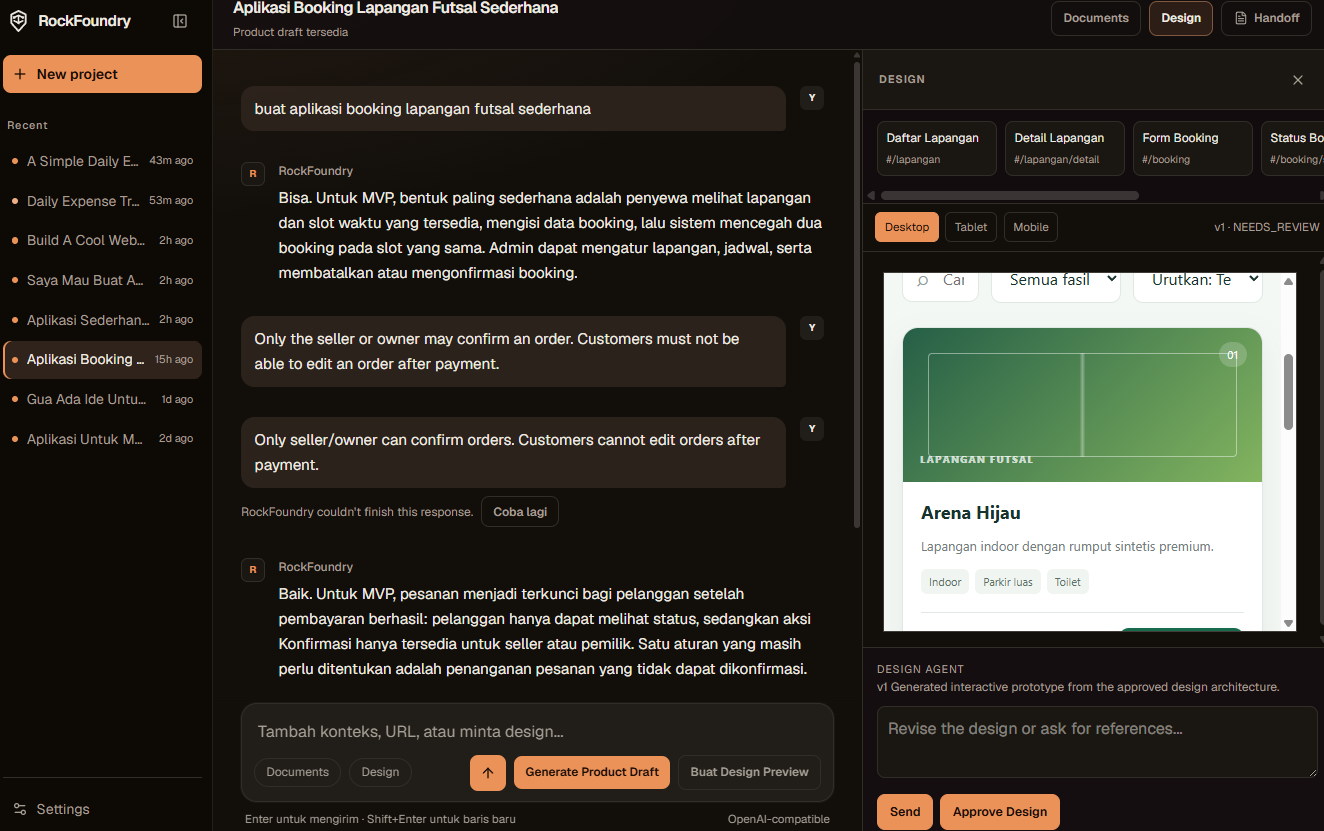
- refine product decisions
- generate an interactive Design Preview
The Product Draft includes six connected artifacts:
- BRD
- PRD
- ERD
- User Flows
- Screen Map
- Design Brief
The same product context is then used to generate a multi-screen interactive prototype.
How I built it
RockFoundry is built with Next.js, React, TypeScript, Prisma, SQLite, and Docker.
WebMCP tools are registered directly by the RockFoundry web interface using document.modelContext.registerTool().
The tools are page-scoped: the homepage exposes a tool for starting a product, while an active project exposes tools for inspection, drafting, refinement, and design generation.
The WebMCP layer reuses RockFoundry's existing APIs and product workflows instead of duplicating business logic.
Challenges
The biggest challenge was making an AI workflow feel fast and reliable.
Product documents originally required several long-running sequential AI calls. I changed the generation flow to use bounded parallel batches.
Design generation was also too slow, so the initial preview now uses a deterministic design specification and one focused AI prototype-generation call.
Another challenge was tool routing. Generic tool names could collide with other agent capabilities, so the WebMCP tools were namespaced specifically for RockFoundry.
What I learned
WebMCP is most useful when tools represent real product actions instead of generic browser automation.
Giving the agent access to the same live product state as the user makes the interaction feel much more like collaboration than automation.
What's next
Next I want RockFoundry to produce an even stronger handoff for coding agents, so a product can move from idea → product specification → design → implementation with less context loss.
Built With
- agents
- ai
- docker
- llm
- next.js
- openai
- prisma
- react
- sqlite
- typescript
- webmcp


Log in or sign up for Devpost to join the conversation.