-
-
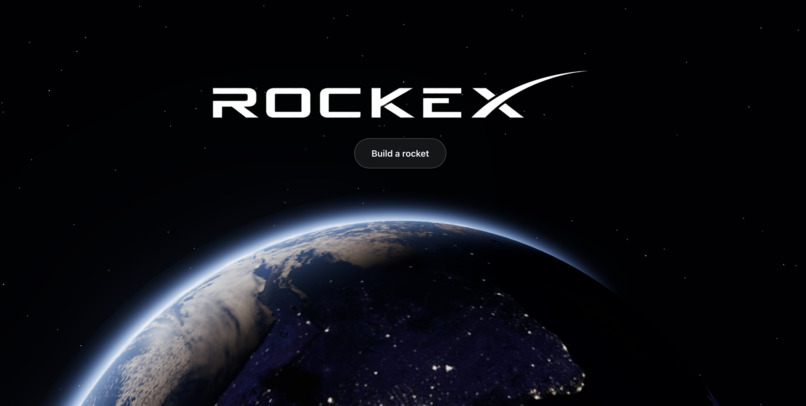
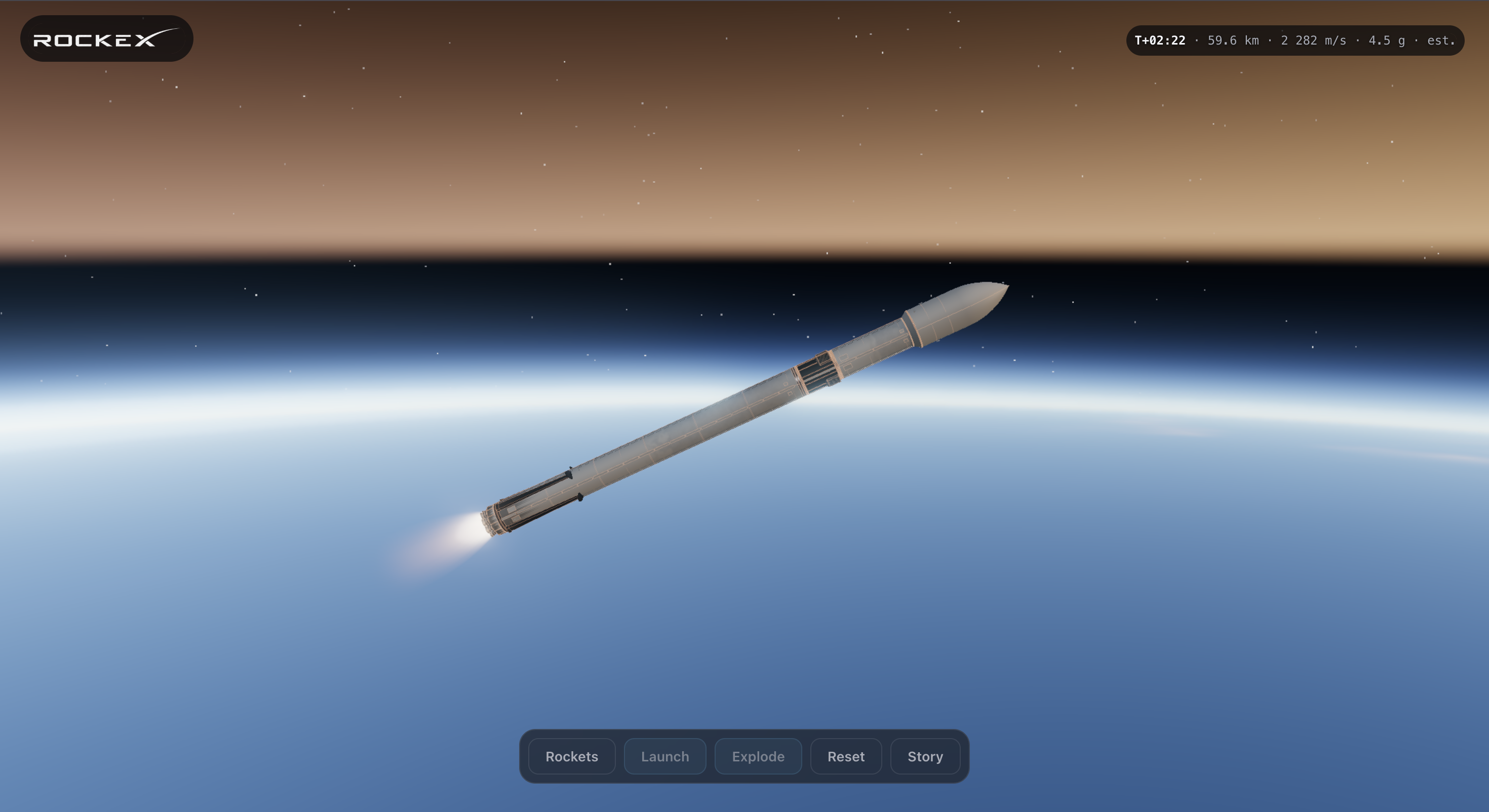
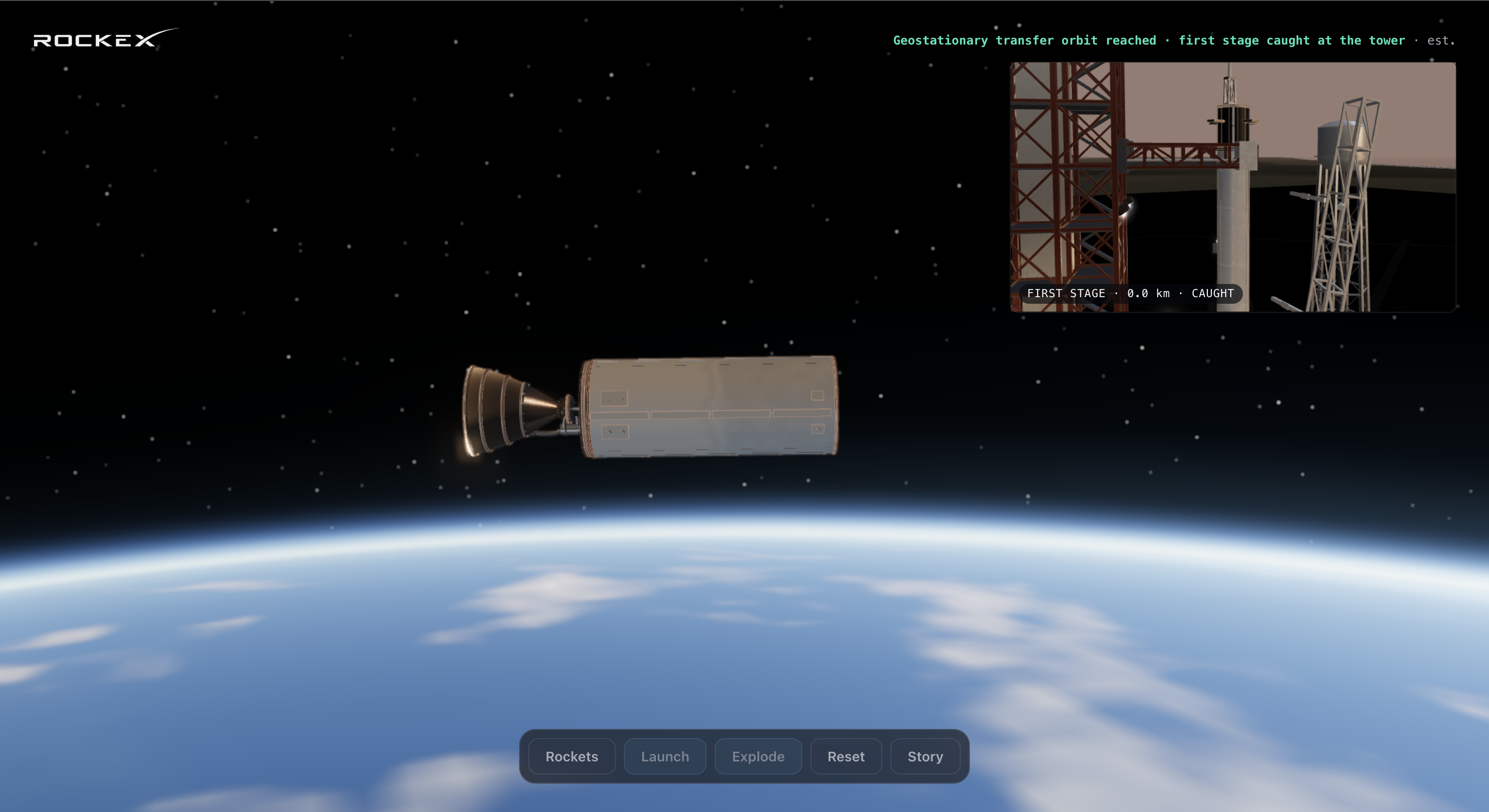
Landing Page
-
-
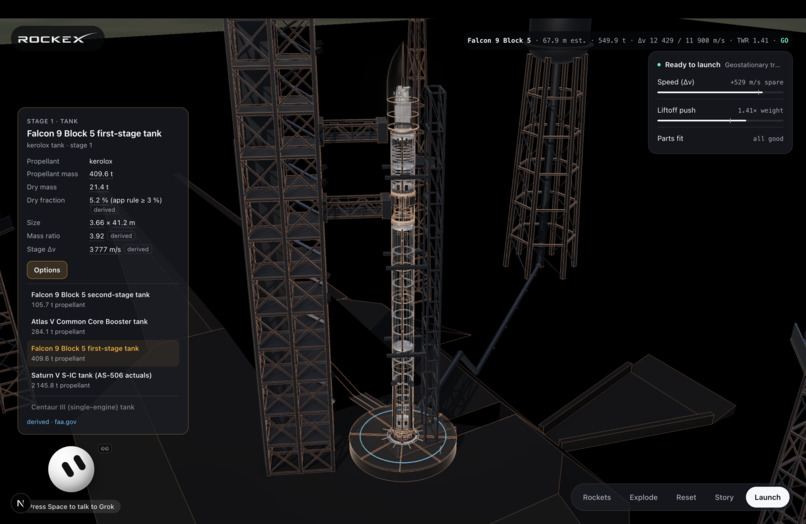
Falcon 9
-
-
-
-
-
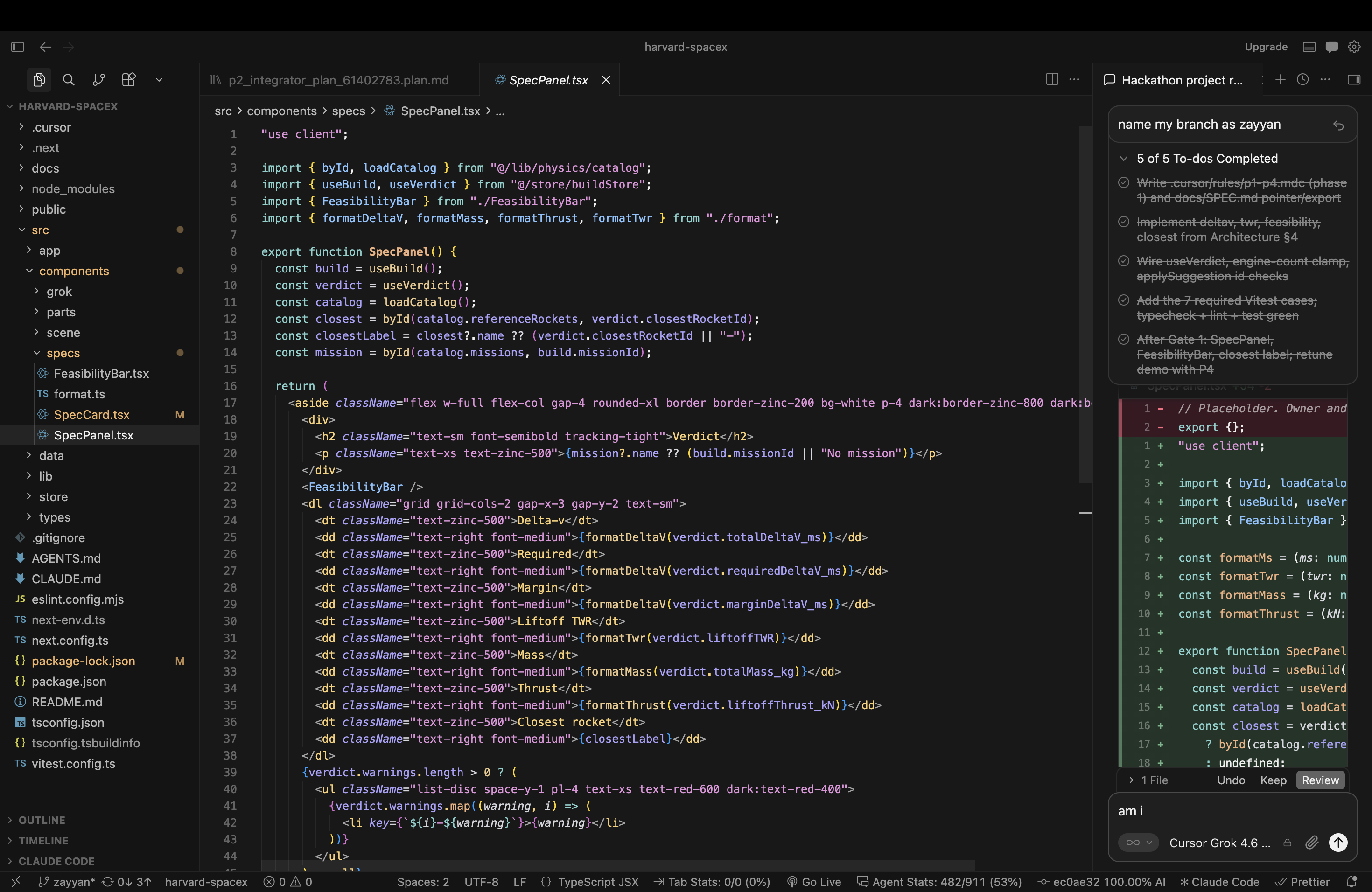
Cursor
-
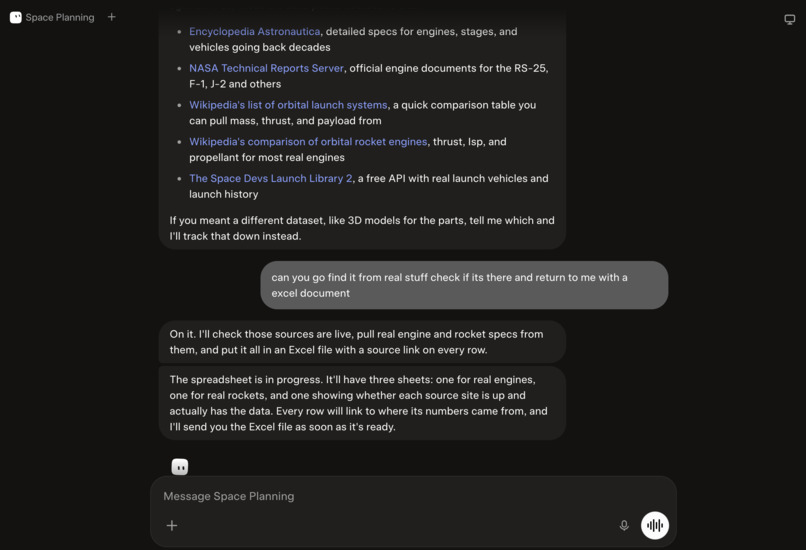
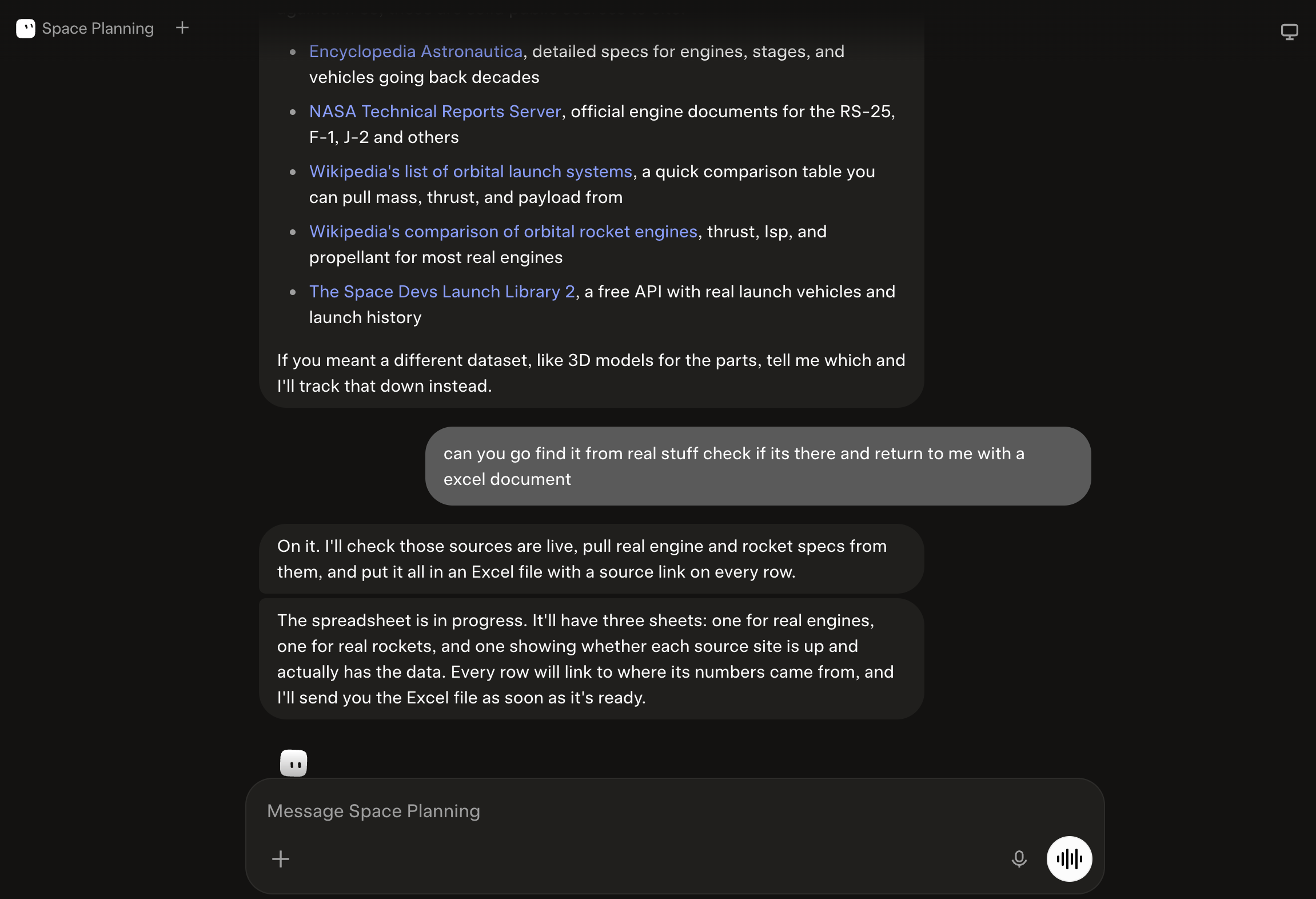
Grok Bot planning session
-
Inspiration
In 2015, SpaceX was still crashing boosters while trying to land them. Months later, its engineers landed one. As missions get more ambitious, who will build tomorrow's rockets? The global space economy reached $686 billion in 2025 (Space Foundation), yet 76% of surveyed aerospace and defense organizations reported trouble hiring engineers (AIA/McKinsey, 2025). Only 31% of U.S. eighth graders reached NAEP Proficient in science (NCES, 2024). Preparing future engineers needs to start earlier.
For many students, aerospace feels out of reach, hidden behind complex equations, expensive equipment and professional software. Students shouldn't have to wait until college to find out if engineering excites them. So we built ROCKEX: an AI-powered rocket lab where students design and launch rockets from real aerospace hardware and learn through trial and error.
What it does
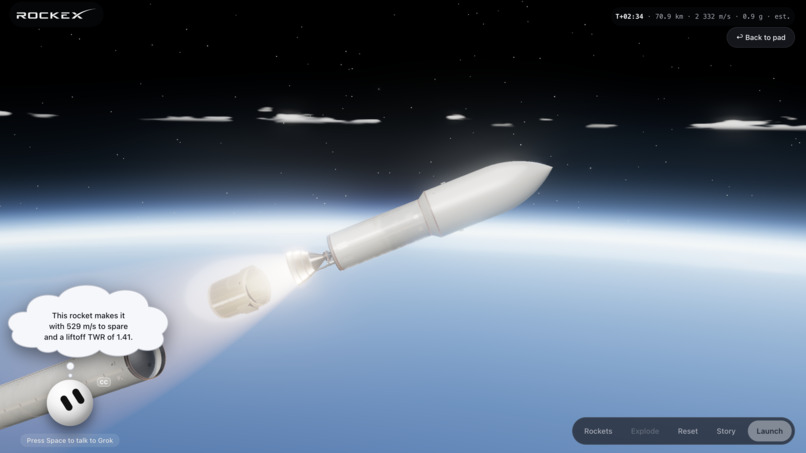
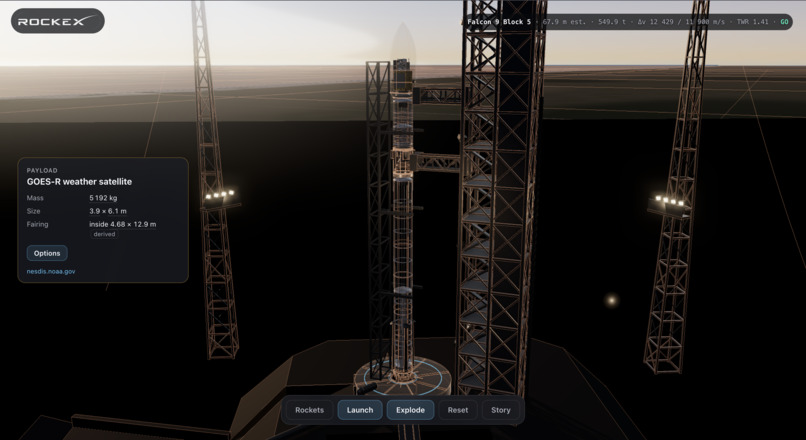
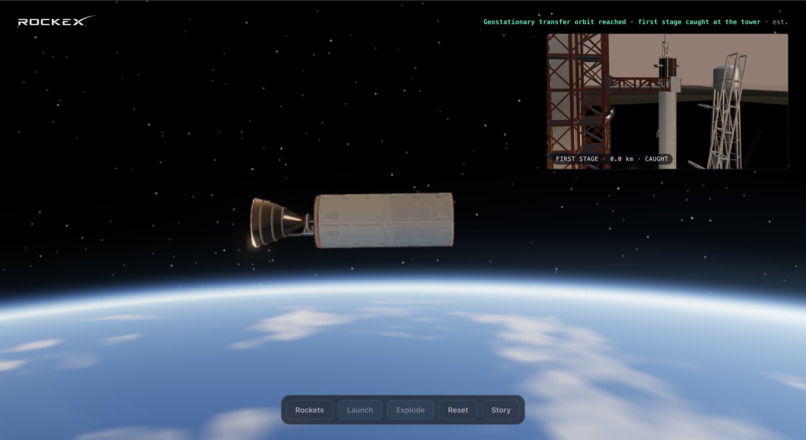
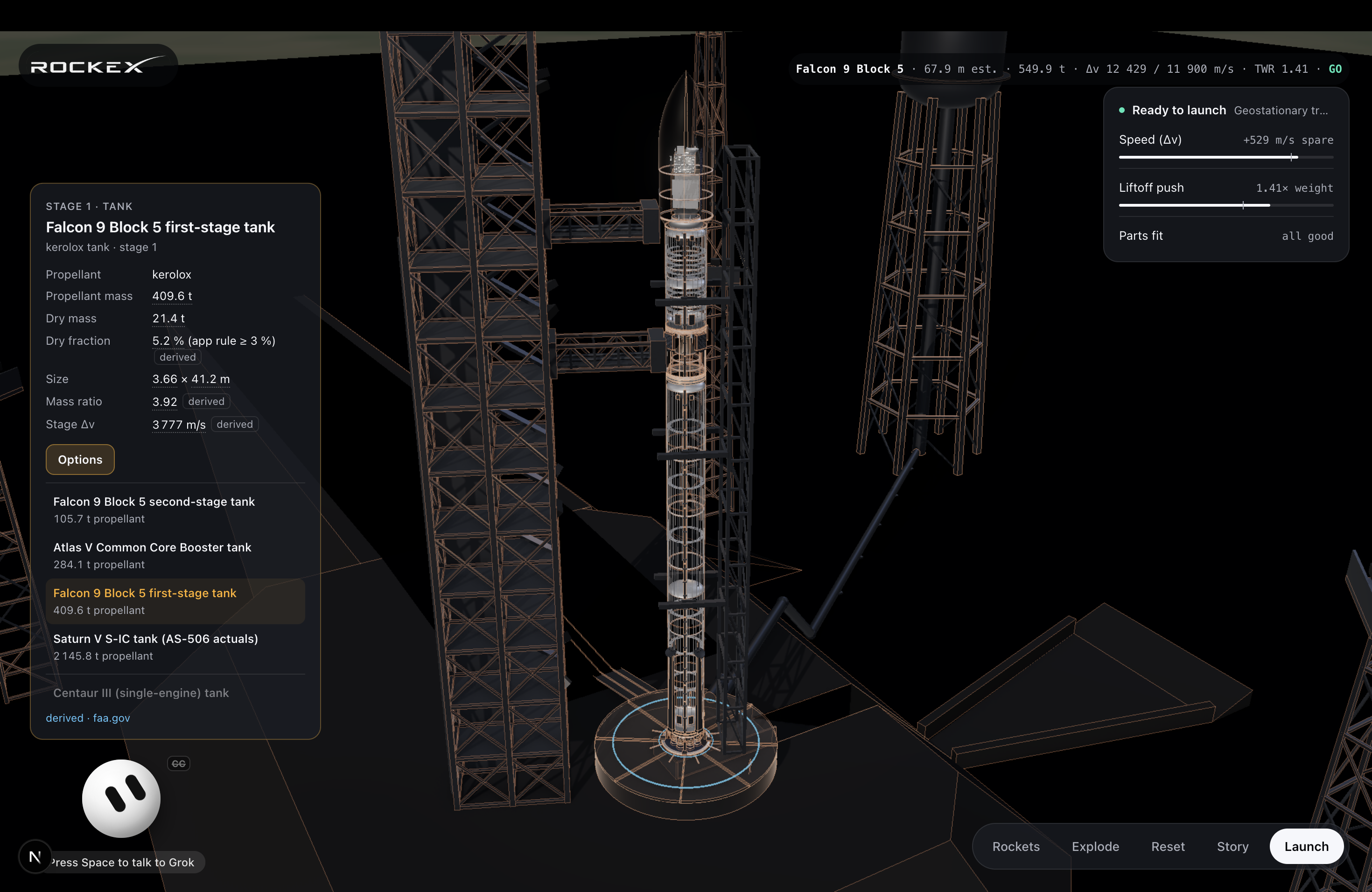
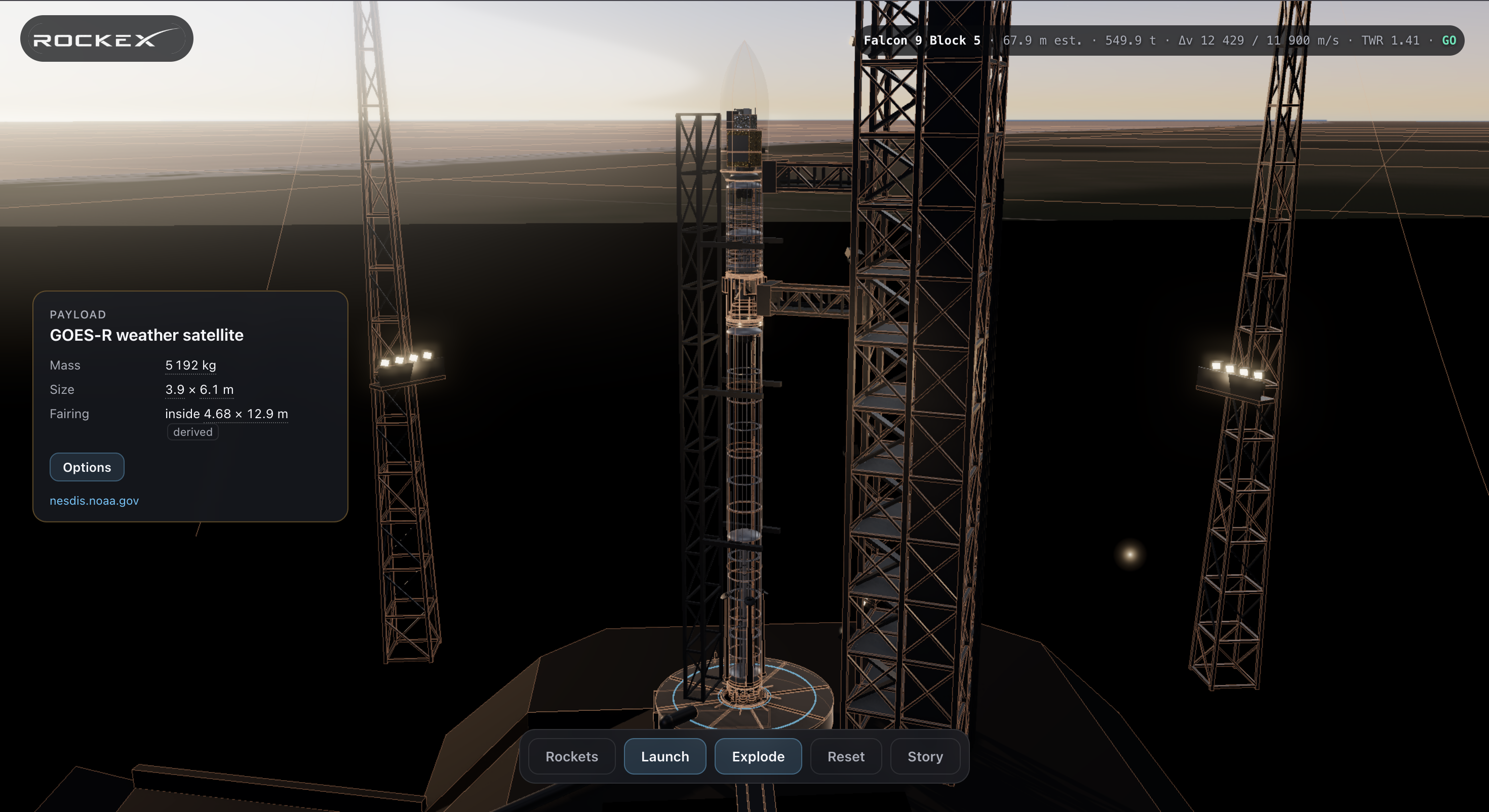
ROCKEX is an AI-powered rocket design and launch lab in your browser, built for high school and early college students. You design with a voice-controlled AI flight engineer, and real physics decides if your rocket flies. Pick a destination (low Earth orbit, the Moon, Mars and more) and stack a rocket from real hardware: Merlin 1D, RS-25, F-1, Falcon 9 and Saturn V tanks, and more.
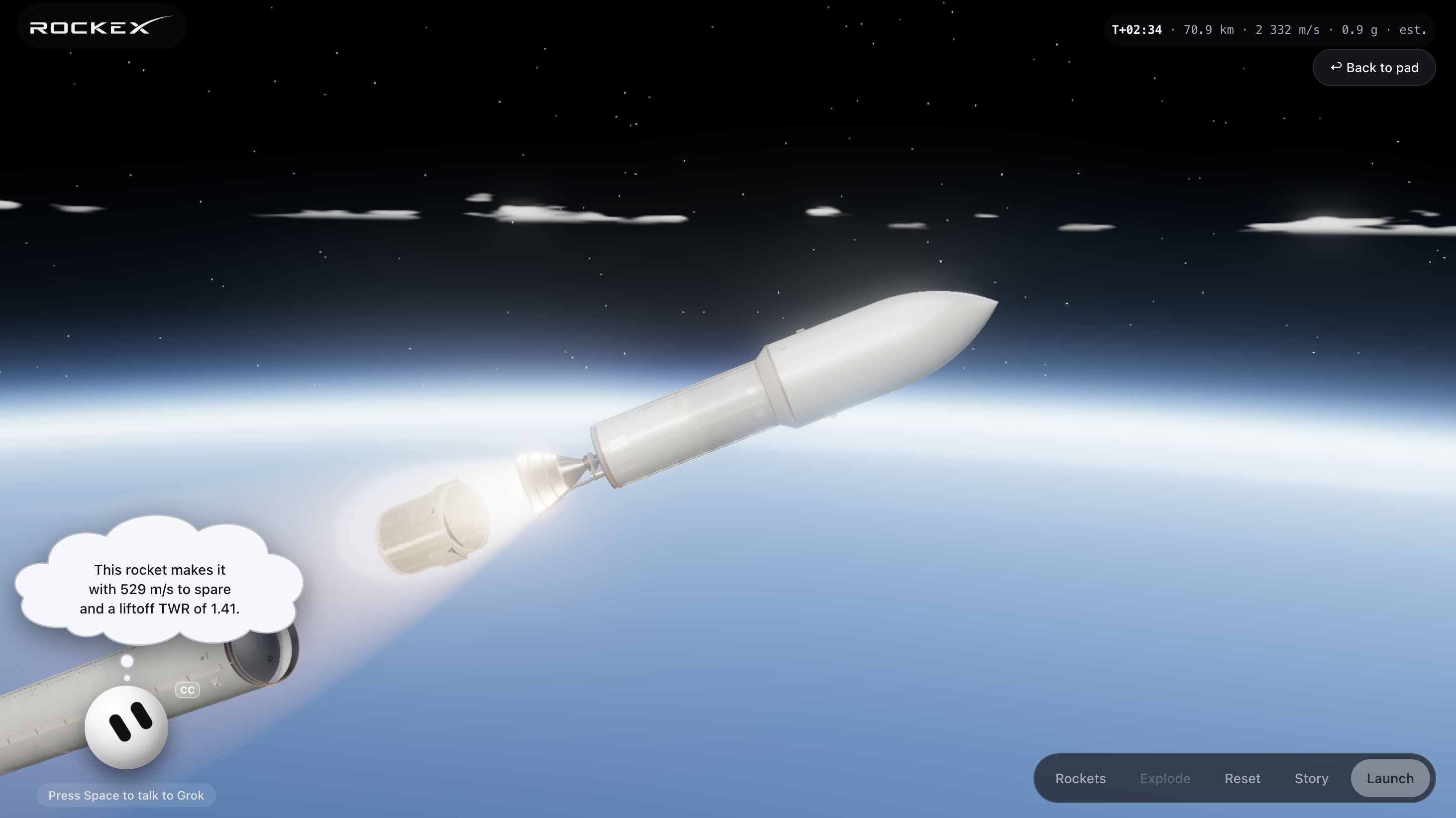
Grok is your flight engineer. Hold Space and talk to it. It walks you through each part, shows the choices as 3D parts next to your rocket, and can build, swap and launch by voice. It doesn't hand you the answer. It asks what you think will happen and lets you try.
When you launch, physics decides. Each stage's speed budget comes from the rocket equation:
Δv = Isp × g₀ × ln(m₀ / m_f)
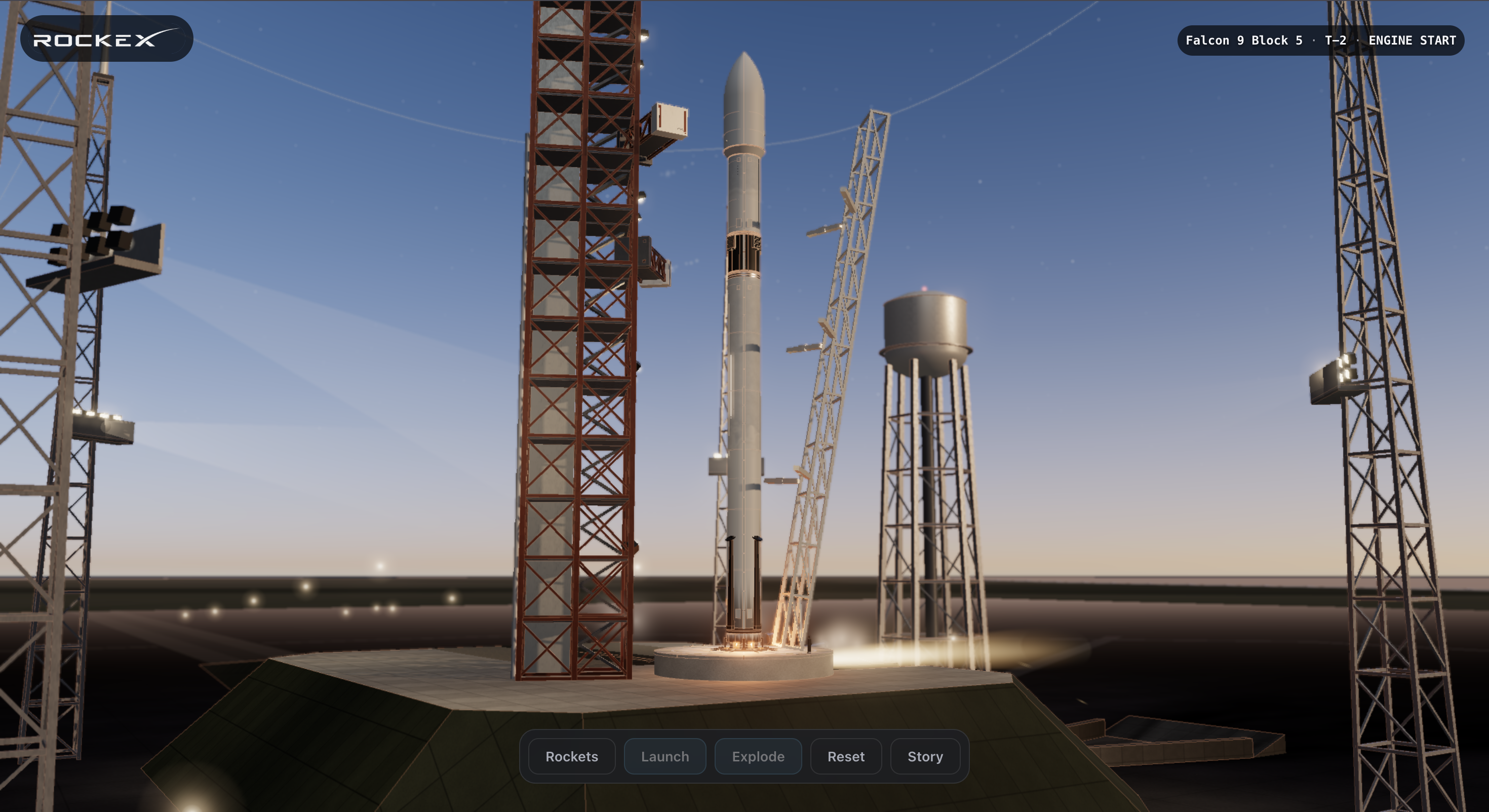
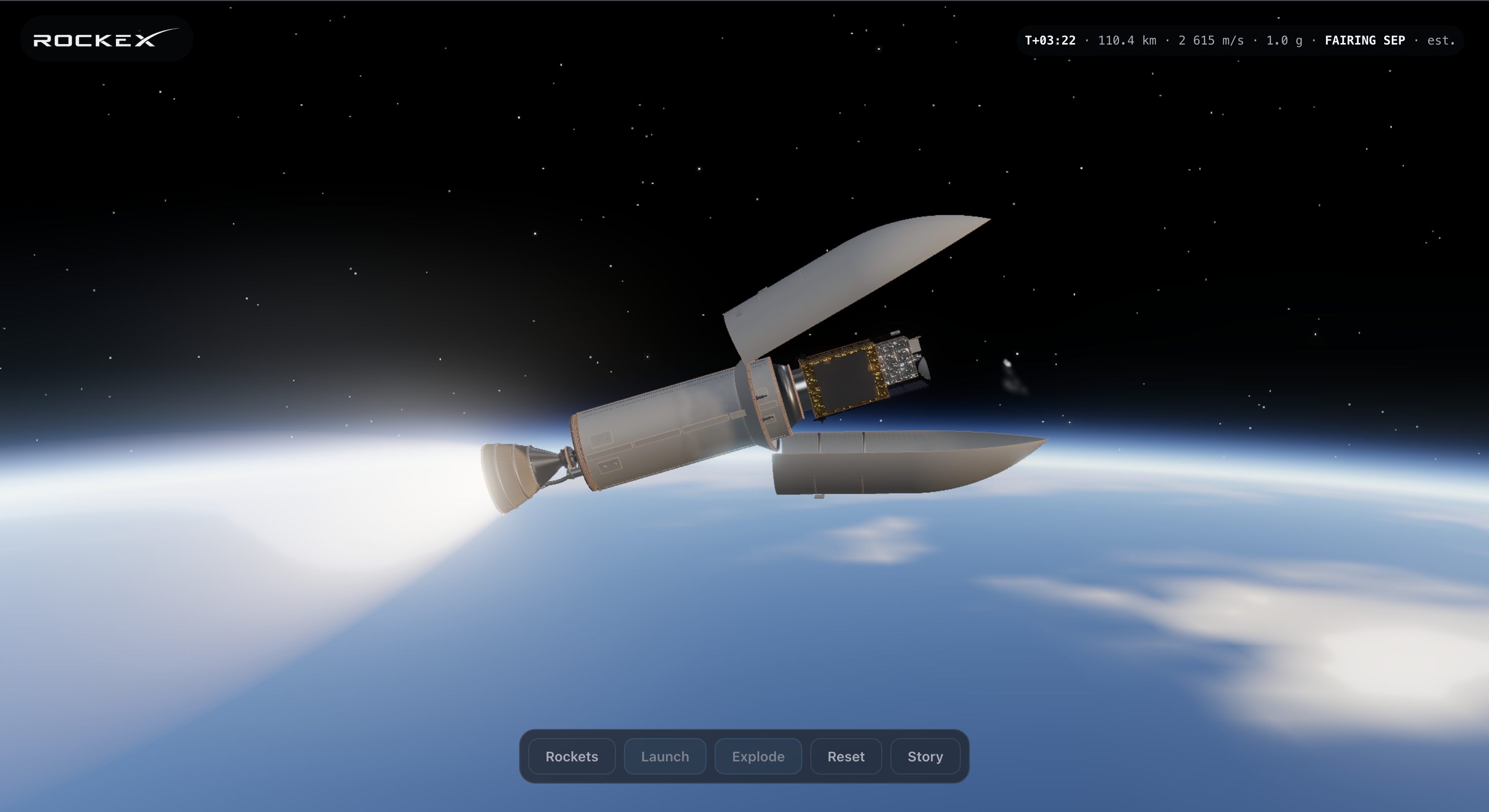
The engines also have to out-push the rocket's weight to leave the pad. If the rocket can't do the mission, it fails, and the readiness panel shows what's missing: speed, thrust, or a part that doesn't fit. You can also compare your rocket with real ones like Falcon 9, Saturn V and Starship.
How we built it
- Next.js + TypeScript on Vercel.
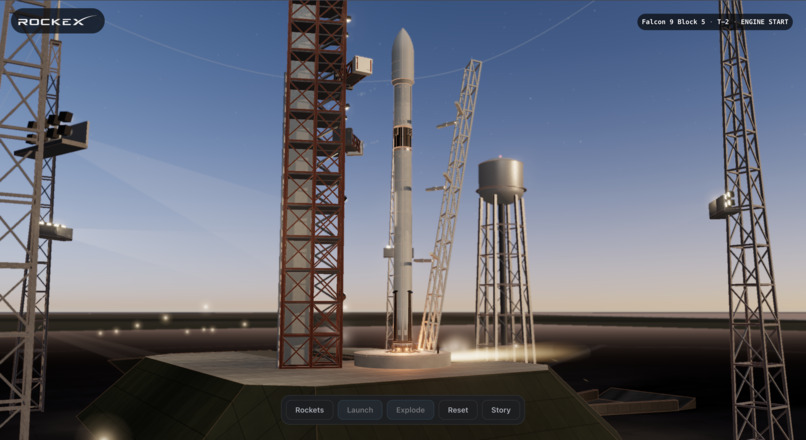
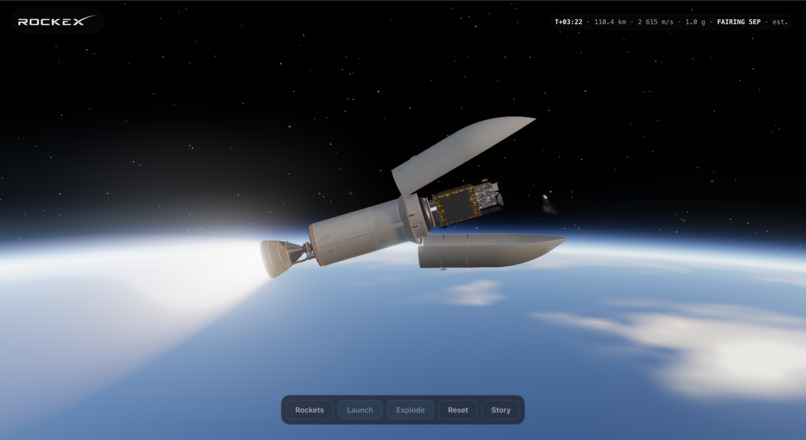
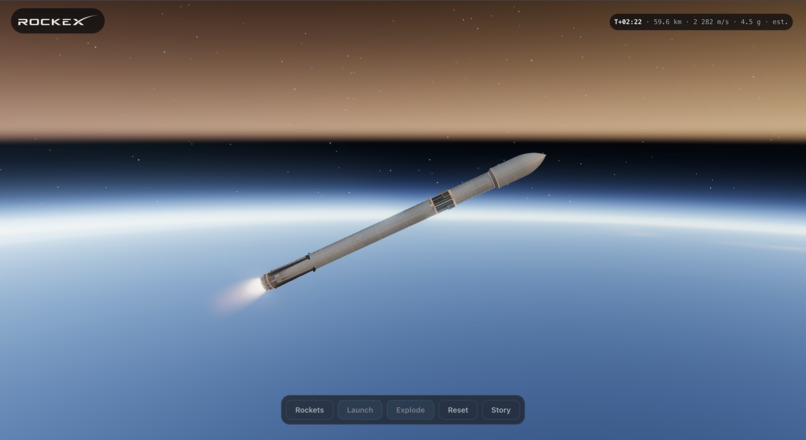
- three.js and anime.js for 3D assembly and flight. Every part is modeled in code, snaps onto the stack and flies a simulated ascent.
- Physics in plain TypeScript: rocket equation per stage, thrust-to-weight, and fit rules. The verdict is always computed in code, never by the AI.
- Real data: 11 engines, 12 tanks, 5 payloads and 6 missions, each cited (SpaceX, NASA, ULA, the FAA, Aerojet Rocketdyne, NPO Energomash). The "closest real rocket" match uses Jonathan McDowell's GCAT catalog of 534 launch vehicles and 7,200 orbital launches.
- Grok Voice over xAI's realtime API with push-to-talk. Grok's tools drive the app (show options, swap parts, build, launch), and each returns the new physics verdict, so Grok only quotes real numbers.
- Grok chat reviews finished rockets. xAI speech-to-text and text-to-speech power hold-to-ask mode.
- Grok Bot and Grok Imagine for our demo video. Grok Bot helped plan and script it, and Grok Imagine generated some of its cinematic scenes.
- Zustand for state, Zod to validate AI responses, Vitest for 140+ tests.
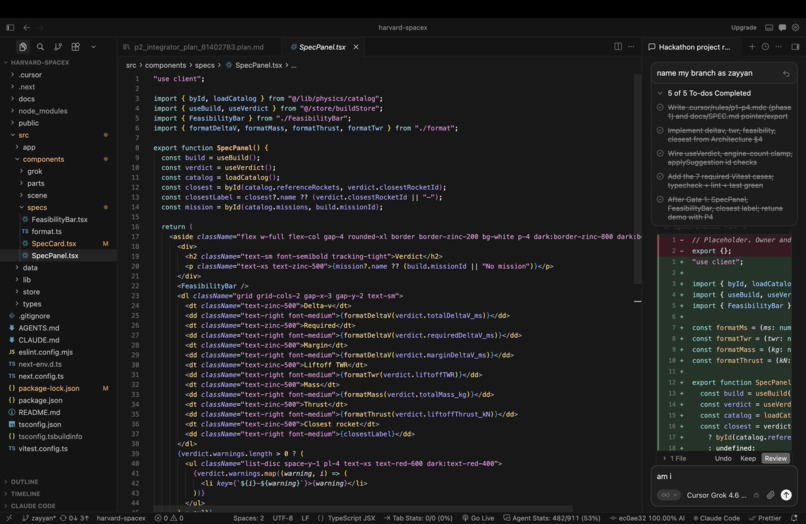
- Cursor: with parallel subagents. A main agent delegated tasks to Cursor subagents running at the same time, and each of the four of us had our own rules file.
Challenges we ran into
- Keeping Grok honest. Language models make up numbers. Code is the only source of truth: Grok talks, physics decides.
- Teaching without spoiling. Grok knows which part works, but saying so kills the learning. It hints first and only gives the answer if you ask again.
- Four people, one app. The 3D front end started as a separate prototype. Wiring it in broke the live site once, so the app now reads the prototype's HTML at build time.
- Keeping flight and verdict in sync on the same physics.
- Crowded screen. Part choices, Grok, subtitles and controls kept overlapping.
- Cost. We tried a Grok Imagine video for every launch, but it was too expensive per launch, so we cut it.
Accomplishments that we're proud of
- Grok runs the whole app by voice. It knows what's on screen, builds and launches with real tools, and you can interrupt it mid-sentence.
- The real Saturn V reaches the Moon. We rebuilt Apollo 11's rocket from published specs, and our physics gets it there with 38 m/s to spare.
- Grok teaches instead of telling. It hints, lets you pick the wrong part, and lets the launch show you why.
- Every number has a source. Each value is cited, and our tests fail if any source is missing.
What we learned
- Why rockets have stages, and why more fuel can make a rocket worse: the mass ratio sits inside a logarithm, so returns drop fast.
- Hydrogen engines are efficient but need huge tanks. Kerosene engines push harder off the pad.
- Voice AI needs different design from chat: short replies, push-to-talk, and showing on screen what it's doing.
- AI works best as the guide, not the judge.
What's next for ROCKEX
- A classroom mode where teachers set a mission and see how students worked through it.
- Partnering with SpaceX and educational institutions to bring ROCKEX into classrooms and spark interest in space exploration.
Built With
- anime.js
- claude
- cursor
- drei
- github
- grok
- next.js
- node.js
- three.js
- typescript
- vercel
- xai
- zod
- zustand


Log in or sign up for Devpost to join the conversation.