Inspiration
RocketSim was inspired by the idea of making aerospace engineering more accessible and intuitive through AI. Designing rockets traditionally requires deep technical knowledge and complex simulation tools. We wanted to remove that barrier by allowing users to design and explore rockets using natural language, turning an advanced engineering workflow into something interactive, visual, and educational.
What it does
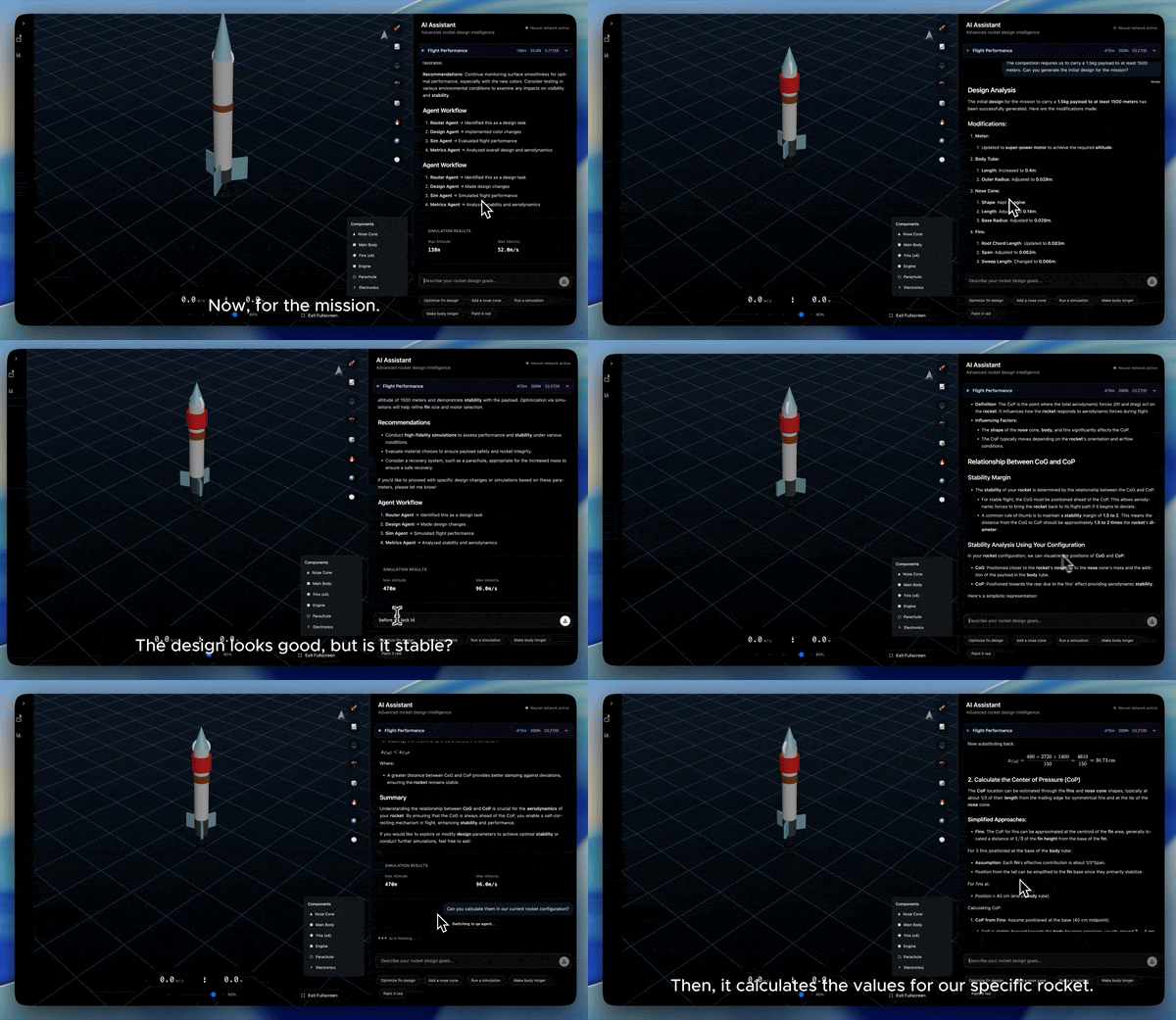
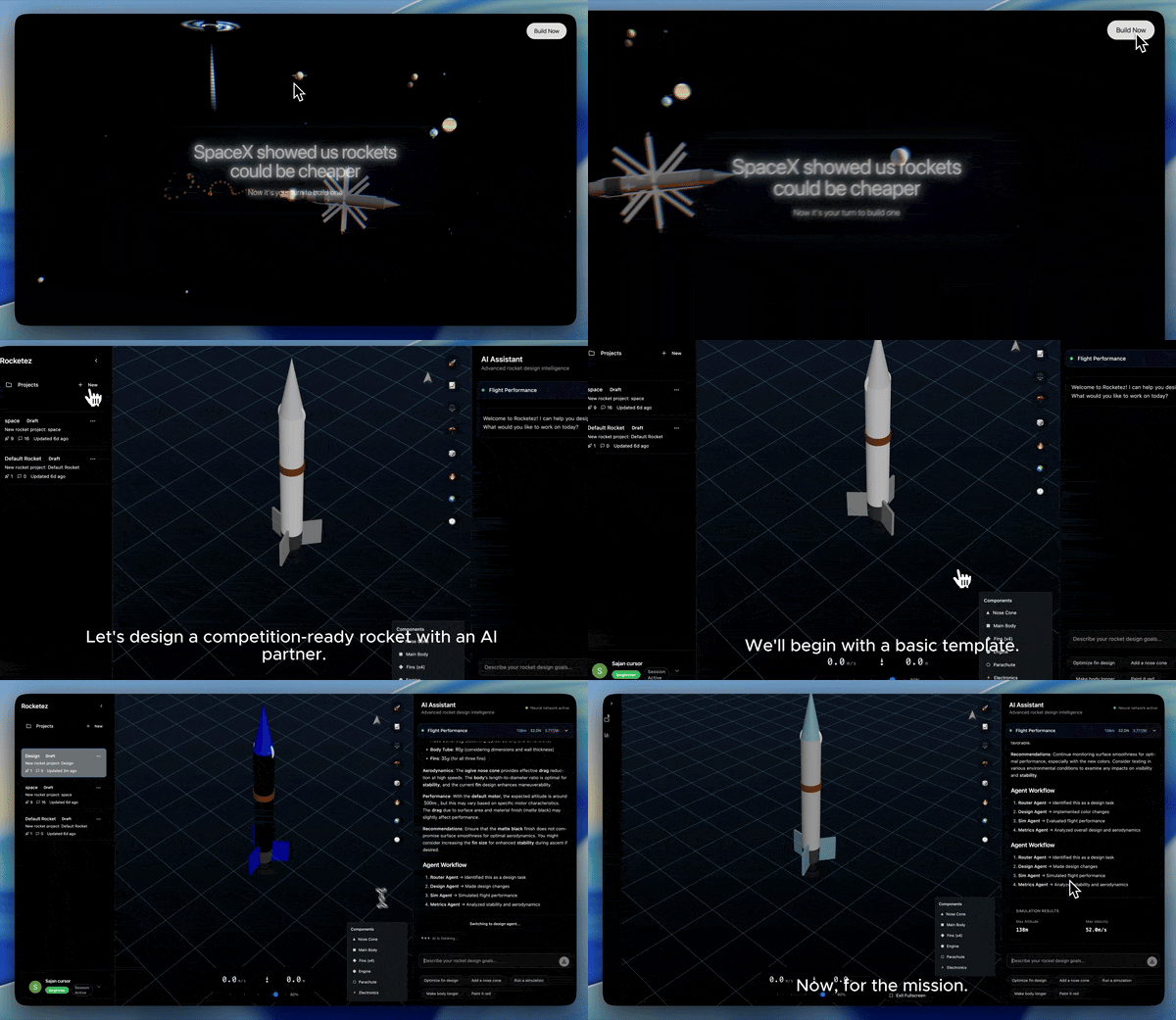
RocketSim is an AI-powered rocket design and simulation platform where users can describe rockets in plain English and see them built and simulated in real time. It allows users to add or modify rocket parts, adjust parameters, run simulations, and understand performance through an interactive 3D environment. The system combines conversational AI with physics-based simulation to make rocket engineering accessible and exploratory.
How we built it
We built RocketSim using a full-stack architecture. The frontend is developed with Next.js, TypeScript, and React Three Fiber for real-time 3D visualization. The backend uses a Python microservices setup powered by the OpenAI Agents SDK for natural language understanding and command execution. RocketPy handles high-fidelity physics simulations, while Docker and Docker Compose orchestrate the multi-service system. Communication between components is managed through REST APIs, with Zustand used for frontend state management.
Challenges we ran into
One of the main challenges was bridging natural language input with structured engineering constraints required for accurate rocket simulation. Ensuring consistency between AI-generated designs and physics simulation parameters was complex. We also faced difficulties managing multi-service communication between the AI agent, frontend visualization layer, and physics engine while maintaining real-time responsiveness.
Accomplishments that we're proud of
We successfully built an end-to-end system that converts natural language into fully simulated rocket designs. The integration of AI-driven design with real-time 3D visualization and accurate physics simulation is a major achievement. We also implemented a modular architecture that cleanly separates AI reasoning, simulation logic, and frontend rendering, making the system scalable and extensible.
What we learned
We learned that combining AI with simulation systems requires careful orchestration between unstructured input and strict physical constraints. Designing effective tool-calling systems and managing context across services is critical for reliability. We also gained deeper experience in multi-service architecture, real-time 3D rendering, and integrating LLMs into interactive engineering tools.
What's next for Rocket-Simulator
Next, we plan to improve simulation fidelity and expand the component library for more complex rocket designs. We also aim to introduce collaborative design features, allowing multiple users to work on rockets together in real time. Further improvements include better physics visualization, performance optimization for larger simulations, and expanding the AI assistant to provide deeper engineering insights and recommendations.


Log in or sign up for Devpost to join the conversation.