Inspiration
Currently, blind people do not have many resources to learn Braille. They need to use a teacher who costs a lot of money and is usually limited. With this machine, it is easy, cheap and fast to learn Braille.
What it does
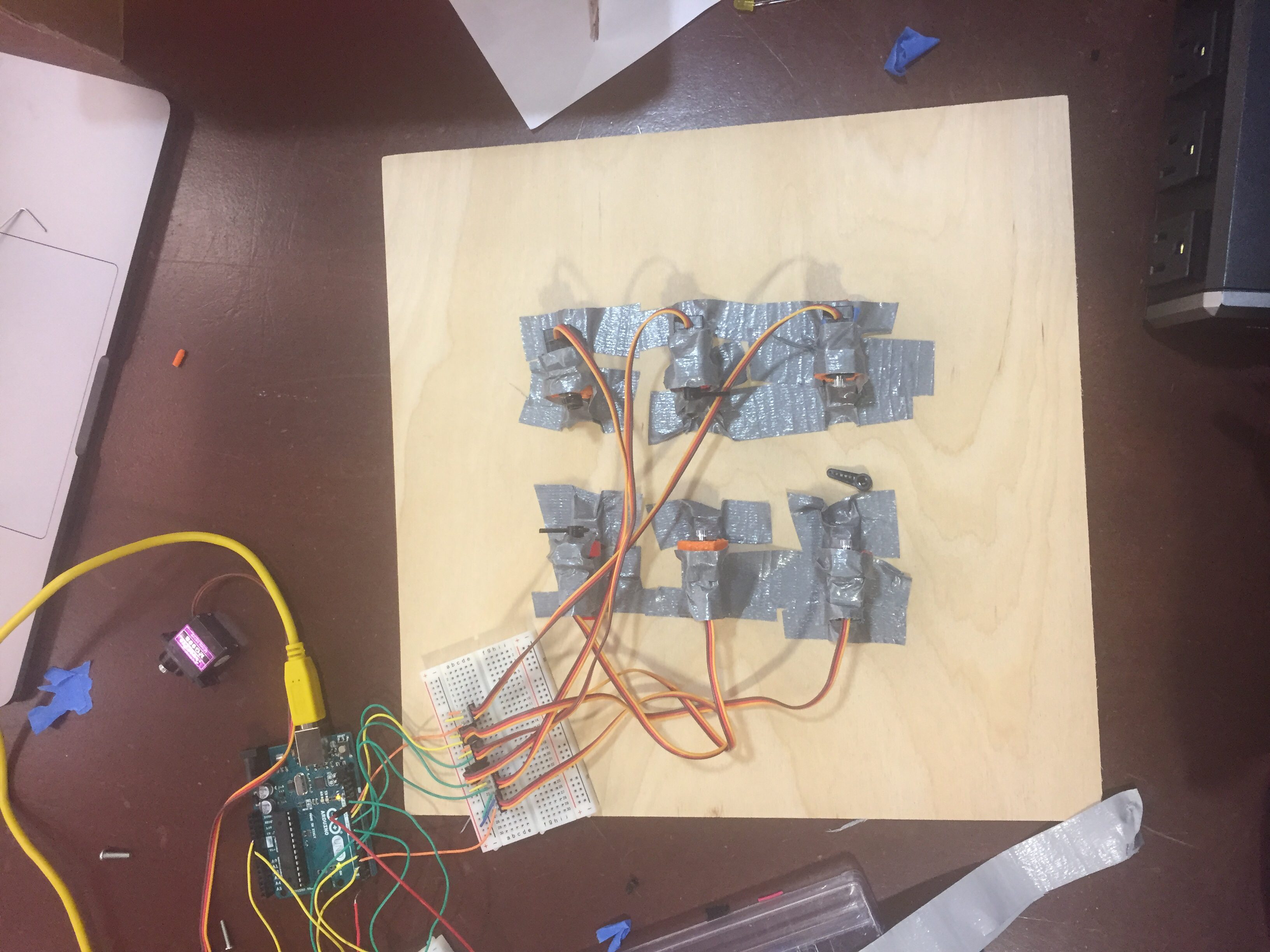
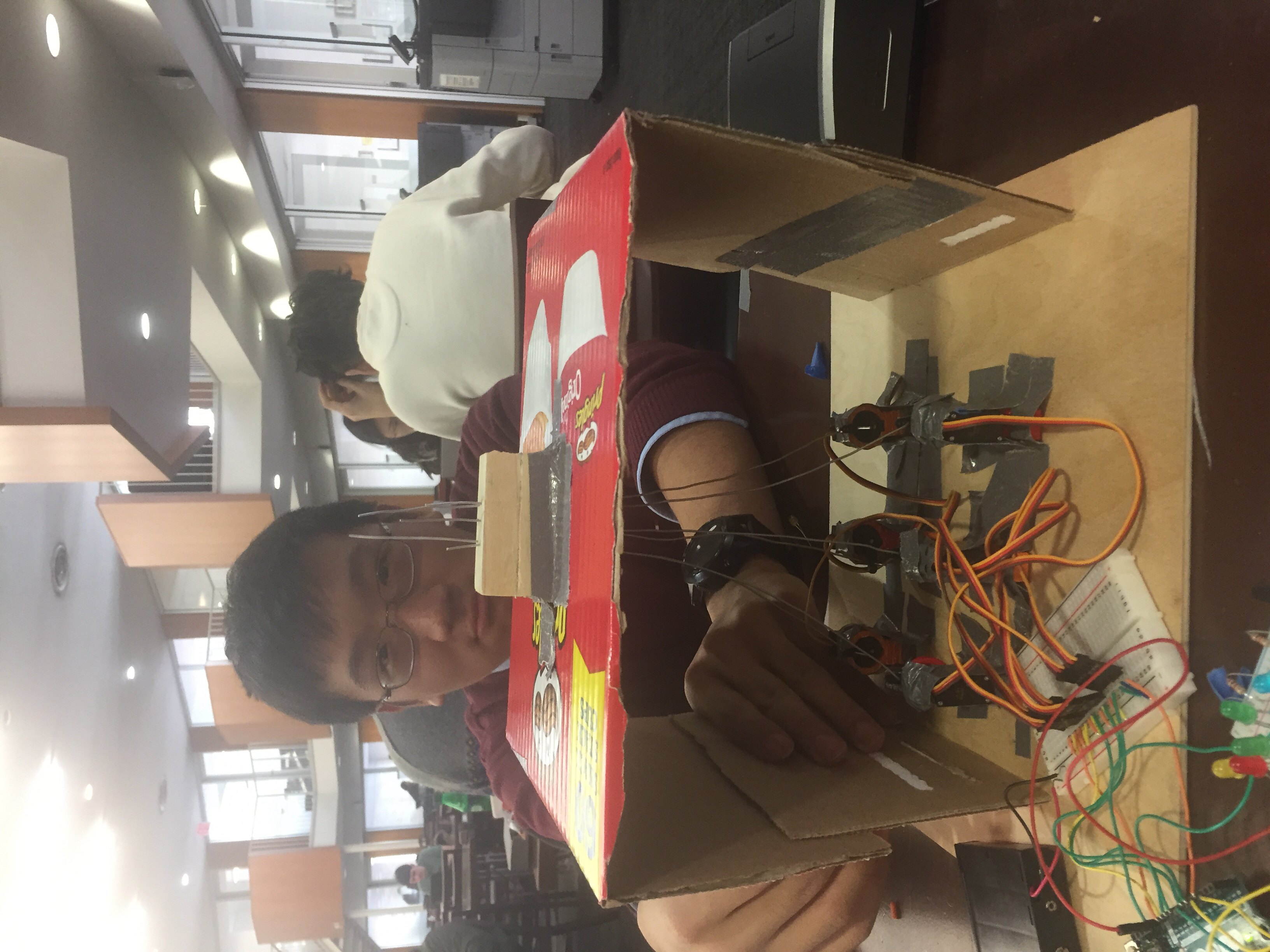
The device uses SERVO motors with arms that move up and down that resemble the dots of Braille. The software generates a sequence of random letters. One letter at a time is represented on the Braille, which the user can feel on his finger. Then, he says the letter represented out loud, and the software recognizes whether this is correct or not and either passes on to the next letter or repeats.
How we built it
The process is divided in two. First, the software is mainly a Java program which contains all the main functions, such as the implementation of the Microsoft API (voice recognization), the generation of a random sequence of letters, among others. Also, the Arduino contains the code to move the motors depending on the data that is sent to it by the Java program.
Challenges we ran into
Ironically, the hardest part was getting a single byte of data to be transmitted from the computer to the Arduino. Also, implementing the Microsoft API or designing the hardware were new challenges for us.
Accomplishments that we're proud of
We are proud of building a device combining both our abilities of hardware and software, working as a team clearly delineating each others' tasks, and getting the API to work.
What we learned
We learned new software tools, a lot about APIs and making post requests. We also learned Arduino and Python.
What's next for Robotic Braille Education Tool
The next steps would be to build a faster, more precise model, especially regarding the mechanics (the arms of the motors going up or down). Also, a smaller and more user-friendly device would be the next appropriate step for this device.

Log in or sign up for Devpost to join the conversation.