Inspiration
In the early 2000s, our team leader was first exposed to a TV show called BattleBots. Back then, he vaguely dreamed of building a robot like those someday. Recently, while watching BattleBots videos on YouTube, an idea suddenly came to him: "This would be fun in XR." Building a real robot is something not everyone can do, but in XR, anyone can build their own robot with their hands and bring it into the arena.
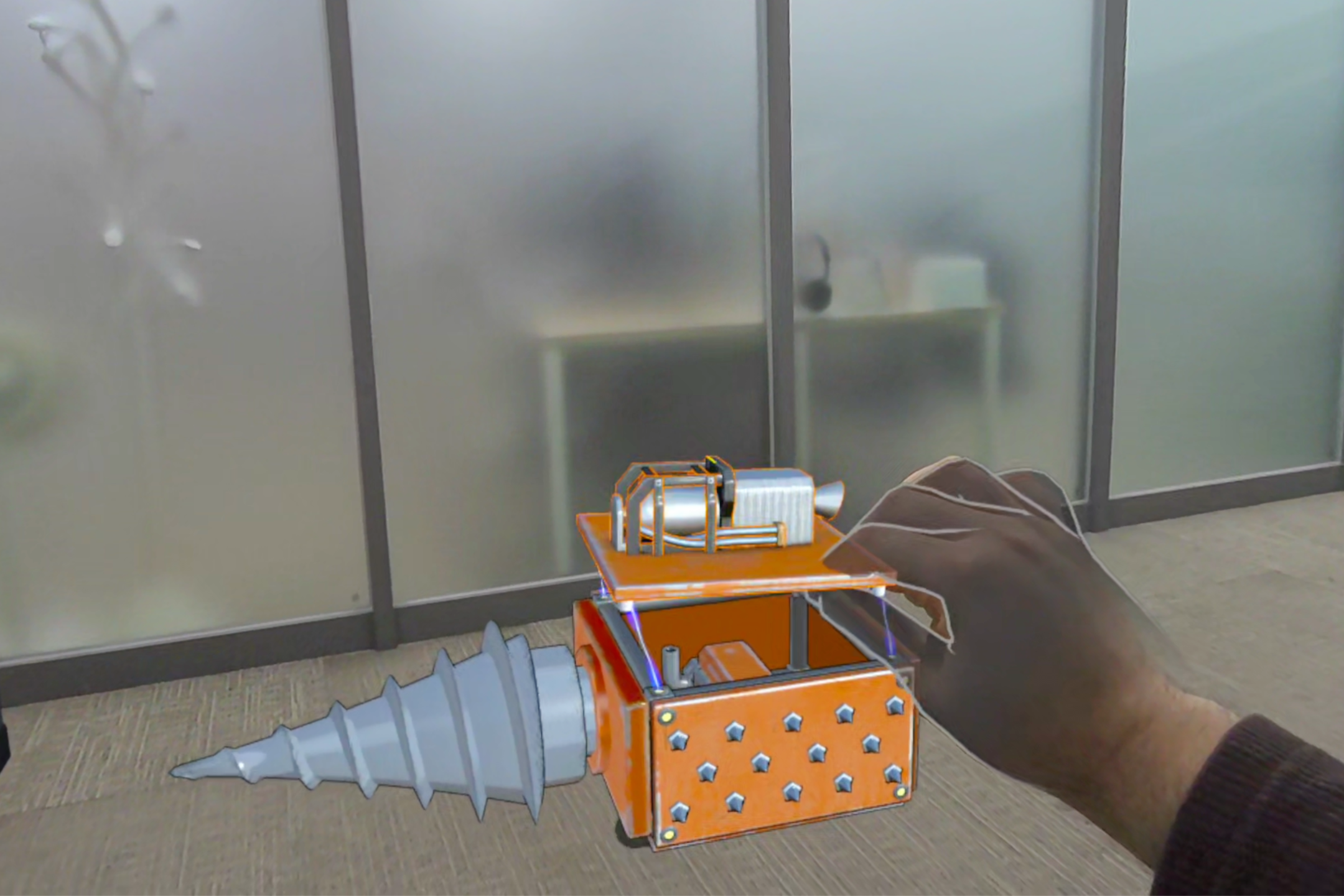
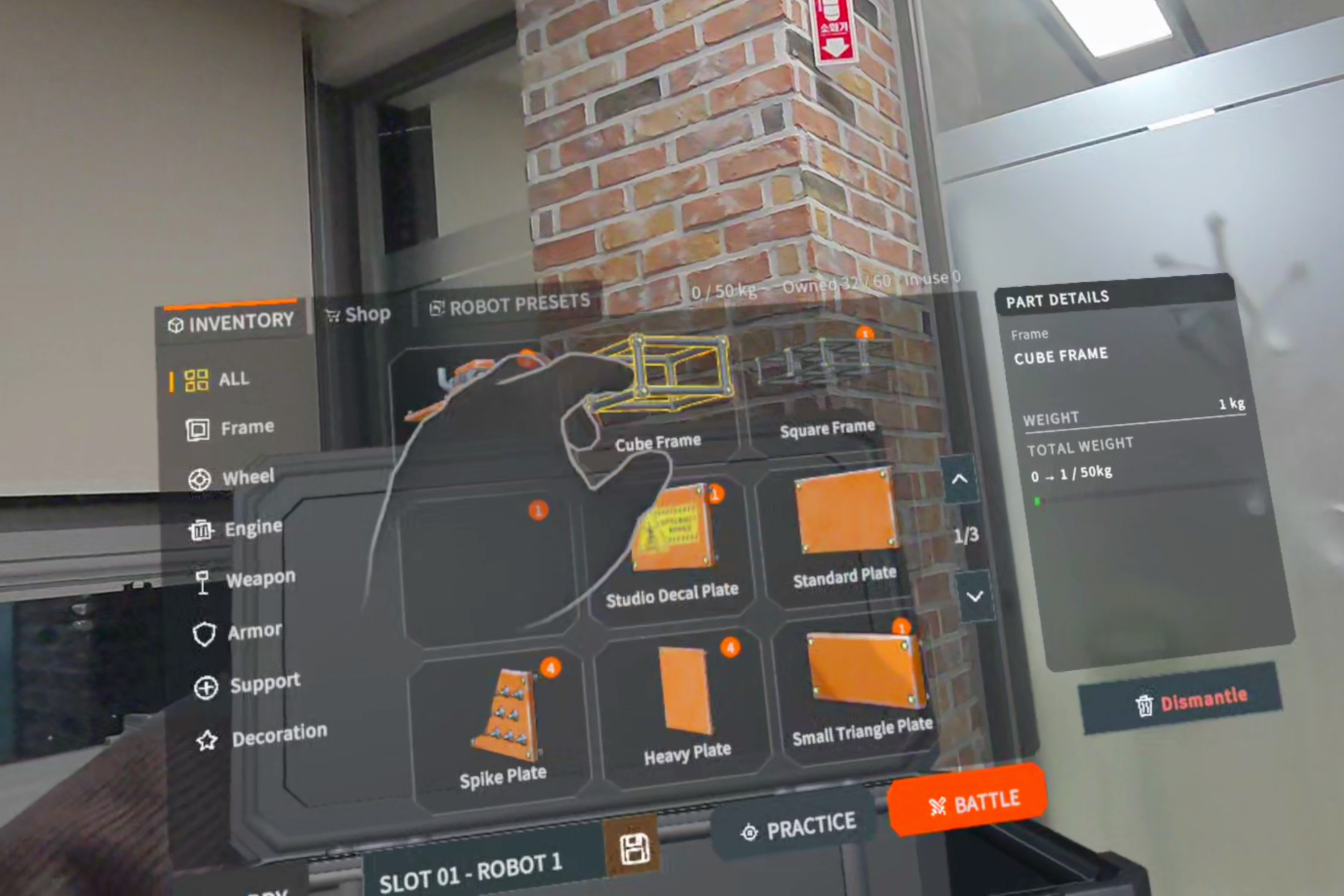
To make that possible, building a robot had to be just as fun as fighting with one. Instead of simply selecting parts from a menu, he wanted players to physically grab, rotate, and attach components to their robots using their hands.
What it does
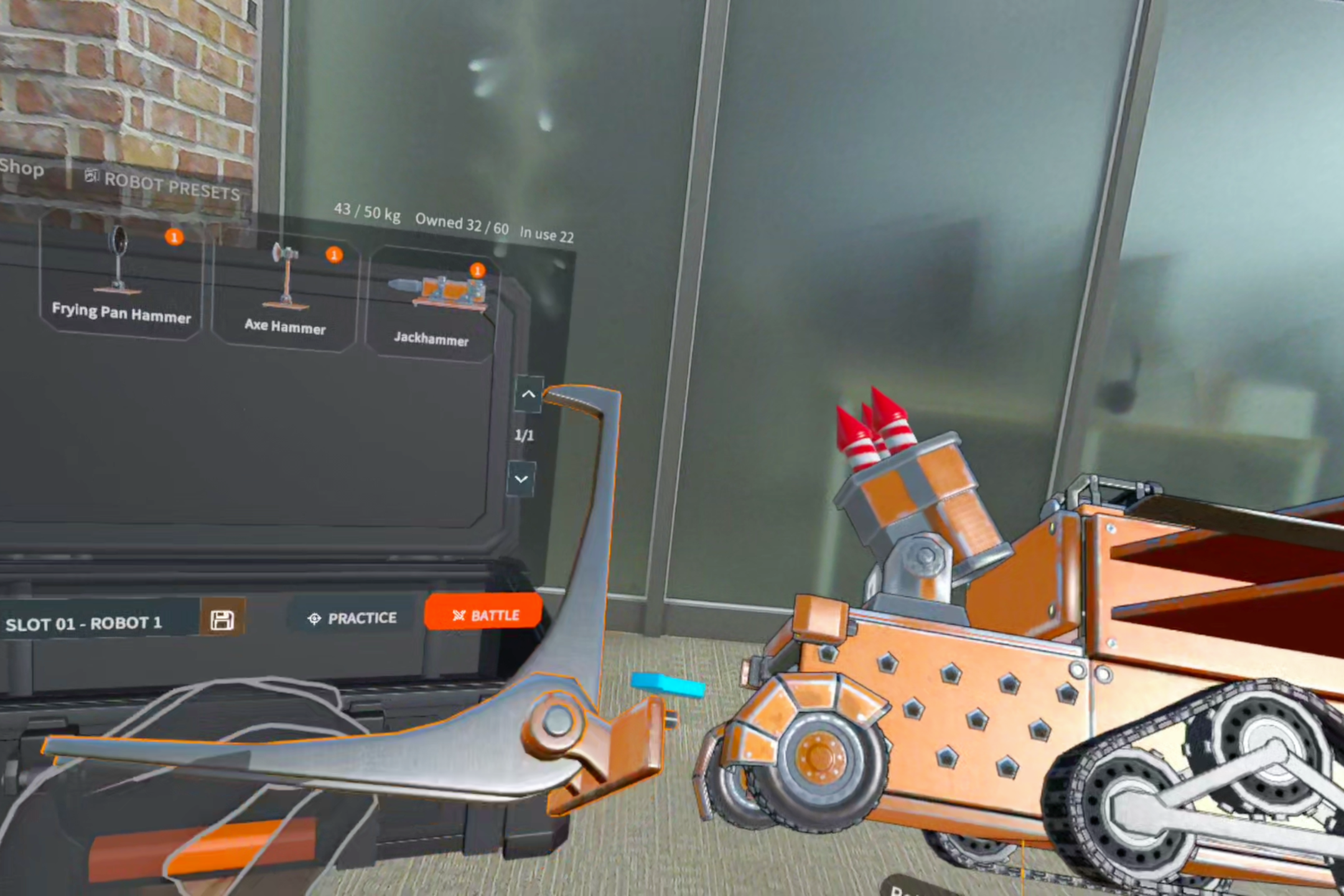
In the game you can take wheels out of the parts box and attach them to the chassis. Mount a weapon on the front and add another layer of armor. Pick up and attach each component by hand to build your very own combat robot.
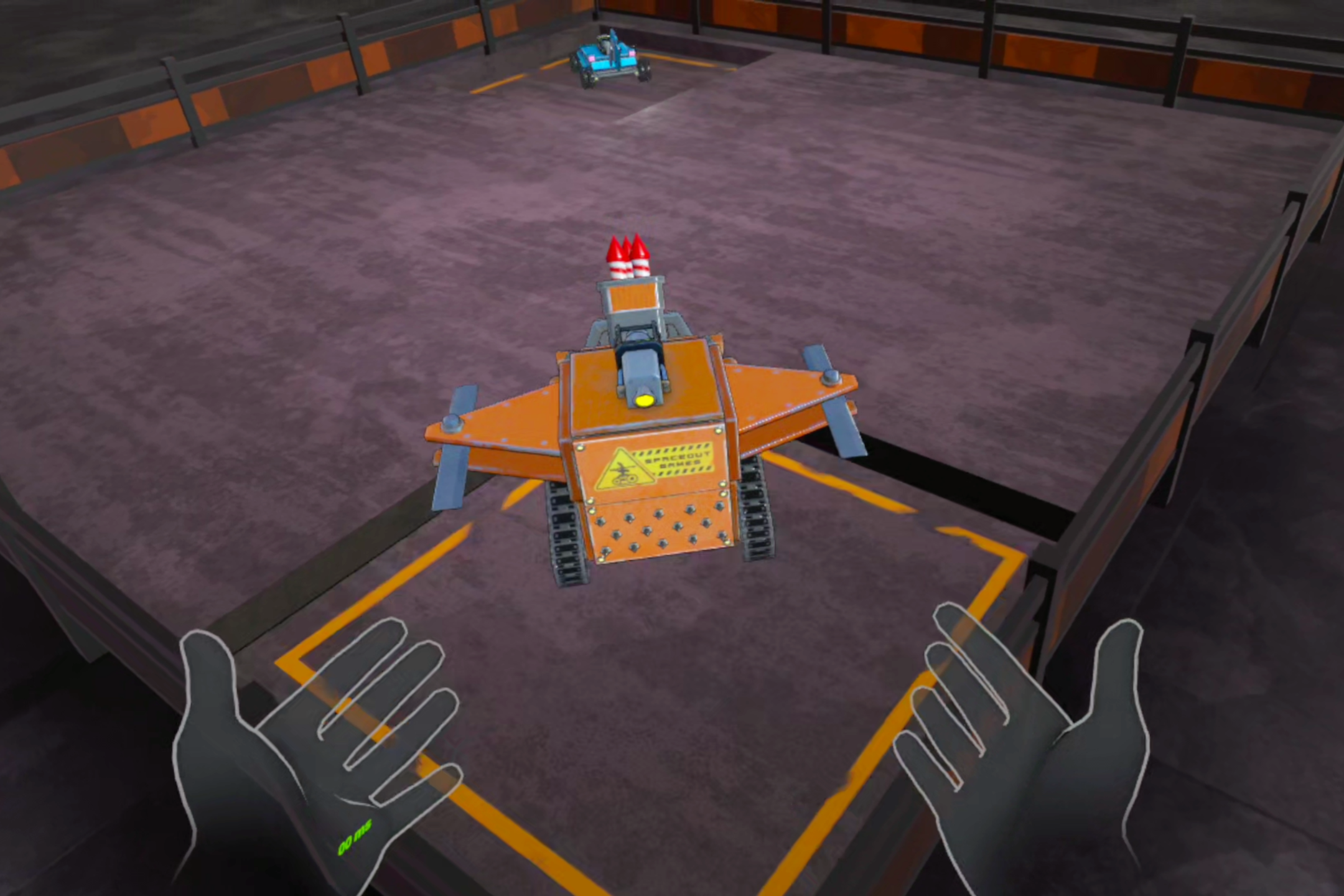
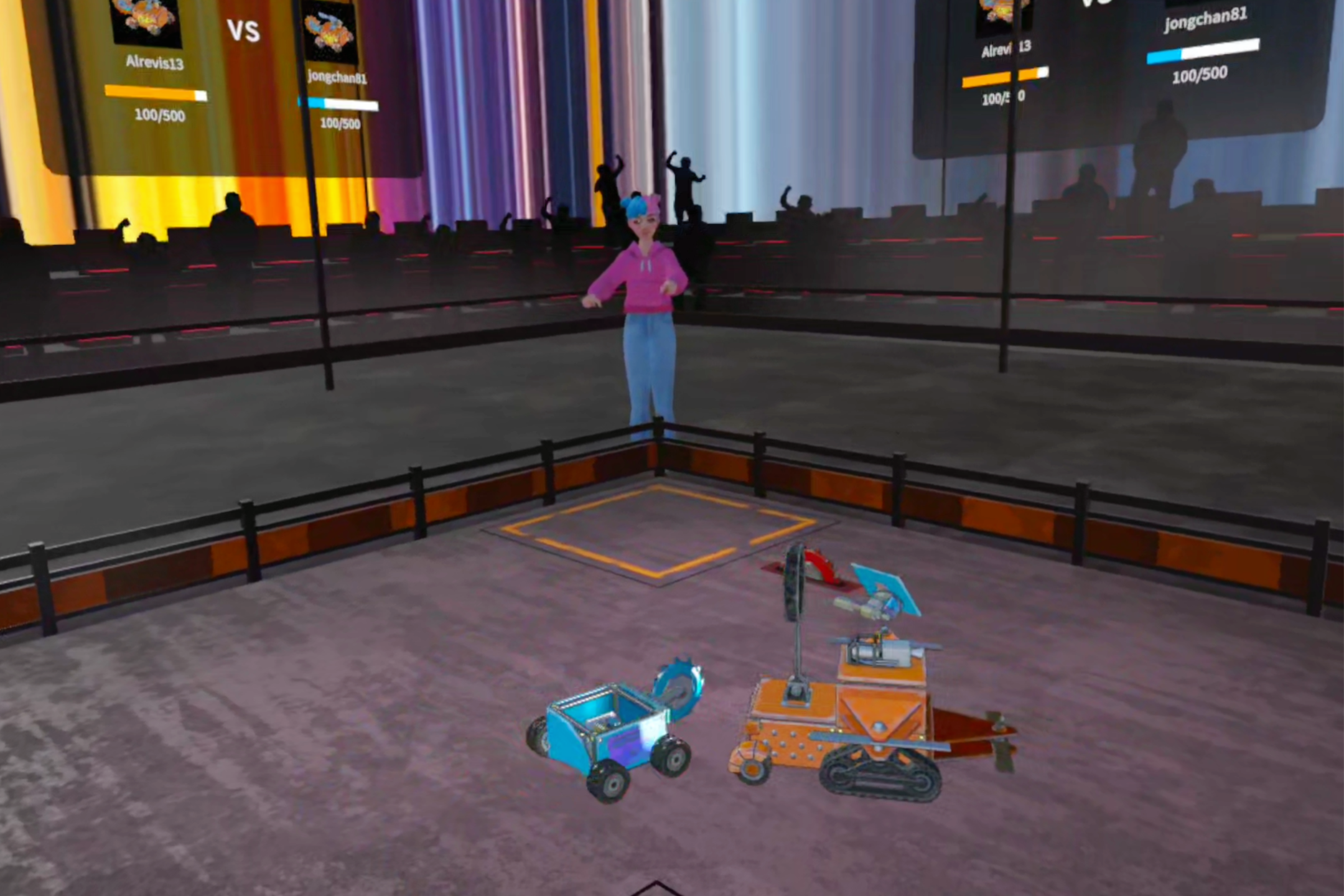
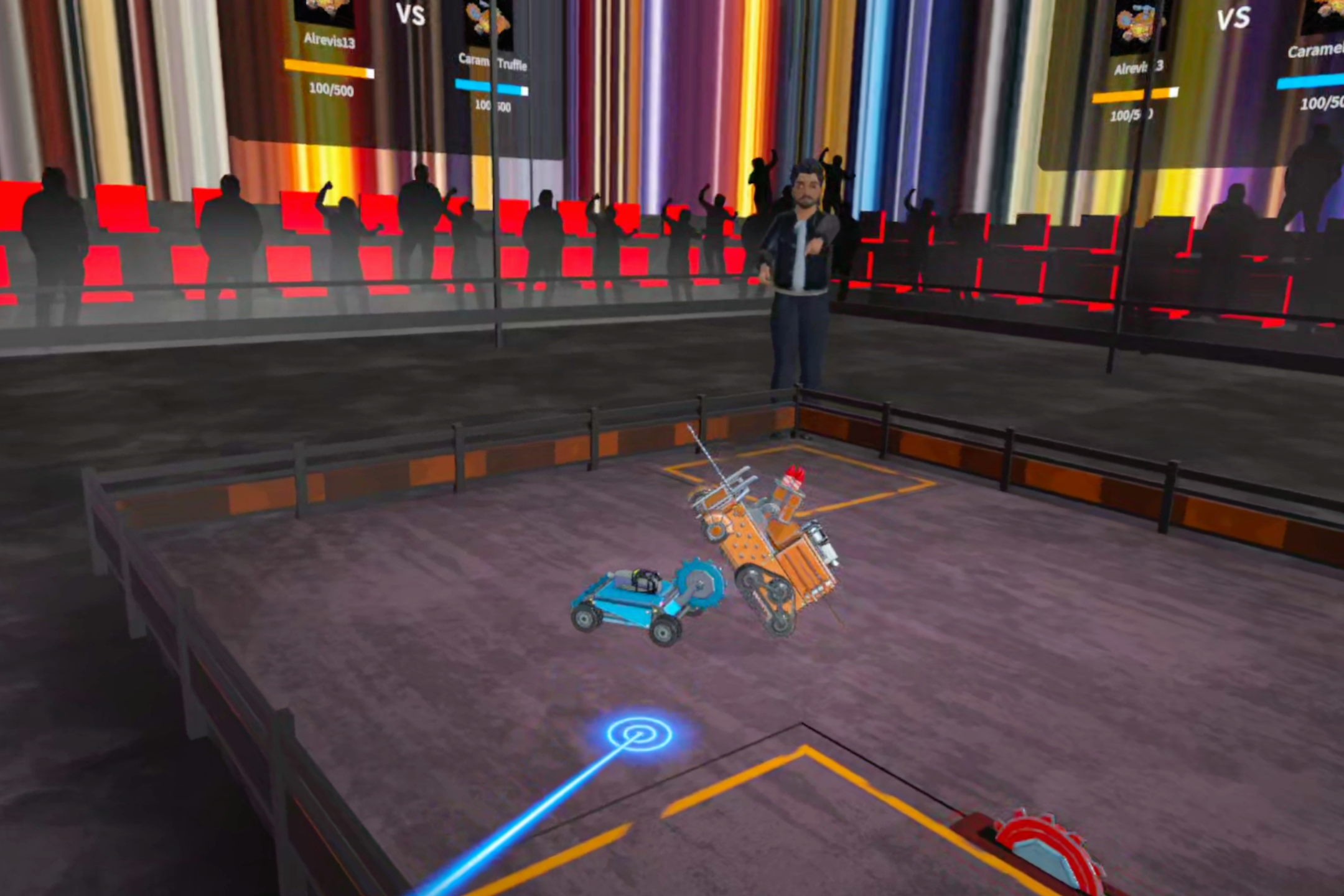
Once your robot is complete, you can place it in the arena and face off against another player's robot in a 1v1 battle. Point your finger at the floor, and your robot moves toward that location. Shout "Attack!" and your weapon activates. As spinners and hammers collide, armor gets dented and wheels get destroyed. You must fight until the very end.
When you lose, return to your workshop and think about where your robot was outmatched. Should you add thicker armor, or make it lighter and faster? Reconsider your design, rebuild your robot, and head back into the arena. Experience firsthand the excitement of earning your first victory with a robot you've improved yourself.
How we built it
We have focused on making every game interaction possible using only hands and voice.
For robot assembly, we focused on creating a satisfying tactile experience by allowing players to physically pick up and attach individual components.
Combat controls went through repeated cycles of development, testing, and refinement. Initially, players had to point at the floor while pinching their thumb and index finger together to move their robots. However, continuously holding this gesture quickly caused hand fatigue. We changed the system so that simply pointing at a location would make the robot move toward it.
For weapon switching, we looked for a faster and more intuitive solution. We eventually implemented a system where players could make a fist and look at it to open the weapon selection menu. For attacks that required both hands, we assigned the controls to voice commands instead.
Challenges we ran into
Building robots with hand interactions was relatively straightforward, but making combat fully playable with hands was much more challenging.
The feature that took us the longest to refine was movement. Players needed to be able to both move and rotate their robots using only their hands, without becoming fatigued during extended gameplay. We experimented with gesture-based movement, but we quickly became tired because our hands never had a chance to rest.
The solution came from an unexpected moment. While pointing at the arena floor and thinking about how to control robot movement, we realized that instead of controlling every movement in detail, players could simply point to where they wanted their robots to go.
Now, pointing at the floor with the left index finger makes the robot move toward that location.
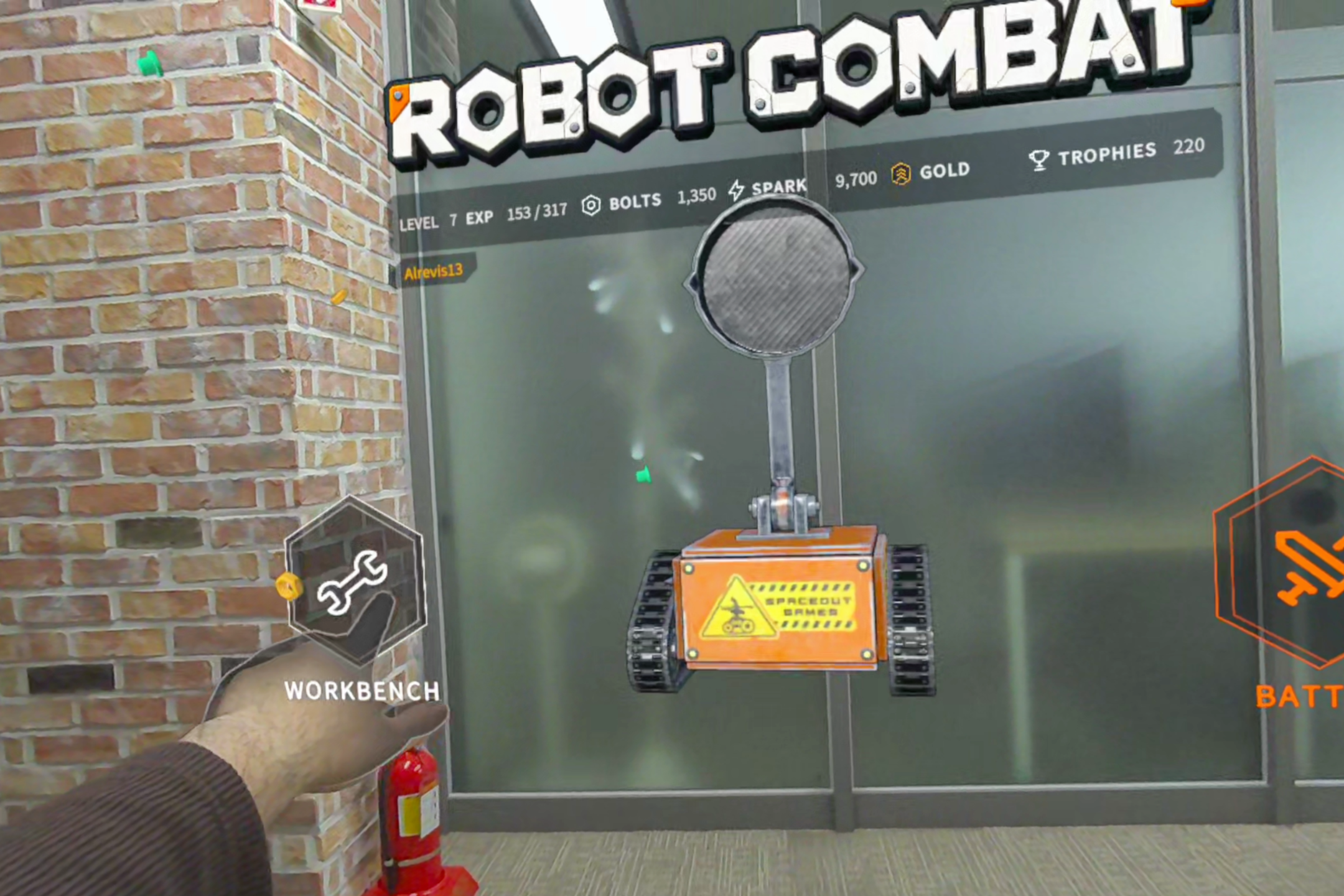
Preventing unintended actions was another challenge. We made the weapon selection menu and wrist menu appear only when players look at them, reducing accidental inputs. If hand tracking is interrupted, the robot automatically stops and prompts the player to show their hands again.
Accomplishments that we're proud of
Players can enjoy the entire game from beginning to end using only their hands and voice, rather than just experiencing hand interactions during robot assembly.
Everything from physically attaching components and practicing, to real-time 1v1 online battles and competitive leagues, can be played this way.
Picking up, rotating, and attaching individual components by hand genuinely makes players feel like they are building a real robot. Short tutorial videos introduce unfamiliar interactions before players use them, making it easy to learn the controls.
What we learned
We learned that hand interactions can quickly become tiring when they require frequent and continuous input.
As demonstrated by our movement system, where a single pointing gesture keeps the robot moving, players need opportunities to rest their hands if they are going to enjoy the experience for extended periods.
Controls also need to be simple enough to use during intense combat, with enough tolerance in gesture recognition to accommodate slightly imperfect hand movements.
We also learned that a safety mechanism is essential: whenever hand tracking is lost, the robot should automatically stop.
We have also developed a controller support for the game, and we recently have been testing both options. We came to realize that the game onboarding experience is faster using hand-tracking.
What's next for Robot Combat
We are preparing for an Early Access launch on the Meta Store in late Q1 or early Q2 2027.
There is still plenty of room for improvement, so we will continue refining hand interactions and the overall gameplay experience leading up to launch.
After release, we plan to regularly introduce new robot components, as well as update the game with features such as adding friends for battles and team-based combat where multiple players can fight together.
We also plan to support Meta VR Glasses.


