Inspiration
We wanted to explore the intersection of human-computer interaction (HCI) and robotics. Instead of using a traditional joystick, we challenged ourselves to create a more intuitive, "hands-free" way to navigate physical space using natural hand gestures.
What it does
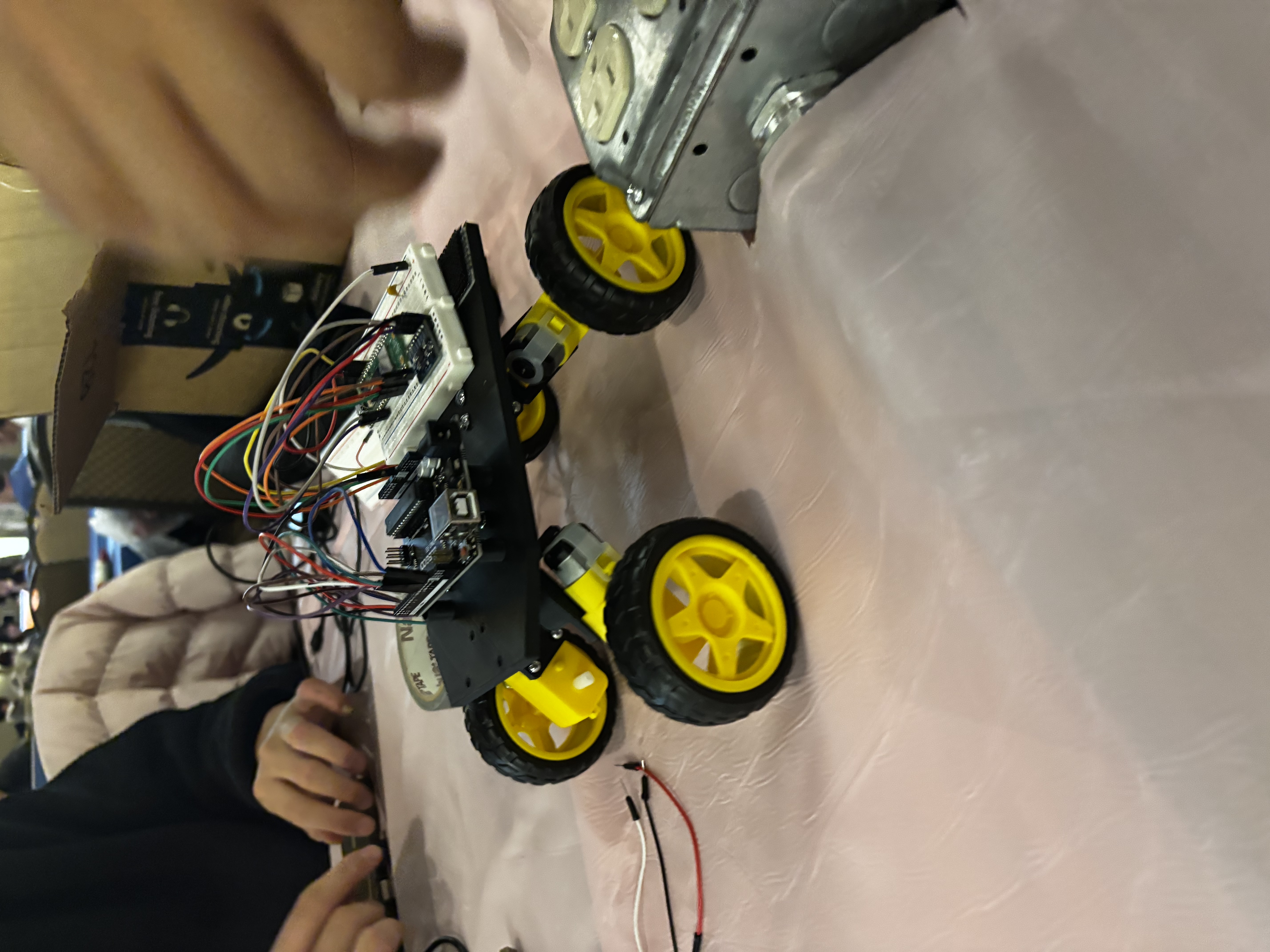
The Robot Car is a wireless RC vehicle that mirrors the movements of a user’s hand. By tilting or moving your hand, the car responds in real-time to move forward, backward, or turn. It uses a custom-built wireless link to ensure low-latency communication between the "controller" and the "car."
How we built it
We integrated a complex stack of hardware and software to make this possible:
The Brains: We used an Arduino for real-time sensor processing and a Raspberry Pi for higher-level logic and potential future computer vision expansion.
Communication: We utilized NRF24L01 transceivers (or similar) to establish a dedicated 2.4GHz wireless link between the glove/hand-sensor and the car.
Motion: An L298N Motor Driver (or similar) was used to bridge the Arduino logic with the high-current requirements of the DC motors.
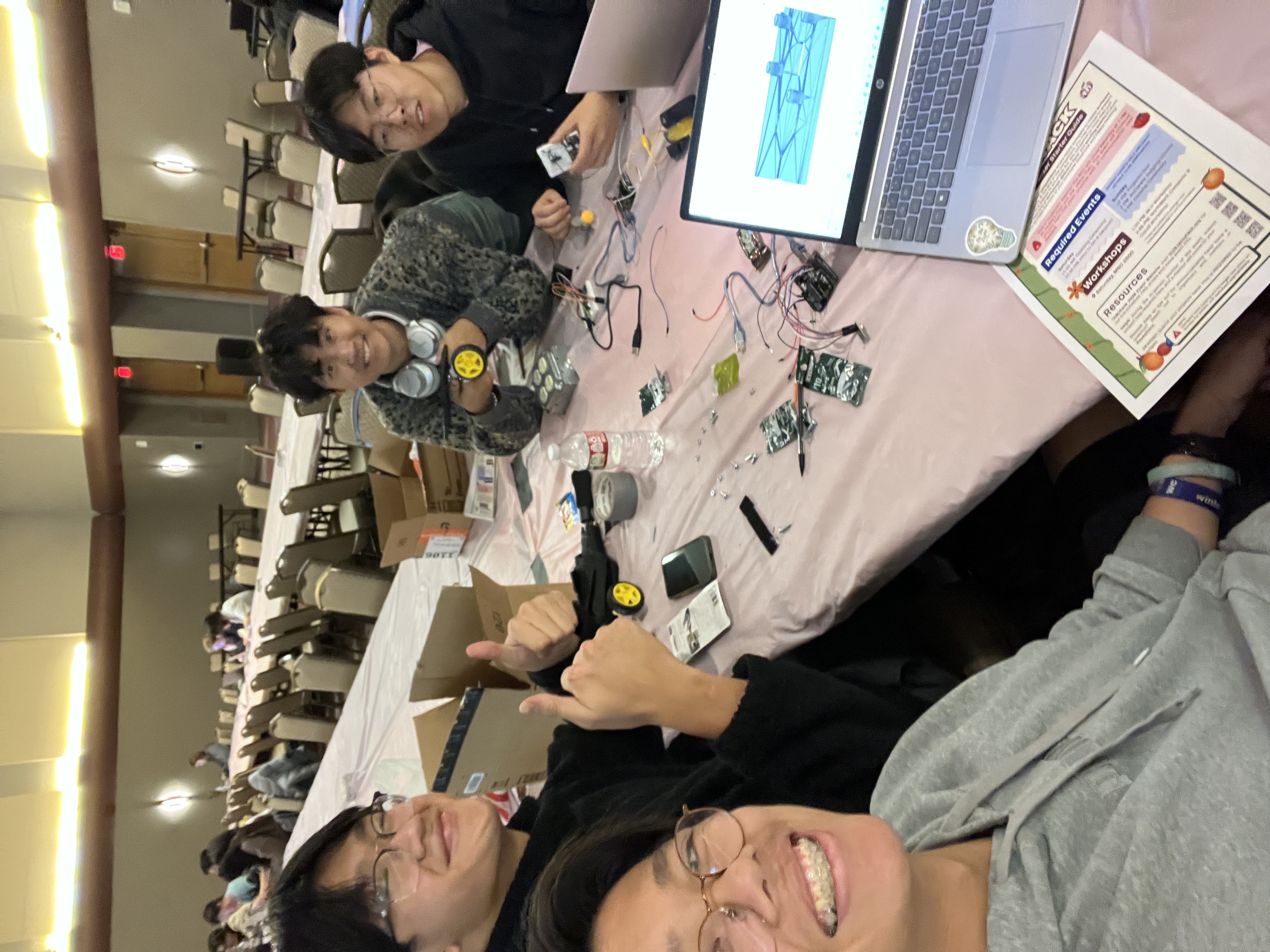
Design: The chassis and mounting components were designed in SolidWorks to ensure a perfect fit for all electronic components.
Challenges we ran into
One of the biggest hurdles was signal interference and data packet loss between the two transceivers. We had to implement a stable data protocol to ensure the car didn't stutter during movement. Additionally, calibrating the gesture sensitivity required fine-tuning the threshold values in the Arduino IDE to prevent accidental movements.
Accomplishments that we're proud of
Successfully achieving near-zero latency between hand movement and motor response.
Building a robust, 3D-ready chassis designed entirely from scratch in SolidWorks.
Creating a seamless bridge between the Raspberry Pi and Arduino environments.
What we learned
As beginners we learned ALOT. Specifically, we gained deep experience in SPI communication protocols, motor torque management, and the importance of power regulation when sharing a battery source between a microprocessor and high-draw motors.
What's next for Robot Car
As a successful proof of concept, we plan to evolve this project from a remote-controlled vehicle into an intelligent autonomous system. Our roadmap includes:
Computer Vision Integration: Leveraging the Raspberry Pi's processing power to add a camera module for object detection and obstacle avoidance.
Enhanced Gesture Library: Moving beyond simple directional tilts to recognize complex hand signs for specific tasks, like "park" or "follow me."
Haptic Feedback: Implementing sensors on the wearable controller to provide the user with tactile vibrations when the car detects an obstacle.
Precision Engineering: Refining our SolidWorks chassis design to incorporate suspension and more durable housing for the transceivers.
Built With
- arduino
- raspberry-pi
- solidworks


Log in or sign up for Devpost to join the conversation.