-
-
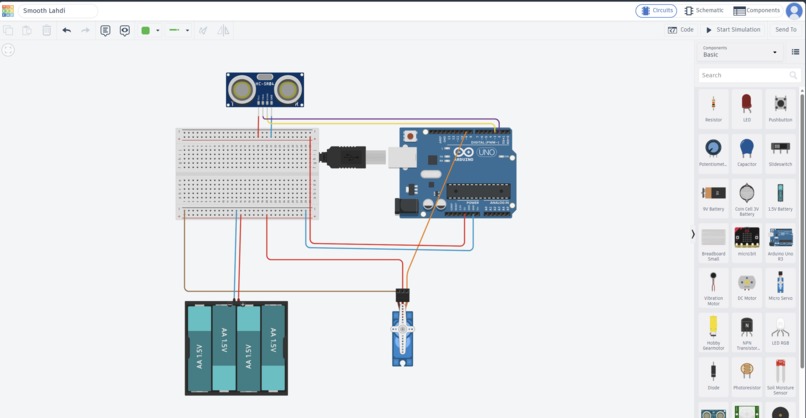
Tinkercad Stimulation
Inspiration
Our city streets are often cluttered with poorly segregated waste, leading to overflowing landfills and low recycling efficiency. The inspiration behind RoboSort stemmed from a desire to address environmental waste management issues at the exact point of disposal—making smart recycling accessible, fully automated, and effortlessly clean without human intervention.
How we built it
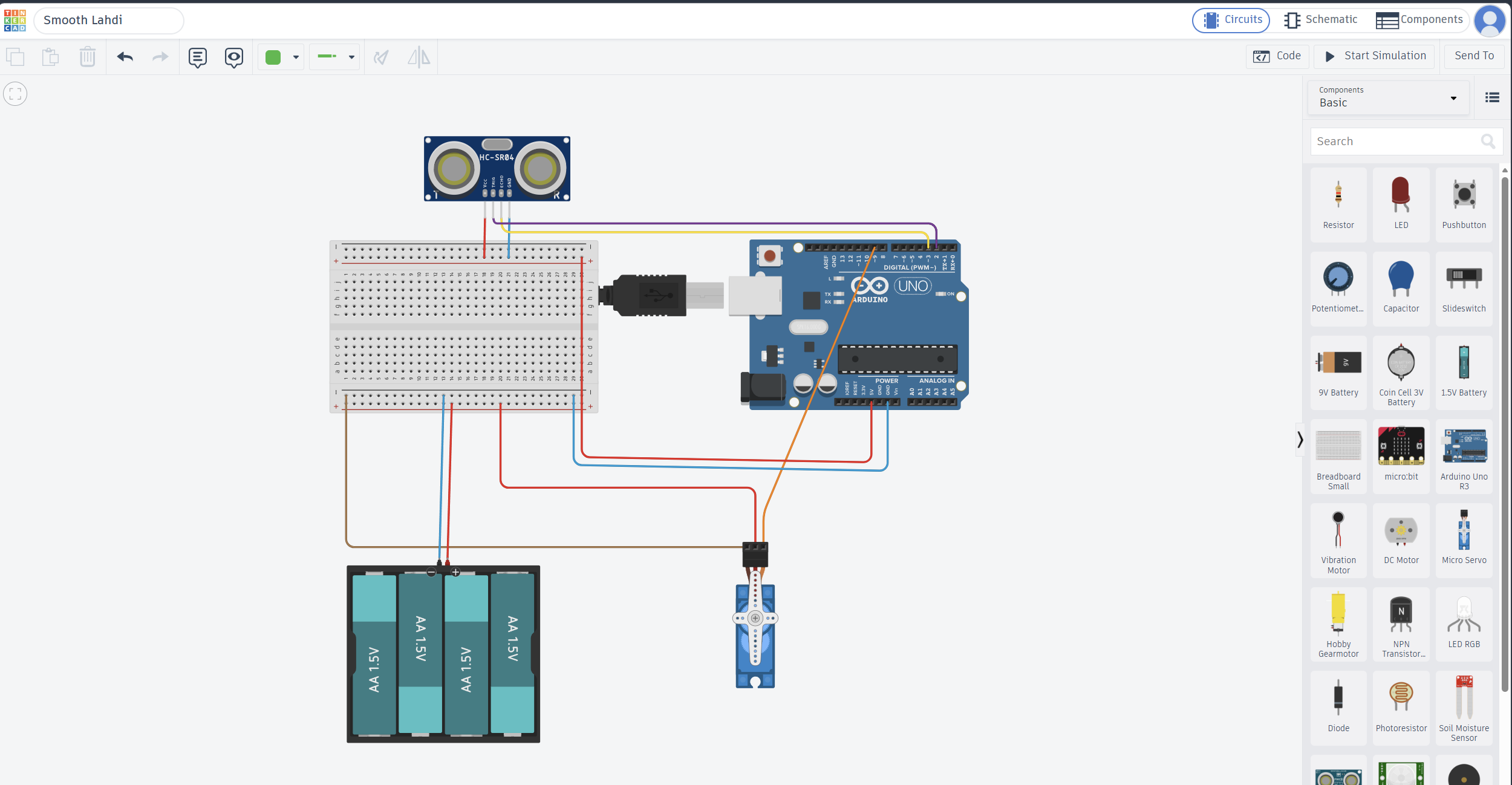
RoboSort blends embedded systems, computer vision, and mechanical design into a physical prototype: Electronics & Actuation: An Arduino Uno R3 serves as the primary hardware controller. An HC-SR04 Ultrasonic Sensor detects when an item enters the sorting chute. Once triggered, an MG996R Servo Motor rotates to align the internal sorting gate with the designated disposal bin. Vision & AI: A smartphone running DroidCam captures the item's image. The image stream feeds into a Python script on the host machine using OpenCV. We utilized YOLOv8 Vision Model (trained on datasets managed via Roboflow) to classify materials (such as plastic, paper, and metal). System Flow: Sensor Trigger --> Camera Capture --> AI Classification --> Servo Actuation
Challenges we ran into
The primary hurdle was real-time hardware-to-software synchronization. Resolving connectivity drops over DroidCam while coordinating microsecond timing between sensor triggers, serial data transfers, and motor responses required significant debugging. Fine-tuning the computer vision model to remain resilient under shifting ambient lighting conditions was also crucial.
What we learned
Building RoboSort taught us how to bridge pure software algorithms with real-world physical actuation (Embodied AI). We deepened our understanding of dataset curation, serial communication protocols, and system integration.
What's next for RoboSort AI
RoboSort will not stop here, we develop it to spread this great project and see our environment clean and healthy

Log in or sign up for Devpost to join the conversation.