Submitted to track: Health
Inspiration
The process for self-diagnosis on google is tedious, and especially for those with less sufficient google skills (older generations), it may be easy to fall prey to misinformation.
What it does
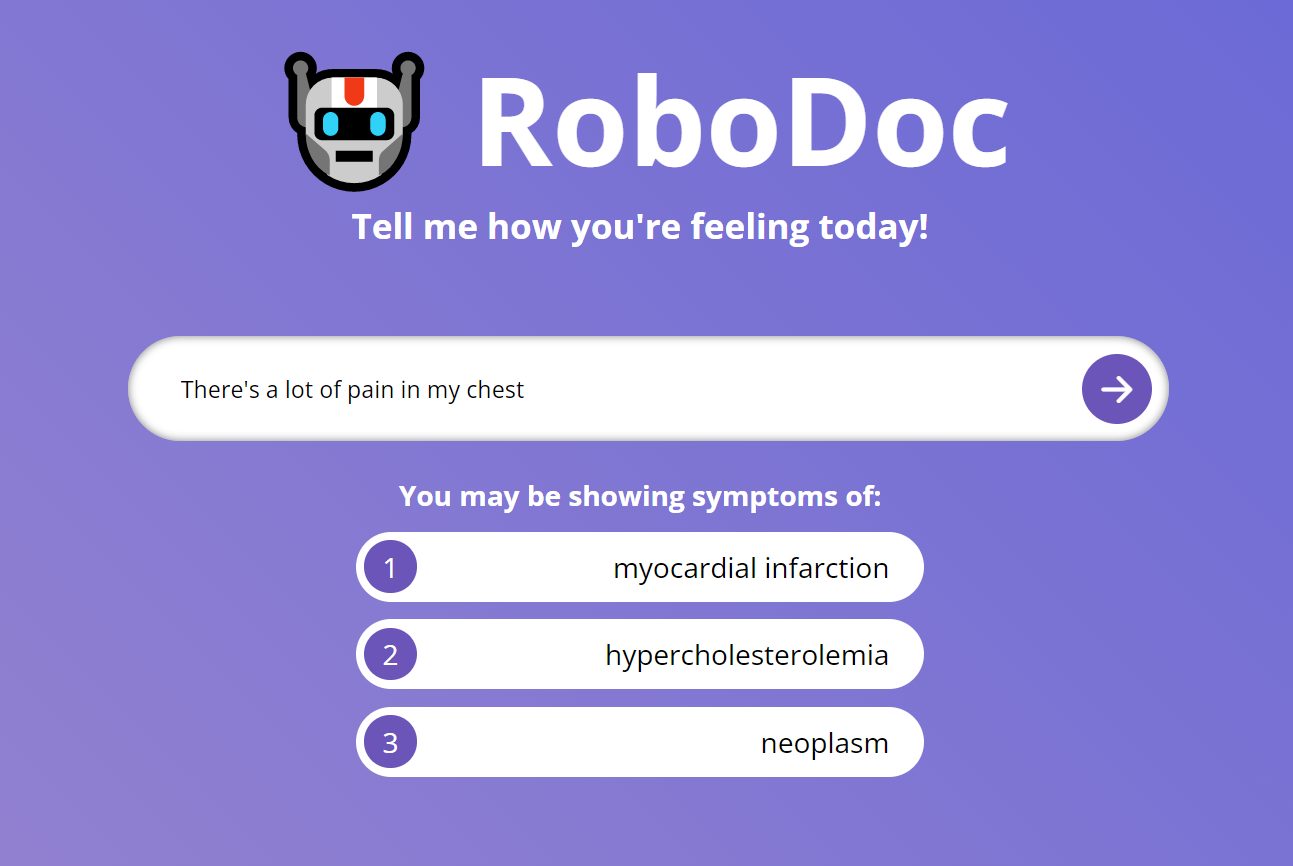
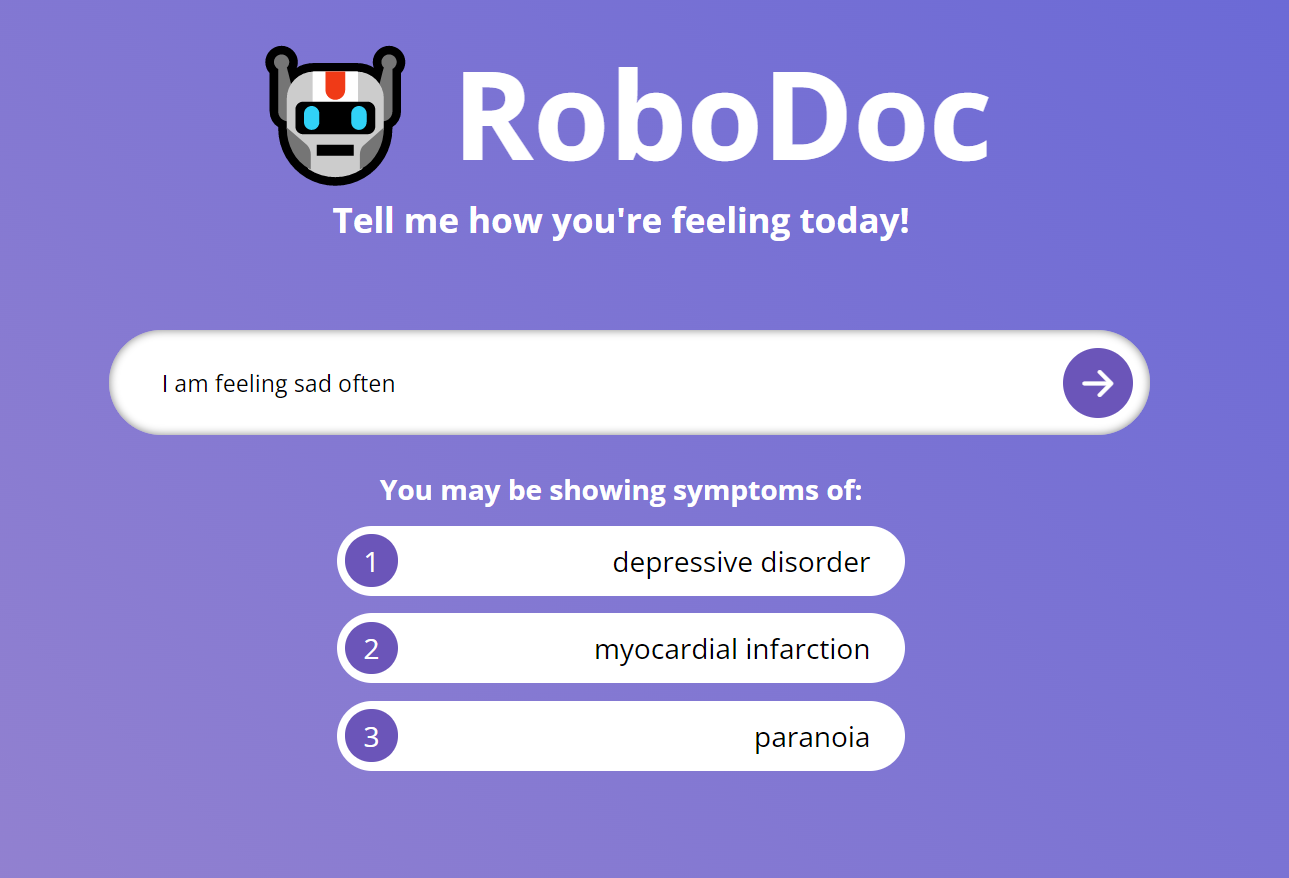
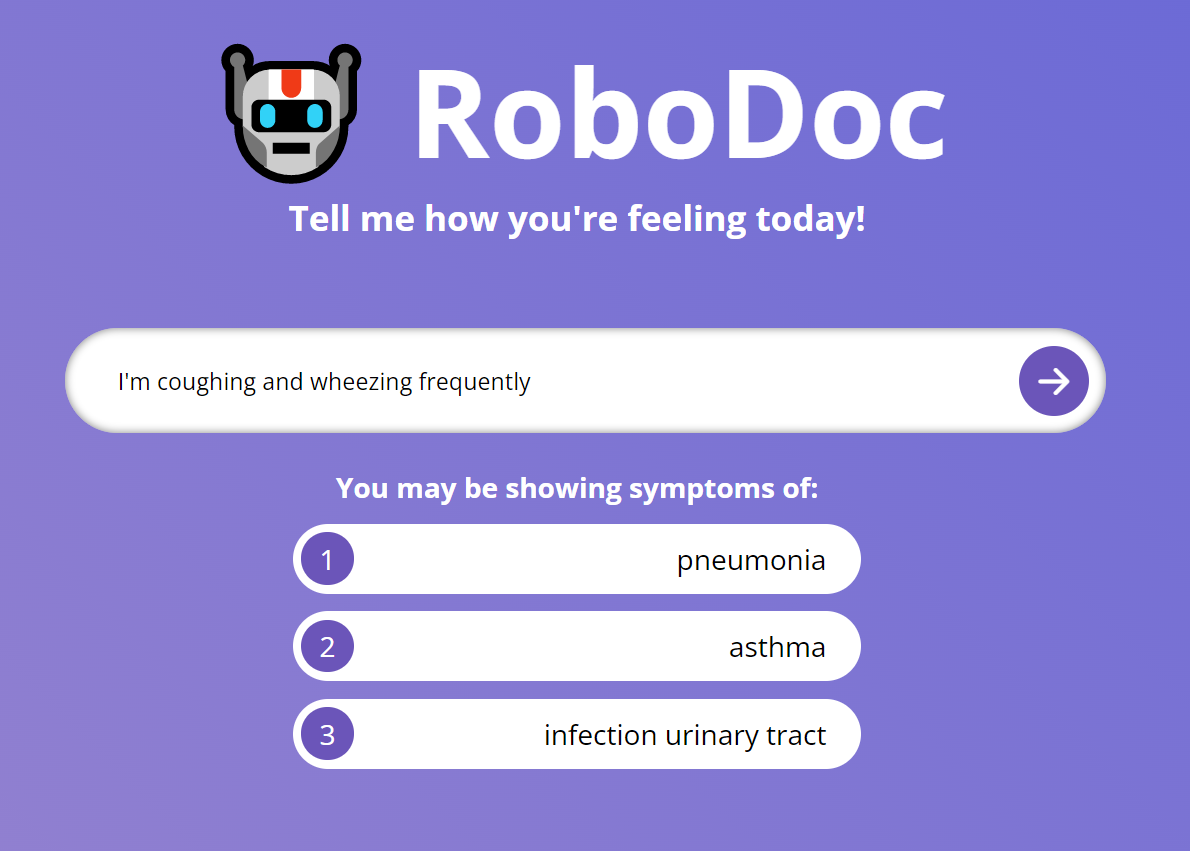
RoboDoc is a simple web app that takes user input, applies simple languages processing, and returns what it believe the symptoms might match with.
How we built it
Trained a Keras model in Google Colab on a disease-symptom database from Columbia; did symptom-text conversion using (Unified Medical Language System) UMLS. Backend build in Node.js and model deployed using Tensorflow.js. Frontend built using React.
Challenges we ran into
I had a lot of difficulty trying to implement the tensorflow model, which is actually done client side (to reduce strain on the backend). The client gets the weights from node and assembles it in javascript.
Accomplishments we're proud of
I didn't have time to fully test the model, but it seems that it learned decently for some of the symptom-disease relations.
What we learned
I learned better the pipeline for ML to javascript and deploying all of it to Heroku.
Future plans
- Implement some sort of speech-to-text (I tried to do this for way too long using assemblyai, could not make it work).
- Put the whole app on a domain.com domain (I am trying to do this, but I honestly have no idea about DNS and all that stuff)
- Reword all the medical terminology from UMLS to be more understandable (i.e "myocardial infarction" -> heart attack).


Log in or sign up for Devpost to join the conversation.