-
-
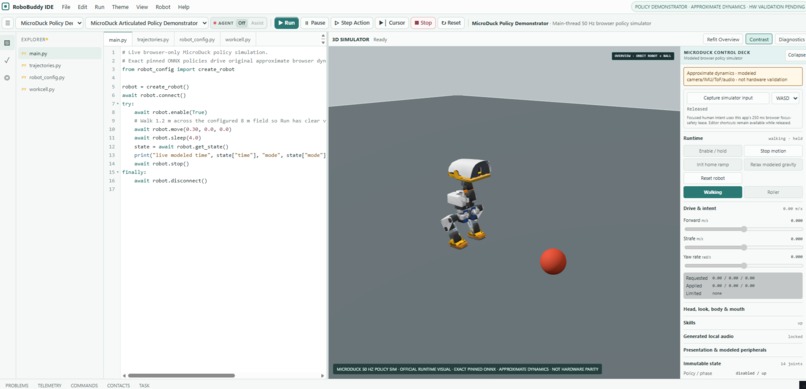
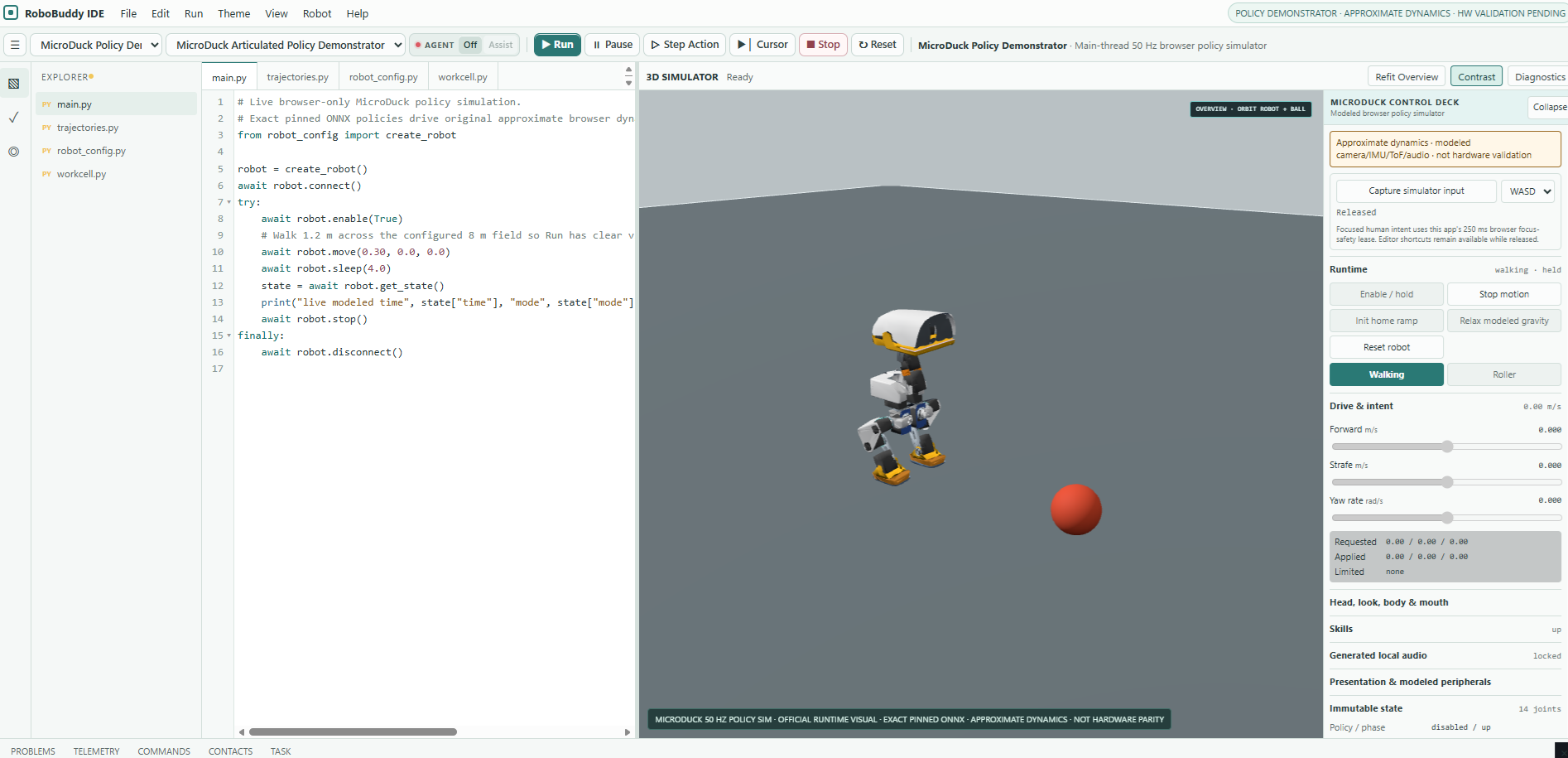
Microduck simulator
-
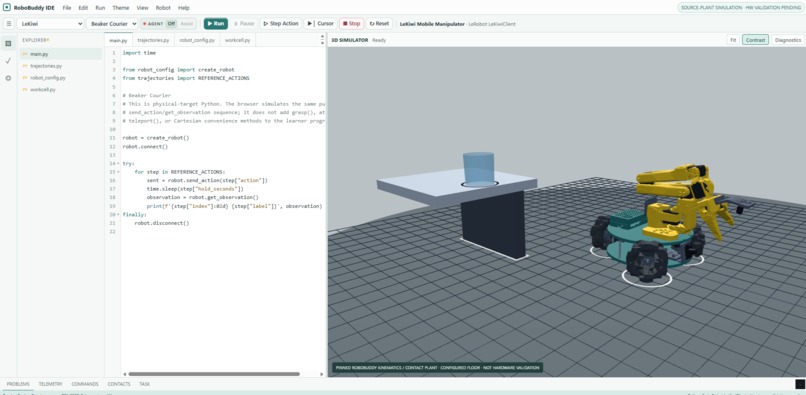
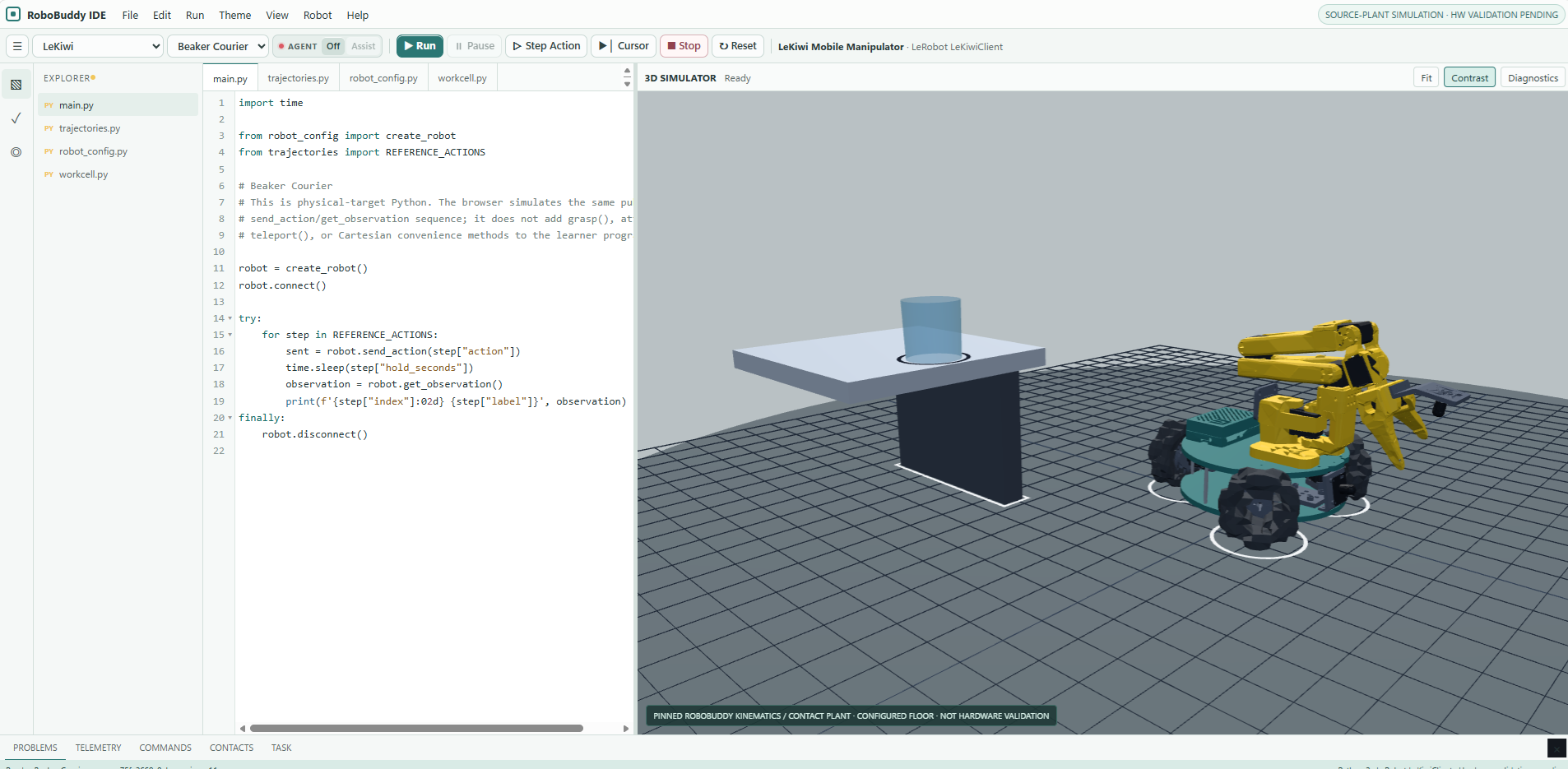
LeKiwi simulator
-
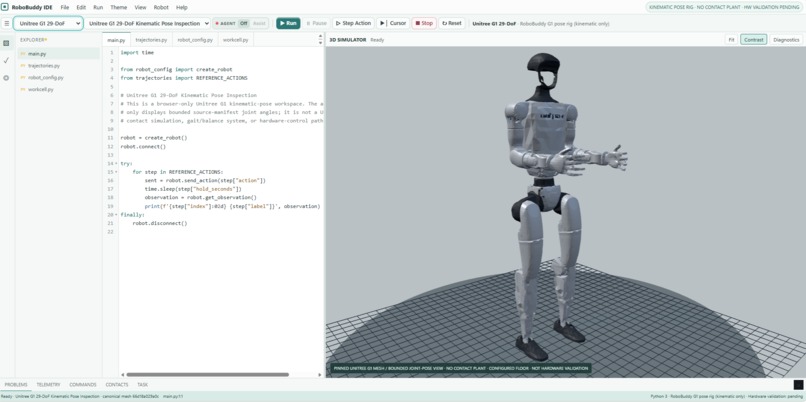
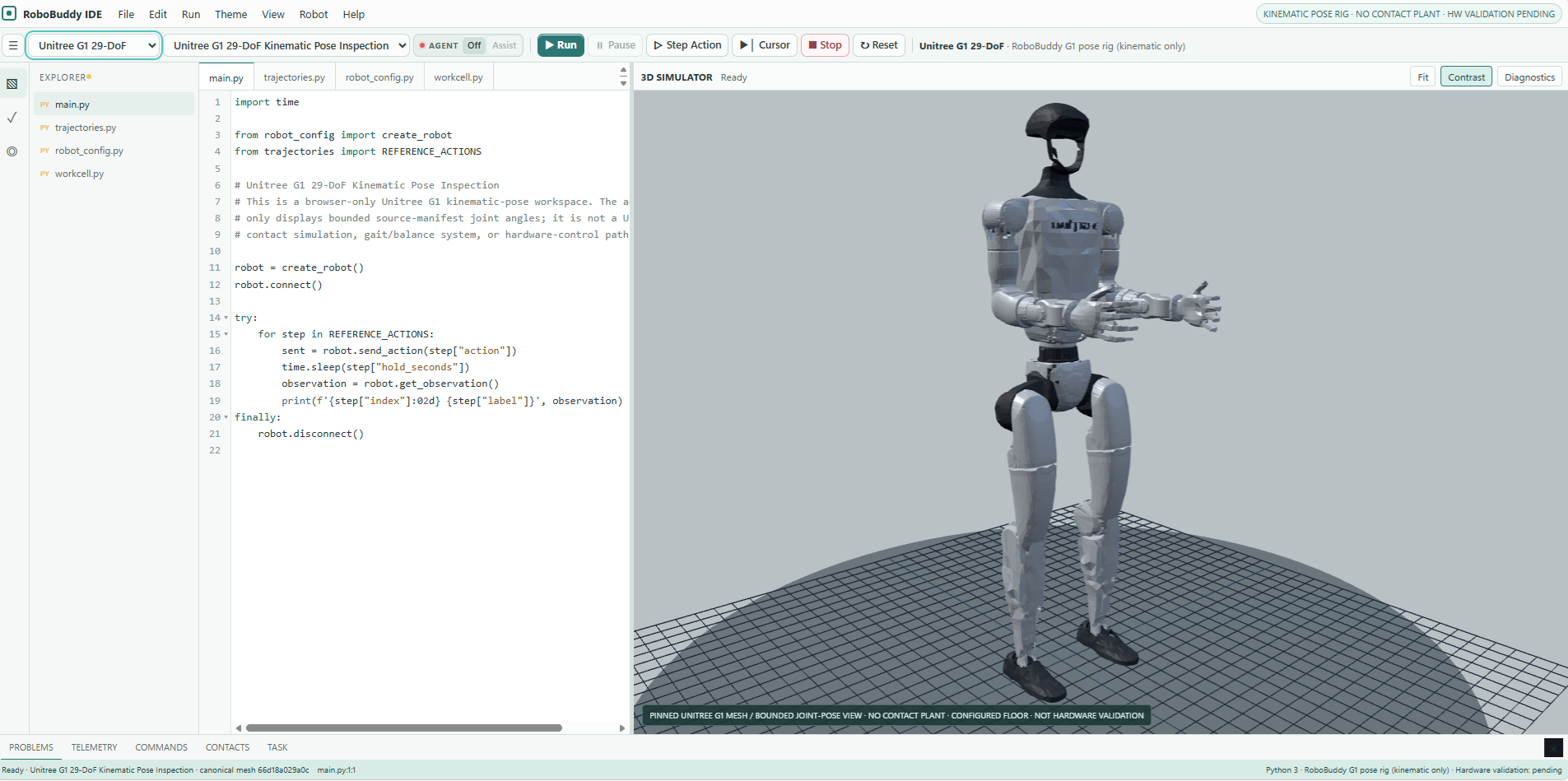
Unitree G1 simulator
-
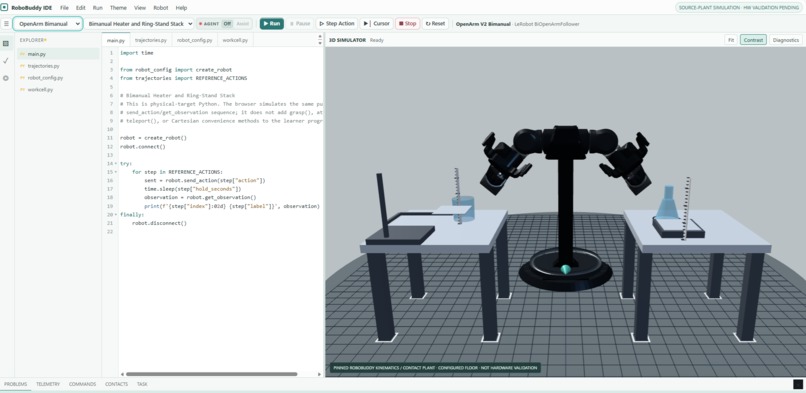
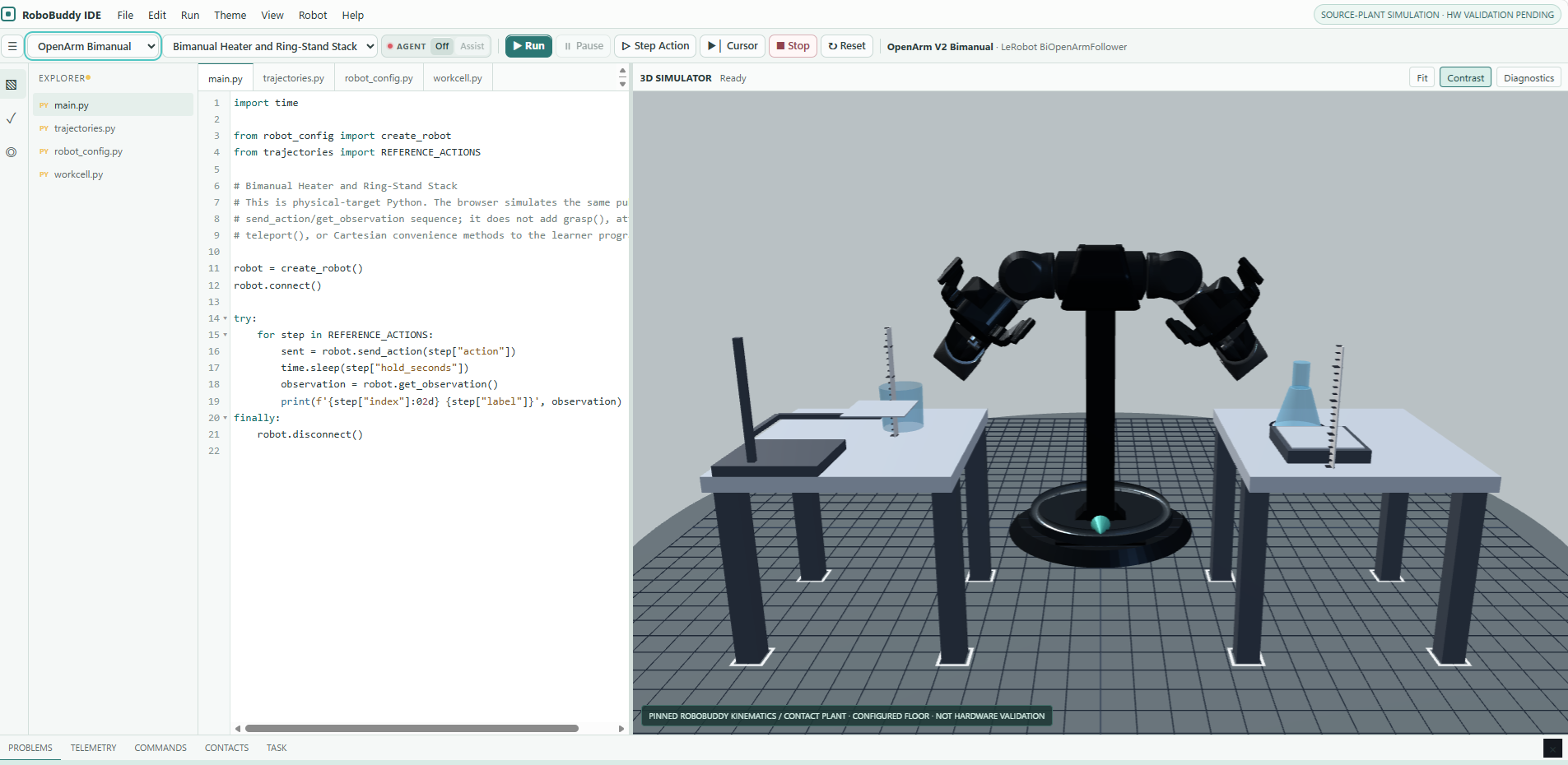
Bimanual OpenArm simulator
-
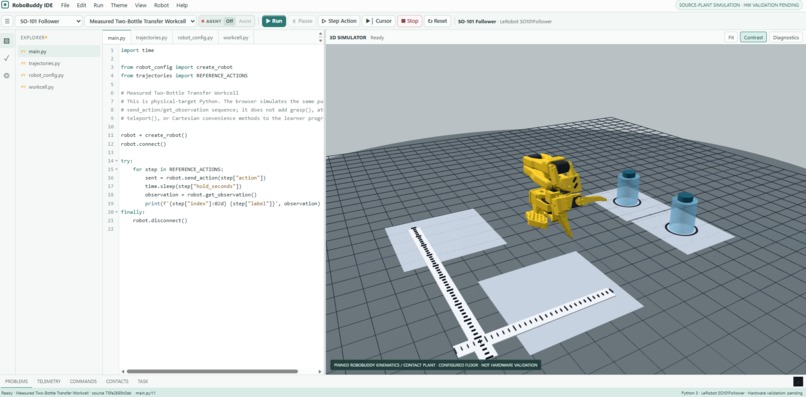
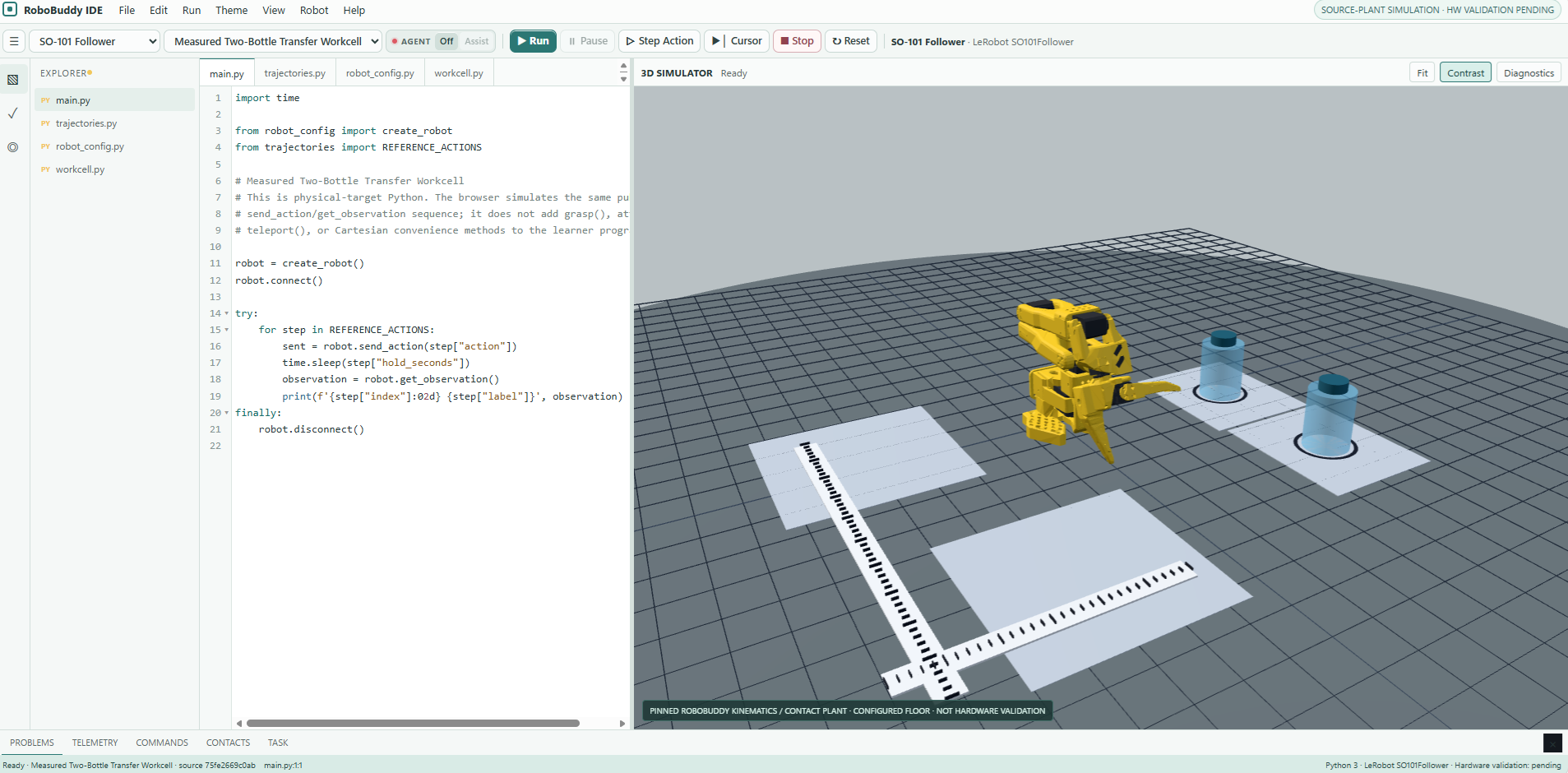
SO-101 Follower simulator
Inspiration
RoboBuddy began in November 2025 when I helped my daughter with an elementary-school project: we 3D-printed and built an Arduino-based 6 DOF robotic arm, then controlled it from a web interface (RoboBuddy). That project sparked my own interest in robotics. I later built and operated an SO-101 follower arm using its 3D mesh rigs (RoboBuddy AI).
For the WebMCP Challenge, I wanted to make robotics exploration more approachable: one browser workspace that humans and agents can use side by side, without a separate project-specific API-key workflow. My original idea was to program robotic arms for scientific lab operations. Then MicroDuck arrived and offered a playful, immediately understandable way to demonstrate agent-accessible web capabilities.
What I built
RoboBuddy IDE is a browser-based robotics workspace with a code editor, simulation controls, and a 3D MicroDuck policy simulation. Through a bounded WebMCP tool surface, agents can inspect the modeled state and make focused, visible changes—such as moving the duck, interacting with the ball and scene, or adding temporary measurement cues.
The experience is designed to be understandable and reversible. Actions stay inside the browser demo, and temporary visual cues disappear on refresh. RoboBuddy IDE does not claim physical hardware control through this WebMCP demo.
How I built it
I used GPT-5.6-Sol in Codex as a development collaborator to build the IDE interface, integrate the MicroDuck model, and develop WebMCP functions for the duck, related objects, and 3D environment. RoboBuddy IDE was built during the submission period. It builds on lessons from earlier RoboBuddy robotics experiments, but the submitted browser IDE, WebMCP collaboration surface, and MicroDuck experience are new work created for this challenge. The goal was to build useful, comprehensible, expandable capabilities that a human can observe alongside the agent.
What I learned
WebMCP made the application feel less like a page to automate and more like a set of intentional shared capabilities. Pairing each agent action with visible state makes it easier to see what changed, why it matters, and how to reset the experiment. That makes the experience easier to trust, teach with, and extend.
Challenges
The main constraints were time and the weekly limits on my Pro account. Technically, GPT-5.6-Sol enabled very fast iteration. The careful challenge was maintaining honest boundaries between a browser simulation and physical robotics while keeping the demo inviting for a broad audience.
What comes next (current)
This experience inspired me to explore WebMCP in my other learning and science projects, including Lab Studio, AssayLens, and RoboStudio Circuits. Even if I cannot submit them all, they show how human-visible, bounded agent capabilities can extend across robotics, science, and education.

Log in or sign up for Devpost to join the conversation.