-
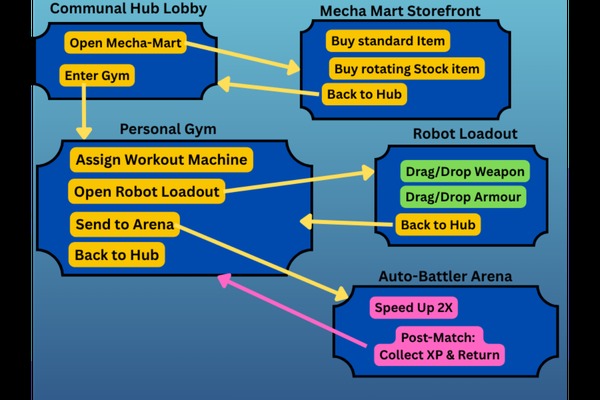
Wireframe
-
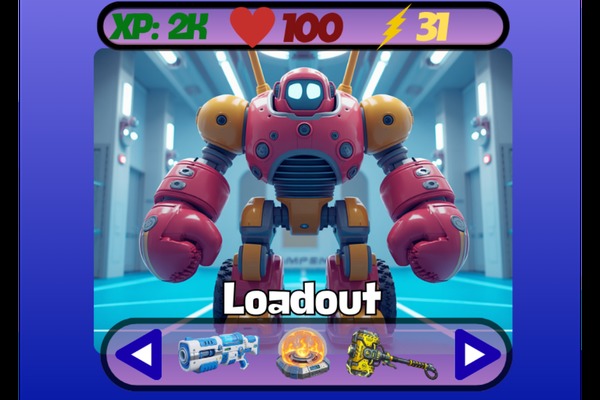
Customize robot 1
-
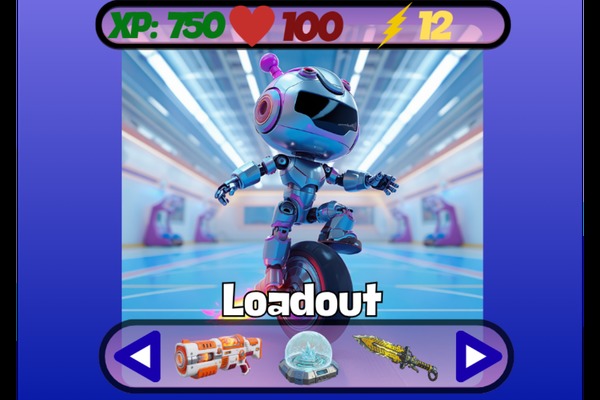
Customize Robot 2
-
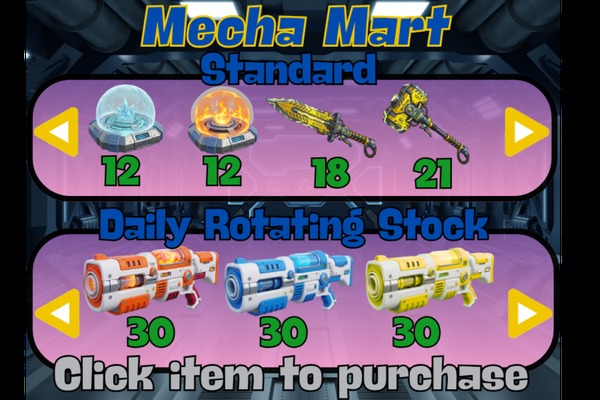
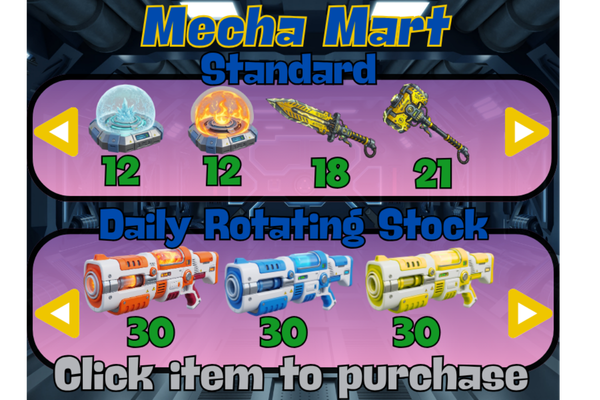
Equipment Store
-
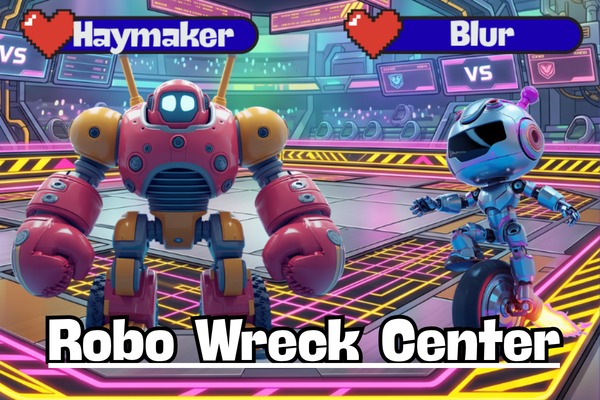
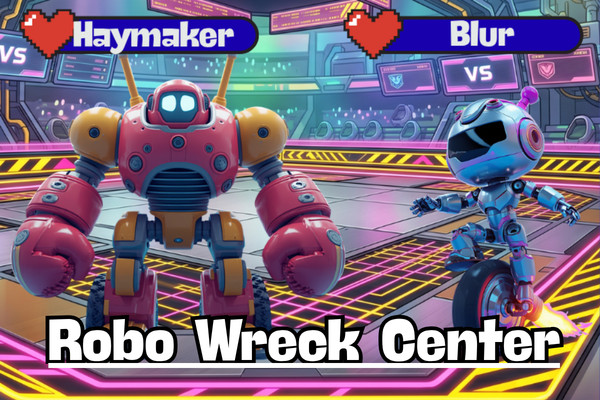
Battle Arena
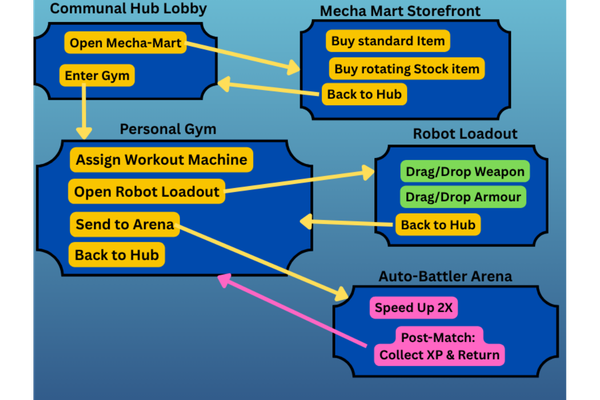
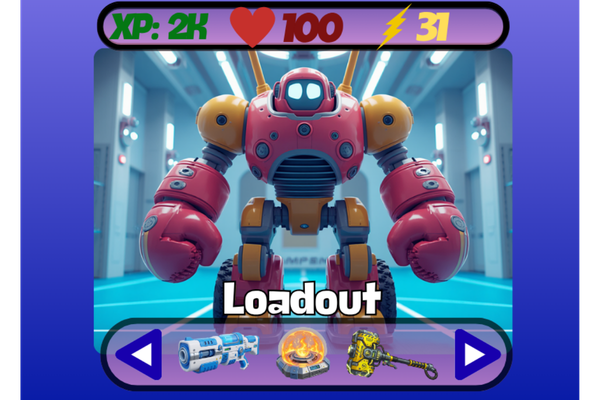
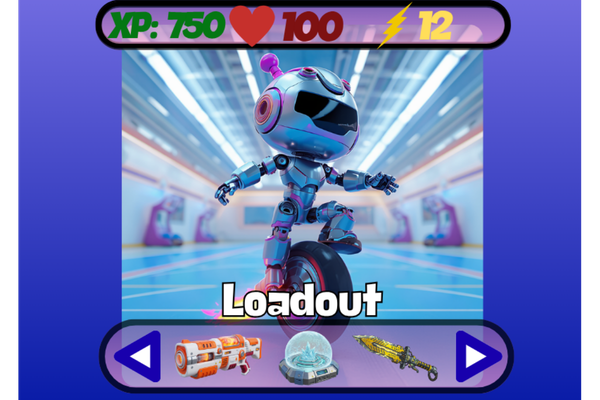
The Story of Robo-Wreck Center
What Inspired Me
This is a game I have wanted to make for a long time! I chose the Simulation & Management genre because I always get incredibly hyped playing them, but eventually, I get bored of the repetitive loops. I wanted to design something that would hold my attention long-term, so I added the tactical thrill of a fighting game to the end of the gym-building progression. I was also heavily inspired by my love for Pokémon and the fact that I am already great at building robots in other games.
How I Built My Project
All the creative ideas, loops, and mechanics were entirely my own. To put the actual documents together, I used NotebookLM as my design assistant. I fed it the competition rules and the Meta Horizon creator videos to make sure my ideas hit all the formatting requirements perfectly. For the Visual Concept Package, I used Canva to design the bright, "Saturday-morning cartoon" aesthetic.
Challenges I Faced
My absolute biggest hurdle was staying on track and preventing feature creep. I constantly went back and forth, agonizing over whether to include features because I liked them, or because I thought they would appease the judges. Finally, I decided to ignore the pressure, prioritize the "fun factor," and just build a game I would genuinely love to play.
What I Learned
My biggest takeaway is that I genuinely have a proclivity for game design! Up until now, my design plans were just a bunch of loose bullet points scribbled onto scrap paper. Learning how to properly structure a formal Game Design Document was an incredible lesson. I loved the structured format, and it taught me that I am actually really good at this.
The Math Behind the Mechas
Robo-Wreck Center uses a few core formulas to calculate offline progression and combat damage.
1. The Offline XP Accumulator To create a strong daily hook, players passively earn Experience Points (XP) while away from the game, but it strictly caps at 18 hours.
$$ \text{Total XP} = \text{Hours Offline (Max 18)} \times \text{Gym Base Rate} $$
2. Tactical Auto-Battler Damage Combat relies on a rock-paper-scissors counter system (like a Freeze Blaster vs. a Fire Shield). A robot's final damage is determined by its Base Damage multiplied by their elemental advantage:
$$ \text{Final Damage} = \text{Base Damage} \times \text{Multiplier} $$
(Where the Multiplier is **1.5* for an Advantage, 1.0 for Neutral, or 0.5 for a Disadvantage).*
Built With
- canva.com
- notebooklm


Log in or sign up for Devpost to join the conversation.