-
-
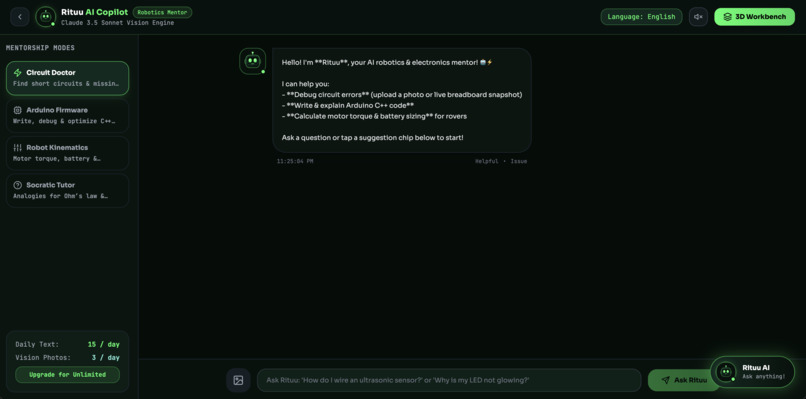
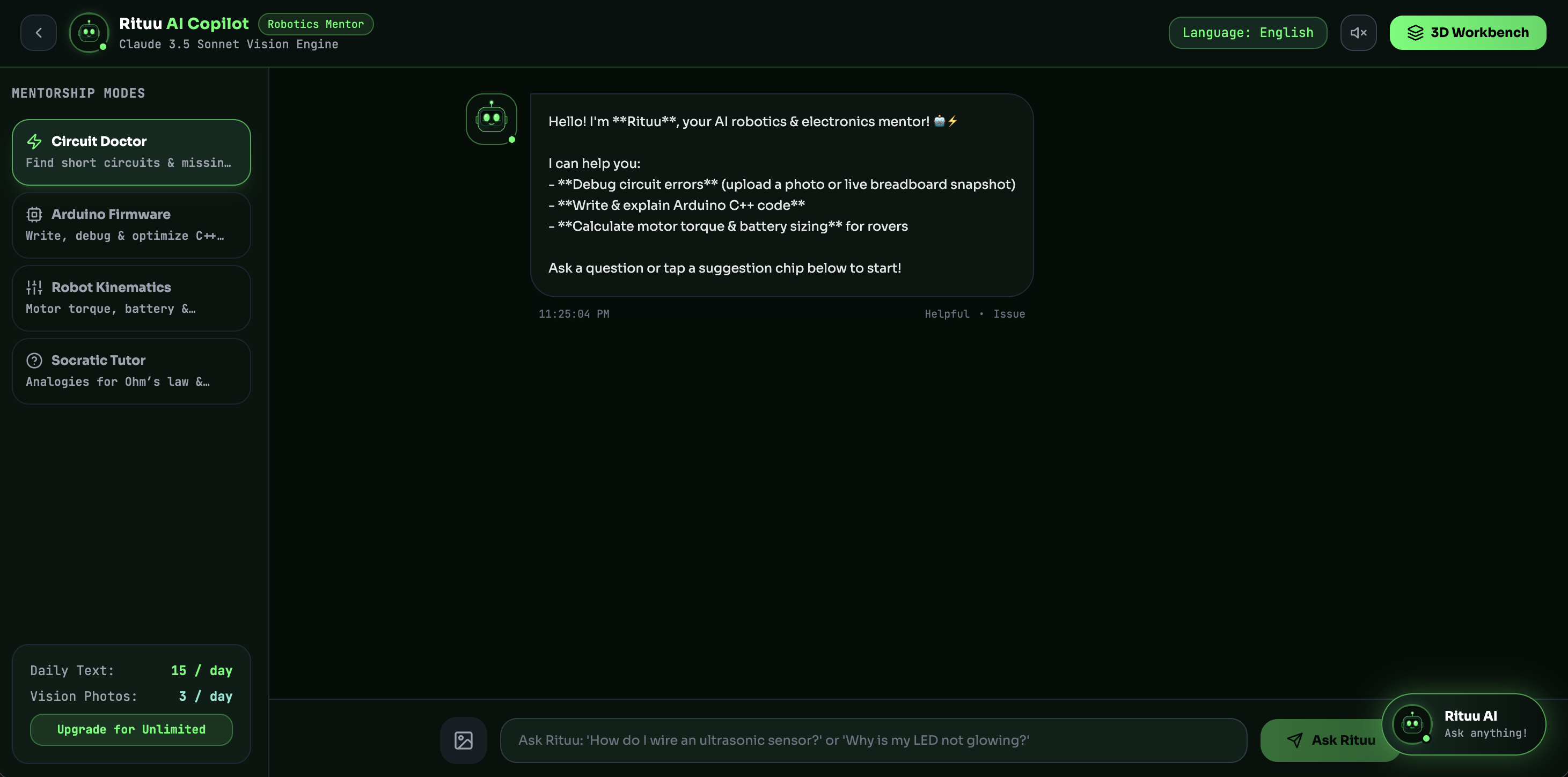
This is main part it is a chatbot user can ask anythings just like how to build and how to create a new things.
-
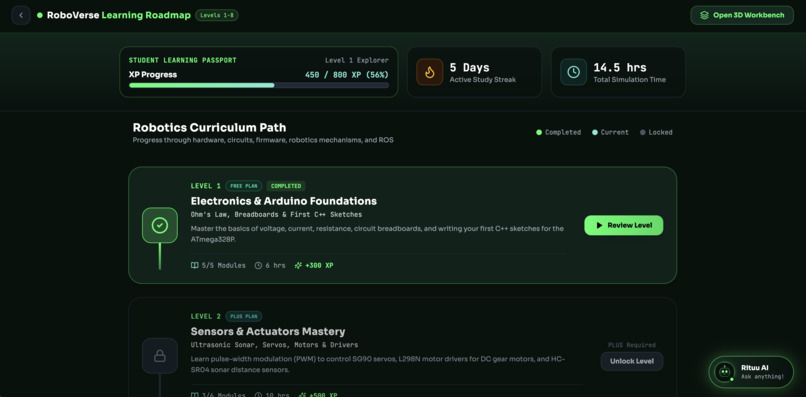
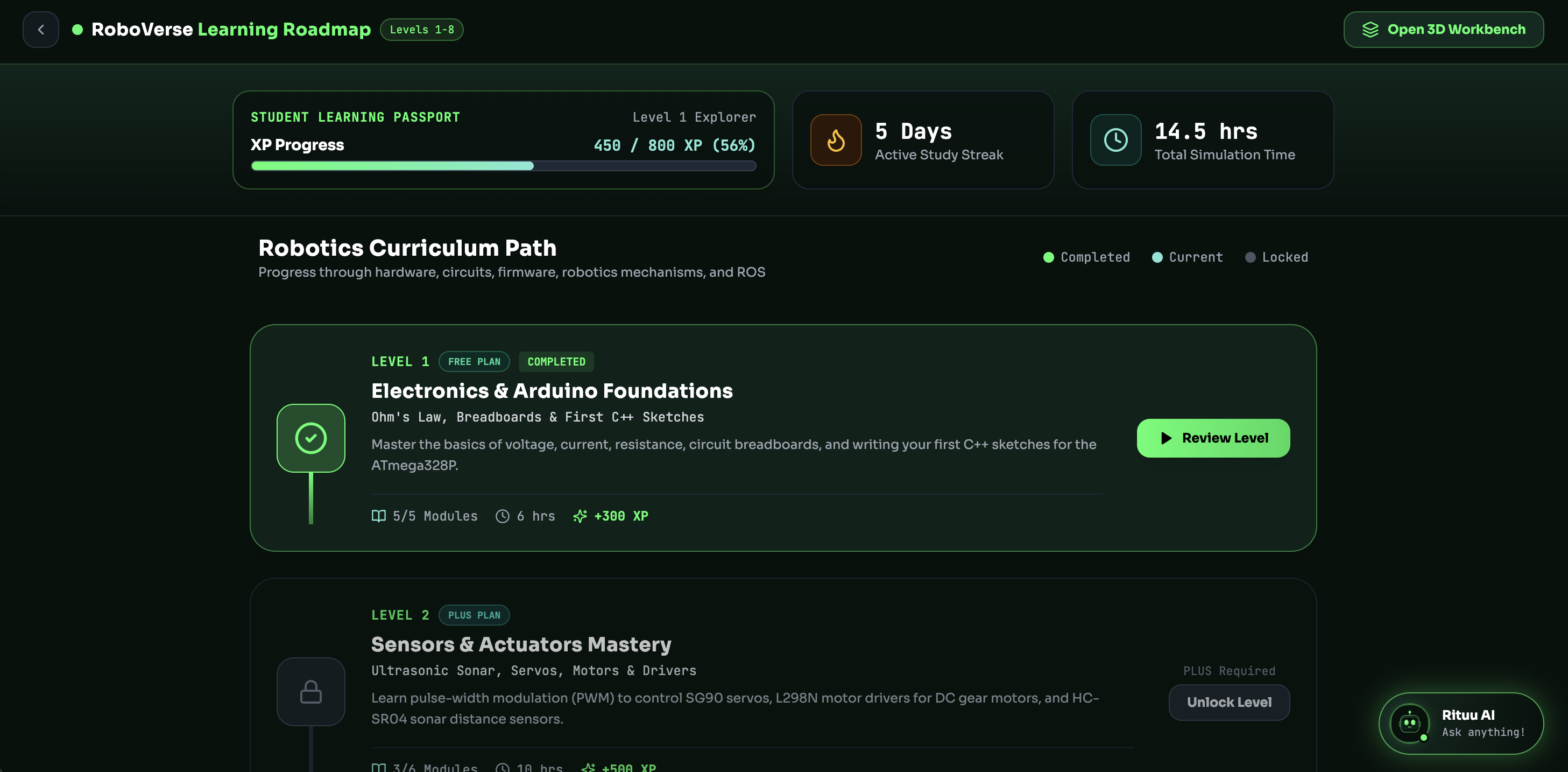
This is a roadmap or curriculum section where user can do given projects completes the task that is give make his own roadmap.
-
This is the loading screen that appears when users open our website. After a few seconds, it takes them to the login page.
-
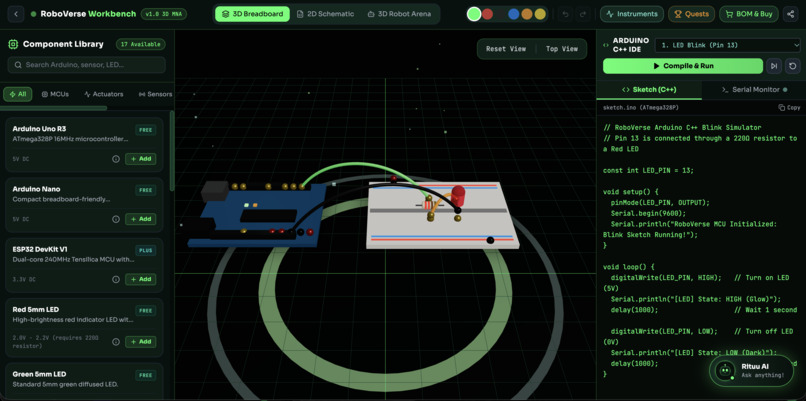
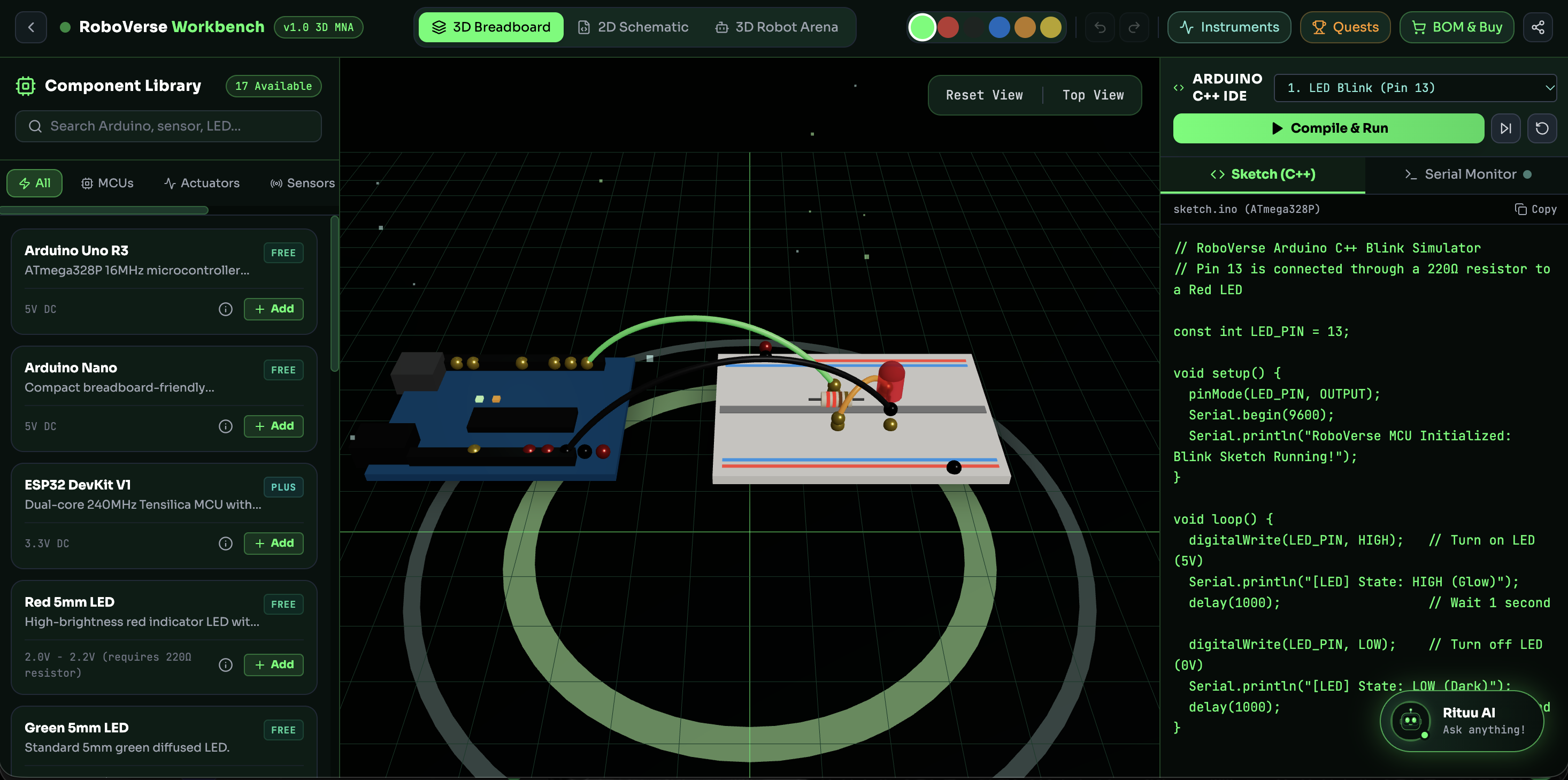
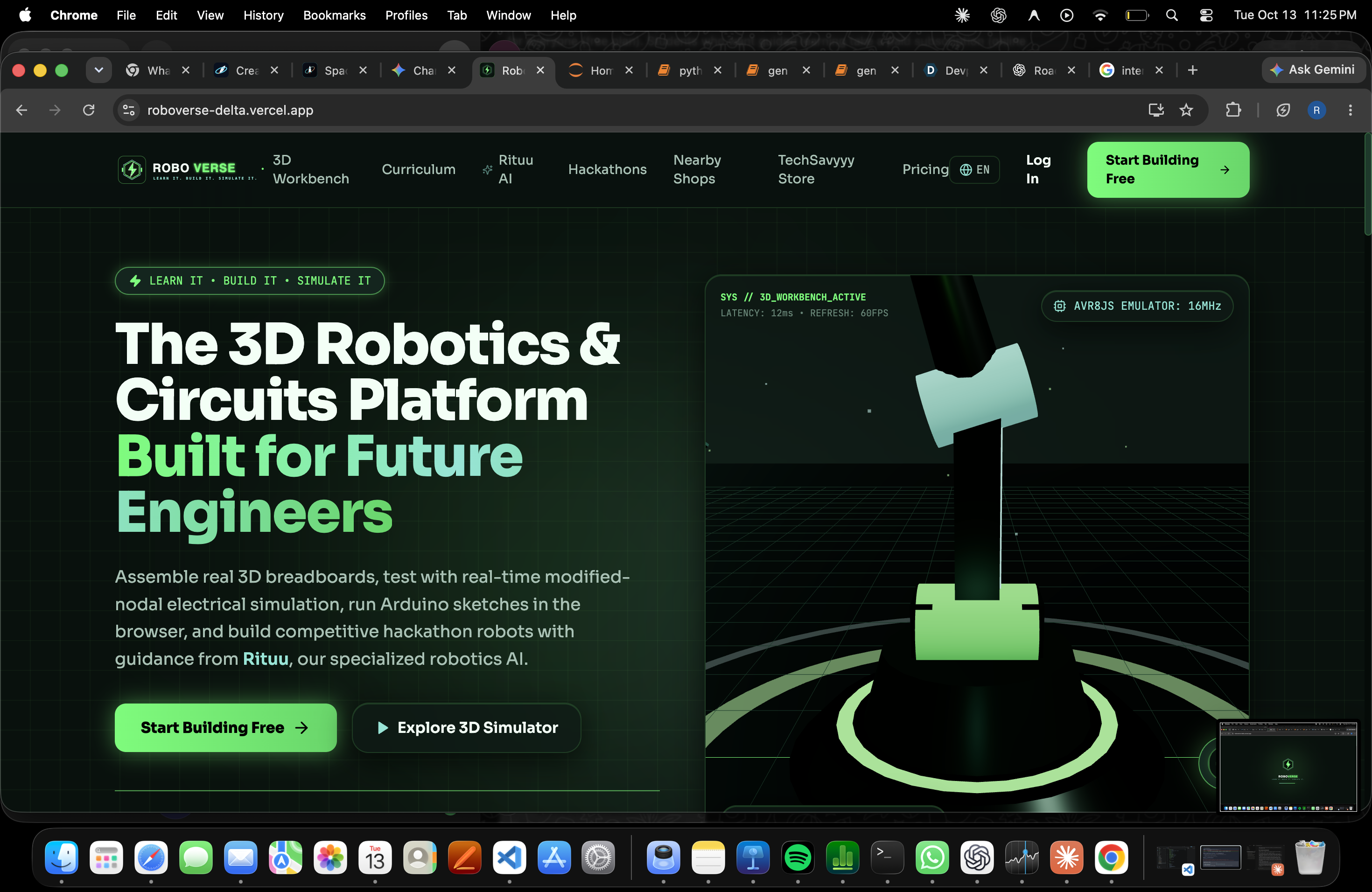
This is a a 3D workspace just like tinkercat when the user can make anything virtually and also can do experiments to make as they want.
-
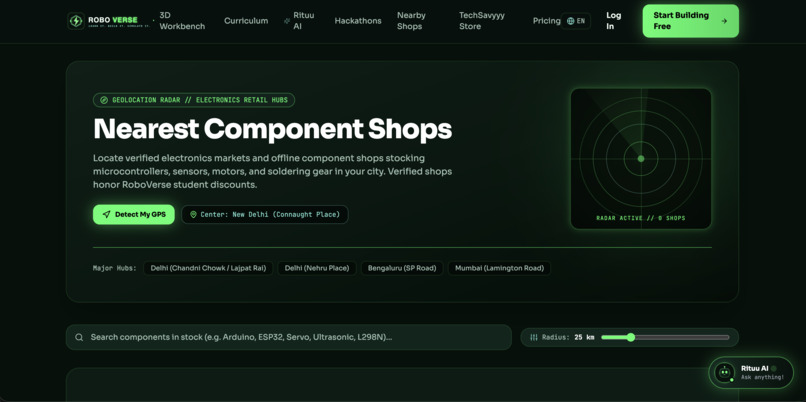
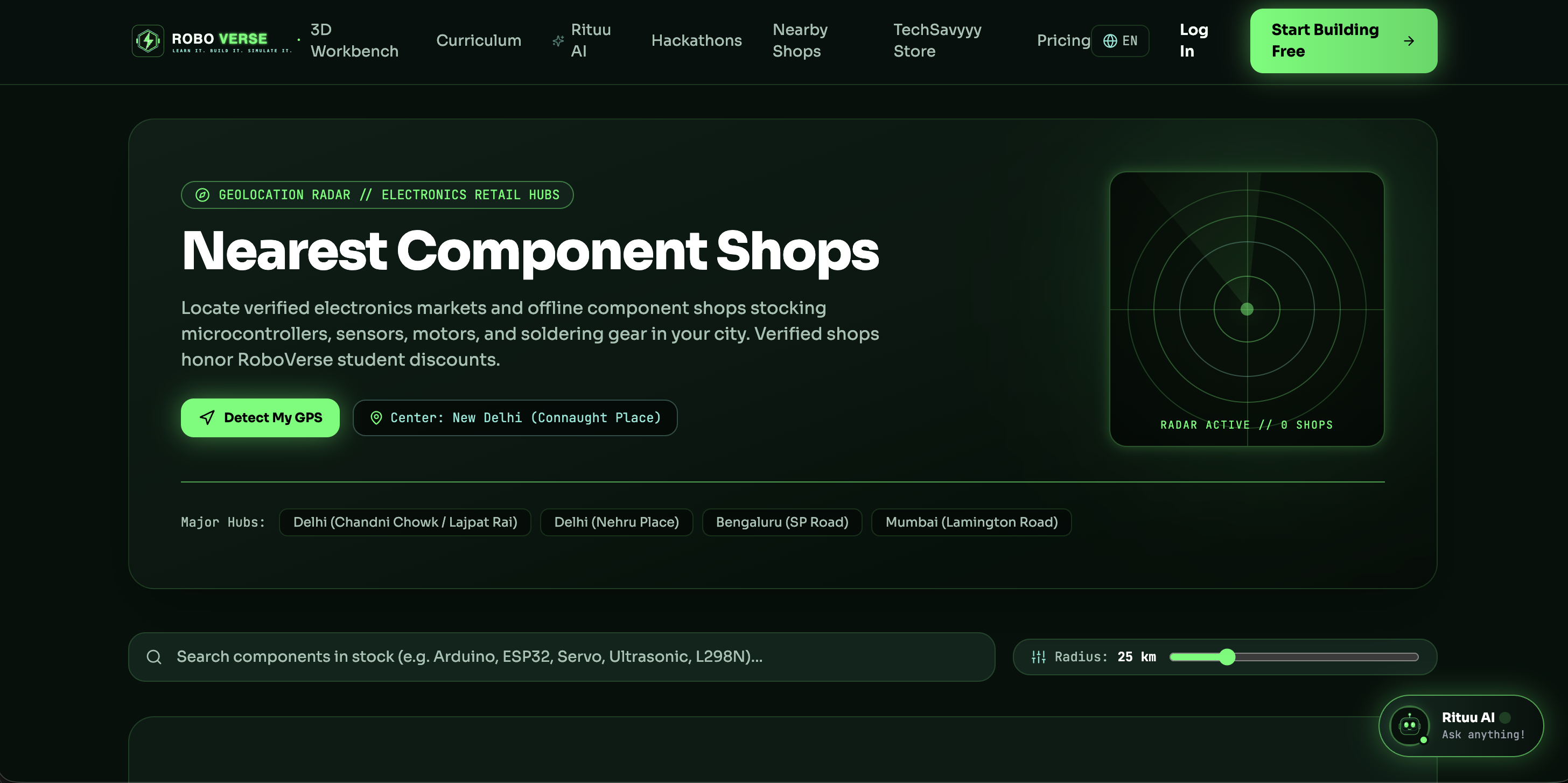
This page give you the location of nearby store and you can change the radius are to find the store.
-
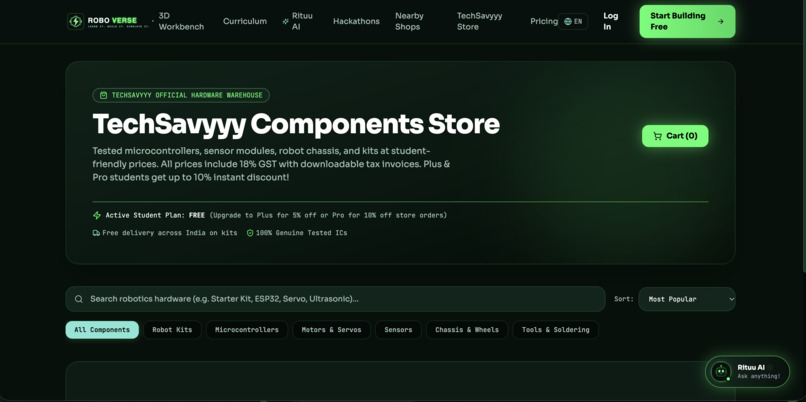
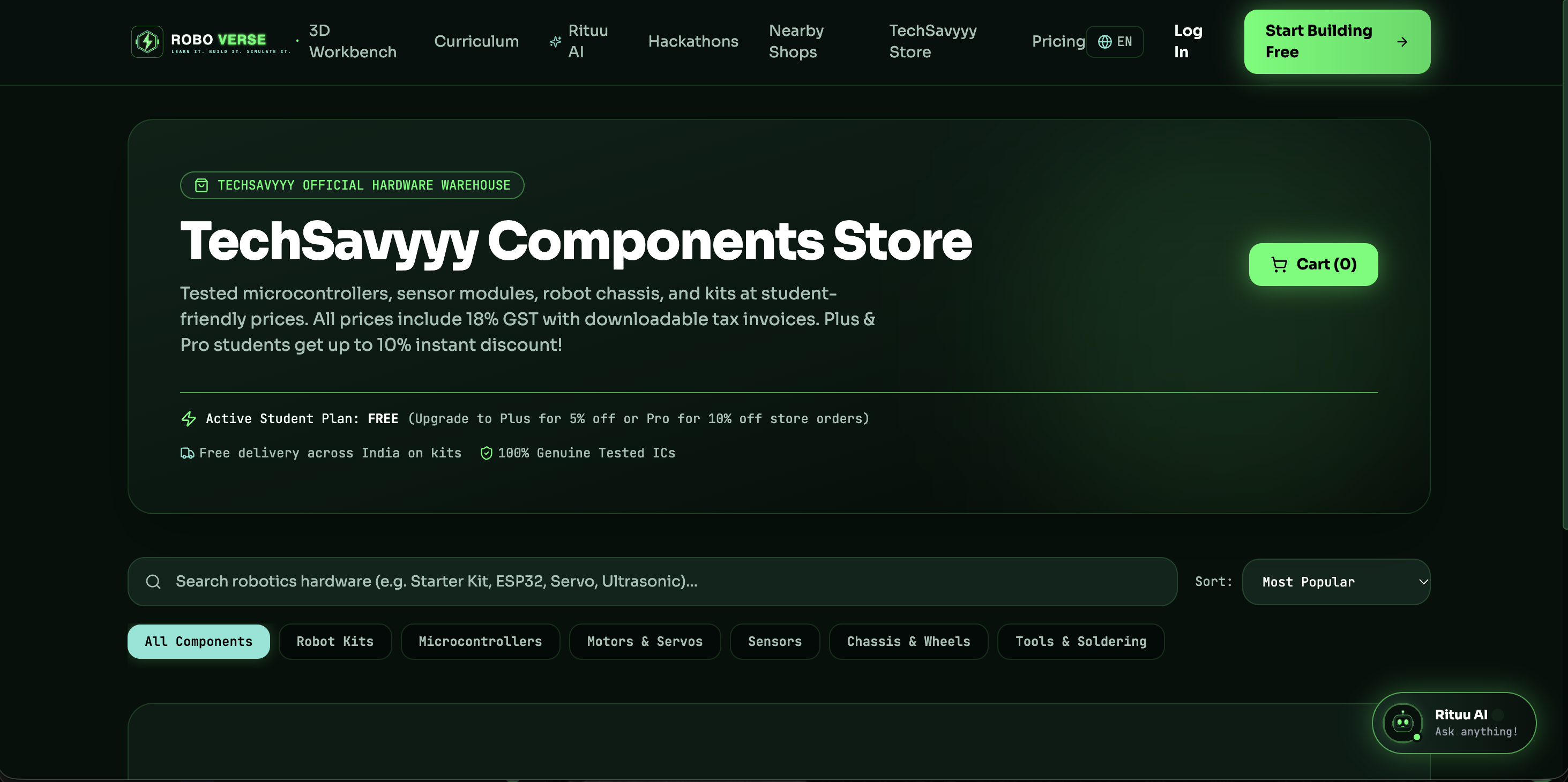
This page will be like store from our end we can delivers the kits and tools at a low price .
-
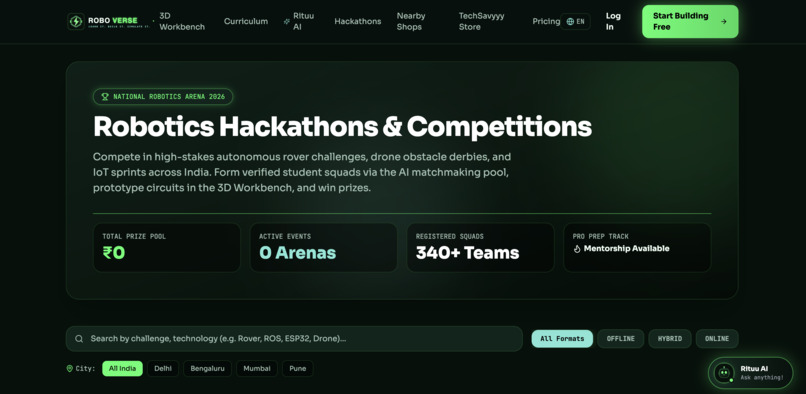
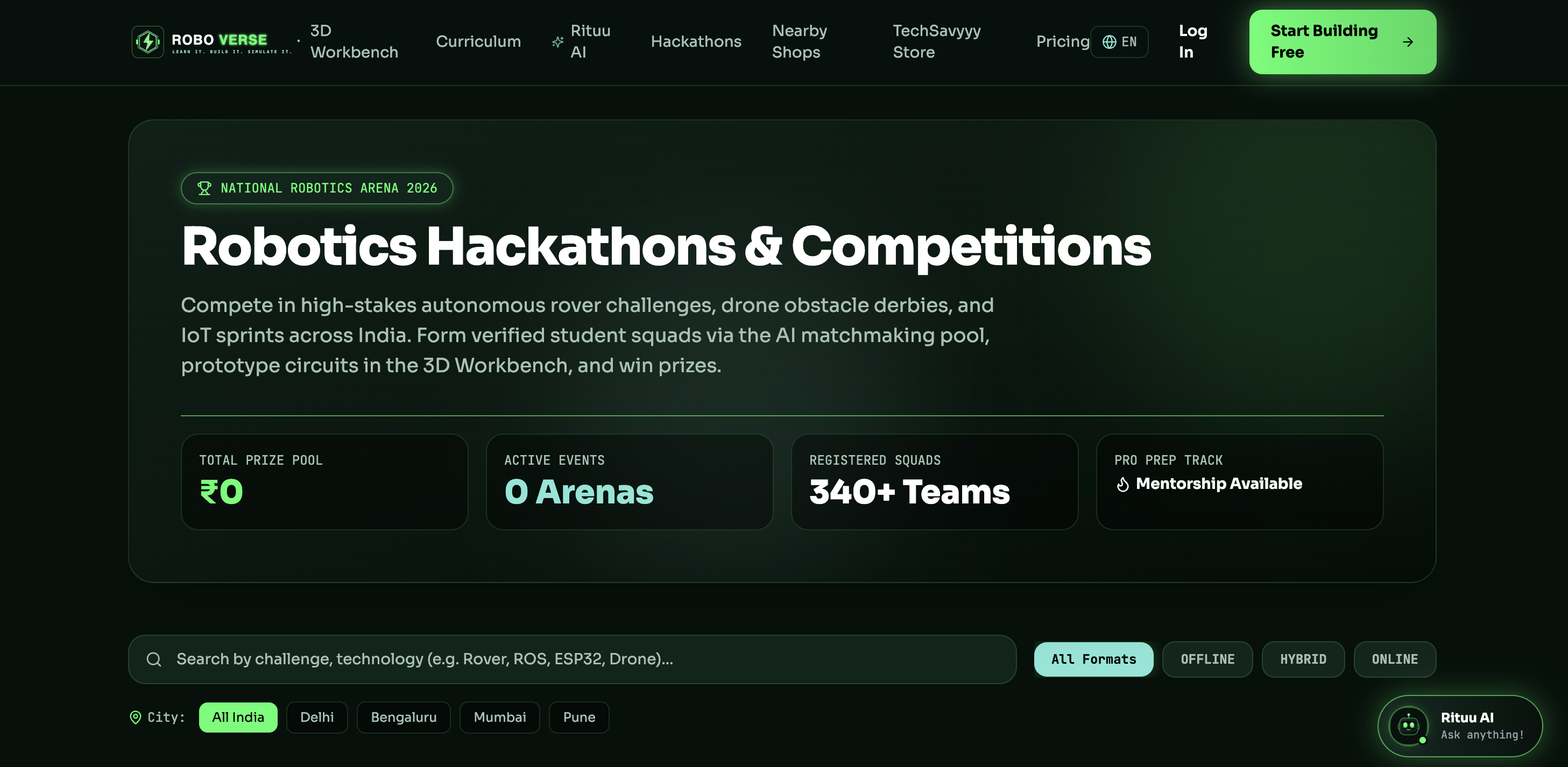
This is a near by hackathons page here user can find where the hackathons are happaning what is the prize for winning where is the location.
-
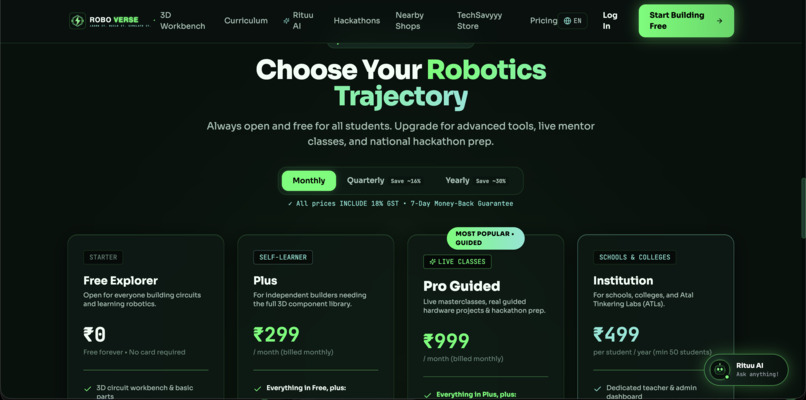
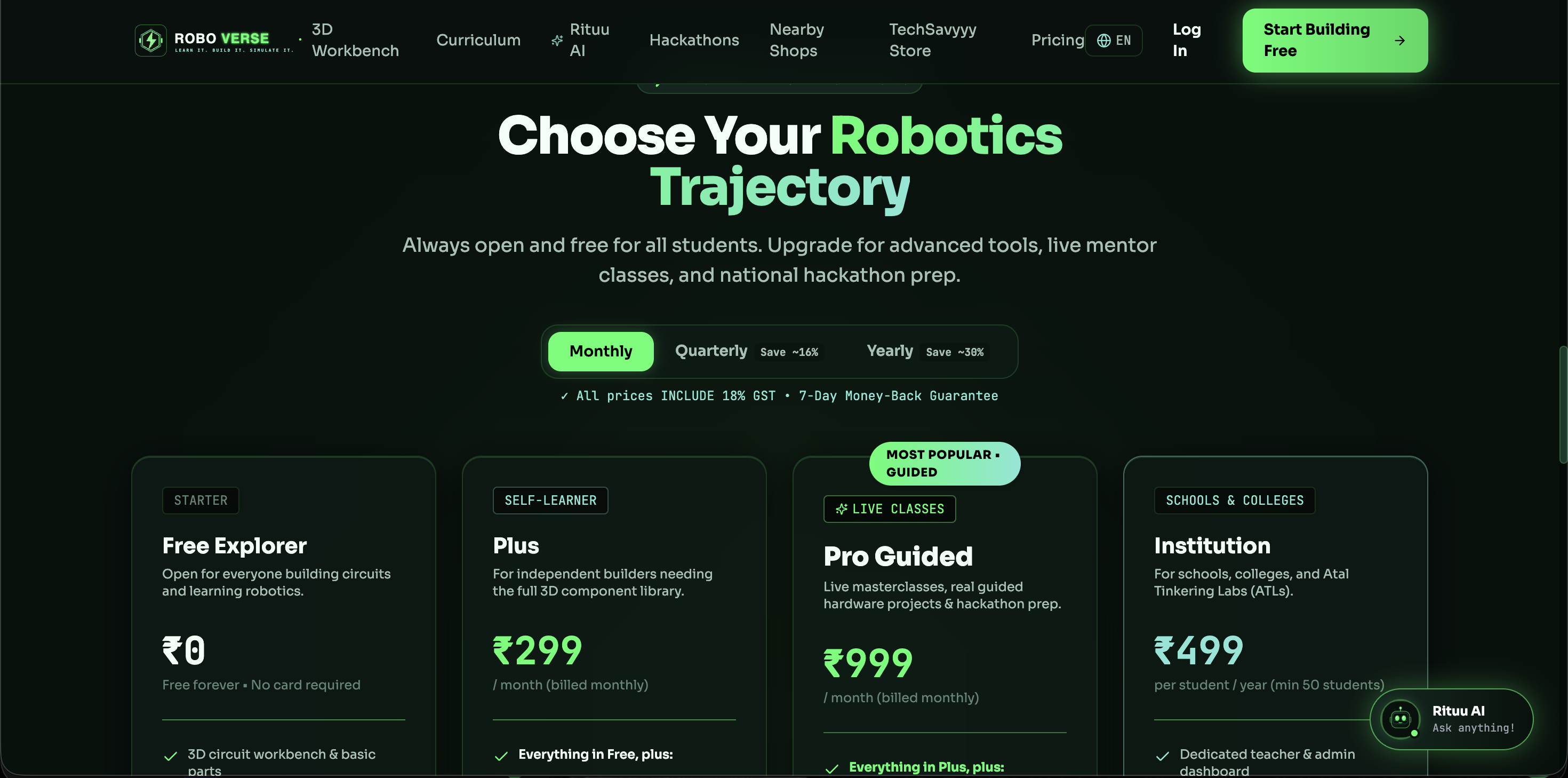
This page demonstrate the subscription and pricing and what feature you will get there is different price for unique individual.
-
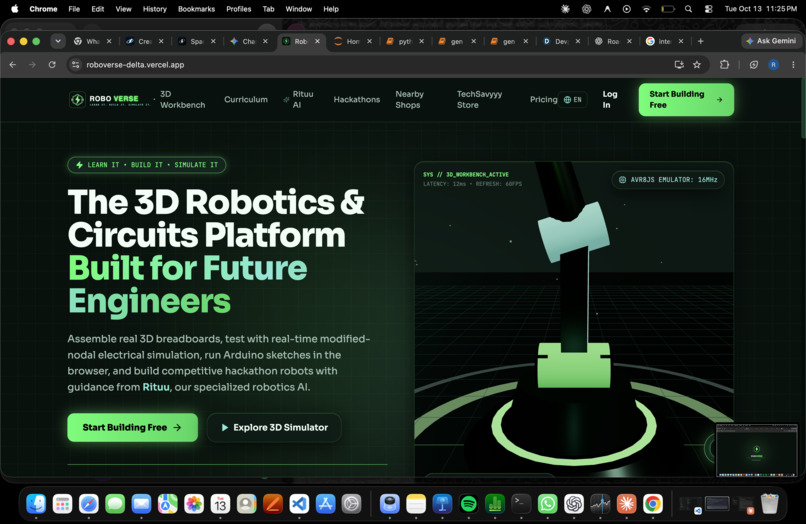
This is a dashboard here user can go to any feature that they want to use by selecting above nav-bar features.
Inspiration
Robotics is exciting, yet most students quit before they begin. We kept seeing the same four walls. Hardware is costly, so starter kits, sensors and motors are out of reach. Trained mentors are few, so nobody answers "why isn't my LED working?" One wrong wire can burn a part the student can't replace, so beginners learn to fear trying. And competitions are hard to find, so motivated students miss hackathons.
We asked a simple question: what if a student could start robotics with just a browser?
That became RoboVerse. Students wire circuits and run Arduino code in a simulator, where mistakes cost nothing and short circuits appear as alerts instead of smoke. Rituu, our robotics-only AI copilot, reads a photo of a circuit or a piece of code and explains the fix in Hindi or English, standing in for the missing mentor. A guided roadmap from electronics to ROS shows what to learn next, while hackathon alerts and a nearby shops map point toward competitions and parts. It's free for every student, with simple plans for schools and Atal Tinkering Labs. Our goal is that no student gives up on robotics because of cost, distance, or fear of breaking something.
What it does
RoboVerse is a free, browser-based robotics platform for students.
Simulate: Build circuits on a 3D breadboard and run Arduino code in the browser, with short-circuit alerts. No hardware needed. Learn: Follow an 8-stage roadmap, from electronics to ROS, and earn XP, badges and QR-verifiable certificates. Get help: Rituu, our robotics-only AI, reads a photo of your circuit or code and gives a step-by-step fix in Hindi or English. Compete: Find hackathons in your city and nearby component shops, and get a parts list generated from your circuit. Schools: A teacher dashboard with batches and assignments, ready for Atal Tinkering Labs.
How we built it
Web: Next.js 14, React, Tailwind CSS 3D: Three.js, React Three Fiber Simulation: Custom DC circuit solver (MNA) with an Arduino emulator (avr8js) Mobile: React Native, Expo SDK 51 Backend: Node.js, Express, TypeScript Database: PostgreSQL with Prisma AI: Claude API powers Rituu, called server-side only Shared code: Monorepo with common types and schemas across web, mobile and API
we also make it because we see that gap in many college that Robotics club are created but no one look after it so some one is interested in that can take advantage for our app to learn.build.explore...
Challenges we ran into
Real-time circuit simulation in the browser. Solving circuits and running Arduino code together, without lag, took a custom DC solver and an AVR emulator. Making wiring mistakes visible. Detecting short circuits, wrong polarity and floating pins, then showing them as clear alerts, needed careful rules. A smooth 3D breadboard. Drag-and-drop parts, snapping and wiring in 3D had to stay fast on school-grade laptops and phones. Keeping Rituu robotics-only. Reading a photo of a real circuit and giving a safe, correct fix, in Hindi and English, meant tight scoping and server-side AI calls. One backend for web and mobile. We shared types, schemas and APIs across Next.js, Expo, and the native Android and iOS builds. Student safety. Parental consent for under-18s and built-in safety warnings added extra flows. Scoping. We shipped the core loop first and marked the 3D robot builder, store checkout and Pro live classes as coming soon.
Accomplishments that we're proud of
A working end-to-end platform, live on Vercel, with a 3D circuit workbench, Rituu AI, student dashboard, hackathons hub and nearby shops map. A real simulator in the browser: a custom circuit solver plus Arduino code emulation, with short-circuit alerts, an oscilloscope and a multimeter. Rituu, a robotics-only AI that reads a photo of a circuit or code and gives a step-by-step fix in Hindi and English. One codebase for web and mobile: Next.js web app, Expo mobile app, and native Android and iOS projects, all sharing one backend. A complete learning path: an 8-stage roadmap from electronics to ROS, with XP, badges, streaks and QR-verifiable certificates. Built for schools: a teacher dashboard with batches and assignments, ready for Atal Tinkering Labs. Safe and free: parental consent for under-18s, built-in safety warnings, and a free plan for every student. Honest scoping: unfinished features are clearly marked “coming soon” instead of faked.
What we learned
During RoboVerse, We learned the basics of robotics, how different components work together, and how technology can be used to solve real-world problems. I gained practical knowledge of robotics concepts, logical thinking, and problem-solving. The experience also helped me understand the importance of teamwork, creativity, and hands-on learning while building and experimenting with new ideas.
What's next for Robo-Verse
Coming soon
3D robot builder: design and simulate full robots, not just circuits. TechSavyyy store checkout: buy parts straight from your circuit’s parts list. Pro plan: live classes and mentor guidance.
Launch and grow
Public launch, free for every student. Pilot with schools and Atal Tinkering Labs through the Institution plan. More parts, lessons and hackathon listings in more cities. A stronger Rituu with deeper circuit checking and more languages.
Affordable for everyone
Core tools stay free: workbench, Rituu and lessons. Low-cost plans: Plus at ₹299 a month, and Institution at ₹499 per student per year. Low-data mode and mobile-first design for students on basic phones. Scholarship and student discounts so cost never blocks a student. Our goal is simple: any student, in any city, can learn robotics without buying a single part.
Built With
- 3d-visualization
- ai
- arduino-c++
- circuit-simulation
- claude-ai
- computer-vision
- css
- electronics
- firebase
- gemma
- html
- javascript
- machine-learning
- node.js
- openai-codex
- react
- responsive-web-design
- robotics
- three.js
- vercel
- webgl


Log in or sign up for Devpost to join the conversation.