-
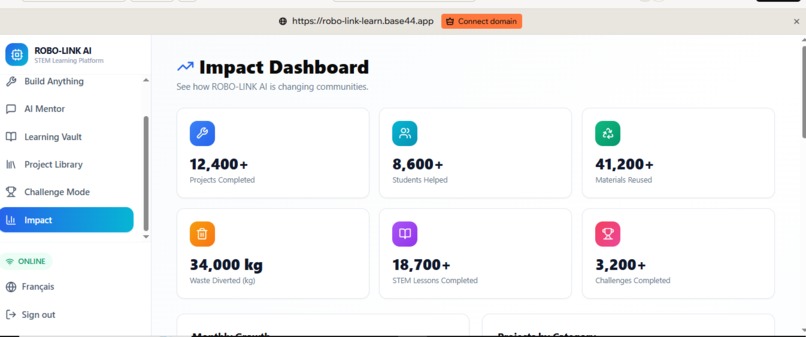
This is an image of the app
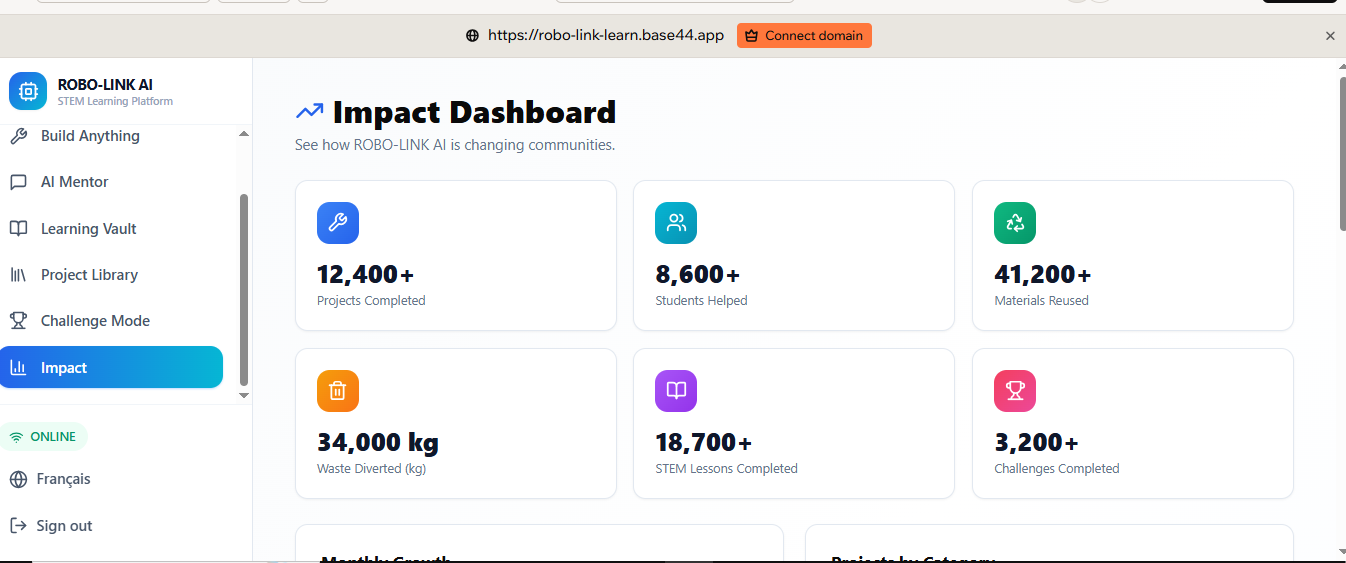
Inspiration
Many students have the curiosity to learn robotics, coding, and engineering but do not have access to expensive equipment, reliable internet, or advanced STEM learning resources. We were inspired by the idea that a lack of resources should not prevent a student from becoming an inventor. ROBO-LINK AI was created to make STEM learning affordable, practical, and accessible.
What it does
ROBO-LINK AI is an AI-powered STEM learning platform that helps students turn the materials they already have into real projects.
Students can enter their available components, choose a problem they want to solve, and receive a personalized project with:
- Materials and estimated cost
- Step-by-step building instructions
- Circuit connections
- Arduino code
- Simple explanations
- Troubleshooting help
- Project upgrades and challenges
The platform also provides STEM lessons, an AI mentor, project challenges, and offline learning resources.
How we built it
We built ROBO-LINK AI as a modern web application using React, TypeScript, Vite, and Tailwind CSS. We designed the interface to be simple and accessible for students with different levels of technical experience.
We integrated AI to generate personalized STEM projects and explanations. We also designed the platform with an offline-first approach so that important learning resources can remain available even when internet connectivity is limited.
Challenges we ran into
One of our biggest challenges was designing AI features that were useful for beginners without making the experience overwhelming. We also had to think carefully about how to make robotics education accessible to students who may only have a few inexpensive components.
Another challenge was designing an offline-first experience while still providing interactive AI-powered features.
Accomplishments that we're proud of
We are proud of creating a platform that connects AI with hands-on STEM education instead of using AI only as a chatbot.
We are especially proud of the “Build Anything” concept, where students can enter the materials they have and receive a project designed around those resources. This makes learning more affordable while encouraging creativity, engineering, and problem-solving.
What we learned
We learned that solving a technology problem is not only about building advanced software. It is also about understanding the people who will use it.
We learned how to combine AI, web development, education, accessibility, and real-world engineering into one product. Most importantly, we learned that a simple idea can become much more powerful when it is designed around real community needs.
What's next for ROBO-LINK AI
Our next goal is to expand ROBO-LINK AI into a complete STEM ecosystem for schools and communities.
We want to add more offline lessons, support additional languages, expand the project library, introduce teacher tools, add more hardware platforms beyond Arduino, and create partnerships with schools and STEM organizations.
Our long-term vision is to make quality hands-on STEM education accessible to students regardless of their location or available resources.


Log in or sign up for Devpost to join the conversation.