-
-
robin logo
-
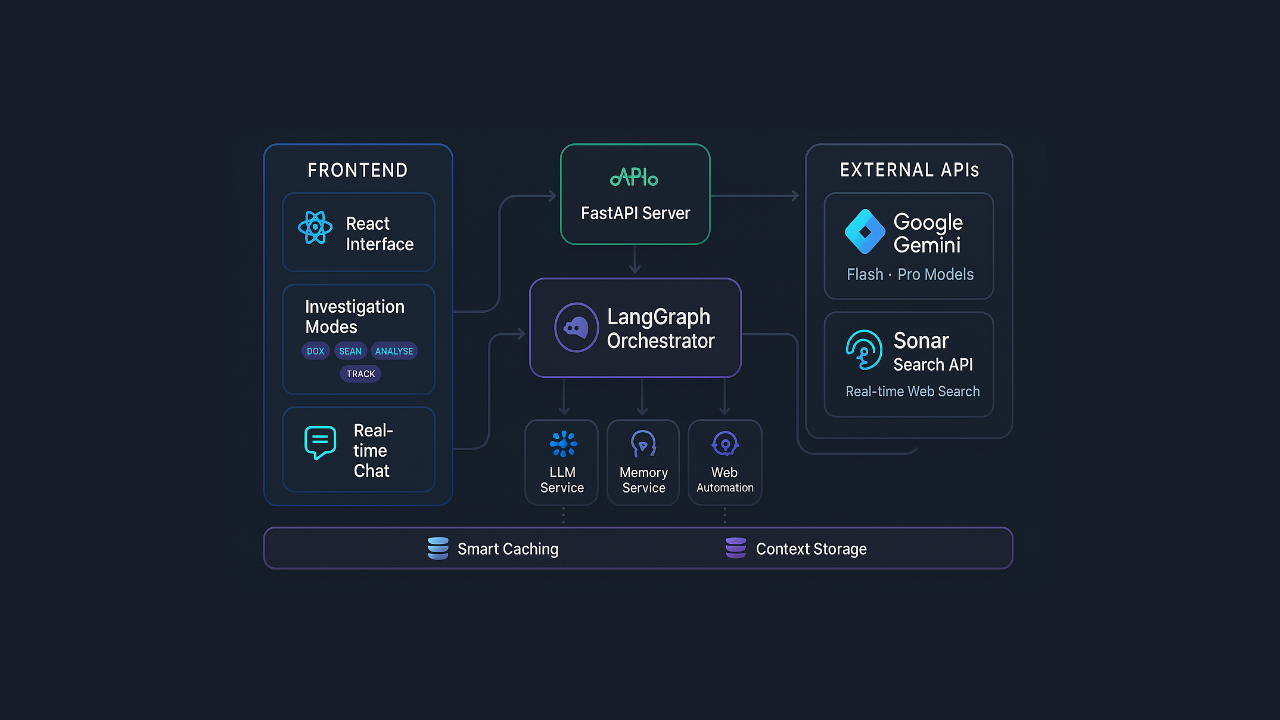
high level flow
-
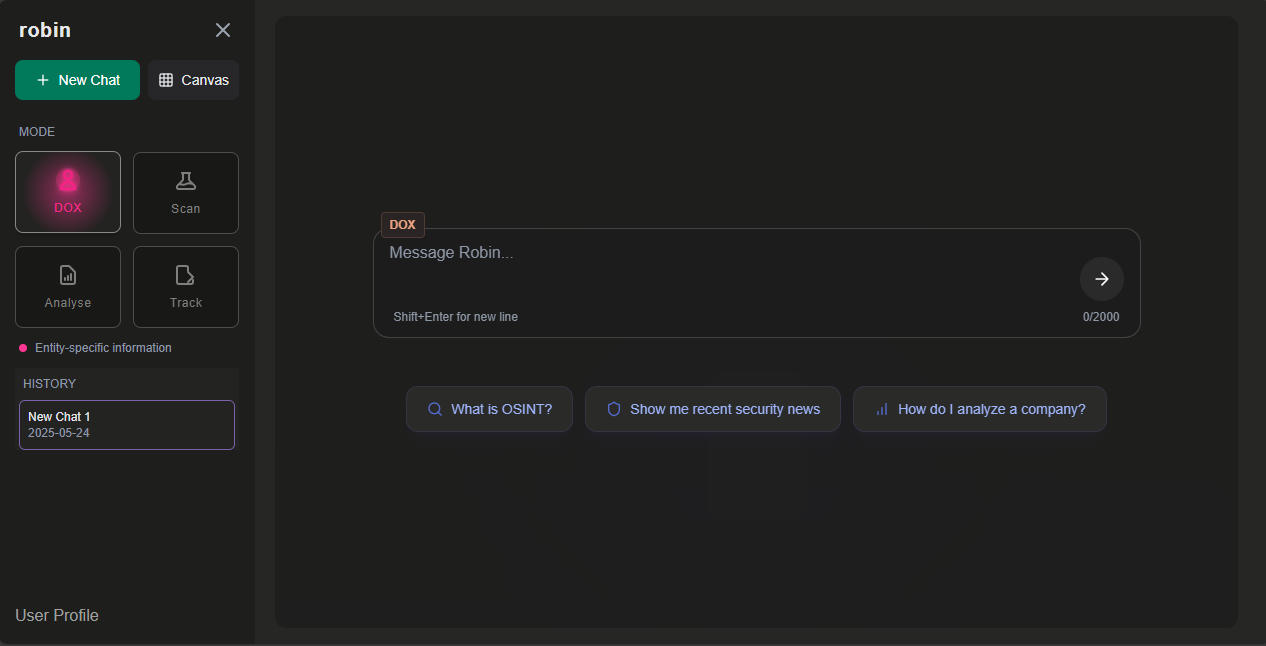
robin ui
-
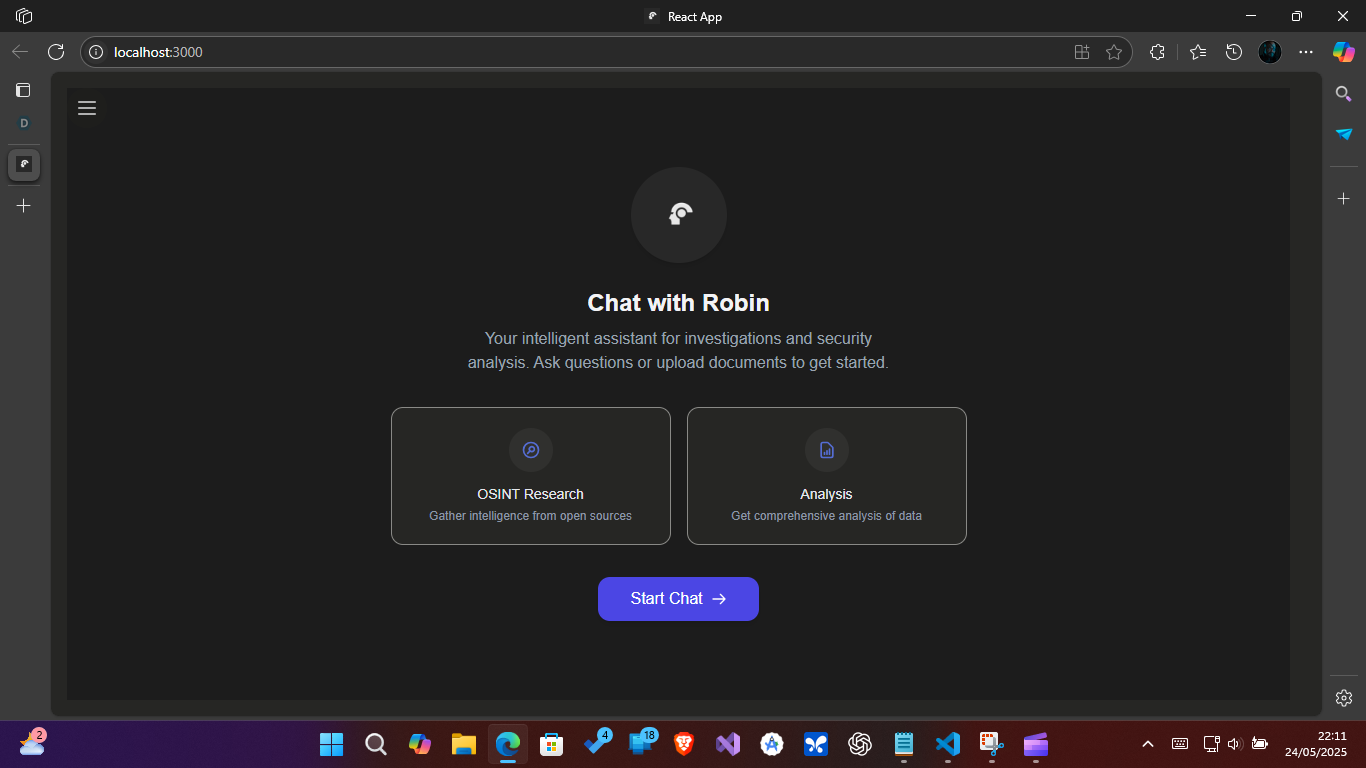
chat emptystate

Robin
AI-Powered Research Investigation System
Inspiration
The inspiration for Robin came from the critical need for AI-driven Open Source Intelligence (OSINT) capabilities combined with Sonar's real-time search power. In an era where information changes rapidly and research requires both speed and accuracy, we envisioned a system that could autonomously conduct thorough investigations while maintaining awareness of the latest developments. Robin bridges the gap between traditional research methods and modern AI capabilities, leveraging real-time data streams to provide comprehensive intelligence gathering.
What it does
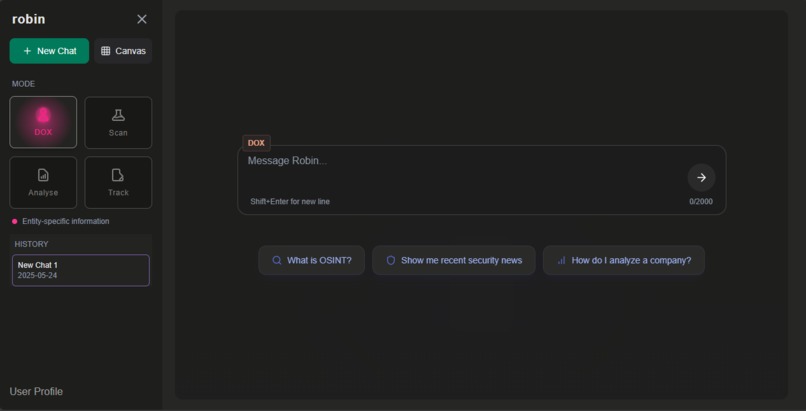
Robin is an intelligent research orchestrator that conducts automated investigations based on user queries through multiple specialized modes:
Investigation Modes
| Mode | Purpose | Capability |
|---|---|---|
dox |
Quick factual searches | Basic citations and rapid fact-checking |
scan |
Deep research analysis | Content analysis with entity extraction |
analyse |
Comprehensive investigation | Extensive reporting with detailed insights |
track |
Web automation research | Browser-based interactions and verification |
Core Features
- Contextual Memory Management across investigation sessions
- Multi-round Research with progressive depth enhancement
- Automatic Query Classification to distinguish simple chat from complex research needs
- Citation Tracking and comprehensive source management
- Response Caching for improved efficiency and speed
- Real-time Progress Streaming to keep users informed during investigations
How we built it
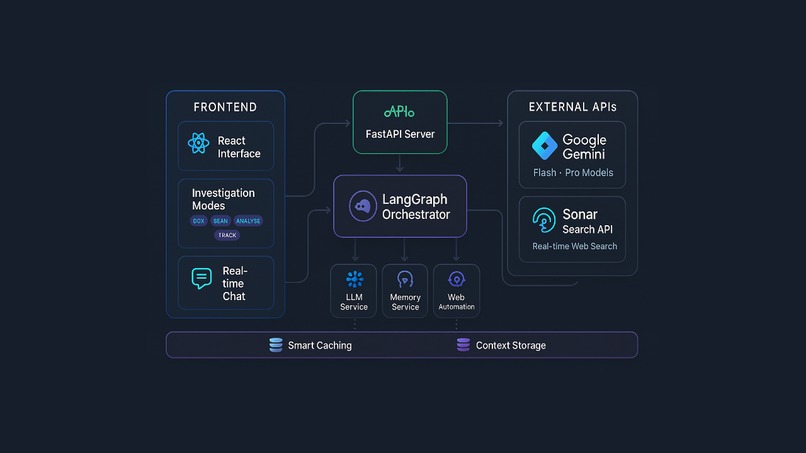
Robin is architected using LangGraph, a state machine framework that orchestrates complex research workflows through a graph-based approach.
Technical Architecture
graph TD
    A[Initialize] --> B[Check Cache]
    B --> C[Retrieve Context]
    C --> D[Classify Query]
    D --> E[Create Research Plan]
    E --> F[Execute Research Rounds]
    F --> G[Synthesize Findings]
    G --> H[Process Findings]
    H --> I[Generate Responses]
    I --> J[Store Context]
    J --> K[Finalize]
Core Technology Stack
State Management
InvestigationStateTypedDict for comprehensive data tracking- Persistent context storage across sessions
Service Integration
- Sonar API for real-time search capabilities
- Gemini Models for AI processing and analysis
- Playwright for web automation in track mode
- Custom Memory Service for contextual intelligence
Workflow Engine
- Asynchronous Python architecture
- Multi-round research execution with fallback mechanisms
- Progressive query enhancement based on findings
- Dual response generation (conversational + detailed reports)
Challenges we ran into
Integration Complexity Managing the seamless integration between Sonar's real-time capabilities, Gemini's AI processing, and Playwright's automation while maintaining state consistency across the LangGraph workflow proved challenging.
State Management Designing a robust state management system that could handle concurrent research rounds, maintain context across sessions, and gracefully handle failures required careful architectural planning.
Response Quality Balance Achieving the right balance between comprehensive research depth and response speed, especially when transitioning between different investigation modes, required extensive optimization and caching strategies.
Web Automation Reliability Ensuring reliable web automation through Playwright while handling dynamic content, rate limiting, and various website structures presented ongoing technical challenges.
Accomplishments that we're proud of
Seamless Sonar Integration Successfully integrated Sonar's real-time search capabilities with our graph-based architecture, enabling Robin to access and process the latest information as investigations unfold.
State-Aware Intelligence Built a sophisticated state management system that maintains context across multiple research rounds, allowing Robin to build upon previous findings and conduct truly progressive investigations.
Lightweight Deep Research Developed an efficient deep research methodology that balances thoroughness with performance, enabling comprehensive investigations without overwhelming system resources.
Multi-Modal Investigation Created a flexible system supporting multiple investigation modes, each optimized for different research scenarios while sharing core infrastructure and state management.
What we learned
Graph-Based Architecture Benefits Working with LangGraph taught us the power of state machines for complex AI workflows, particularly how graph-based approaches can handle branching logic and error recovery more elegantly than linear processing chains.
Real-Time Data Integration Integrating Sonar's real-time capabilities showed us the importance of designing systems that can adapt to rapidly changing information landscapes while maintaining consistency and reliability.
Automation Fundamentals Building the web automation features with Playwright provided deep insights into the challenges and opportunities of automated web interaction, particularly in research contexts.
State Management Complexity Managing state across asynchronous operations, multiple service integrations, and various investigation modes highlighted the critical importance of robust state design in AI systems.
What's next for Robin
Enhanced Agentic Capabilities Transform Robin into a fully autonomous agent with expanded tool access, enabling it to perform more sophisticated research tasks and make independent decisions about investigation strategies.
Advanced Tool Integration Expand Robin's toolkit with additional specialized research tools, databases, and APIs to broaden its investigation capabilities across different domains and data sources.
Improved Intelligence Enhance the AI models and reasoning capabilities to provide even more insightful analysis, better entity recognition, and more sophisticated connection-making between disparate information sources.
Scalable Architecture Optimize the system architecture for better scalability, enabling Robin to handle multiple concurrent investigations while maintaining performance and accuracy.
Domain Specialization Develop specialized investigation modules for specific domains such as cybersecurity research, financial intelligence, and academic research, each with tailored methodologies and tools.
Built for the Perplexity Hackathon - Combining the power of real-time search, AI intelligence, and automated research orchestration.

Log in or sign up for Devpost to join the conversation.