-
-
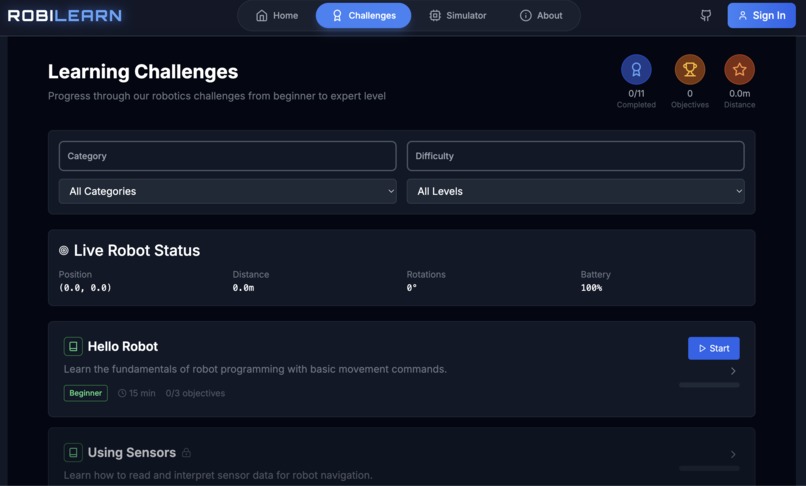
Challenges
-
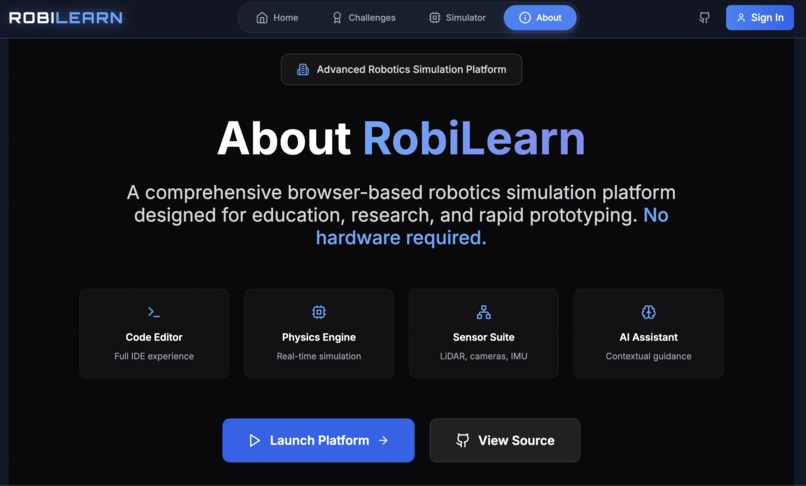
About Us
-
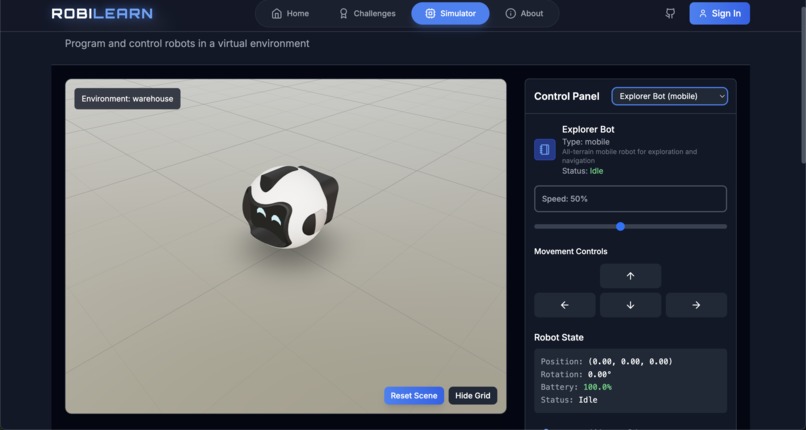
Robot Simulator
-
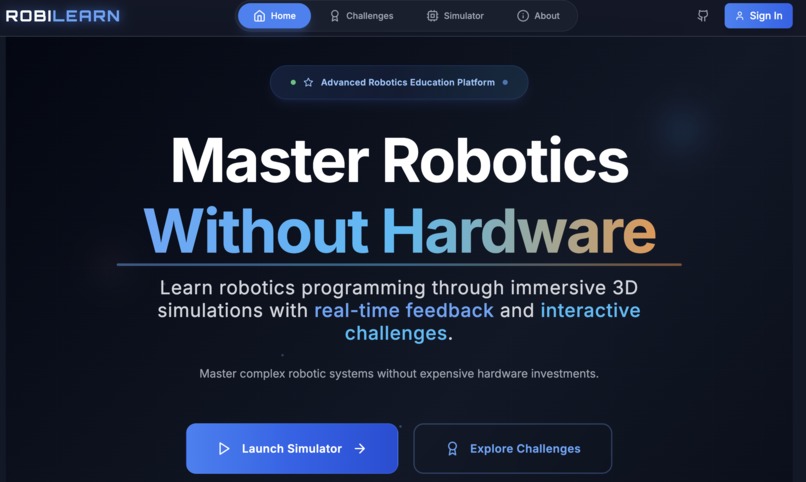
Main Page
Inspiration
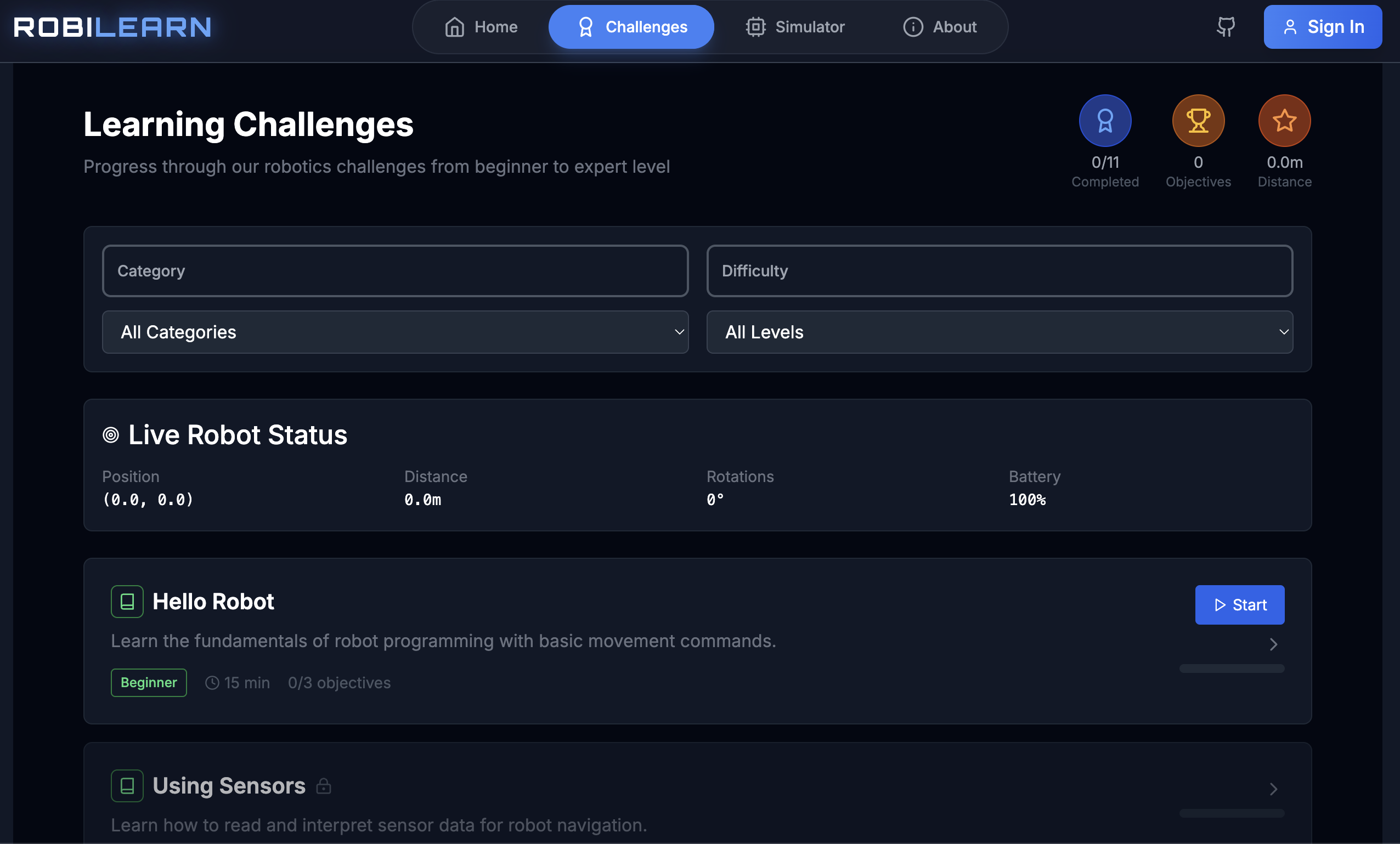
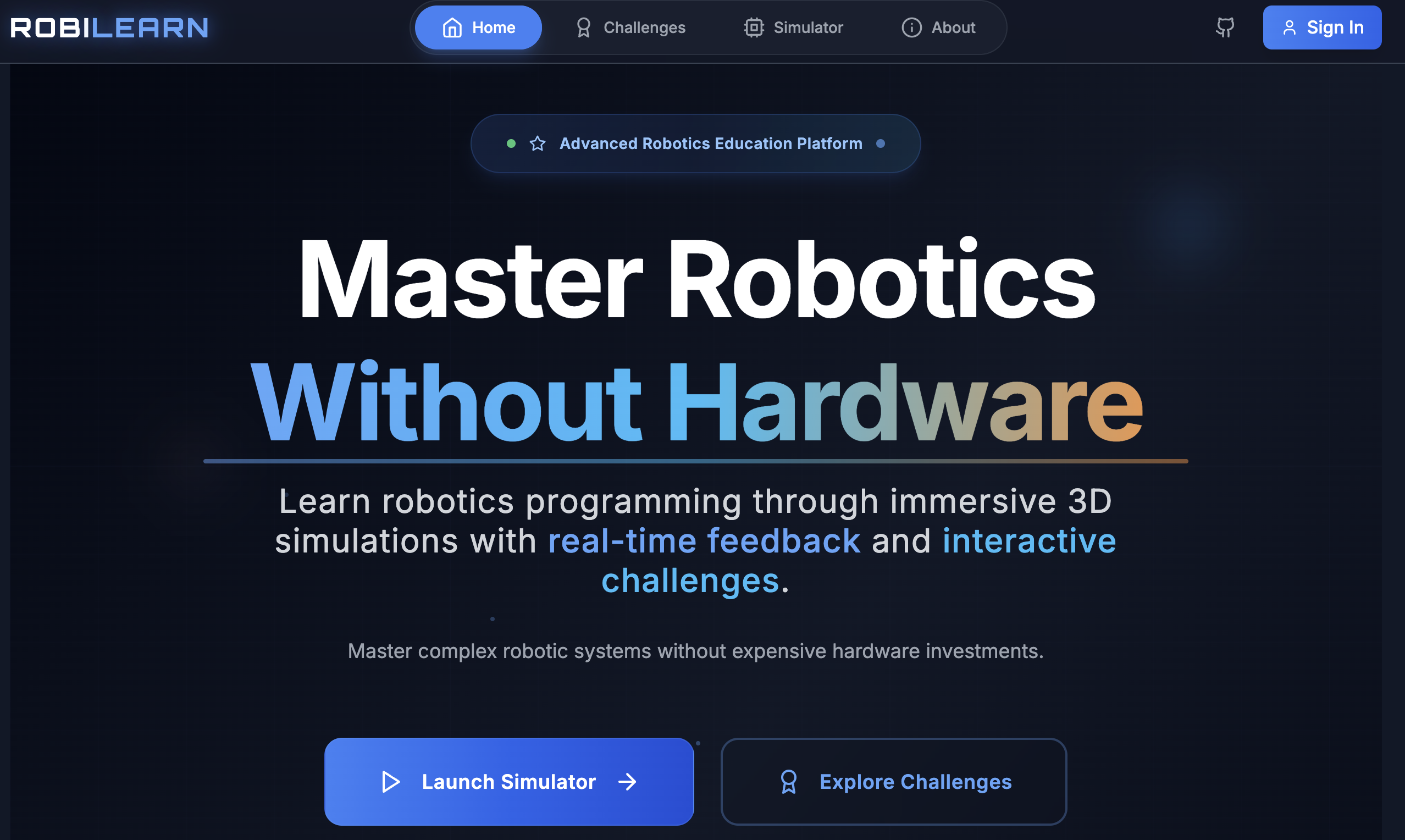
RobiLearn was born from a simple but powerful realization, learning robotics is unnecessarily hard for most students because of expensive and fragile hardware. As students ourselves, we knew how frustrating it was to want to build something but not have access to the tools. We wanted to change that. Our goal was to create a space where anyone, regardless of background or resources, could dive into robotics with nothing more than a browser. That idea became the foundation of RobiLearn.
What it does
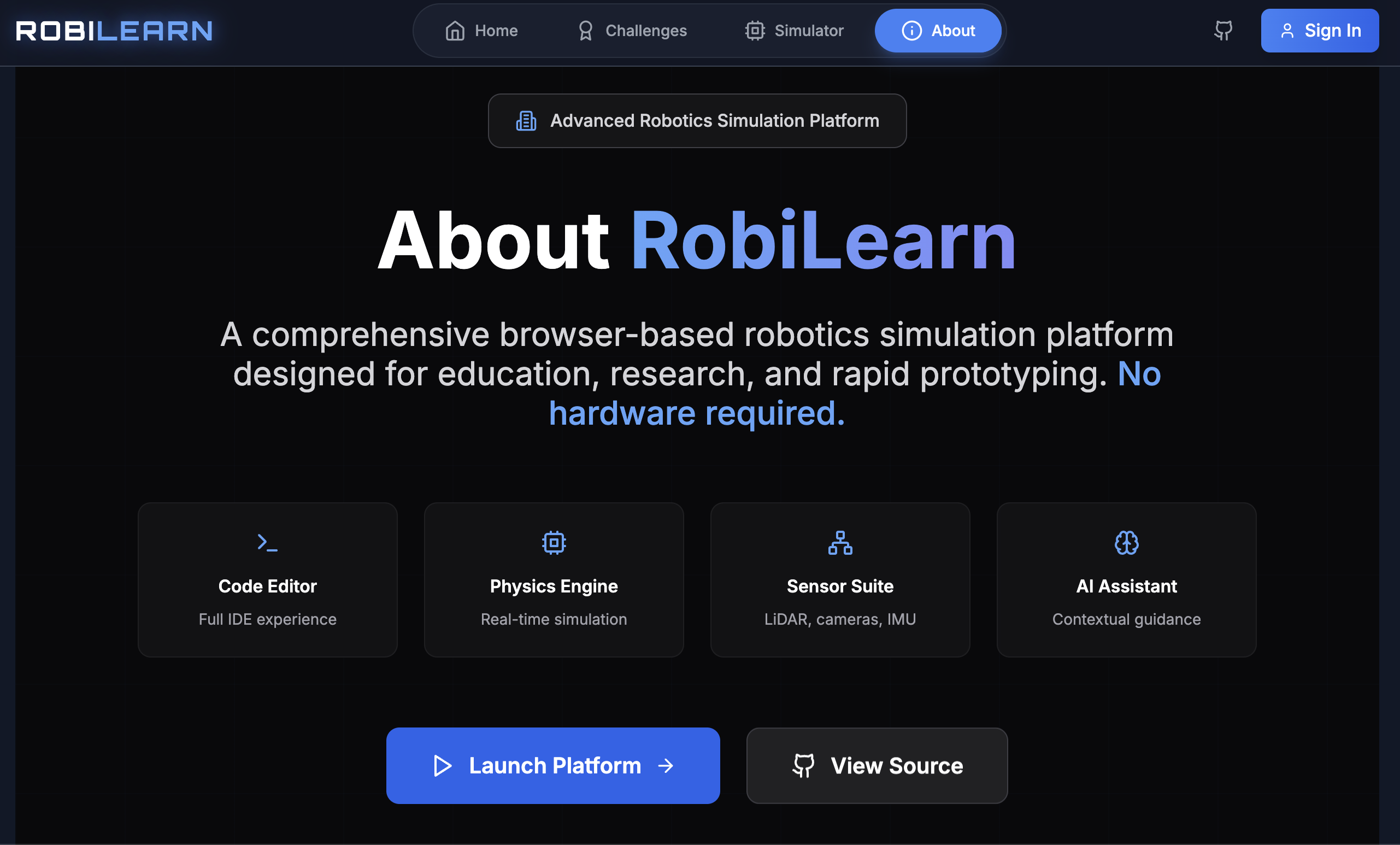
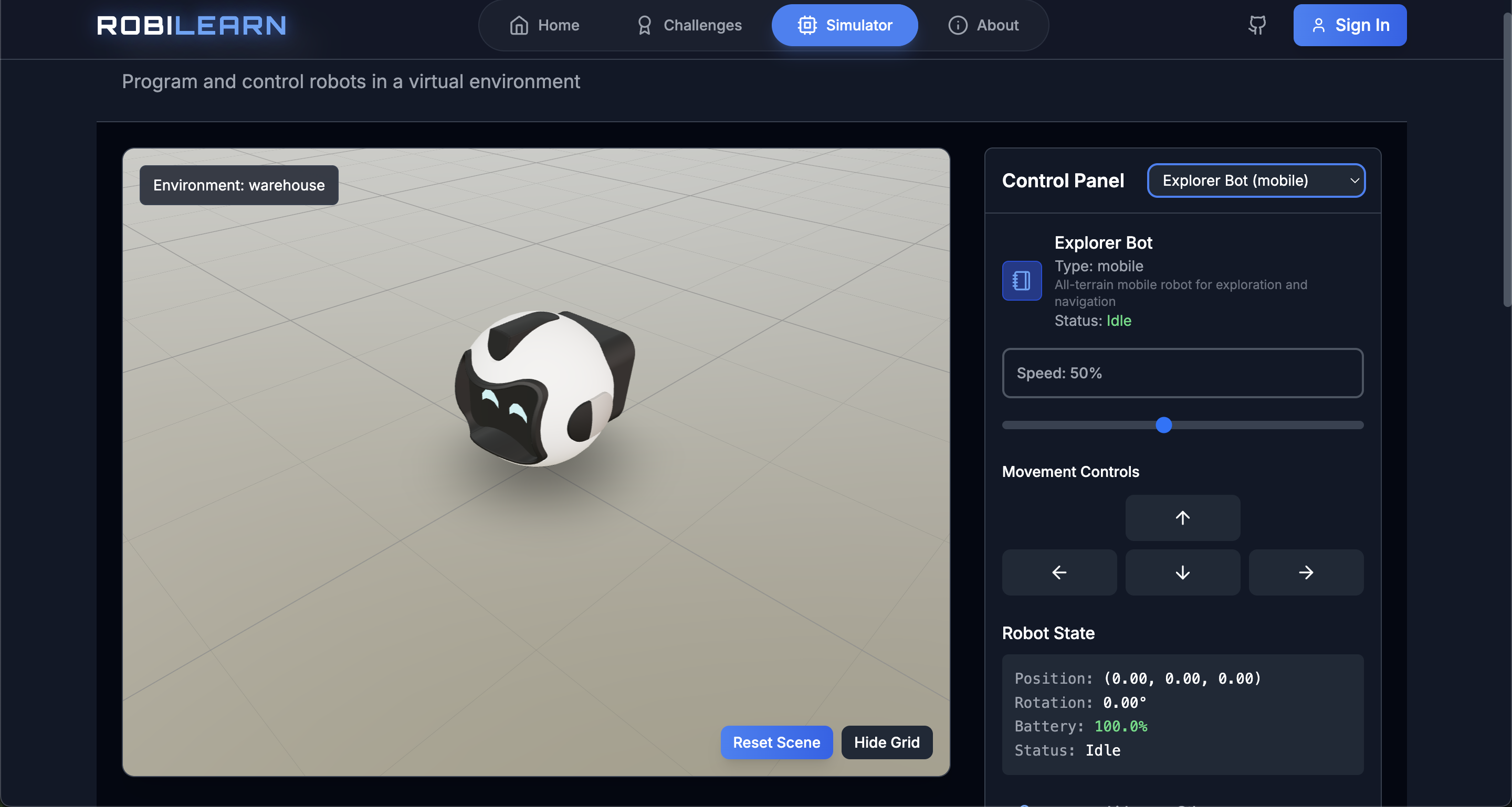
RobiLearn is an immersive browser-based robotics simulation platform that allows students, educators, and researchers to learn and practice robotics without any physical hardware. Users can program robots using natural language, block-based interfaces, or traditional code. The platform includes a powerful real-time physics engine, a wide array of sensors like LiDAR and IMU, and an AI assistant that provides intelligent coding help, debugging tips, and explanations. It’s a full robotics lab, right in the browser.
How we built it
We started by building a robust 3D simulation engine optimized for the web, capable of running smoothly at 60fps. We then integrated a suite of simulated sensors to replicate real world robotics systems. The platform supports multiple programming modes, including Javascript, visual blocks, and even natural language thanks to BOLT.AI. On top of that, we developed a progressive curriculum with hands on challenges and interactive feedback. The entire experience is designed to be modular, intuitive, and scalable across devices.
Challenges we ran into
Simulating realistic physics in a browser was one of our biggest technical hurdles. Achieving smooth performance without sacrificing accuracy required countless optimizations. Modeling sensors like LiDAR and IMUs in a believable and responsive way was also a significant challenge. We had to balance educational depth with simplicity, making sure beginners weren’t overwhelmed while still offering depth for advanced users. Cross-browser compatibility and ensuring stable performance across devices also added complexity to the development process.
Accomplishments that we're proud of
We’re proud that we’ve created a truly accessible and scalable robotics platform that runs entirely in the browser. Seeing students and educators use RobiLearn in classrooms and labs, and hearing that it helped them understand robotics better, has been incredibly rewarding. The integration of AI-powered programming support has also been a major achievement, it bridges the gap between concept and code in a way that’s empowering for learners.
What we learned
Throughout this journey, we’ve learned that accessibility drives innovation. When you remove barriers, people surprise you with what they can build and learn. We also gained a deeper appreciation for user-centered design, it’s not just about features, it’s about how those features feel to use. Finally, we learned how powerful real-time feedback can be in helping learners stay engaged and motivated.
What's next for RobiLearn
Our next steps include expanding the robot library with new models like humanoids and wheeled manipulators, as well as integrating machine learning tools for vision and decision-making. We’re also working on more structured educator resources and community led challenges to make learning even more collaborative. Ultimately, we want RobiLearn to become the go-to robotics platform for schools, universities, and hobbyists around the world, a place where anyone can learn, build, and innovate in robotics without limits.


Log in or sign up for Devpost to join the conversation.