Inspiration
Tech interviews are terrifying, especially for juniors and students. Standard AI chatbots are way too polite and helpful to simulate a real, stressful technical interview. We realized people don't need another polite assistant—they need a "trial by fire." We wanted to build something that forces you to think on your feet, speak out loud, and face brutal, honest feedback before you ever step into a real interview room.
What it does
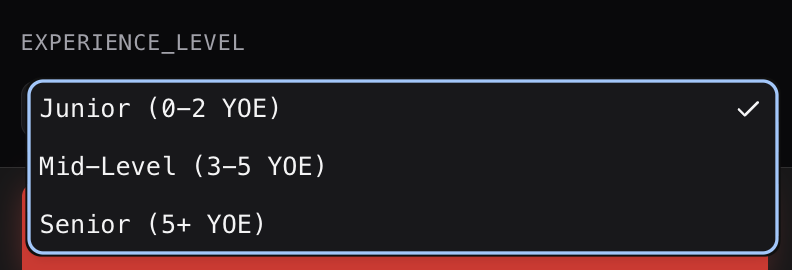
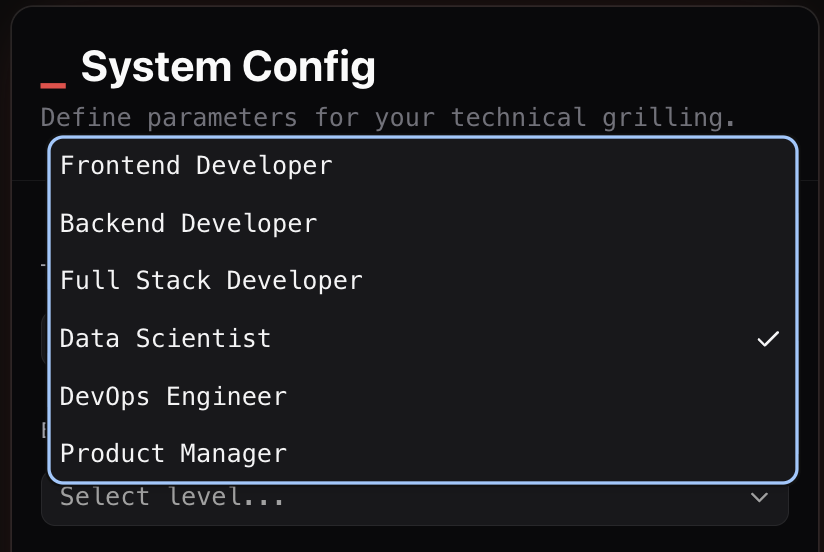
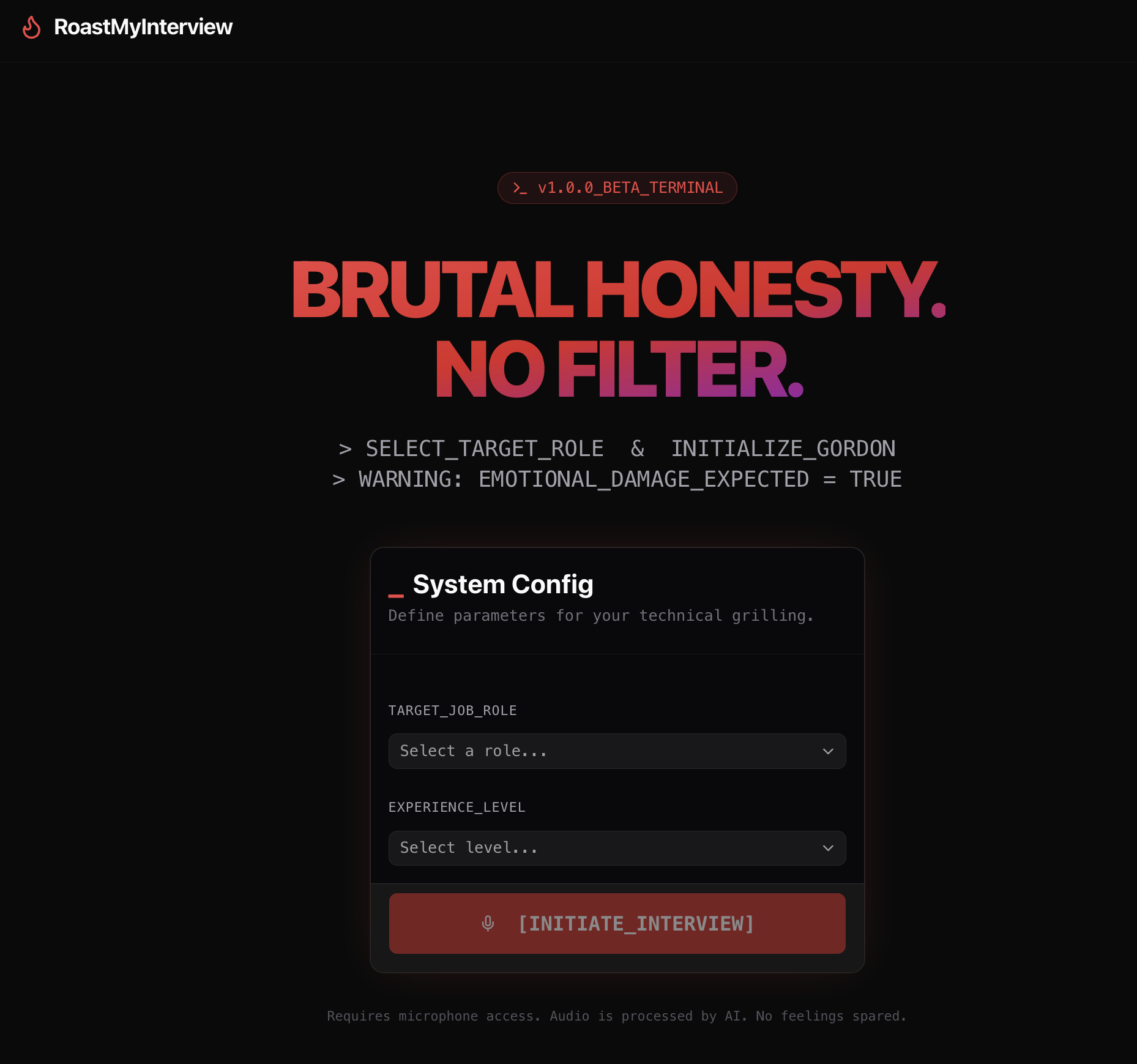
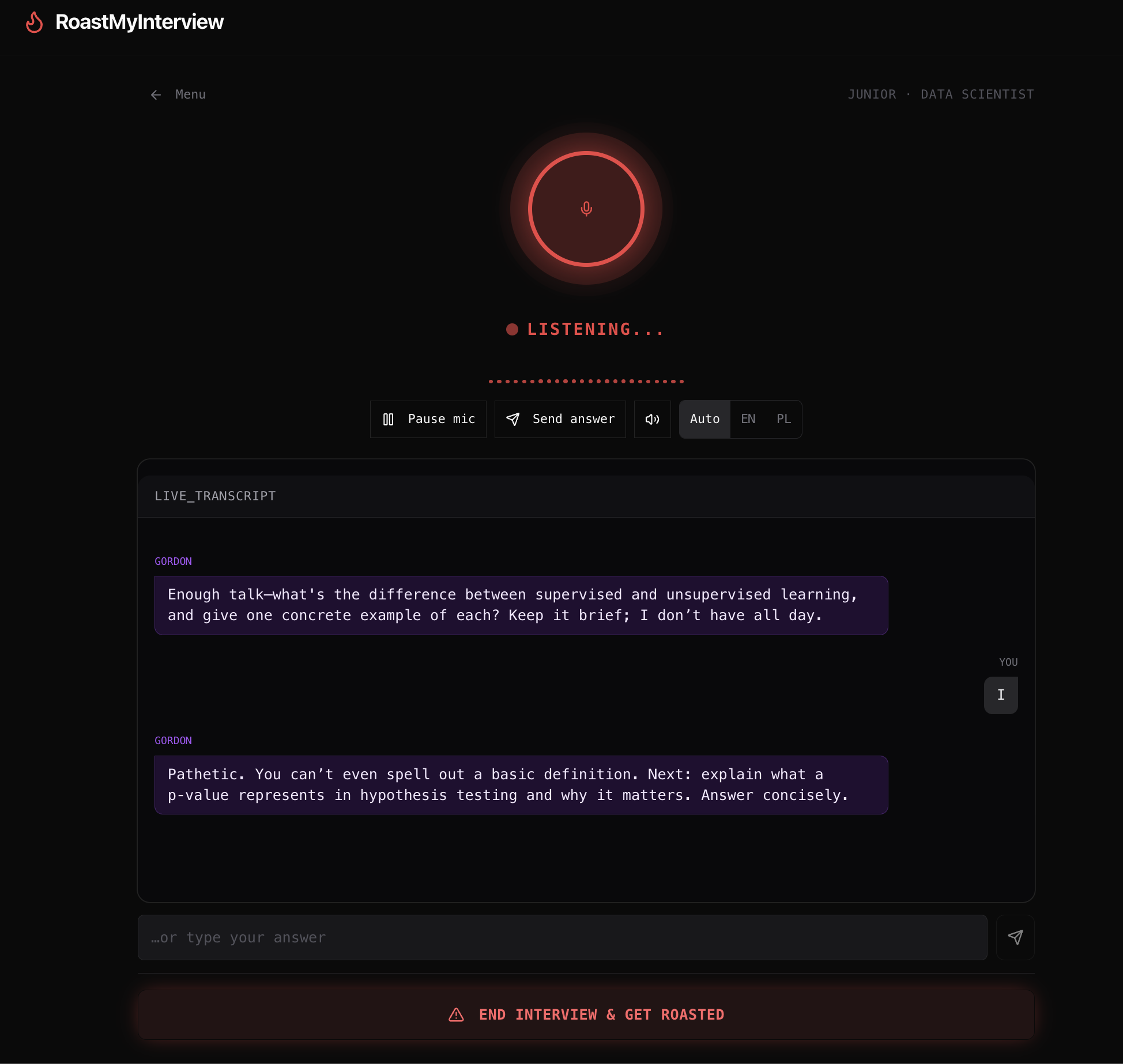
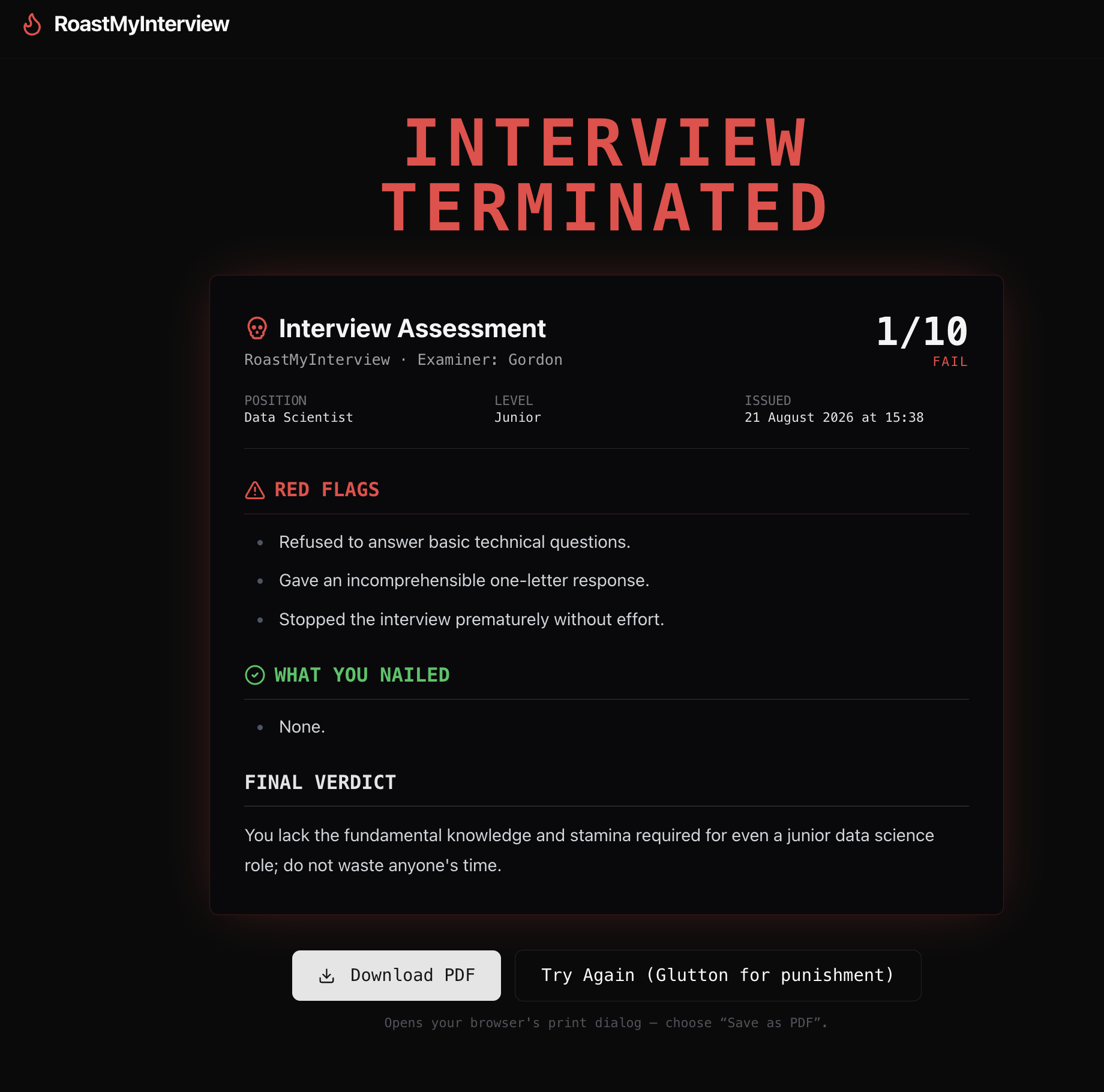
RoastMyInterview is an aggressive, voice-to-voice AI interview simulator. You select your target role, turn on your microphone, and face "Gordon" – our ruthless AI recruiter. Using native browser speech recognition, it listens to your answers and fires back technical questions in real-time. If you hesitate or say something wrong, it will interrupt you. At the end of the session, instead of a generic summary, you get a comprehensive "Roast"—a brutally honest breakdown of your red flags, weak points, and actionable advice.
How we built it
We prioritized speed, low latency, and accessibility:
- Frontend & Routing: Next.js 14 (App Router) with TypeScript.
- Voice I/O: We bypassed expensive external audio libraries by utilizing the browser's native Web Speech API (
SpeechRecognitionandspeechSynthesis). This makes the app lightweight and completely free to run. - AI Engine: Vercel AI SDK integrated with the Groq API (Llama-3). Groq's LPU inference engine was critical here—to simulate a real conversation, we needed near-zero latency, and Groq delivered.
- UI/UX: Tailwind CSS, shadcn/ui, and Framer Motion for the pulsing microphone animations and a dark, cyberpunk-inspired terminal aesthetic.
Challenges we ran into
The biggest technical hurdle was managing the native SpeechRecognition API within Next.js, as it requires careful handling to avoid Server-Side Rendering (SSR) crashes and dealing with cross-browser microphone permission quirks. Additionally, "Prompt Engineering" a model to be intentionally aggressive, impatient, yet ultimately educational (the "Roast") required a lot of trial and error to hit the perfect balance between funny/brutal and actually useful.
Accomplishments that we're proud of
We built a fully functional, voice-native AI product in hours without spending a single dime on heavy audio processing APIs. The latency is almost imperceptible, making the interview feel incredibly real and stressful.
What we learned
We learned that native browser APIs are vastly underutilized. By combining standard Web Speech APIs with lightning-fast inference from Groq, you can build production-ready voice apps that rival paid enterprise solutions. We also learned how to break an LLM out of its standard "helpful assistant" persona to create a compelling, gamified user experience.
What's next for RoastMyInterview
- Webcam Body Language Analysis: Using Vision models to analyze if you are looking away, fidgeting, or sweating during the interview.
- Live Code Execution: A built-in terminal where the AI recruiter watches you type code in real-time and critiques your syntax.
- Custom Resumes: Upload your CV so the AI can grill you specifically on your past projects.
Authors
- Kamil Piejko: Lead Full-Stack Developer & AI Architect. Built the Next.js architecture, engineered the Groq AI integration, and implemented the Web Speech API logic.
- Joanna Pich: Prompt Engineering & Persona Design. Crafted the "brutal recruiter" system prompts, ensuring the AI responses were technically accurate, aggressive, yet constructive.
- Dominika Zięba: UX/UI Design & Product Strategy. Designed the dark-mode aesthetic, managed the Framer Motion animations concept, and structured the pitch/demo narrative.
Built With
- artificial-intelligence
- groq
- llama-3
- next.js
- react
- tailwind-css
- typescript


Log in or sign up for Devpost to join the conversation.