-
-
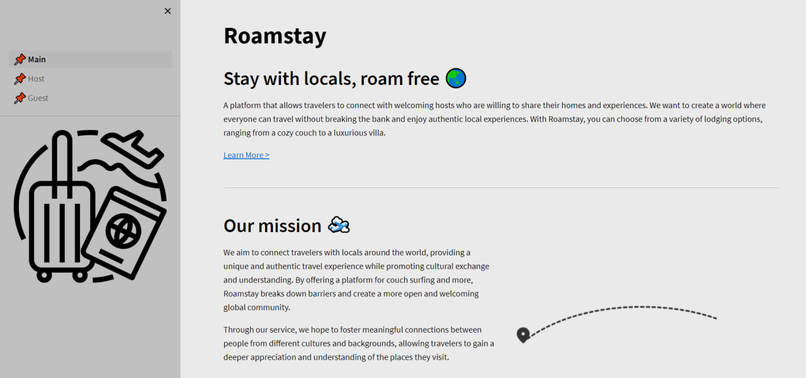
Main Page
-
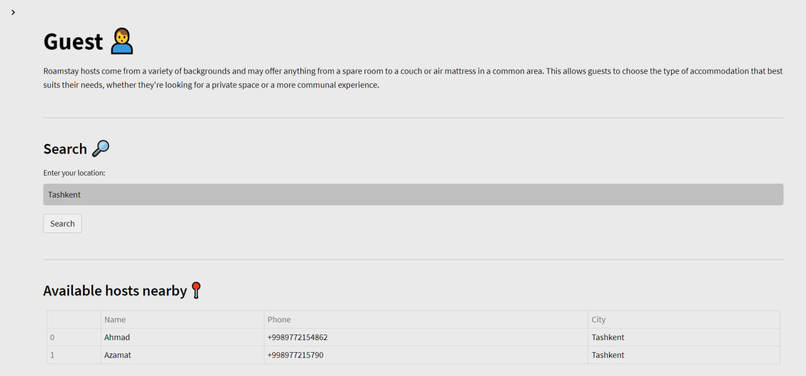
Gues Page
-
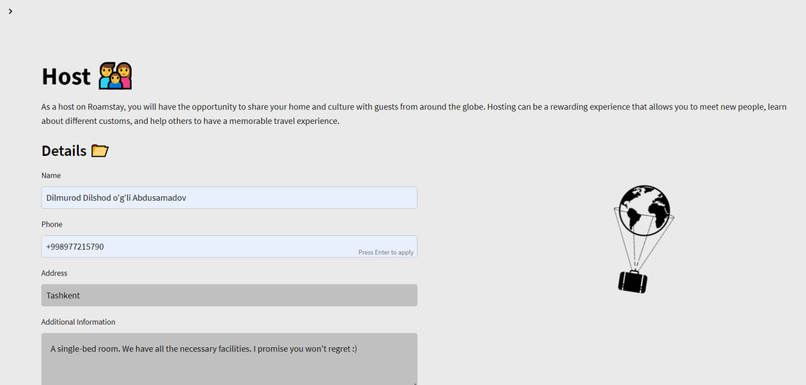
Host Page 1
-
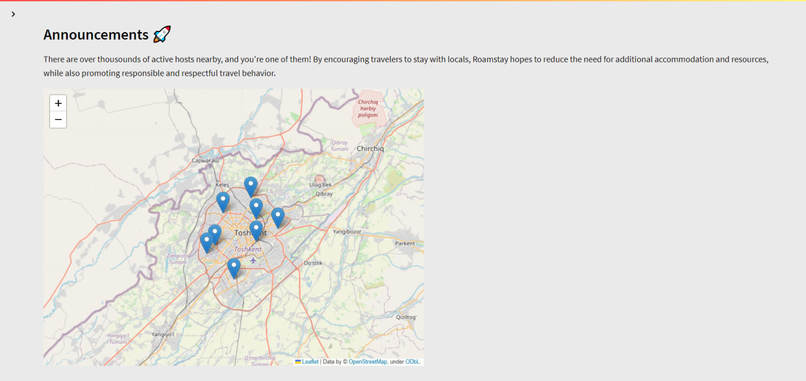
Host Page 2
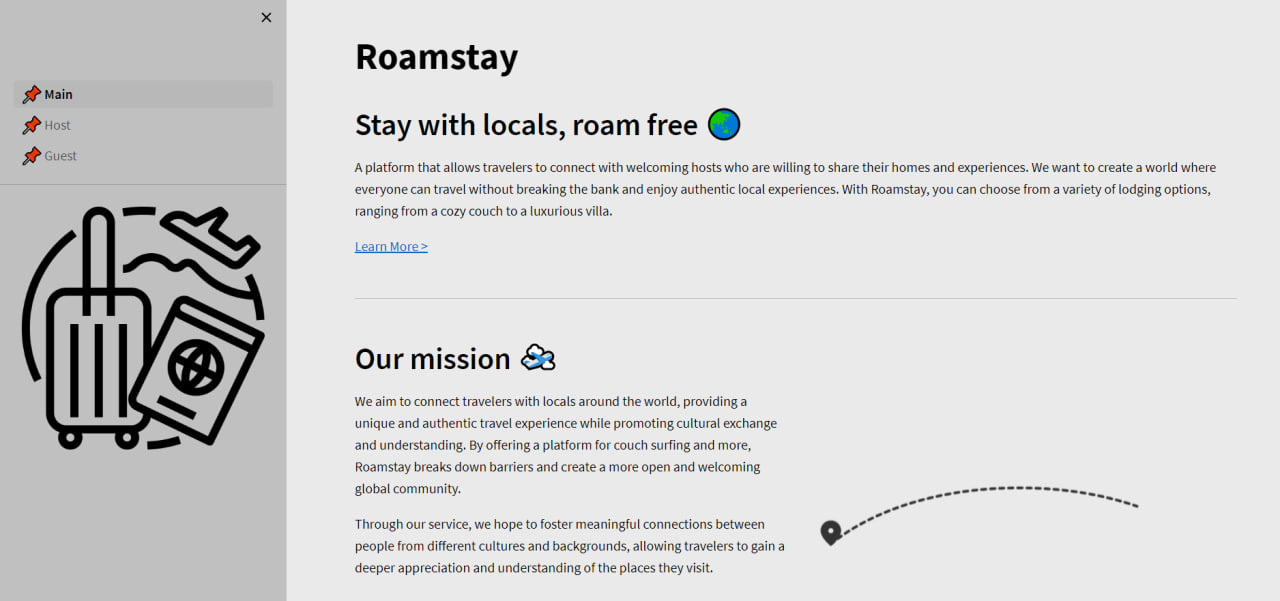
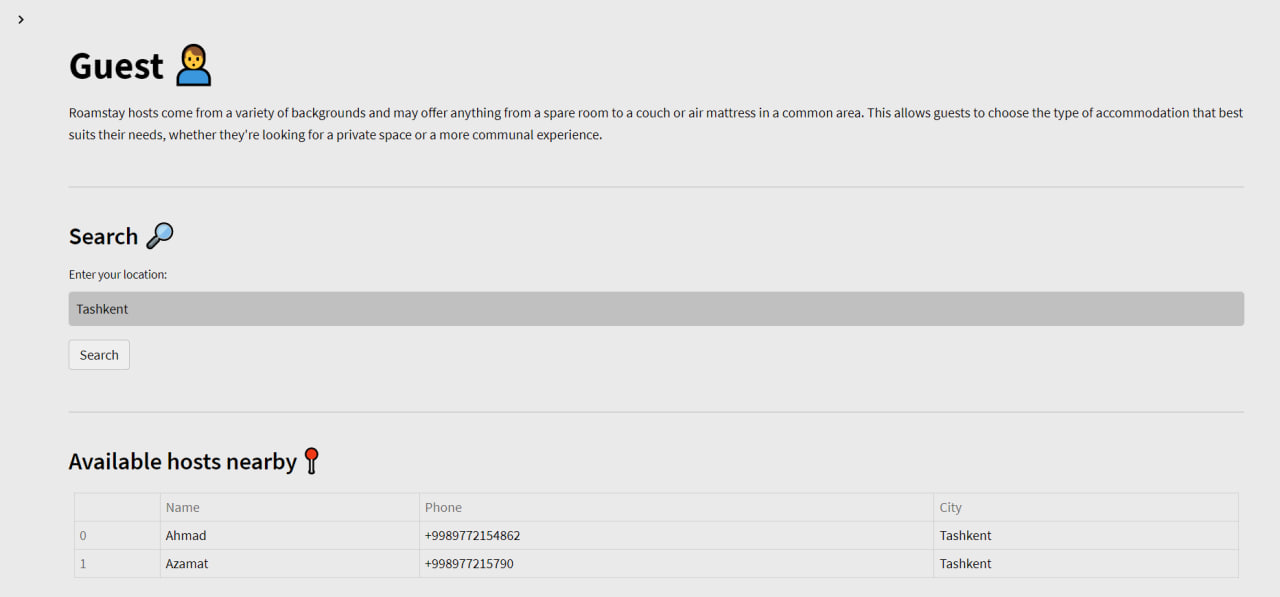
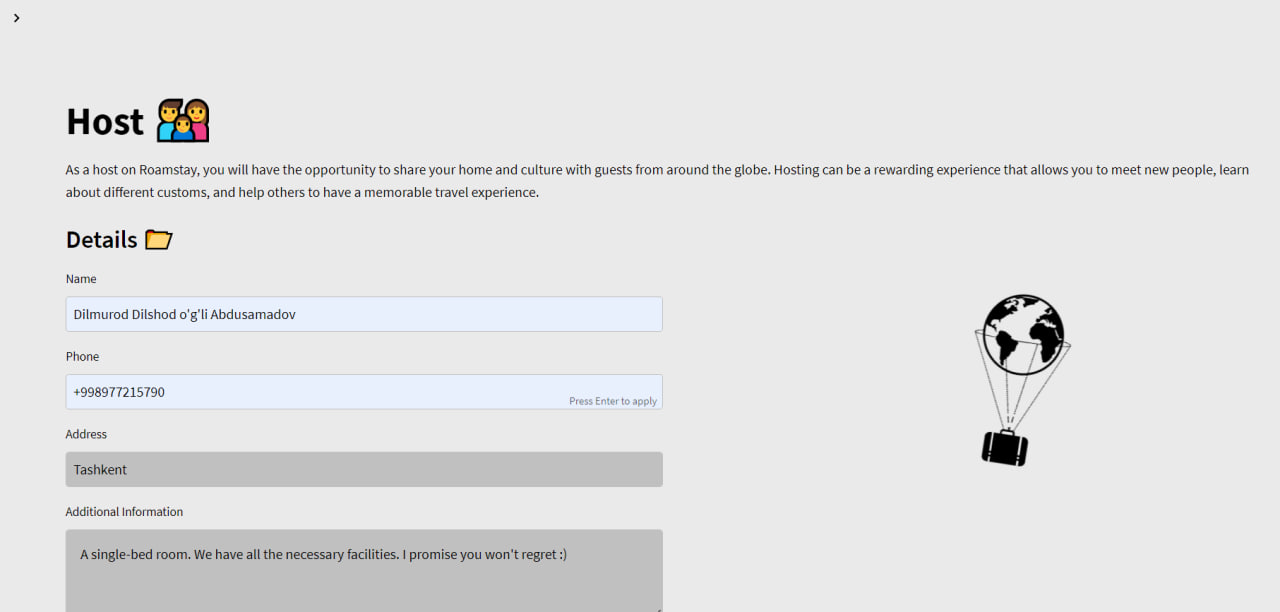
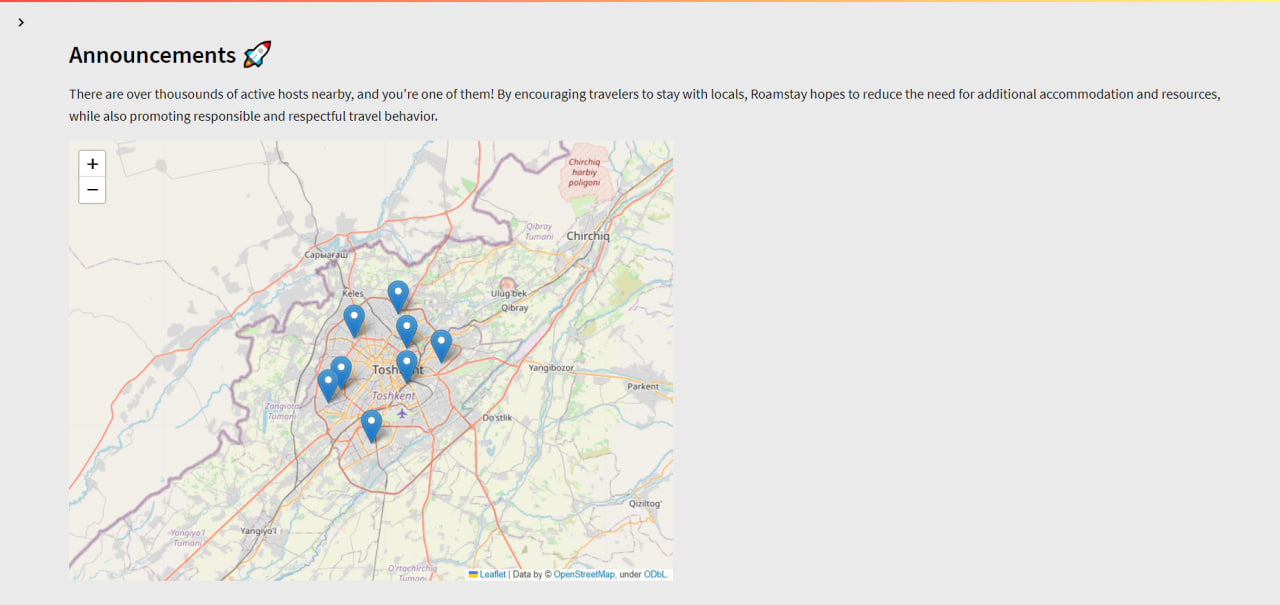
Inspiration
My friend and I noticed that many tourists visiting our country were struggling to find suitable and affordable accommodation. It was disheartening to see travelers spending their precious time and money searching for a place to stay rather than enjoying the sights and sounds of Uzbekistan. We came up with the idea of Roamstay, a platform that connects travelers with local hosts who can offer a comfortable place to stay and a unique cultural experience.
What it does
With Roamstay, travelers can discover new areas and cultures, make lifelong connections, and create unforgettable memories. Whether it be for a day or more, the Roamstay always helps to find a place for spending the night over. Our goal is to provide an alternative to expensive hotels and impersonal vacation rentals through a user-friendly web application.
How we built it
Our team created the Roamstay application using various Python libraries that helped us make the UI more user-friendly and efficient. We utilized a wide variety of open-source libraries available, such as folium, pandas, streamlit, requests, etc:
Challenges we ran into
During the development of the Roamstay application, we encountered several challenges that tested our team's problem-solving abilities and technical expertise. One of the most significant challenges we faced was data integration. Yet, another challenge we encountered was designing a user-friendly interface that was easy to navigate.
What we learned
Despite these challenges, our team was able to overcome these obstacles through collaboration, research, and a sprinkle of creativity. By the end of the day, we have developed a couch-surfing web application that was not only visually appealing but also user-friendly, efficient, and scalable. In creating Roamstay, we learned about the importance of community building, UI/UX design, and the challenges and opportunities that arise in the travel and tourism industry.


Log in or sign up for Devpost to join the conversation.