-
-
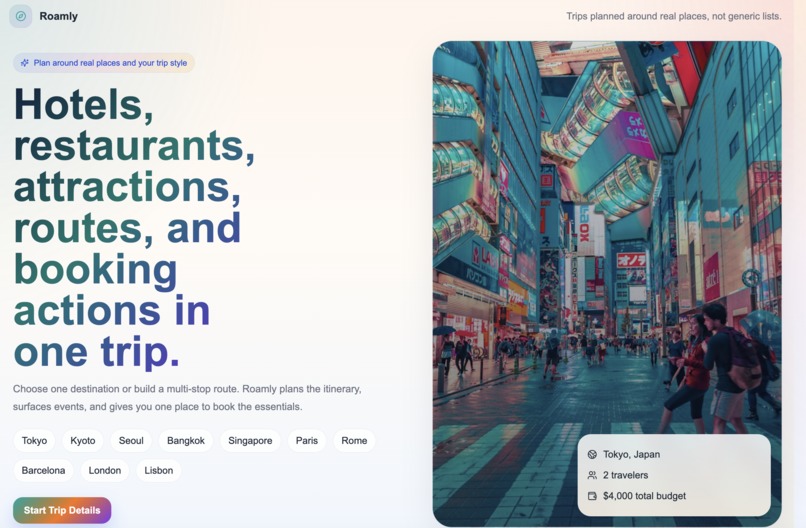
Front Page
-
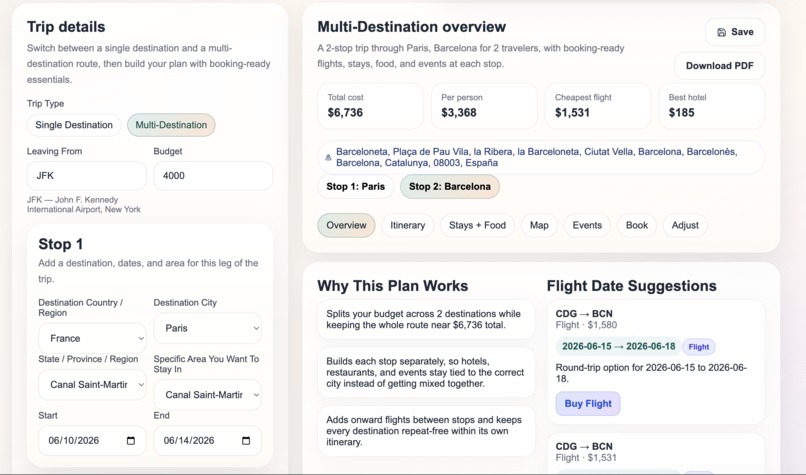
Trip Details
-
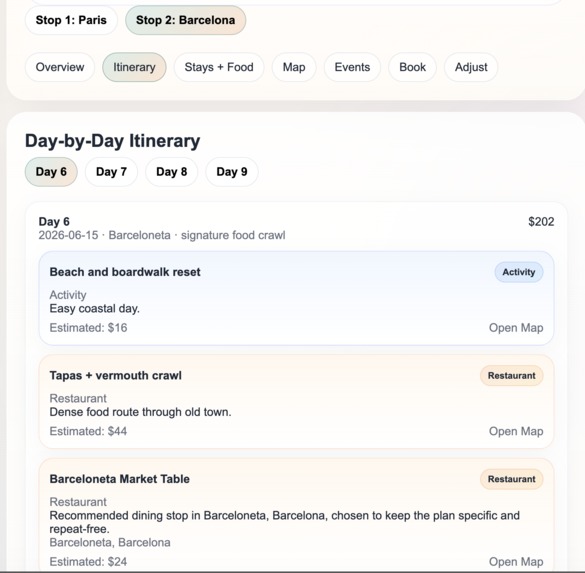
Day-by-Day Itinerary
-
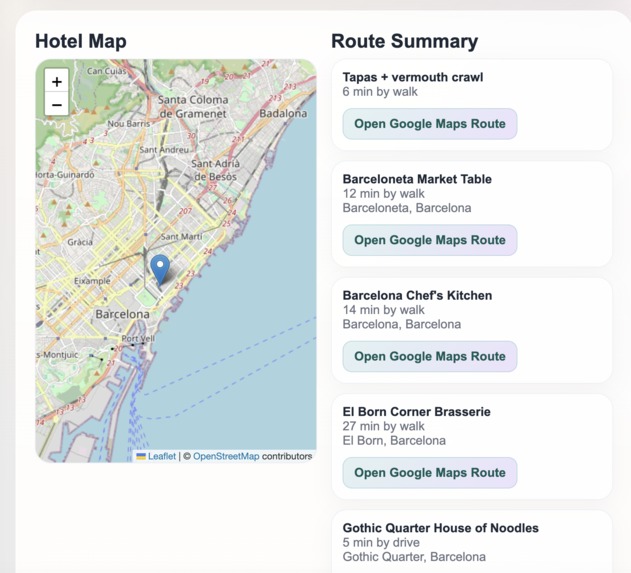
Maps
-
Booking
Inspiration
The inspiration for Roamly came from the sheer exhaustion of planning group and multi-city trips. As students, we are often incredibly budget-conscious, and the inefficiency of cross-referencing flexible flight dates, comparing neighborhoods, and finding places that actually cater to specific needs usually requires dozens of open browser tabs. Most existing tools are either hyper-focused on one vertical (like just flights or just hotels) or they generate generic, un-actionable inspiration. We wanted to build a single, unified "operating system" for travel that actually executes the planning process.
What it does
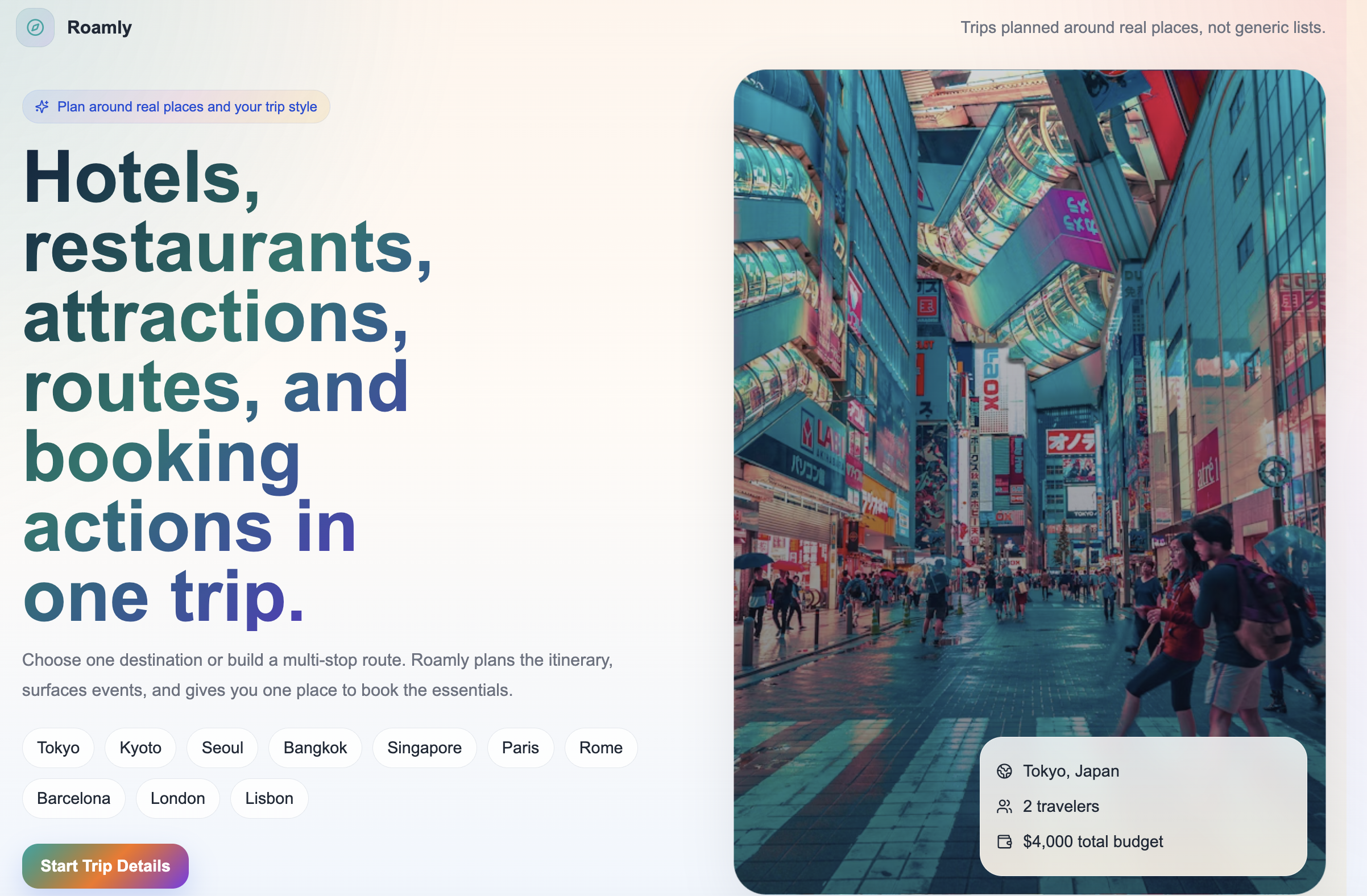
Roamly is an intelligent travel planning platform that takes users from “I want to go here” to a complete, bookable trip plan in minutes. It serves as an AI-powered travel agent that handles both single and complex multi-destination trips.
Instead of manual research, Roamly generates a visually structured, tabbed workflow that provides:
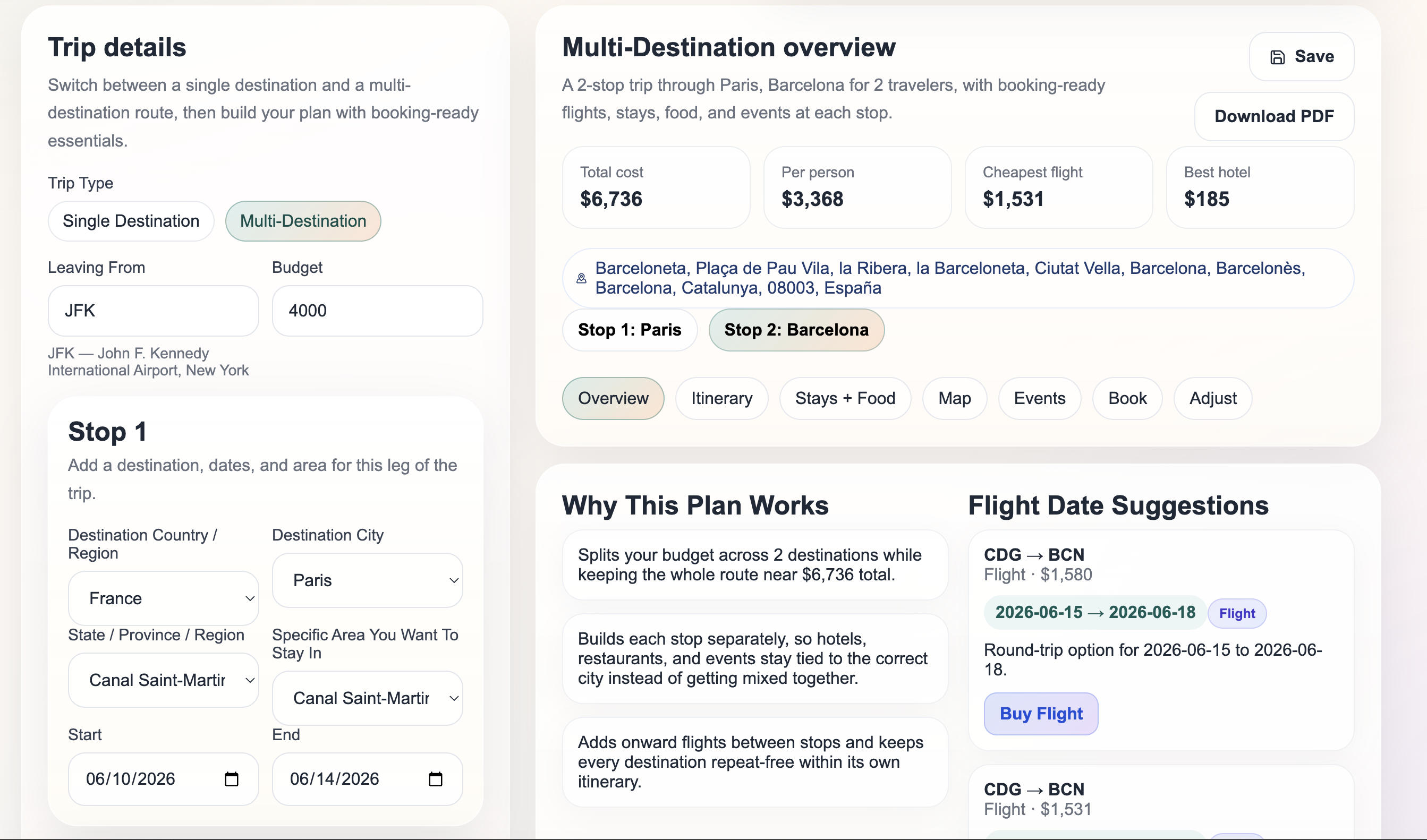
Smart Flight Planning: Date-flexible, budget-aware flight suggestions with direct booking links.
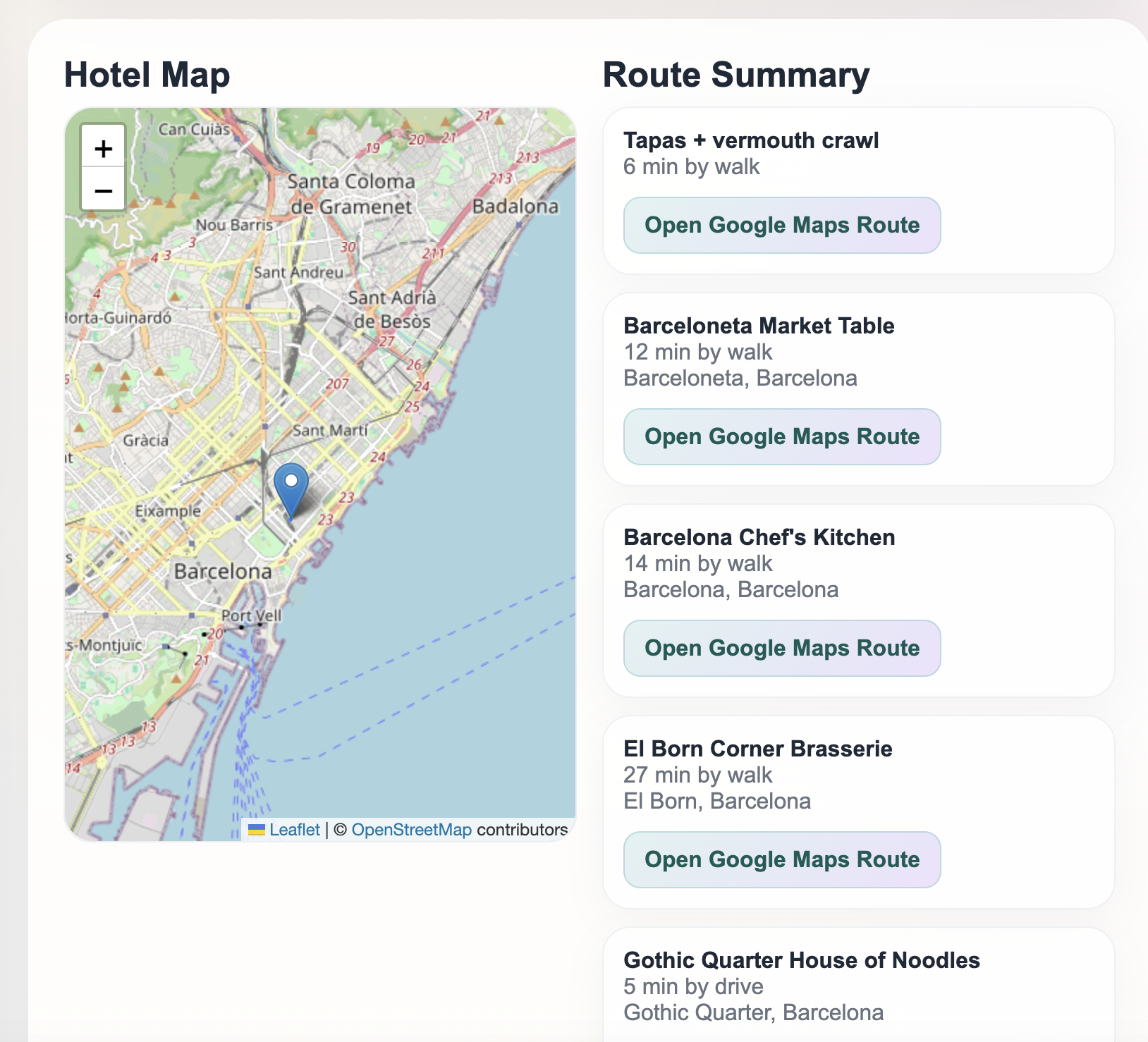
Location-Aware Discovery: Affordable hotel recommendations and nearby restaurant suggestions based on the destination context.
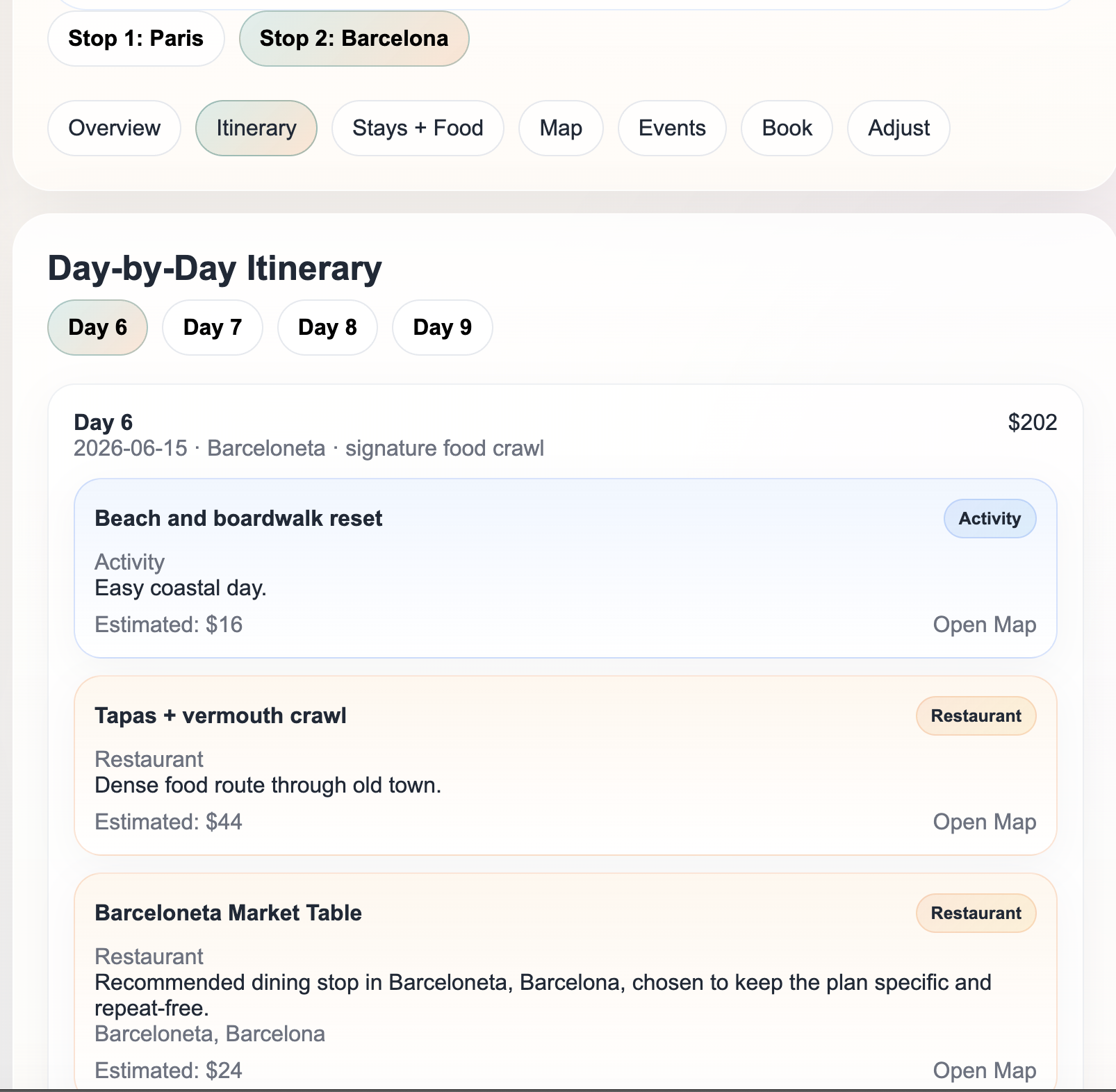
AI Itinerary Generation: A day-by-day, dynamically categorized schedule that avoids redundant spots.
Live Events Integration: Concerts, sports, and live entertainment happening during the exact dates of the trip.
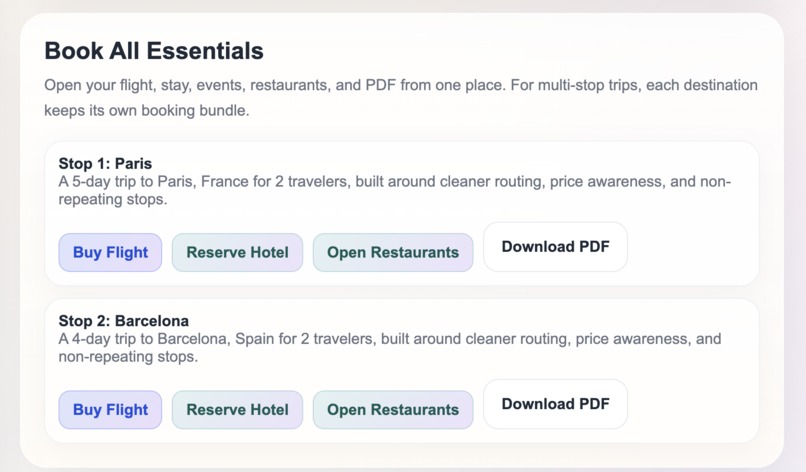
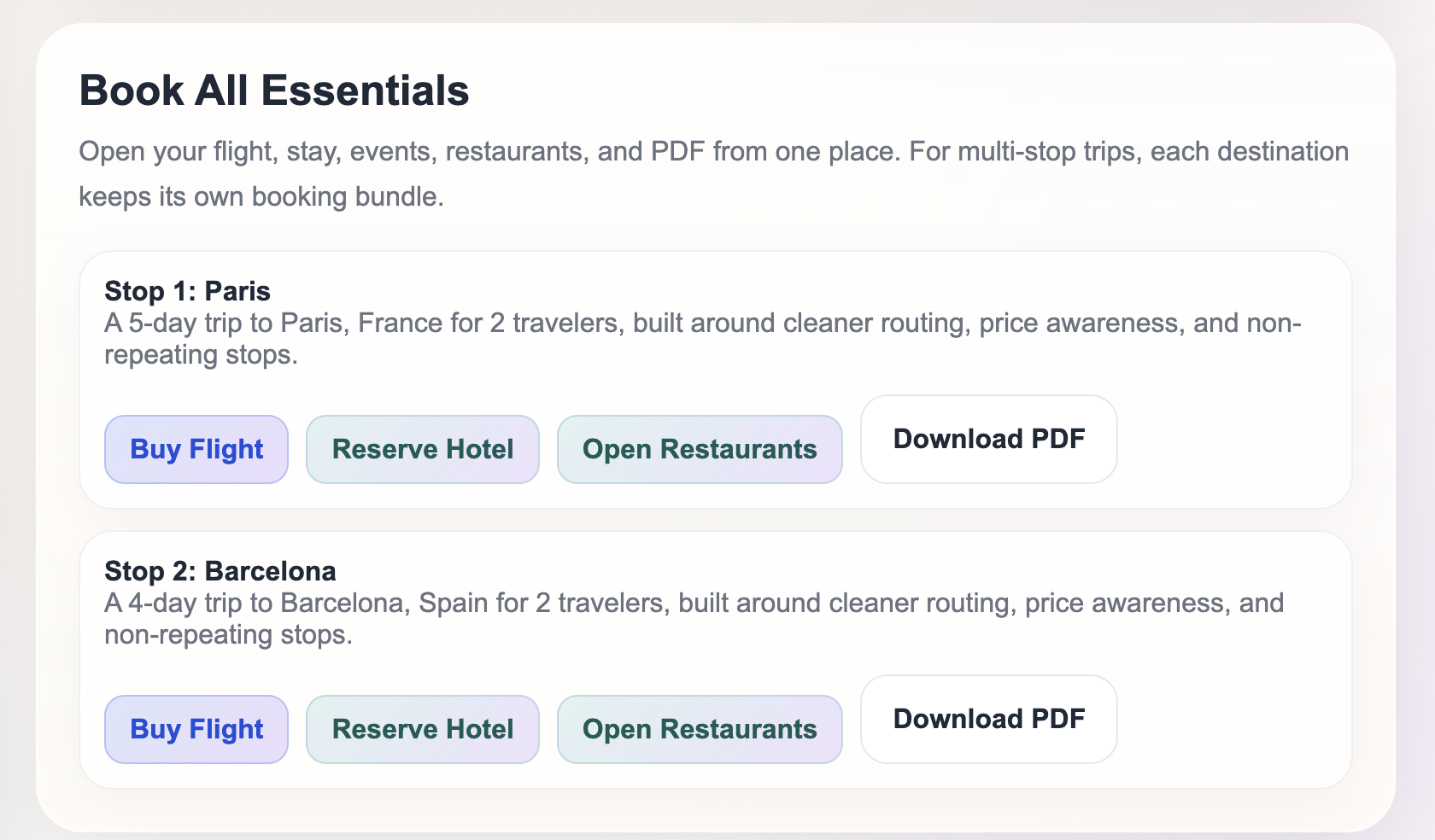
Centralized Execution: Direct booking flows for all essentials and a clean, downloadable PDF trip summary.
How we built it
We built the frontend using Next.js, React, and TypeScript, managed by pnpm for fast and efficient package management.
For the core intelligence, we utilized Google GenAI to process user preferences and generate the highly personalized, day-by-day itineraries. We used Zod to ensure the AI's output was strictly validated and structured properly for our UI.
To bring the data to life, we integrated several APIs: the Ticketmaster API to pull in live, date-specific events, and Google Maps/Flights integrations to handle route-aware booking links and location context. Finally, we implemented Leaflet / React-Leaflet for interactive mapping and jsPDF to allow users to export their master trip overview into a clean, portable document.
Challenges we ran into
Getting an AI to generate creative yet highly structured, consistently formatted JSON data for our itineraries required rigorous prompt engineering and strict schema validation using Zod.
Managing asynchronous calls across Google GenAI, Ticketmaster, and mapping APIs without slowing down the user experience or causing UI bottlenecks was a significant architectural challenge.
Designing a seamless state management system to handle the complex variables of multi-city/multi-country trips
Accomplishments that we're proud of
We are incredibly proud that Roamly is not just a "trip ideas" app. By successfully integrating practical booking actions and live event tickets, we turned it into a true decision-making and booking workflow tool. We managed to condense a massive amount of data (flights, hotels, maps, events, and daily itineraries) into a clean, tabbed, and visually structured planning workflow that completely eliminates "planning fatigue." Lastly, implementing the jsPDF export feature so users can actually take their AI-generated itineraries offline and on the go.
What we learned
Surviving Our First Hackathon: As our first time competing in a hackathon, we learned what it actually takes to build and ship a product in a high-pressure, sleep-deprived environment. It was an incredible crash course in time management and scoping a project down to its core features.
Before this weekend, collaborative version control was a bit of a mystery. We learned the hard way (and the rewarding way) how to push projects to GitHub, manage different branches, and navigate the inevitable merge conflicts that happen when multiple people are touching the same code.
We learned how to actually work together as a cohesive development team. This meant figuring out how to delegate tasks effectively between the frontend UI and the API integrations, and how to communicate constantly so our individual pieces would seamlessly connect at the end.
We realized that building software from scratch isn't about knowing everything perfectly from the start. We had to figure things out on the fly, read documentation under a time crunch, and lean on each other to debug issues.
What's next for Roamly
Our vision is for Roamly to become the standard operating system for modern trip planning. Moving forward, we plan to implement:
Real-time multiplayer features so friend groups can vote on AI-suggested itinerary items and split costs.
Allowing Roamly to remember past trips and highly specific user preferences to make future generations even faster.
Incorporating hyper-local transit data (like subway or train routes) to bridge the gap between multi-city travel and on-the-ground navigation.


Log in or sign up for Devpost to join the conversation.