-
-
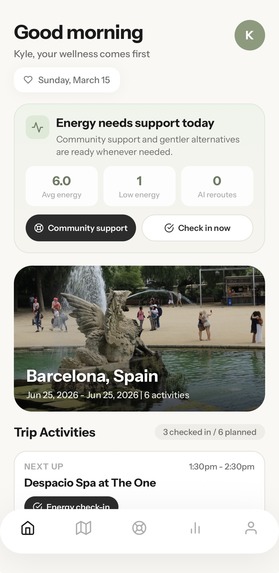
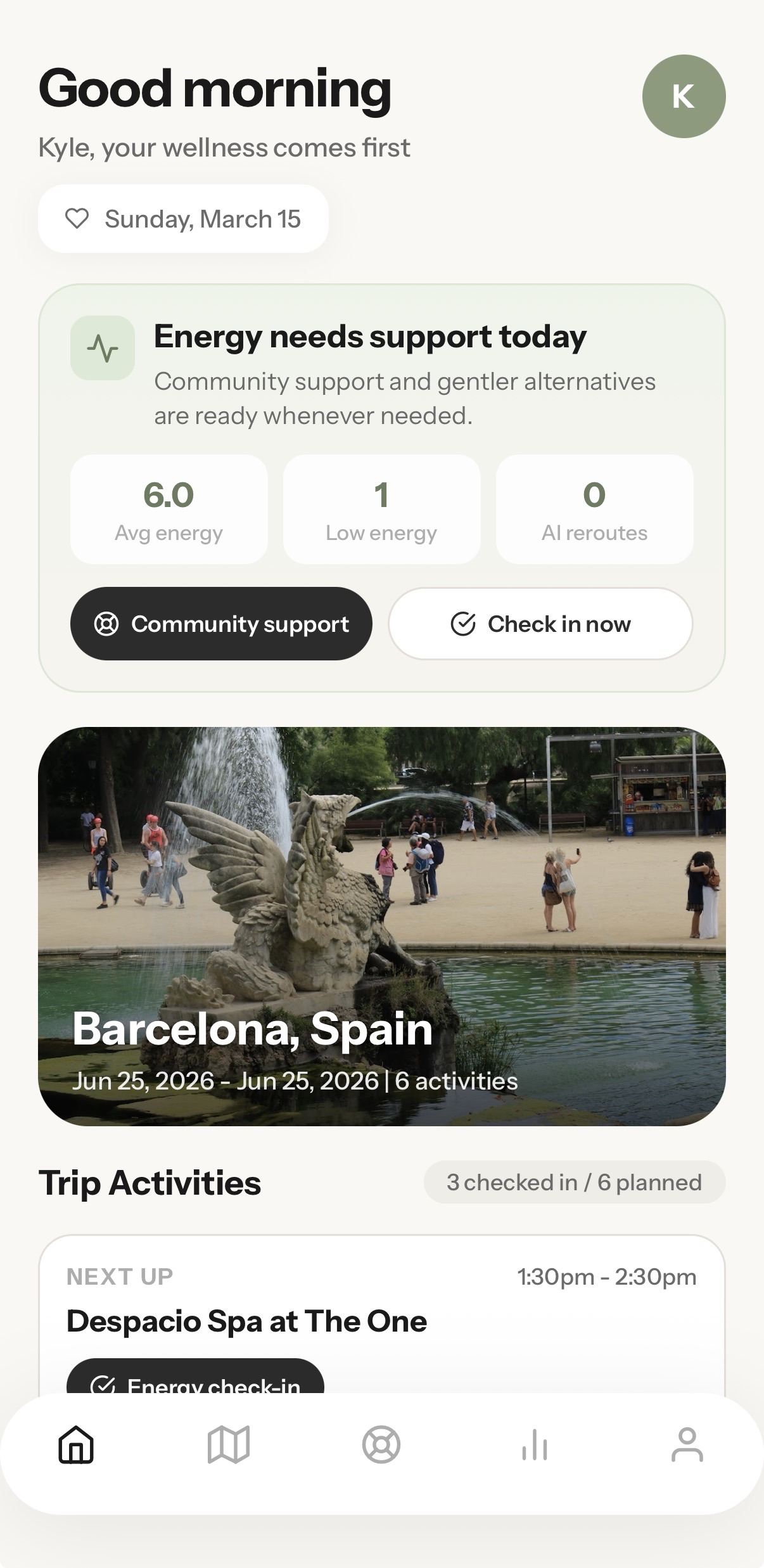
roamio's home page
-
-
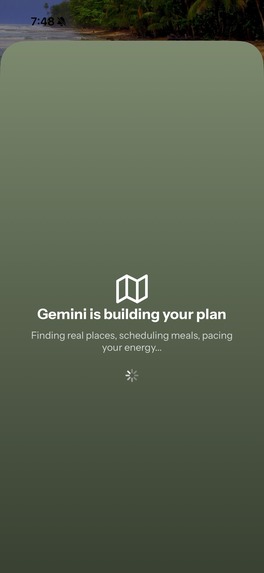
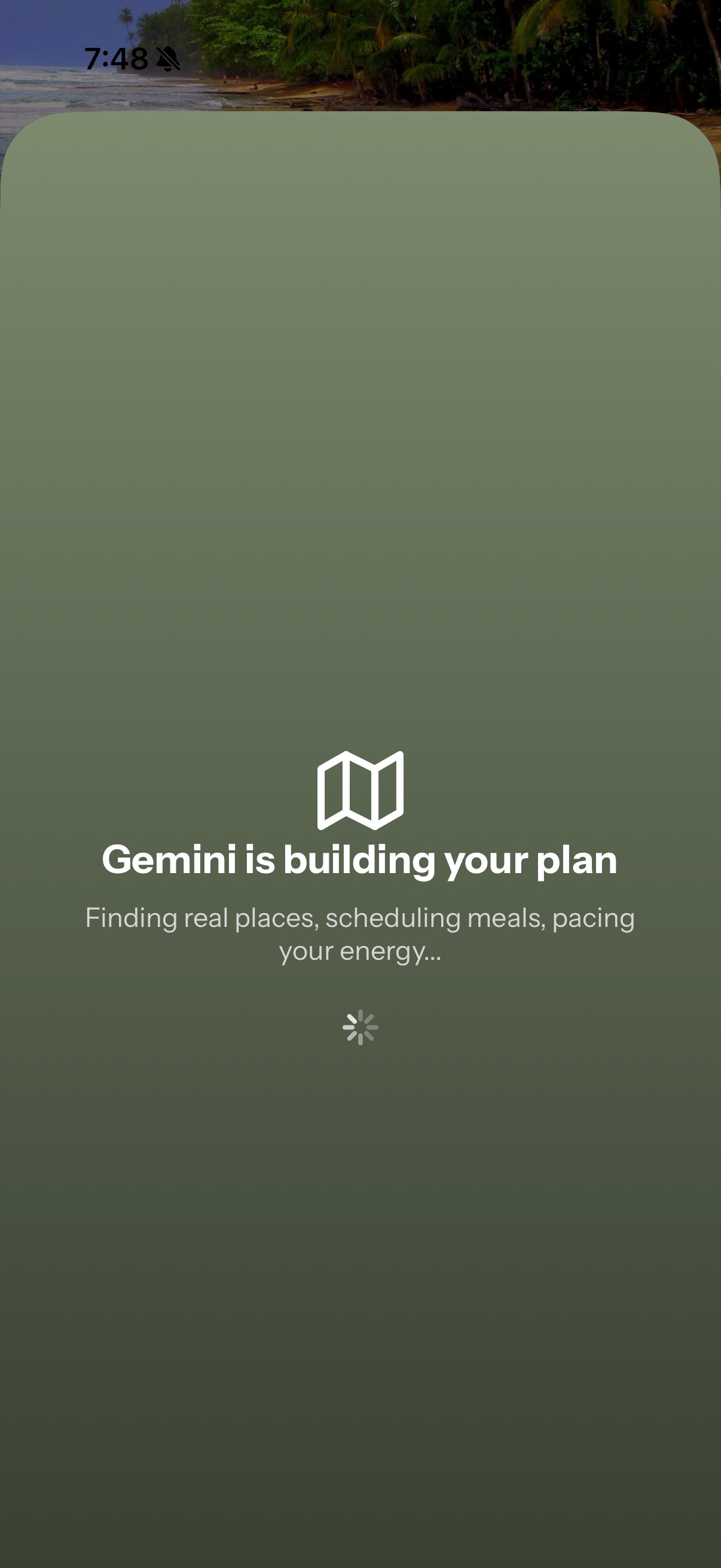
gemini planning your trip!
-
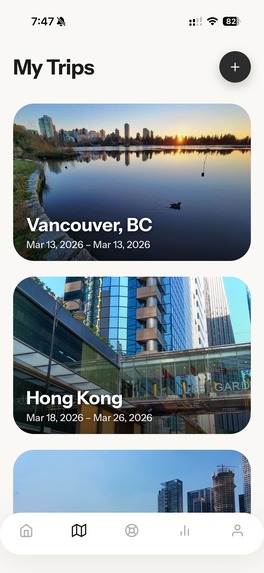
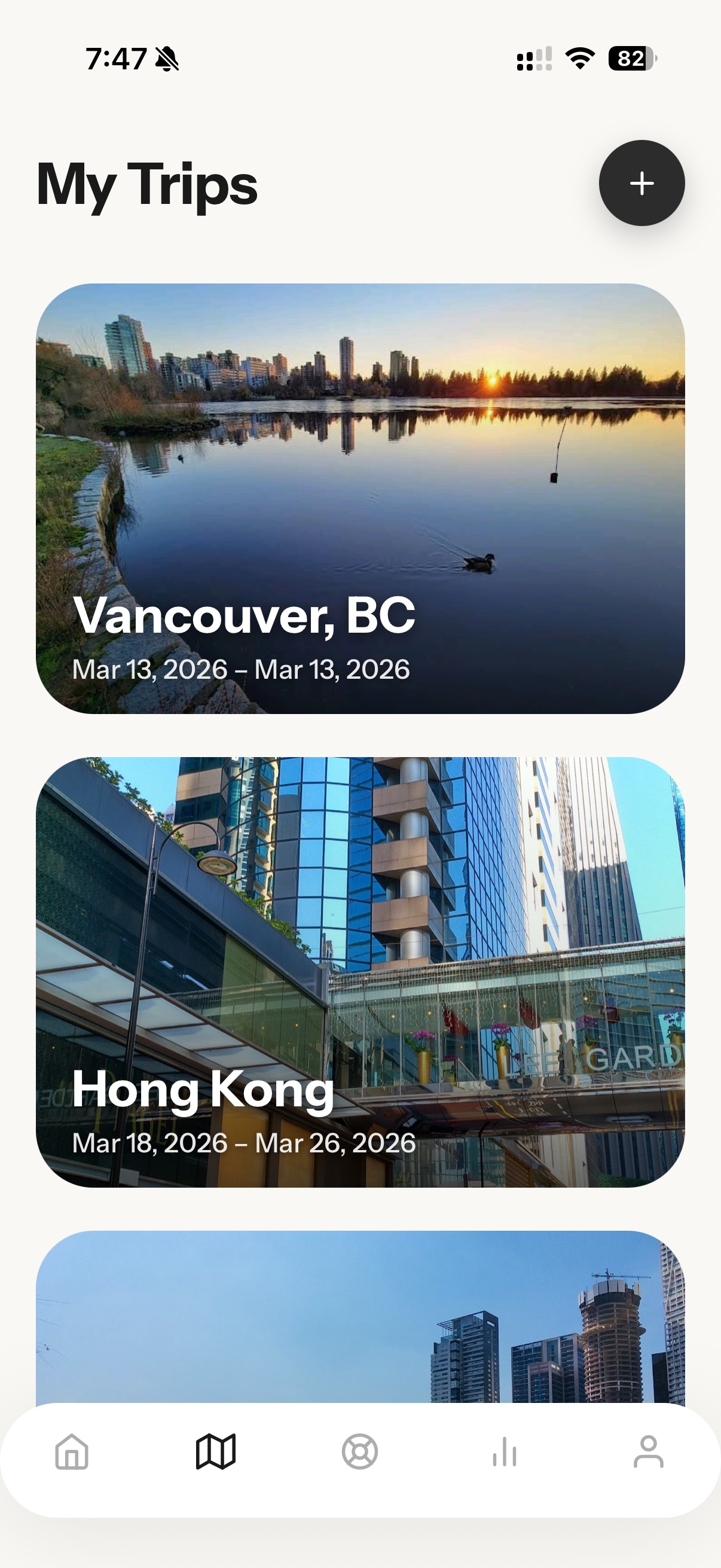
list of trips
-
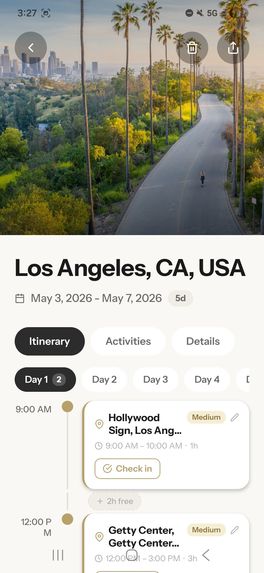
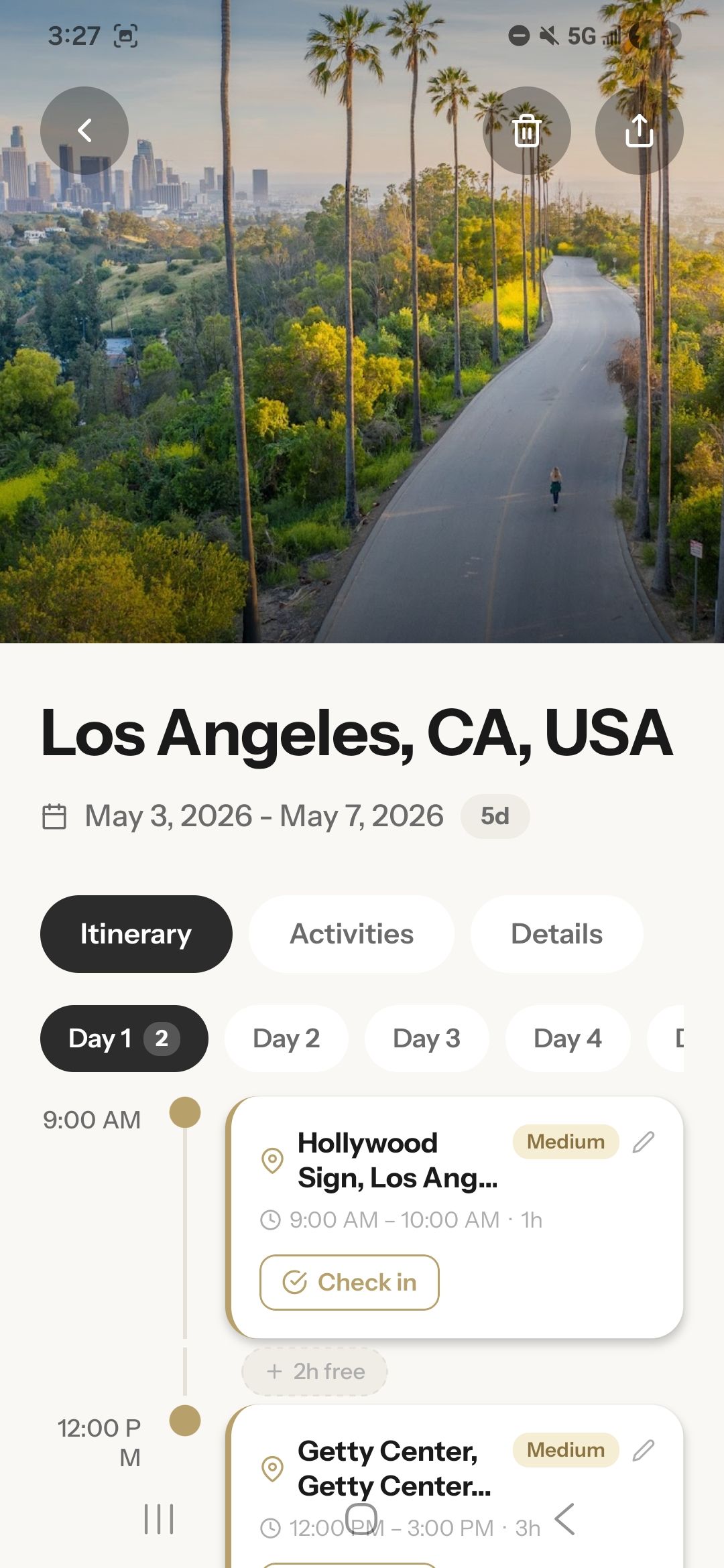
android version - viewing a trip at LA
-
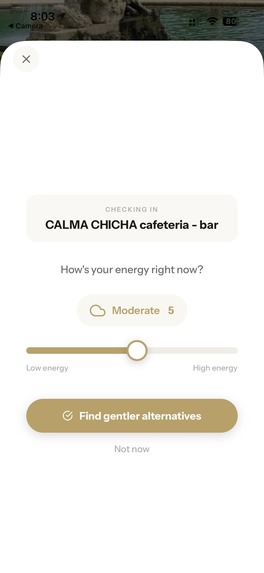
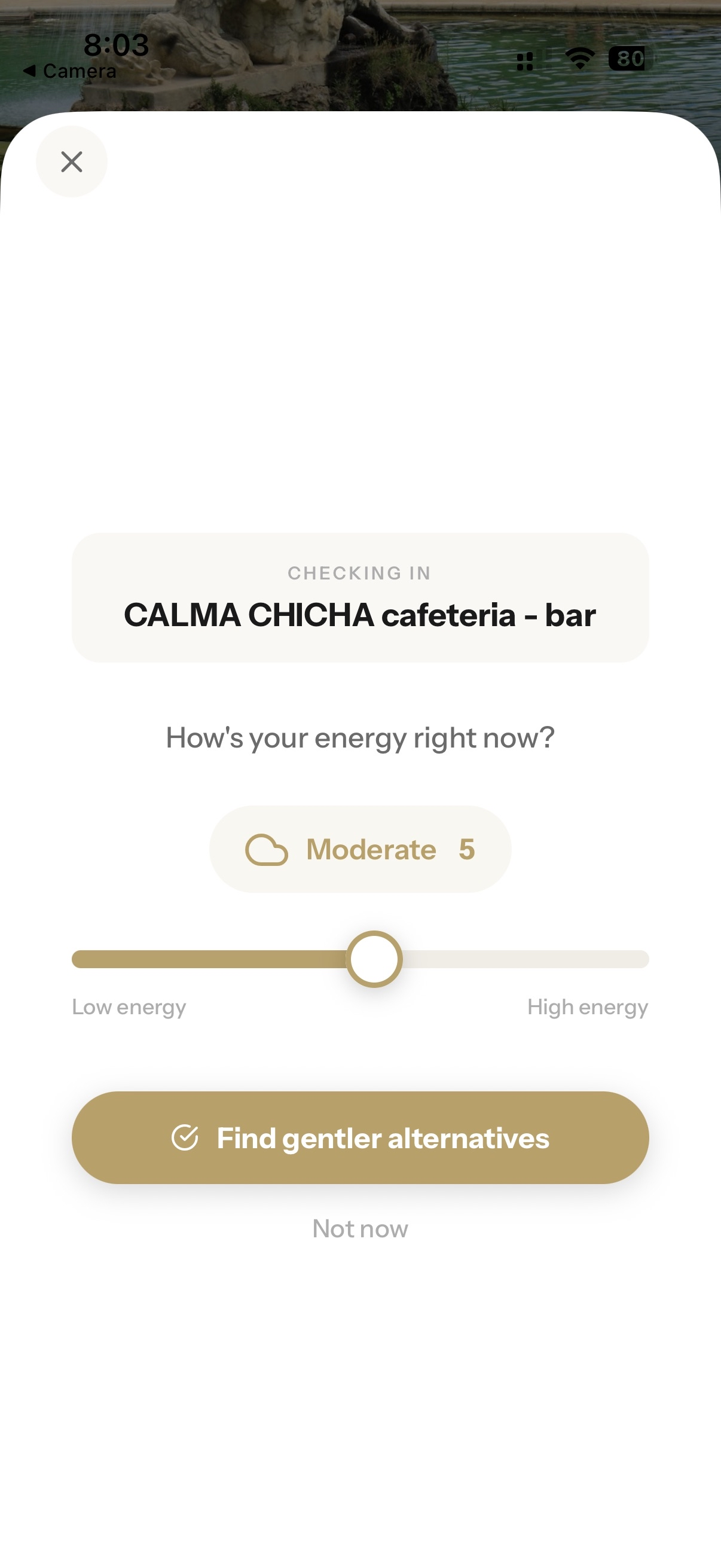
let roamio ai know how you're feeling about this activity!
-
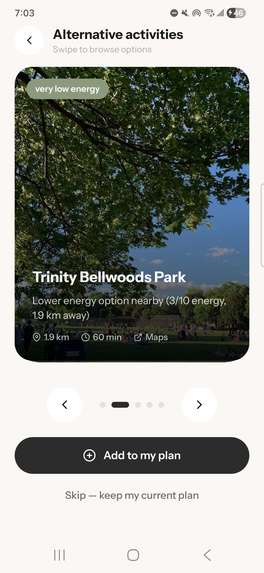
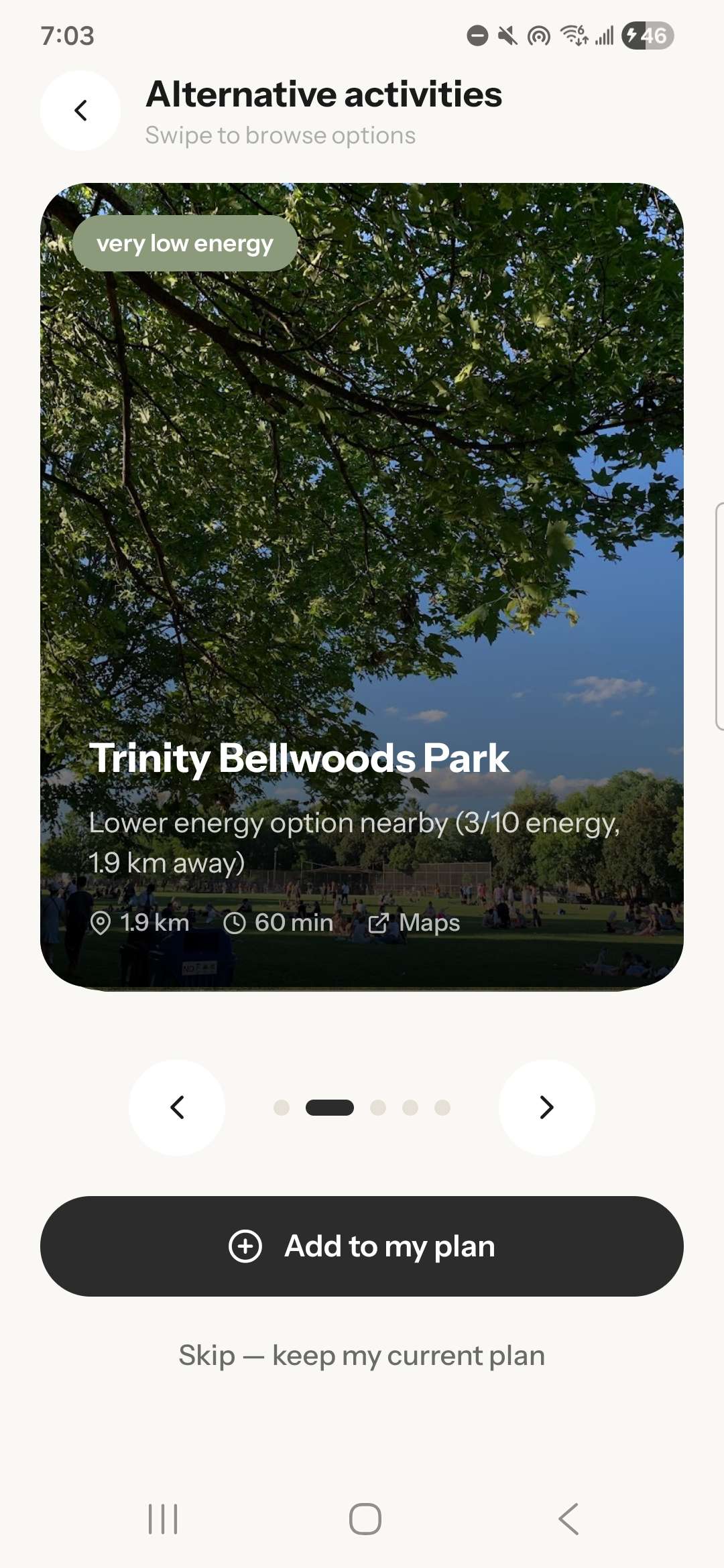
android - suggesting alternative activities
-
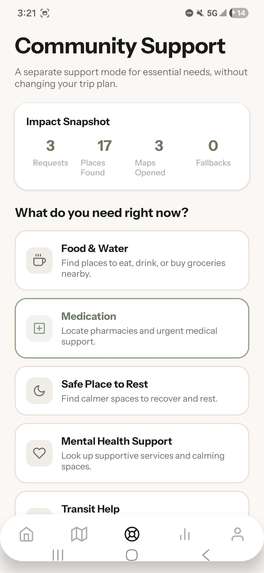
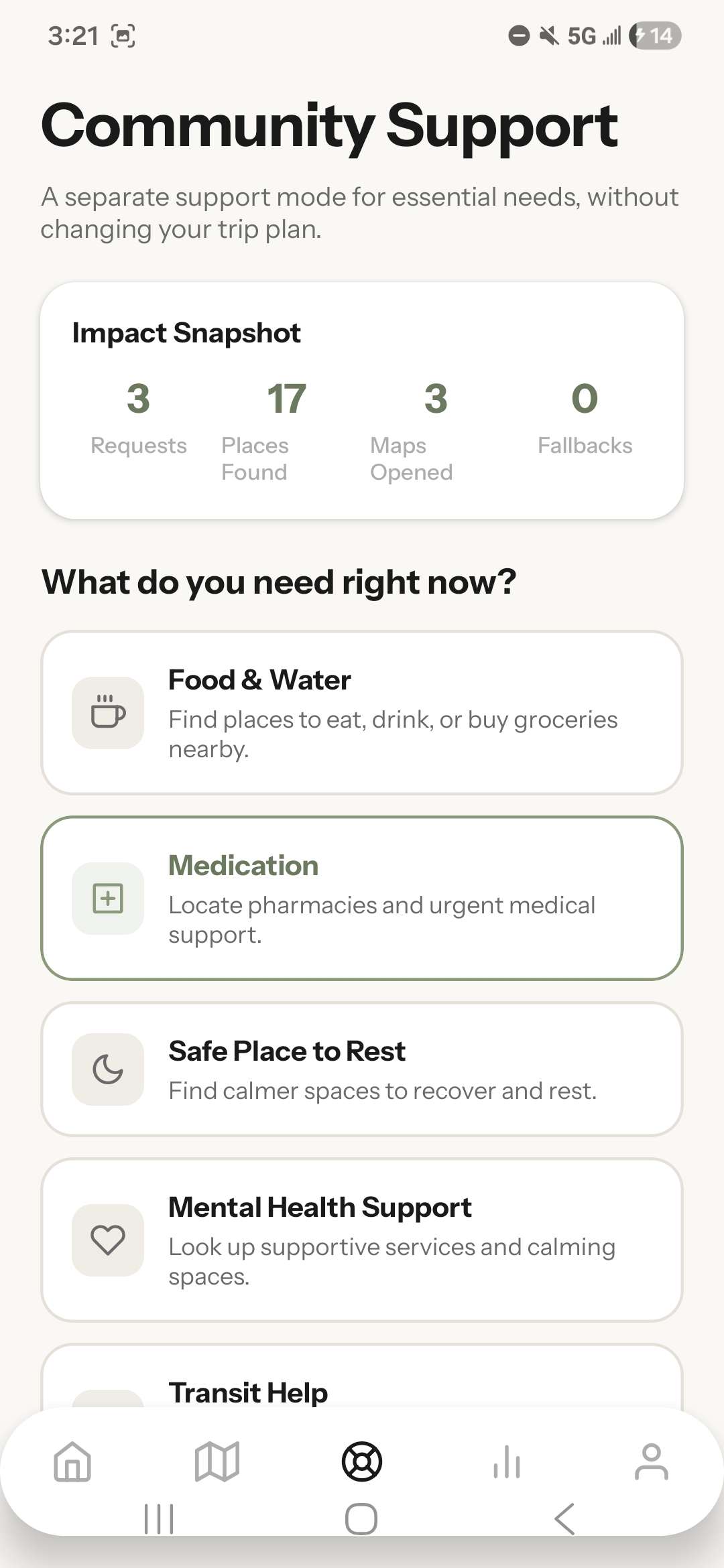
android version - community support
-
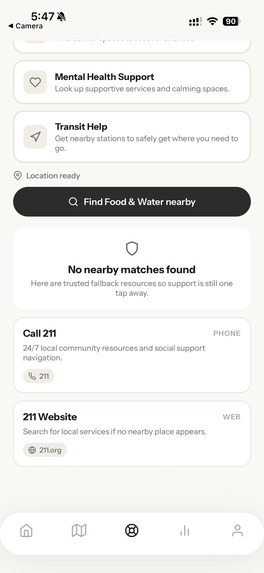
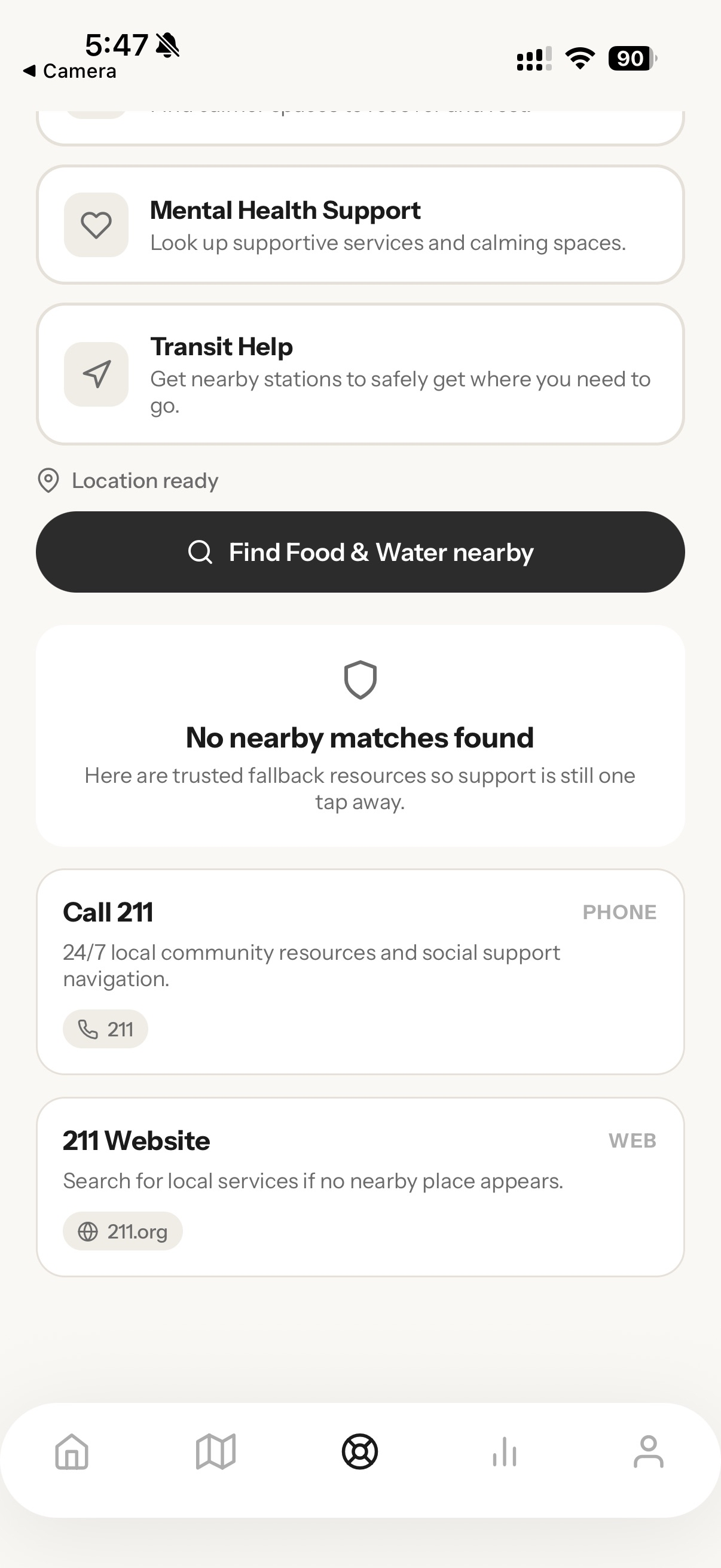
community fallback resources
-
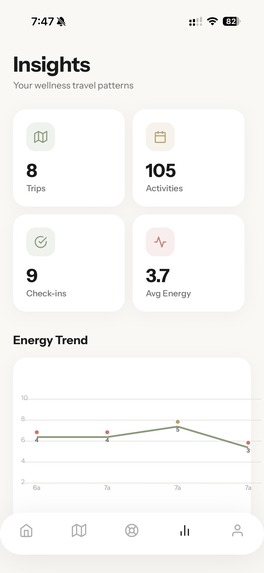
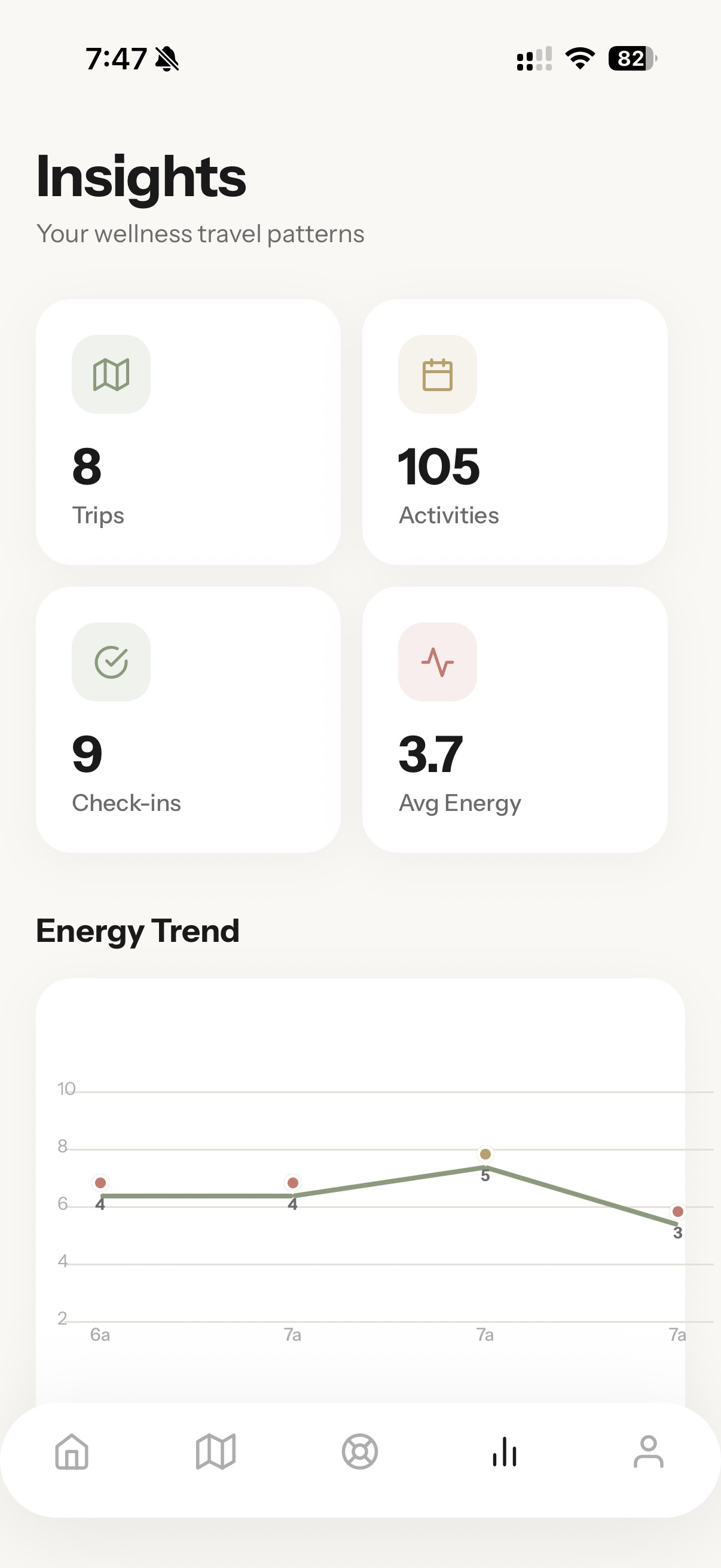
insights dashboard
Project Inspiration
Travel is meant to be a time for people to relax and recharge, yet up to 89% of travelers experience the opposite. Planning an itinerary can be overwhelming, with countless attractions, activities, and decisions to make. Once the trip begins, many travelers feel pressure to see everything, often sacrificing sleep and personal well-being just to fit more into their schedule.
Sometimes, the best plans are unplanned. We realized that travel plans rarely adapt to how people actually feel during the day, usually trying to maximize sightseeing. roamio was created to help travelers explore at their own pace, allowing their plans to adjust to their energy and well-being instead of forcing them to keep up with a rigid itinerary.
Project Summary
roamio: a wellness-first travel companion that adapts your itinerary based on how you feel. Users can create trips and plan activities, while the app helps curate balanced day plans. During the trip, users check in with their energy level, and roamio adjusts the itinerary by suggesting nearby, lower-effort alternatives when needed. The app also provides location-based recommendations and community support options, helping travelers find places that meet their immediate needs. By continuously adapting to the user’s well-being, roamio transforms travel from a stressful race into a calm and personalized experience.
Key features
- Login / Signup
- Users sign in and their trips/itineraries/check-ins persist across sessions.
- Trips
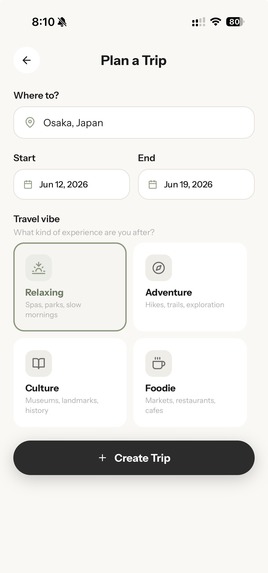
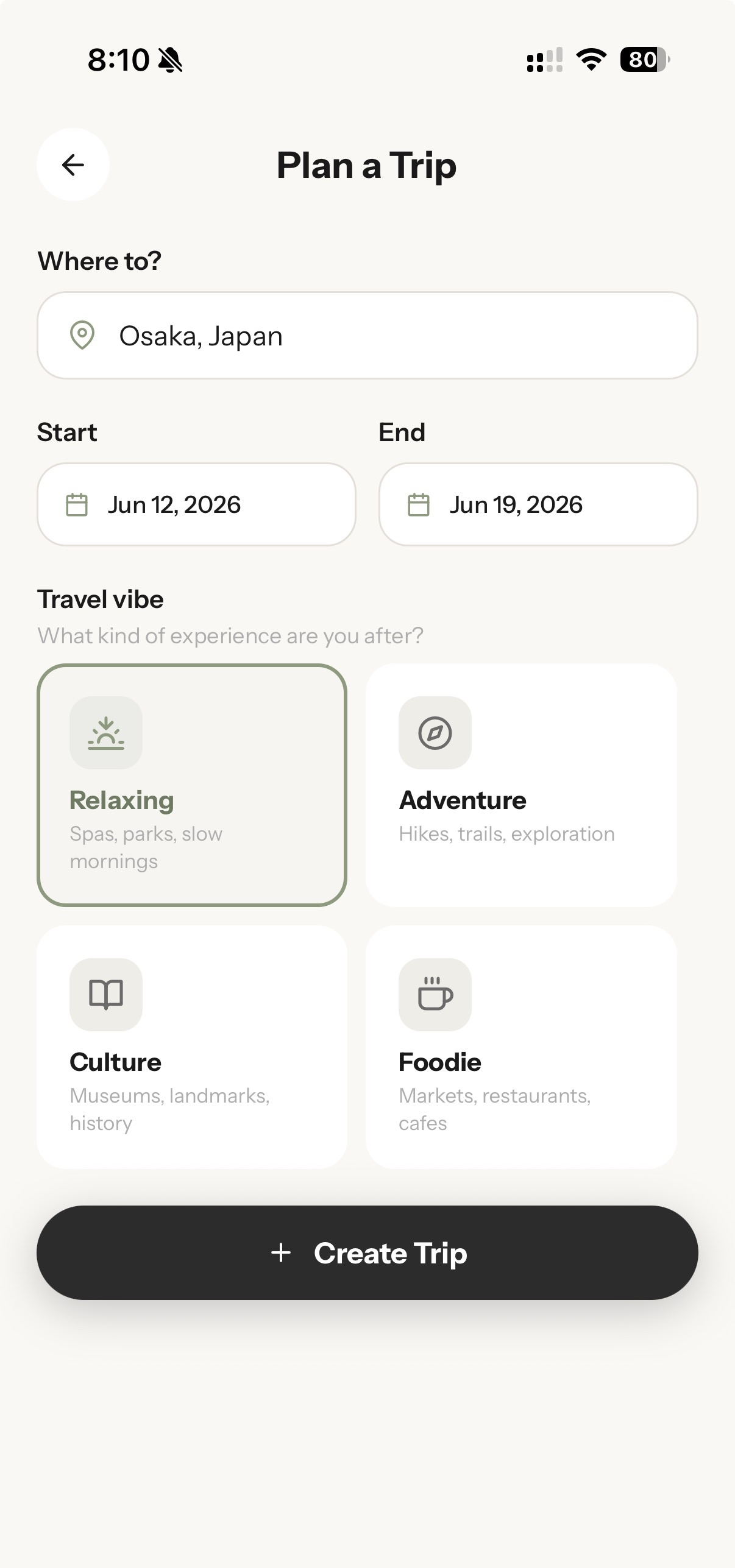
- Create/delete trips; store destination and date range.
- Curated by Roamio AI
- Gemini will build an entire itinerary for your based on your preferred trip vibe and energy history.
- Itinerary blocks
- Search for your favorite destinations on our Google Maps powered search engine and create/update/delete activity blocks (place name + time window).
- Simplify Your Day
- If check-ins show low average energy, roamio can recommend dropping the most energy-expensive blocks for the day.
- Energy Check-ins
- Record energy level (1–10) tied to the current activity block + timestamp + current lat/lng.
- Rerouting Suggestions (Agentic AI)
- When energy is low, generates several nearby alternatives that are “less energy intensive.”
- Suggestions include context (“why this fits”), distance, and a Google Maps link.
- Community Support
- A dedicated support mode for essential needs, without changing your trip plan. Find necessities nearby such as food, medication, lodging, mental health support, and transit. Get quick Google Maps directions to the nearest place.
- Calendar export (ICS)
- Generate an
.icscalendar file from your itinerary blocks.
- Generate an
How we built it
We built this using JavaScript and TypeScript as the main languages. For the frameworks and libraries, we used Expo and React Native to create the mobile app. Node.js and Express were used as the backend service. Supabase was used for the database, with PostgreSQL. We used the Google Places API to search for different locations on Google Maps, taking the details and photos and storing them in the database. We also used the Gemini API to suggest several locations to personalize the user's trip based on current data and their mood. The platforms we used include Supabase Cloud, Google APIs, and Gemini. To actually get our program running, we mostly ran it on Visual Studio Code / Antigravity, as well as using the Expo tooling to locally develop it on our devices. Furthermore, we used git to upload and share our code on GitHub.
Challenges we ran into
- Creating a user-friendly interface that is both intuitive and not overly stimulating for the user
- Ensuring AI suggestions feel relevant and trustworthy, rather than random travel recommendations
Accomplishments that we're proud of
- Getting Gemini to be able to generate a personalized itinerary for the user
- Making a mobile app that runs on both Android and iOS using a single codebase
- Integrating AI-powered suggestions with real-world location data to recommend nearby alternatives
- Building a system where the itinerary can adapt dynamically based on energy check-ins
What we learned
- Adding too many features can feel overwhelming
- Integrating multiple APIs taught us how to handle unreliable responses and design fallback systems
- Personalization is most effective when it’s based on simple user inputs like energy level or mood
What's next for roamio
📆 Syncing the user's current itinerary through Google Calendar, so the user does not need to manually input their activities for the trip
🔔 Enabling notifications that the user can receive to send helpful and encouraging messages throughout the day based on how the user is feeling (less energetic = less notifications)
⚙️ Allowing the user to change their profile picture, settings, and manage their account
👥 Partnering with local communities and small businesses to highlight hidden gems and wellness-friendly destinations
😌 Takes into account the areas that are currently bustling with people and avoids crowds when the user needs a low-energy activity
Built With
- expo.io
- gemini
- react-native
- supabase


Log in or sign up for Devpost to join the conversation.