-
-

Logo: Roaming Angels
-
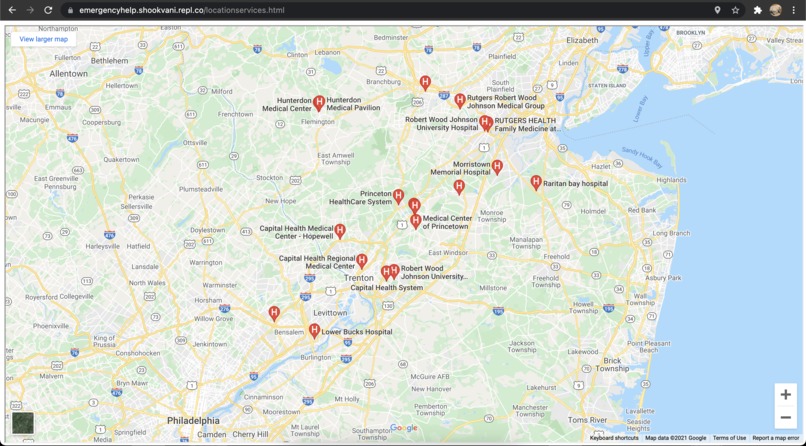
Nearby Hospitals Based on Location

Inspiration
I was inspired by my original idea, a way to track ambulances while they were on the way to the person who called. However, this original code did not work and there were many errors (which is not exactly important). Worried, I went back to the drawing board and came up with the idea of a general, quick first aid site. I did some research and surprisingly found that many Americans don’t know how to do first aid - an essential part of society.
You can also find details at this link.
What it does
This is a learning tool and resource which can also act as an on-the-fly guide. This is to help raise awareness about first aid and to encourage people to start learning and (eventually get certified) which can increase the number of people who can help others in sticky situations.
You can also find details at this link.
How I built it
I built this entire thing using repl.it (although I had switched to local files and used my coding editor when attempting to use Twilio and messengerbird (see below). The main languages I ended up using were javascript (for the API which was for the location services), CSS, and HTML.
As a person who has worked with the front-end time and time again, it was pretty easy to set up the CSS and HTML outline (as I have done it a lot). Next, it was a matter of doing research, getting information, and understanding how I could tackle the project. I started with the actual project site, working to compile the necessary information and bring them together using the code. In addition, I started working on the necessary information to gather the location services.
Challenges I ran into
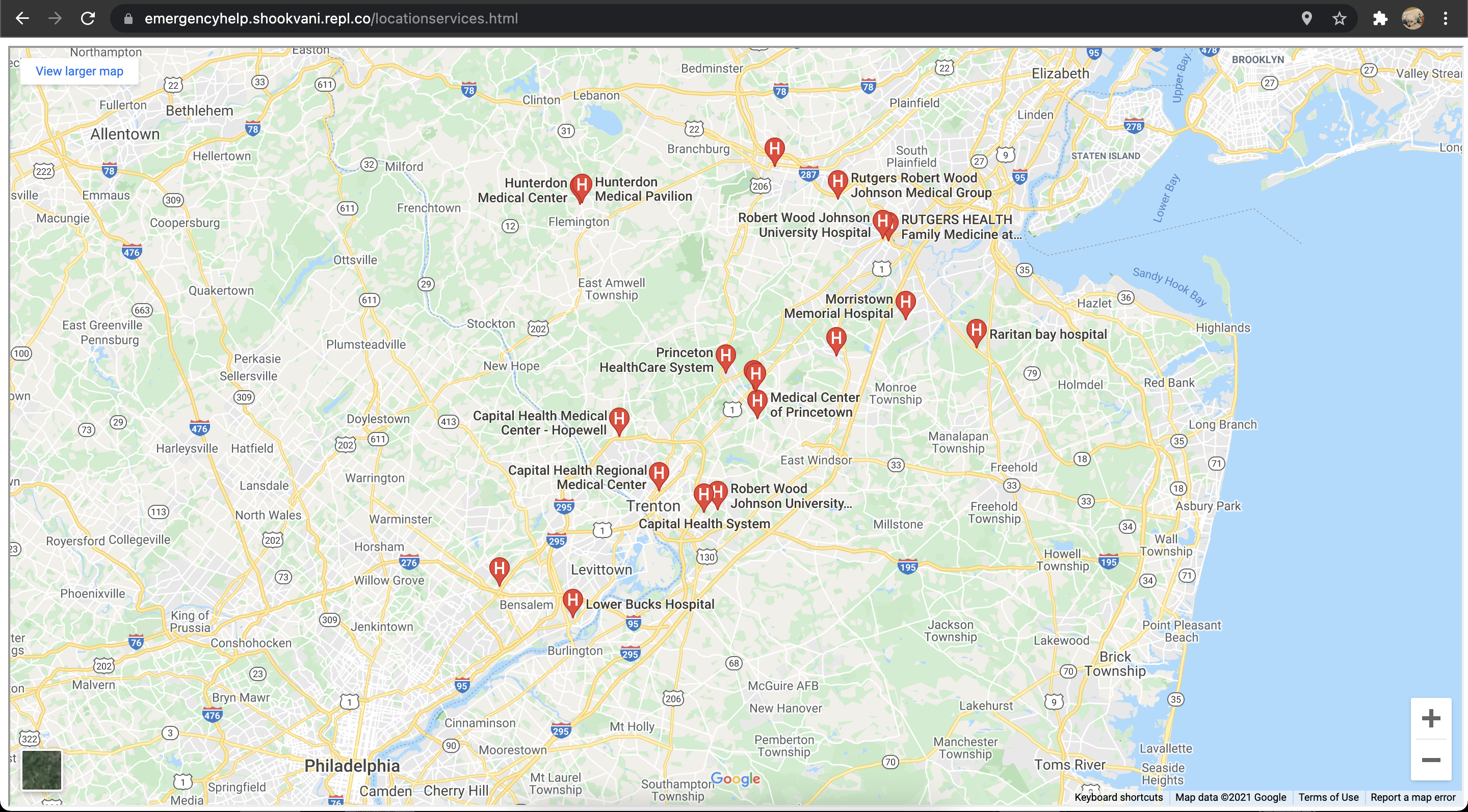
I had a huge setback with the location services - and not just with my original hack. I attempted to use the google maps API in JS (after other ideas of tackling it, using python or SQL fell through), which after some hard (mostly annoying) work had it all set up, only to find that due to specific security actions google takes prevented me to use the API. However, not all of it went to waste - I was able to combine some of my earlier code, using the iframe tag, and “merge” it with some of the javascript code, which allowed me to (successfully) get the lat and long coordinates of a specific device and provide the person with nearby hospitals.
However, when trying to implement Twilio (and after that failed Messengerbird, which is similar) to provide the user with a message of relevant information they may need, it fell through due to pricing and other issues.
You can see the completed location services part at this (please make sure that your browser can get your location) link.
Accomplishments that I am proud of
I am proud of being able to (finally) complete this! The location idea was an extreme challenge - I spent hours (like literally at least 8) on it, and tried line after line, test after test, to find out how I could get my desired output (and my family was witness to me almost crying and being extremely happy for a solid few minutes). Also, I am pretty thrilled that I was able to incorporate the parts I wanted to during the hack, especially considering my hectic weekend and regatta on Sunday morning.
You can see the completed location services part at (please make sure that your browser can get your location) this link.
What I learned
I learned a lot. It was challenging to do this on my own, implementing the back-end into the front end. In addition, it was a challenge to find a way around the API, something which you aren’t exactly supposed to be finding ways around. It was a good learning experience, and it was a challenge to complete this under the time frame I had. It was a pleasure returning to hackPHS.
What's next for Roaming Angels
Goals: I want to be able to implement the message function (which would include automated, personalized messages based on specific circumstances) as well as a way to be able to search for specific first aid ways. In addition, although I am not sure, it could be helpful to add more developed ideas for symptoms (like dedicating a section) even though symptoms can be hard to detect and not on the first thing in a civilian’s mind when giving first aid.
Project site: link About site: link Feedback (also on site): link
Built With
- api
- css
- html5
- javascript
- maps
- repl.it

Log in or sign up for Devpost to join the conversation.