Inspiration
We are former college athletes who have lived the challenge of balancing travel with training. One of us ran track and cross country for over a decade, and during that time, vacations, competition trips, and business travel all shared the same problem: running became a stressful part of the journey. Too often, hotels were nowhere near safe or scenic running routes, leaving us stuck on crowded streets or in unsafe areas, not ideal for keeping up with fitness.
At the same time, running in a new city is one of the best parts of being a runner. We are explorers at heart, new routes, fresh scenery, and discovering a place on foot is what makes running special. Yet getting to those experiences in an unfamiliar city is often stressful and uncertain, especially while traveling.
With millions of people worldwide who run and travel, and with the running community only continuing to grow, this problem is not unique. Our inspiration comes from wanting runners to enjoy the best of both worlds: the excitement of exploring new places and the confidence of knowing they’ll always have a safe, enjoyable route.
What it does
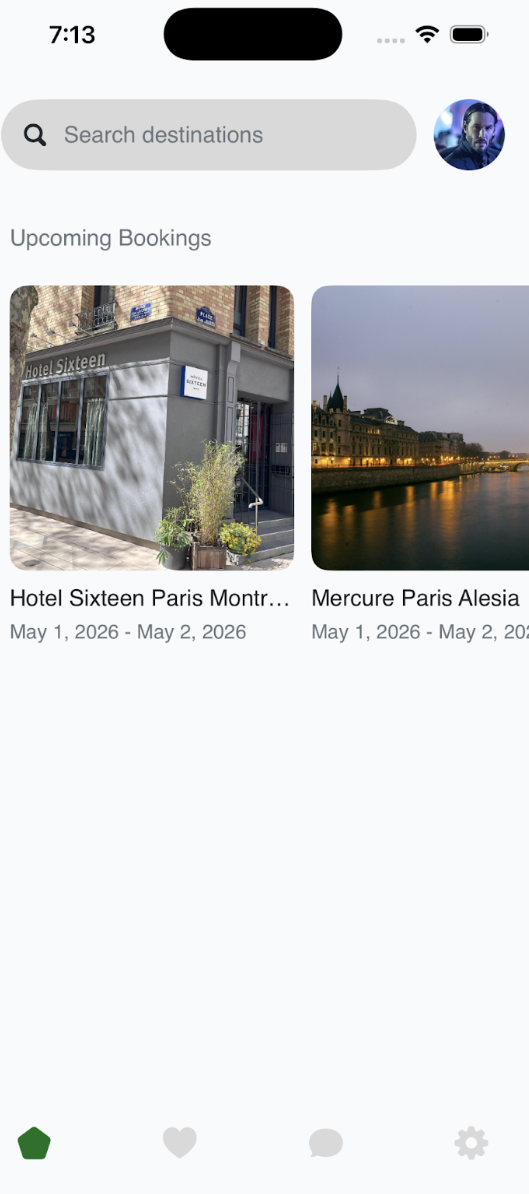
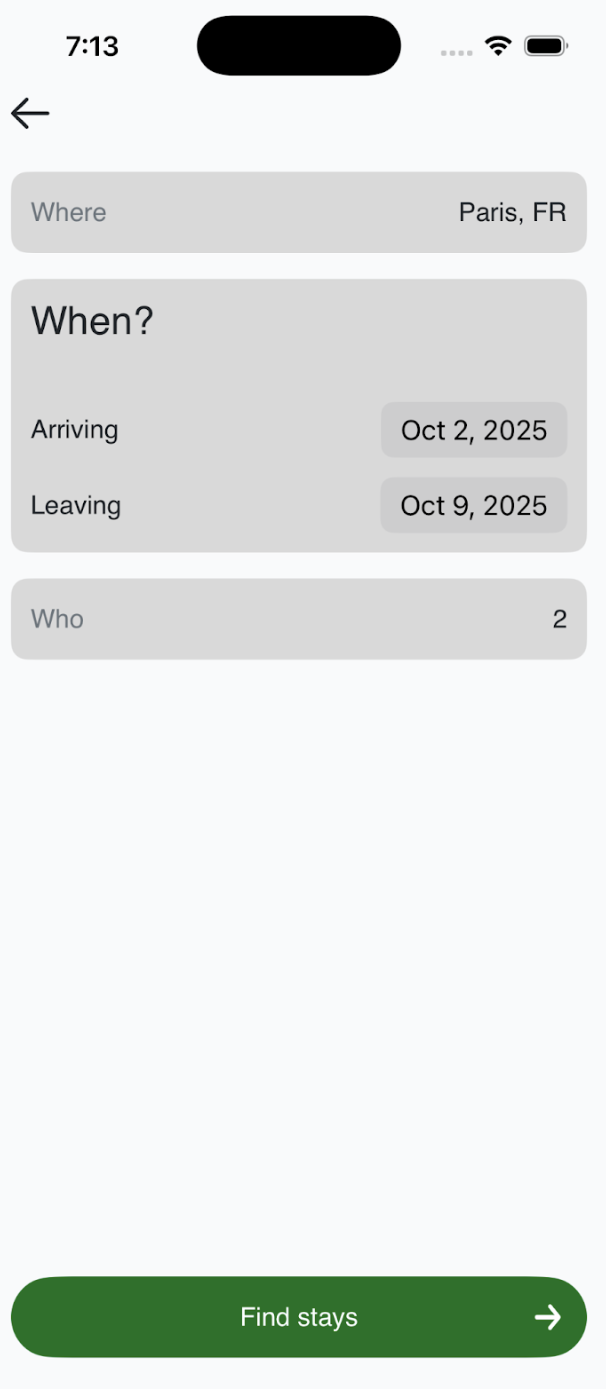
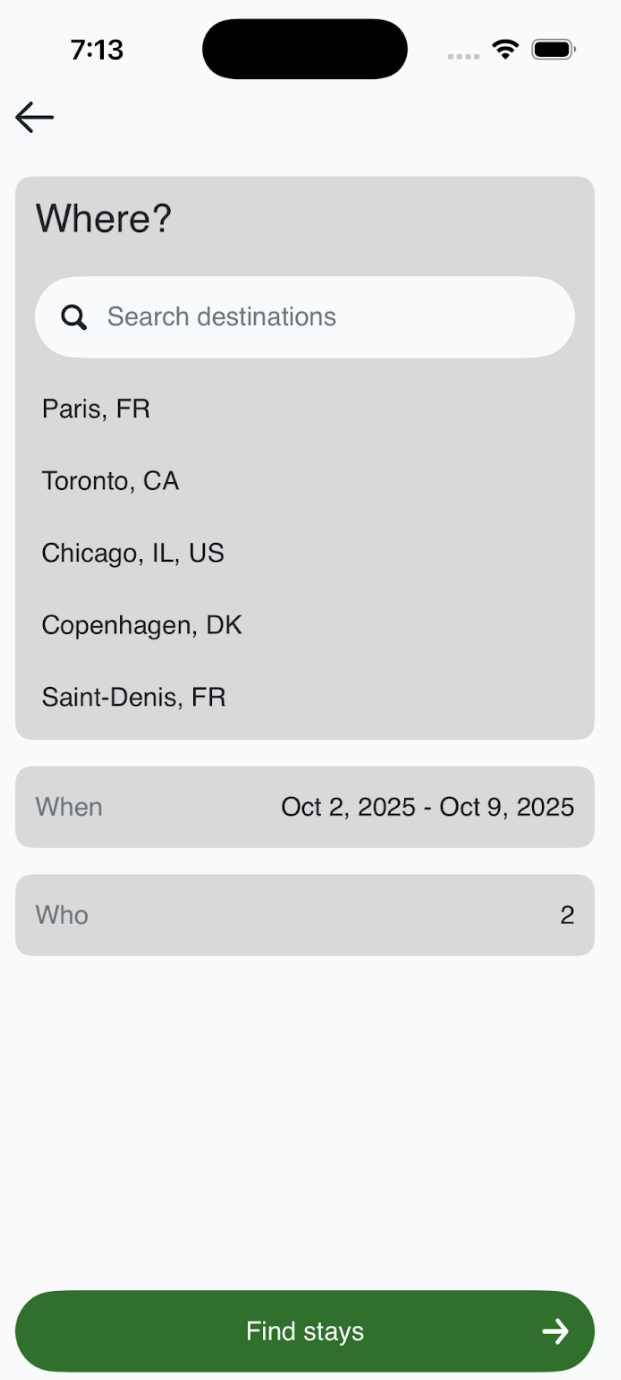
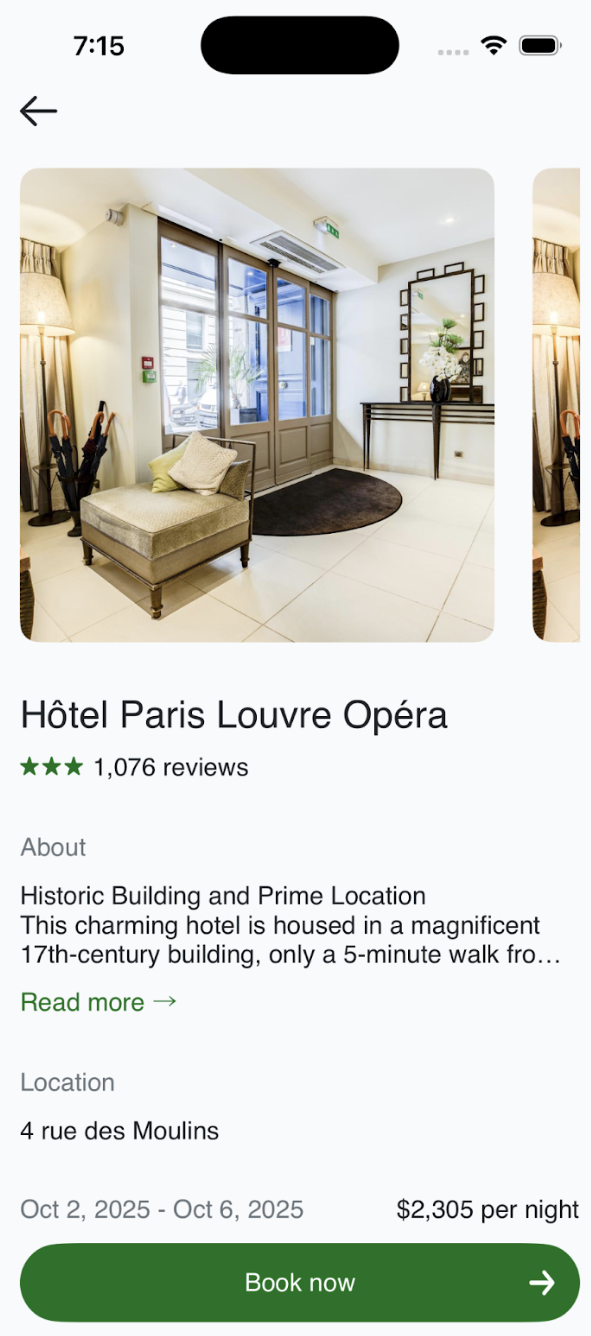
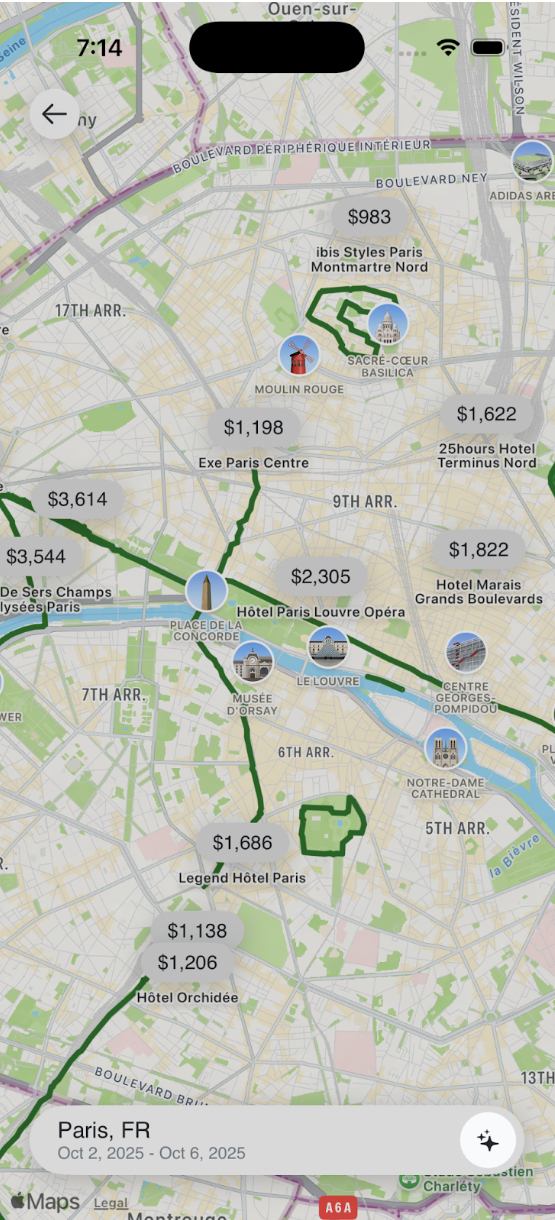
Roamin helps travelers book hotels with running in mind. The app connects hotel selection with nearby running routes, allowing users to filter by preferences such as terrain, scenery, safety, or sightseeing. Instead of guessing or wasting time researching unfamiliar areas, runners can see curated route options directly tied to each hotel, making it simple to choose a place to stay that fits their training or fitness routine.
Roamin also eliminates the stress of arriving in a new city without knowing where to run. By combining hotel data with mapped running routes, users can instantly compare locations, preview nearby paths, and feel confident that their travel plans won’t disrupt their fitness. Whether it’s a 3-mile city loop, a quiet park trail, or a scenic waterfront run, Roamin ensures runners can explore new places while maintaining their lifestyle.
How we built it
We built this over the course of 3 days, Where we crated a mobile app with SwiftUI frontend, which was intented for quick prototyping. Backing this, is a node.js backend calling from the hotels from LiteAPI, and scraped trails from Strava, personalized trail data from Genimi.
Challenges we ran into
One of the primary challenges we encountered was identifying a suitable running-route mapping API that was both accurate and accessible. While there are numerous options available, many of them suffered from incomplete or low-quality mapping, and the more extensive platforms restricted access behind formal application or approval processes. With a 5 day project timeline, this is something we could not realistically complete.
To overcome this constraint, we adopted a manual workaround. For each of our five target cities, we curated and favorited publicly available routes on Strava. By saving these routes to our account, we were able to programmatically extract (scrape) the associated geospatial data and use it as the foundation for our route-location system. This provided us with reliable, high-quality routes despite the limitations of external API access.
We would like to still improve this process and get access to Strava or Garmin Connect API in the future.
Accomplishments that we're proud of
At nearly every stage of development, we found ourselves questioning whether what we envisioned was even possible. That’s why we are especially proud that, as two self-taught developers, we were able to build and deliver a robust MVP in such a short time frame.
What we learned
We quickly realized that tasks we assumed would be simple were far more challenging than expected. At the same time, we gained a deeper appreciation for how complex the hotel booking ecosystem really is and how much the LiteAPI simplifies that process.
What's next for Roamin
The next step for Roamin is enhancing trail availability by integrating with platforms such as Strava and Garmin Connect. This will allow us to provide the most accurate, reliable, and safe routes for our users. Beyond improving our trail database, we plan to establish strategic partnerships with leading running brands and world-class marathons. For example, booking a hotel through Roamin could unlock discounts on running gear, creating a new revenue stream for the company, while partnerships with events like the Boston, Chicago, and Berlin Marathons would position Roamin as the premier booking tool for endurance athletes.
Looking ahead, we see significant opportunities to expand into adjacent categories. Hiking is a natural extension, helping travelers find hotels, campsites, or lodges near top trails. Cycling represents another segment, where we can serve athletes seeking route-specific accommodations, while skiing and snowboarding open the door to the winter sports travel market. In addition, we are building safety into our platform by incorporating features that highlight areas to avoid. Safety is consistently cited as a top concern for runners in unfamiliar places, and addressing it will be key to delivering trust and peace of mind to our users.

Log in or sign up for Devpost to join the conversation.