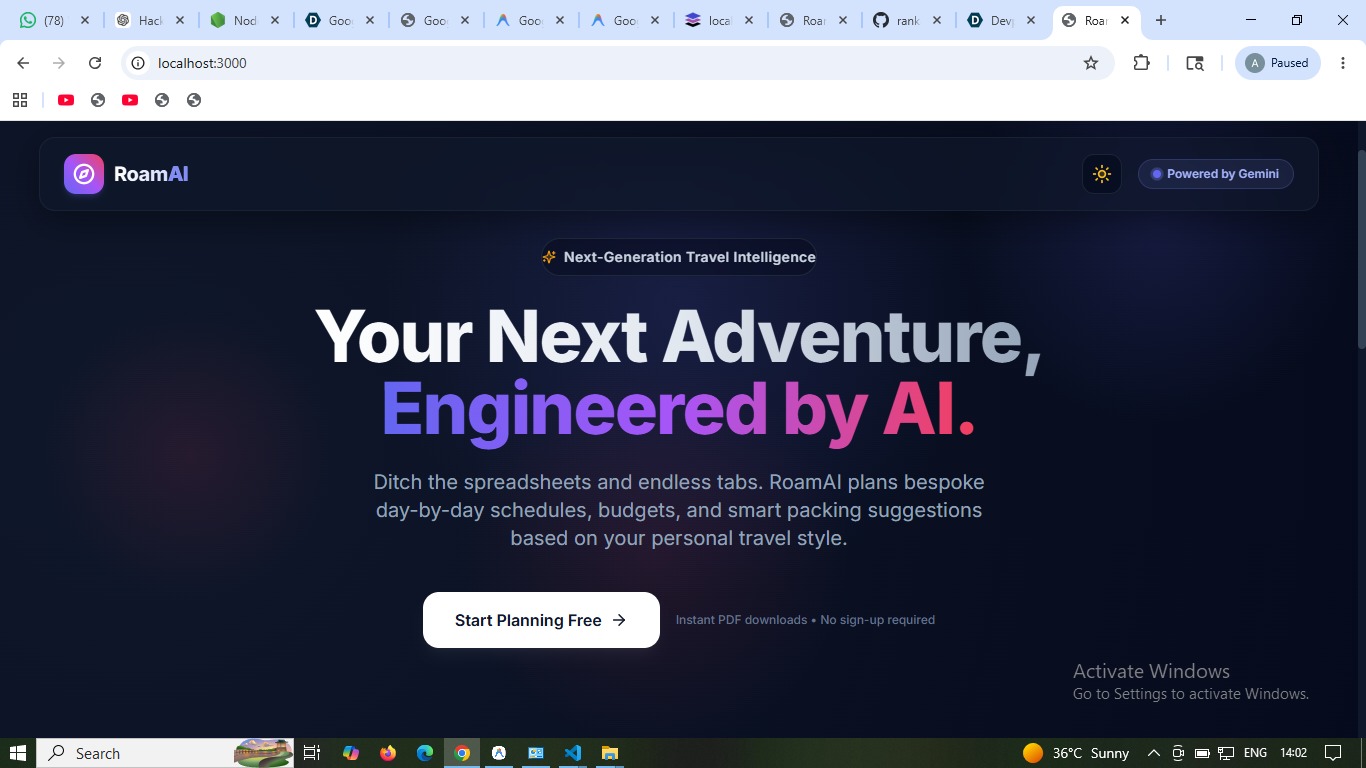
Inspiration-As a second year engineering student, I’ve always been fascinated by how AI can simplify real-life problems. While planning trips with friends, I realized that most travel apps only provide generic suggestions and complicated interfaces. I wanted to build something that feels like a personal AI travel companion instead of just another booking website.
That idea became RoamAI — an intelligent travel planner that generates personalized itineraries, budget breakdowns, travel tips, and interactive experiences using AI.
What it does-RoamAI helps users plan trips effortlessly by generating smart AI-powered travel itineraries based on:
- Destination
- Budget
- Trip duration
- User interests
The platform includes:
- 🧠 AI-generated itineraries
- 📅 Day-wise schedules
- 💰 Budget analysis
- 🗺️ Google Maps integration
- 🎙️ Voice trip explanation
- 💡 AI travel tips
- 🧳 Packing suggestions
- 🌙 Modern glassmorphism UI
- 📱 Fully responsive design
Users can interact with activities directly and explore locations through Google Maps integration.
How we built it-Frontend
We built the frontend using:
- React + Vite
- Tailwind CSS
- Framer Motion
- Lucide React Icons
The UI was designed with a premium glassmorphism aesthetic inspired by modern travel platforms and Apple-style interfaces.
Backend
The backend was built using:
- Node.js
- Express.js
- Gemini API
The Gemini API powers itinerary generation and AI-assisted travel recommendations.
🧠 AI Logic
The AI system dynamically generates plans using prompts based on: [ Trip = f(destination, budget, interests, duration) ]
The generated output is then structured into:
- Day schedules
- Budget estimates
- Recommended attractions
- Smart travel advice
Challenges we ran into-One of the biggest challenges was connecting the frontend and backend properly while handling real-time AI responses.
We also faced issues with:
- Environment variable configuration
- API integration
- React component interactions
- Modal and click functionality
- UI responsiveness
Another challenge was balancing aesthetics and functionality while keeping the app smooth and interactive.
Accomplishments that we're proud of
What we learned-Through this project, we learned:
- Full-stack web development
- API integration
- React state management
- Modern UI/UX design
- AI workflow integration
- Real-world debugging and deployment concepts
Most importantly, we learned how powerful AI can become when combined with creativity and user-focused design.
What's next for RoamAl-Travel-Planner-RoamAI is more than a travel planner.
It is an attempt to create a smart AI companion that transforms the way people explore the world.
Built With
- api
- apis
- css
- css3
- dotenv
- express.js
- framer
- gemini
- html5
- icons
- integration
- javascript
- lucide
- maps
- motion
- node.js
- react
- react.js
- rest
- tailwind
- vite

Log in or sign up for Devpost to join the conversation.