-
-
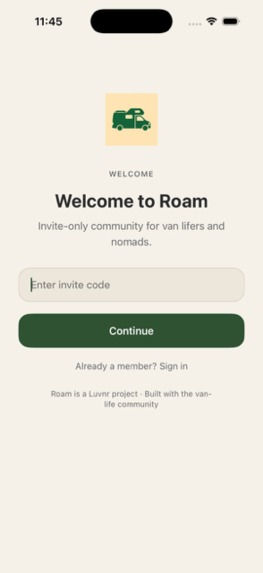
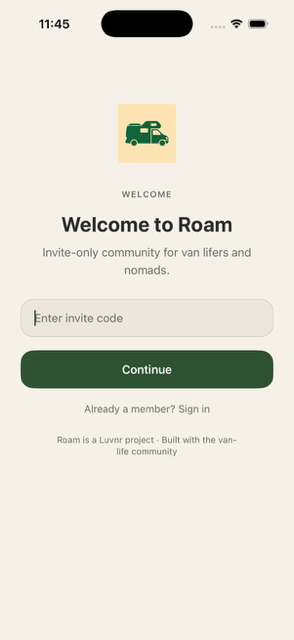
Roam Login with invitation only gating (Use code "QUIN")
-
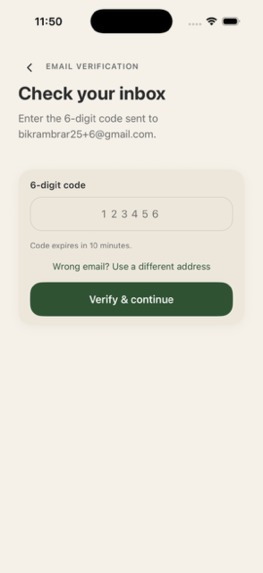
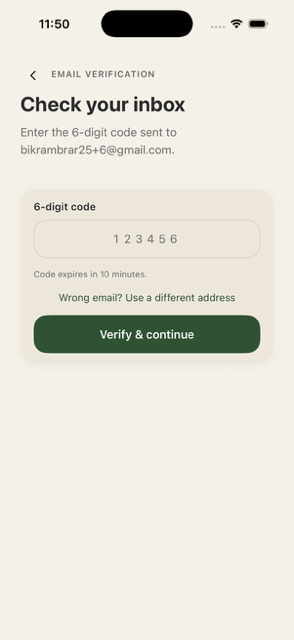
Easy email code login
-
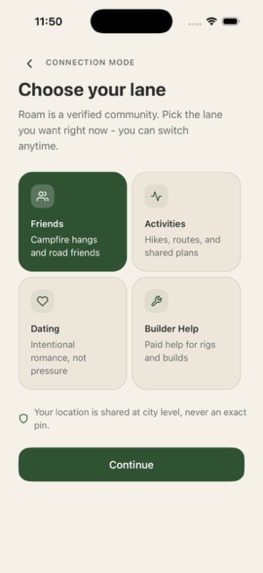
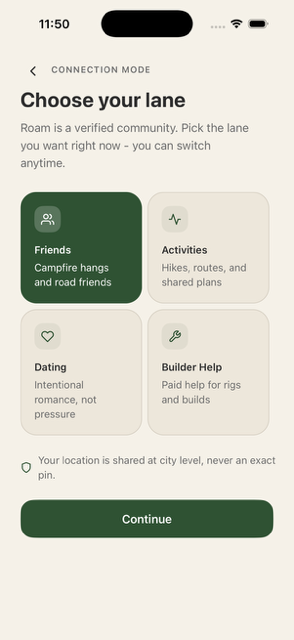
Choose your lane (friends, dating, etc)
-
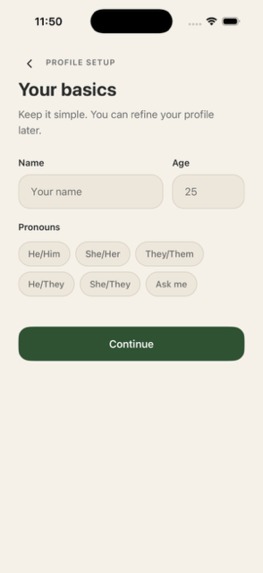
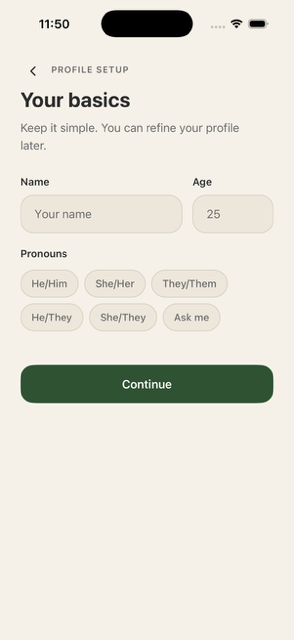
Add your details
-
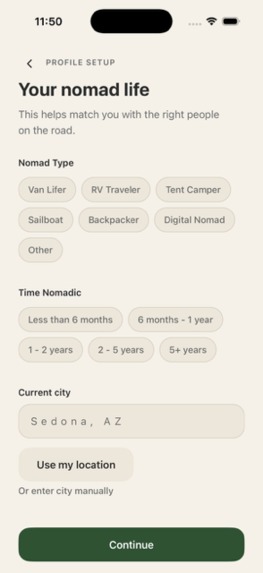
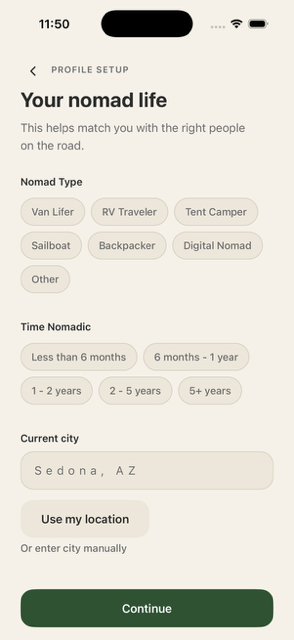
Add nomadic details
-
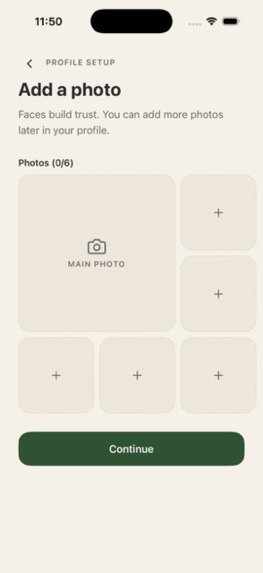
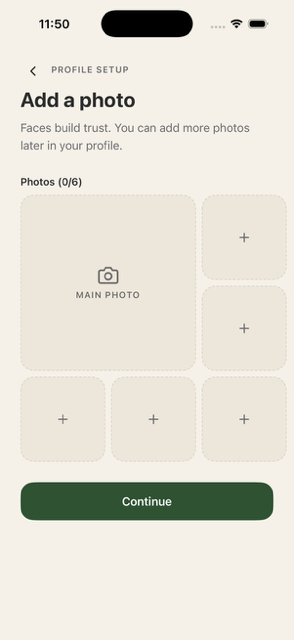
Add Photos
-
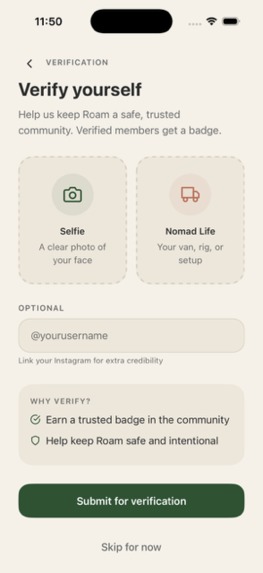
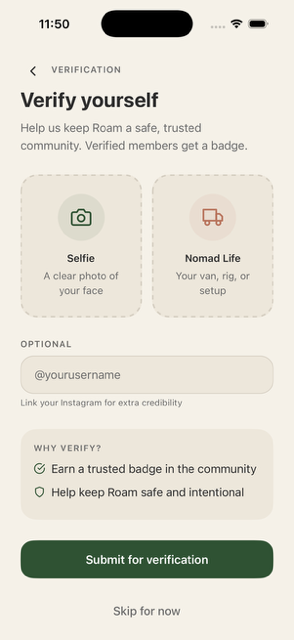
Verify vanlife/instagram (gets sent to mod)
-
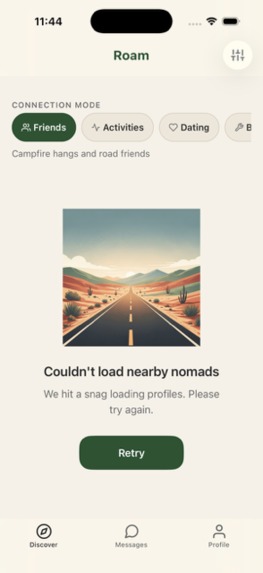
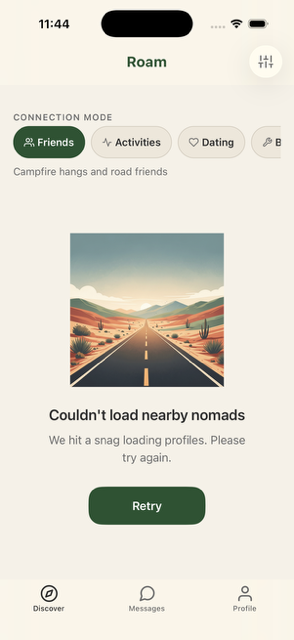
Match other roamers (screenshot of real data - so no other users yet)
Inspiration
I built this for the van-living community because vanlifers often need connection without losing safety. Dating, friendship, and project support are hardest when everyone is constantly moving, and many community groups are either too open, too noisy, or not built for nomadic lifestyles.
I wanted an app that feels intentional: small-circle access, meaningful meetups, and trustworthy collaboration for van builds. Roam also works well for digital nomads!
What it does
Roam is a social app for vanlifers & nomads that combines social discovery with safety-first controls. Users can:
- Discover nearby people on a map and by activity interests
- Start conversations through a messaging system
- Join or create local circles/activities
- Request and offer paid builder help for van projects
- Verify identity and use invite-only access to keep quality high
- Most importantly Roam is invitation gated, so only current users can invite others, helping to build a trusting community
How we built it
I built Roam with an Expo + TypeScript client and an Express backend, using shared types between client and server for consistent APIs.
The app includes onboarding and invite flow logic, location-aware discovery, profile setup, moderation/reporting, and a paywall-integrated creator utility path using RevenueCat for paid builder features.
I focused on shipping a practical MVP quickly with reusable route modules, shared schema definitions, and clean separation between social, messaging, and operational services.
The MVP backend is very performant and can handle thousands of users, it's design in a way where frontend design changes can be very easy to better match user vibes.
Challenges we ran into
Safety and onboarding were the hardest parts. I had to find balance between accessibility and trust, especially for dating and direct messaging use cases.
Realtime messaging and location-sensitive discovery had to feel responsive across mobile networks, so event invalidation and caching had to be handled carefully.
We also had to keep the monetization path optional and additive so free users can still use core community features.
Accomplishments that we're proud of
- Built a full mobile product path from signup to verified social interaction
- Delivered a social graph flow that supports discovery, messaging, and local community building
- Added a practical monetization layer for builder services without blocking core usage
- Implemented meaningful moderation and trust signals for a high-sensitivity community
What we learned
I learned that community products are mostly about trust infrastructure, not just feature count.
In mobile social apps, the hardest part is shaping user behavior through flow design: invitation boundaries, verification, and reporting tools changed retention and safety perception more than any single “cool” feature.
What's next for Roam Social (for Vanlifers)
Future work will focus on making connections more useful and reliable on the road:
- Better reputation and trust scoring over time
- More nuanced matching/preferences for travel-style compatibility
- Improved builder marketplace: booking, milestones, and completion tracking
- Better onboarding for new regions/cities and richer offline-friendly behavior
- Native app-store readiness with production-ready observability and moderation tooling

Log in or sign up for Devpost to join the conversation.