-
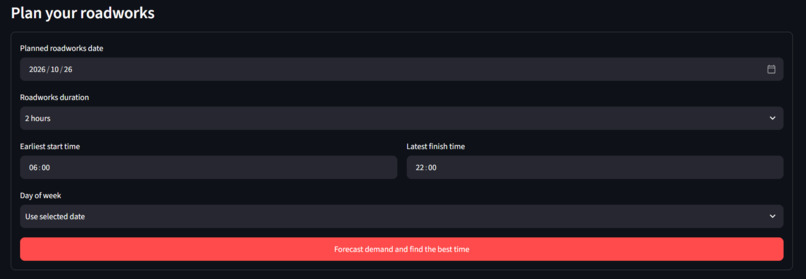
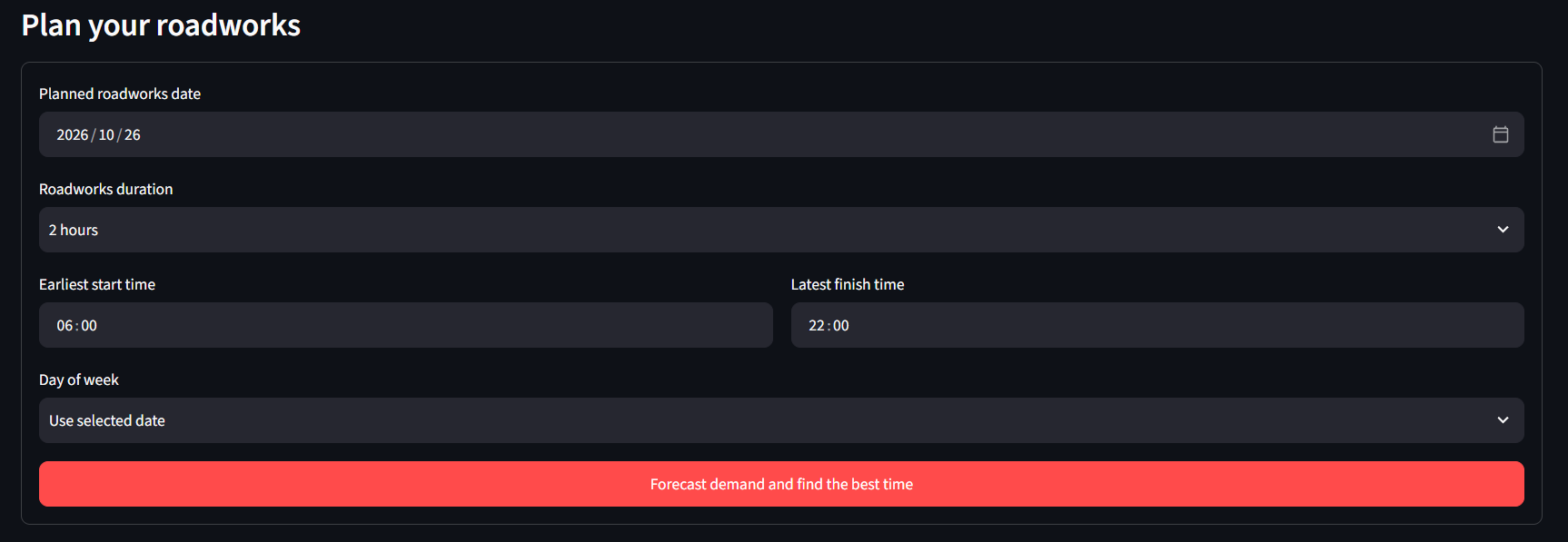
Choosing roadwork time and constraints
-
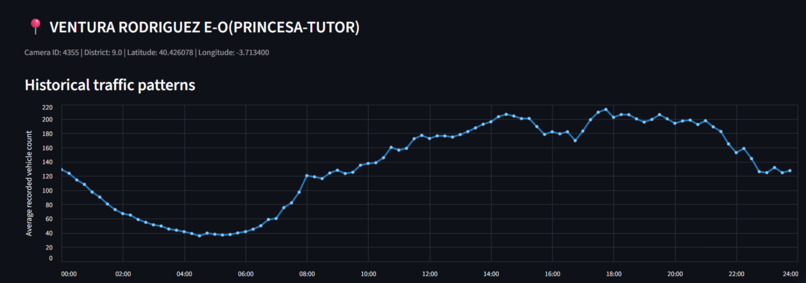
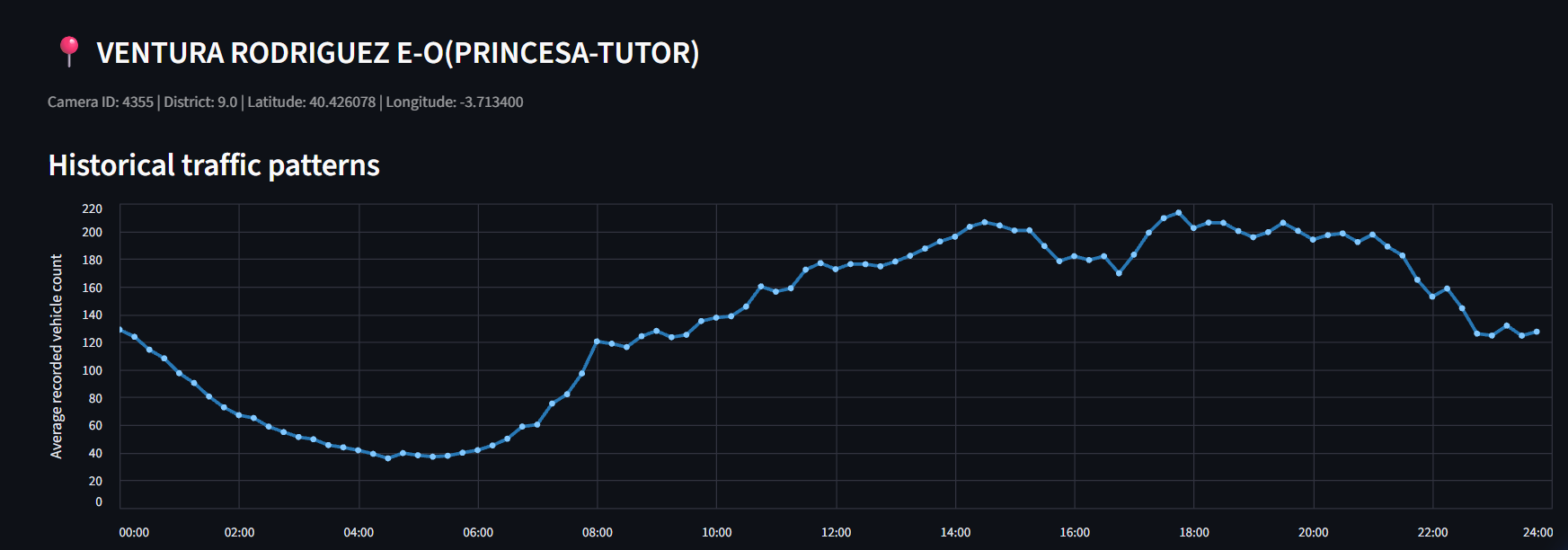
Historic traffic
-
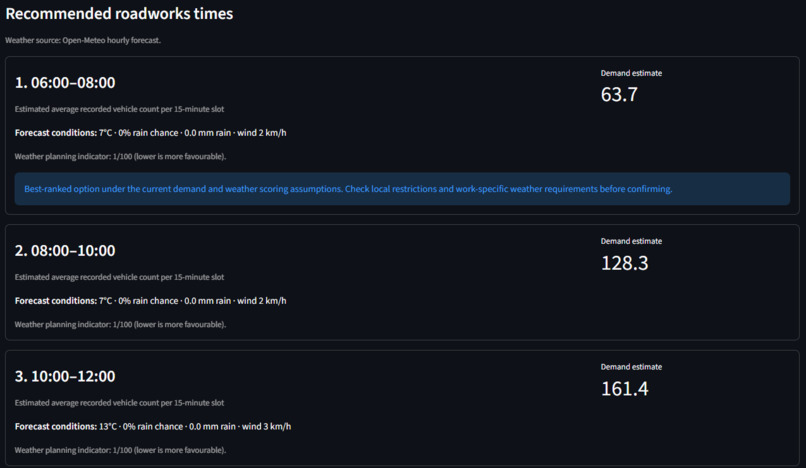
Suggestion for best roadwork times
-
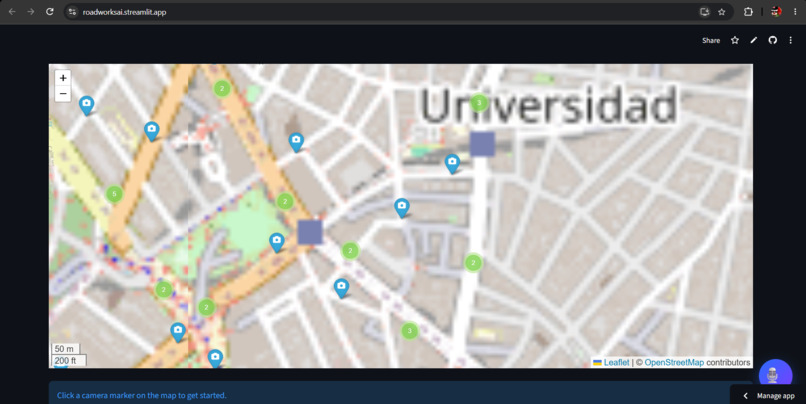
Interactive Map to choose roadwork location
-
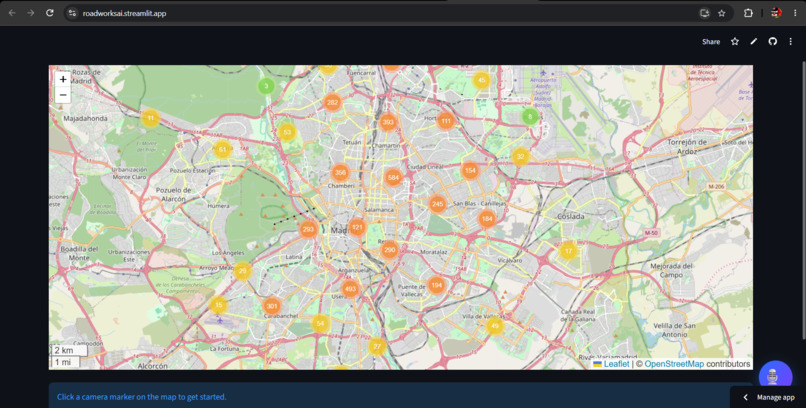
Interactive Map to choose roadwork location
-
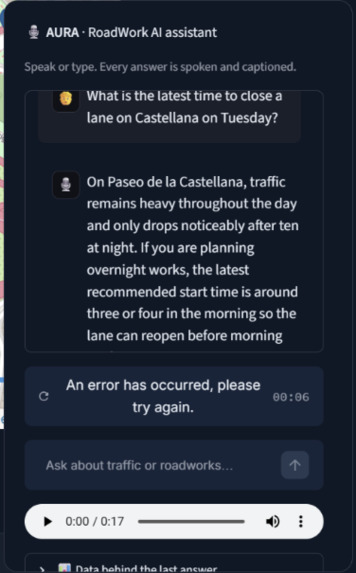
Chat Bot
We’ve all been stuck in traffic and wondered why roadworks have to happen at the busiest times. Roadworks are important, but we thought there must be a smarter way to plan them so they cause less disruption.
That’s what inspired us to build RoadworkWise. Instead of just asking where roadworks are needed, we wanted to figure out when they would have the least impact on drivers.
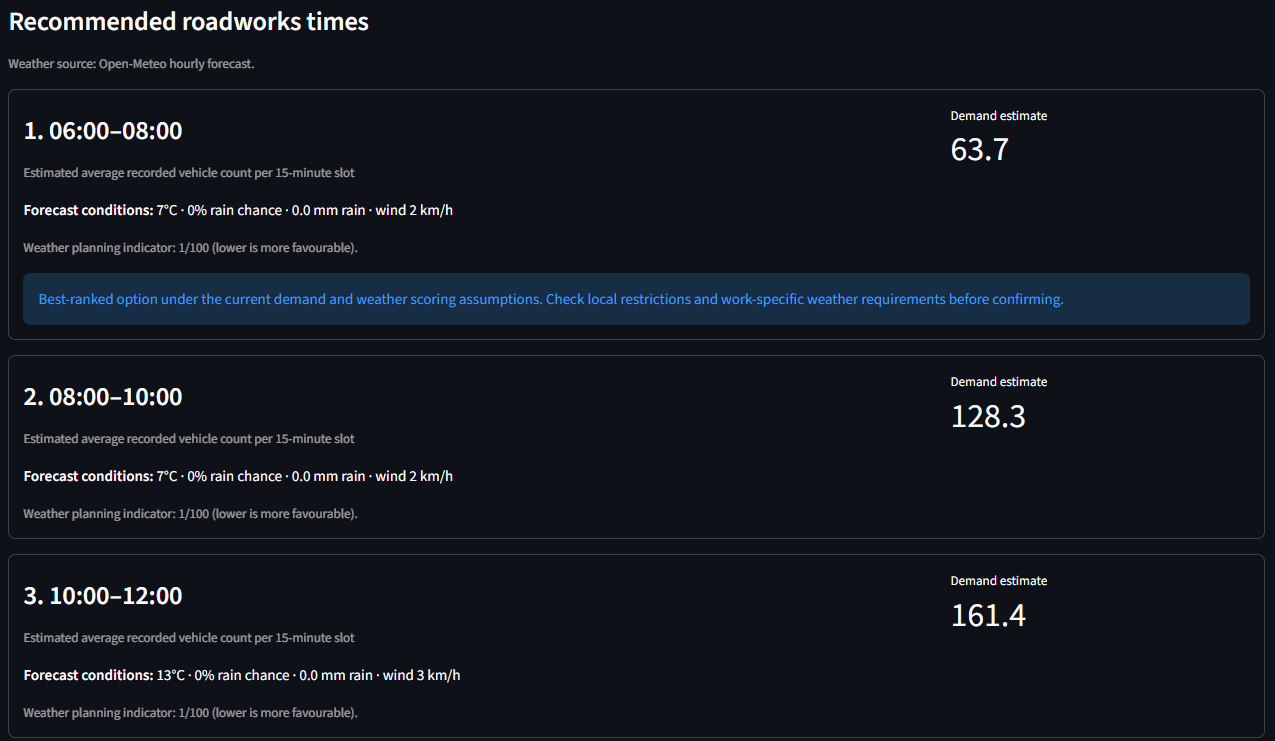
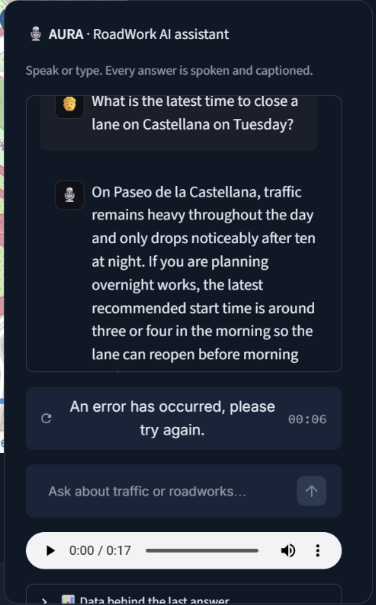
Our project uses historical traffic data to identify traffic patterns and compare different times for roadworks. We built a traffic model to estimate how closing lanes affects congestion and journey times, then use those results to recommend the least disruptive time slot. We also developed AURA, an AI chatbot that lets users ask questions about traffic data and recommendations in a more natural way.
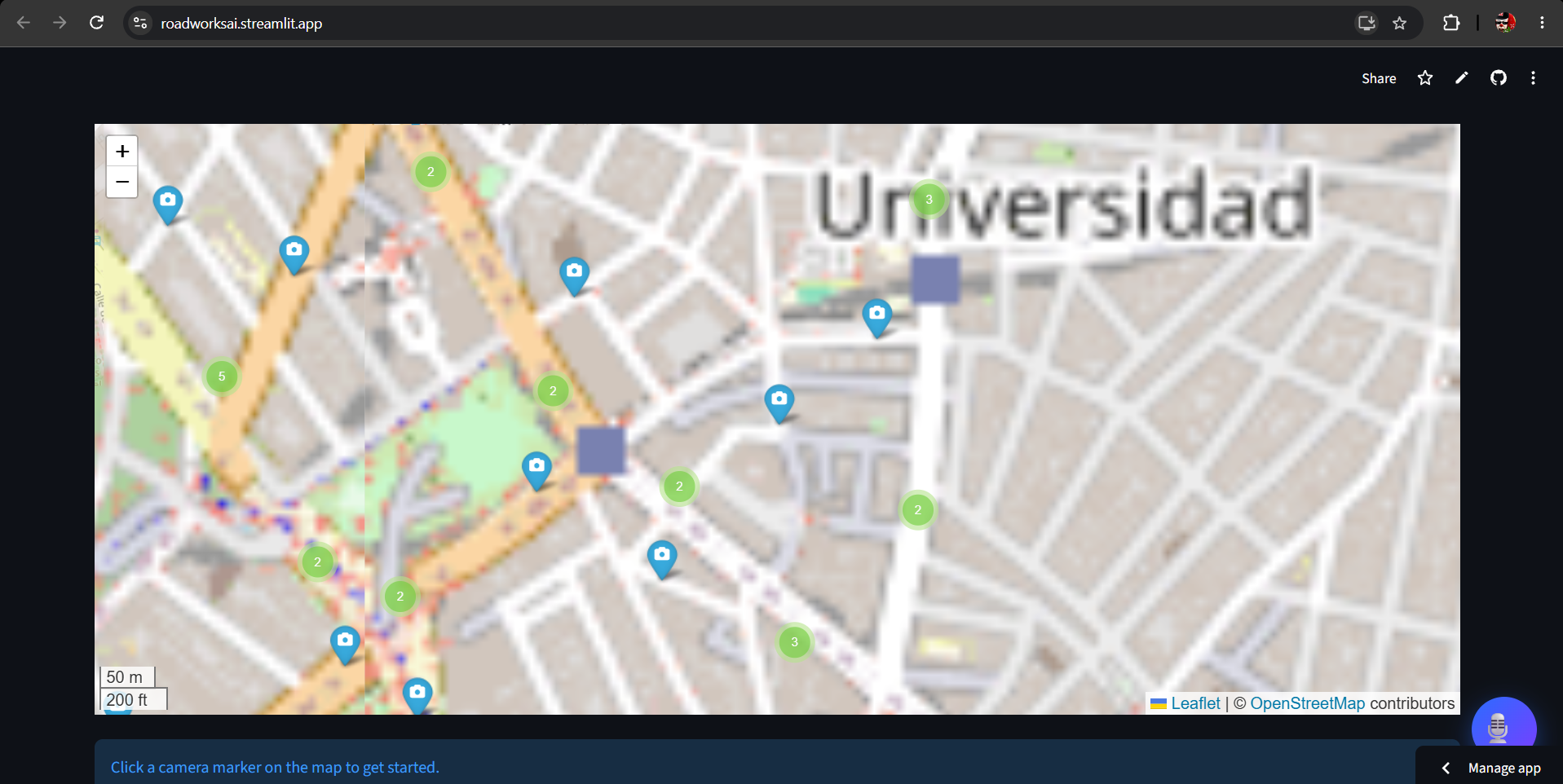
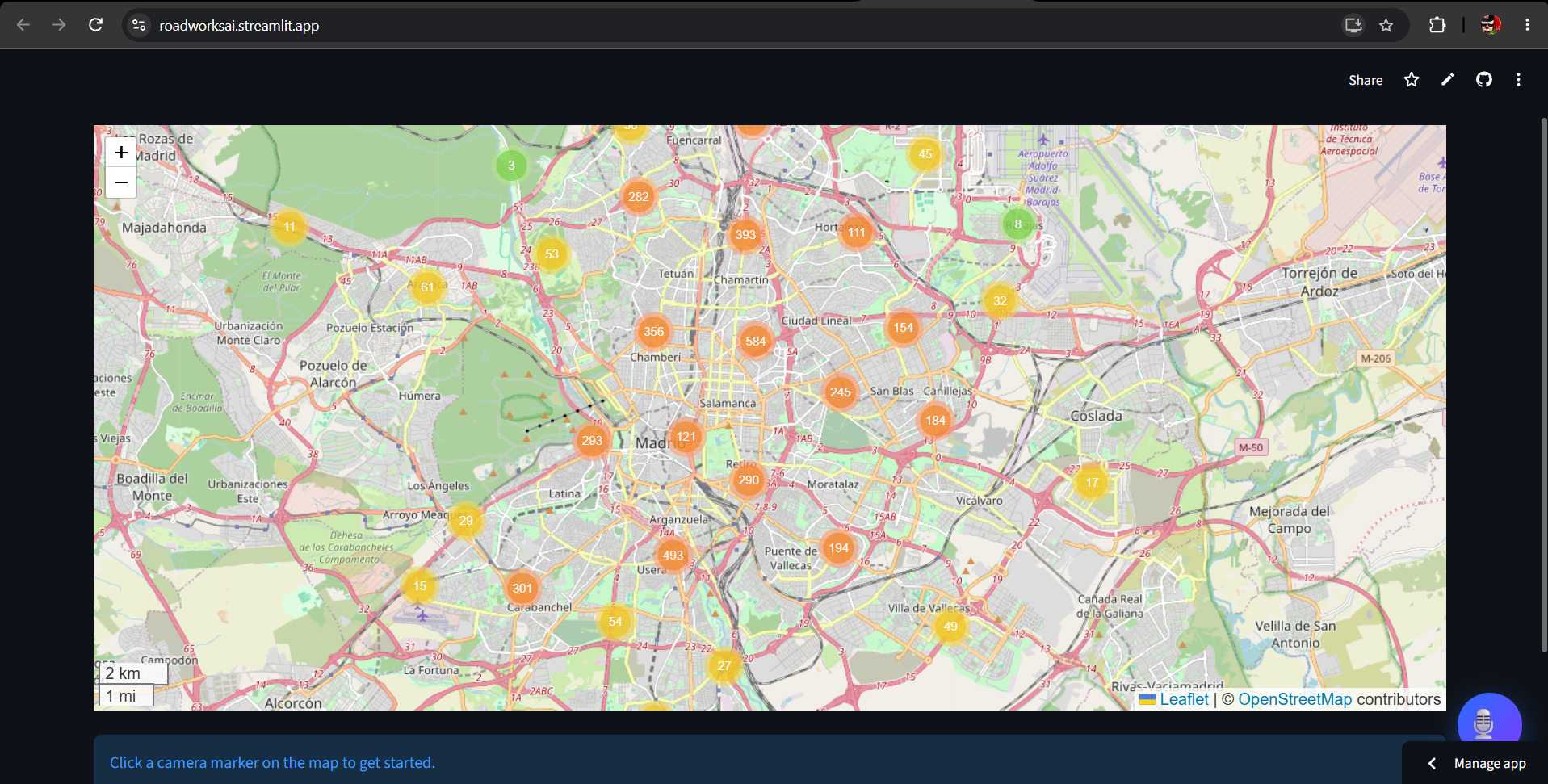
One of the main challenges was finding suitable raw traffic data and turning it into something that could actually help someone make a decision. We had to consider not just how many vehicles use a road, but also how reducing the number of open lanes affects its capacity. We also worked on bringing the analysis, dashboard and chatbot together into one project.
Along the way, we learned more about traffic modelling, working with data, and making technical information easier to understand. The project also showed us how AI can make data more accessible and useful.
Ultimately, we wanted to build something that tackles a real, everyday problem. Roadworks can't always be avoided, but we believe choosing a better time for them could help people spend less time sitting in traffic.


Log in or sign up for Devpost to join the conversation.