Inspiration.
The trucking and logistics industry is the backbone of the economy, yet many dispatchers still rely on fragmented spreadsheets and outdated software to manage fleets. We wanted to build a unified, intelligent platform that seamlessly connects fleet management, 3D freight optimization, crew scheduling, and predictive AI. The goal was to eliminate guesswork and modernize the supply chain.
What it does.
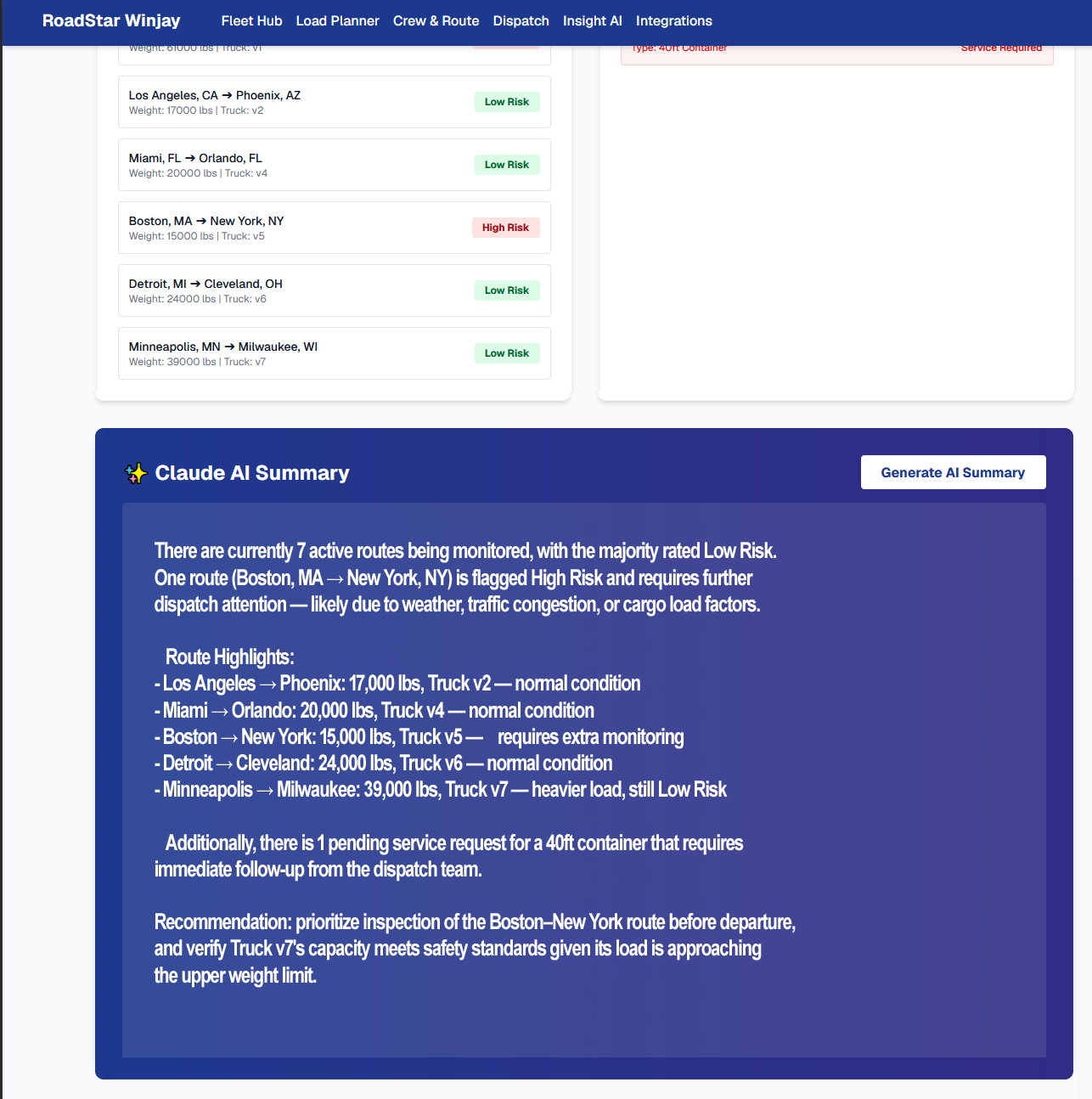
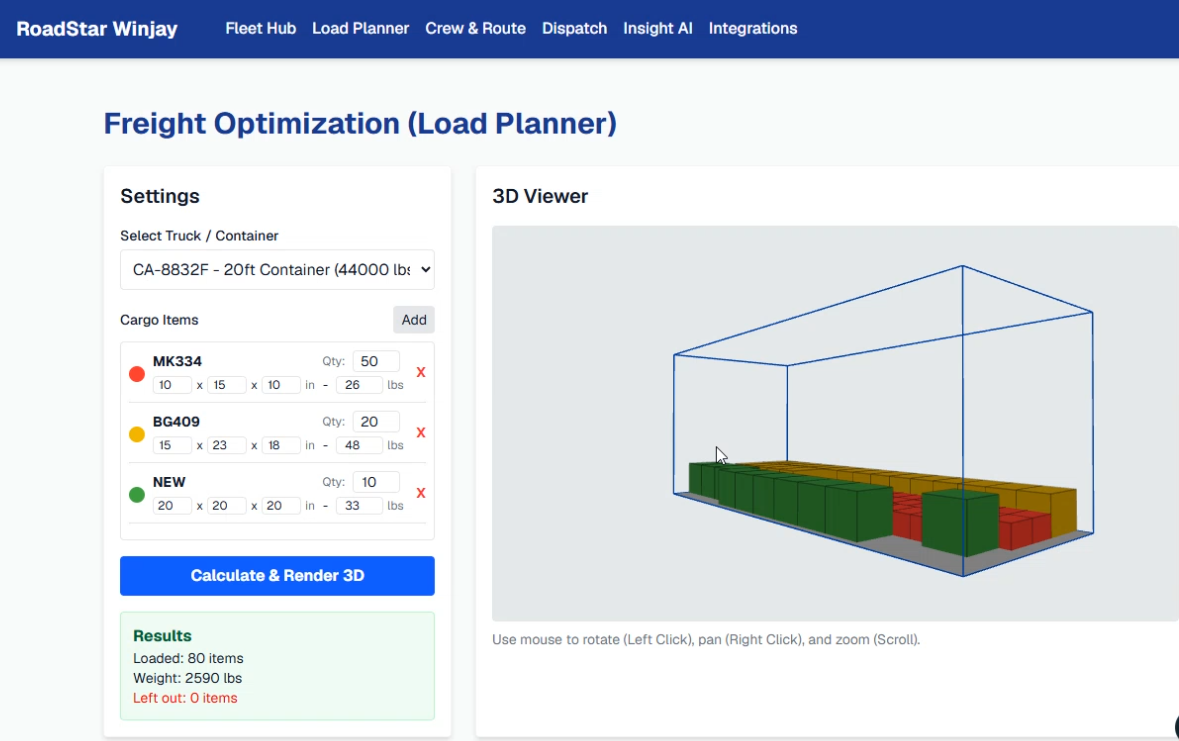
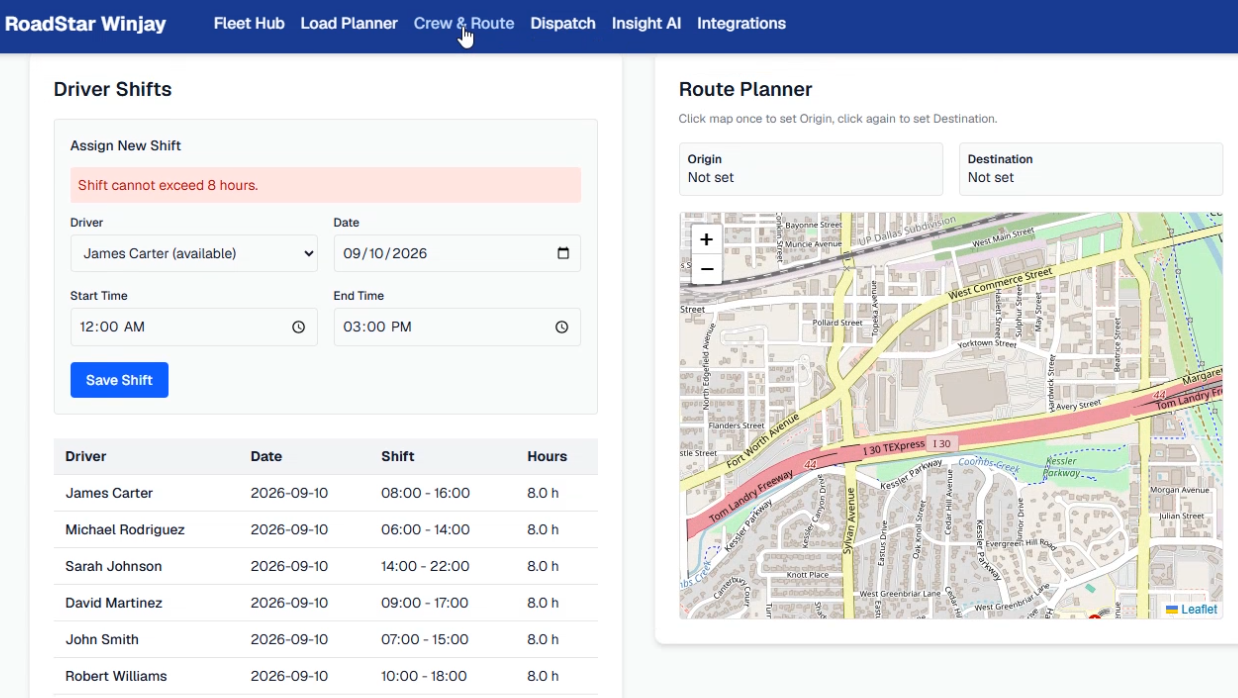
RoadStar Winjay is an all-in-one logistics MVP designed for dispatchers. It features a Fleet Hub to track trucks and drivers (with CDL and US plate formats), a 3D Load Planner that visualizes bin packing to maximize cargo space, a Crew and Route Planner with OSRM map routing and strict shift validation, and a Kanban style Dispatch Board for matching loads. It also includes an Insight AI dashboard powered by Claude to predict delay risks and maintenance needs.
How we built it.
We built the frontend using React 19, Vite 8, and Tailwind CSS v4. For mapping and 3D visualization, we integrated React Leaflet and Three.js. The backend is powered by Node.js and Express. To ensure maximum stability during the hackathon, we built a custom in-memory data architecture for our API endpoints. For predictive analytics, we integrated the Anthropic Claude API to generate real-time executive summaries of fleet utilization.
Challenges we ran into.
Our biggest hurdle was the database layer. We initially planned to use PostgreSQL, but we encountered persistent connection refusal errors that threatened to derail our timeline. We had to make a rapid executive decision to pivot the entire backend to a 100% in-memory mock data architecture. Additionally, migrating a legacy vanilla JavaScript 3D bin-packing viewer into a modern React component required careful refactoring.
Accomplishments that we're proud of.
We successfully delivered a comprehensive 5-phase logistics platform under extreme time constraints. We are especially proud of the 3D Load Planner and the automated matching algorithm on the Dispatch Board that pairs capable trucks with available drivers without overlapping schedules.
What we learned. We learned the importance of architectural flexibility and pivoting under pressure. Stripping out the database logic and shifting to an in-memory solution taught us how to decouple business logic from storage. We also gained deep experience in integrating external routing engines and leveraging Large Language Models for practical business analytics.
What's next for RoadStar Winjay.
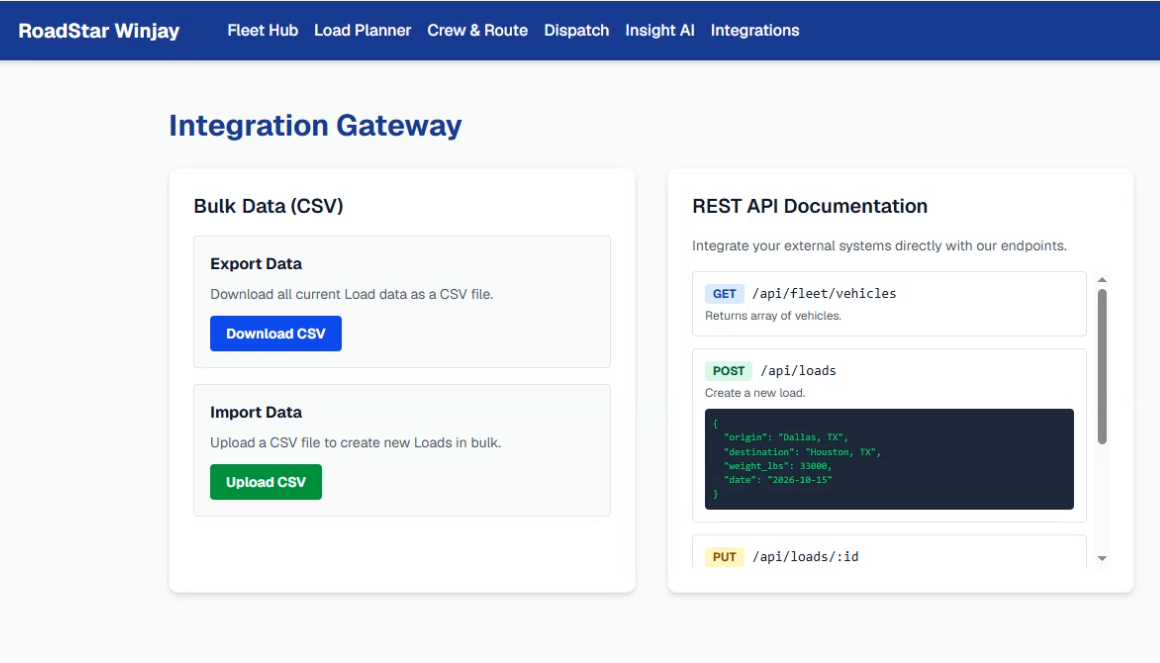
Our immediate next steps include migrating the backend to a persistent PostgreSQL database now that the core logic is stable. We also plan to build a Mobile PWA specifically for drivers on the road, integrate real-time GPS tracking for active loads, and expand the Integration Gateway to support EDI standards for enterprise clients.
Built With
- anthropicapi
- express.js
- leaflet.js
- node.js
- osrm
- react
- tailwindcss
- three.js
- typescript
- vite

Log in or sign up for Devpost to join the conversation.