Inspiration
Aquaculture is a major livelihood in coastal Andhra Pradesh. Farmers often find out about low dissolved oxygen or sudden pH and temperature swings only when fish are already dying. Lab testing is slow and costly, and most monitoring systems are priced beyond small farmers.
What it does
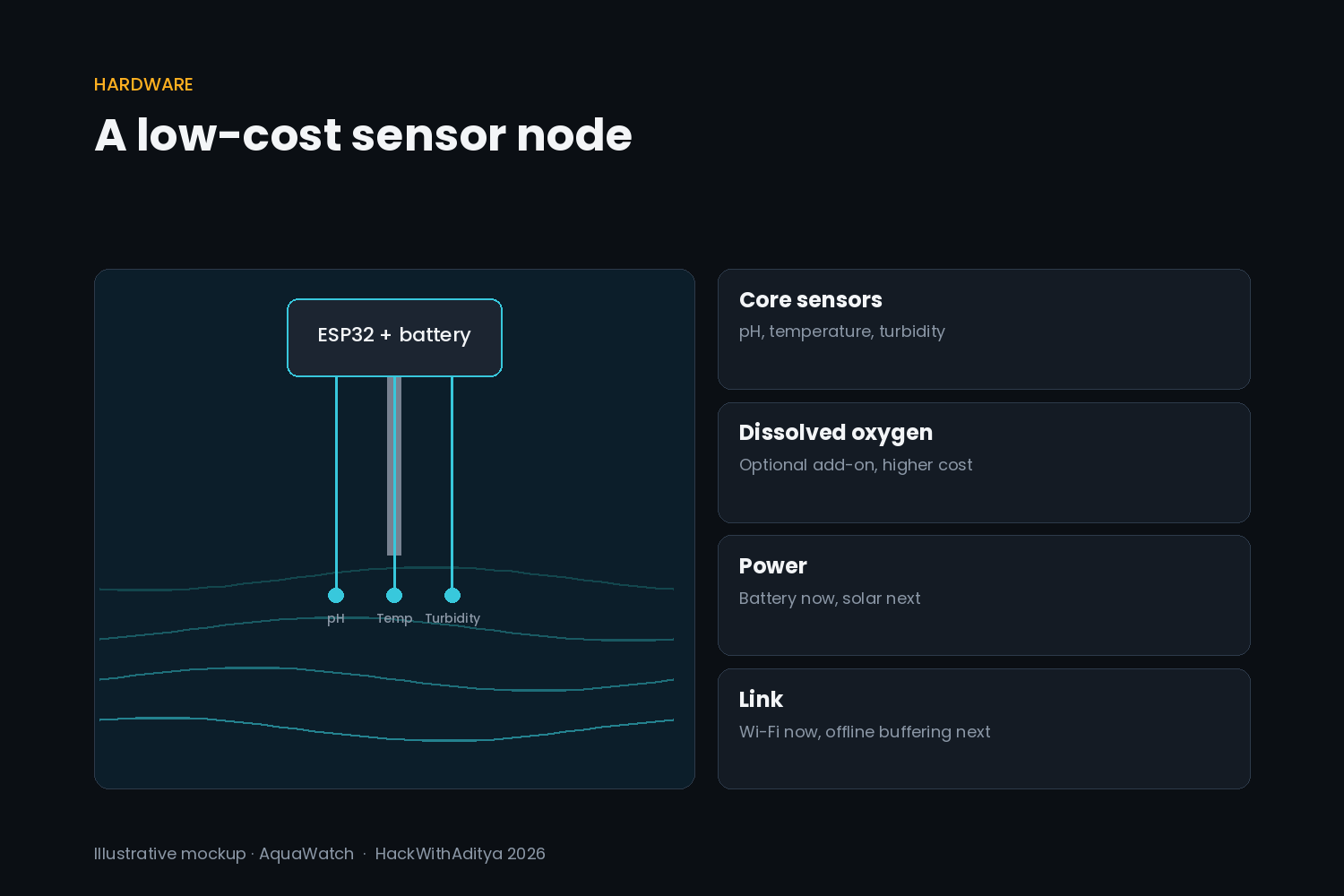
- Measures pond water quality: pH, temperature, dissolved oxygen and turbidity
- Sends readings to a cloud dashboard in real time
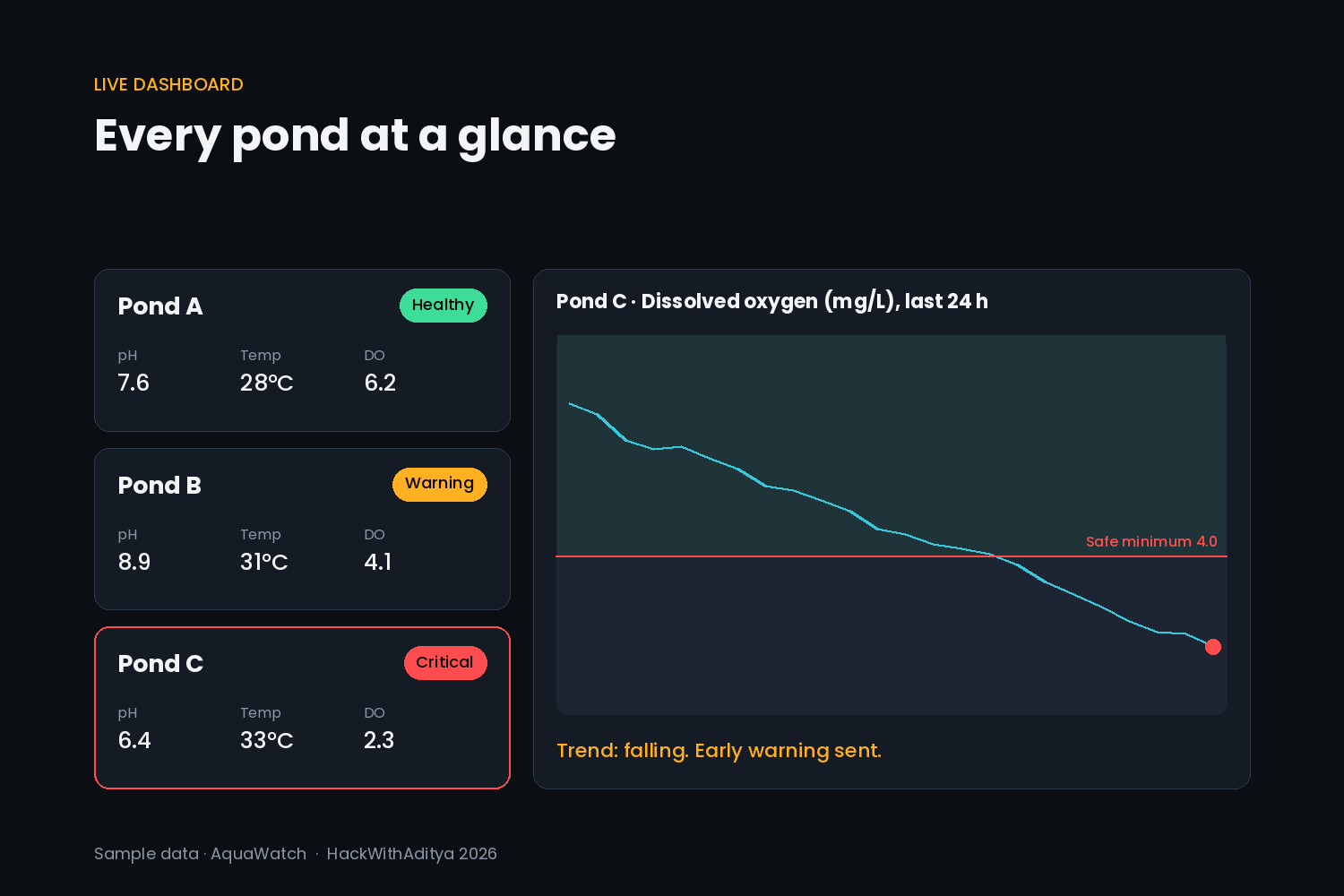
- Detects dangerous trends and anomalies early, before they become emergencies
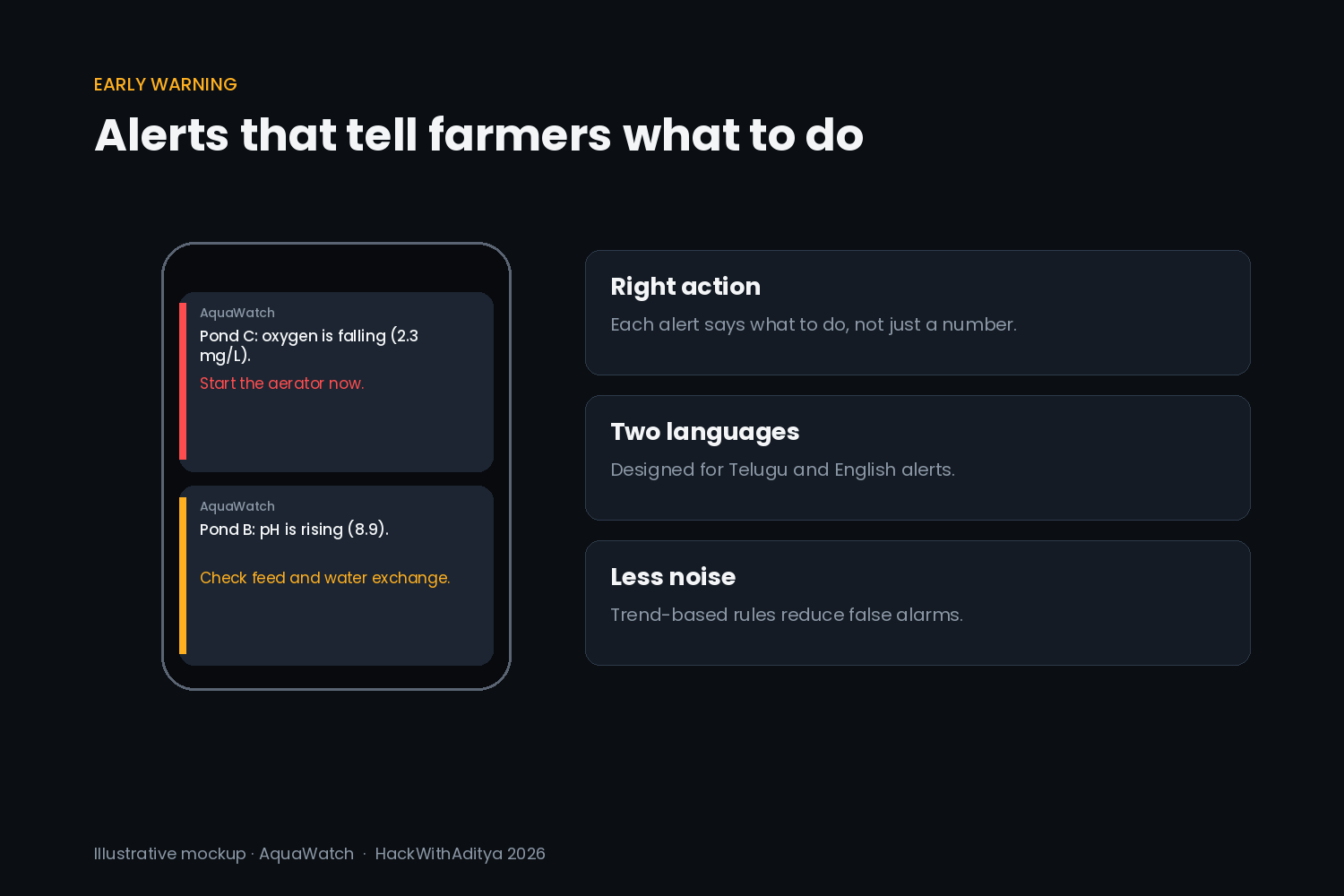
- Sends alerts in Telugu and English by SMS or messaging app, with a suggested action (for example, start the aerator)
- Shows history per pond so farmers can spot patterns
How we built it
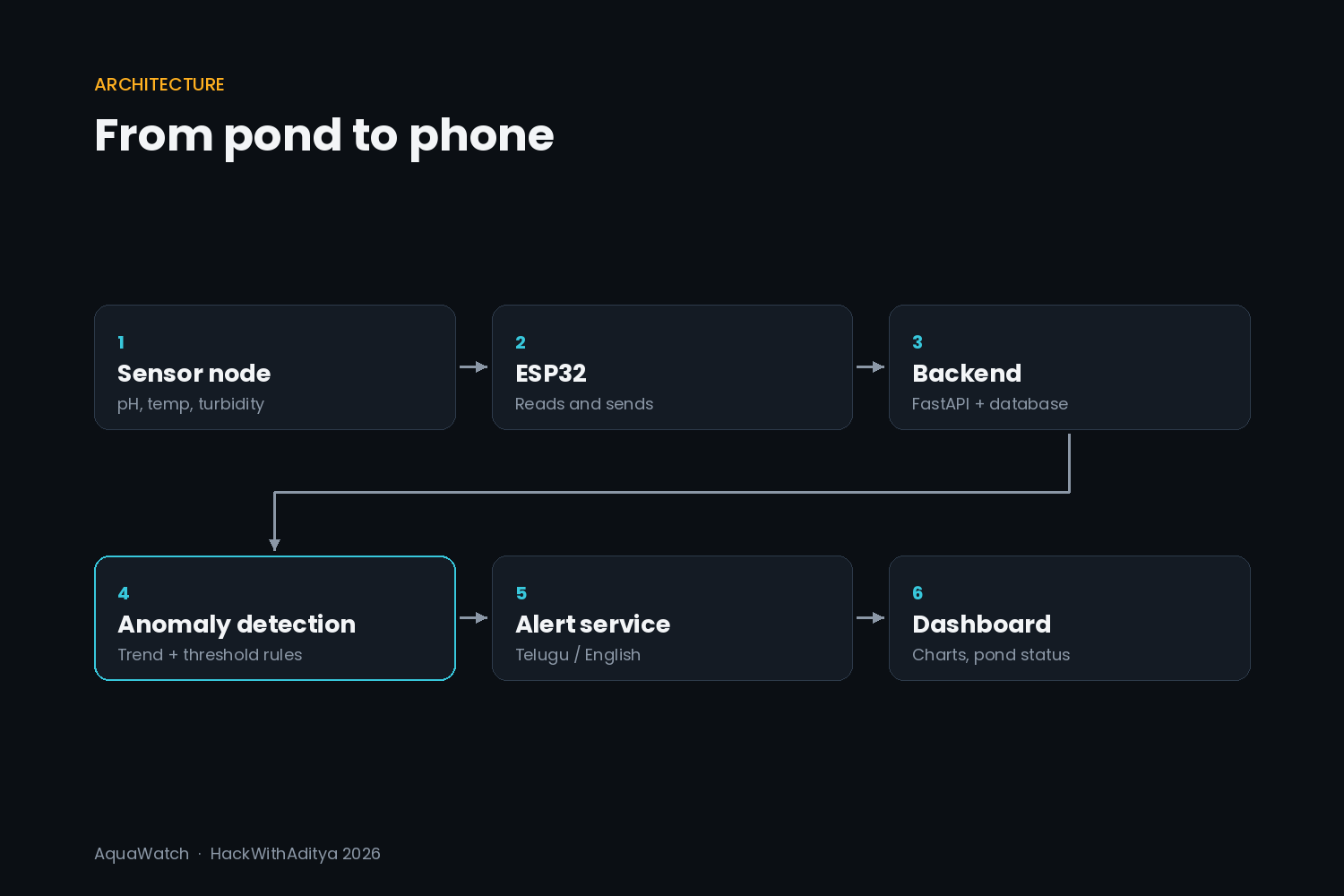
- ESP32 microcontroller with water-quality sensors
- Data sent over Wi-Fi to a FastAPI backend and database
- Anomaly detection model for early warnings, plus simple threshold rules as a fallback
- Web dashboard with charts and pond status, usable on a phone
- Alert service for Telugu and English notifications
Challenges we ran into
- Sensor calibration and drift in real water
- Unreliable connectivity near ponds
- Keeping alerts useful without causing alarm fatigue
What we learned
Reliable data matters more than a complex model, and farmers need clear actions, not just numbers.
What's next
- Solar-powered sensor nodes
- Offline buffering when the network drops
- Predicting oxygen crashes several hours ahead
- Pilot with local farmers
Built With
- arduino
- chart-js
- esp32
- fastapi
- mqtt
- python
- react
- scikit-learn
- sqlite
