-
-
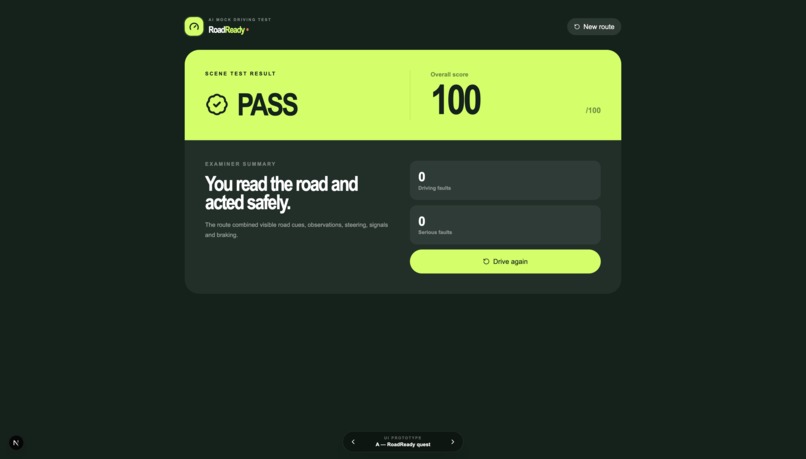
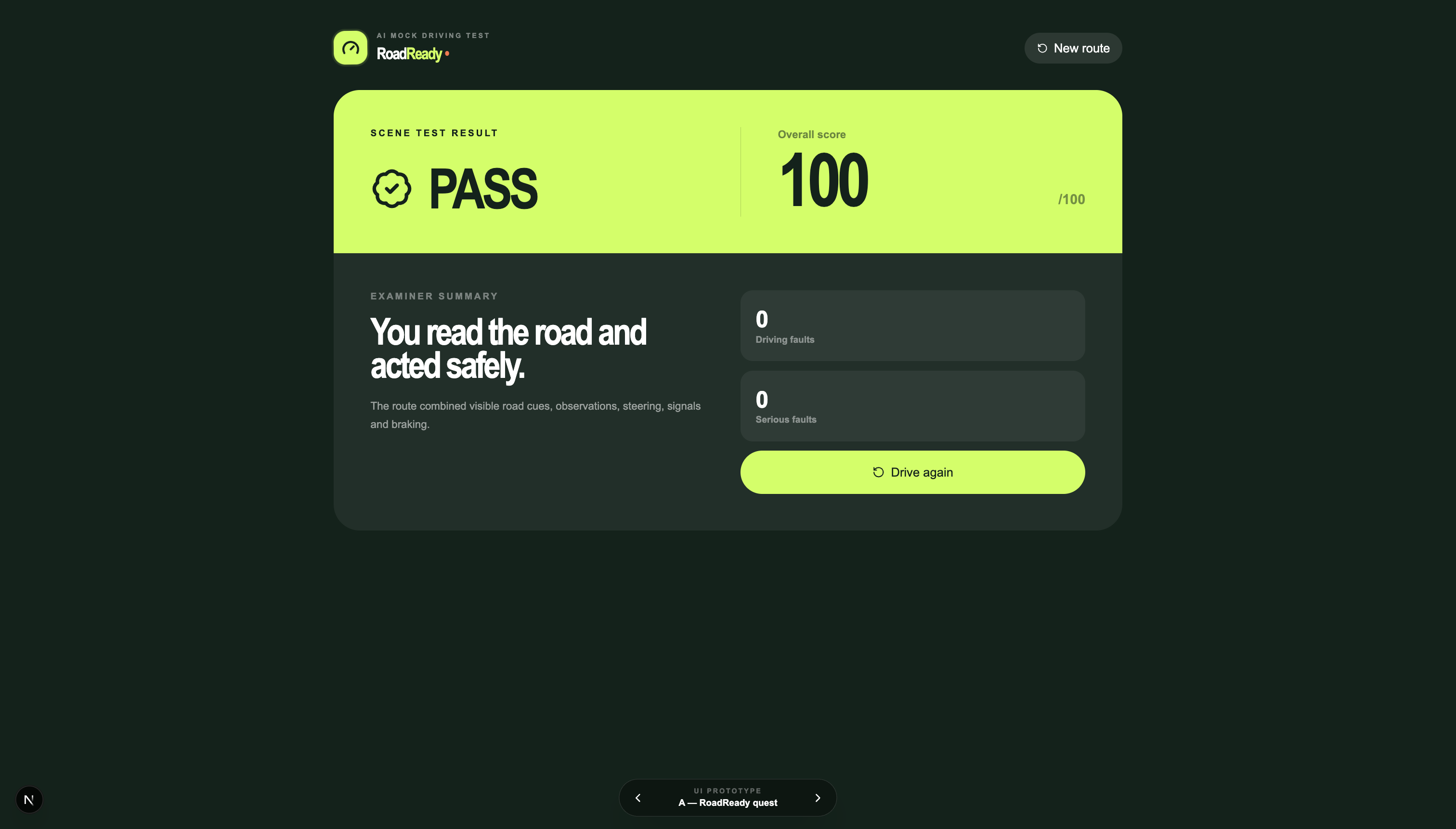
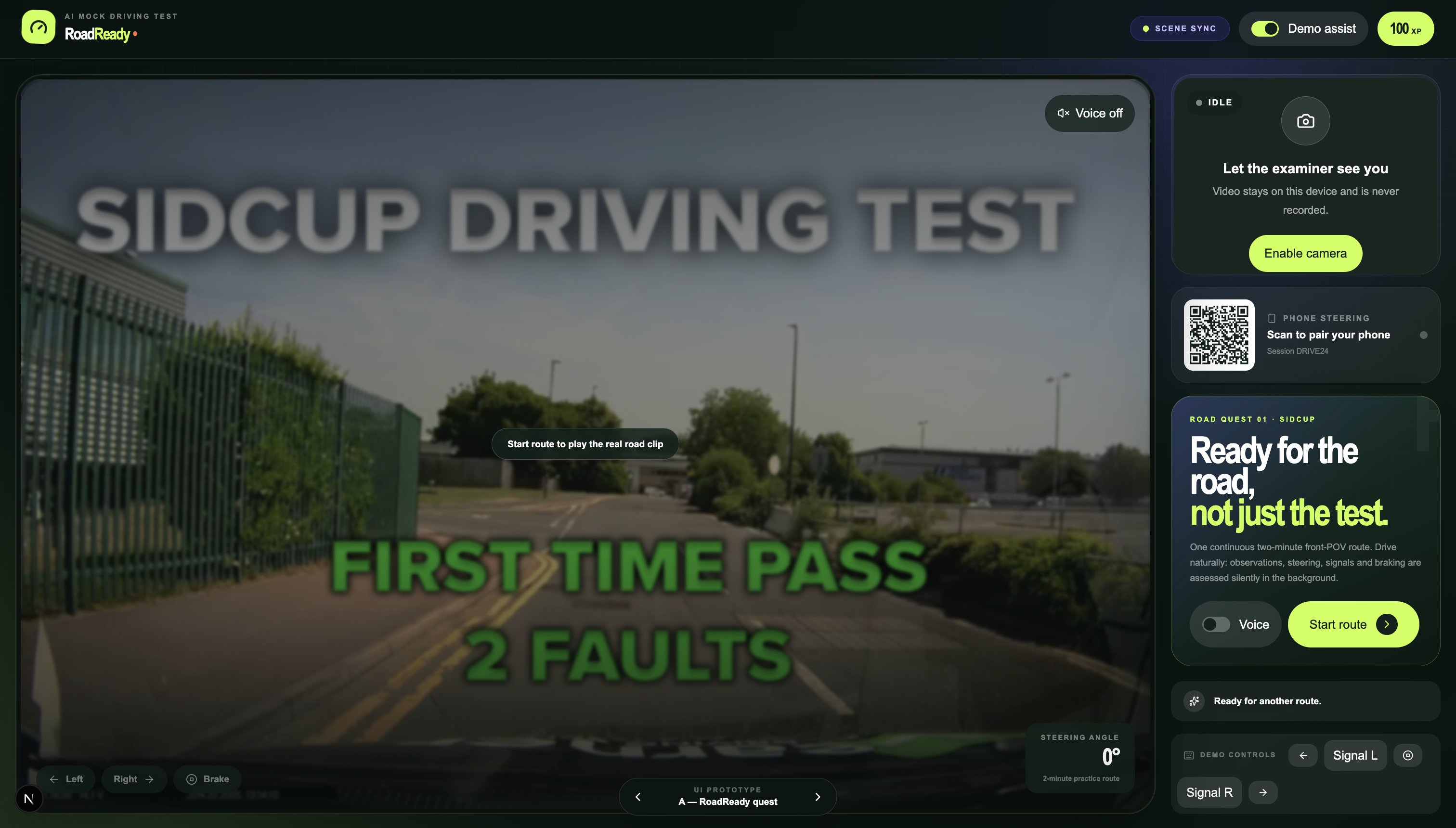
product output page
-
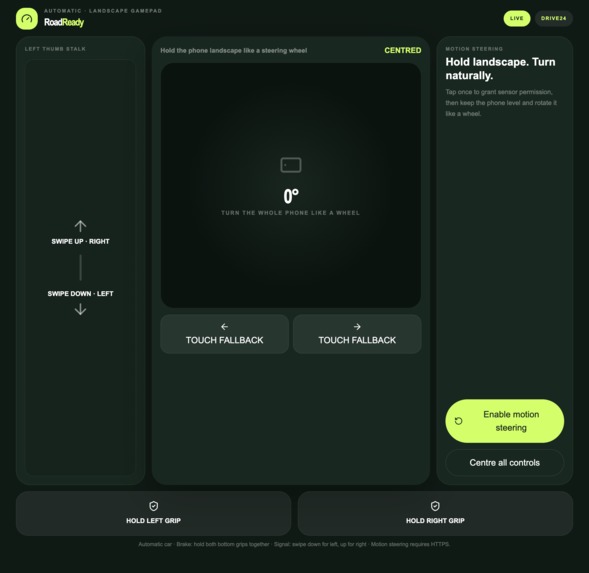
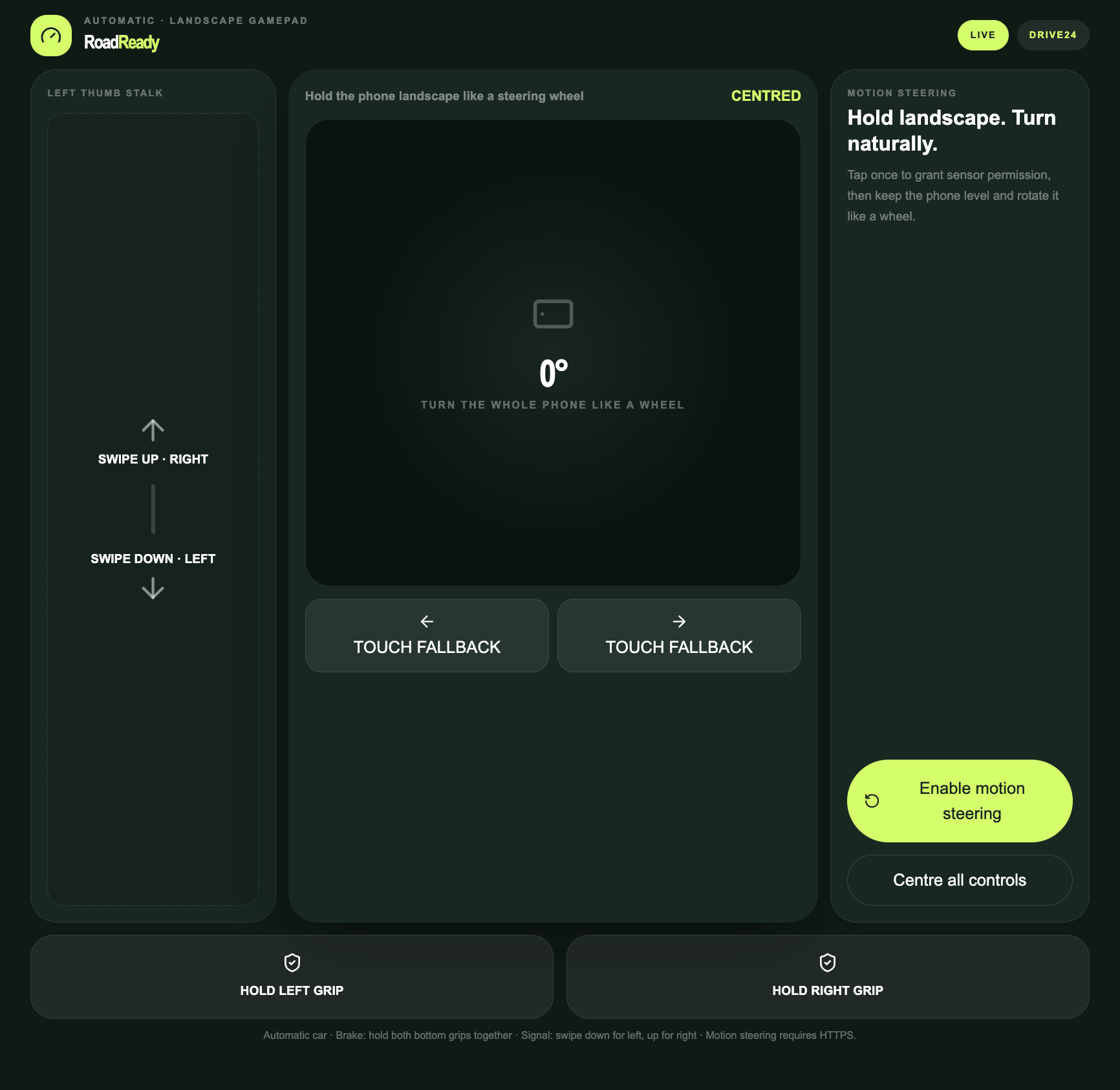
mobile control page
-
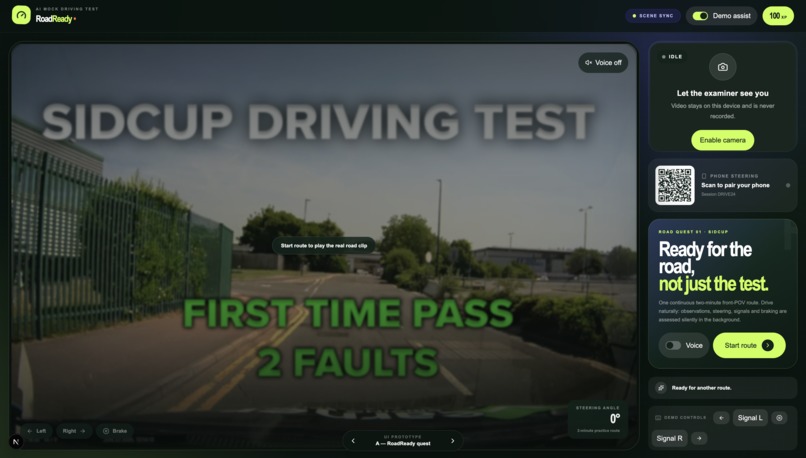
product main page
Inspiration
Learner drivers often know the rules but still struggle to coordinate observation, signalling and vehicle control at the right moment. Simulator hardware is expensive and ordinary driving videos are passive. We wanted to make realistic rehearsal possible with devices a learner already owns.
What it does
RoadReady turns a laptop and phone into a lightweight mock driving-test station. The learner follows a real front-facing UK road sequence, holds the phone like a steering wheel, swipes for indicators, grips to brake and performs natural head checks. The product assesses those actions silently against hidden route events, then returns a score and fault summary without giving away the expected answer during the drive.
How we built it
The product uses Next.js, React and TypeScript. A same-origin controller API relays phone orientation and gesture state to the desktop. MediaPipe Face Landmarker and Pose Landmarker analyse observation movements locally in the browser, so webcam frames are not recorded or uploaded. A route-aware state machine combines observation, steering, indicator and brake evidence into the final report.
RoadReady was built inside OpenAI Codex with GPT-5.6 as the primary coding model. GPT-5.6 helped reason across the desktop, mobile-controller, camera and scoring paths; Codex inspected and edited the repository, exercised the live UI in a browser, diagnosed device-orientation bugs and ran regression, lint and production-build checks. Key human-directed decisions included narrowing the MVP to one continuous route, removing answer-like prompts and designing physical phone gestures for an automatic-car experience.
Challenges we ran into
Mobile motion permissions require HTTPS and differ across browsers. Phone orientation also crosses the 0°/360° boundary, which initially reversed left and right steering. Camera startup needed clear failure handling and a GPU-to-CPU fallback. Finally, the assessment had to stay aligned to a fixed road timeline without showing instructions that would teach the answer.
Accomplishments that we're proud of
We produced a coherent end-to-end loop using only a laptop and phone: local observation detection, motion steering, gesture indicators, braking, hidden assessment windows and an automatic final report. The phone-direction regression is covered by a focused test, and the project passes lint and a production build.
What we learned
For a training product, restraint matters. One well-understood route with honest limitations is more useful than many loosely matched scenarios. Silent assessment also creates a more authentic exercise than on-screen commands, while local vision offers a practical privacy boundary for webcam-based feedback.
What's next for RoadReady
The next version would use original or explicitly licensed road footage, durable multi-user sessions and stable hosting. Longer term, we would replace authored timing windows with validated road-event understanding, add instructor-authored route packs and test the feedback model with learner drivers and approved instructors.
Built With
- device-orientation-api
- gpt-5-6
- mediapipe
- next-js
- openai-codex
- react
- typescript

Log in or sign up for Devpost to join the conversation.