-
-
Road to Recovery App Icon
-
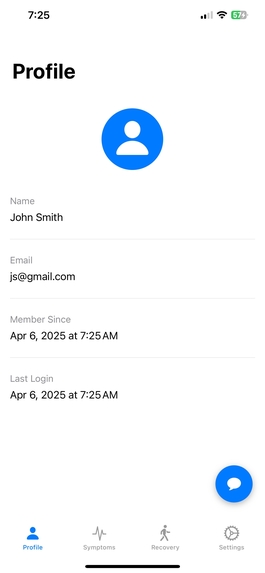
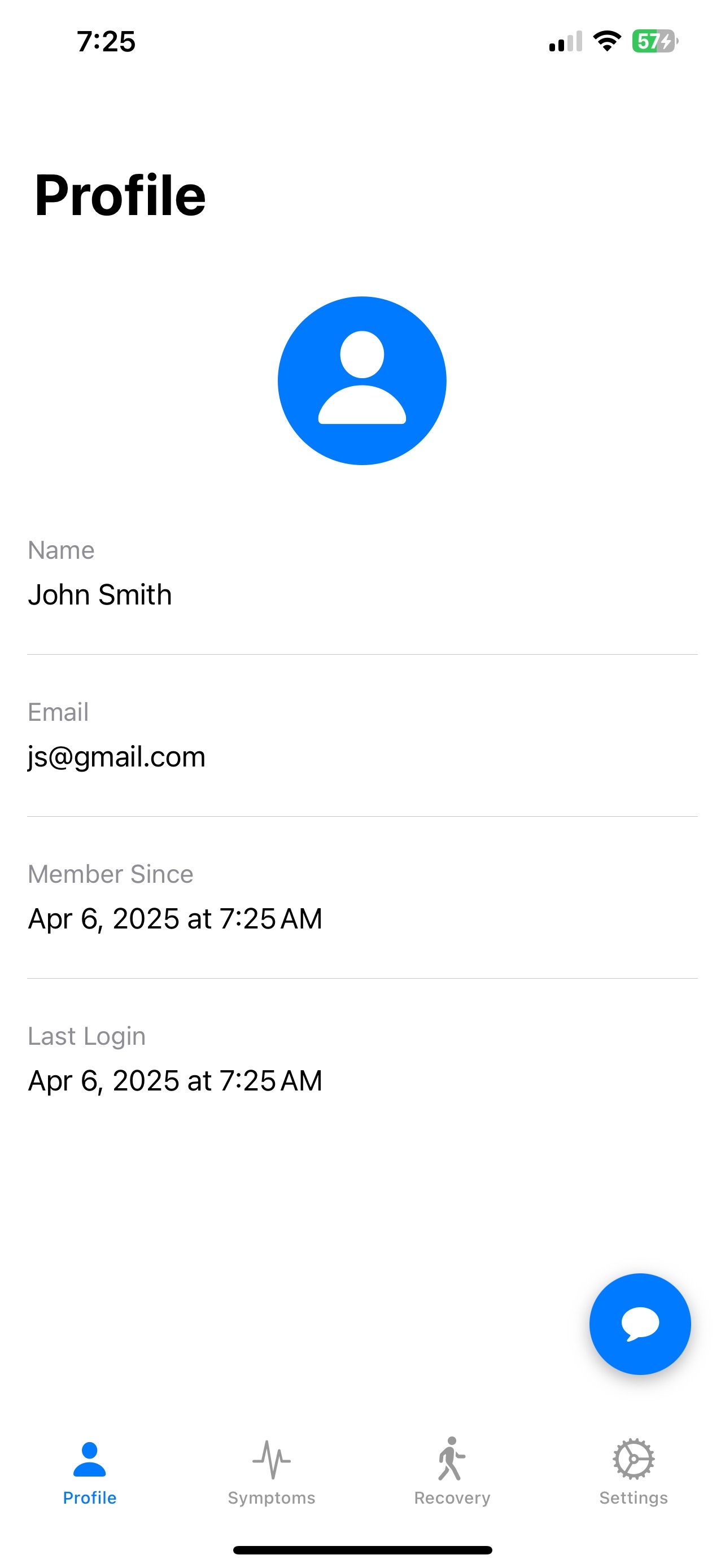
Profile Page
-
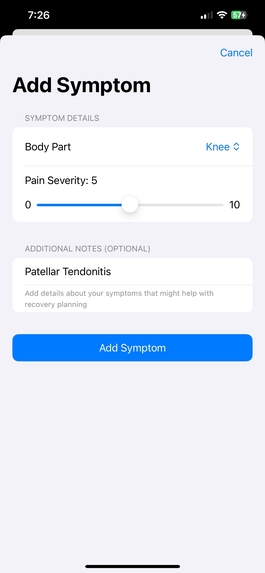
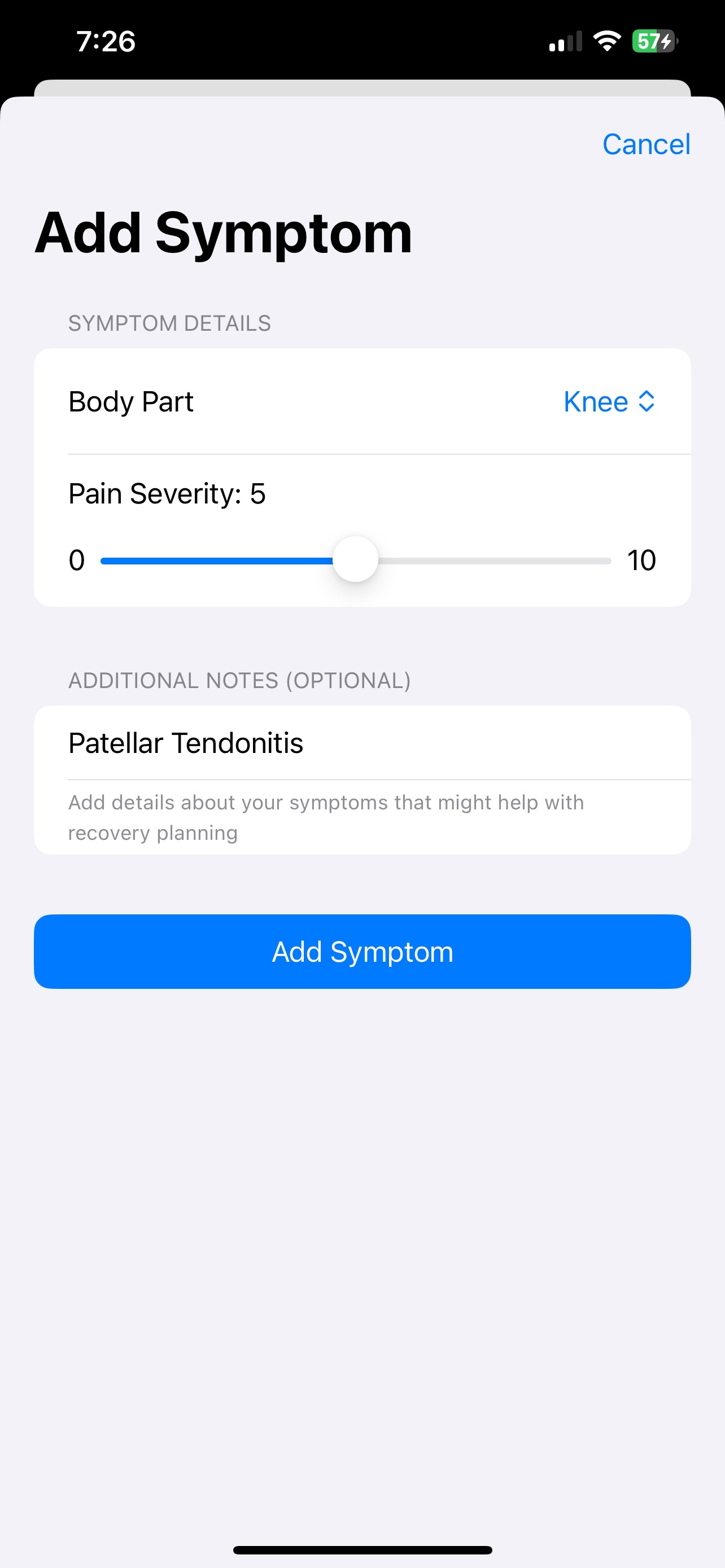
Adding New Symptoms
-
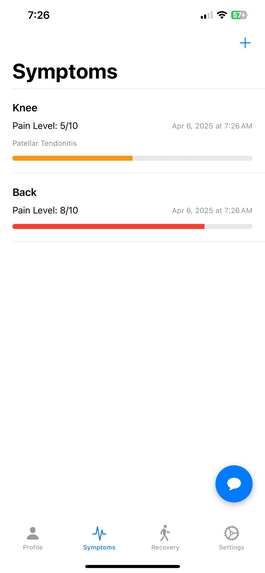
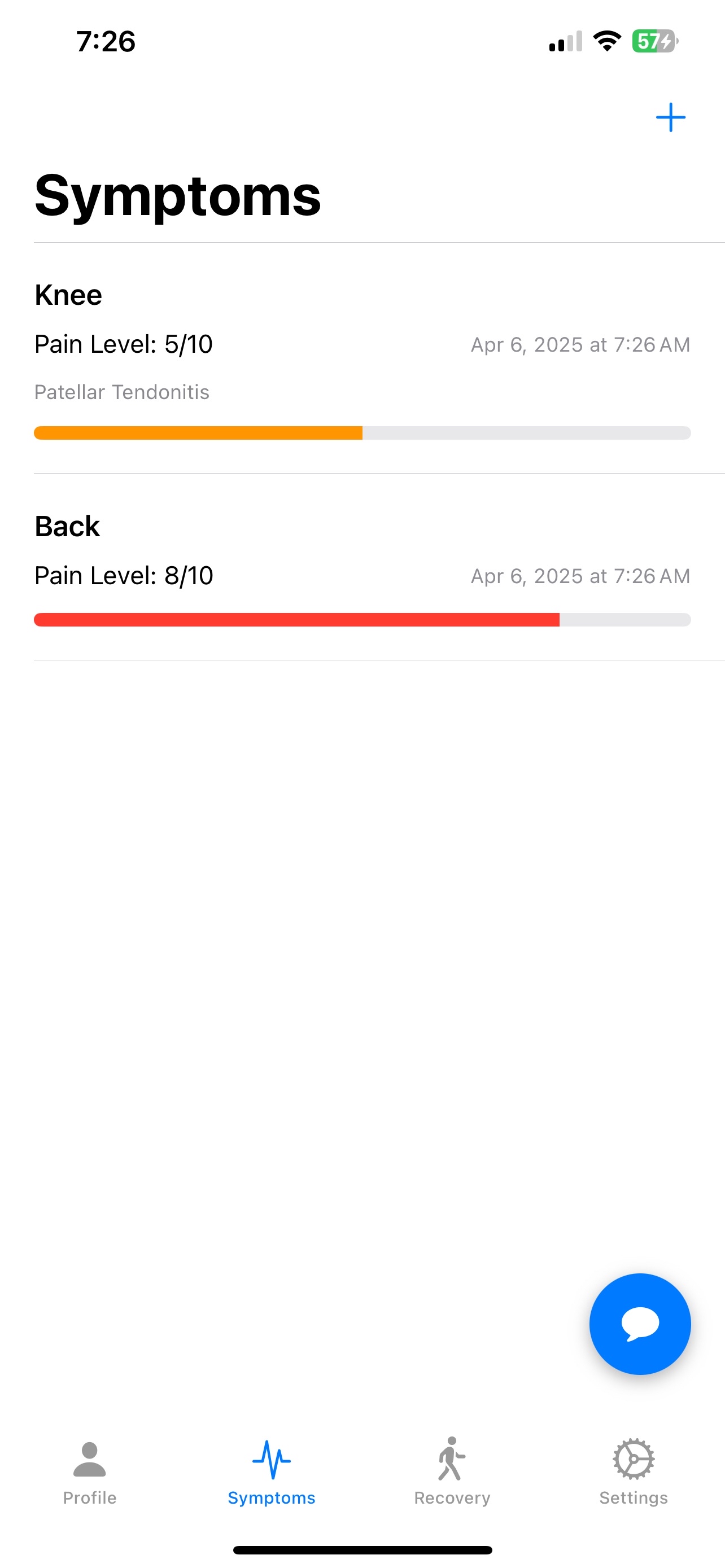
Symptoms View
-
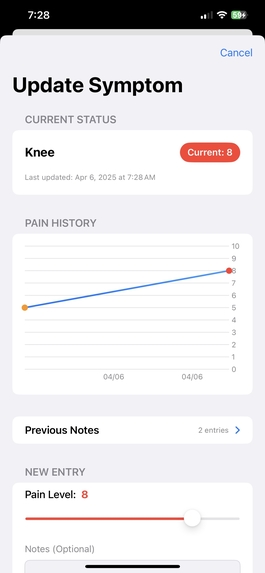
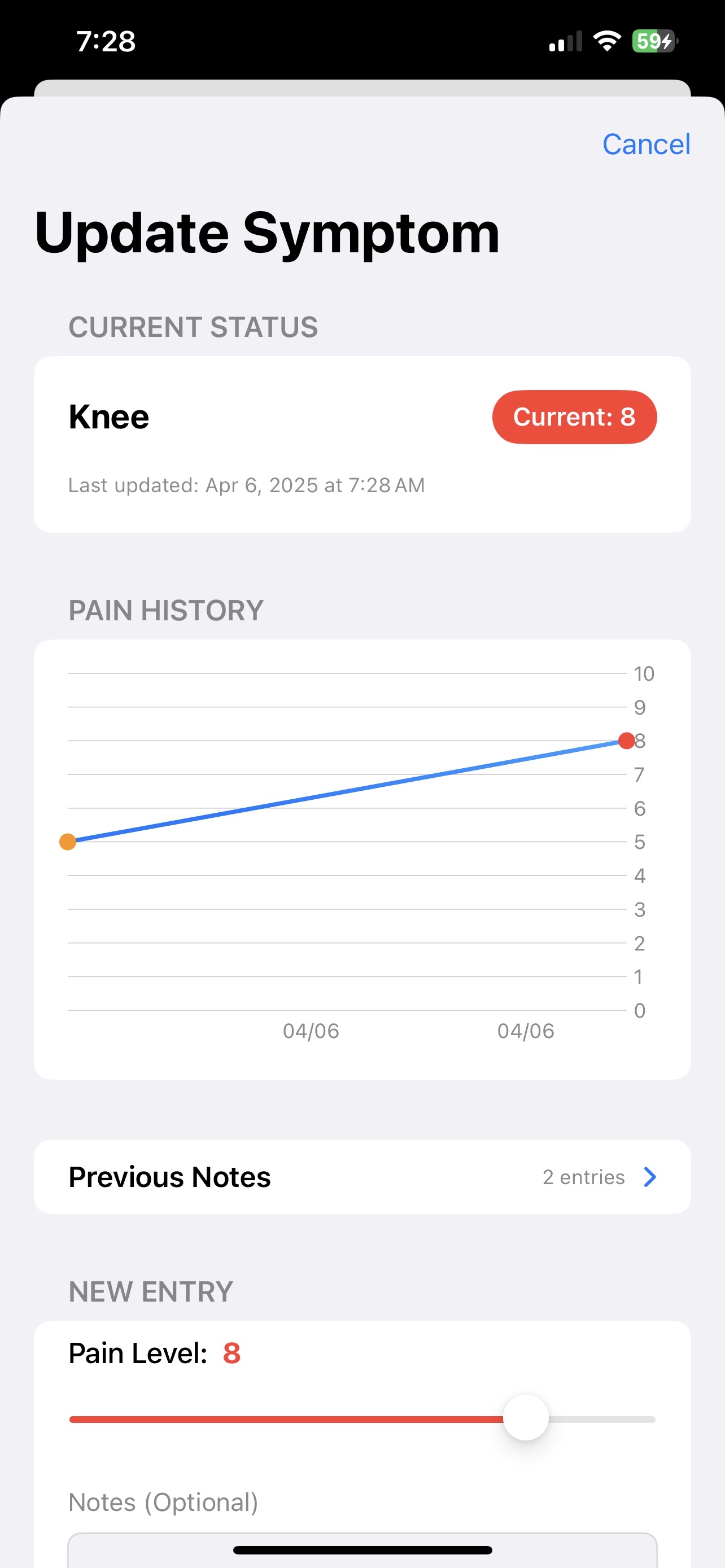
Symptom History
-
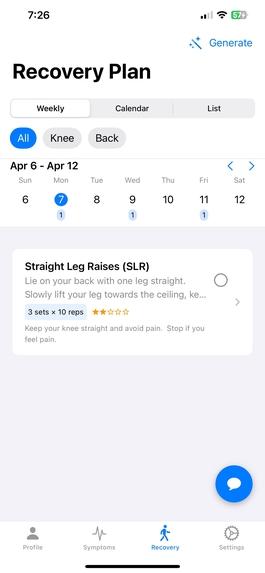
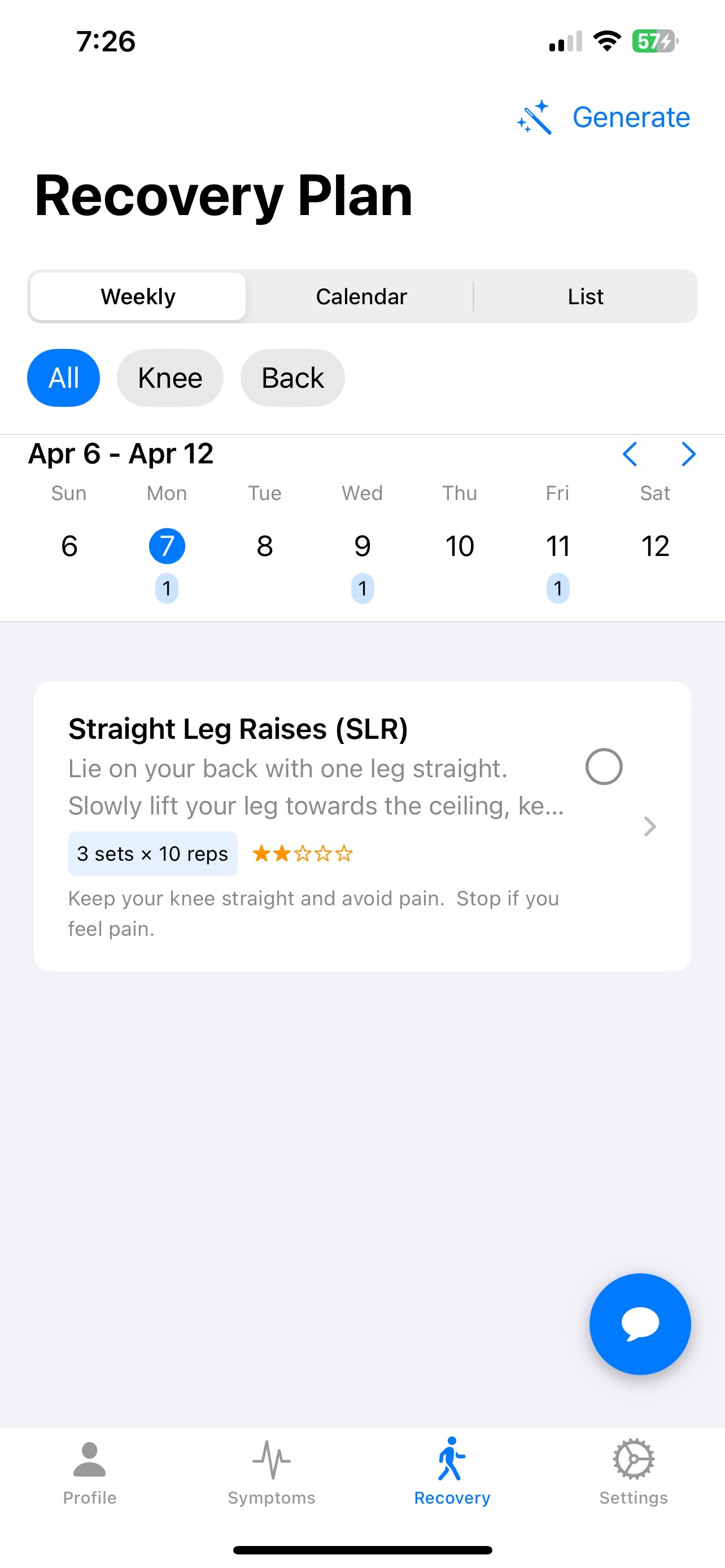
Exercises View
-
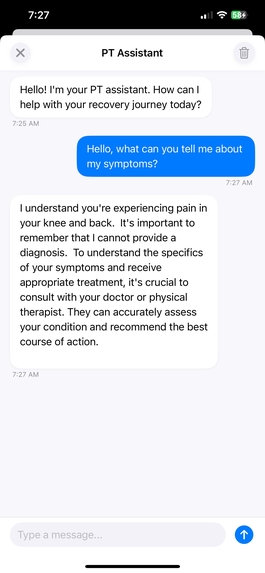
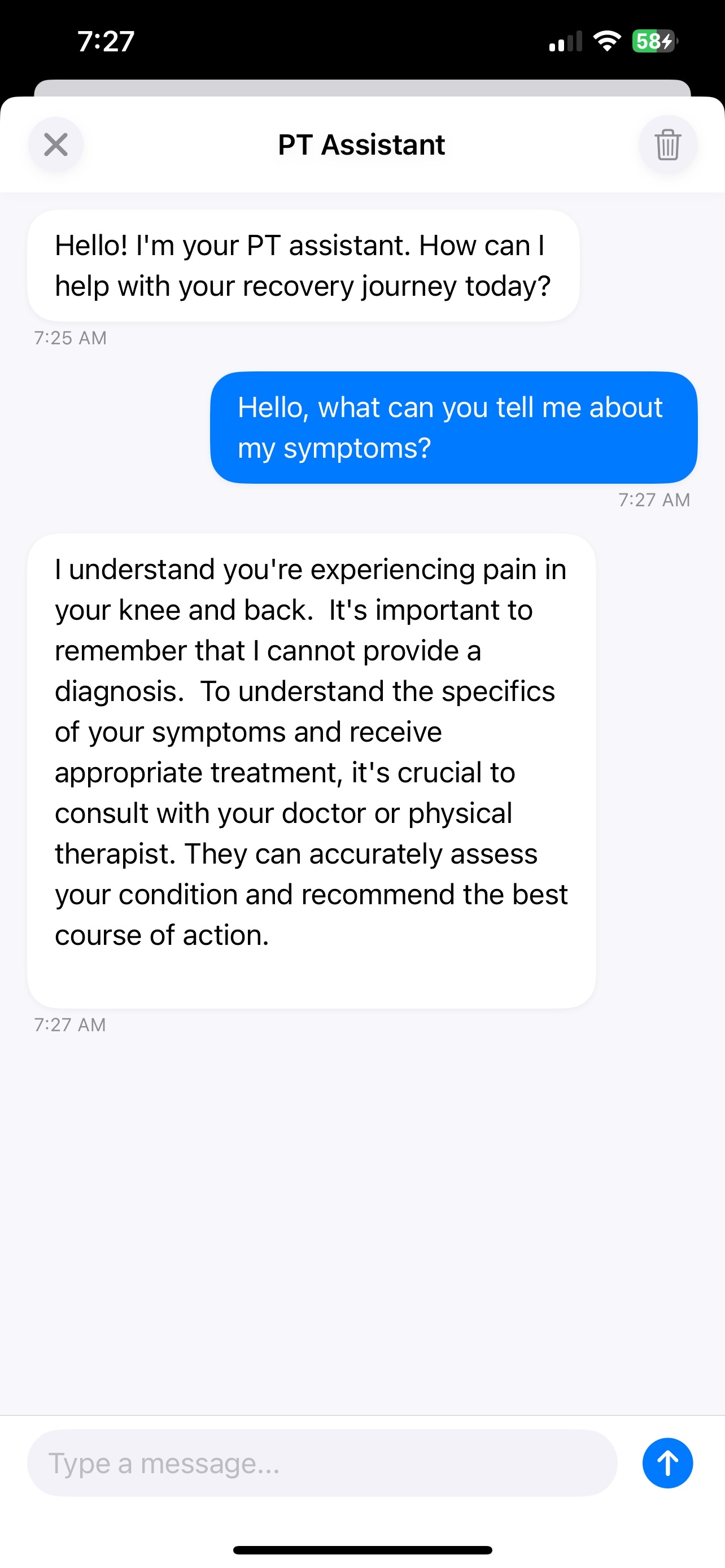
AI Chatbot Experience
The Story Behind Road to Recovery
Inspiration
The inspiration for Road to Recovery came from a personal experience with physical therapy and the challenges faced during the recovery process. Many people going through physical therapy struggle to:
- Keep track of their daily exercises
- Monitor pain levels and symptoms consistently
- Remember the details of their progress between sessions
- Stay motivated throughout their recovery journey
These challenges often lead to slower recovery times and less effective treatment outcomes. We realized that while there were many fitness tracking apps available, there wasn't a comprehensive solution specifically designed for physical therapy patients.
The Journey
Initial Concept
The project started with a simple idea: create a mobile app that helps patients track their physical therapy exercises and symptoms. However, as we dove deeper into the requirements and spoke with physical therapy patients and practitioners, we realized the need for a more comprehensive solution that would:
- Provide detailed symptom tracking with pain levels
- Support offline usage for exercises done without internet access
- Ensure data security for sensitive medical information
- Offer a simple, intuitive interface that works for all age groups
Technical Decisions
Mobile-First Approach
We chose to develop a native iOS app using Swift and SwiftUI because:
- It provides the best performance and user experience on iOS devices
- SwiftUI enables rapid UI development with modern design patterns
- Native iOS features like Keychain provide secure data storage
- The framework offers excellent accessibility support
Backend Architecture
For the backend, we selected Node.js with Express and MongoDB because:
- The MEAN stack provides excellent scalability
- MongoDB's flexible schema works well for evolving medical data
- JWT authentication ensures secure API access
- The admin panel facilitates easy monitoring and support
Challenges and Solutions
1. Offline Support
Challenge: Users needed to access their exercise plans and track symptoms even without internet connection.
Solution: Implemented a robust local caching system that:
- Stores exercise data locally using Core Data
- Syncs with the backend when connection is restored
- Manages conflict resolution for data updates
2. Data Security
Challenge: Handling sensitive medical information required strong security measures.
Solution: Implemented multiple security layers:
- JWT-based authentication
- Secure token storage in iOS Keychain
- Data encryption in transit and at rest
- Regular security audits and updates
3. User Experience
Challenge: Creating an interface that works for users of all ages and technical abilities.
Solution:
- Conducted extensive user testing
- Implemented clear, high-contrast UI elements
- Added comprehensive error handling with user-friendly messages
- Created intuitive navigation patterns
4. Performance
Challenge: Maintaining app responsiveness with increasing data volume.
Solution:
- Implemented efficient data pagination
- Optimized database queries
- Added request caching
- Compressed API responses
What We Learned
Technical Insights
- The importance of proper error handling across the full stack
- Strategies for managing offline-first applications
- Best practices for secure medical data handling
- Techniques for optimizing API performance
Project Management
- The value of user feedback in the development process
- The importance of documentation from day one
- How to balance feature development with technical debt
- The benefits of a modular, maintainable architecture
Future Development
We're excited about the future of Road to Recovery and plan to add:
- AI-powered exercise form detection and correction
- Integration with wearable devices for better tracking
- Telehealth features for remote consultations
- Expanded exercise library with video guidance
- Social features for connecting with other patients
Conclusion
Building Road to Recovery has been a journey of continuous learning and improvement. We've created not just an app, but a tool that makes a real difference in people's recovery journeys. The challenges we faced pushed us to become better developers and reminded us why we started this project: to help people recover better and faster from their injuries.
We're proud of what we've built and excited about the future improvements that will make Road to Recovery even more helpful for physical therapy patients worldwide.


Log in or sign up for Devpost to join the conversation.