-
-
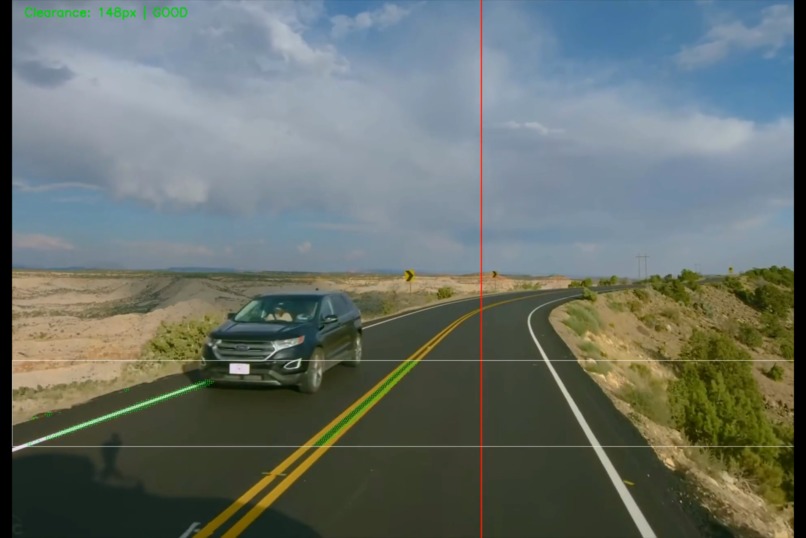
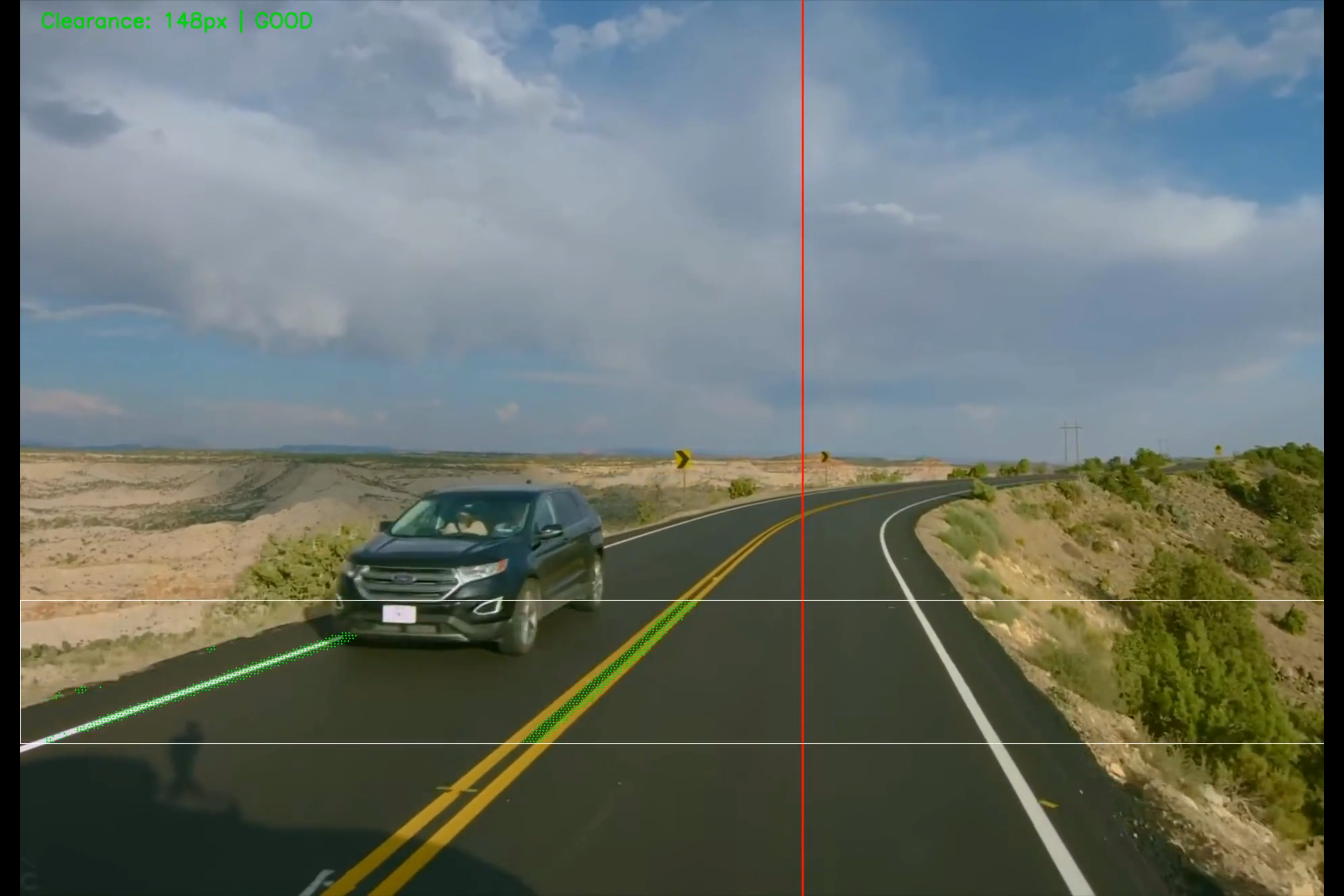
Under the hood how the model sees the inputted video.
-
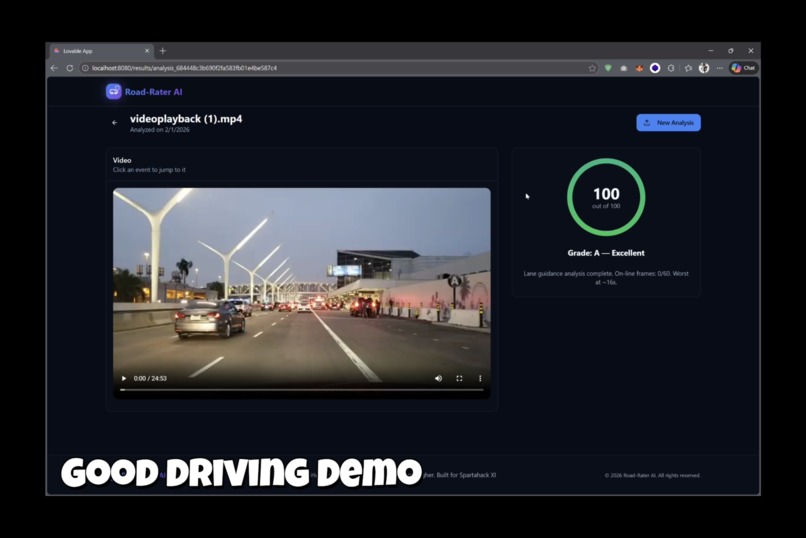
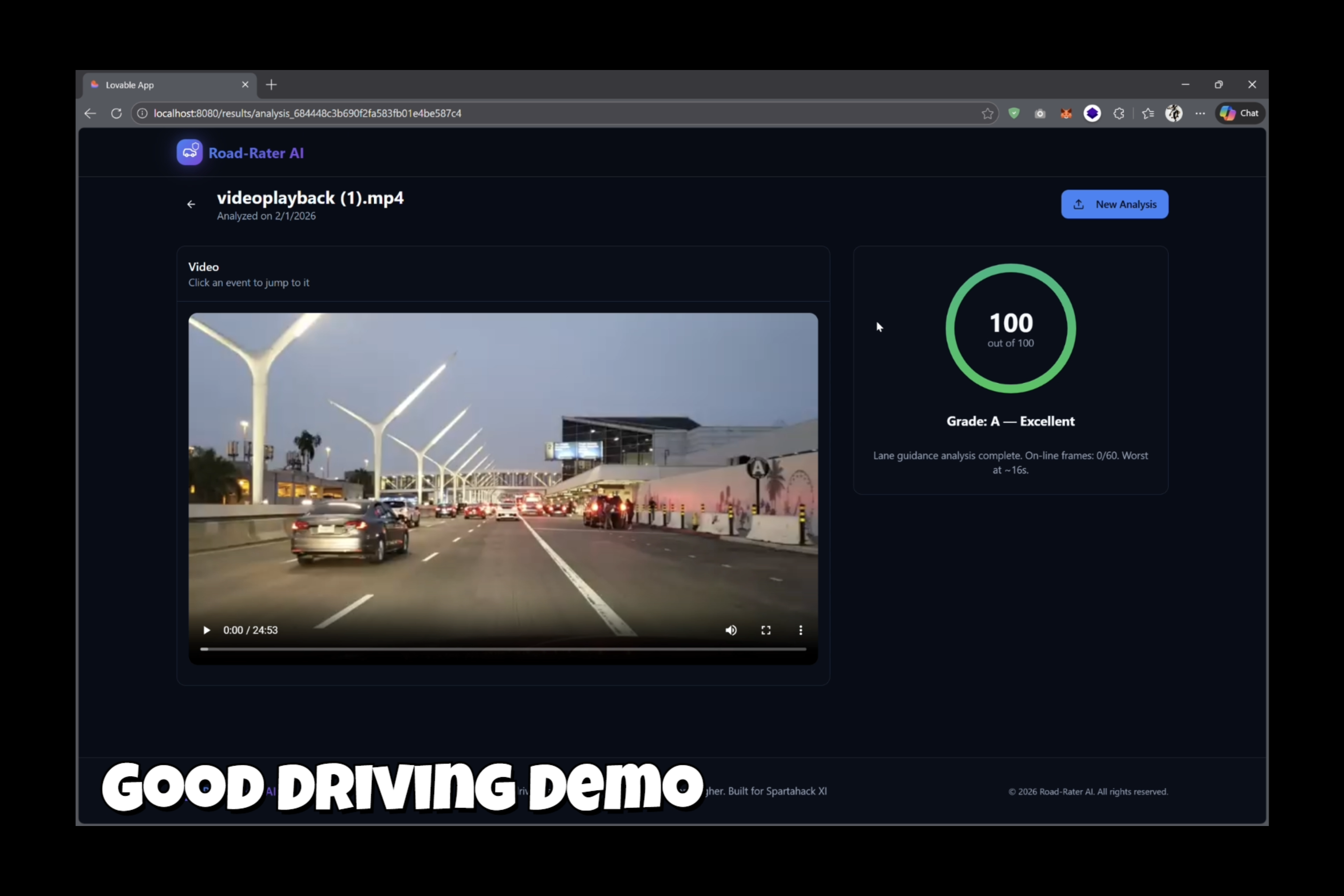
Final Analysis UI
Inspiration
Road safety remains a major concern, with many accidents stemming from unsafe or inconsistent driving behavior. While modern vehicles collect large amounts of data, most drivers receive little to no actionable feedback on how safely they actually drive. Dashcams are increasingly common, yet their footage is rarely used beyond post-incident review. Road-Rater was inspired by the idea that everyday driving data can be transformed into meaningful safety insights. Our goal was to build a system that analyzes real-world dashcam footage to evaluate driving behavior, generate objective safety metrics, and help drivers better understand and improve their habits on the road.
What it does
Road-Rater allows users to upload dashcam video footage through a web-based interface. The video is processed on the backend frame-by-frame using a computer vision model that segments road and lane boundaries. For each frame, the system evaluates whether a predefined vehicle center point intersects with detected lane or road boundaries, an indicator of unsafe or erratic driving behavior such as lane drifting or boundary overcrossing. These frame-level evaluations are aggregated into a final safety score and summary statistics, which are then presented to the user through the frontend.
How we built it
- We initialized the frontend using Lovable.ai to quickly generate a clean, professional UI boilerplate built with React and TypeScript.
- The frontend was customized and refined in VS Code, with assistance from agentic LLMs such as Gemini and GitHub Copilot.
- On the backend, we built a video inference pipeline capable of processing uploaded MP4 and MOV files frame-by-frame.
- We integrated YOLOP, a multi-task vision model for road and lane boundary segmentation, as the core perception component.
- Using the segmentation output, we implemented scoring logic that checks for boundary intersections with a configurable vehicle center point.
- The backend aggregates results across the entire video and returns structured safety analysis data to the frontend for visualization.
Challenges we ran into
A major challenge was handling variability in dashcam placement. Differences in mounting position, camera angle, and field of view significantly affect how lane boundaries appear in the image, which directly impacts scoring accuracy. Achieving consistent safety analysis across diverse camera setups remains an important challenge for real-world deployment.
Accomplishments that we're proud of
- Implemented a working vision-based system that detects lane boundaries and flags unsafe lane crossings in standard dashcam footage.
- Designed a user interface that clearly communicates driving safety analysis and feedback.
- Built an end-to-end upload and processing pipeline that allows users to submit dashcam videos and receive automated safety reports.
What we learned
We learned the importance of building clear interfaces between system components and maintaining strong communication within a team. Combining frontend development, backend infrastructure, and computer vision required coordination across different skill sets, and leveraging each team member’s strengths was critical to success.
What's next for Road-Rater
Road-Rater is intended as a scalable road safety analysis framework. Next, we plan to expand beyond lane boundary detection to flag additional unsafe behaviors such as speeding, missed stop signs, red-light violations, and other traffic infractions. We also aim to incorporate center offset metrics, homography-based corrections, and a dataset export pipeline that automatically extracts challenging frames for further labeling to improve the model. Ultimately, our goal is to provide drivers with clear, actionable insights that help improve road safety for everyone.

Log in or sign up for Devpost to join the conversation.