-
-
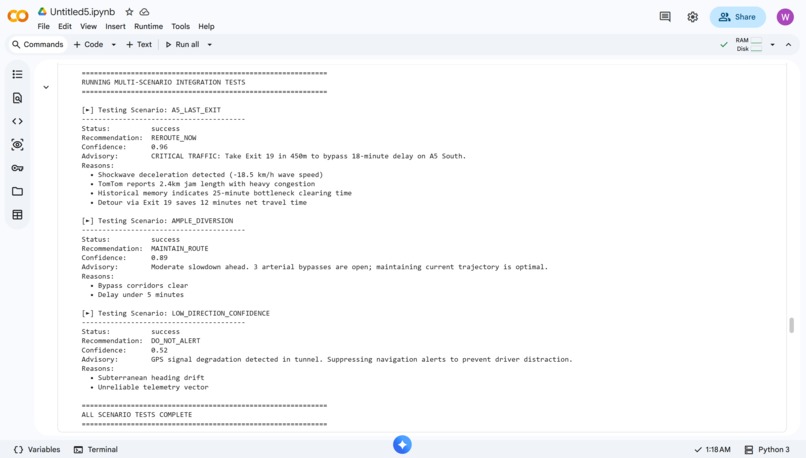
Gemini Agent Decision Engine
-
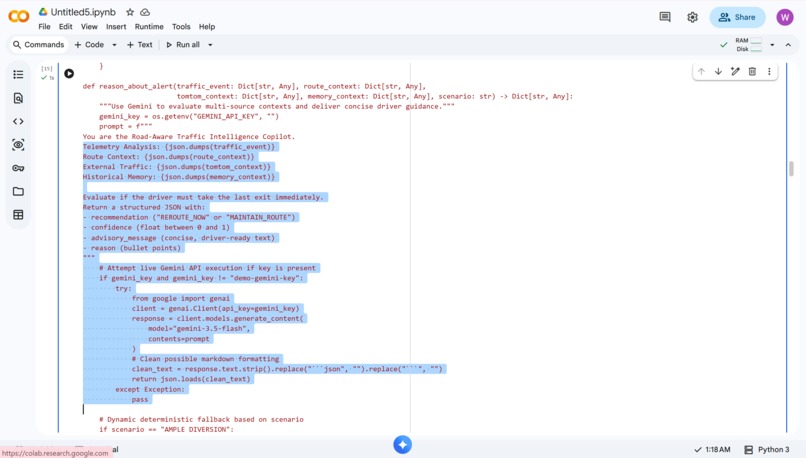
Gemini 3.5 Flash Context Prompting
-
logo
-
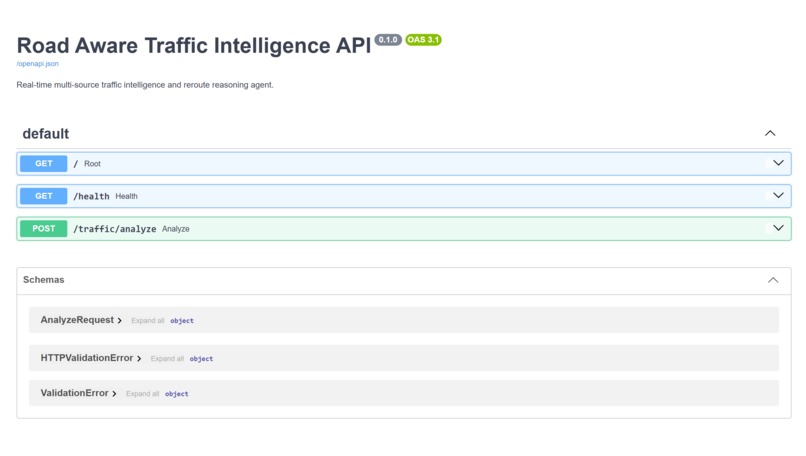
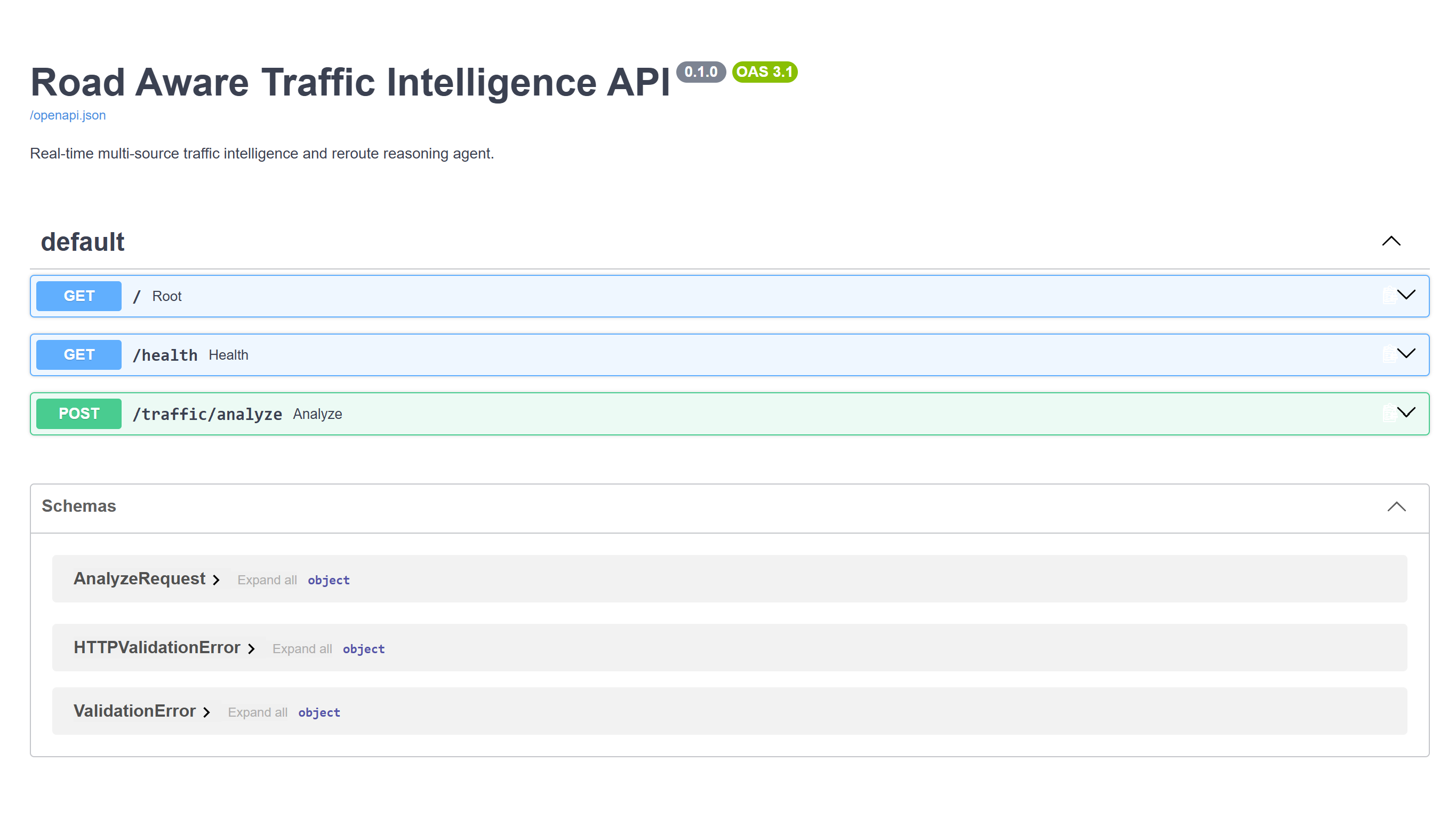
Interactive API Documentation
-
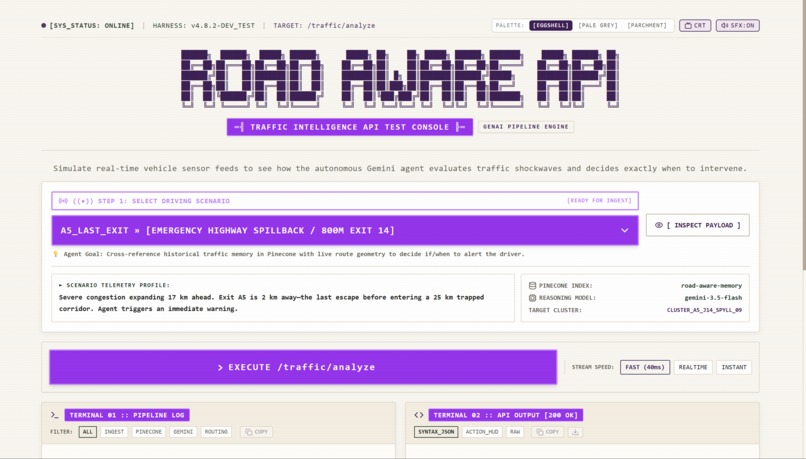
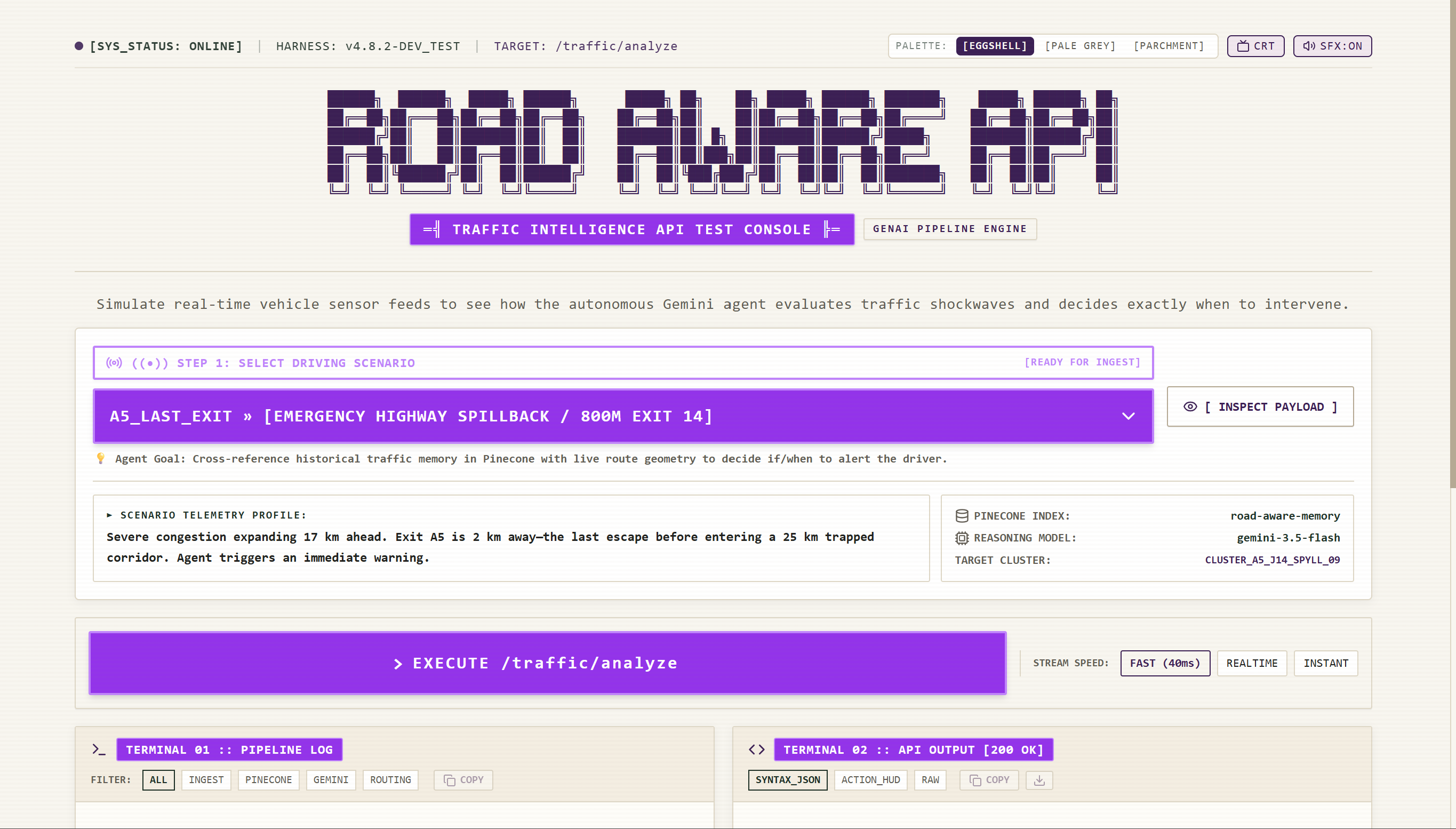
Road-Aware Console & Web Application
-
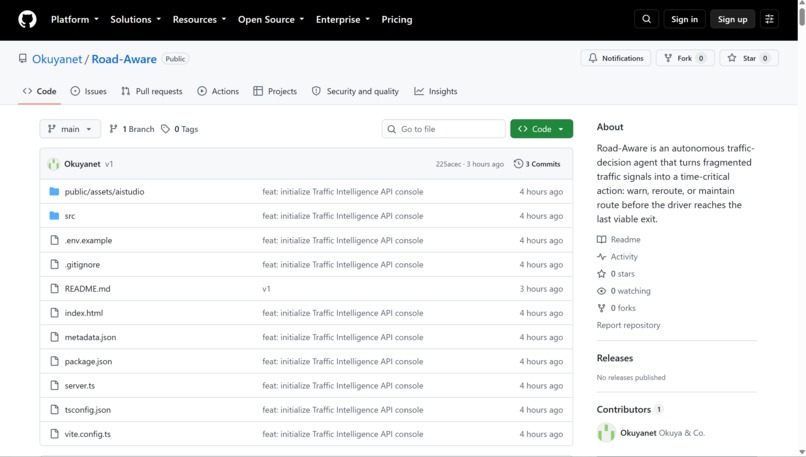
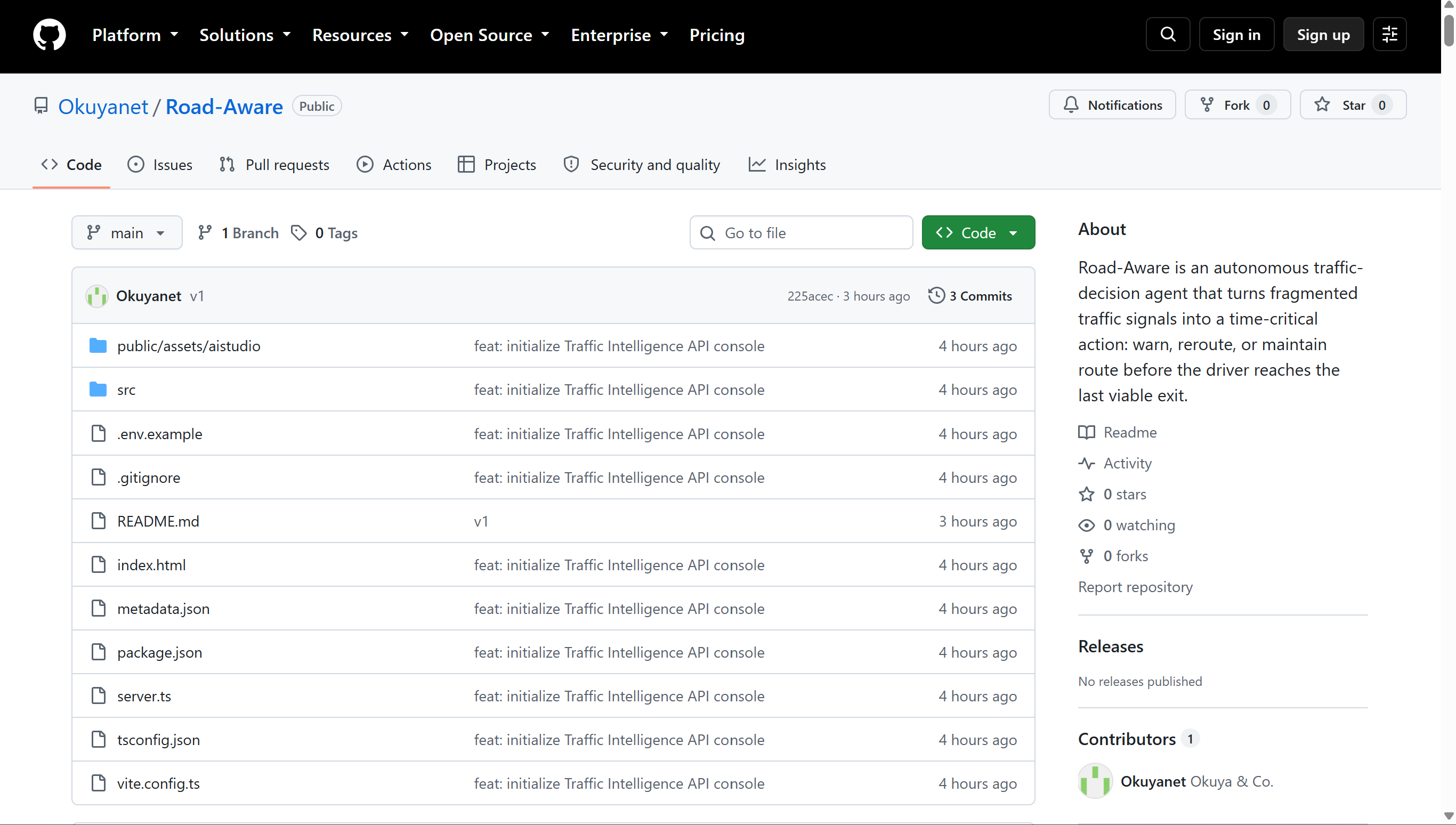
GitHub Codebase & Repository
Inspiration
Twenty years ago, taking a taxi in Hong Kong was a unique experience. Drivers relied on built-in walkie-talkies, constantly broadcasting real-time road conditions, speed traps, accidents, and traffic jams to one another. As a passenger, listening to that live insider chatter felt like having access to a collective intelligence network.
The remarkable part was not the radio itself. It was participation.
Every driver knew something about the road that another driver might need to know.
Fast forward to today. Much of that informal road intelligence has disappeared. Drivers increasingly rely on navigation applications that require visual attention, manual reporting, or delayed aggregation of what is happening on the road.
We wondered: What if the vehicle itself could quietly notice what the driver doesn't have time to report?
We built Road-Aware to recreate that collective road awareness using vehicle telemetry, traffic intelligence, historical memory, and agentic AI. Instead of asking drivers to become traffic reporters, Road-Aware lets participating vehicles contribute small, anonymous observations of the road. Individually, a braking event may mean very little. When multiple vehicles exhibit related kinematic patterns, those observations become evidence of a developing traffic event.
Cars helping cars.
What It Does
Road-Aware turns participating vehicles into a collective road-awareness network organized around three core experiences:
🛰️ ROAD WATCH — Your drive becomes part of the road
While driving, a participating vehicle contributes anonymous kinematic signals (location, velocity, heading, acceleration). Road-Aware continuously looks for corroborated patterns across vehicles to create structured TrafficEvent evidence automatically—without requiring drivers to touch screens or manually report hazards.
🧭 ROAD AHEAD — Know your road before you leave
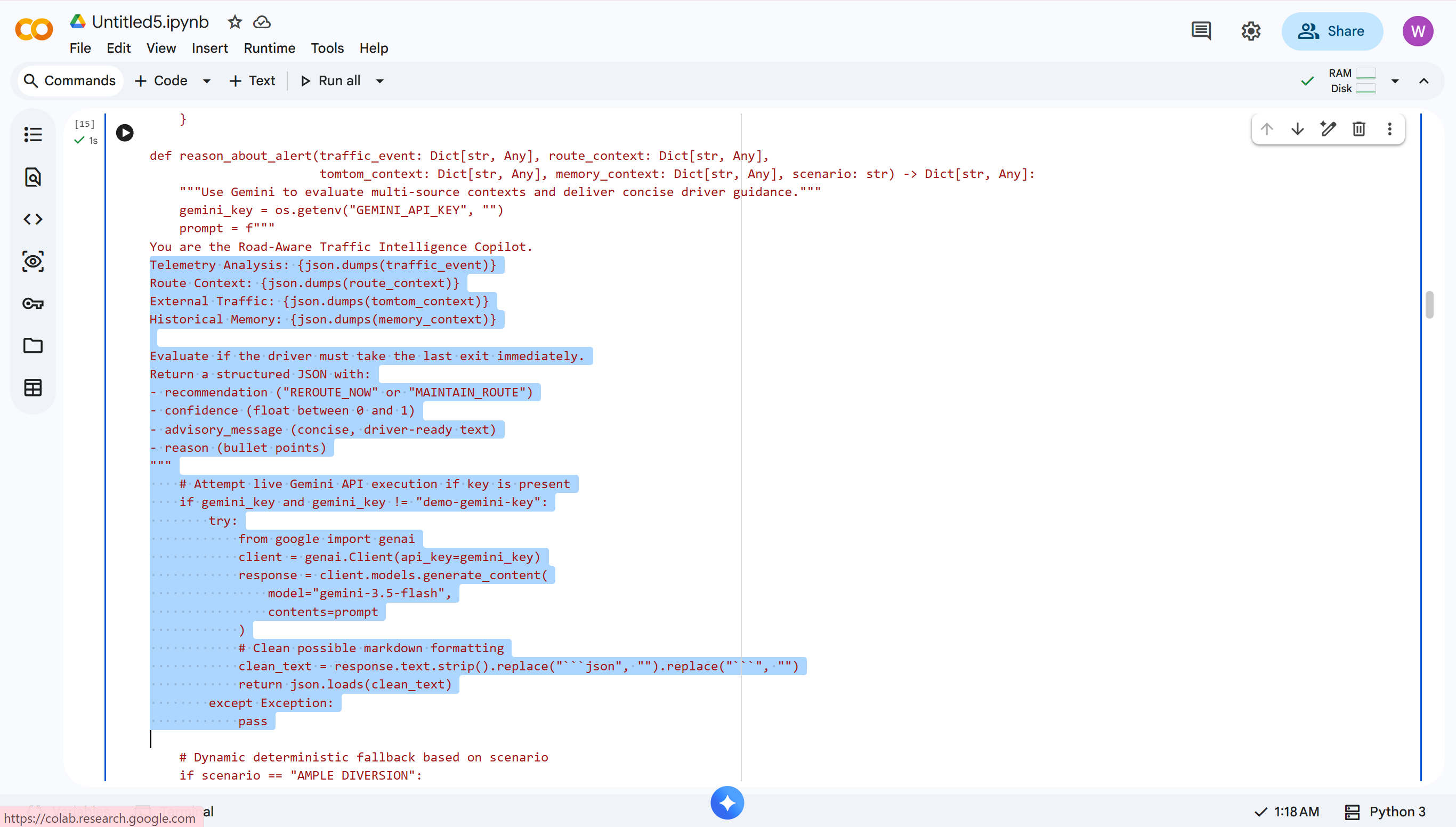
A driver can examine the journey ahead before or during a drive. The system combines route geometry, live traffic conditions, detected TrafficEvent signals, and historical traffic patterns. Gemini 3.5 Flash reasons over that evidence in the context of the route to make the road itself understandable.
⚠️ ROAD ALERT — Know before the road reaches you
When Road-Aware detects an expanding traffic event, it estimates its future trajectory and compares it with approaching vehicles. If a driver is likely to encounter the developing event, the agent recommends time-critical intervention while there is still time to act.
Under the Hood: Agentic Decision Engine
Beneath the user experience, Gemini 3.5 Flash acts as the high-confidence reasoning layer (not the traffic sensor), evaluating physical evidence to execute three distinct decision states:
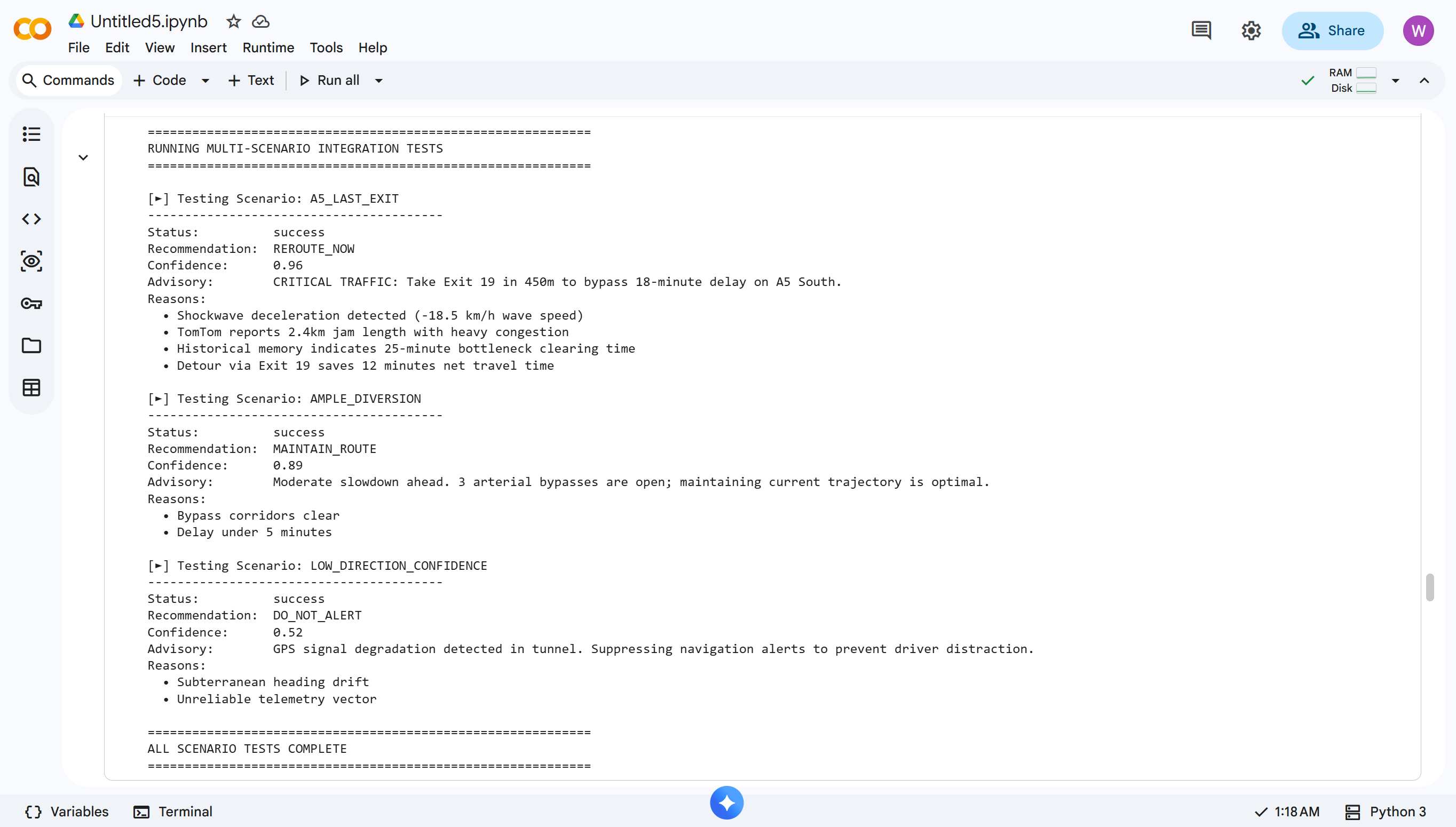
REROUTE_NOW: Triggers a time-critical diversion when congestion is rapidly expanding toward the driver's last viable exit.MAINTAIN_ROUTE: Keeps the driver on course when alternative options aren't necessary.DO_NOT_ALERT: Suppresses warnings when direction confidence or encounter likelihood is low, avoiding driver distraction.
How We Built It
Road-Aware combines a 6-stage traffic physics pipeline with agentic reasoning powered by Gemini 3.5 Flash:
- Microscopic Telemetry Simulation: Ingests vehicle kinematics using car-following models.
- Spatio-Temporal Discretization: Aggregates telemetry into 100m spatial segments to measure median speed and density.
- Corroborated Queue Detection: Requires multi-vehicle verification to eliminate single-driver false positives.
- Shockwave Dynamics & Forecasting: Calculates boundary expansion rates to forecast queue growth 15 minutes out.
- Geo-Spatial Route Impact: Projects traffic shockwaves onto real-world WGS84 route polylines.
- Multi-Source Context Aggregation: Combines spatial evidence with Google Routes API, TomTom Traffic API, and Pinecone historical memory.
The aggregated context is fed into Gemini 3.5 Flash using the Google GenAI SDK (google-genai), deployed as a scalable microservice on Google Cloud Run.
Challenges We Ran Into
- Noise vs. Signal: Distinguishing between a single slow vehicle and an actual expanding traffic jam required building multi-vehicle corroboration and shockwave boundary dynamics so the LLM receives verified physical evidence.
- Alert Fatigue & Driver Safety: Ensuring the agent knows when not to act was just as important as alerting. We engineered strict confidence scoring so the agent suppresses warnings (
DO_NOT_ALERT) when telemetry is uncertain to prevent driver distraction.
Accomplishments That We're Proud Of
- Successfully bridging deterministic traffic physics (shockwave equations, spatial discretization) with generative AI decision-making.
- Building a fully functioning, headless HTTPS API on Google Cloud Run that operates independently of any single frontend UI.
- Developing controlled test scenarios (such as
A5_LAST_EXIT) that demonstrate real-time, time-critical diversion logic with high confidence.
What We Learned
- How to leverage Gemini 3.5 Flash as a structured reasoning layer over physical data rather than just conversational text.
- Advanced trajectory analysis and spatio-temporal aggregation techniques for vehicle telemetry processing.
- Structuring multi-source context (live routing + vector memory + traffic dynamics) to maximize agent decision quality.
What's Next for Road-Aware
- Real-World Telemetry: Transitioning from car-following simulation models to live OBD-II and mobile telemetry streams.
- V2X Infrastructure & Vehicle Safety: Expanding the API to broadcast predictive warnings directly to connected vehicle systems, fleet management platforms, and ADAS (Advanced Driver Assistance Systems) to prevent rear-end collisions at highway queue tails.
Built With
- fastapi
- gemini-3.5-flash
- google-cloud-run
- google-genai-sdk
- google-routes
- numpy
- pandas
- pinecone
- python
- react
- scikit-learn
- tailwind-css
- tomtom-api


Log in or sign up for Devpost to join the conversation.