-
-
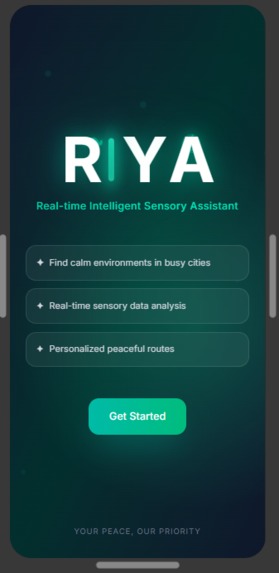
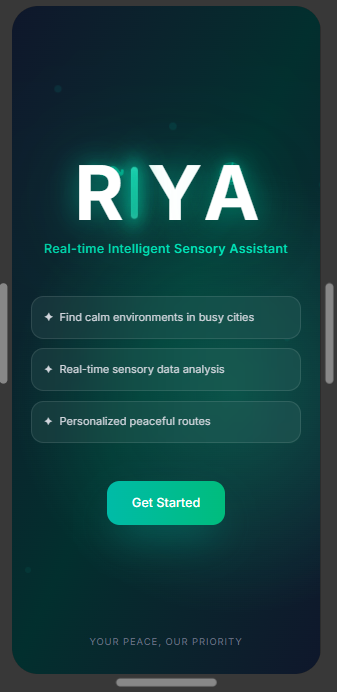
RIYA: Real-time Intelligent Sensory Assistant. A tool bridging the gap between urban stressors and human well-being.
-
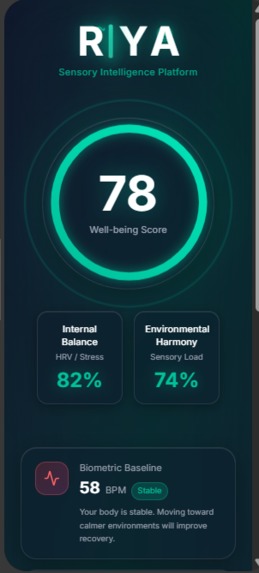
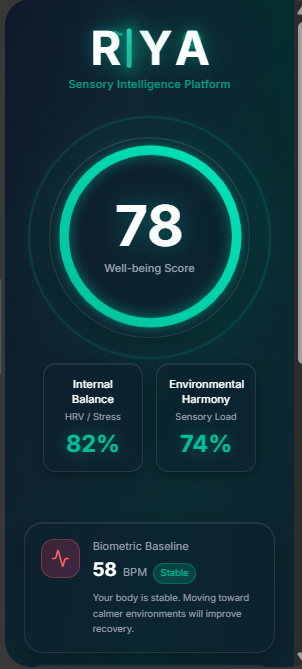
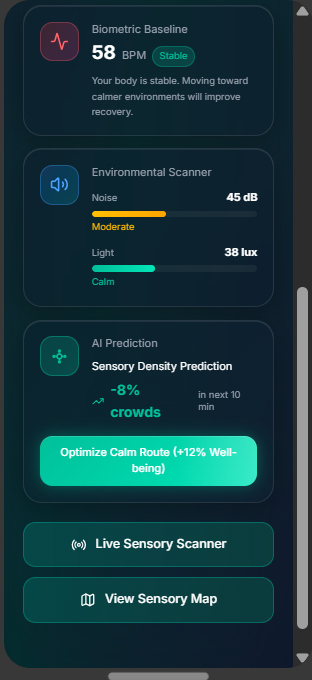
The Quantified Nervous System. Synthesizing a unified Well-being Score by balancing biometrics with real-time environmental data.
-
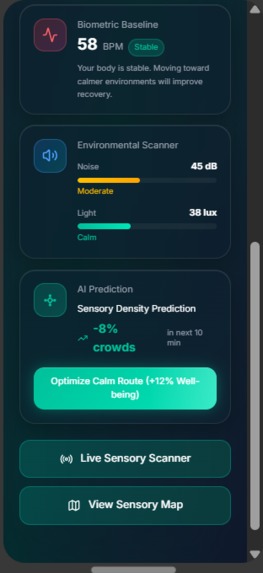
Predictive Intelligence. Leveraging AI to forecast environmental density shifts, allowing the system to suggest proactive adjustments..
-
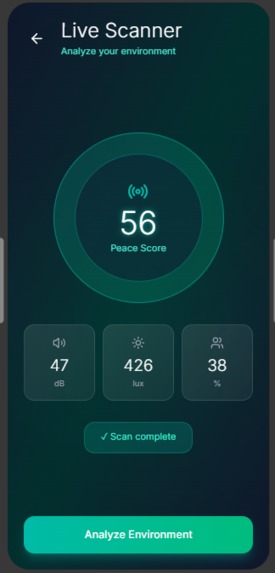
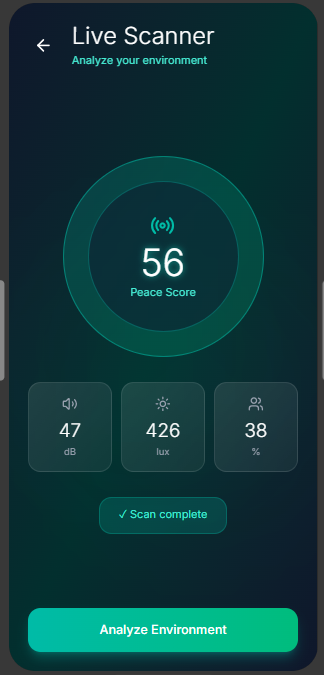
RIYA Live Scanner analyzes the surrounding environment and visualizes sensory conditions to help users manage sensory overload in real time.
-
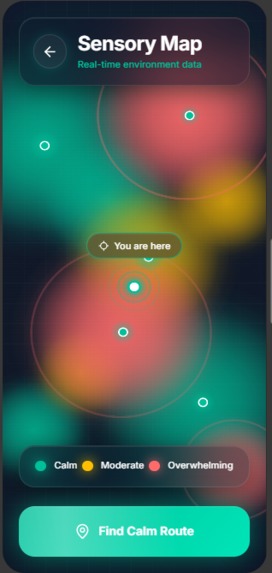
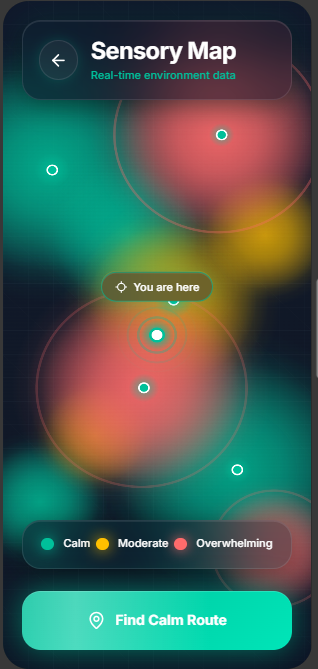
Urban Harmony Map. Translating raw decibel and lux data into a navigable landscape of "Calm Zones" and "Sensory Minefields."
-
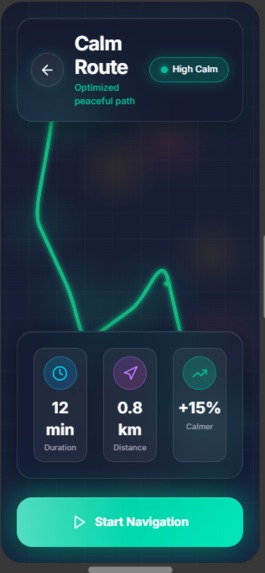
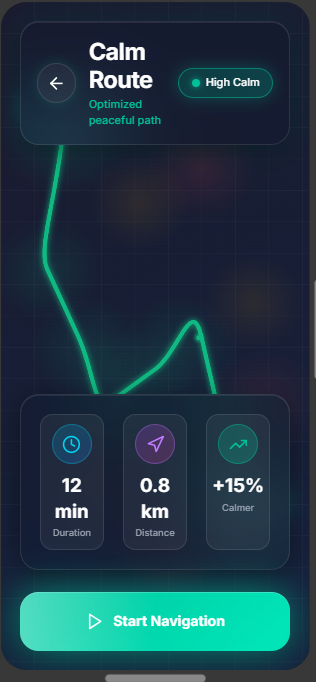
Sensory Navigation. The final output provides a curated path that prioritizes mental well-being by avoiding high-stress urban zones.
Inspiration
Urban environments are built for efficiency, not for peace. For people with sensory sensitivities, anxiety, or neurodivergence, a simple walk through a busy city can feel like a sensory gauntlet. Many of us have experienced that “shutdown” moment in a crowded station or on a loud street.
We built RIYA — the Real-time Intelligent Sensory Assistant to act as a buffer between the user and the chaos of the city. Our goal was to transform navigation from a source of stress into a tool for emotional regulation and comfort.
What it does
RIYA is a navigation ecosystem that prioritizes “The Calmest Path” rather than simply “The Fastest Path.”
Key Features
The Biometric Bridge RIYA monitors real-time stress indicators such as Heart Rate Variability (HRV) to understand the user's physiological state.
The Sensory Heatmap The system maps urban areas based on sensory intensity, including noise levels, crowd density, and lighting conditions. This allows users to identify overwhelming zones before entering them.
Intelligent Rerouting If biometric stress levels increase, RIYA automatically recommends a Calm Route—such as a path through a park or a quieter street—to help the user regulate and reset.
How we built it
We approached RIYA as a multi-layered system, combining data science with empathetic design.
The Engine
We designed a routing logic where environmental stressors behave like traffic variables within a navigation system. The sensory load $L$ is modeled as a weighted combination of environmental and biometric factors:
$$L = w_1 \cdot n + w_2 \cdot c + w_3 \cdot s$$
Where:
- n = noise level
- c = crowd density
- s = user stress level
- w_1, w_2, w_3 = adjustable weighting factors
This approach allows the routing engine to prioritize lower sensory-load paths instead of simply minimizing distance.
The Interface
The interface was designed in Figma following a “Quiet Design” philosophy. We focused on:
- Desaturated, calming color palettes
- High-legibility typography
- Minimal visual clutter
The goal was to ensure the interface itself never contributes to cognitive overload.
Prototyping
Interactive components were used to simulate transitions between a Standard Route and a Calm Route, triggered by simulated biometric signals.
Challenges we ran into
One of the biggest challenges was visualizing sensory data without making the interface itself stressful. Representing factors like noise levels, crowd density, and stress indicators without cluttering the map required careful design iteration.
We went through four major iterations of the Sensory Heatmap to achieve the right balance between:
- Clear data communication
- A calming visual language
Balancing information density with a minimalist aesthetic was a constant design challenge.
Accomplishments that we're proud of
We successfully transformed the concept from a simple navigation utility into an assistive digital companion. Some highlights include:
- Developing the Calm Route navigation concept
- Creating a clear and intuitive Sensory Heatmap
- Designing a cohesive and accessible interface system
- Demonstrating that assistive technology can feel modern, elegant, and empowering
What we learned
This project taught us that context is everything. A biometric signal like heart rate provides limited value without environmental context such as noise levels or crowd density. Through this process, we learned how to:
- Translate biometric data into meaningful user interventions
- Design interfaces that reduce cognitive load
- Apply Inclusive Design principles
Designing for the most sensitive users ultimately improves the experience for everyone.
What's next for RIYA
RIYA is currently at the high-fidelity prototype stage, and our next milestone is building a functional MVP.
Future Development Plans
- Sensor Integration: Connect with platforms such as Apple Health and Garmin APIs to obtain real-time HRV and biometric data.
- Live Environmental Data: Integrate crowdsourced noise maps and municipal traffic data to power the Sensory Heatmap.
- Predictive Modeling: Use machine learning models to predict Sensory Peaks in neighborhoods based on time of day and historical environmental patterns.
Our long-term vision is to develop RIYA into a real-world intelligent assistant that helps people navigate cities with greater calm, confidence, and control.
Built With
- figma
- ui/ux


Log in or sign up for Devpost to join the conversation.