-
-

-
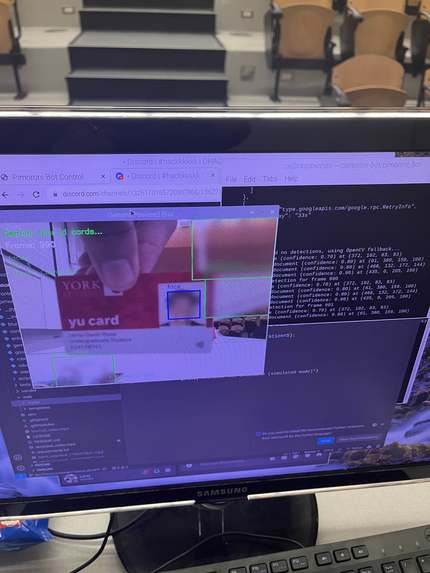
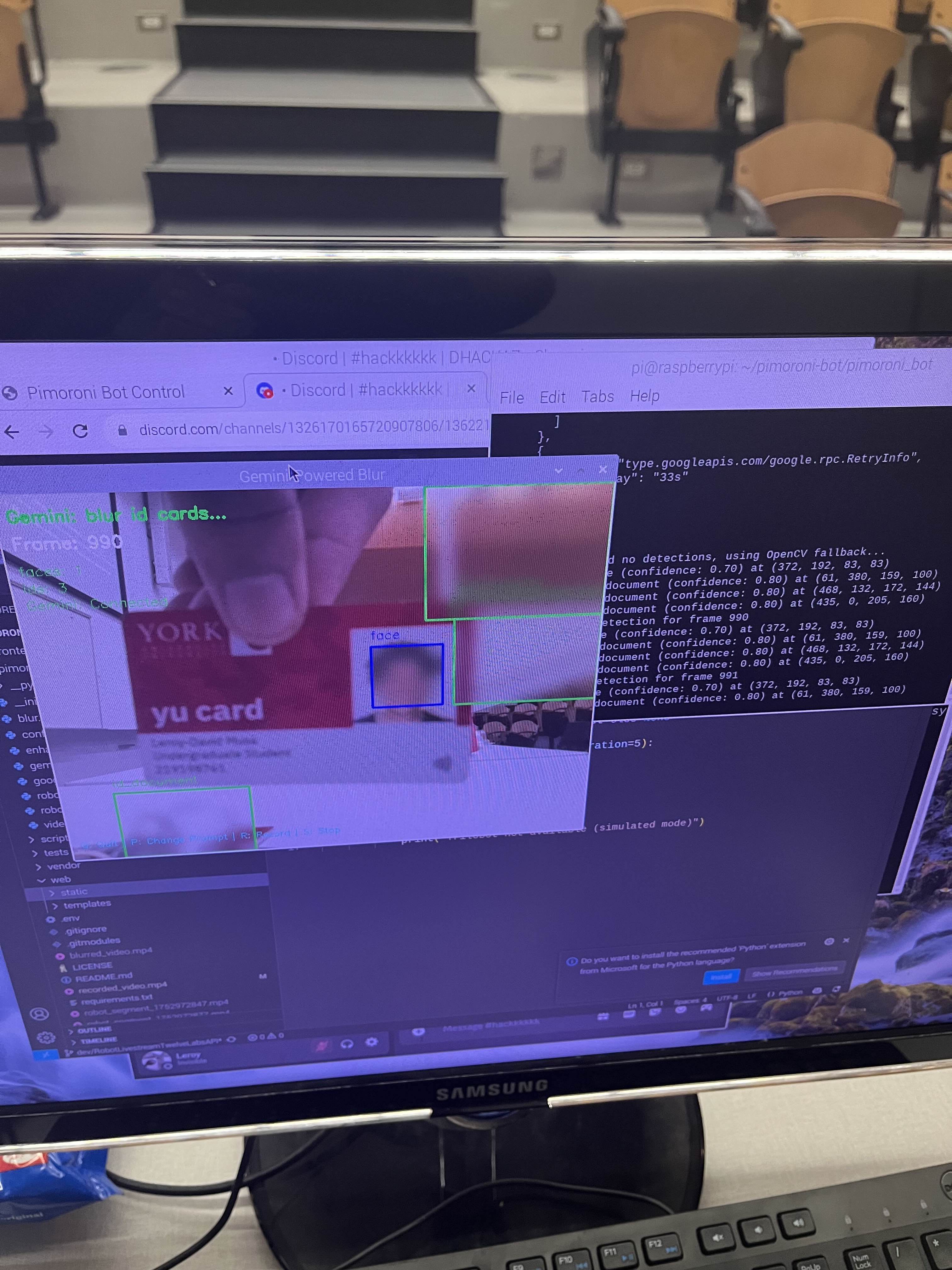
The robot uses the Gemini API to live-detect and blur ID cards and faces in real time.
-
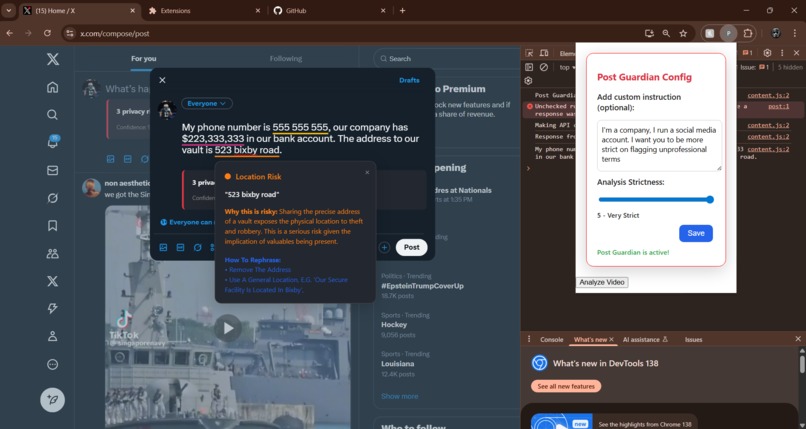
Example
-
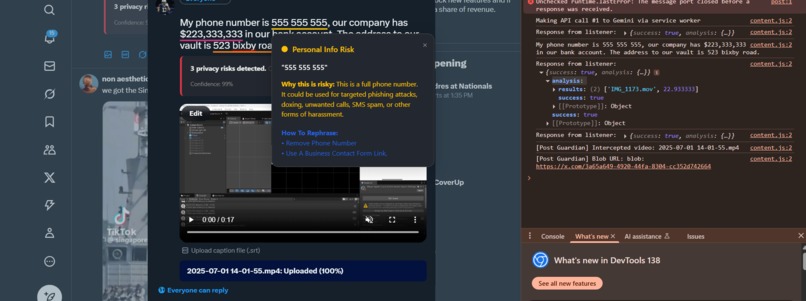
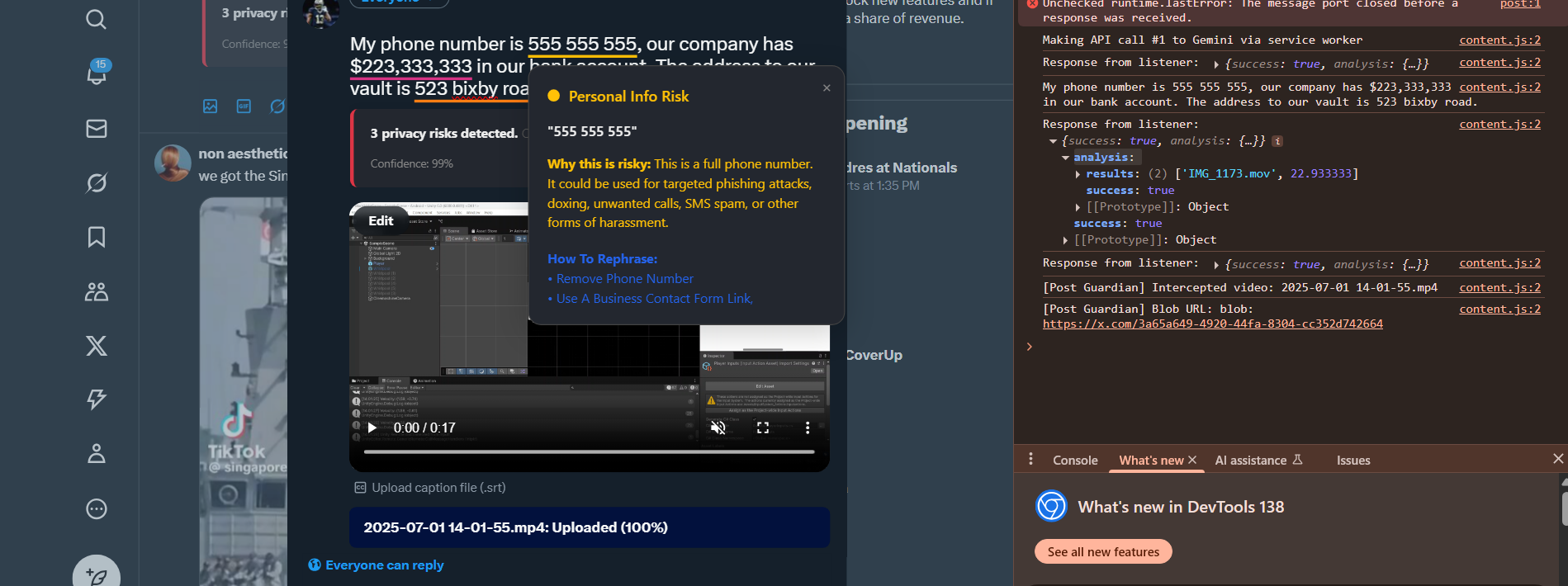
Uploaded videos are intercepted by our extension, analyzed with TwelveLabs, and instant feedback is shown for each upload
-
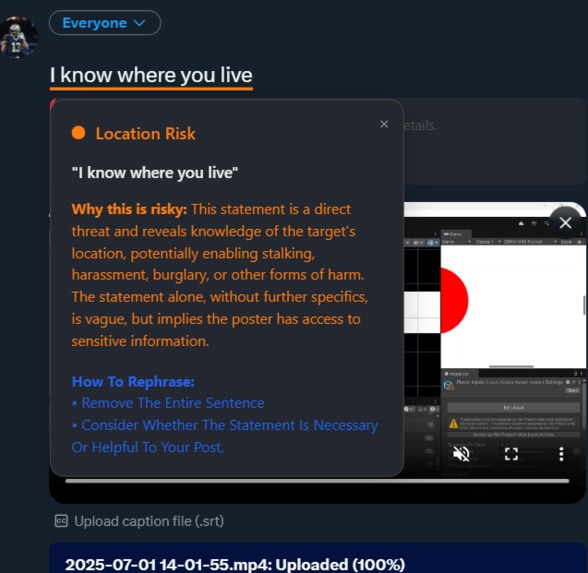
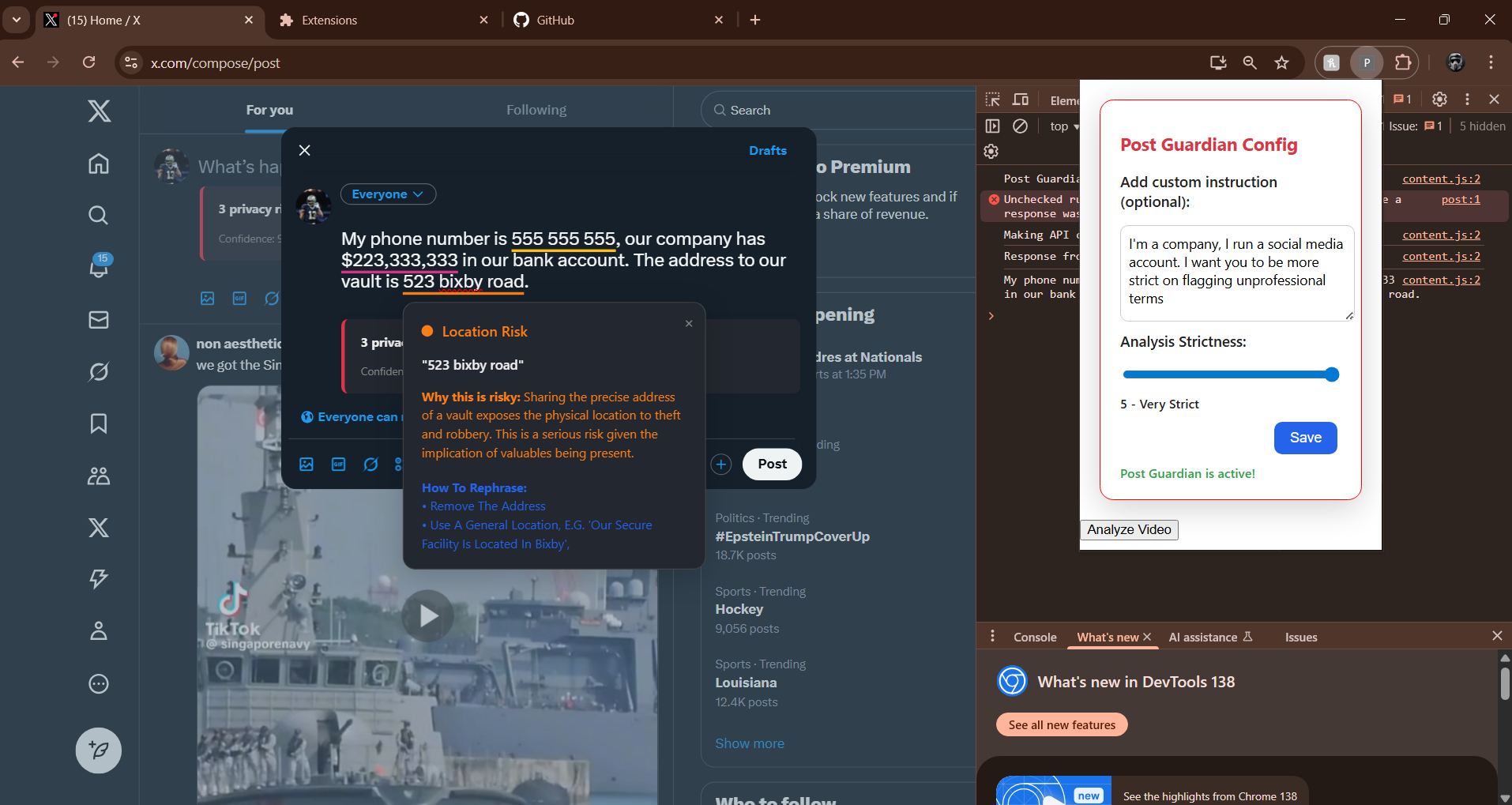
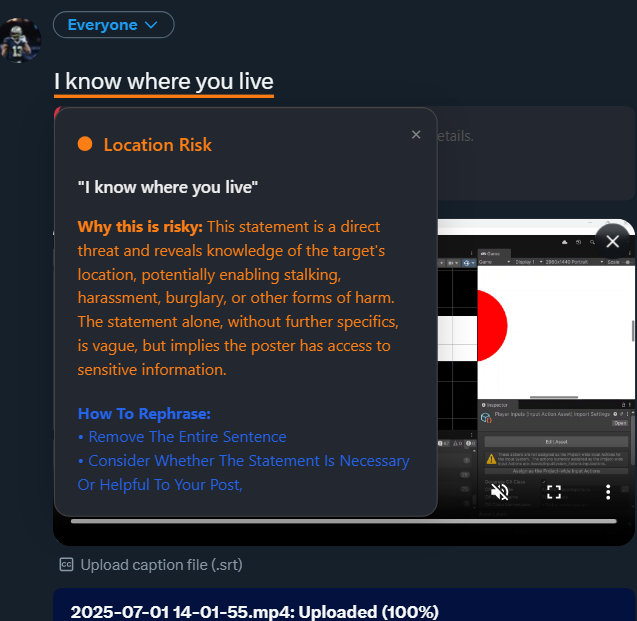
Example of controversial post, post guardian does not only protect privacy

Inspiration
The idea of Post Guardian goes back to a story we heard in one of our classes recently. Our guest speaker, delivering a lecture on cyber security, told us about a backend developer who posted a diagram of their company’s backend system on LinkedIn. Hackers used this information to breach the company. This inspired us to create tools that warn people or organizations if they might be sharing sensitive or inappropriate information--whether online or in the physical world.
What it does
Post Guardian is both a Chrome extension and a robot-based privacy system. The Chrome extension provides real-time privacy and content risk feedback as users compose posts on platforms like Twitter, detecting risky keywords, phrases, or visuals and overlaying non-intrusive warnings. The robot system uses the Gemini API to analyze live video, automatically detecting and blurring sensitive content (like faces and ID cards) in real time, helping protect privacy in physical spaces.
How we built it
We built Post Guardian as a browser extension using JavaScript, HTML, and CSS, with content scripts to interact with the live DOM of social media platforms. For video content, we used the TwelveLabs API for multimodal analysis and the Gemini API for both text and video risk detection. The robot system is built on a Raspberry Pi, streaming live video and using the Gemini API to detect and blur sensitive content in real time.
Challenges we ran into
- Intercepting user-uploaded video files in the browser was a major hurdle due to in-memory blob URLs.
- Ensuring overlays didn’t interfere with the native UI while remaining responsive.
- Integrating the TwelveLabs and Gemini APIs for both text and video analysis.
- Achieving real-time video feedback and blurring on limited hardware.
Accomplishments that we're proud of
- Creating a system that can detect and underline sensitive terms in real time within editable tweet boxes.
- Successfully analyzing and blurring sensitive content in live video streams using the Gemini API.
- Making both the extension and robot system seamless and non-disruptive to the user experience.
- Designing a flexible architecture that can be adapted for other platforms or risk types.
What we learned
- The limitations and possibilities of browser extensions and real-time video processing.
- The importance of privacy and cybersecurity in both online and physical environments.
- Practical experience integrating advanced AI APIs (TwelveLabs, Gemini) for multimodal content analysis.
- The value of user-centered design--providing gentle, actionable feedback rather than blocking actions.
What's next for Post Guardian
- Expanding to more platforms like LinkedIn and Reddit.
- Improving the UI with hover-based explanations for flagged content.
- Adding support for image OCR and detection, not just video and text.
- Implementing a user feedback loop for custom risk categories.
- Partnering with organizations to create enterprise-specific risk dictionaries.
Built With
- cv
- gemini
- javascript
- python
- robotics
- twelvelabs


Log in or sign up for Devpost to join the conversation.