Inspiration
Financial risk prediction is still a slow, manual, and error-prone process for many banks and small businesses. Traditional scoring systems rely on outdated datasets, limited credit factors, and static models that fail in fast-changing economic conditions.
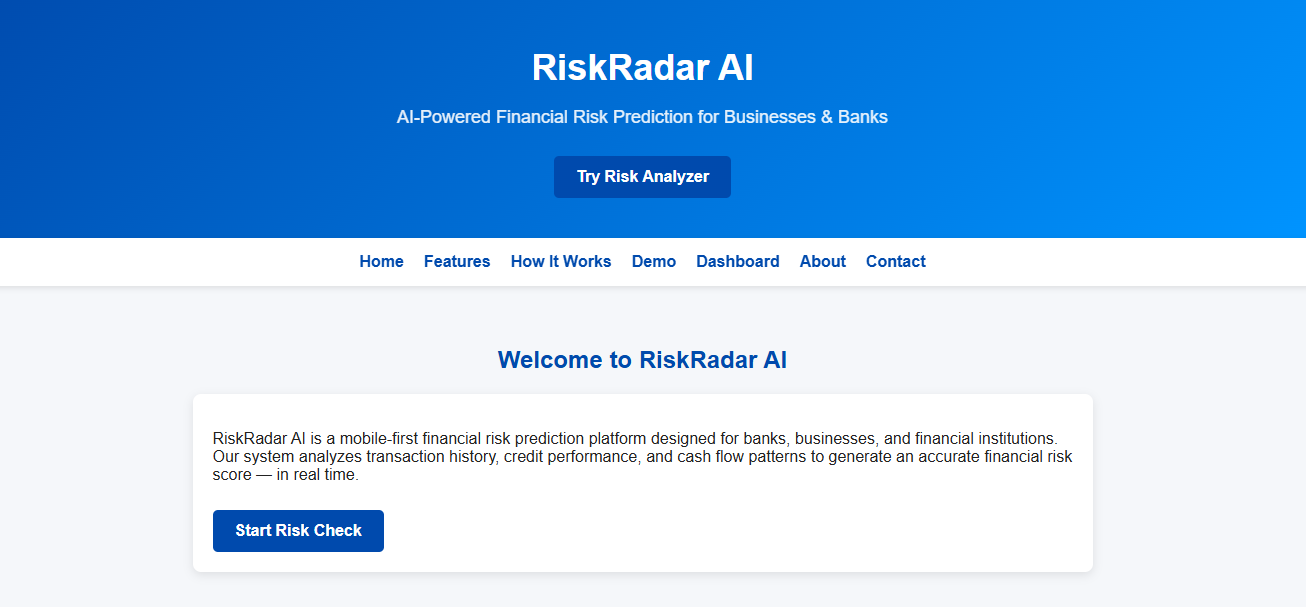
I wanted to build a mobile-first, AI-powered risk engine that could instantly analyze financial patterns and warn users about potential risks before they escalate. The idea came from observing how many individuals and businesses struggle with cash-flow issues, loan defaults, and fraud detection — areas where machine learning can help dramatically.
What it does
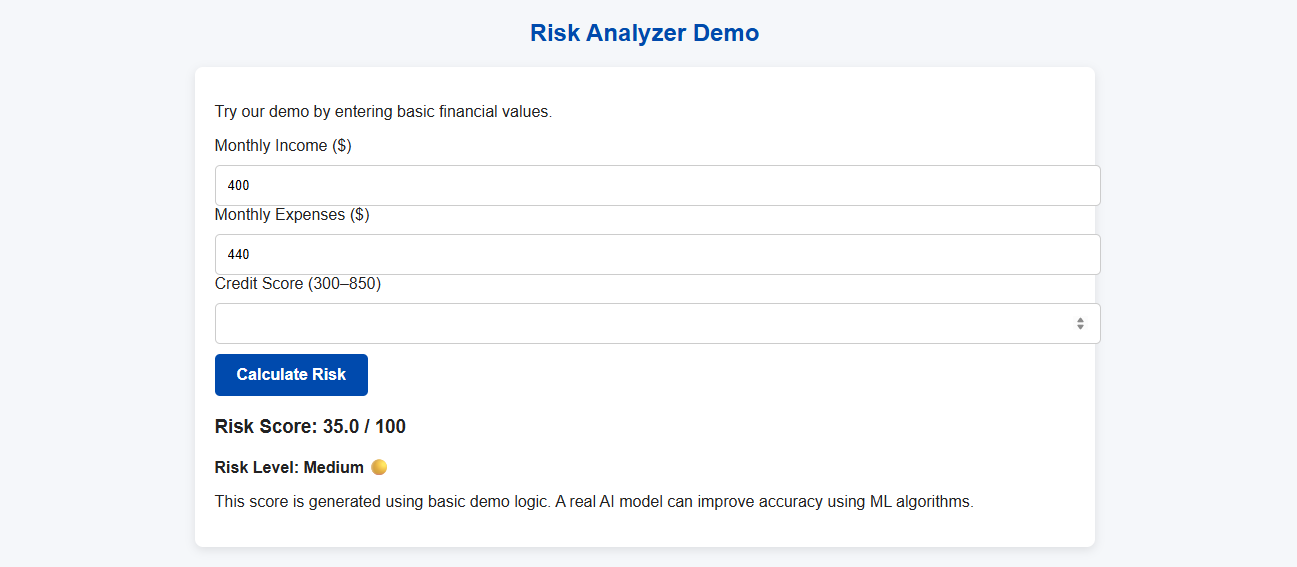
RiskRadar AI analyzes financial inputs such as income, expenses, credit score, and cash-flow patterns to generate:
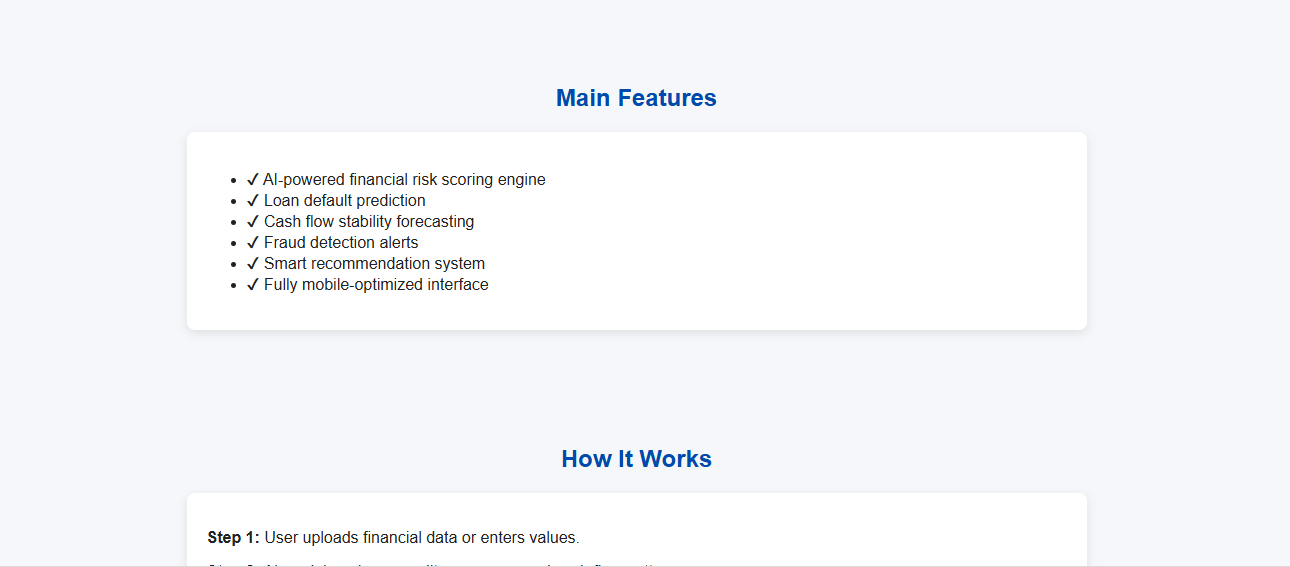
A real-time financial risk score (0–100)
Loan default probability
Cash-flow stability indicators
Fraud detection signals
Personalized recommendations for reducing risk
The system is optimized for mobile usage, allowing users to assess their financial health anywhere, anytime.
How we built it
Frontend
HTML/CSS for layout
JavaScript for dynamic input handling and demo calculations
Fully responsive mobile-first design
Challenges we ran into
Data limitations: Finding balanced datasets for training a risk prediction model was challenging. I had to preprocess, normalize, and engineer features manually.
Mobile optimization: Ensuring the UI worked smoothly across different screen sizes required multiple iterations.
Model tuning: Some algorithms overfit easily. Finding the right balance between accuracy and generalization took significant testing.
Fraud detection logic: Integrating rule-based checks with machine learning involved careful threshold tuning.
Accomplishments that we're proud of
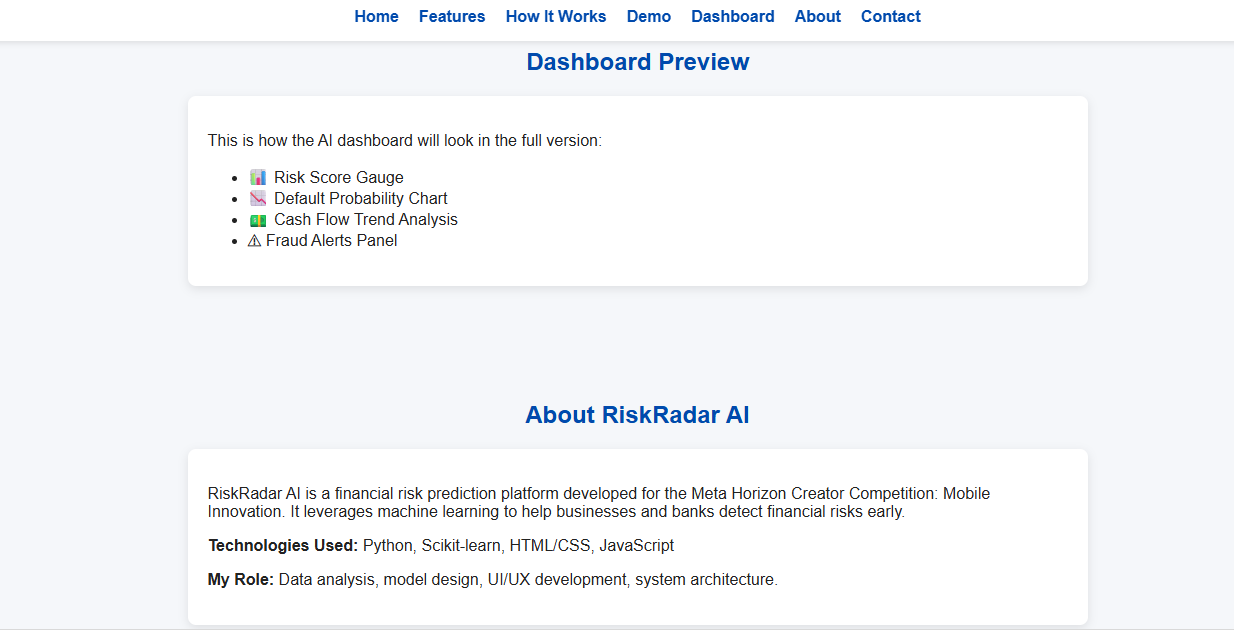
Built a fully functional AI risk scoring engine. Designed a clean, mobile-first financial dashboard. Successfully implemented a demo Risk Analyzer where users can test the model. Created a scalable architecture that can be deployed to real financial institutions. Learned how to combine data science, UI/UX, and system design effectively.
What we learned
How to build a machine learning model for credit and financial risk prediction. How to reduce overfitting and tune hyperparameters. UI/UX principles for mobile innovation. Better feature engineering strategies for financial datasets. Designing an AI system that balances accuracy, speed, and explainability.
What's next for RiskRadar AI – Financial Risk Prediction Platform
Deploying the model as an API so mobile apps can access real-time scoring. Integrating OCR to upload bank statements and extract financial data automatically. Adding deep learning models for pattern recognition and fraud detection. Developing a full bank dashboard for enterprise use. Expanding into SME risk management and micro-loan risk scoring. Improving explainability with SHAP-based insights.

Log in or sign up for Devpost to join the conversation.