-
-
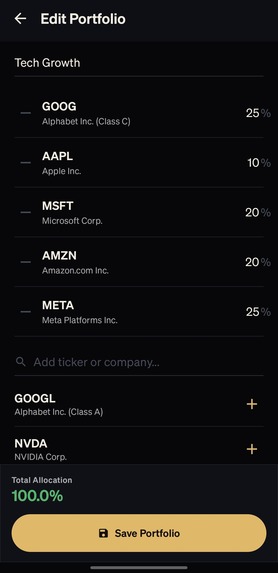
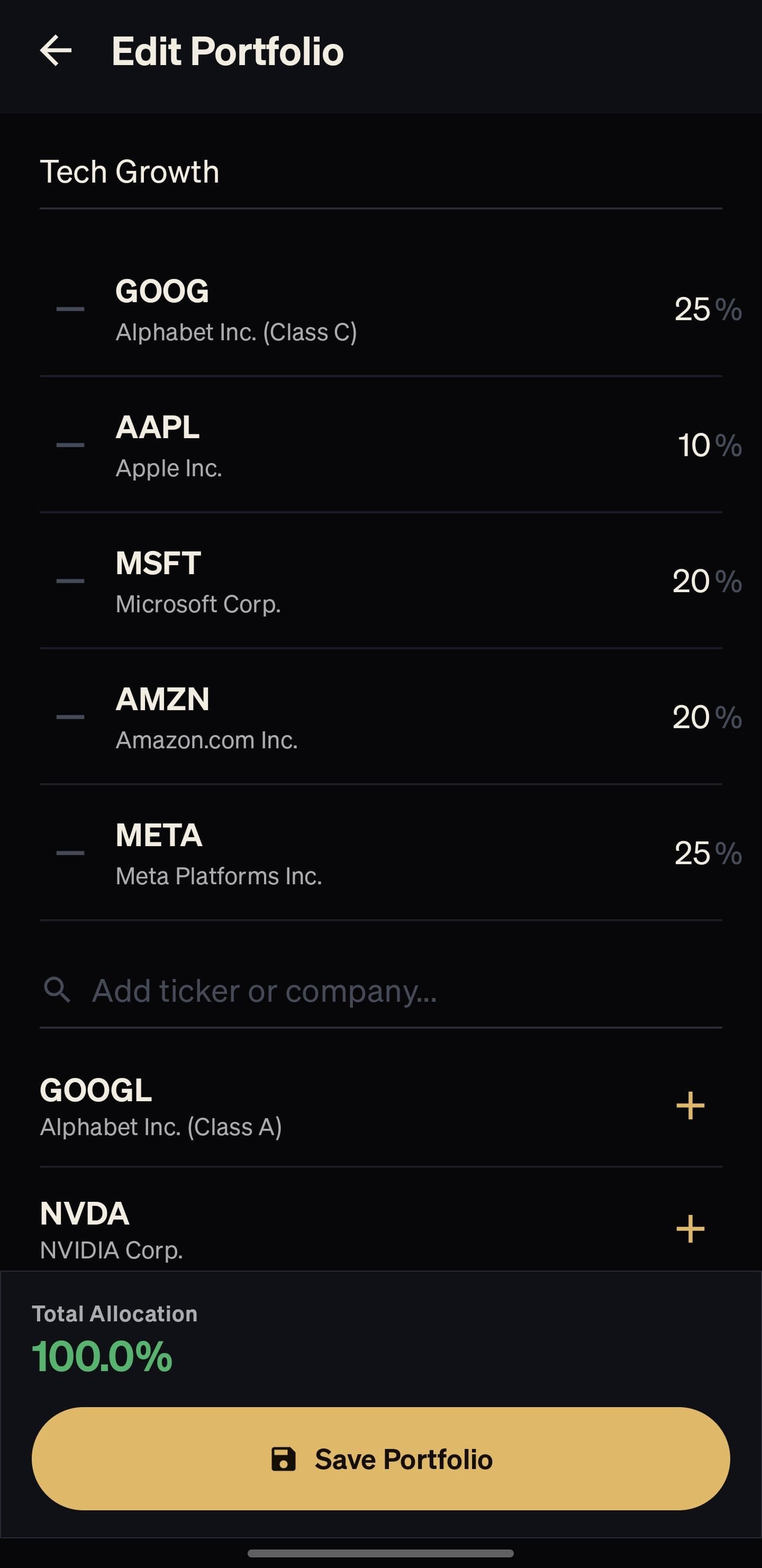
The custom portfolio builder where you define, tweak, and balance your exact ticker allocations.
-
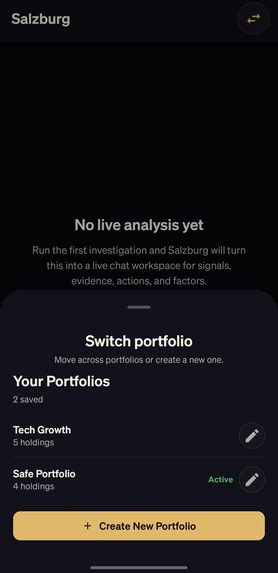
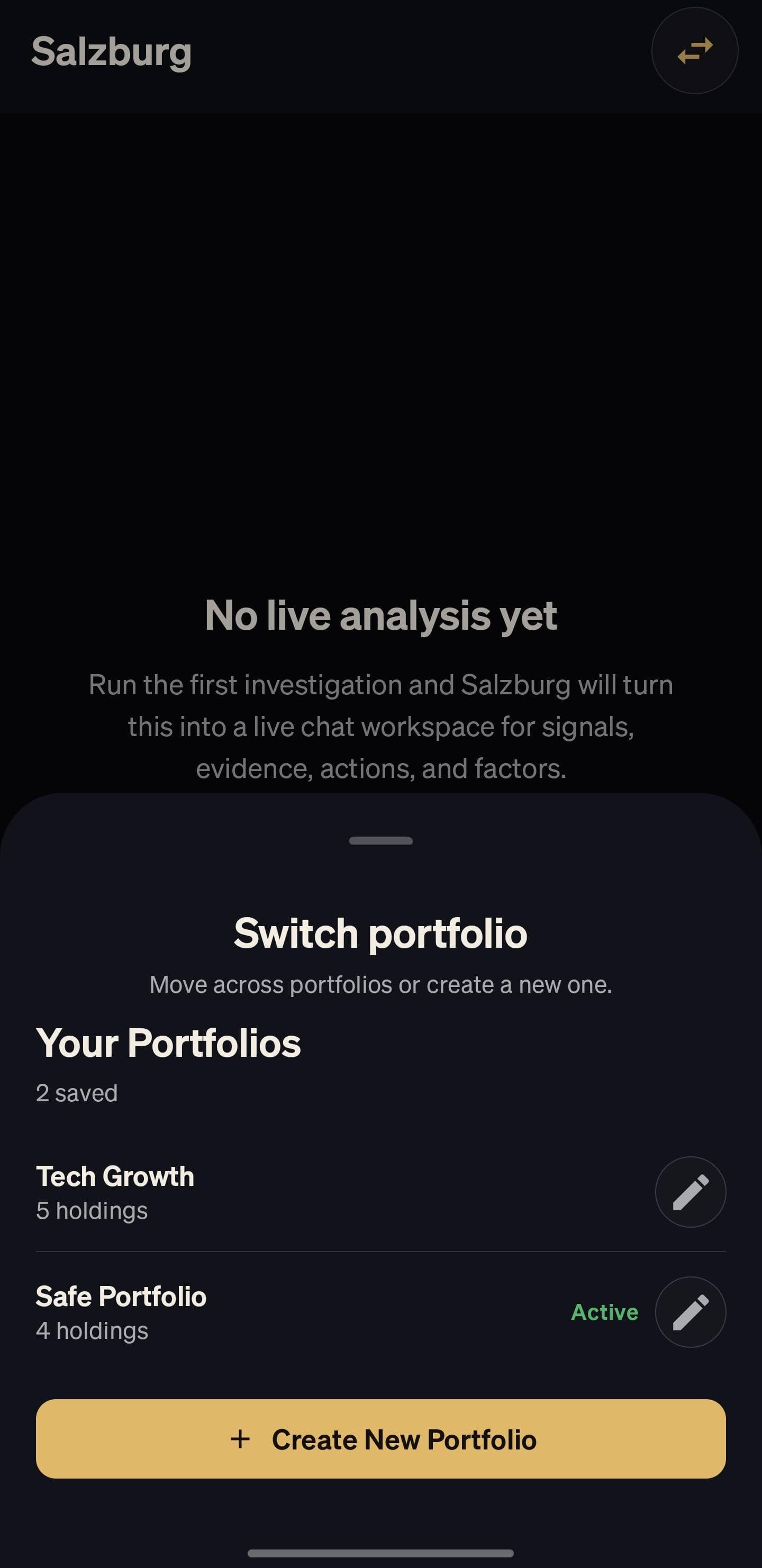
Clean portfolio management interface to easily switch contexts or build a new investment thesis from scratch.
-
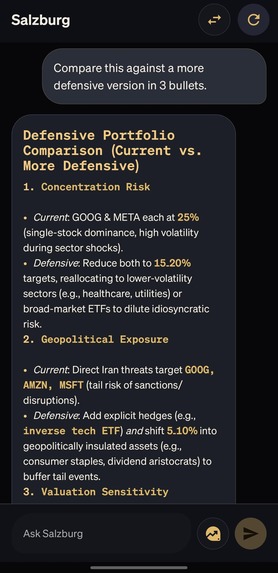
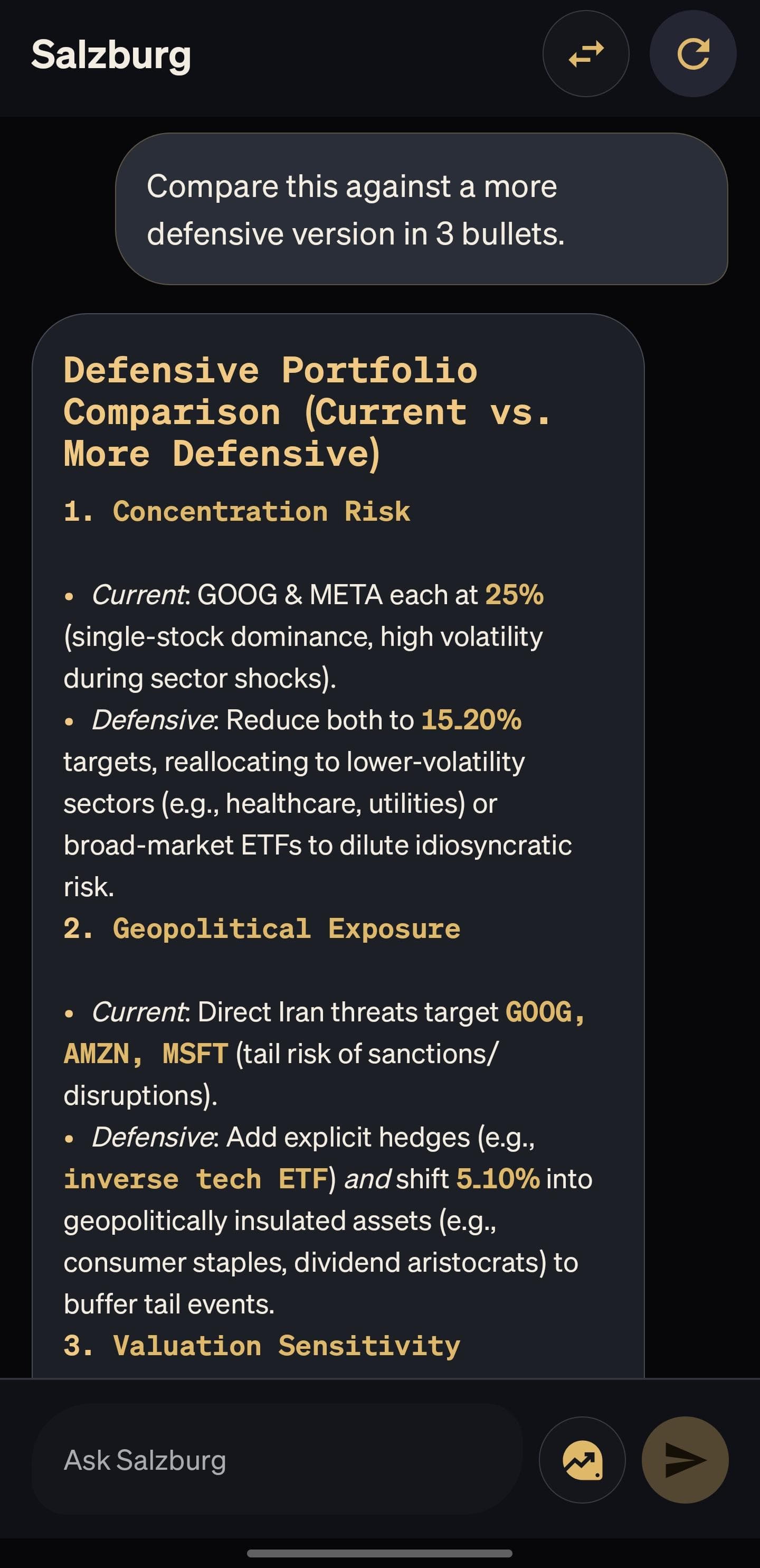
The interactive analyst chat in action, breaking down complex portfolio risk comparisons on the fly.
-
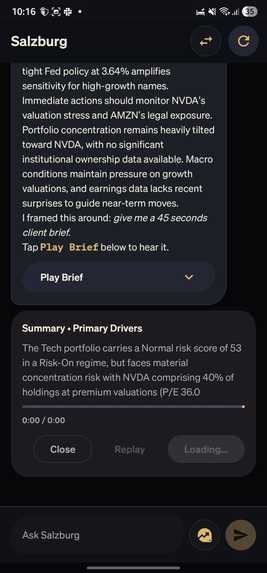
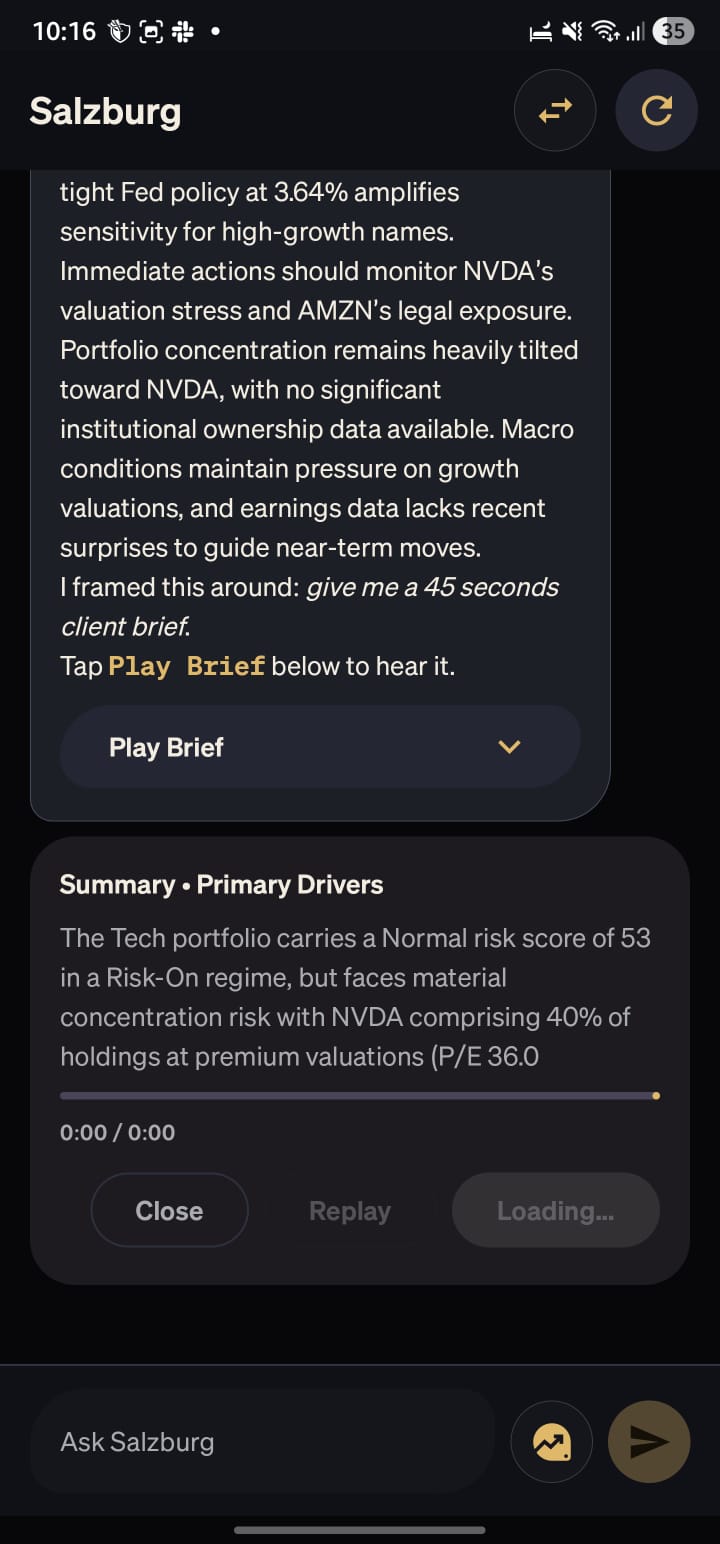
Generate and listen to narrated, plain-English client briefs directly within the chat interface using Amazon Polly.
-
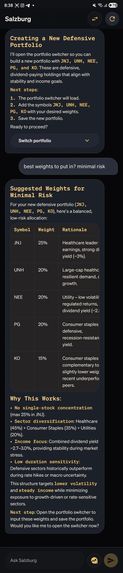
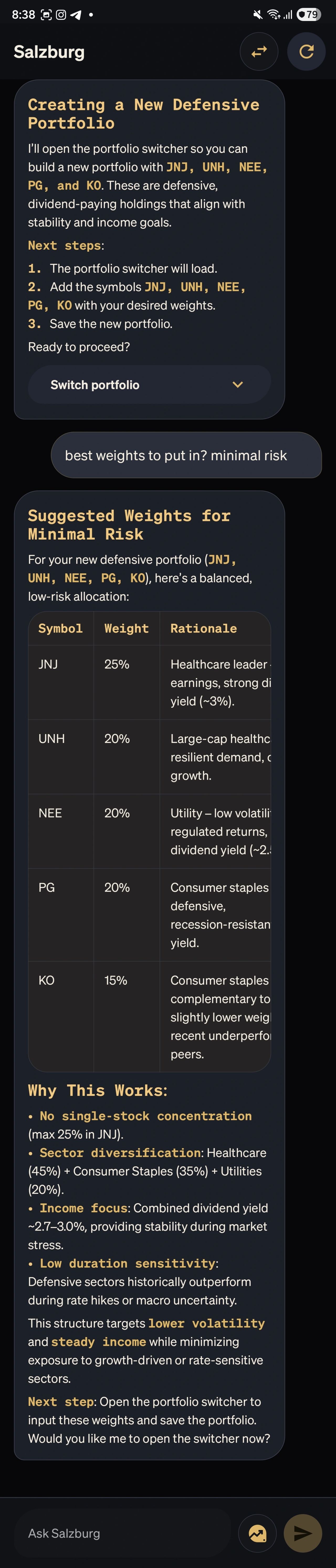
You can leverage Salzburg's AI to instantly transform high-level goals like "minimal risk" into precise, data-backed stock allocations.
Salzburg: Agentic Portfolio Risk Analyst
Built for the Amazon Nova Hackathon
A grounded portfolio risk copilot for real investors.
Markets move on narratives, but most portfolio tools still speak in spreadsheets. Salzburg turns holdings, live quotes, headlines, fundamentals, earnings, institutional ownership, and macro signals into an evidence-backed portfolio risk investigation that ordinary investors can actually follow.
Salzburg is not a free-form investing chatbot. It is a bounded, agentic risk copilot built around Amazon Nova 2 Lite. Nova plans what to inspect, selects bounded tools, verifies which findings are actually supported, simulates one-step portfolio changes, rejects unsafe proposals, and synthesizes the final verdict.
The result is a system that can explain why a portfolio is risky right now, what changed since the last run, which claims are evidence-backed versus weak inference, what happens if one holding or one weight changes, and which proposal is actually safer after simulation.
Inspiration
Salzburg came from a simple frustration: portfolio tools are usually good at showing numbers and bad at explaining risk.
Investors can often feel that a portfolio has become crowded, fragile, or overexposed, but the tools they use rarely help with the next layer of reasoning. They show prices, charts, and weights, but they do not help users understand the actual source of risk, what changed, which claims are grounded, or what a safer bounded move would look like after simulation.
I wanted to build something that behaves less like a dashboard and more like a disciplined risk editor: investigate the portfolio, ground the findings, test one bounded change at a time, and explain the result in plain language.
What Salzburg Does
Agentic portfolio investigation
Nova runs a bounded investigation loop over the portfolio:plan -> fetch -> verify -> synthesize.Deterministic score, AI explanation
The portfolio risk score is computed by a rules-based engine. Nova does not invent the score. It explains and prioritizes what matters around it.Evidence-backed claims
Findings are tied to fetched evidence. If data is stale, partial, or missing, Salzburg degrades gracefully instead of bluffing.Safe bounded proposals
Salzburg proposes one bounded portfolio change at a time, simulates it, and rejects unsafe or worsening moves before they ever reach the apply flow.Interactive analyst chat
Users can ask follow-ups, request fresh news, test what-if scenarios, explore candidate replacements, and apply one validated proposal at a time.What-changed intelligence
Salzburg can explain what changed after a proposal and what changed since the previous investigation, instead of forcing the user to compare snapshots manually.Inline narrated brief
Users can ask for an audio brief in chat and play it directly in the same screen.
Why This Is Agentic
Salzburg is not a generic chatbot wrapped around market data.
- Nova chooses from a bounded tool set instead of answering from scratch.
- The system executes those tools and streams what happened.
- A verifier pass checks which findings survive.
- Portfolio changes are bounded, simulated, and only applied after confirmation.
- Unsafe proposals are rejected before they are shown as actionable.
That means Salzburg uses AI to make investigation decisions inside a constrained workflow, not just to decorate a static report.
How I Built It
Salzburg is a split system with a deterministic risk core and an agentic orchestration layer on top.
Frontend
The frontend is an Android app built with Kotlin and Jetpack Compose.
It provides:
- a chat-first analyst experience
- focused workspaces for signals, evidence, portfolio structure, actions, and factors
- NDJSON streaming for both investigation and follow-up chat
- inline Amazon Polly playback for narrated briefs
Backend
The backend runs on AWS Lambda using a streamed Python ASGI setup behind Lambda Web Adapter.
It exposes:
POST /investigate/streamPOST /chat/streamGET /health
Core architecture
Deterministic risk engine
Computes the portfolio risk score independently from the LLM.Bounded proposal engine
Generates one-step proposal candidates, simulates them, scores them, and rejects unsafe or worsening moves.Amazon Nova 2 Lite
Plans, verifies, synthesizes, and explains the investigation.Alpha Vantage MCP integration
Fetches quotes, headlines, fundamentals, earnings, institutional holdings, and macro indicators.Amazon Polly
Generates narrated brief playback directly inside the app.Security and trust controls
HMAC request signing, optional Play Integrity, bounded proposal validation, and explicit degradation behavior when evidence is weak.
How Amazon Nova is used
Amazon Nova 2 Lite is part of the shipped core flow, not a side feature.
- Nova plans the investigation by selecting which bounded tools should run.
- Nova verifies candidate findings and rejects weak or unsupported claims.
- Nova synthesizes the final verdict, drivers, and action path from the deterministic baseline and fetched evidence.
- Nova powers the conversational follow-up layer on top of the latest portfolio analysis.
- Nova explains the surviving bounded portfolio proposal after deterministic simulation and validation.
- Nova is also used for structured brief generation when the user asks for a narrated summary.
In Salzburg, Nova is strongest where model judgment actually matters:
- planning
- verifying
- synthesizing
- explaining
The deterministic layer owns the score and safety-sensitive proposal logic.
Challenges I Faced
The hardest challenge was making the system useful without letting it become careless.
Grounding
A system like this becomes dangerous quickly if it sounds confident without enough support. I had to make sure findings stay tied to evidence, weak claims can be rejected, and the final answer remains honest when data is partial or stale.Proposal safety
I did not want Salzburg to behave like a free-form portfolio optimizer. I scoped it as a risk copilot. That meant bounding proposal types, simulating every proposal first, and refusing “safer” moves that actually worsen score or concentration.Latency and UX
A user should not tap investigate and stare at a frozen screen. I solved that by streaming the analyst loop live so planning, tool execution, verification, and synthesis are visible as they happen.Trust boundaries across follow-up chat
It was not enough to generate smart answers. The system also had to remember proposal state correctly, explain what changed after apply, and keep that flow deterministic across reruns.Narration inside the product
I wanted the audio brief to feel native to the conversation, not like an export button, so I built playback directly into the chat experience.
What I Learned
The strongest AI products in this space are not the ones that let the model do everything. They are the ones that give the model the right job.
In Salzburg:
- the deterministic layer owns the risk score
- the bounded proposal engine owns simulation and safety checks
- Nova owns planning, verification, synthesis, and explanation
That separation made the system more trustworthy, easier to debug, and much easier to defend technically.
I also learned that agentic products are as much about orchestration and UX as they are about model output. Streaming, fallback behavior, refusal handling, memory hygiene, and transparent evidence matter just as much as the text itself.
What I’m Proud Of
I’m proud that Salzburg is not just a one-shot LLM wrapper around market data.
It is a structured, streamed system with:
- deterministic scoring
- evidence-aware verification
- bounded what-if simulation
- safe refusal behavior
- mobile-first UX
- inline narrated brief playback
It does not just sound intelligent. It behaves in a way that is grounded, legible, and disciplined.
Why It Matters
Salzburg is designed to create value in two ways.
Enterprise impact
The system can help advisors, analysts, and portfolio operators reduce the time needed to understand:
- where portfolio fragility comes from
- what changed since the last run
- which claims are actually supported
- which bounded move is worth considering next
That makes it useful as a decision-support layer, not just a reporting tool.
Community impact
For individuals, Salzburg makes portfolio risk more understandable. It turns opaque market context into something legible, explainable, and easier to act on responsibly.
Core User Flow
- Create or load a portfolio in the Android app.
- Tap Investigate Portfolio.
- Salzburg streams the analyst loop live: planning, tool execution, verification, and synthesis.
- Review the verdict, main driver, and action path.
- Ask follow-up questions in chat.
- Test one bounded portfolio change at a time.
- See the simulated impact before applying it.
- Ask for a narrated brief and play it inline.
What’s Next
- scheduled morning portfolio editions
- deeper cross-run change tracking
- multi-proposal comparison workflows
- broker integrations for practical rebalance workflows
- multilingual reporting and narrated briefs
Note
Salzburg is an informational portfolio risk investigation tool. It is not investment advice.

Log in or sign up for Devpost to join the conversation.