🚨 RiskLens AI: Merge Request Risk Analyzer
🧠 Inspiration
Every merge request introduces risk — whether it’s security vulnerabilities, misconfigurations, or deployment instability.
Traditional code review is manual, time-consuming, and often inconsistent. I wanted to build a system that could automatically analyze merge requests and provide instant, structured risk insights before code is merged.
⚙️ What It Does
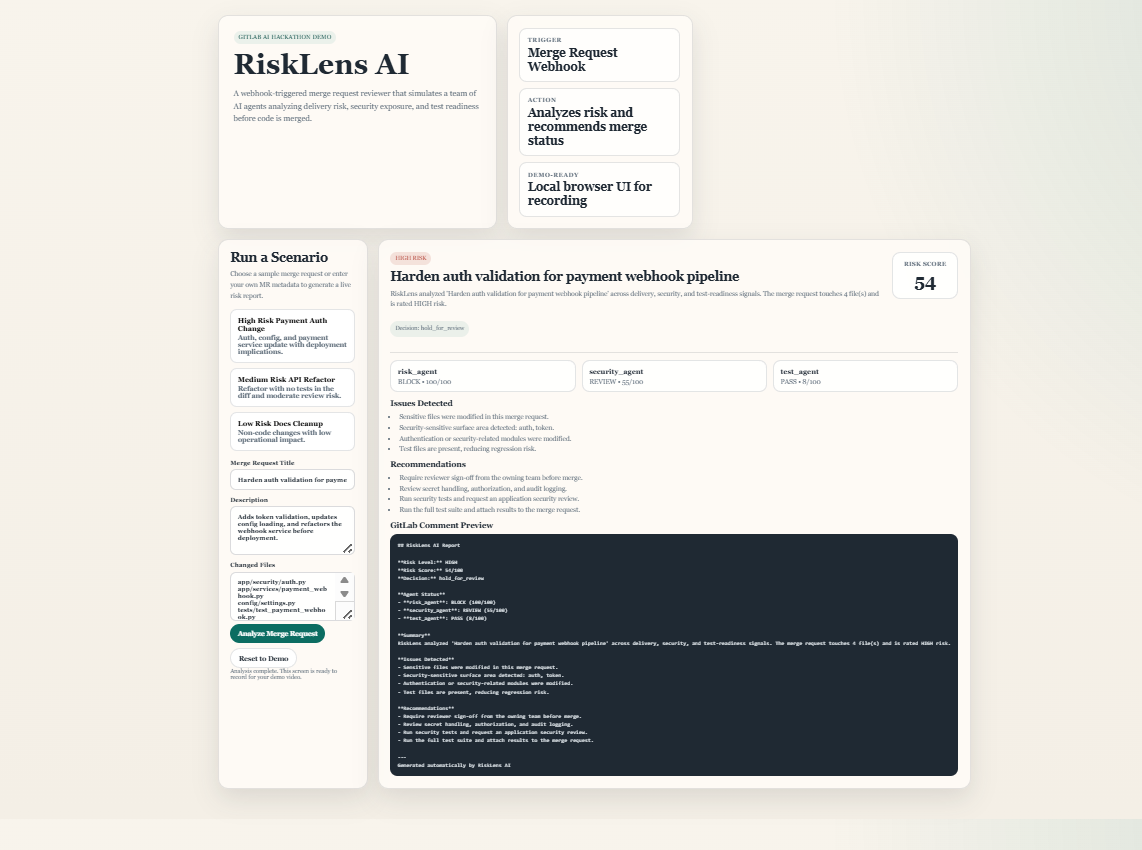
RiskLens AI is an event-driven system that analyzes GitLab merge requests and generates a structured risk report in real time.
It evaluates:
- Merge request title and description
- Change context
- Potential risk indicators
And outputs:
- 🚨 Risk level (LOW / MEDIUM / HIGH)
- 📊 Risk score
- ⚠️ Issues detected
- ✅ Actionable recommendations
🔁 How It Works
- A merge request event is triggered
- A webhook sends the data to the RiskLens system
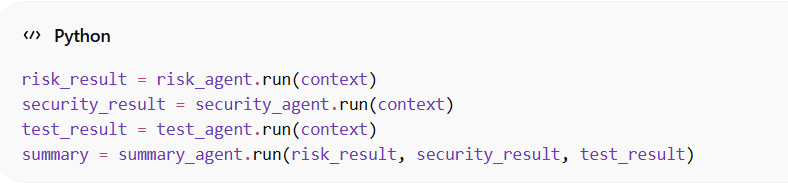
- The system analyzes the request using AI logic
- A structured risk report is generated instantly
For demo purposes, the webhook is simulated locally to demonstrate the full trigger → action workflow.
🎬 Demo Highlights
/demoendpoint shows a full risk analysis output/webhooksimulates a GitLab merge request event- Real-time processing generates risk insights immediately
🧱 How I Built It
- Python (Flask) for backend API
- Webhook-based architecture for event handling
- Structured risk analysis engine
- Local simulation of GitLab merge request events
🚧 Challenges I Ran Into
- Managing webhook payload structure and parsing
- Handling environment variables securely
- Rebuilding the project after accidental exposure of sensitive keys
- Ensuring clean Git workflow and secure
.gitignoreusage
🏆 Accomplishments
- Built a fully working event-driven AI system
- Successfully implemented webhook-based trigger logic
- Designed a structured and interpretable risk scoring system
- Recovered and rebuilt the project under pressure
📚 What I Learned
- How to design event-driven systems
- Secure handling of environment variables and secrets
- Git and repository management best practices
- How to turn a prototype into a submission-ready project
🚀 What’s Next
- Integrate directly with GitLab webhooks in production
- Add real AI/LLM-based risk analysis
- Post automated comments directly on merge requests
- Expand into a full AI-powered DevOps assistant
💡 Why This Matters
RiskLens transforms code review into a proactive, intelligent safety layer.
Instead of reacting to issues after deployment, teams can identify risks early — improving code quality, reducing failures, and accelerating development workflows.

Log in or sign up for Devpost to join the conversation.