Inspiration
Every year, thousands of startups fail not because of bad ideas, but because founders didn't anticipate critical risks early enough. Meanwhile, product teams ship AI features without fully considering harm scenarios, bias, or privacy implications. We wanted to build a tool that democratizes risk intelligence — giving founders and product teams the same caliber of risk analysis that top consulting firms charge thousands for, powered by AI and delivered in seconds.
What it does
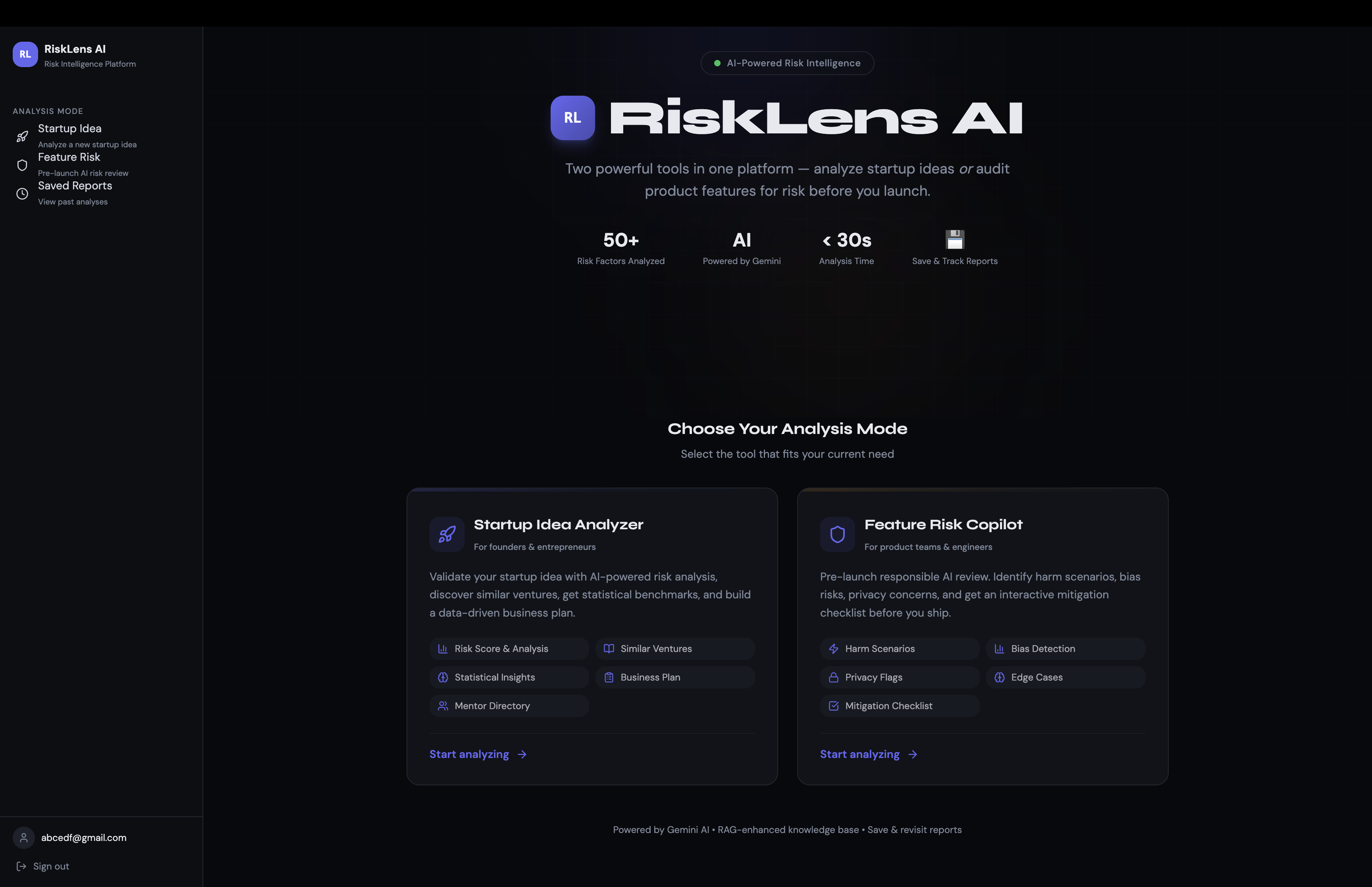
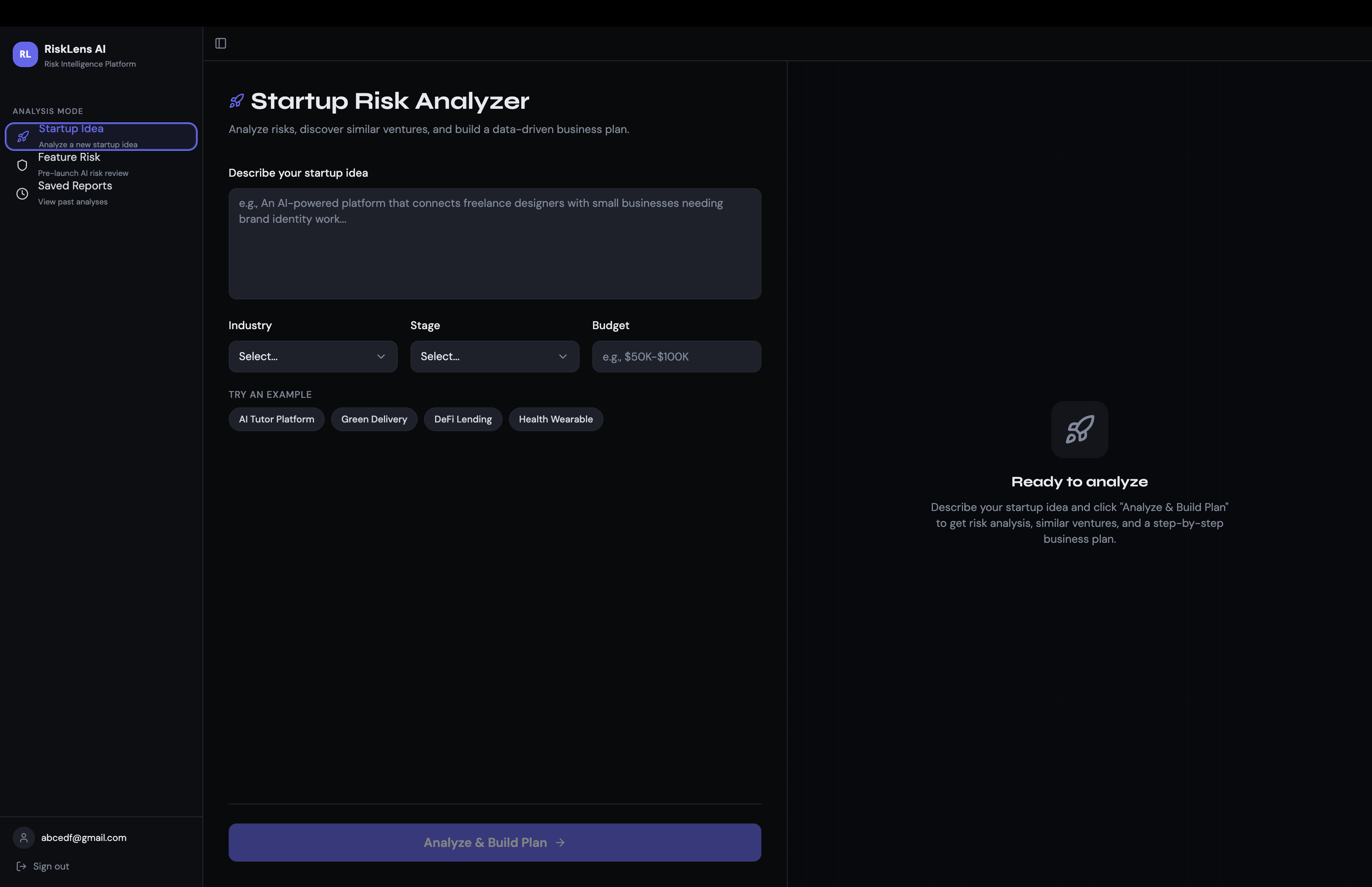
RiskLens AI is a dual-mode risk intelligence platform:
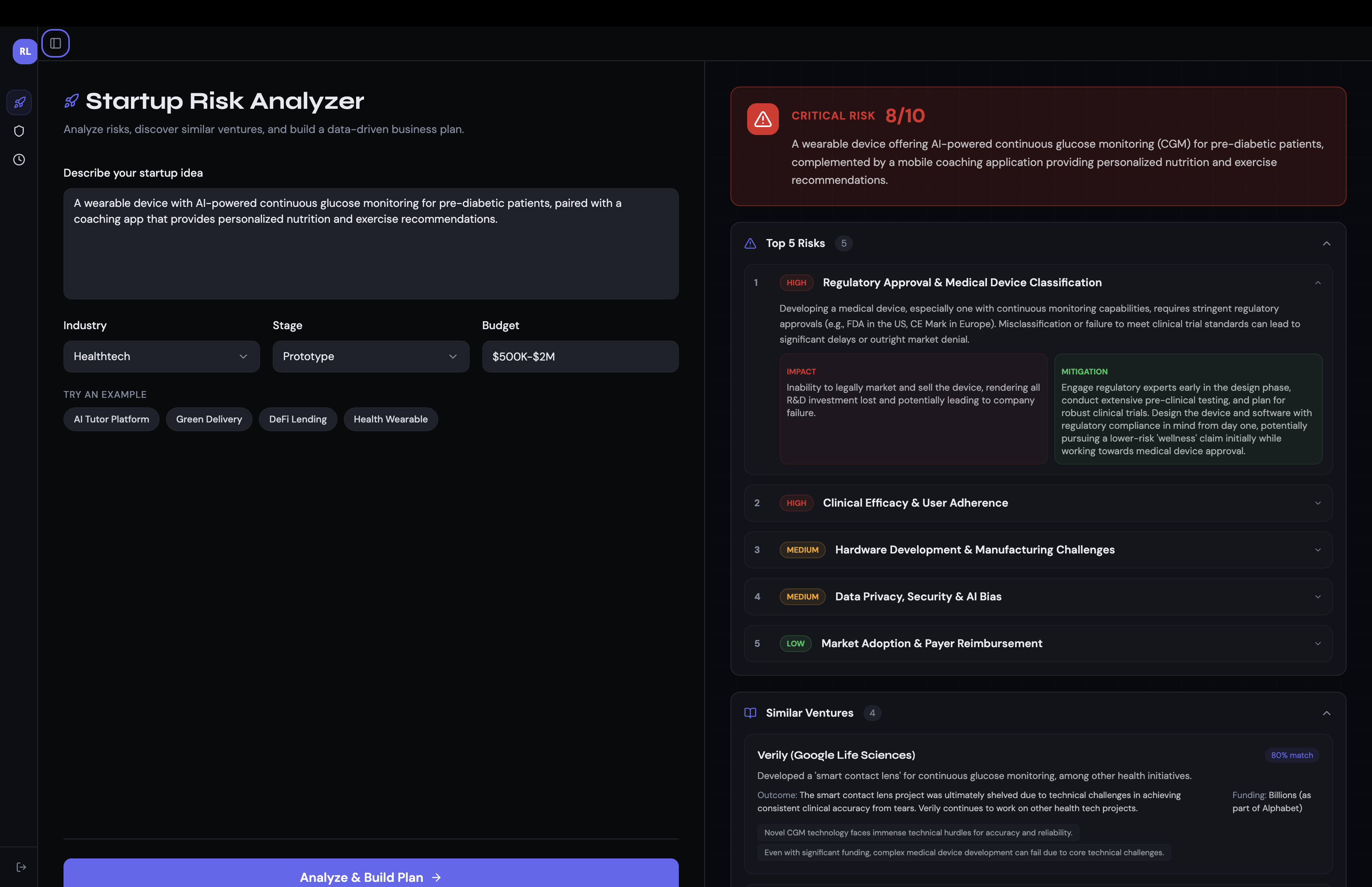
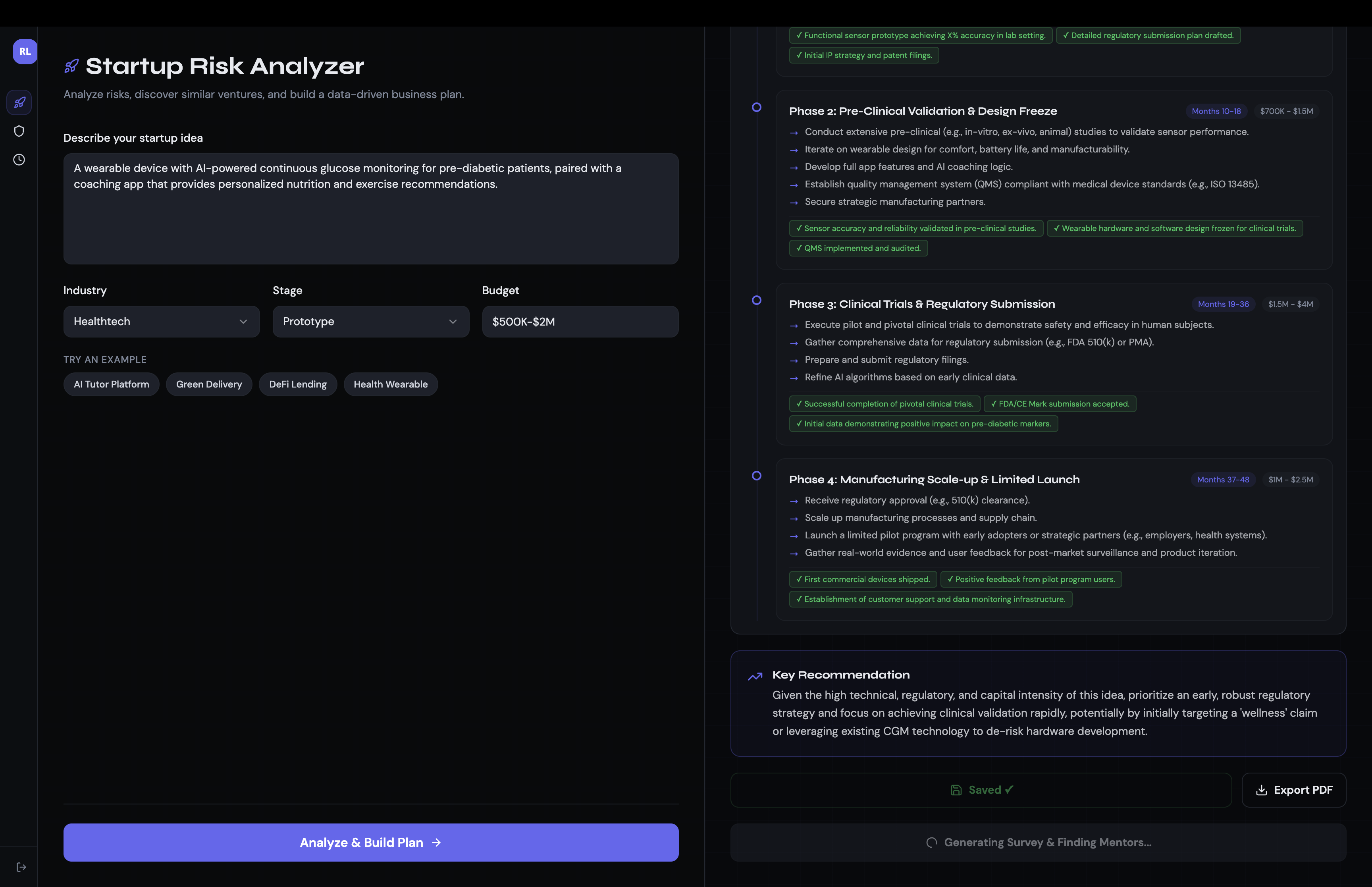
Startup Idea Analyzer — Founders enter their startup idea, industry, and stage. The AI returns a comprehensive risk score, identifies similar ventures (with survival/failure data), surfaces statistical benchmarks, generates a business plan outline, and connects users with relevant mentors. It also produces a custom survey to validate assumptions with real users.
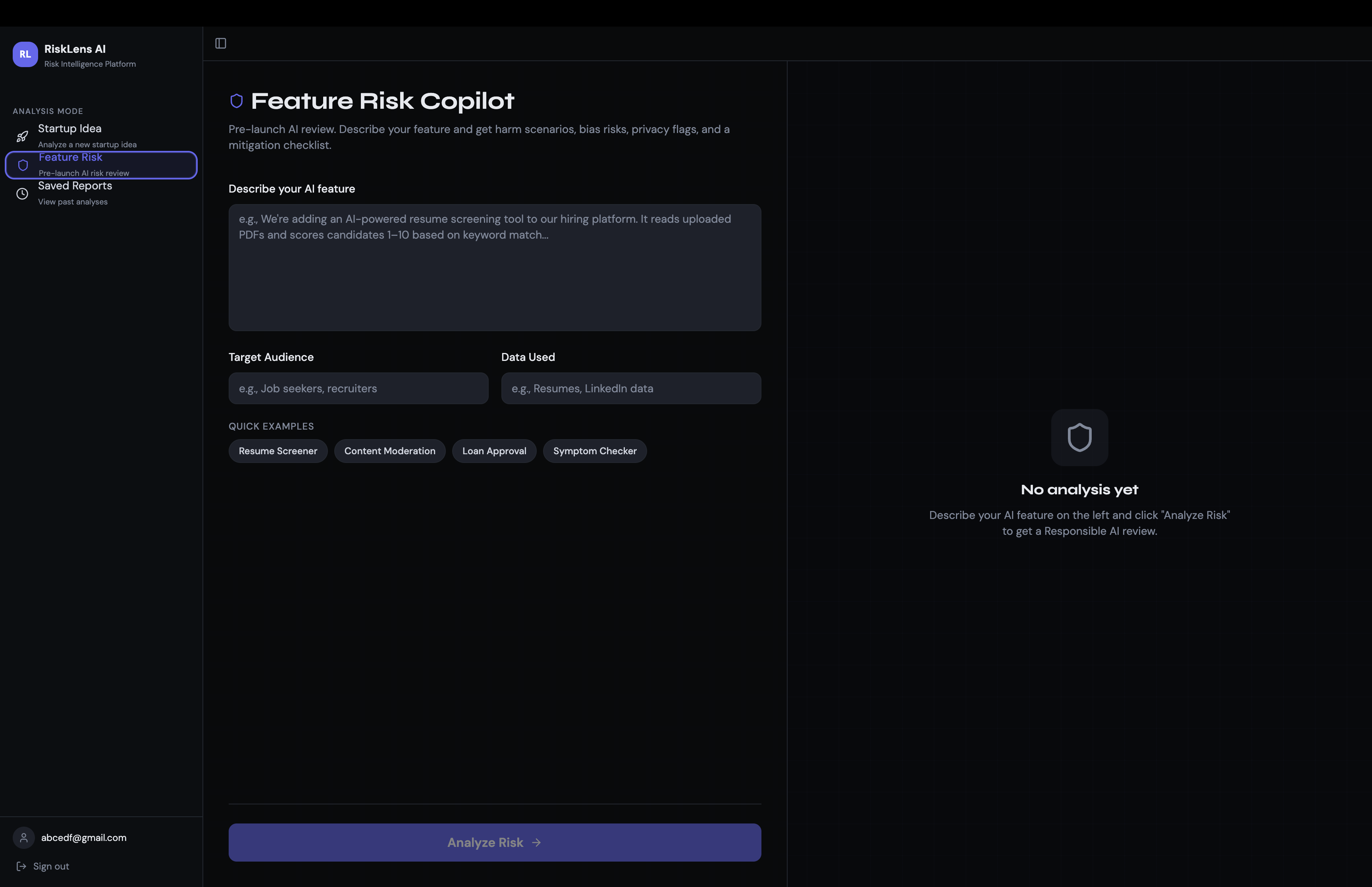
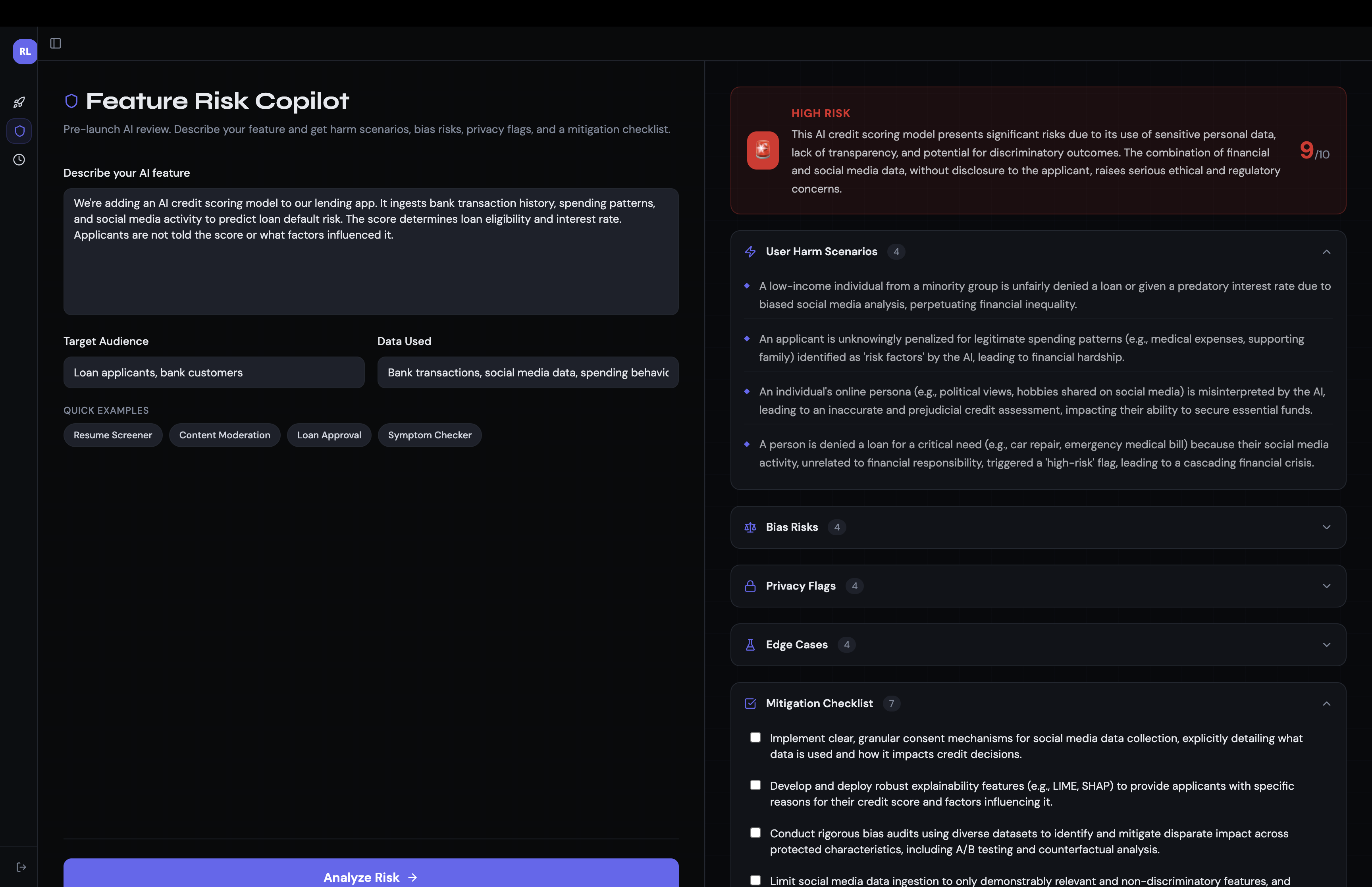
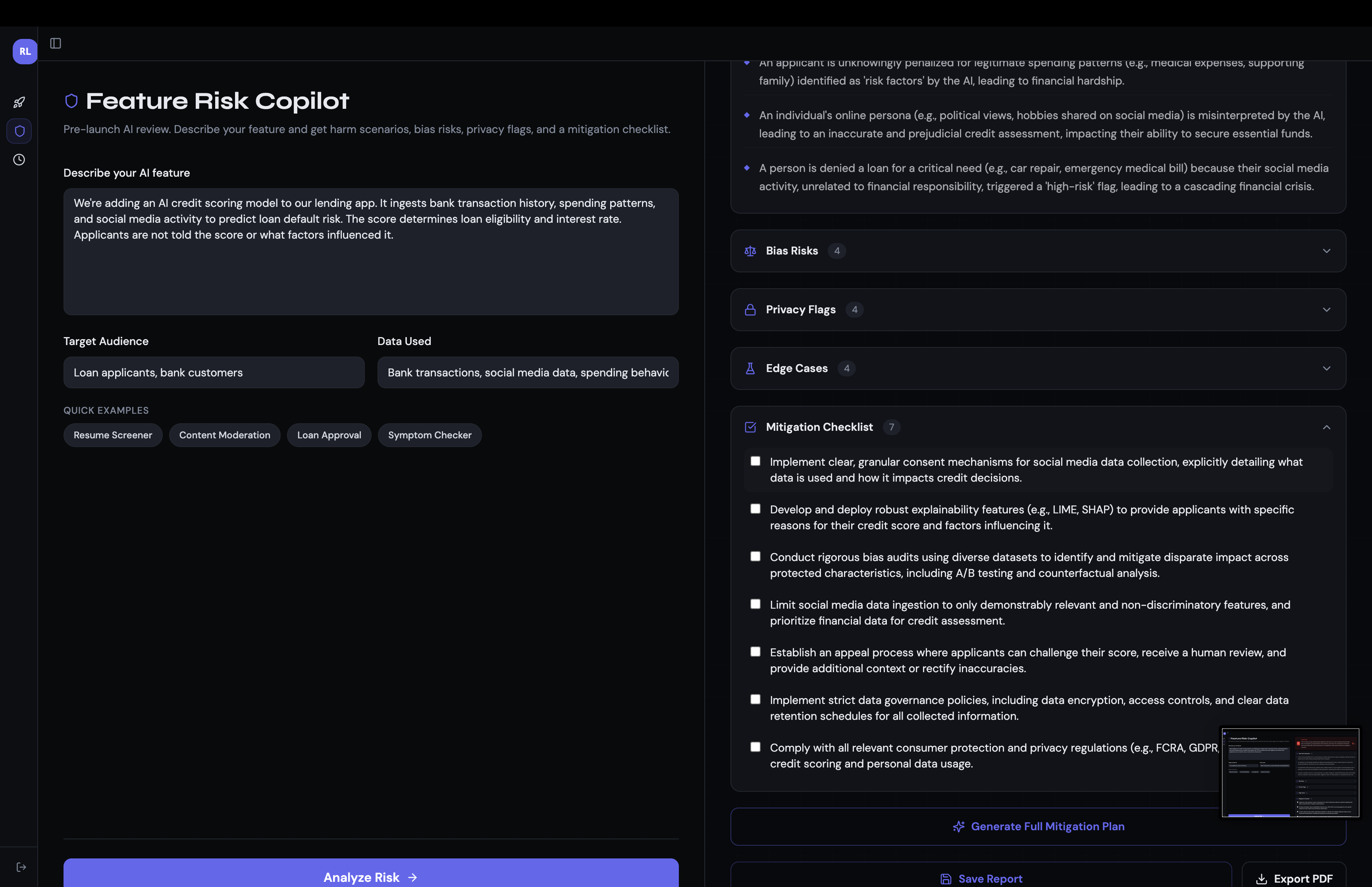
Feature Risk Copilot — Product teams describe a feature they're about to ship. The AI identifies potential harm scenarios, bias risks, privacy flags, and edge cases, then generates an interactive mitigation checklist. It's essentially a pre-launch responsible AI review.
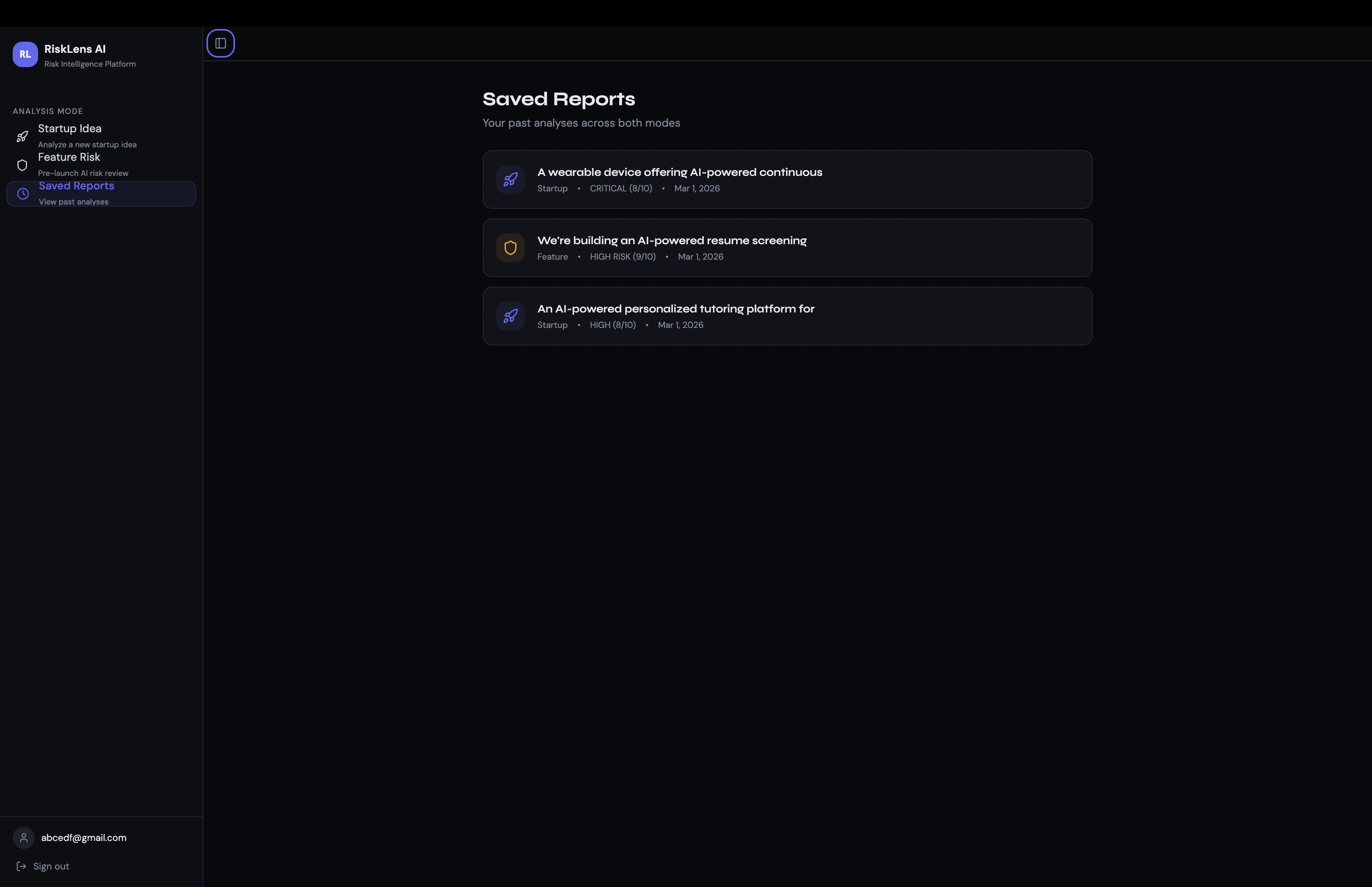
Both modes support saving reports, viewing history, and exporting professional investor-ready PDFs.
How we built it
Frontend: React + TypeScript + Vite, styled with Tailwind CSS and shadcn/ui components. Framer Motion handles animations throughout the app.
Backend: Lovable Cloud for authentication, database (saved analyses, user profiles), and edge functions. AI Engine: Gemini AI powers all analysis — startup risk scoring, similar venture discovery, survey generation, and feature risk auditing.
RAG Pipeline: A knowledge base of responsible AI frameworks, startup failure data, and industry benchmarks feeds into the AI via a retrieval-augmented generation edge function, grounding responses in real data rather than pure hallucination.
PDF Export: jsPDF generates professional, text-based PDF reports formatted for investor or PM review — no screenshots, just clean structured documents.
Challenges we ran into
Structuring AI output reliably — Getting Gemini to return consistent JSON schemas across different startup industries and feature types required careful prompt engineering and validation layers.
RAG relevance — Balancing the knowledge base so recommendations are specific enough to be useful but broad enough to cover diverse industries was an iterative process.
PDF formatting — Moving from screenshot-based PDF export to a proper text-based document generator with headers, sections, page numbers, and clean typography was a significant rewrite.
Dual-mode UX — Designing a single app that serves two distinct user personas (founders vs. product teams) without feeling fragmented required thoughtful navigation and shared design patterns.
Accomplishments that we're proud of
End-to-end analysis in under 30 seconds — From idea input to a full risk report with similar ventures, statistics, and actionable recommendations.
RAG-enhanced accuracy — Recommendations are grounded in real responsible AI frameworks and startup data, not just generic AI output.
Professional PDF export — Reports are genuinely investor-ready, with proper formatting, sections, and typography.
Save & track over time — Users can revisit past analyses and track how their risk profile evolves as they iterate on their idea or feature.
Clean, cohesive design — A dark-mode-first interface with a consistent design system that feels polished and purposeful.
What we learned
Prompt engineering is as much about output structure as it is about content quality. Consistent JSON schemas matter enormously for downstream UI rendering.
RAG adds real value when the knowledge base is curated and domain-specific, not just a generic document dump.
Users care deeply about exportability, aka the ability to share a PDF with co-founders or investors turned out to be one of the most requested features.
Building for two personas in one app forces better abstraction and component reuse.
What's next for RiskLens AI
Comparative analysis — Let users run multiple startup ideas side-by-side and compare risk profiles. Real-time market data integration — Pull live competitor data, funding rounds, and market trends into the analysis.
Team collaboration — Shared workspaces where co-founders or product teams can annotate and discuss risk reports together.
Mitigation tracking — Turn the feature risk checklist into an actionable project tracker with status updates and deadlines.
API access — Let teams integrate RiskLens analysis into their existing CI/CD or product review workflows.
Expanded AI models — Support for additional models and let users compare outputs across different AI providers for higher confidence.
Built With
- deno
- framer-motion
- google-gemini-2.5-flash
- jspdf
- lovable-ai-gateway
- lovable-cloud
- postgresql
- postgresql-full-text-search
- rag
- react-18
- react-hook-form
- react-router
- recharts
- shadcn/ui
- sql
- supabase
- tailwind-css
- tanstack-react-query
- typescript
- vite
- zod

Log in or sign up for Devpost to join the conversation.