-
-
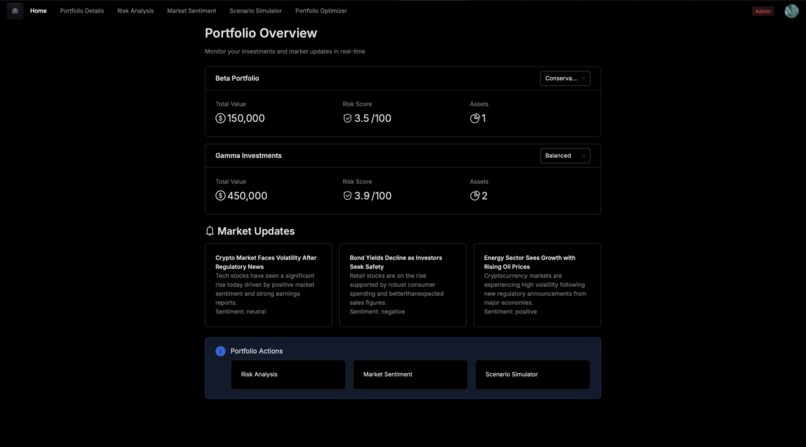
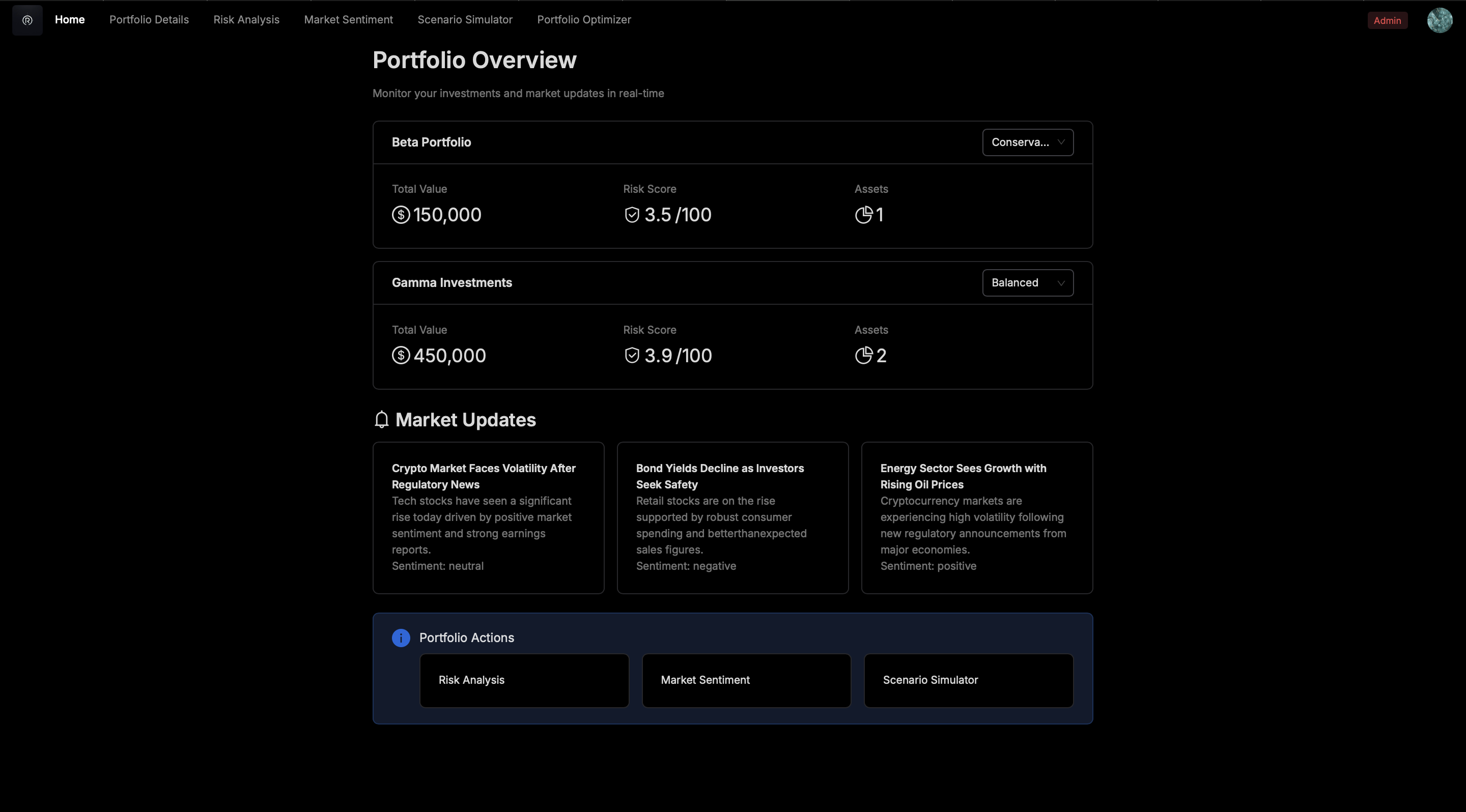
Portfolio Overview
-
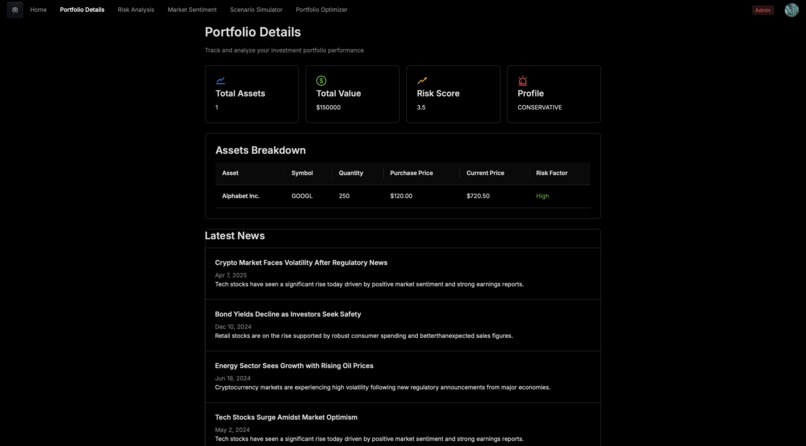
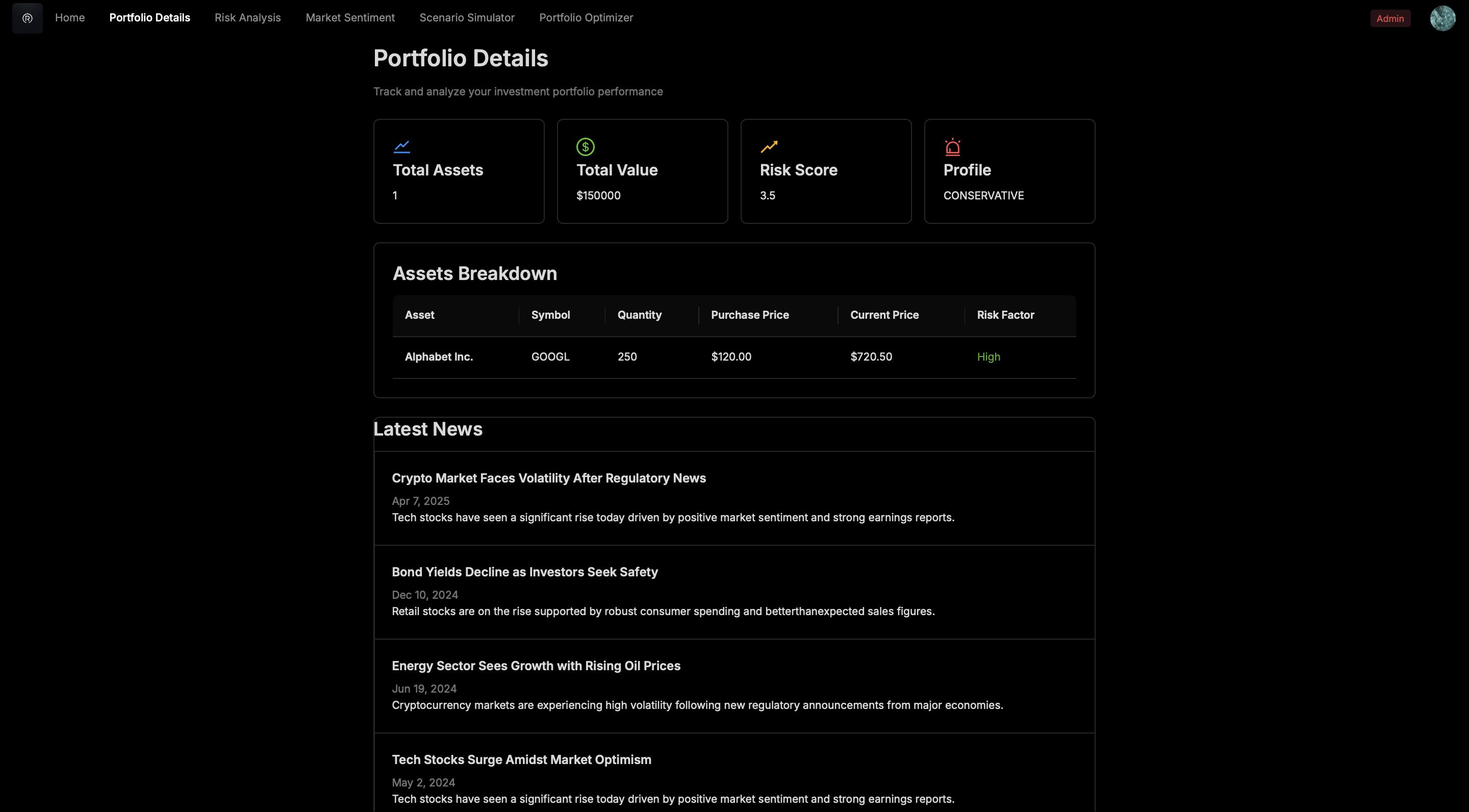
Portfolio Details
-
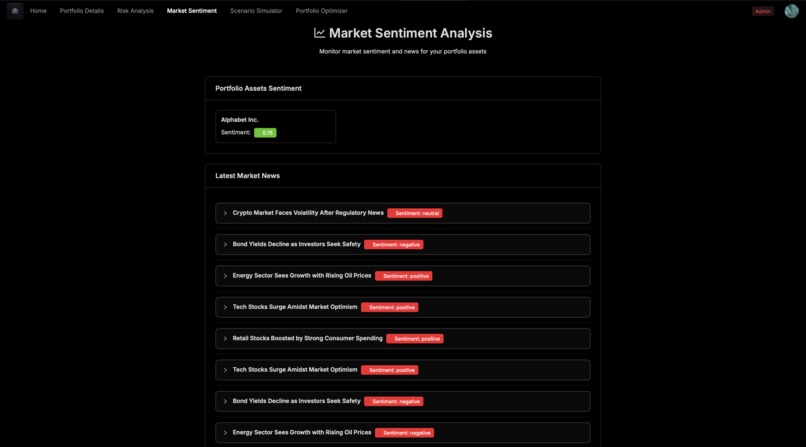
Market Sentiment
-
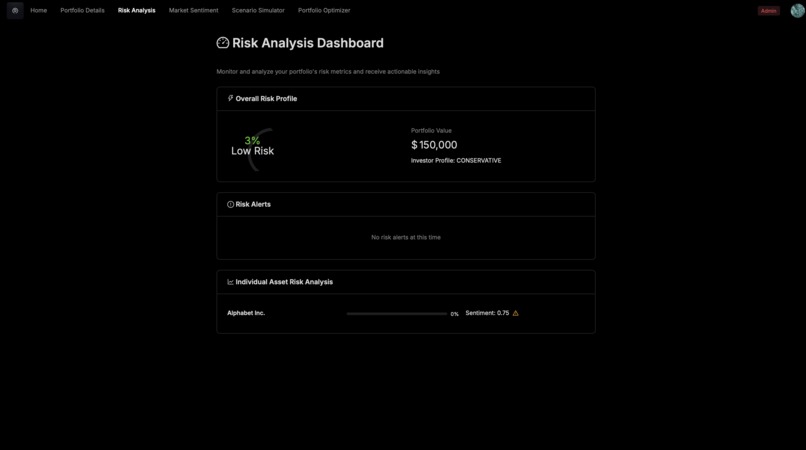
Risk Analysis
-
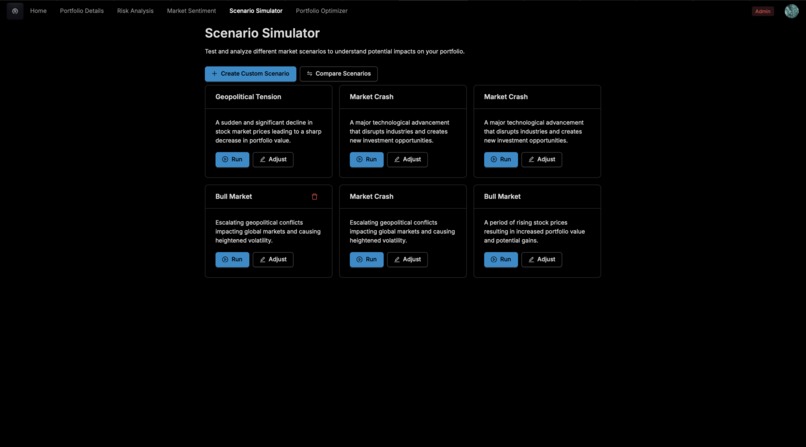
Scenario Simulator
-
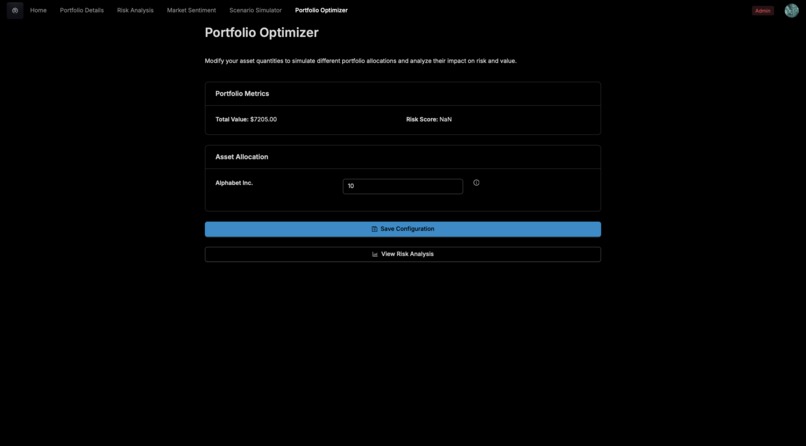
Portfolio Optimizer
Inspiration
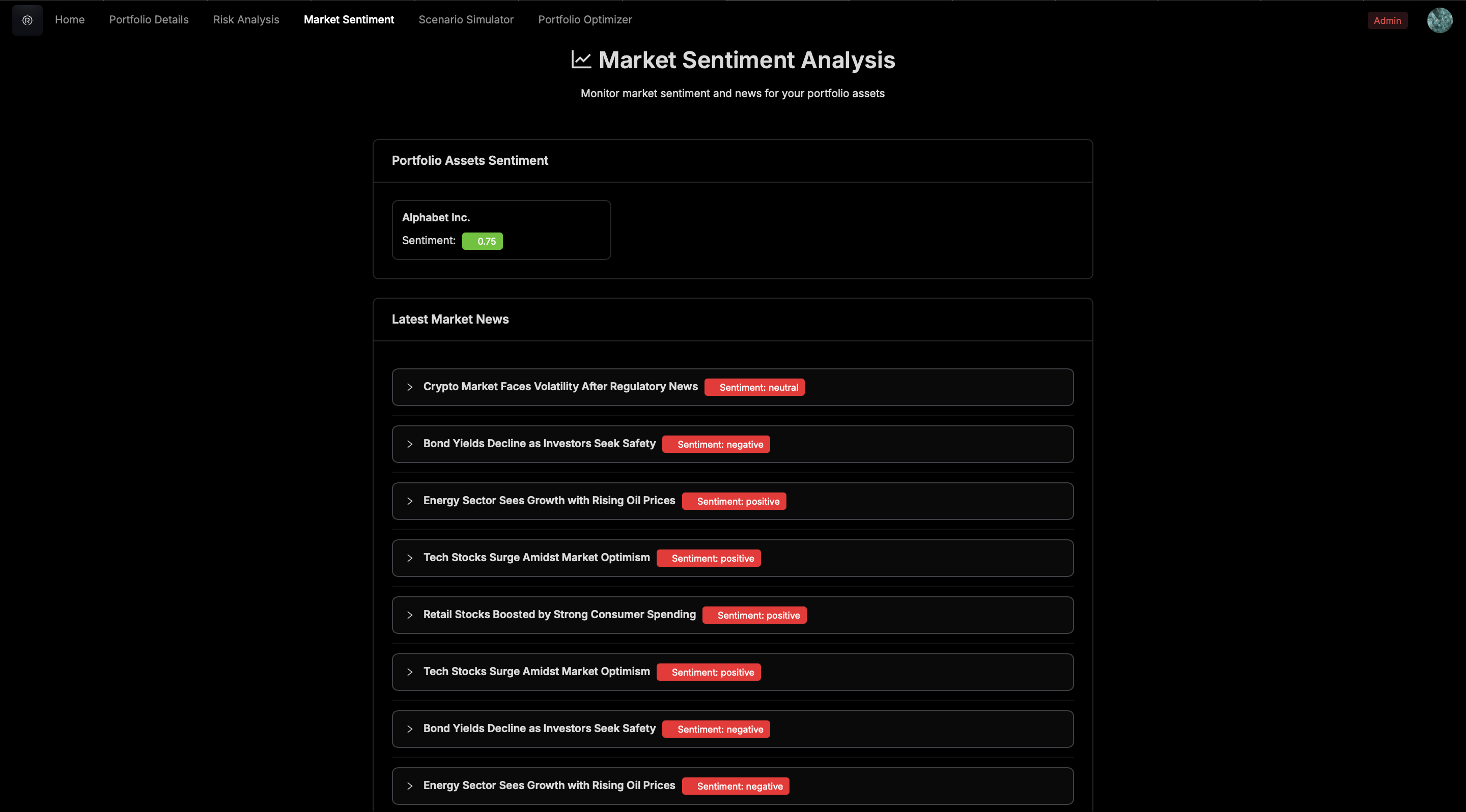
In today’s volatile market, managing investment risk is crucial for both new and experienced investors. However, many lack the tools to accurately assess and monitor portfolio risk in real-time. We wanted to create a solution that empowers investors to make data-driven decisions, optimizing their portfolios while staying informed of potential risks. Our goal was to build a comprehensive, user-friendly dashboard that combines real-time data, interactive tools, and financial insights into one platform, making portfolio management accessible to everyone.
What it does
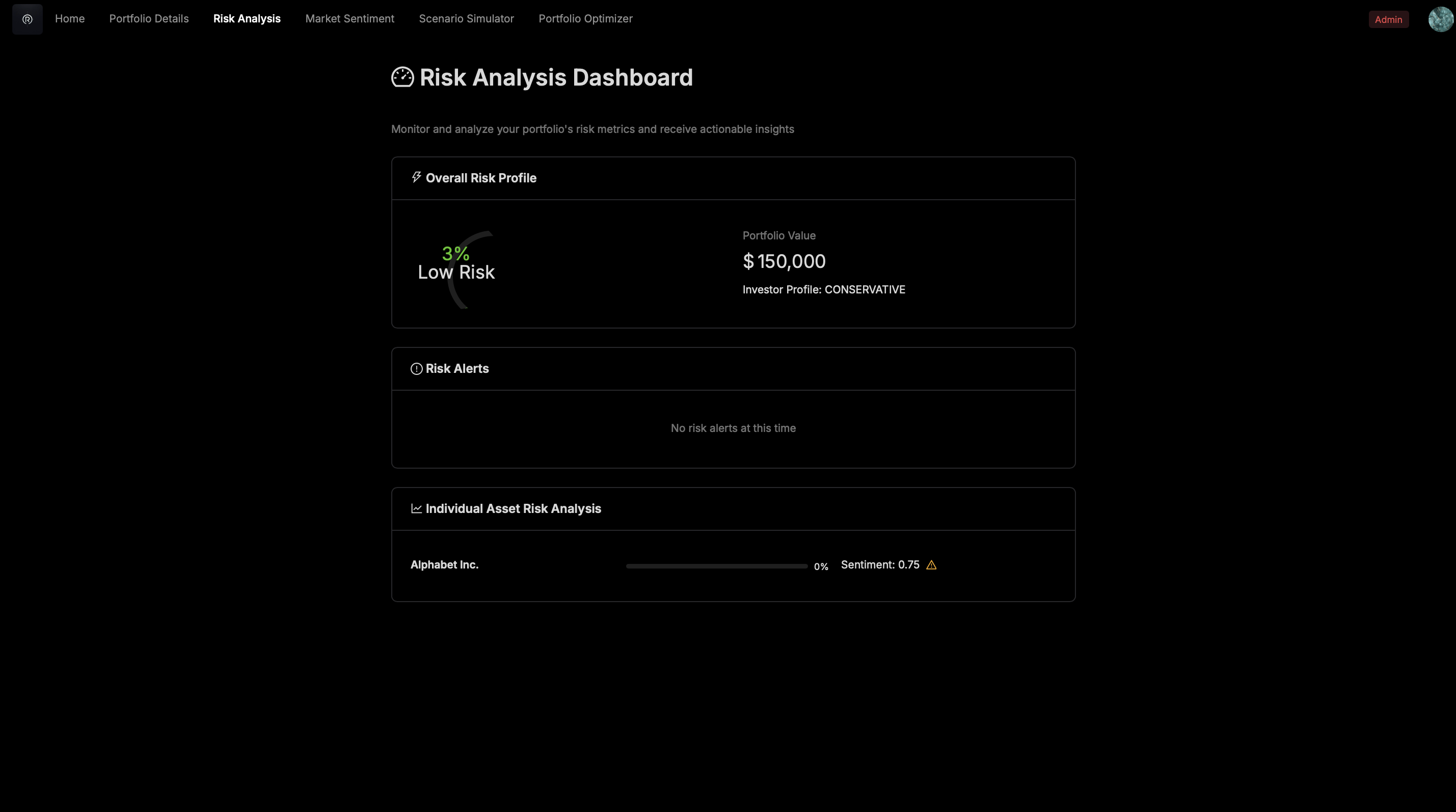
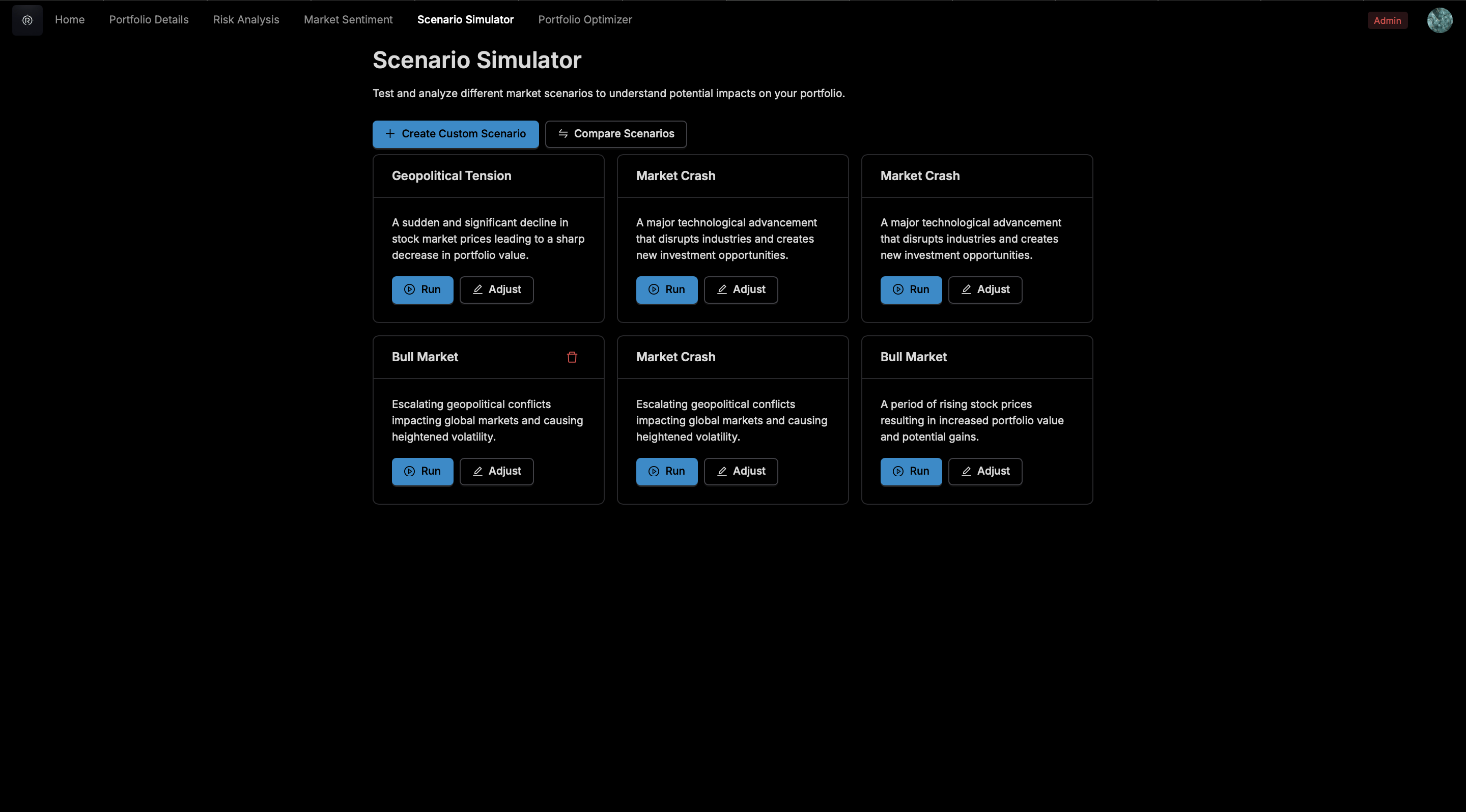
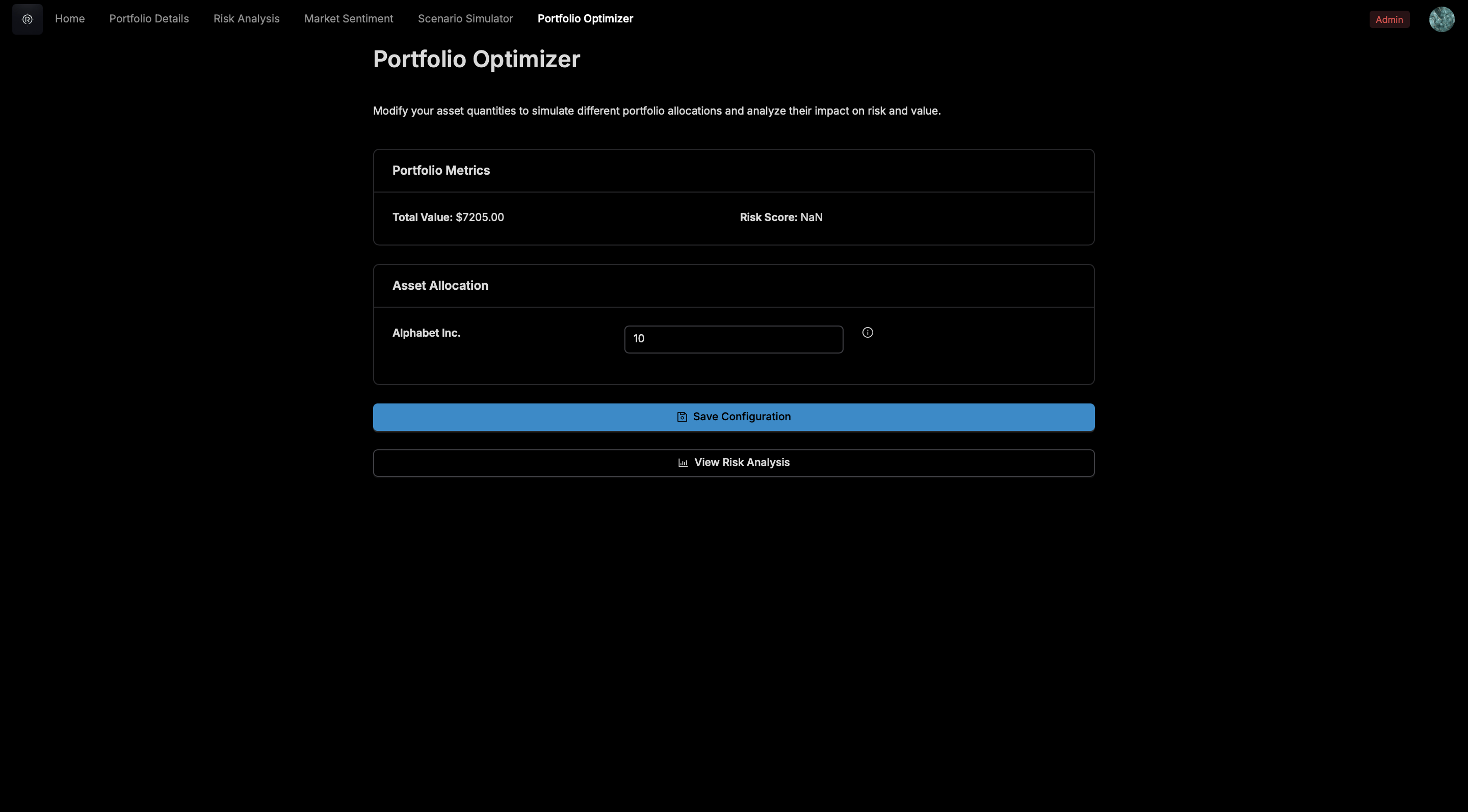
The Portfolio Risk Management Dashboard is a web-based platform that provides users with an in-depth analysis of their investment portfolios. Users can view their total portfolio value, individual asset risk scores, and real-time market sentiment updates. The dashboard also includes powerful tools like the Scenario Simulator, where users can model the impact of market events (e.g., “Market Crash” or “Bull Market”), and the What-If Analysis, which allows users to adjust asset allocations and instantly see the effects on risk and diversification. It’s designed to offer investors actionable insights, helping them optimize their portfolio strategy based on their risk tolerance.
How we built it
We started with Marblism AI as the base, leveraging its generative capabilities to lay out a framework for our dashboard. From there, we built and customized each feature in TypeScript, using .tsx and .ts for component structure and logic. The frontend is primarily built in React, allowing for an interactive and responsive user experience. For real-time market data, we integrated external APIs, which enabled live updates on stock prices and sentiment analysis. To manage complex functionalities like risk scoring and scenario simulation, we implemented custom algorithms and data processing scripts, ensuring the dashboard provides accurate and actionable insights for users.
Challenges we ran into
One of the main challenges we faced was handling real-time data integration. Ensuring smooth and consistent updates across all components without affecting performance was critical, especially with multiple data sources. Additionally, designing a user interface that could effectively display complex financial data in a clean and intuitive way required several iterations. Another challenge was implementing the scenario simulation and risk calculation algorithms in a way that was both accurate and responsive to user interactions. Debugging type errors in TypeScript also posed some hurdles, given the complexity of the data being processed.
Accomplishments that we're proud of
We’re proud of creating a functional, visually engaging dashboard that offers valuable insights in real-time. The Scenario Simulator and What-If Analysis tools stand out as accomplishments, as they add significant depth and interactivity to the user experience. We successfully integrated real-time data and designed a user-friendly interface that makes complex financial information accessible to users of all experience levels. Additionally, implementing a customizable experience with multiple dummy profiles allows users to explore different risk profiles and investment strategies, making our platform versatile and informative.
What we learned
Through this project, we gained valuable experience working with TypeScript and improving our skills in managing data flow and reactivity in React. We learned how to effectively handle real-time data integration, ensuring that our dashboard remains up-to-date without compromising performance. Additionally, designing complex algorithms for risk scoring and market simulations taught us the importance of balancing accuracy with usability. We also deepened our understanding of UI/UX design principles, specifically in creating intuitive layouts for financial data visualization.
What's next for Risk Management
Looking ahead, we plan to enhance the platform with personalized alerts for market events and potential risks, allowing users to receive notifications when key thresholds are met. We also aim to add machine learning capabilities to improve risk scoring accuracy and provide more advanced predictive analytics. Future updates could include deeper integration with financial APIs for expanded asset coverage and real-time sentiment analysis. Finally, we envision expanding the educational content to help users learn more about risk management strategies and build stronger financial literacy skills, empowering them to make informed investment decisions.

Log in or sign up for Devpost to join the conversation.